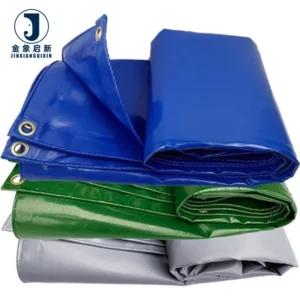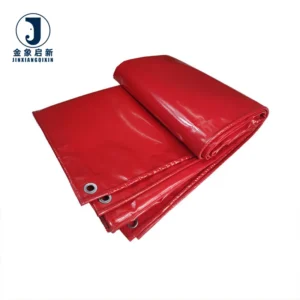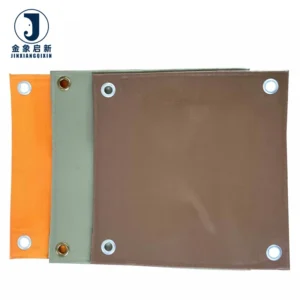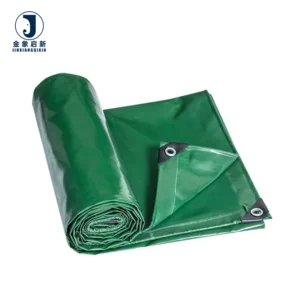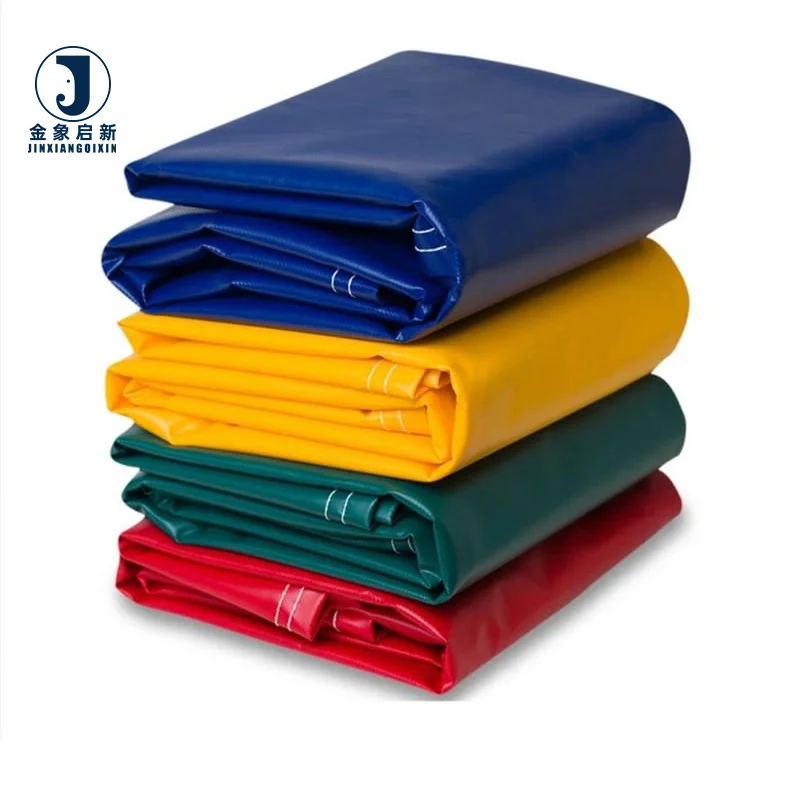
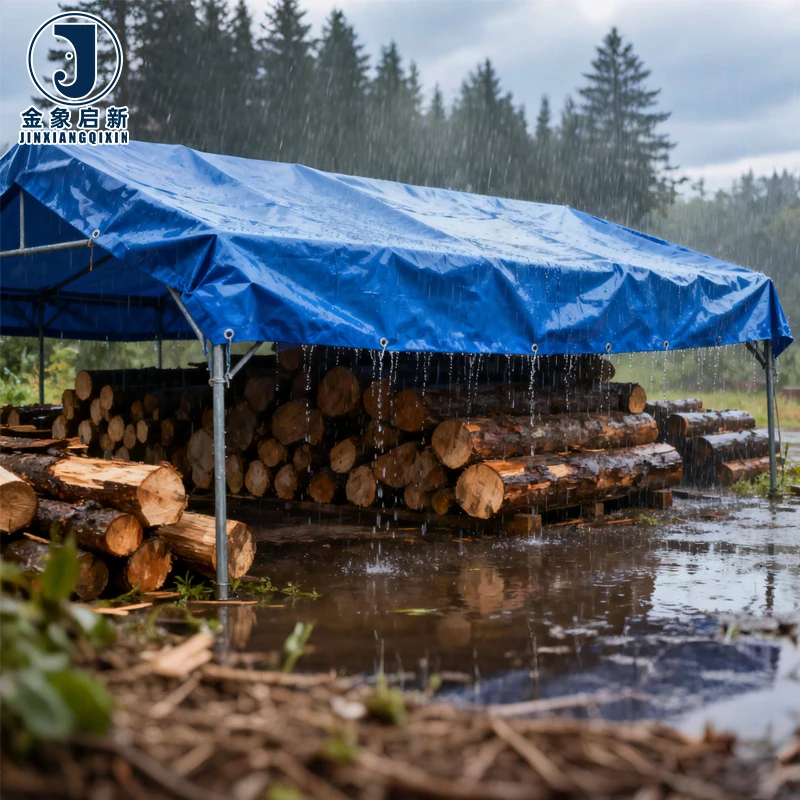
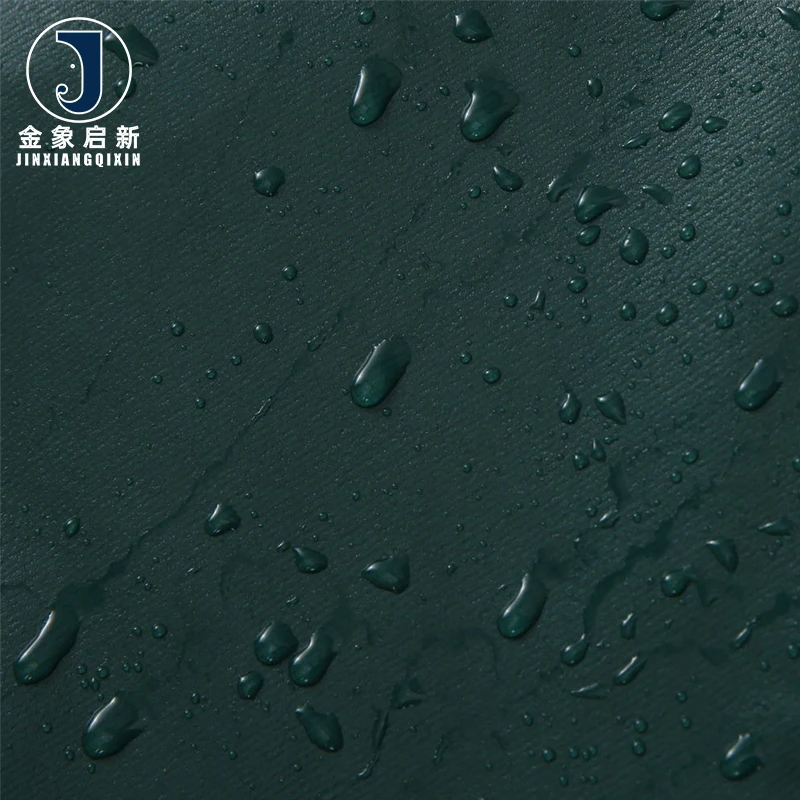
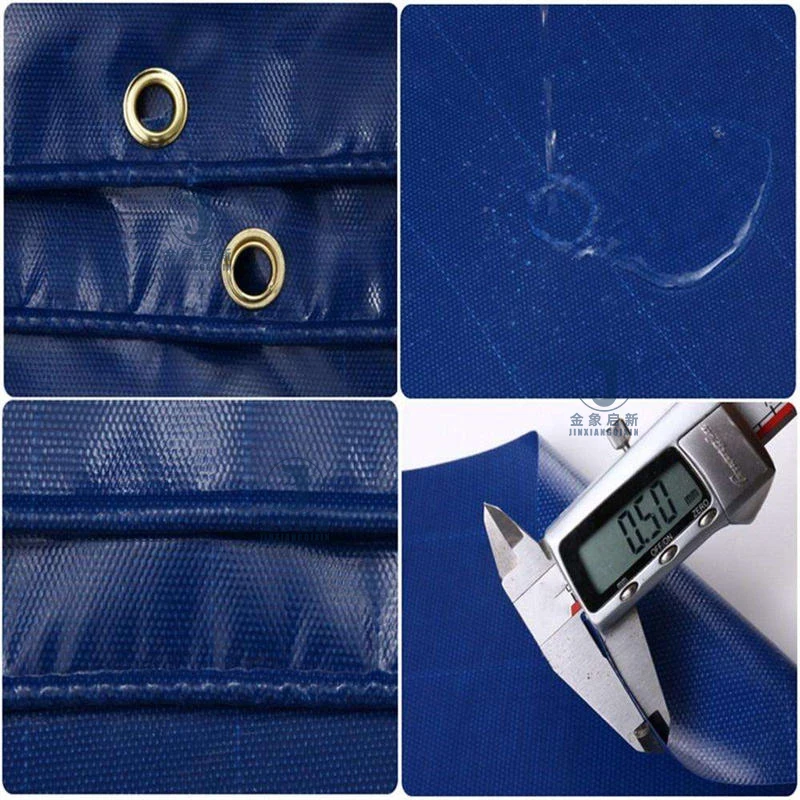
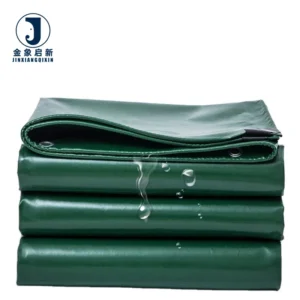
Heavy Duty PVC Coated Tarpaulin Roll — 400–1500 g/m², 500D–2000D base fabric, 0.35–1.5 mm thickness, glossy or matte finish. Waterproof and tear resistant with custom width, colour, eyelets and reinforced hems available.
- Full PVC coated fabric range covering truck, tent, awning and industrial cover applications — specify GSM, base denier and surface finish to match your project requirements
- R&D team develops custom width, colour matching and printed samples within days, supported by 100% pre-shipment inspection on every roll
Description
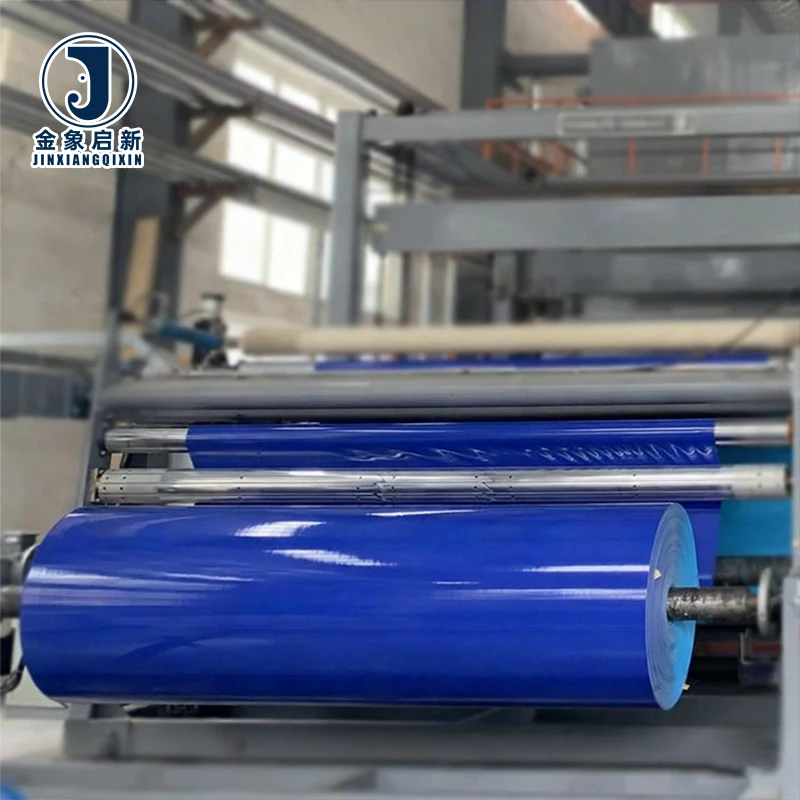
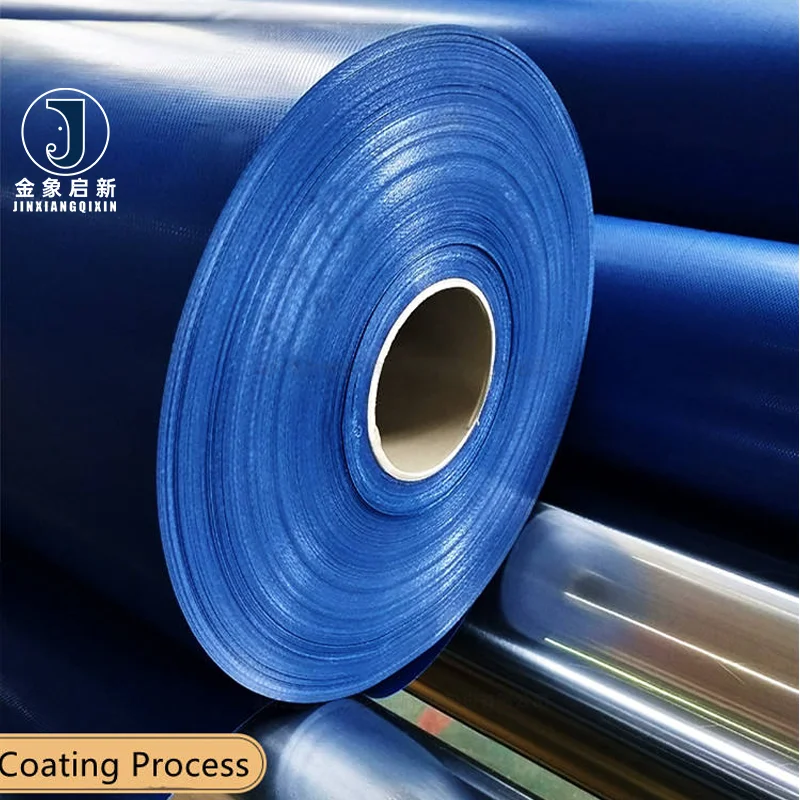
Deep Process Control Over Coating Weight — Every PVC coated tarpaulin roll undergoes in-process GSM verification at the coating stage, ensuring the weight on your specification sheet matches the material received on the dock.
Technical Specifications
| Parameter | Value |
|---|---|
| Product Type | PVC Coated Tarpaulin Roll |
| Material | PVC coated polyester base fabric |
| Base Fabric Denier | 500D (medium-duty), 1000D (heavy-duty), 500D-2000D (super heavy-duty) |
| Weight Range | 400-500 GSM (medium) / 700-1000 GSM (heavy) / 1100-1500 GSM (super heavy) |
| Total Thickness | 0.35-0.45 mm (medium) / 0.70-1.0 mm (heavy) / 1.2-1.5 mm (super heavy) |
| Tensile Strength (Warp) | 1500-2000 N/5cm (medium); 2000-2500 N/5cm (heavy); 2500-3000 N/5cm (super heavy) |
| Tensile Strength (Weft) | 1200-1800 N/5cm (medium); 1800-2200 N/5cm (heavy); 2200-2800 N/5cm (super heavy) |
| Surface Finish | Glossy or matte (customizable) |
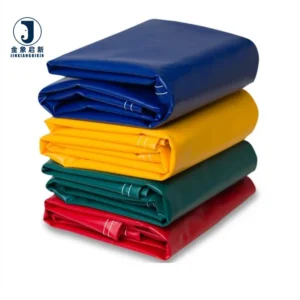
| Colour Options | Blue, Blue/Orange, Green, Grey, Black, Clear, Orange, custom colours |
| Key Features | Waterproof, mildew proof, anti-aging, tear resistant; UV treatment available (test basis not stated — confirm grade for your market); flame retardant grades available (confirm grade required) |
| Customisation | Width, length, pattern printing, branding, eyelets, reinforced hems |
| Assembly | Roll stock or cut-to-size panels |
| Certifications | ISO, CE |
Application Suitability
| Application | Exposure & Requirement |
|---|---|
| Truck and trailer tarpaulin covers | Constant flexing at load points, road abrasion, wind uplift, UV exposure; requires high tear resistance and strong welded seams |
| Tent and awning fabric by the roll | Repeated assembly and disassembly, tension stress at grommet lines, prolonged sun exposure; demands colour consistency across rolls |
| Construction site and equipment covers | Debris impact, standing water, ground chemicals, heavy-duty abrasion from equipment contact; requires heavier GSM grades |
| Pond and reservoir liners | Permanent water immersion, soil chemistry, puncture risk from substrate; needs full waterproof integrity and seam reliability |
| Inflatable and membrane structures | Continuous air pressure load, UV degradation, flex fatigue at fold lines; calls for high tensile strength and coating adhesion |
Why the GSM on Your Quotation May Not Match the Roll You Receive
Dedicated QA/QC at every production stage with full pre-shipment inspection is what separates a verified specification from a hopeful claim.
Buyers regularly report receiving PVC coated tarpaulin fabric rolls that feel noticeably lighter than the quoted weight. This is rarely accidental — it reflects inconsistent coating application or base fabric substitution that goes undetected without stage-by-stage measurement. When a PVC coated tarpaulin roll manufacturer does not document coating weight at each production pass, the final GSM becomes a guess rather than a guarantee. [NEED_CITE: ISO 1421 tensile and tear test methods for coated fabrics]
What Roll Buyers Should Evaluate Beyond Price Per Square Metre
When sourcing a PVC coated tarpaulin roll for high-volume cutting and fabrication, the per-metre cost only tells part of the story. Batch-to-batch colour drift between rolls in the same shipment forces fabricators to reject panels that would otherwise meet specification, adding waste and rework time. A PVC coated tarpaulin roll manufacturer that controls colour matching at the compound stage — rather than adjusting after the fact — delivers consistent material that cuts and welds predictably across the entire order.
Coating Method and Its Effect on Fabrication Behaviour
The way PVC is applied to the base fabric determines how the material behaves during heat welding, sewing, and long-term flexing. Knife-over-roll coating produces a uniform layer that bonds directly into the weave, giving strong peel resistance at welded seams. Lamination methods can leave a weaker boundary between coating and base, which shows up as delamination when the fabric flexes repeatedly under load. For fabricators running high-frequency welding machines, consistent coating thickness across the roll width is what prevents burned edges on one side and cold joints on the other. [NEED_CITE: peel strength testing for PVC coated fabrics per ISO 2411]
Reading the Specification Sheet Against Actual Performance
Base fabric denier and GSM together define how a PVC coated tarpaulin roll handles real-world stress. A 1000D base at 700 GSM delivers different tensile behaviour than a 500D base at the same weight — the heavier denier yarns resist tear propagation, while the lighter denier relies more on coating thickness for strength. Total thickness alone does not predict weldability; a 0.9 mm material with a soft coating compound welds at lower temperatures than the same thickness with a harder formulation. Tensile strength values measured in N/5cm on both warp and weft axes give engineers the data needed to calculate safety margins for tensioned structures.
When Specification Mismatches Become Expensive Problems
Ordering a medium-duty grade for an application that demands heavy-duty performance rarely shows up as immediate failure — it appears months later as seam separation at high-flex points, colour fading unevenly across adjacent panels, or coating cracking in cold weather. Buyers who skip requesting a pre-shipment inspection record have no baseline to compare against when rolls arrive underweight. Flame retardant or UV-treated material supplied without a supporting test report puts the receiving site at compliance risk during inspection. [NEED_CITE: fire classification requirements for temporary structures and tensioned fabric]
Why Fabricators and Distributors Source This PVC Coated Tarpaulin Roll
Three full production lines with dedicated coating equipment allow bulk roll orders to run without being queued behind small-batch jobs, supporting reliable delivery schedules for distributors holding container-load commitments. The 10-person R&D team develops custom colour matches, pattern printing proofs, and non-standard width samples within days, reducing the gap between specification and confirmed material. Every roll passes through stage-by-stage QA checks with documented GSM readings, not just a final visual pass before packing. ISO and CE certification covers the production system itself, with pre-shipment inspection records available for each order confirming the material matches the agreed specification.
Documentation & Verification
- Material specification sheet stating GSM, base fabric denier, coating type, and colour reference for each roll produced
- Pre-shipment inspection record confirming weight verification and visual QA across the full roll count
- Test reports for UV treatment and flame retardant grades where specified — request documentation before committing
- Roll packing list detailing roll numbers, net weight, and dimensions for receiving verification
- Certificate of origin and customs documentation supporting import clearance
Fabrication, Handling & Storage
- Heat welding parameters should be calibrated to the specific coating thickness — 0.35 mm medium grades need lower temperature settings than 1.2 mm super heavy grades
- Store rolls upright on pallets to prevent flat-spotting and permanent creasing, especially on heavier GSM grades above 700
- When cutting panels from roll stock, allow material to relax for several hours after unrolling to minimise dimensional drift
- Glossy finish surfaces require solvent-free cleaners to avoid clouding; matte finishes tolerate mild detergent solutions
- Eyelet installation on finished covers should include reinforced hem strips to distribute load across the base fabric weave
Requesting a Specification That Matches Your Application
To move from inquiry to confirmed sample efficiently, share the end-use application and the specific environmental exposures the material will face — continuous UV, chemical contact, or mechanical abrasion. Provide your target GSM or thickness range, required roll widths, and annual volume estimate so the production team can assess feasibility and batching. If custom colour or printed branding is needed, a Pantone or RAL reference and artwork file allows the R&D team to prepare a physical sample for approval before the full production run is scheduled.
Frequently Asked Questions
Q: How do I verify the GSM matches what was quoted before the container ships?
A: Each production batch undergoes in-process GSM measurement at the coating stage, and a pre-shipment inspection record is generated covering weight verification across the roll count. You can request this documentation before dispatch to confirm the material on the spec sheet matches the physical rolls packed for your order.
Q: Can you supply a test report for UV or flame retardant treatment?
A: Test reports are available for UV-treated and flame retardant grades where applicable. Specify the exact treatment and grade required for your market at the inquiry stage, as different regions have different classification requirements. Confirm the documentation you need before production begins so the correct material grade is allocated to your order.
Q: How do you ensure colour consistency across multiple rolls in the same order?
A: Colour matching is controlled at the PVC compound stage before coating begins, not adjusted after rolls are produced. This means every roll in a single production run receives the same compound batch. A pre-shipment inspection includes a visual cross-roll colour check, and the inspection record documents the results.
Q: What is the lead time for custom width, colour, or printed rolls?
A: Custom widths and colours are developed through the R&D team with sample production completed within days for approval. Once the sample is confirmed, full production lead time depends on the roll count and current line scheduling. Confirming your specification early — including colour reference and width — allows production planning to begin without delay.
Q: What documentation ships with each roll order?
A: Each dispatch includes a material specification sheet, roll packing list with individual roll details, pre-shipment inspection record, and certificate of origin. For orders specifying UV or flame retardant grades, the corresponding test reports are included. ISO and CE certification documentation is available upon request for customs and receiving verification.
Related products
-
Factory Custom 9×11 Poultry Curtains Tarpaulin PVC Coated Waterproof Anti-Static Eco-Friendly Tarp for Chicken Coop Boys Girls
¥0.90 Select options This product has multiple variants. The options may be chosen on the product page -
630 Gsm Blue/Grey/Orange Pvc Tarpaulin Roll Pvc Tarpaulin Truck Tarpaulin Pvc Coated Tarpaulin
¥1.66 Add to cart -
Factory Direct Sale Flatbed Trailer Tarps Black Heavy Duty Lumber Pe Tarp Flatbed Truck Transportation Tarpaulin Roll Sheet
¥1.25 Select options This product has multiple variants. The options may be chosen on the product page -
Heavy Duty Truck Tarpaulin 1000d Pvc Tarp Waterproof Pvc Canvas
¥1.20 Add to cart