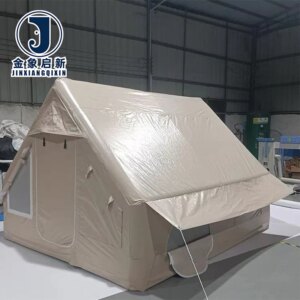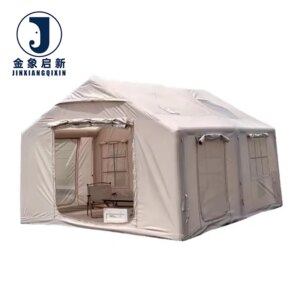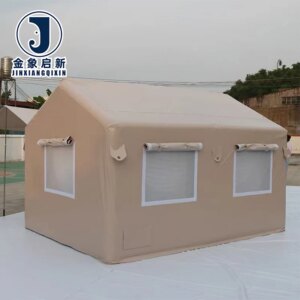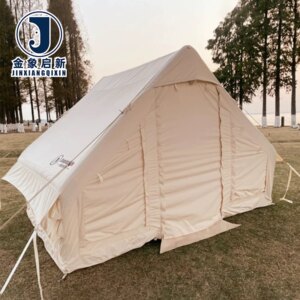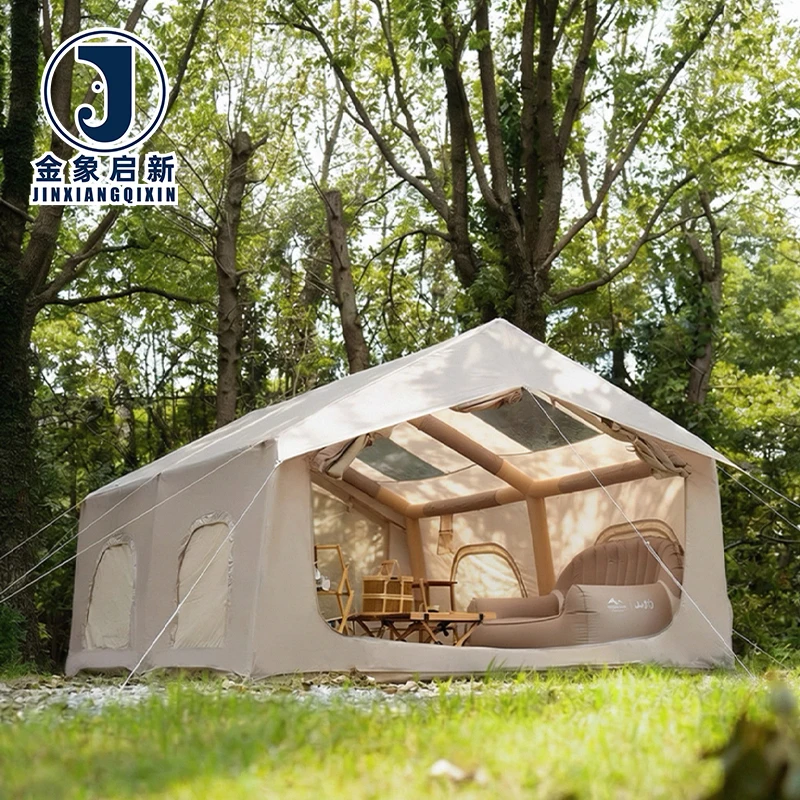
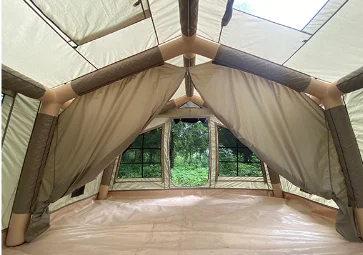
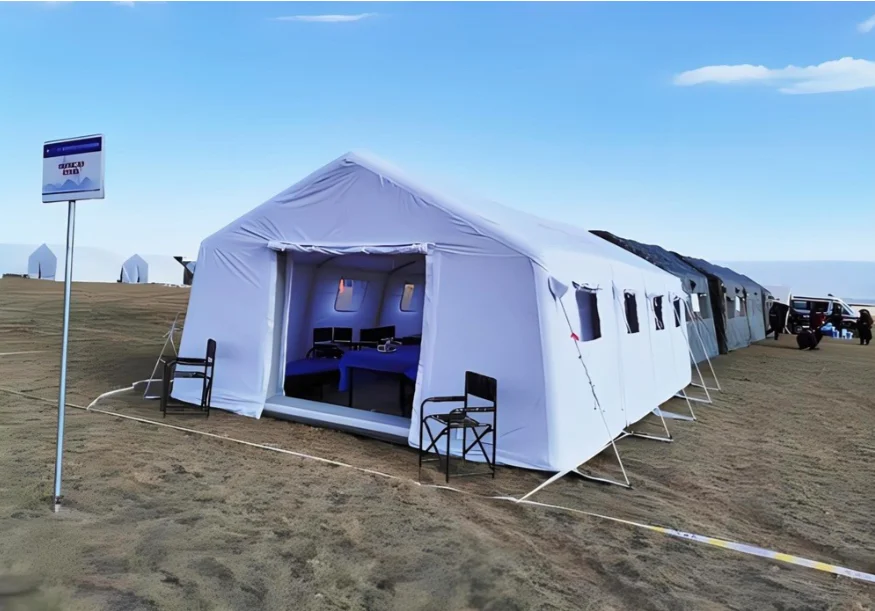
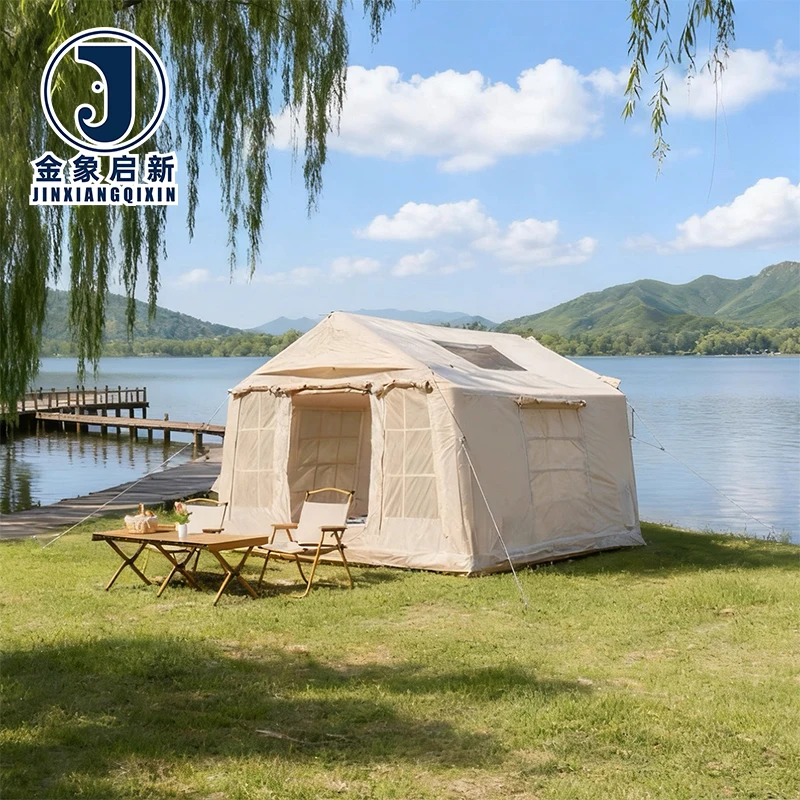
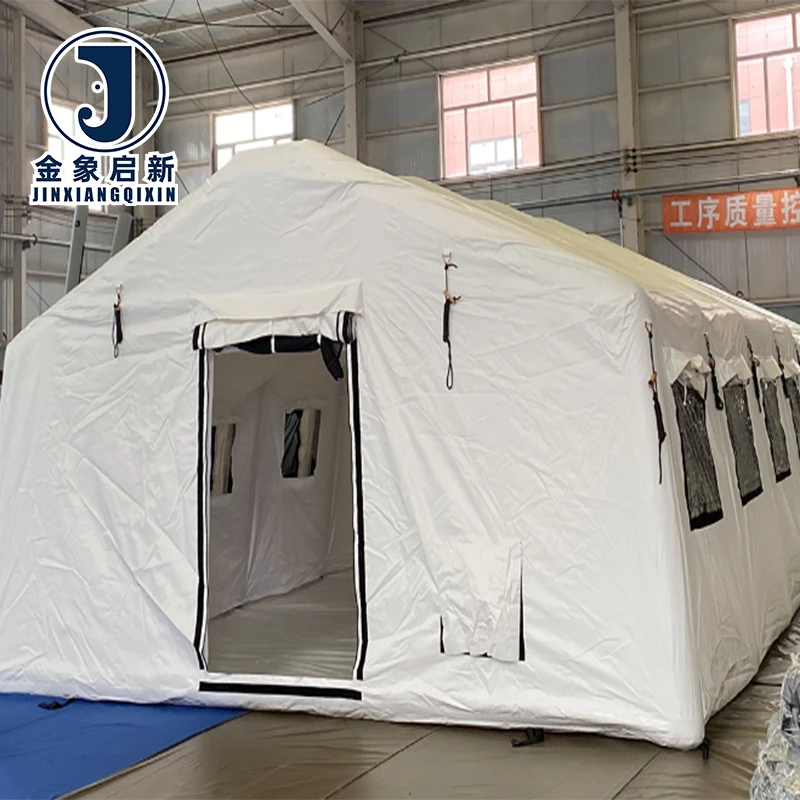
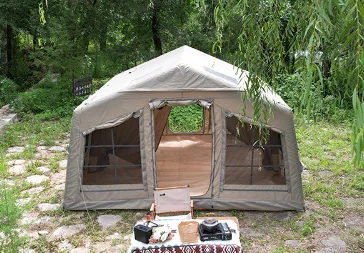
Inflatable Tent — waterproof, UV-resistant PVC tarpaulin, single-layer four-season design, 1-12 person capacity
- Full-range PVC coated fabric solutions with proprietary coating process ensuring consistent waterproof performance across the entire surface
- Heat-sealed seams tested for tear resistance at flex points where structures experience mechanical stress
- OEM & ODM customization including pattern printing and size adjustments
- Sourcing tent fabric and finished structures from one facility eliminates color mismatch and finger-pointing when seams fail
- 30 years of coating expertise with 100% pre-shipment inspection, samples developed within days for custom requirements
Description
Deep Process Control Over Coating Weight — Every inflatable tent we produce reflects nearly 30 years of focused PVC coated fabric expertise, verified through dedicated QA at each production stage from roll stock to finished structure.
Technical Specifications
| Parameter | Value |
|---|---|
| Product Type | Inflatable Camping Tent |
| Core Material | PVC Tarpaulin |
| Capacity Range | 1–12 Person configurations available |
| Construction | Single layer |
| Season Rating | Four-season design |
| Waterproof Performance | Fully waterproof coated construction |
| UV Resistance | UV-resistant formulation (test basis not stated in source — confirm the UV standard required for your market) |
| Tear Resistance | Tear-resistant PVC tarpaulin base fabric |
| Customization | OEM & ODM — sample customization, pattern printing, bespoke sizing |
| Airtightness Validation | 24-hour pressure retention test on every finished unit |
| Production Equipment | 36 sets of professional processing equipment |
| R&D Capability | 10-person technical team |
| Certifications | ISO 9001, ISO 14001, ISO 45001, CE |
Application Suitability
| Application | Exposure & Requirement |
|---|---|
| Construction site crew accommodation | Repeated setup and breakdown cycles, ground abrasion, wind loading, prolonged UV exposure |
| Mobile field operations base | Rapid deployment requirement, variable terrain, four-season weather fluctuation, transport vibration |
| Emergency response staging area | Immediate inflation and takedown, extreme weather readiness, high-visibility colour options |
| Outdoor event infrastructure | Multi-day continuous inflation, public foot traffic contact, UV degradation from constant sun exposure |
| Year-round commercial outdoor use | Seasonal temperature swings, sustained UV load, structural load from snow or pooling water |
What Buyers Get Wrong About Inflatable Tent Material Selection
Airtightness starts at the coating formulation, not at the valve. Many commercial inflatable camping tent failures trace back to the fabric itself — pinholes from inconsistent coating weight, micro-cracks at heat-sealed seams where the coating adhesion failed, or UV degradation that embrittles the membrane until it cannot hold internal pressure [NEED_CITE: common failure modes in PVC-coated inflatable structures]. I have watched field operators replace entire tent systems mid-project because the PVC tarpaulin delaminated at the seam lines after a single summer deployment. The coating weight per square metre and the method by which it bonds to the base fabric determine whether a tent survives its first month or its first year. Specifying the material correctly upfront — and verifying it arrives as specified — costs a fraction of what field failure does.
Why Coating Adhesion Determines Inflatable Tent Longevity
An inflatable camping tent lives under constant internal pressure, which places continuous stress on every welded seam and coated surface. When the coating bond to the base fabric is weak, the membrane separates under this sustained load — a failure mode that no amount of seam reinforcement can correct. Our PVC tarpaulin coating process maintains controlled adhesion across the full surface area, ensuring that seam strength remains consistent with the body fabric strength. This is verified during the 24-hour pressure retention test applied to every finished unit before dispatch.
Controlling Batch Consistency Across Multi-Unit Orders
Commercial buyers ordering multiple inflatable tents for a fleet or project site need every unit to perform identically. Colour variation between batches, inconsistent coating thickness, or fluctuating GSM across the same order creates visible mismatch once the structures are deployed side by side. We control this through in-process QA at each production stage and 100% pre-shipment inspection, so batch-to-batch variability is caught and corrected before your containers are sealed.
Understanding the Specification That Actually Matters
GSM alone does not tell you how well an inflatable tent will hold pressure. The base fabric denier and weave density define the tensile skeleton, while the coating weight and formulation determine airtightness and UV stability. A heavier GSM with poor coating adhesion will fail faster at the seams than a lighter-grade fabric with superior bond strength. The PVC tarpaulin used in our inflatable camping tent product line is selected for the specific balance of base fabric integrity and coating performance required for sustained inflation cycles [NEED_CITE: relationship between base fabric denier, coating weight, and tensile performance in PVC tarpaulins]. Four-season deployment demands that the material resist both low-temperature embrittlement and high-temperature softening — properties that depend on the plasticiser system within the PVC coating rather than weight alone.
The Real Cost of Underspecifying Your Inflatable Structure
A tent that arrives lighter than quoted will inflate — but the seams will creep open faster under pressure, demanding constant pump compensation and early retirement from service. I have seen commercial operators absorb full replacement costs mid-season because the PVC tarpaulin they received had a thinner coating than specified, and the UV degradation set in before the project timeline ended. Weld line failures at flex points compound this: once the coating peels at a heat seal, the base fabric absorbs moisture and loses structural coherence. Every discrepancy between the quotation and the delivered product compounds into field downtime, crew relocation costs, and project schedule impact [NEED_CITE: financial impact of material specification deviation in temporary site accommodation].
What Our Production Process Delivers
Deep process control over coating weight and adhesion comes from nearly 30 years focused exclusively on PVC coated fabric — not a product line added last quarter. Three full production lines and 36 sets of professional processing equipment give us the capacity to handle bulk inflatable tent orders while maintaining the coating consistency that smaller operations cannot sustain. A 10-person R&D team handles material selection, pattern printing, custom sizing, and sample development in-house, so specification changes are validated before production starts rather than discovered at delivery. Dedicated QA and QC staff inspect every production stage, backed by 100% pre-shipment inspection on finished units. Samples for custom requirements are developed within days, giving buyers the physical confirmation they need before committing to a full production run.
Documentation & Verification
- Material specification sheet stating PVC tarpaulin base fabric and coating details for each inflatable tent order
- Batch inspection report with performance test results included with every commercial shipment
- ISO 9001, ISO 14001, ISO 45001, and CE certificates available for cross-border compliance documentation
- Pre-shipment inspection record confirming 100% QA/QC coverage before dispatch
- 24-hour pressure retention test certificate for airtightness validation on every finished tent
- Certificate of origin and customs support documentation for international inflatable camping tent shipments
Fabrication, Handling & Storage
- Heat-seal all seams at temperatures matched to the specific PVC tarpaulin coating thickness used in your tent order
- Store inflated units in dry, ventilated conditions to prevent coating adhesion loss from trapped moisture
- Avoid folding inflatable tents at identical crease lines repeatedly to prevent coating fatigue cracking
- Use only PVC-compatible cleaners — solvent-based products will degrade the tarpaulin coating surface
- Transport deflated tents above freezing temperatures to avoid low-temperature coating embrittlement during transit
- Inflate to full working pressure before initial storage to verify seam integrity after any field repair
Preparing Your Specification Before You Enquire
Share your deployment environment, expected seasonal temperature range, and the compliance standards your site or market requires — fire classification, UV test standards, or structural wind-load ratings. Tell us whether you need finished inflatable tents in custom sizes or PVC tarpaulin roll stock for your own fabrication line. Confirm colour requirements, pattern printing needs, and annual volume so we can match you to the right production schedule and batch consistency protocol.
Frequently Asked Questions
Q: How is airtightness verified and what does the pressure retention test involve?
A: Every finished inflatable camping tent undergoes a 24-hour pressure retention test. The unit is inflated to its specified working pressure and monitored for pressure drop over a full day. Any unit showing measurable loss beyond the acceptable threshold is flagged, reworked, or rejected before it enters the packing line.
Q: What OEM and ODM customization is available for inflatable tents?
A: We offer full OEM and ODM services including custom sizing, pattern printing, material specification adjustments, and sample customization. Our 10-person R&D team develops samples within days, allowing buyers to verify fit, colour, and performance before committing to full production runs.
Q: How do you control colour and material consistency across a multi-unit order?
A: In-process QA runs at each production stage, with 100% pre-shipment inspection on every finished unit. Coating weight, colour reference, and material properties are checked against the order specification, so batch-to-batch variation is identified and corrected before your inflatable tents leave the facility.
Q: What UV-resistant testing basis supports the outdoor durability claim?
A: Our PVC tarpaulin formulation includes UV-resistant additives for extended outdoor deployment. The specific UV test standard applied depends on your market requirement — confirm the standard needed for your region and we will align the test report and certification documentation accordingly.
Q: What documentation accompanies each commercial inflatable tent order?
A: Each shipment includes a material specification sheet, batch inspection report, ISO 9001, ISO 14001, ISO 45001, and CE certificates, a pre-shipment inspection record, 24-hour pressure retention test results, roll packing list, and certificate of origin with full customs support.
Related products
-
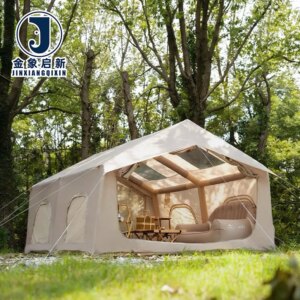
Inflatable Tent Family Size Four-Season Quick Automatic Opening Waterproof 2-8 Person Factory Direct Sale
Read more -
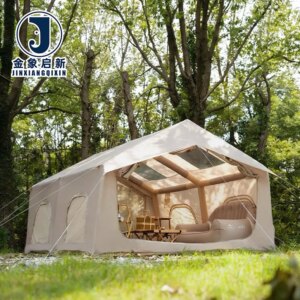
Camping Tent Inflatable UV Resistant Customizable Four-season Waterproof PVC Eco-Friendly Windproof Foldable Quick Automatic
Read more -
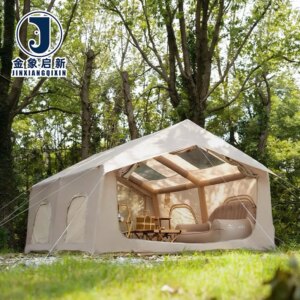
Inflatable Camping Tent Waterproof PVC Outdoor Air Tent Easy Setup Family Camping Shelter
Read more -
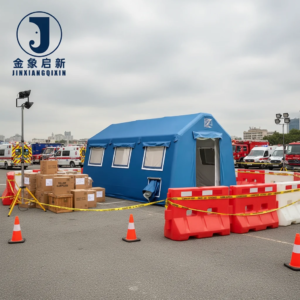
Aufblasbares Campingzelt Wasserdicht PVC Outdoor Luftzelt Einfacher Aufbau Familiencamping Schutz Vier-Jahreszeiten >3000mm Wasserdicht Schnell
Read more