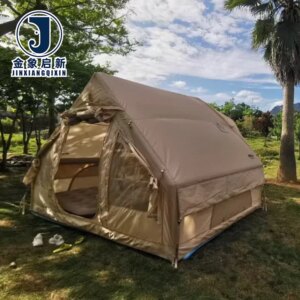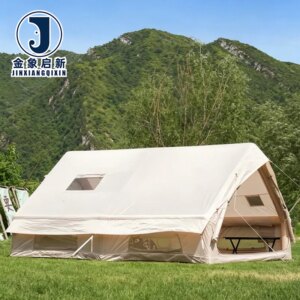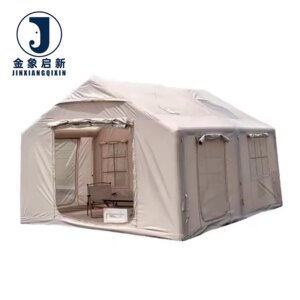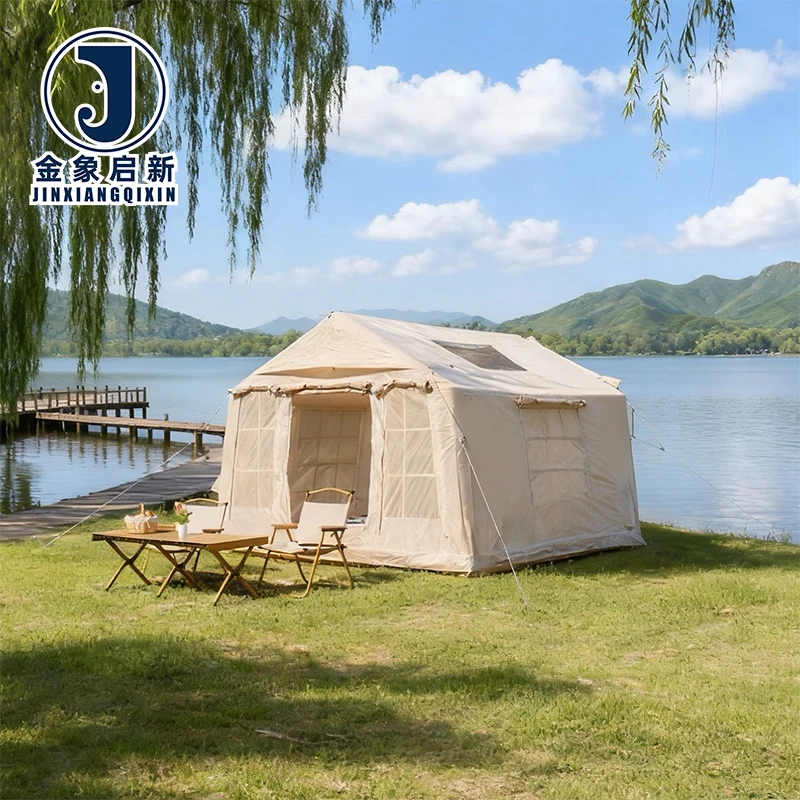
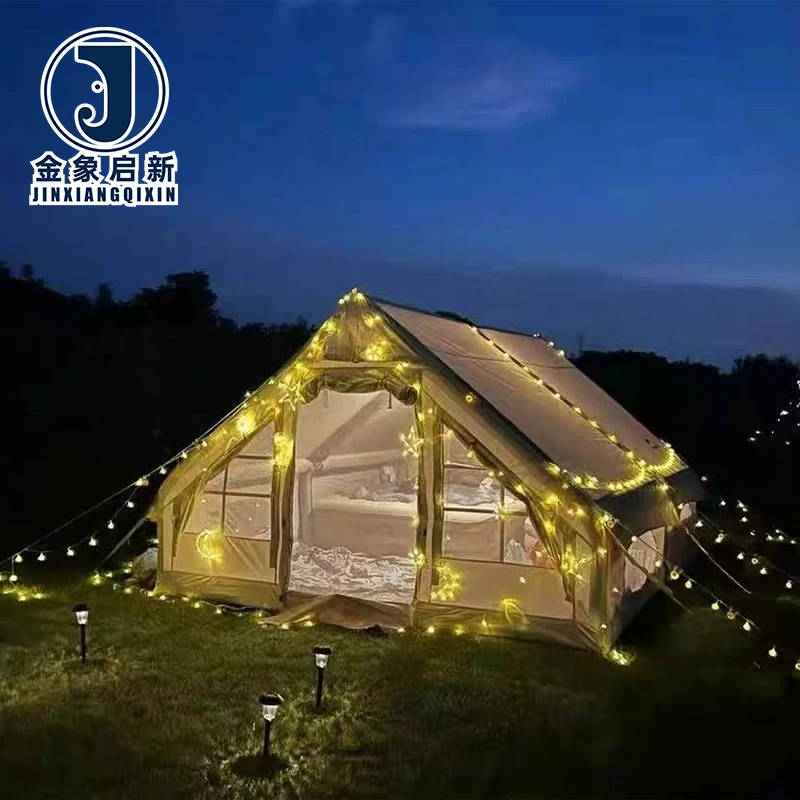
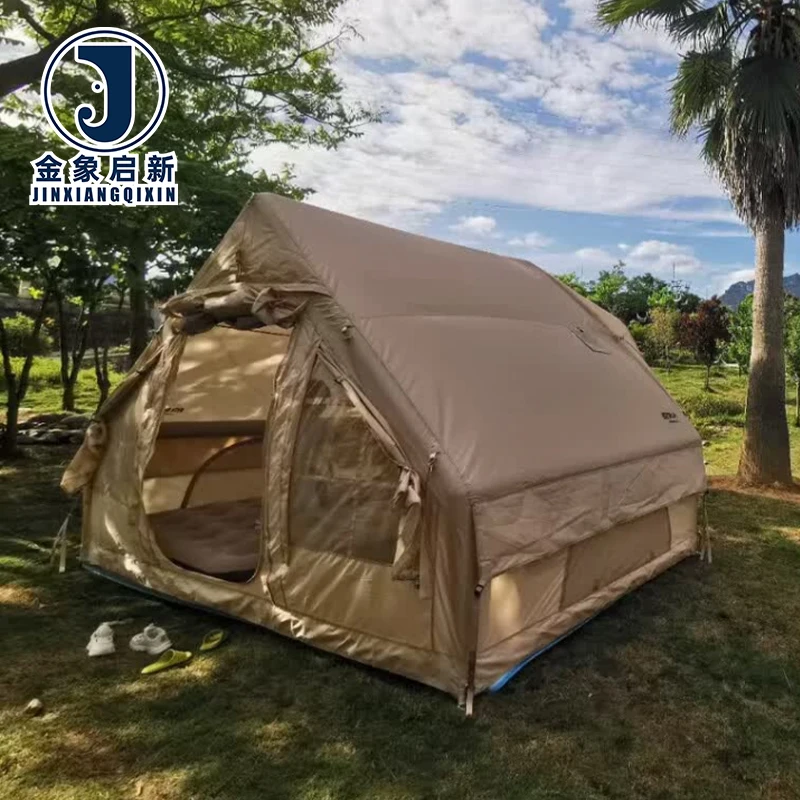
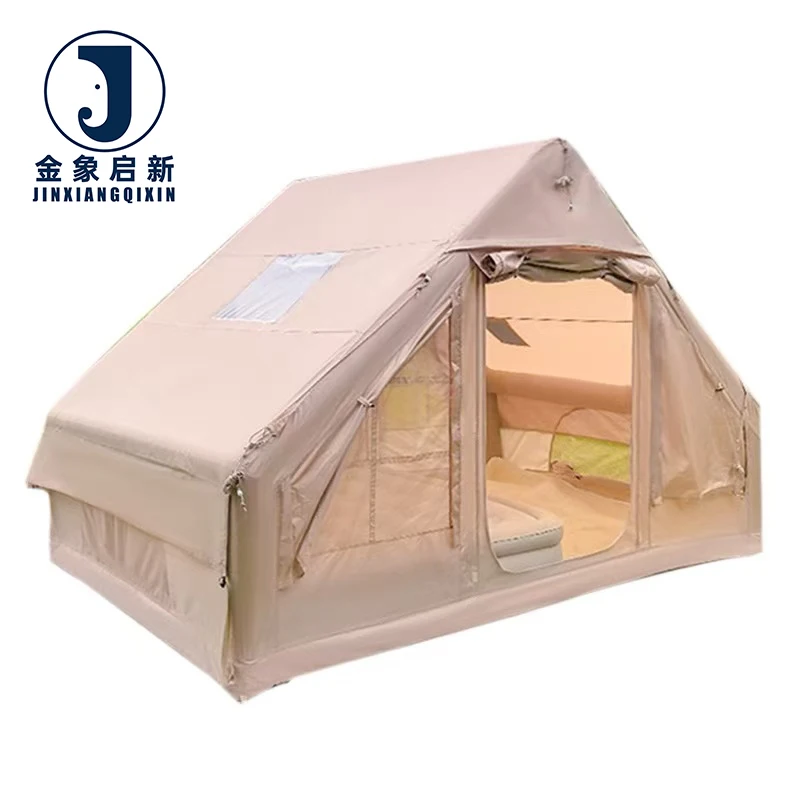
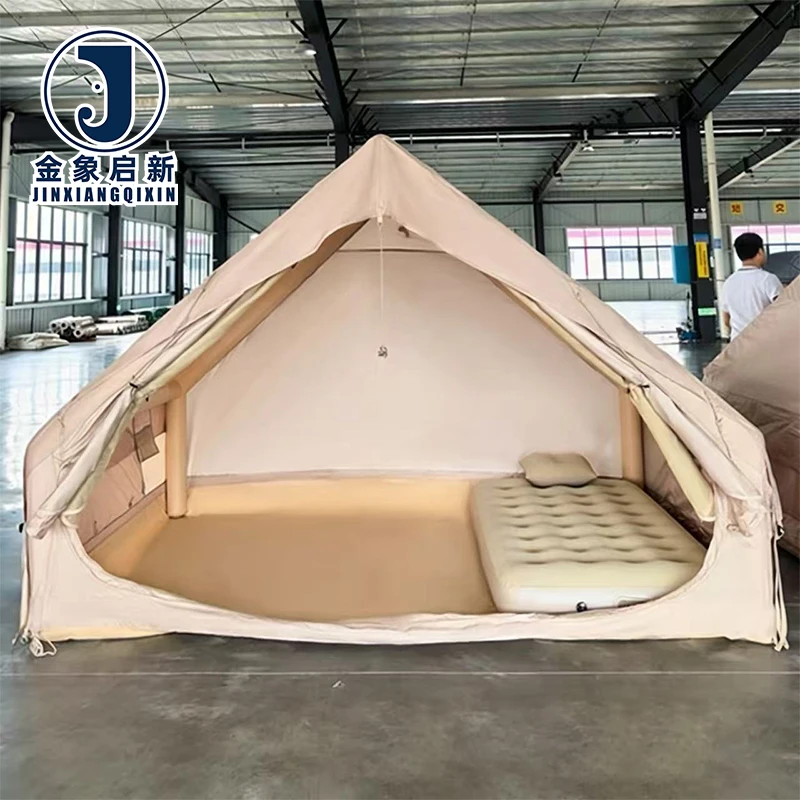
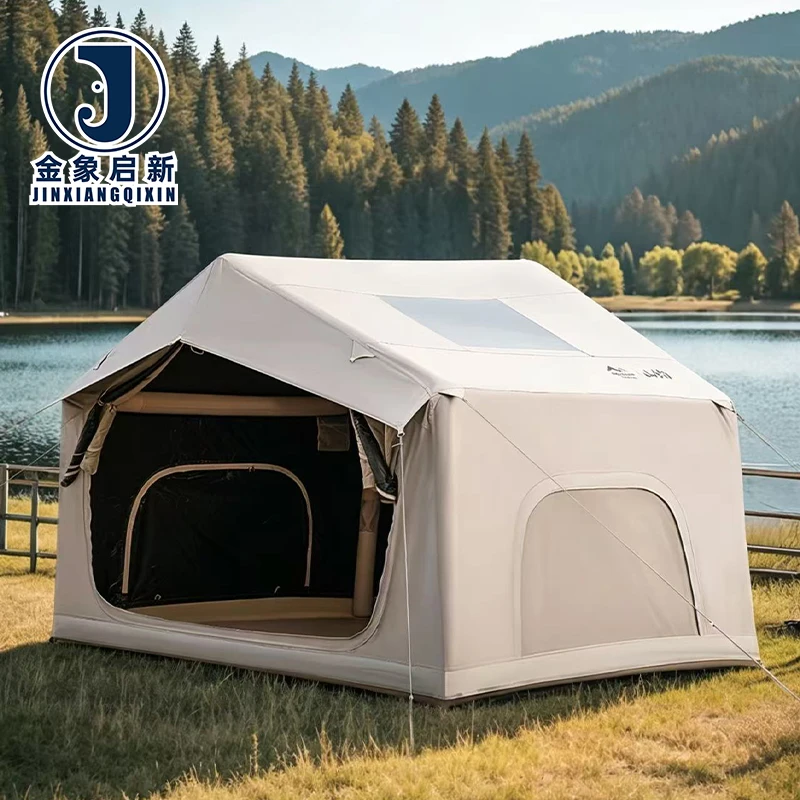
Inflatable Camping Tent with 650g/m² PVC coated fabric, 3000N tearing resistance, and -20°C to 60°C operating range — engineered for repeated commercial deployment across four seasons.
- Quick automatic opening mechanism reduces field setup time for crews
- Full OEM/ODM customization from dimensions to pattern printing
- 24-hour inflation test on every unit with pressure retention data recorded
Sourced from a facility running three full production lines and 36 sets of equipment, delivering consistent batch-to-batch quality at volume.
Description
Process Control Over Coating — Verified GSM consistency and adhesion control across every roll of inflatable tent fabric, backed by in-process QA checkpoints at each of three production lines.
Technical Specifications
| Parameter | Value |
|---|---|
| Product Type | Inflatable Tent Fabric |
| Core Material | PVC knife-coated tarpaulin |
| Weight | 650g/m² |
| Coating Method | Knife coated |
| Coating Material | PVC |
| Tear Strength | 3000N (test basis not stated in source) |
| Temperature Range | -20°C to 60°C |
| UV Treatment | UV-resistant (test basis not stated in source) |
| Flame Retardant Grade | Grade not stated in source |
| Waterproof Rating | Waterproof (specific rating not stated in source) |
| Customization | OEM & ODM, sample customization, pattern printing |
| Key Features | Waterproof, UV-resistant, tear-resistant, four-season design |
| Standards | ISO 9001, ISO 14001, ISO 45001, CE |
Application Suitability
| Application | Exposure & Requirement |
|---|---|
| Commercial inflatable shelter rental fleets | Repeated inflation and deflation cycles, surface abrasion from handling, UV exposure across seasons |
| Industrial base camps and mobile command centers | Wind loading on inflated walls, temperature swings, ground contact and moisture |
| Remote worksite equipment housing | Prolonged sun exposure, dust ingress, mechanical contact with stored machinery |
| Expedition and four-season outdoor deployment | Sub-zero flexibility, snow load on inflated beams, freeze-thaw moisture cycles |
| Temporary storage at outdoor events | Rapid setup and teardown, crowd proximity, variable weather |
Why Welded Seams Fail Before the Inflatable Tent Fabric Does
Seam failure on inflatable structures almost always traces back to inconsistent coating weight and uncontrolled heat-sealing parameters.
When an inflatable tent beam flexes under wind load or during deflation, the stress concentrates at every welded joint. If the PVC coating weight varies from one section to the next, the heat-seal temperature that works perfectly on one panel will under-weld or over-weld the adjacent strip. Commercial rental operators see this pattern repeatedly — the fabric itself shows no damage, but the seam delaminates at the exact point the structure bends most [NEED_CITE: coated fabric weld adhesion test methods per ISO 2411]. This is not a design flaw. It is a process control failure. Choosing an Inflatable Tent Fabric manufacturer custom capable of maintaining tight GSM tolerances across the roll eliminates the root cause before fabrication begins.
Coating Weight Consistency and Heat-Seal Performance
Every inflatable tent beam relies on welded seams to hold air pressure under load. Knife-coated PVC at 650g/m² provides a uniform coating thickness that responds predictably to hot-air and wedge welding. When coating weight drifts between rolls, fabricators must adjust sealing temperature and speed mid-run — a variable that introduces weak spots. An Inflatable Tent Fabric manufacturer custom operation with dedicated in-process QC checkpoints can hold coating weight within tight tolerances, giving fabricators a stable baseline for their welding parameters.
Tear Resistance Across Repeated Deployment Cycles
Commercial inflatable shelters are inflated, deflated, folded, transported, and redeployed hundreds of times. Each cycle stresses the fabric at fold lines and beam junctions. The 3000N tear resistance of this knife-coated PVC supports those repeated mechanical demands, reducing the likelihood of tear propagation starting from a small nick or abrasion mark [NEED_CITE: tear strength testing for coated fabrics]. For rental operators and field deployment teams, this translates to fewer mid-season fabric replacements and lower lifecycle cost per deployment.
Temperature Range and Four-Season Behaviour
PVC becomes stiffer as temperatures drop and softens as they rise. This knife-coated fabric is rated for use from -20°C to 60°C, covering the operational envelope for four-season inflatable shelters. At the lower boundary, the material retains enough flexibility to fold without cracking the coating. At the upper boundary, the PVC remains dimensionally stable under direct sun without excessive softening that could compromise inflated beam rigidity. This range suits deployment from winter base camps to summer event sites without requiring seasonal fabric swaps.
Reading the Specification Sheet Beyond GSM
GSM alone does not determine how a coated fabric performs in an inflatable structure. The base fabric denier and weave density work together with the PVC coating weight to produce the final tensile and tear values. A 650g/m² knife-coated construction achieves its 3000N tear figure through the combination of yarn count, weave pattern, and coating penetration. Knife coating forces PVC into the fabric interstices under blade pressure, creating a mechanical bond that supports higher peel strength at welded seams compared to laminated alternatives [NEED_CITE: knife coating versus lamination adhesion comparison]. Understanding this relationship helps buyers evaluate competing quotations on performance rather than weight alone.
The Hidden Cost of Batch-to-Batch Colour Variation
When a commercial order spans multiple rolls and the colour shifts between them, the mismatch becomes visible the moment two panels are welded side by side on the finished inflatable. For rental operators displaying branded shelters at public events, this inconsistency undermines the professional appearance the client expects. The root cause often lies in pigment dosing variation during the coating stage — a problem that compounds across large orders when process control is loose. Specifying colour references tied to a physical standard and requiring pre-shipment roll inspection against that standard catches the issue before the material leaves the factory [NEED_CITE: colour fastness and batch consistency standards for coated textiles].
Why Source Inflatable Tent Fabric Here
In-house coating lines with dedicated QA checkpoints at every stage mean coating weight and adhesion are verified during production, not just at final inspection.
A 10-person R&D team handles material selection, custom sizing, and pattern printing development, enabling full OEM and ODM capability for inflatable tent projects.
Three full production lines and 36 sets of processing equipment support bulk roll output with consistent on-time delivery for large commercial orders.
Samples are developed within days for custom colour, width, or printed branding requirements, allowing buyers to validate material before committing to production volume.
100% pre-shipment inspection with serialized quality records ensures every roll dispatched matches the agreed specification for GSM, colour, and coating integrity.
Documentation & Verification
- Material specification sheet stating GSM, base fabric denier, coating method, and colour reference
- Batch-specific test reports for UV resistance and flame-retardant grades where applicable
- Pre-shipment inspection record with serialized quality certificate per roll
- ISO 9001, ISO 14001, ISO 45001, and CE certificates on file for compliance
- Roll packing list with net weight and dimensions for customs and freight planning
Fabrication, Handling & Storage
- Heat-seal temperature settings should be validated against the 650g/m² knife-coated surface before full production runs begin.
- Store rolls upright or suspended to prevent permanent creasing in the PVC coating layer.
- Allow cold-stored rolls to reach ambient temperature before unrolling to avoid coating micro-cracking.
- Use PVC-compatible cleaners only; solvent-based agents can degrade the knife-coated surface finish.
- Field repairs on minor punctures respond well to PVC patch kits applied with hot-air activation.
- Plan cutting layouts to minimise off-cuts and reduce the number of welded seams per inflatable beam.
What We Need to Prepare Your Quotation
Share your intended application and the environmental conditions the inflatable shelter will face, including typical temperature range and exposure duration. Specify the roll widths and colours required, along with any pattern printing or branding artwork. Confirm whether your target market requires a specific flame-retardant grade so we can match the correct formulation.
Frequently Asked Questions
Q: How is the 650g/m² weight verified and what documentation accompanies each batch?
A: Each roll undergoes GSM sampling at multiple points during production. The pre-shipment inspection record includes measured weight values against the stated 650g/m² specification. A serialized quality certificate accompanies every roll, and buyers can conduct incoming inspection using standard GSM cut-and-weigh methods to cross-check on arrival.
Q: What heat-sealing parameters are recommended for PVC inflatable tent seams?
A: Hot-air welding at temperatures suited to 650g/m² knife-coated PVC generally produces reliable peel strength. Exact settings depend on your welding equipment and ambient conditions. We recommend running test welds on sample pieces to establish optimal temperature, speed, and pressure before full production.
Q: What are the MOQ and lead time for custom width or colour?
A: Minimum order quantities and lead times vary with the specific width, colour, and any printed branding required. Custom colours require pigment matching and a production trial. Share your target dimensions and annual volume, and we will confirm the minimum and schedule accordingly.
Q: How is colour consistency maintained across rolls in a single order?
A: Pigment dosing is controlled at the coating stage against a confirmed colour reference standard. Rolls within the same production batch are inspected side by side before dispatch. Any roll falling outside the agreed tolerance is held and recoated to maintain visual uniformity across the complete order.
Q: What is the sample process for custom branding and pattern printing?
A: Our R&D team prepares printed samples on the specified 650g/m² knife-coated fabric within days of receiving artwork files. You review colour accuracy, registration, and adhesion of the print before approving the production run. Revisions are accommodated until the sample meets your requirements.
Related products
-
Outdoor Portable Camping Inflatable Tent Luxury All-Season Use Overnight Large Space Rainproof Insulated Quick Automatic Opening
Read more -
Outdoor Waterproof Inflatable Tent for Camping Portable Air Camping Tent Shelter
Read more -
Camping Tent Inflatable UV Resistant Customizable Four-season Waterproof PVC Eco-Friendly Windproof Foldable Quick Automatic
Read more -
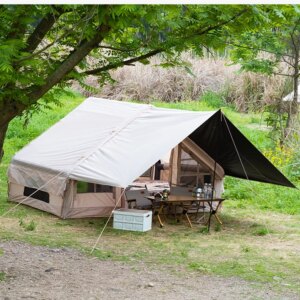
Campingzelt aufblasbar PVC wasserdicht UV-beständig Vier-Jahreszeiten schnell automatisch öffnend anpassbar 2-3 Personen
Read more