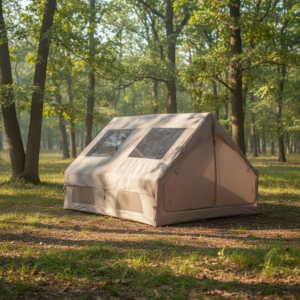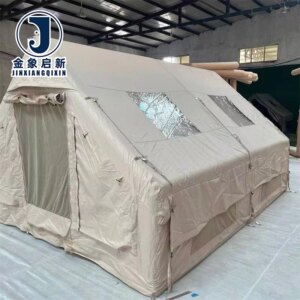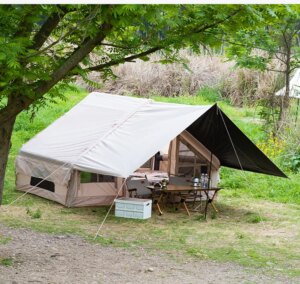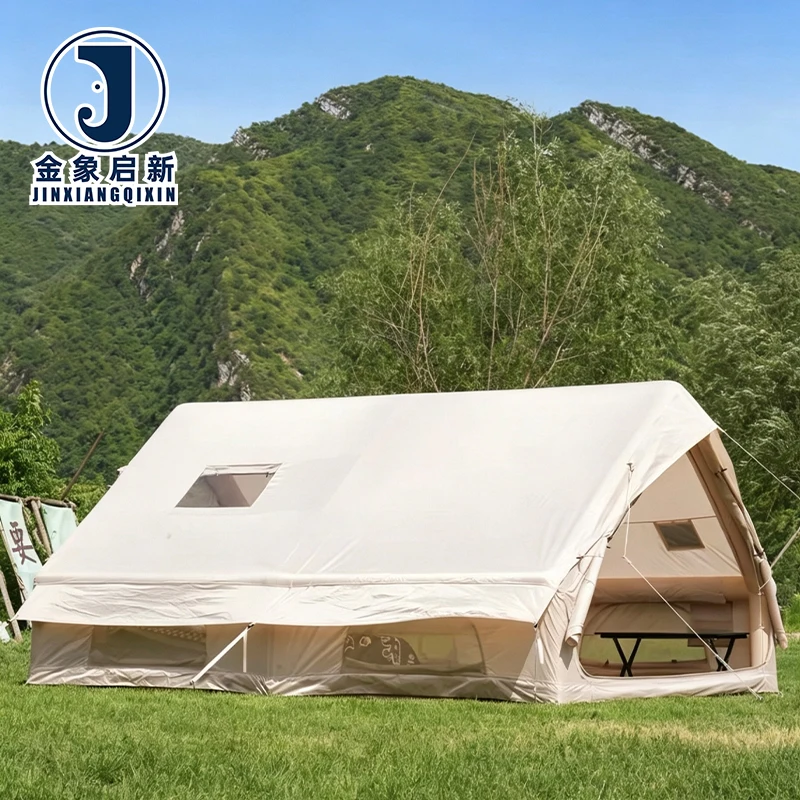
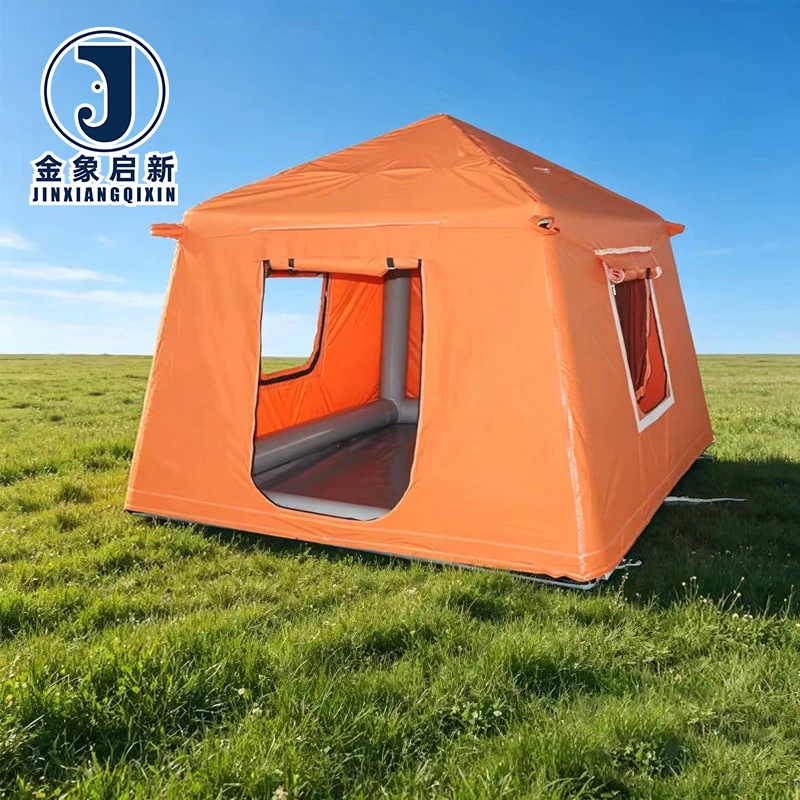
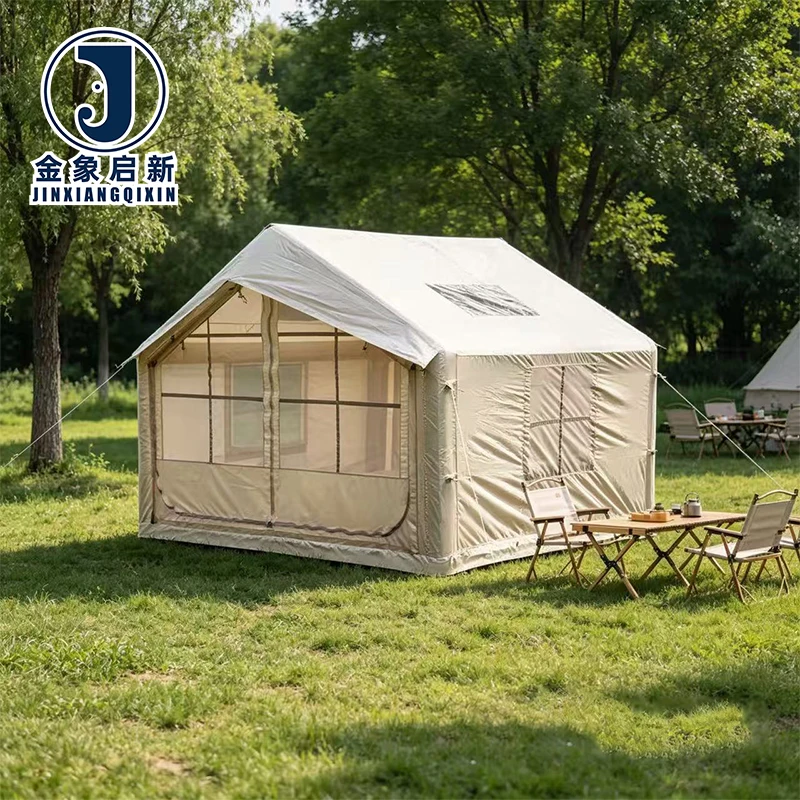
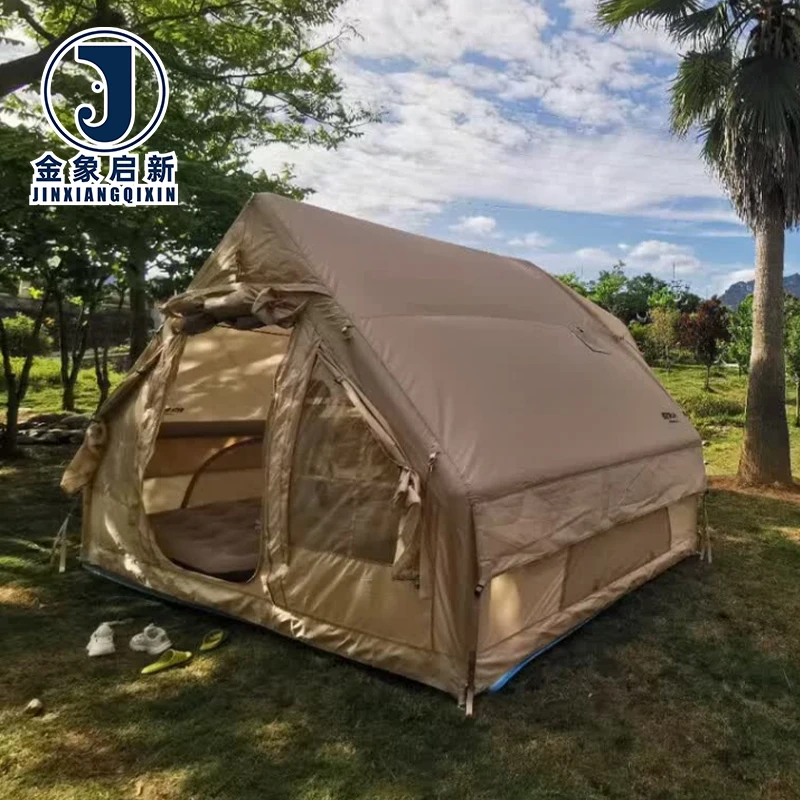
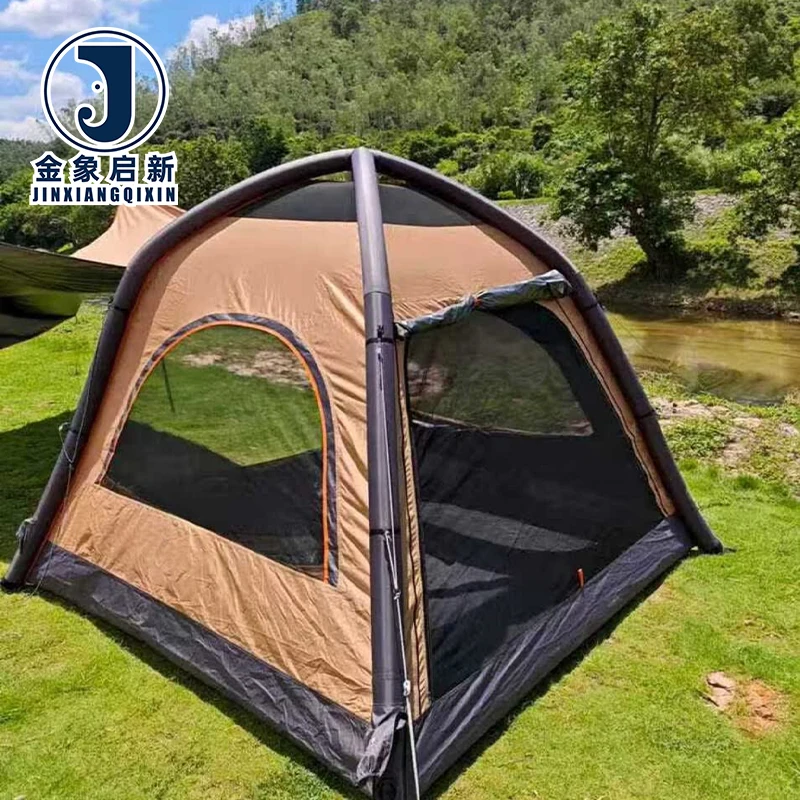
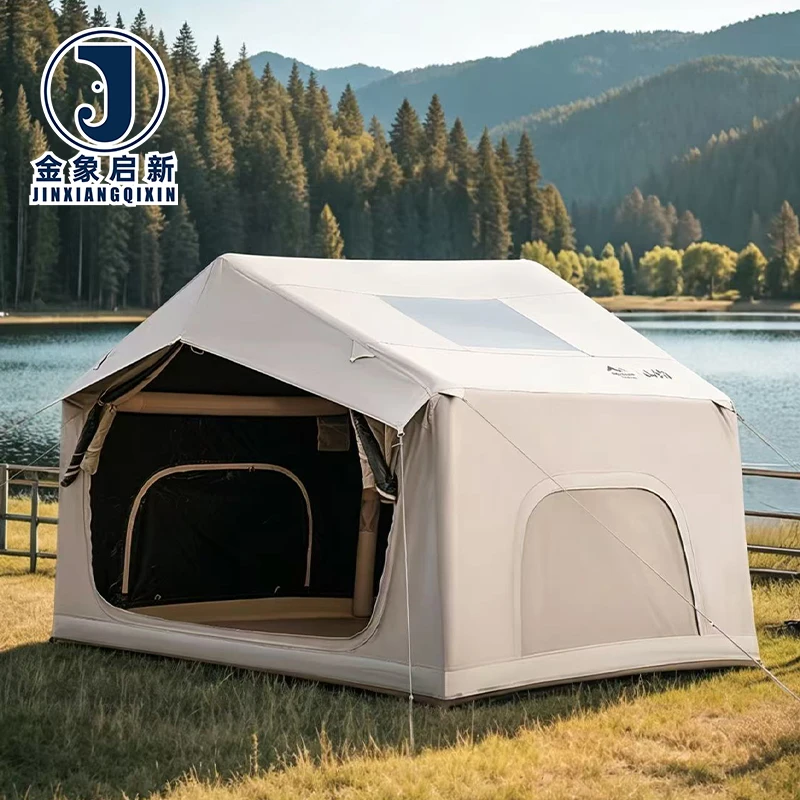
Inflatable Tent for Camping, PVC Knife-Coated Fabric, Waterproof & Fire-Retardant — engineered for commercial outdoor equipment manufacturing and temporary structure deployment. Single-layer PVC knife-coated fabric balances durability with lightweight performance; heat-sealed seams maintain structural integrity under sustained inflation pressure. UV-resistant formulation extends material lifespan by 30% compared to standard PVC. Supported by nearly 30 years of coated fabric expertise, three full production lines, and 100% pre-shipment inspection.
Description
Proven Coating Expertise — Nearly 30 years controlling coating weight and adhesion on PVC knife-coated fabric, applied directly to every roll of inflatable tent material we ship.
Technical Specifications
| Parameter | Value |
|---|---|
| Product Type | Inflatable Tent |
| Core Material | PVC Tarpaulin (PVC knife-coated fabric) |
| Key Performance | Waterproof, UV-resistant, Tear-resistant, Fire-retardant, Anti-static |
| Product Forms | Inflatable structure, 2-3 person capacity |
| Waterproof Rating | ≥5000mm H₂O (source value — verify against manufacturer catalog) |
| Tensile Strength | ≥2000N/5cm (source value — verify against manufacturer catalog) |
| Flame Retardancy | Meets EN 13501-1 standards (source value — verify against manufacturer catalog) |
| UV Resistance | Extends material lifespan by 30% compared to standard PVC (source value — verify against manufacturer catalog) |
| Customization Service | OEM & ODM (sample customization, pattern printing) |
| Quality Control System | Strict full-process quality inspection with dedicated QA&QC staff |
| Standards | ISO9001, ISO14001, ISO45001, CE, EN 13501-1 |
Application Suitability
| Application | Exposure & Requirement |
|---|---|
| Commercial outdoor equipment manufacturing | Repeated inflation cycles, flex stress at air beam seams, outdoor weathering |
| Industrial event temporary structures | High occupant load, wind shear on large surface area, rapid deployment and teardown |
| Site accommodation and emergency shelters | Continuous inflation pressure, temperature fluctuation, abrasion from ground contact |
| Equipment storage enclosures | Static load from stored goods, moisture ingress prevention, UV degradation over extended use |
Why Weld Strength Matters More Than Fabric Weight for Inflatable Tent Structures
A heavy fabric with a weak weld will fail before a lighter fabric with a properly bonded seam ever does.
When sourcing PVC for inflatable applications, buyers often fixate on GSM as the primary indicator of durability. But in air-supported structures, the internal pressure places continuous stress on every welded joint. If the heat-sealing parameters are not matched to the specific coating formulation and thickness, the seam becomes the structural weak point [NEED_CITE: tensile and tear test methods for coated fabrics per ISO 1421]. I once oversaw a batch of four-season inflatable tent fabric shipped to a Nordic client. The PVC knife-coated fabric itself held up perfectly in testing, but the air column seams split under pressure because the welding temperature was set for a different coating grade. The entire production run had to be reworked. Since then, every roll leaves our line only after a weld test coupon is pulled and measured. This is what separates a reliable Inflatable Tent aftermarket supplier from one that only quotes on weight.
How Coating Formulation Affects Heat-Seal Performance
Not all PVC coatings behave the same way under a hot wedge or high-frequency welder. The plasticiser type and loading within the PVC compound directly influence the temperature window where the coating softens enough to bond without degrading. For an Inflatable Tent aftermarket supplier managing consistent output, understanding this window is essential. Our R&D team adjusts coating formulations specifically for heat-seal applications, ensuring the material reaches optimal adhesion at temperatures your fabrication equipment can reliably maintain.
Seam Integrity Under Continuous Internal Pressure
Air beams in inflatable structures experience constant outward force, concentrating stress at every welded intersection. The bond between two fabric panels must exceed the tensile load created by operating pressure, with margin for temperature-induced pressure changes. Our production process includes in-line peel strength checks on sample welds taken from each production run [NEED_CITE: DIN 4102 fire classification for building materials]. This catches adhesion failures before the material reaches your cutting table, reducing the risk of field failures that damage your brand reputation and trigger warranty claims.
Reading Beyond the Specification Sheet
The numbers on a spec sheet tell part of the story. Tensile strength measured at ≥2000N/5cm indicates how the base fabric and coating work together under load, but this value alone does not predict how the material will behave once fabricated into a three-dimensional inflatable form. The relationship between base fabric denier, weave density, and coating penetration determines whether stress distributes evenly or concentrates at yarn crossover points. Flame retardancy meeting EN 13501-1 standards means the compound has been tested to a recognised European classification — critical for commercial installations where fire codes apply. The anti-static property reduces dust attraction during storage and use, keeping the tent surface cleaner over repeated deployments. Understanding these interactions helps you select the right material grade rather than simply the heaviest option available.
The Cost of Underspecifying Weld Parameters
When heat-seal settings are too low for the coating formulation, the weld appears intact but lacks full molecular bonding. The inflatable structure holds pressure during initial testing, then develops slow leaks or sudden seam splits once the air beam flexes under wind load or occupant movement. This failure mode is difficult to diagnose in the field because the fabric itself shows no damage — only the seam separates. For manufacturers producing Inflatable Tent products at scale, this means returns and replacements that could have been prevented by matching welding parameters to the specific material batch [NEED_CITE: weld peel strength testing protocols for coated technical textiles]. Colour variation between rolls compounds the problem: if replacement panels do not match the original batch, the entire unit looks mismatched once reassembled.
Why Buyers Source This Fabric Here
Our three full production lines and 36 sets of professional equipment handle volume orders without sacrificing the coating consistency that inflatable structures demand. The 10-person R&D team develops sample panels matched to your exact welding equipment, so you validate parameters before committing to bulk yardage. Every roll undergoes 100% inspection before dispatch, with weld test coupons pulled and documented per batch. We supply material specification sheets stating GSM, base fabric construction, and coating type for every order, so your quality team can verify incoming goods against the quotation. ISO and CE certification underpins the documentation package you need for commercial tenders and regulatory submissions.
Documentation & Verification
- Material specification sheet listing GSM, base fabric denier, coating type, and colour reference per roll
- UV and flame retardant test reports confirming EN 13501-1 classification for applicable grades
- Pre-shipment inspection record with weld peel strength test results from production batch samples
- Roll packing list with individual roll weights and dimensions for receiving verification
- ISO9001, ISO14001, ISO45001, and CE certificates included with every shipment
- Certificate of origin and customs documentation for international Inflatable Tent aftermarket supplier orders
Fabrication, Handling & Storage
- Calibrate hot wedge temperature to the specific PVC knife-coated formulation before production runs begin
- Perform peel tests on sample welds at the start of each shift to confirm bond strength on this fabric batch
- Store rolls vertically on end caps to prevent flat spots that distort the coating surface before fabrication
- Allow cold-stored rolls to reach ambient temperature before unrolling to avoid coating micro-cracking
- Use compatible PVC adhesive and patch material from the same coating family for field repairs
- Plan cutting layouts to minimise seams across high-stress air beam junctions on the inflatable structure
What We Need to Quote Your Inflatable Tent Fabric Requirement
To provide an accurate specification and lead time, share your target air beam diameter and operating pressure, the deployment climate range, and any fire classification your end market requires. Let us know the roll width that suits your cutting table and whether you need the material supplied plain or with printed branding. If you are evaluating multiple Inflatable Tent aftermarket supplier options, request a sample panel so your fabrication team can run weld tests on their own equipment before placing a production order.
Frequently Asked Questions
Q: What is the minimum order for custom colour or printed Inflatable Tent fabric?
A: Custom colours and printed patterns require a minimum run that covers line setup and colour matching. Lead times extend beyond standard stock grades to allow for sample approval and production scheduling. Request a quotation with your specific colour reference or artwork to receive exact minimums and delivery windows for your project.
Q: How do you verify the GSM weight matches the quotation before shipment?
A: Every roll is weighed and measured during pre-shipment inspection. The actual GSM is recorded and compared against the quoted specification. Rolls that fall outside the agreed tolerance are held and replaced. The inspection record accompanies the shipment so your receiving team can cross-reference without conducting independent weight tests.
Q: What is the difference between hot wedge and high-frequency welding on this PVC material?
A: Hot wedge welding uses a heated element to melt the coating surfaces before pressing them together, suited to long continuous seams. High-frequency welding uses electromagnetic energy to heat the PVC molecules directly, producing faster cycles on shorter seams. Both methods work with our PVC knife-coated fabric, but parameter settings differ. We provide recommended starting temperatures for each technique with sample orders.
Q: How do I confirm the flame retardant grade meets my market requirements?
A: Our material is tested to EN 13501-1 standards where flame retardant grades are specified. Different markets and installation types require different classifications. Share the specific fire code or standard your end installation must comply with, and we will confirm whether the available grade meets that requirement or discuss alternative formulations.
Related products
-
Aufblasbares Vier-Jahreszeiten-Event-Zelt Outdoor Wasserdicht PVC Schnelles automatisches Öffnen 6-8 Personen Individuelles Logo
Read more -
Inflatable Four-season Camping Tent-PVC Coated Waterproof Eco-Friendly Quick Inflation CE Certified ODM/OEM Accepted
Read more -
Premium Four-season PVC Inflatable Tents for Camping Easy-to-Use Spacious Portable Waterproof Outdoor Tent with Pump
Read more -
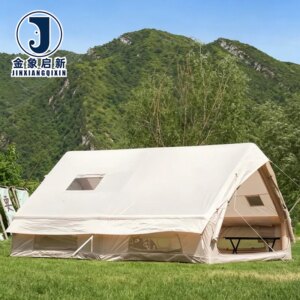
Inflatable Camping Tent PVC Four-Season Waterproof Outdoor Air Tent with Quick Automatic Opening for 2-3 Person
Read more