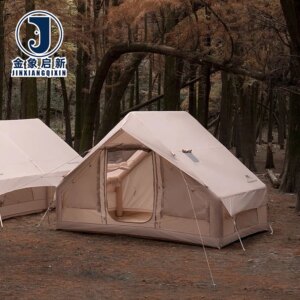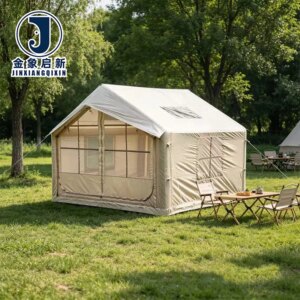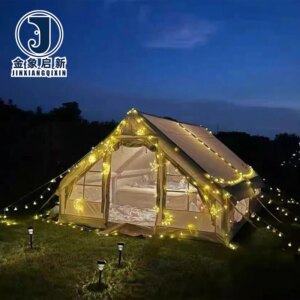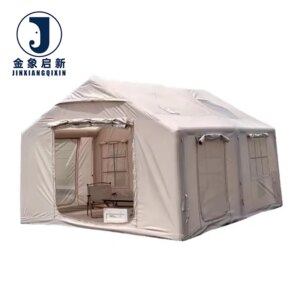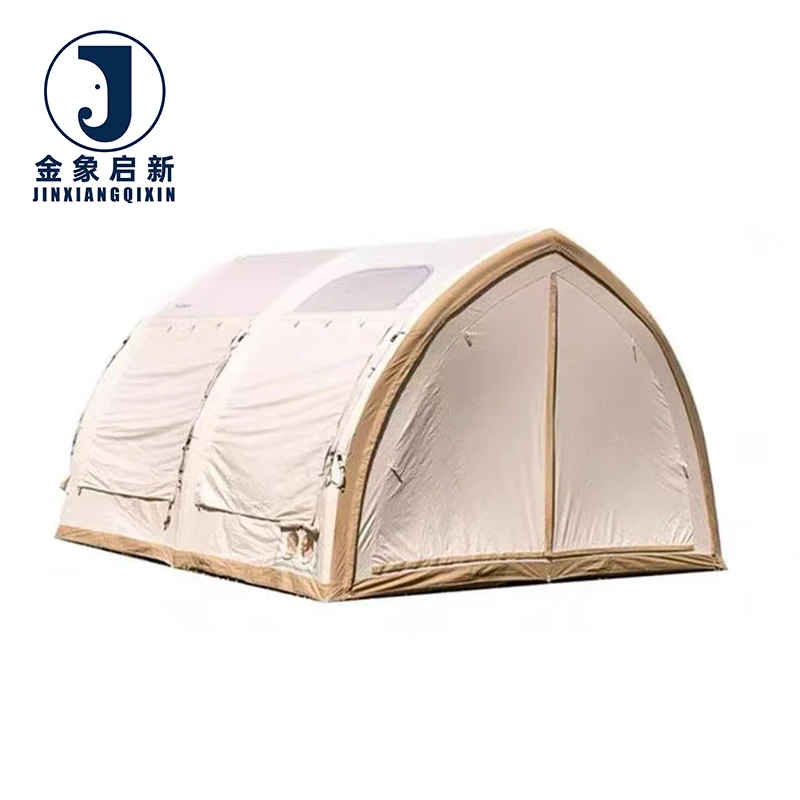
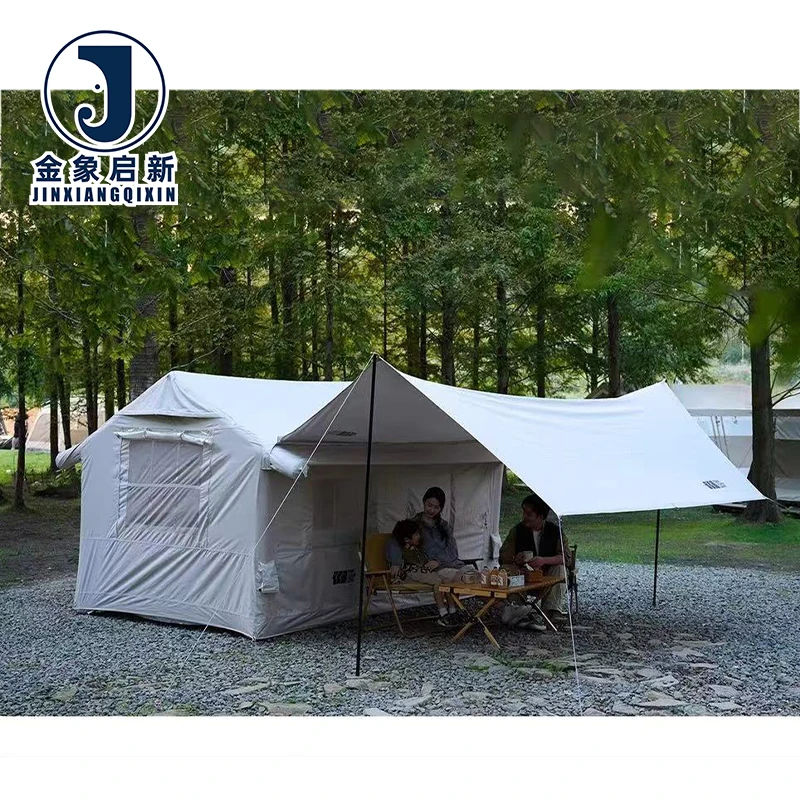
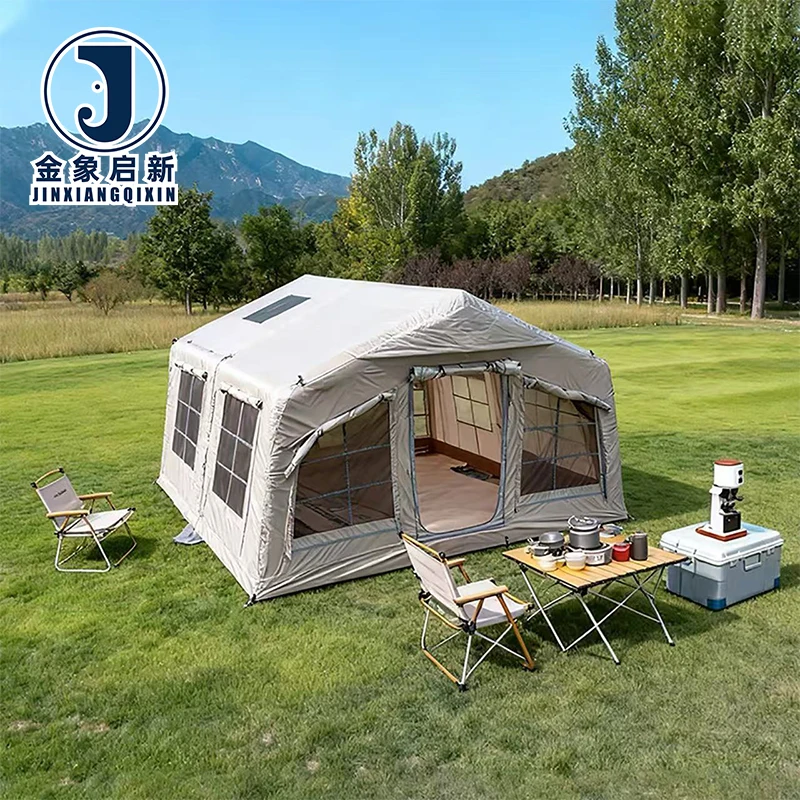
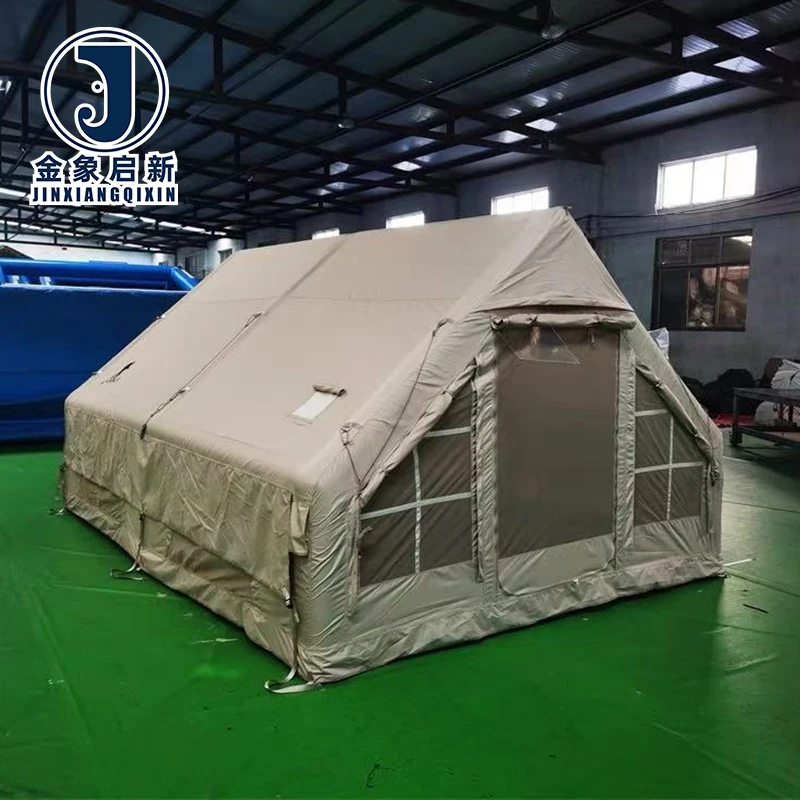
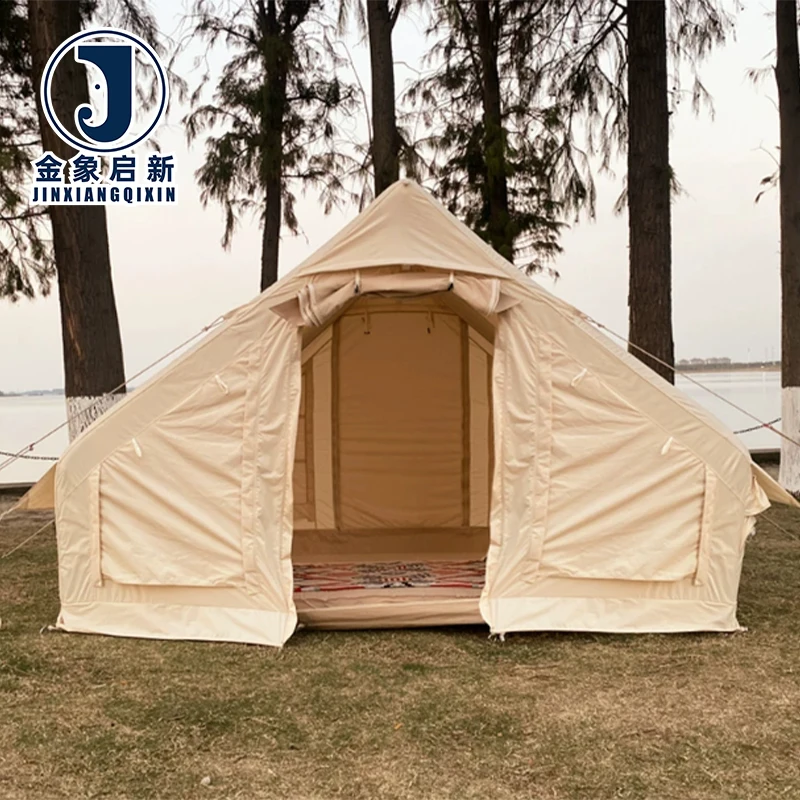
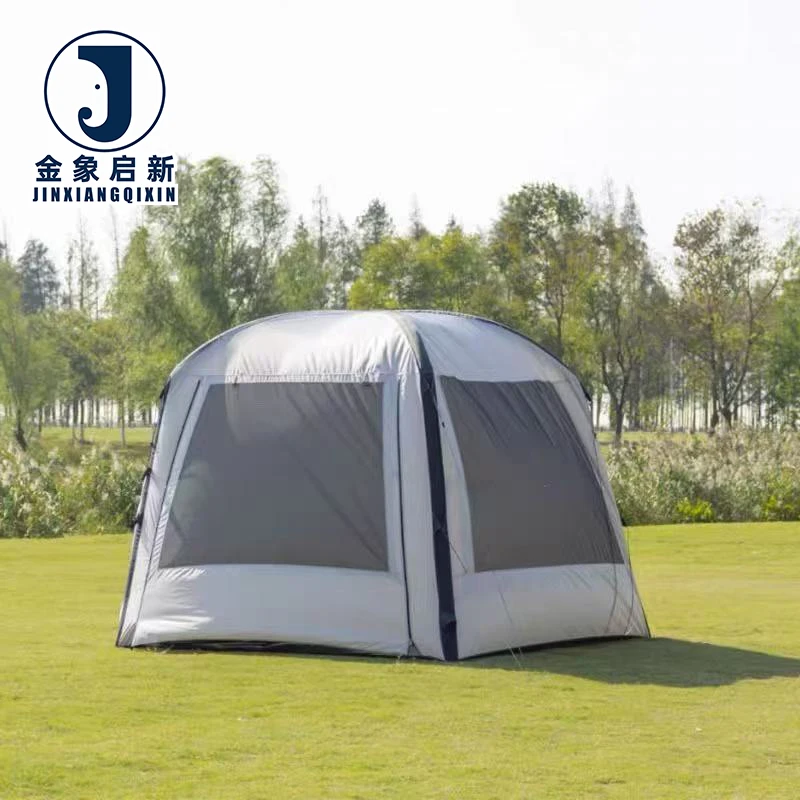
PVC Inflatable Tent with waterproof, UV-resistant and tear-resistant tarpaulin fabric — engineered for rapid automatic deployment across commercial and industrial outdoor sites.
- Single-layer construction ensures compact packing and efficient containerized bulk shipping
- In-house R&D supports custom dimensions, color patterns and logo printing to match site plans
- Four-season weather protection for construction shelters, logistics staging and camp accommodation
- 100% pre-shipment inspection with dedicated QA/QC at every production stage
Description
Proven Coating Control — Deep process mastery over PVC adhesion and weight consistency delivers inflatable tent fabric you can specify with confidence, backed by full in-house testing.
Technical Specifications
| Parameter | Value |
|---|---|
| Product Type | Inflatable Tent Fabric |
| Core Material | PVC Tarpaulin |
| Key Performance | Waterproof, UV-resistant (test basis not stated in source), Tear-resistant, Four-Season Use |
| Flame Retardant | Available in flame retardant grades — confirm the grade required for your market |
| Anti-Static | Available upon specification — surface resistance standard to be confirmed |
| Construction | Single-layer inflatable structure with automatic opening mechanism |
| Customization | OEM & ODM — dimensions, colour, pattern printing, logo, material thickness |
| Quality Control | 12 checkpoints, 24-hour pressure testing for airtightness |
| Production Facility | 9,180 m², 3 full production lines, 36 sets of processing equipment |
| R&D Team | 10 technicians |
| Standards | ISO 9001, ISO 14001, ISO 45001, CE |
Application Suitability
| Application | Exposure & Requirement |
|---|---|
| Construction site temporary shelters | Prolonged sunlight, wind-driven rain, rapid deploy and strike cycles |
| Logistics mobile storage facilities | Abrasion from loading equipment, dust ingress, waterproof integrity |
| Industrial camp auxiliary accommodation | Continuous occupancy, thermal comfort, ventilation compatibility |
| Commercial emergency preparedness | Immediate inflation, all-weather reliability, repeated packing and redeployment |
| Outdoor industrial settings | Sustained UV exposure, chemical splash, temperature fluctuation across seasons |
When "Waterproof and UV-Resistant" Arrives Without the Paperwork
A fabric claim without a matching test report is a liability, not a feature.
Sourcing a custom Inflatable Tent for a remote construction site or an industrial camp often means trusting the supplier’s data sheet. Yet too many buyers discover after delivery that the UV treatment was an additive blended into the coating rather than a verified finish, or that the waterproof rating was never measured against a recognised standard. We have seen projects delayed because the local building inspector asked for a fire classification certificate that nobody thought to request during procurement [NEED_CITE: DIN 4102 fire classification for building materials]. An Inflatable Tent manufacturer that documents every claim removes this risk before the container ships.
From Raw PVC Tarpaulin to a Finished Inflatable Structure
Most Inflatable Tent suppliers assemble from bought-in fabric. Here, the PVC tarpaulin core material is produced on-site, giving full control over coating weight, adhesion to the base fabric, and surface finish. This vertical integration means the same team that formulates the coating also runs the 24-hour pressure test on the finished inflatable unit, closing the loop between material behaviour and structural performance.
Automatic Opening Mechanism for Rapid Site Deployment
Construction crews and emergency response teams cannot afford hours of manual assembly. The automatic opening mechanism engineered into this PVC Inflatable Camping Tent allows a single operator to inflate and secure the structure in a fraction of the time needed for pole-and-sleeve alternatives. The single-layer construction keeps packed volume low, which matters when multiple units must share container space on international shipments [NEED_CITE: tensile and tear test methods for coated fabrics per ISO 1421].
How Base Fabric Density and Coating Weight Interact
Tensile and tear strength in a PVC tarpaulin are governed by two variables working together: the denier and weave density of the polyester base fabric, and the mass of PVC coating applied to each face. A heavier coating adds abrasion protection and waterproof integrity but also increases stiffness, which affects how the fabric folds around an inflatable beam under pressure. The 10-person R&D team balances these variables by adjusting base fabric specification and coating formulation to match the intended inflation pressure and deployment climate, rather than simply chasing a higher GSM number. Flame retardant and anti-static treatments, where specified, are integrated into the coating compound so they remain effective through flex cycles and weather exposure rather than sitting as a surface wash that degrades.
The Hidden Cost of Specifying on Price Alone
Choosing an inflatable tent fabric purely on unit cost often surfaces problems at the worst possible moment. A coating that is lighter than the quoted GSM may pass a casual hand-feel check but fails the 24-hour pressure test because the base fabric lacks sufficient encapsulation. Batch-to-batch colour variation becomes visible only after three shelters are erected side by side on an industrial camp, forcing a full replacement order. Seams that are welded at incorrect temperatures delaminate before the fabric itself shows wear, leaving a structure that cannot hold pressure on a windy site [NEED_CITE: weld strength testing for coated technical textiles]. These failures trace back to a supplier who treated material specification as a marketing exercise rather than a production discipline.
Why Procurement Teams Source Their Inflatable Tent Fabric Here
Deep process control over PVC coating weight and adhesion, developed across nearly 30 years of focused coated-fabric production, ensures the material inside every inflatable beam performs as specified. Three full production lines and 36 sets of professional equipment support bulk order volumes with reliable on-time delivery. The 10-technician R&D team handles custom dimensions, pattern printing, and material thickness adjustments, delivering confirmed samples before mass production begins. Dedicated QA and QC staff run 12 checkpoints through every production stage, including the 24-hour airtightness pressure test on every finished unit, so 100 percent inspection is a routine rather than a promise. Full export documentation — from material spec sheets to certificates of origin — ships with every order, eliminating customs surprises.
Documentation & Verification
- Material specification sheet stating base fabric denier, coating type, and colour reference
- Batch-specific test reports for UV and flame retardant grades matched to your order
- ISO 9001, ISO 14001, ISO 45001, and CE certificates covering production and compliance
- Pre-shipment inspection record including 24-hour pressure test result per unit
- Roll packing list and certificate of origin for customs clearance support
Fabrication, Handling & Storage
- Hot-air welding temperature must match the specific PVC coating formulation to prevent delamination at beam joints
- Store rolled single-layer units vertically in a dry, shaded area to avoid permanent crease marks on the coating surface
- Use mild, non-solvent cleaners on the PVC surface to preserve any applied flame retardant or anti-static treatment
- Allow cold-stored fabric to reach ambient temperature before inflation to avoid low-temperature coating stiffness and cracking
- Plan cutting layouts around the custom ordered dimensions to minimise off-cuts and maximise material yield per roll
Request a Specification Match
Share the deployment environment — expected wind load, temperature range, and any local fire safety classification — so the material grade can be matched precisely. Confirm whether you need finished inflatable structures or fabric rolls for your own assembly line, and specify the custom dimensions, colour references, and pattern printing requirements. Sample development is available to validate material feel, weld behaviour, and inflation performance before committing to a production order.
Frequently Asked Questions
Q: What test evidence supports the UV-resistant and flame-retardant claims on this inflatable tent?
A: Batch-specific test reports are issued for orders where UV or flame retardant treatment is specified. The reports reference the applicable standard and are matched to the production batch number on your shipment, so site inspectors can verify compliance directly from the documentation pack.
Q: How do you control colour consistency across multiple units in the same order?
A: All units in a single order are produced from the same coating batch using calibrated colour references. The 12-checkpoint QA process includes visual and instrumental colour comparison before units leave the production line, reducing the risk of visible variation when shelters are erected side by side.
Q: What customisation is available for dimensions, colour, and branding?
A: Dimensions, material thickness, colour, pattern printing, and logo placement are all configurable through the OEM and ODM service. The R&D team prepares a sample within a short lead time for approval before mass production, ensuring the finished inflatable tent matches your design specification.
Q: How is airtightness verified before shipment?
A: Every finished inflatable structure undergoes a 24-hour pressure test at the specified operating pressure. Units that do not hold pressure are reworked and retested. The inspection result is recorded in the pre-shipment documentation that accompanies your order.
Q: What documentation ships with each order?
A: Each shipment includes a material specification sheet, applicable test reports, ISO and CE certificates, a pre-shipment inspection record with pressure test results, a detailed packing list, and a certificate of origin to support customs clearance in your destination market.
Related products
-
Inflatable Camping Tent PVC Four-Season Waterproof Outdoor Air Tent with Quick Automatic Opening for 2-3 Person
Read more -
Inflatable PVC Camping Tent Four-Season Waterproof CE Certified Quick Automatic Opening 3000mm+ Factory Direct Sale
Read more -
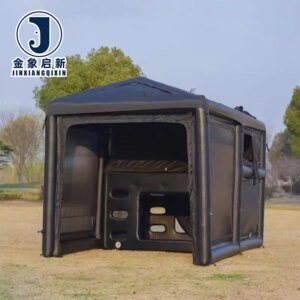
Premium Four-season Inflatable Tents for Camping Easy-to-Use Spacious Portable Waterproof Outdoor Tent Quick
Read more -
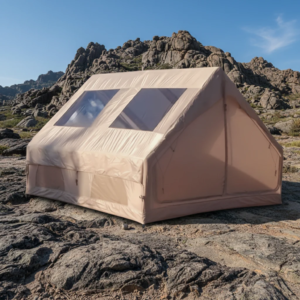
High Quality Four-Season Inflatable Tent for Camping Durable PVC Material All-Weather Resistance Quick Automatic Opening
Read more