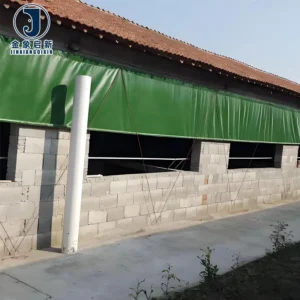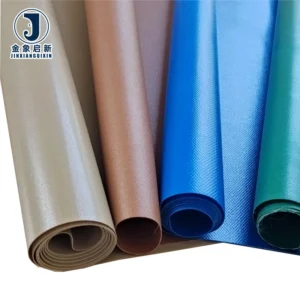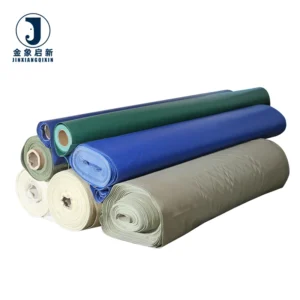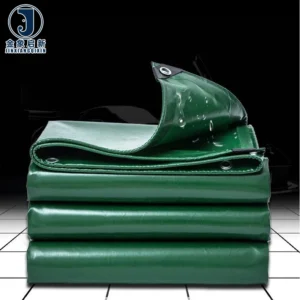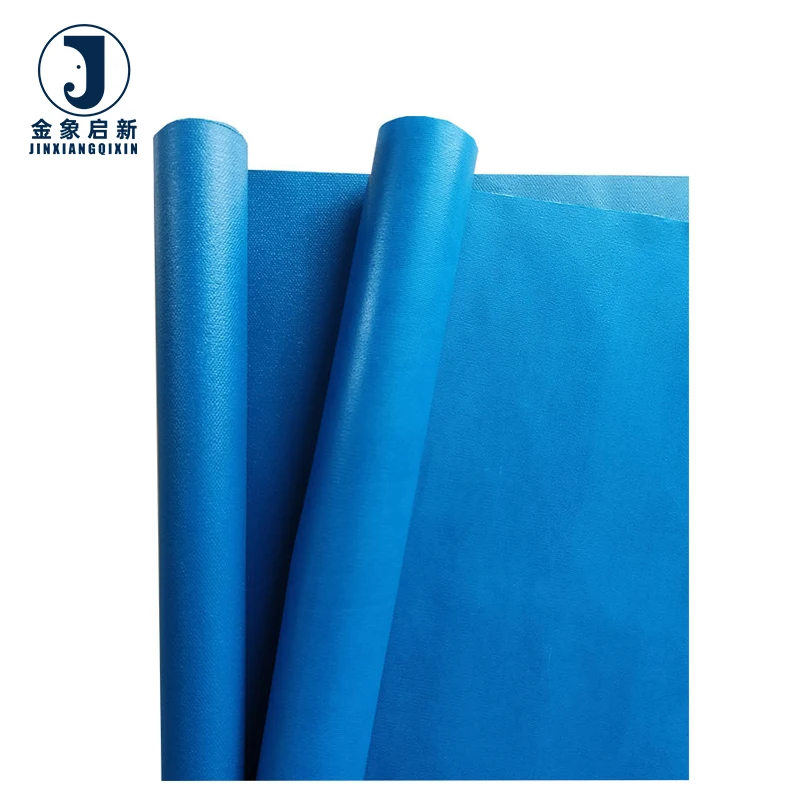
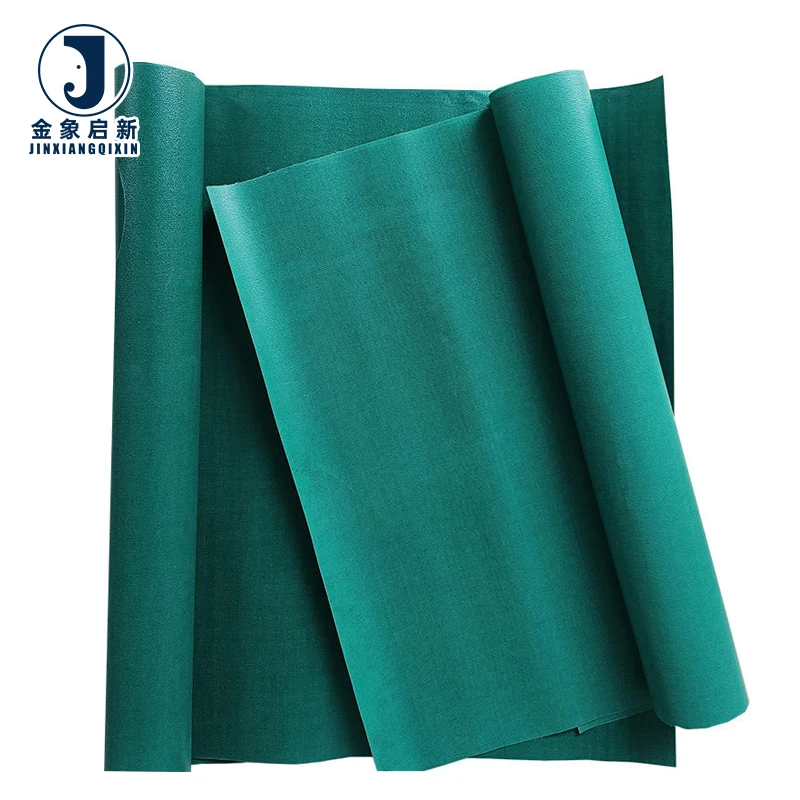
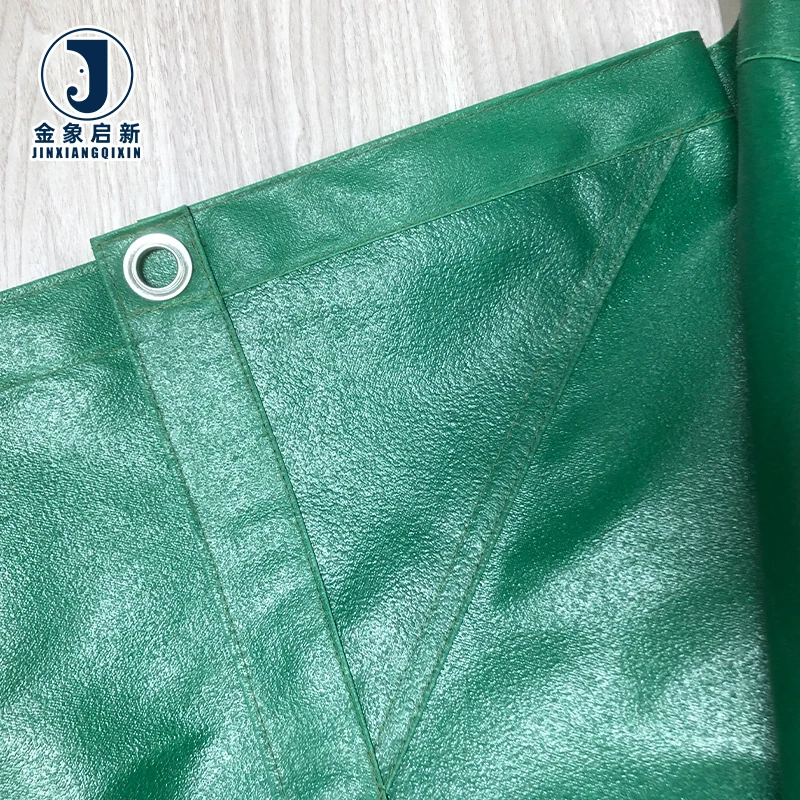
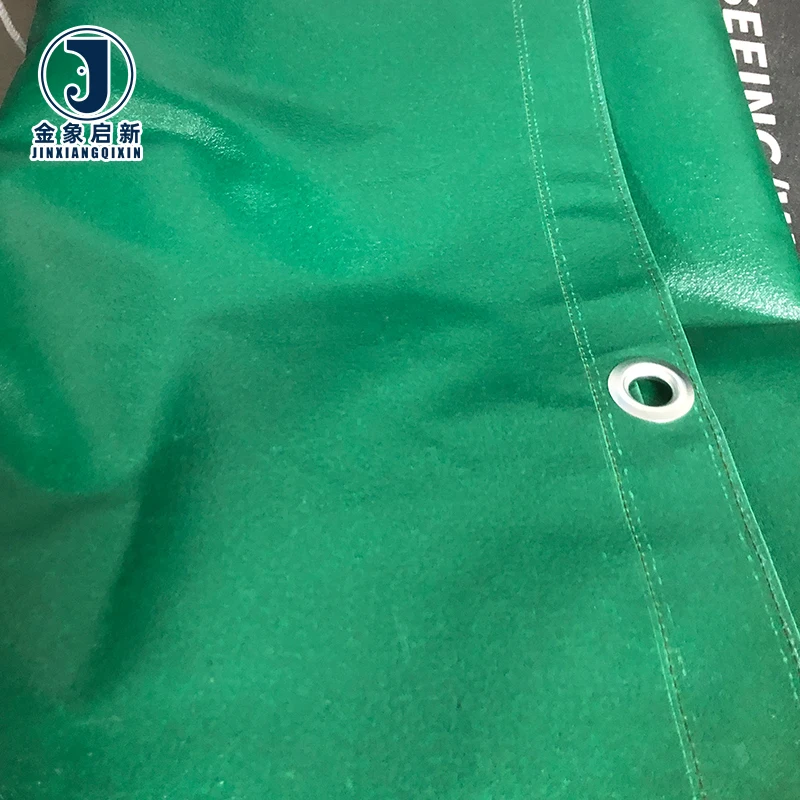
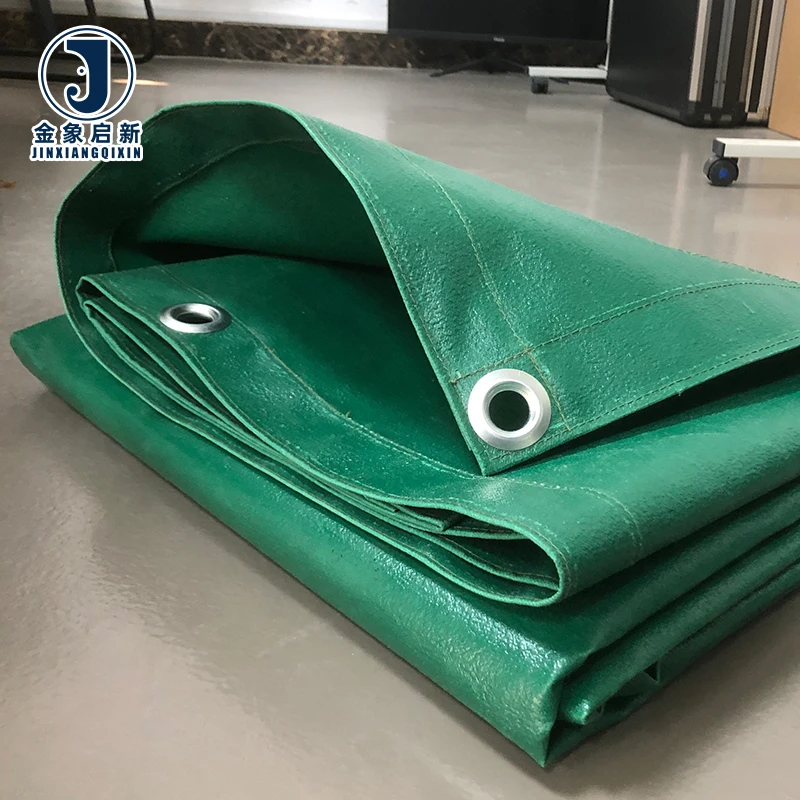
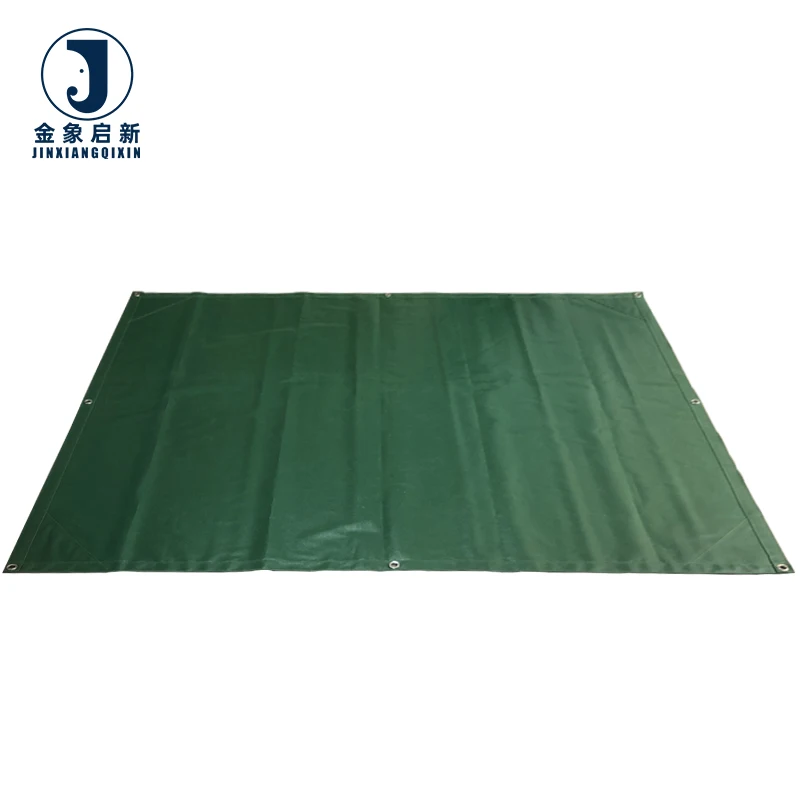
PVC Coated Tarpaulin Roll, 350–750gsm, Hot-Melt Coated — available in 0.32mm to 0.65mm thickness with high-tenacity polyester mesh base for reliable tear and tensile performance across applications.
- Laminated and hot-melt coating options ensure strong PVC-to-fabric adhesion and consistent weld seam behaviour during fabrication
- Custom widths, colours, pattern printing and specialist treatments including flame retardant, anti-static, anti-cold and anti-mildew grades available
- Full material specification sheet, pre-shipment inspection record and test documentation provided with every order
Backed by nearly 30 years of coating process control, three full production lines for bulk capacity, and dedicated QA inspection at every stage before dispatch.
Description
Coating Process Control — Three full production lines with 36 sets of equipment support batch-to-batch GSM and colour consistency across the PVC coated tarpaulin roll range.
Technical Specifications
| Parameter | Value |
|---|---|
| Product Type | PVC Coated Tarpaulin |
| Material | PVC + High-strength polyester mesh fabric |
| Coating Technology | Laminated technology & Hot-melt Coating technology |
| Weight (GSM) | 350gsm, 420gsm, 500gsm, 550gsm, 600gsm, 750gsm |
| Total Thickness | 0.32mm, 0.35mm, 0.4mm, 0.45mm, 0.5mm, 0.65mm |
| Roll Width | 2m, 2.1m |
| Roll Length | 75m (for 2m width), 50m (for 2.1m width) |
| Colour Options | Blue, Red, Yellow, Light blue, Grey (Customized) |
| Key Features | Waterproof, cold crack resistance, anti-mildew, high tenacity polyester yarns, good flexibility, best color fastness |
| Special Treatments | Flame retardant (grade not stated — confirm required standard), Anti-static (standard not stated), Anti-cold, 3P |
| Service Life | Suited to extended outdoor exposure under normal circumstances |
| Standards | ISO, CE |
Application Suitability
| Application | Exposure & Requirement |
|---|---|
| Construction site enclosure | Constant UV and weather exposure, wind load, scaffolding abrasion, requires high tensile stability |
| Tent and awning fabrication | Roll stock cutting and welding, colour matching across panels, flexibility in varied temperatures |
| Truck and trailer side curtains | Continuous road vibration, flexing at fold points, fuel splash, tie-down abrasion |
| Agricultural and pond covers | Permanent water contact, soil chemistry, biological growth risk, puncture from sharp edges |
| Equipment and pallet wraps | Static load bearing, warehouse dust and moisture, repeated handling and folding |
| Inflatable and membrane structures | Air pressure tension, UV exposure, seam integrity under inflation stress |
Why a Quoted GSM Does Not Guarantee the Roll You Receive
GSM stated on paper means nothing if the roll arriving at your warehouse weighs less.
Buyers frequently specify a 500gsm or 600gsm PVC coated tarpaulin roll based on a quotation, only to find the delivered material feels lighter and tears more easily than the sample. The gap comes from production variability in coating weight and base fabric denier, compounded when no stage-by-stage inspection holds the line. A lighter roll saves cost at the factory gate but fails at the weld or tears under load [NEED_CITE: common field failures in coated fabric applications linked to GSM variance]. Verifying weight on arrival is a basic check that protects your downstream fabrication and end-user reputation.
Laminated Versus Hot-Melt Coating: What It Means for Your End Product
The PVC coated tarpaulin roll range is produced using both laminated and hot-melt coating technologies. Laminated construction bonds a pre-formed PVC film to the polyester mesh under heat and pressure, yielding a smooth surface that suits printing and gives predictable thickness across the roll. Hot-melt coating applies molten PVC directly into the mesh weave, forcing the compound through the yarn structure for stronger mechanical adhesion.
For applications where welded seams carry structural load — such as truck side curtains or inflatable structures — hot-melt coated rolls generally deliver higher peel strength at the weld zone. Laminated rolls suit applications where surface appearance and print clarity are the priority, such as awning panels and tent canopies. Specifying the coating method at inquiry stage ensures the PVC coated tarpaulin roll matches your fabrication process.
Colour Consistency Across Rolls in a Single Order
Batch-to-batch colour variation is a recurring complaint from buyers who install multiple rolls side by side on a single project. A tent manufacturer cutting panels from three different rolls cannot tolerate visible shade shifts once the structure is erected. The same applies to distributors reselling cut-to-size covers under a single colour code to their retail network [NEED_CITE: colour matching standards in coated textile production].
Maintaining colour consistency requires locked pigment formulations, controlled coating temperature, and inline visual checks at each production stage. When ordering multiple rolls of the same PVC coated tarpaulin roll colour, request that all rolls come from a single production run to minimise any shade drift.
Reading GSM, Thickness, and Base Fabric Together
Weight in GSM and total thickness in millimetres are often treated as interchangeable indicators of strength, but they measure different things. GSM captures the total mass per square metre — base fabric plus both coating layers — while thickness reflects the caliper distance across the composite. Two rolls can share the same GSM but differ in thickness if one uses a denser base fabric with less coating and the other uses a lighter mesh with a heavier PVC layer.
Tensile and tear strength depend heavily on the base fabric: the denier of the polyester yarns and the warp-and-weft density of the mesh. A 550gsm roll built on a 1000-denier, 18×18 mesh will resist tearing far better than a 550gsm roll on a lighter 500-denier, 14×14 mesh. Always request the base fabric specification alongside the GSM to make an informed grade selection. Coating method further influences how well the PVC adheres under weld stress, which matters when the finished product is fabricated with heat-welded seams rather than stitched panels.
What Happens When the Wrong Grade or Coating Is Specified
Choosing a lighter GSM to save cost on a heavy-duty application often results in premature failure at stress points — the fabric tears where a truck load flexes or where a construction enclosure catches sustained wind. The material itself may survive, but the welded seams fail first because the coating lacks the adhesion strength to hold under repeated movement.
Conversely, specifying a heavy 750gsm roll for a lightweight awning application adds unnecessary weight that strains the supporting frame and makes on-site handling difficult. Colour mismatches between rolls in the same shipment force fabricators to sort and reject panels, increasing waste and delaying project delivery [NEED_CITE: cost of rework due to material specification errors in coated fabric procurement]. These are not quality defects — they are specification errors that a detailed inquiry process prevents.
Why Source PVC Tarpaulin Rolls From This Facility
Three full production lines with 36 sets of professional equipment give the capacity to handle bulk roll orders with reliable scheduling, whether you need stock grades or custom colours and widths.
A 10-person R&D team manages material selection, sample development, and custom specification — producing samples within days so you can confirm weight, colour, and hand-feel before committing to a production run.
Dedicated QA/QC runs at every production stage, with 100% inspection before any roll ships. The pre-shipment inspection record documents the actual measured GSM and visual condition, not just a pass stamp.
Deep process control over coating weight and adhesion, developed across nearly 30 years focused exclusively on coated fabric, means the coating chemistry and application parameters are optimised for each grade rather than treated as a single recipe.
Documentation & Verification
- Material specification sheet confirming exact GSM, base fabric denier, coating type, and colour reference for each roll
- Weight verification per roll measured against the stated GSM before dispatch, recorded in the pre-shipment inspection report
- Test reports for flame retardant and anti-UV grades where applicable — confirm the standard required for your market at inquiry
- Roll packing list detailing quantity, dimensions, batch number, and net/gross weight for container planning
- Certificate of origin and customs documentation prepared to match your import requirements
- ISO and CE certificates included in the shipment documentation package
Fabrication, Handling & Storage
- Hot-melt coated rolls tolerate higher weld temperatures — set your heat welder to match the coating method to avoid burning through the PVC layer
- Laminated rolls produce a cleaner surface for printing — handle with clean gloves to avoid transferring oils onto the gloss or matte finish
- Store 2m and 2.1m rolls upright on end cores in a shaded, ventilated area to prevent flat-spotting and permanent crease marks
- Allow cold-stored rolls to reach ambient temperature before unrolling — the anti-cold treatment improves flexibility but does not eliminate thermal stiffness
- Cut panels from the same roll batch when colour matching is critical — note the batch number on each roll label before cutting begins
- For welded seams on 600gsm and 750gsm grades, increase dwell time to ensure full coating penetration at the overlap zone
Preparing Your Inquiry
To receive an accurate specification recommendation, share the end-use application and the environmental conditions the fabric will face — including UV exposure, temperature range, and any chemical contact. If your market requires specific fire classification or anti-static certification, state the standard so the correct treatment grade is quoted.
Specify the roll width, colour, and whether you need the PVC coated tarpaulin roll supplied as full rolls or cut to finished dimensions. Providing your annual volume and preferred shipment schedule helps align production runs for the best batch consistency.
Frequently Asked Questions
Q: How is the GSM of each roll verified before shipment and how can I recheck on arrival?
A: Every roll is weighed and measured during 100% pre-shipment inspection, with the actual GSM recorded on the inspection report included in your documentation. On arrival, cut a one-metre-square sample from any roll, weigh it on a calibrated scale, and compare to the stated GSM. Any discrepancy beyond normal tolerance should be reported immediately with the batch number.
Q: How do you control colour consistency across multiple rolls in the same order?
A: All rolls in a single order are produced from the same pigment batch using locked formulation parameters. Inline visual checks monitor shade at the coating stage, and a reference colour swatch is retained for comparison. For critical projects, request that all rolls ship from one production run and keep the batch labels for traceability.
Q: What custom widths, roll lengths, and minimum quantities apply to non-stock grades?
A: Standard rolls ship at 2m by 75m or 2.1m by 50m, but custom widths and lengths are available subject to production line capability. Minimum quantities for custom colours or non-stock GSM grades depend on the coating run setup. Contact the sales team with your target width, length, and annual volume to receive a confirmed minimum and lead time.
Q: How do I specify flame-retardant or anti-UV treatment and what test reports will I receive?
A: State the fire classification or UV test standard required by your market or project specification at the inquiry stage — for example, the building code classification or the UV exposure duration needed. The R&D team will match the treatment to that standard, and the applicable test report will be included in your shipment documentation package.
Q: What is the difference between laminated and hot-melt coated PVC tarpaulin?
A: Laminated construction bonds a pre-formed PVC film to the polyester mesh, giving a smooth surface suited to printing and consistent thickness. Hot-melt coating forces molten PVC into the mesh weave for stronger mechanical adhesion between layers. Hot-melt rolls generally deliver higher peel strength at welded seams, while laminated rolls offer better surface finish for printed graphics.
Related products
-
PVC Tarpaulin Industry Fabric PVC Tarpaulin 620gsm for Fish Pond Factory Swimming Pools Cover PE Tarpaulin
¥0.90 Select options This product has multiple variants. The options may be chosen on the product page -
Stock PVC Tarpaulin Fabric Rolls 500D*500D 18*17 Hot Selling Colors in Stock China Manufacture Wholesale Fabrics Best Price
¥1.26 Select options This product has multiple variants. The options may be chosen on the product page -
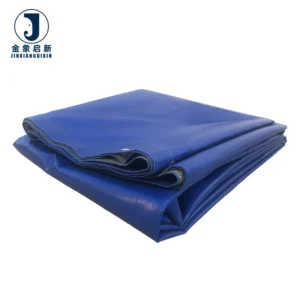
Hot Selling Heavy Duty Waterproof Large Camping Tarp Outdoor Use 500gsm Pvc Laminated Tarpaulin Tent
¥3.20 Add to cart -
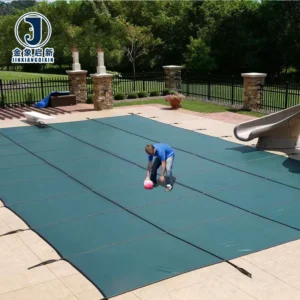
JX Manufacturer Direct Sales PVC Coated Swimming Pool Cover. Durable Waterproof and UV Resistant Floor Swimming Pool Cover Cloth
¥1.78 Select options This product has multiple variants. The options may be chosen on the product page