Three full production lines and 36 equipment sets support bulk roll orders with reliable lead times, backed by 100% pre-shipment inspection before dispatch.
Description
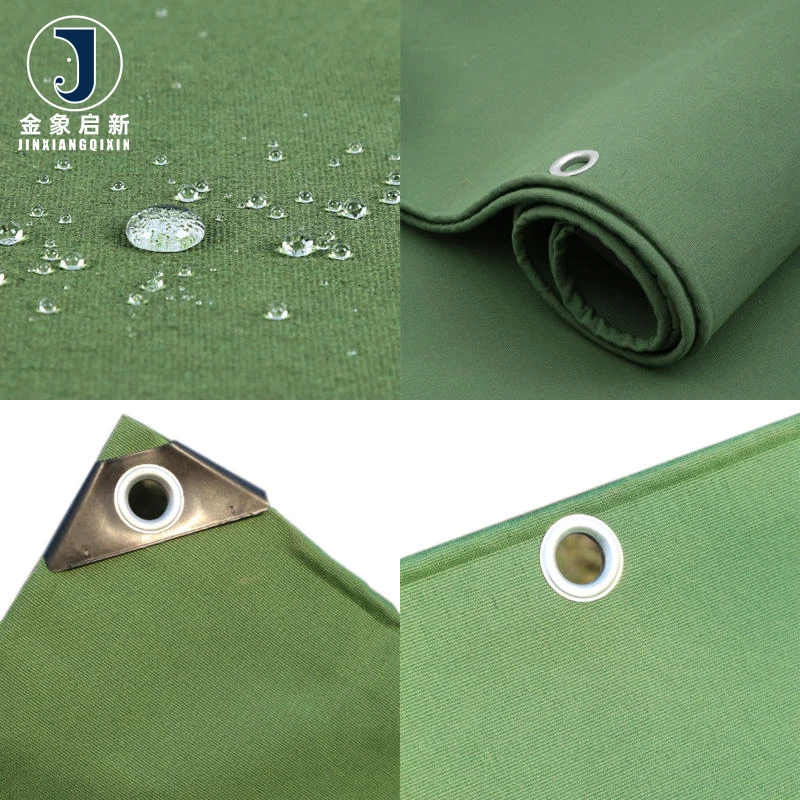
Process Control Over Coating Weight — every roll of this PVC coated canvas tarpaulin is verified against its stated GSM before dispatch, ensuring the material you receive matches the specification you approved.
Technical Specifications
| Parameter | Value |
|---|---|
| Product Type | Canvas Tarpaulin |
| Material | Polyester cotton industrial textile, 8-12 strands fine cotton yarn |
| Weight | 600 GSM |
| Thickness | 0.5mm / 0.6mm / 0.7mm |
| Roll Size | 2m width × 100m length |
| Color | Army Green Camouflage / Custom |
| Finish | PVC coated, glossy or matte available |
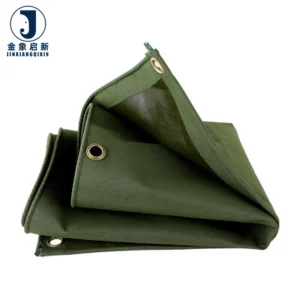
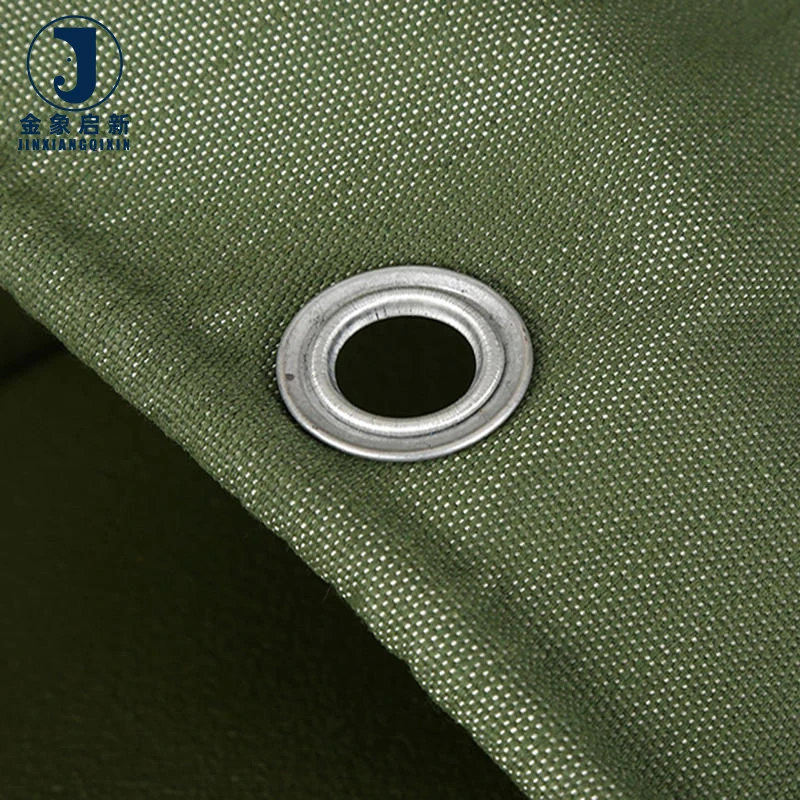
| Reinforcement | Rust proof aluminum eyelets every 1 meter at corners and hem; folding and seams welded and sewn with poly ropes |
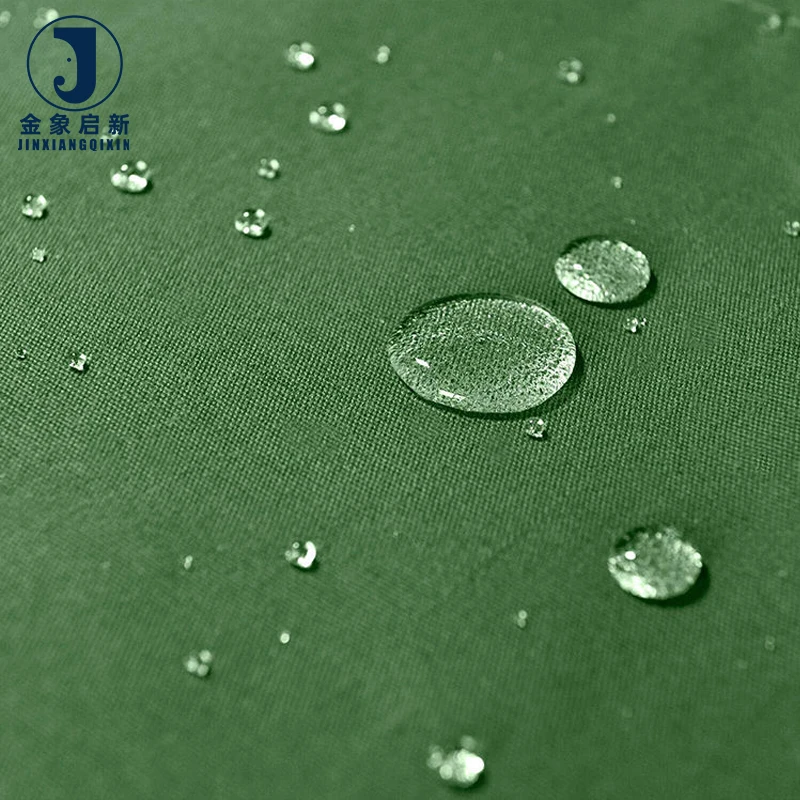
| Key Features | Wear-resistant, corrosion-resistant, tensile-resistant, high- and low-temperature resistant, UV resistant, mold resistant, shrink proof |
| Certifications | CE, ISO |
Application Suitability
| Application | Exposure & Requirement |
|---|---|
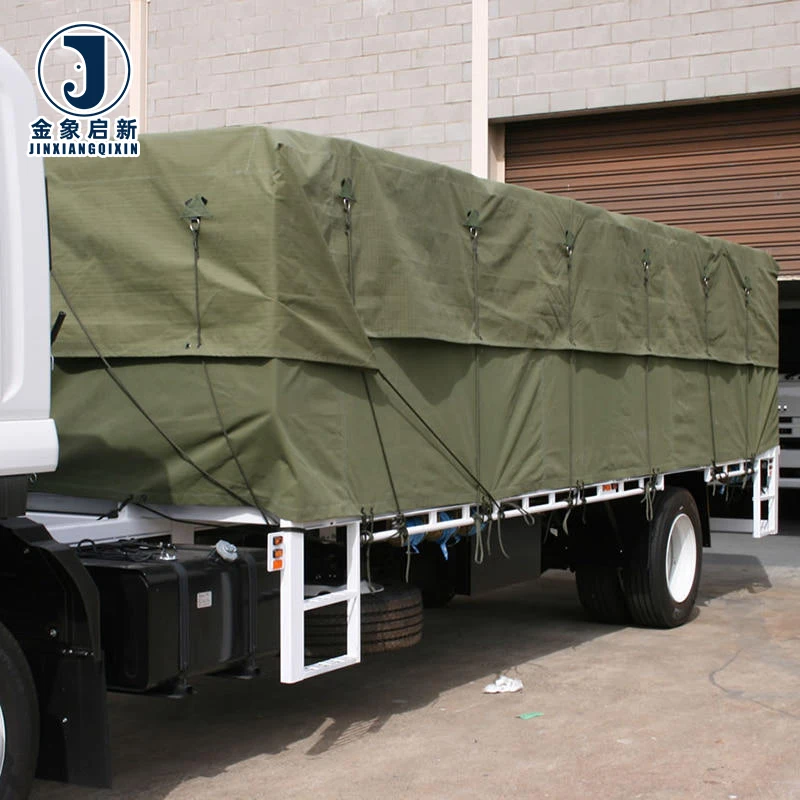
| Asphalt truck cover | Constant road abrasion, hot bitumen contact, repeated flexing at tie-down points |
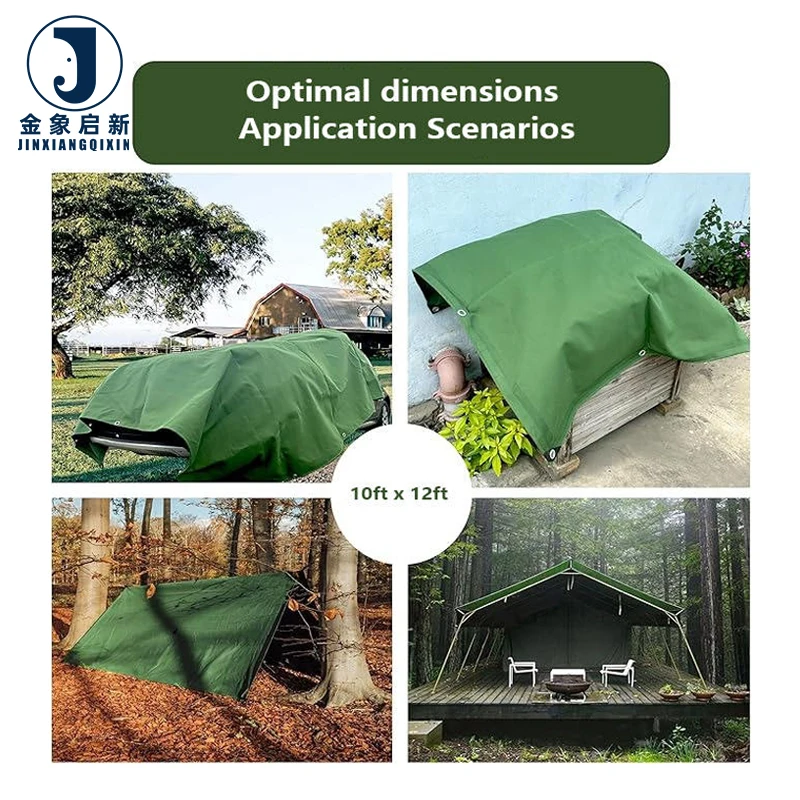
| Construction equipment cover | UV exposure, dust ingress, wind loading on stockpiles |
| General transport trailer cover | Weather exposure, tie-down tension, load shift friction |
| Open-air stockpile cover | Rain pooling, UV degradation, extended static deployment |
| Tent fabrication | Structural tension, seam stress, repeated erection and teardown |
Why the Canvas Tarpaulin Aftermarket Supplier You Choose Defines Cover Life
The difference between a cover that lasts and one that fails early is rarely the fabric itself — it is the coating adhesion, the seam construction, and whether the roll you receive matches what was quoted.
In our workshop, we have seen heavy-grade coated rolls fail at the weld line while the surrounding fabric remained intact. The seam was the weakest point, not the material. For asphalt truck covers cut to generic dimensions, the corner hems tear within weeks because the eyelet spacing did not account for the specific trailer geometry. These are not material failures. They are specification and fabrication failures, and they cost more than the original order. [NEED_CITE: tensile and tear test methods for coated fabrics per ISO 1421]
Coating Adhesion and What It Means in the Field
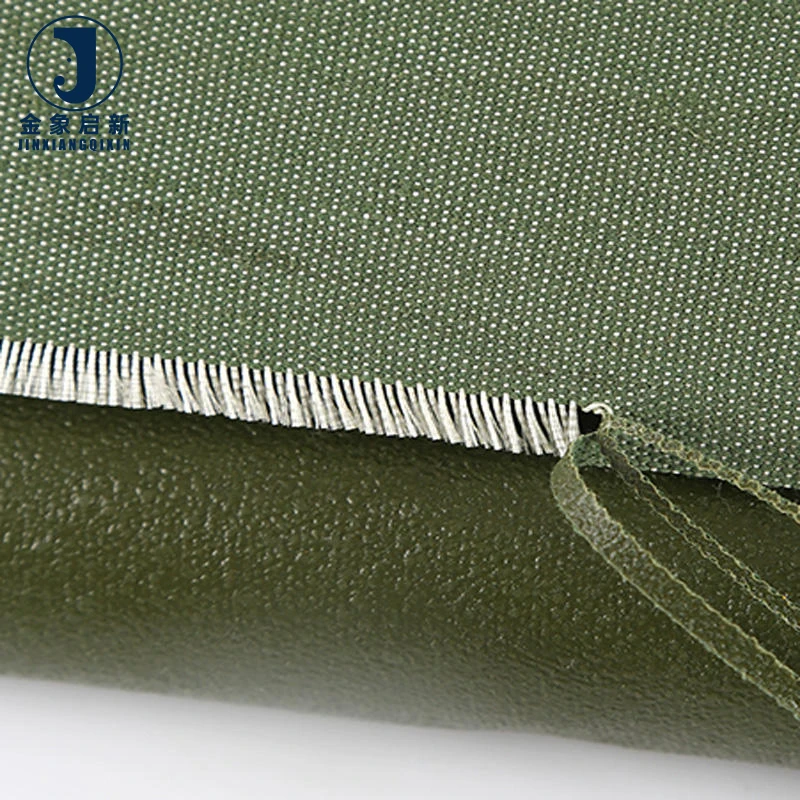
This canvas tarpaulin uses a polyester-cotton base fabric coated with PVC across both faces. The adhesion between the coating layer and the woven substrate determines whether the material delaminates when flexed repeatedly — as happens on side curtain applications or truck covers that are removed and replaced daily. When adhesion is controlled at the coating stage, the PVC layer moves as one with the base fabric rather than cracking or peeling at stress points. This is the core reason we treat coating weight and adhesion as separate quality checkpoints during production, not a single pass/fail gate. A canvas tarpaulin aftermarket supplier that monitors both variables produces covers that hold up under real deployment conditions.
Seam and Hem Construction for Load-Bearing Covers
The reinforcement on this material — aluminum eyelets spaced every meter at corners and hems, with folding and seams welded and sewn using poly ropes — addresses the most common failure zone on any truck or equipment cover. Welded seams alone can become brittle under repeated flex; sewn seams alone can pull through the fabric under point loads. Combining both methods distributes stress across a wider area. For asphalt truck covers in particular, where the fabric is pulled tight over irregular load profiles and subjected to vibration at speed, this dual construction extends service intervals significantly. [NEED_CITE: seam strength testing standards for coated industrial textiles]
Reading the Specifications Beyond the GSM Number
The 600 GSM weight of this canvas tarpaulin tells you the mass per square metre, but it does not alone define how the material performs under tension or puncture. The polyester-cotton base fabric, woven from 8-12 strands of fine cotton yarn, provides the structural skeleton. A tighter weave at the same GSM will resist tear propagation better than a looser weave, because the load is distributed across more yarn intersections. The PVC coating adds waterproofing, UV resistance, and surface durability, but its contribution to tensile strength is secondary to the base fabric. The available thickness range of 0.5mm through 0.7mm reflects different coating build-ups on the same or similar base — thicker coating increases abrasion resistance and stiffness, which matters when the cover must span unsupported gaps over equipment or stockpiles. Selecting the right thickness depends on whether the priority is drape and flexibility or rigidity and surface protection.
The Cost of Getting the Specification Wrong
Ordering a lighter GSM than the application requires shows up as premature wear at abrasion points — typically where the cover contacts sharp edges of machinery or where tie-down straps concentrate force. Colour inconsistency across rolls in the same order becomes visible only after installation, when adjacent panels are seen side by side on a truck fleet or a row of equipment covers. For asphalt truck covers, cutting to a generic size rather than the specific trailer model results in excess material flapping in the wind or insufficient coverage at the rear, both of which accelerate wear and compromise load protection. [NEED_CITE: common failure modes in heavy-duty transport tarpaulins]
Why Production Control Matters for This Material
Deep process control over coating weight and adhesion is built into every production run of this canvas tarpaulin, with three full production lines and 36 sets of professional equipment supporting consistent output. The 10-person R&D team handles material selection, custom sizing, and sample development, which means a custom army green camouflage or a fleet-specific print can be developed as a sample within days before committing to a full order. Dedicated QA/QC runs at every production stage with full inspection before shipment, so the roll you receive has been checked against the specification sheet — not just spot-checked. Bulk orders ship with roll packing lists and certificates of origin, and the team provides after-sales support on installation and repair, which matters when a cover needs field adjustment.
Documentation & Verification
- Material specification sheet confirming 600 GSM, polyester-cotton base fabric, and PVC coating details
- Pre-shipment inspection record with full roll-by-roll verification before dispatch
- Test reports for UV resistance grades where specified at order stage
- Roll packing list with certificate of origin and customs documentation
- CE and ISO certification documents accompanying each shipment
Fabrication, Handling & Storage
- Heat welding parameters must account for the 600 GSM coating weight to achieve full adhesion without scorching the PVC surface
- Aluminum eyelets at corners and hem should be set with backing washers to distribute load across the woven base fabric
- Rolls stored flat or upright on cores to prevent permanent creasing in the 0.5mm to 0.7mm coated material
- Avoid folding the army green camouflage PVC coated canvas at sharp angles during cold-weather transport to prevent coating crack
- Clean surfaces with mild detergent only; solvents degrade the PVC coating bond to the polyester-cotton substrate
- Field repairs on welded seams require compatible PVC adhesive and heat reactivation for lasting adhesion
What We Need From Your Enquiry
Tell us the specific vehicle or equipment model the cover must fit, including any protrusions or irregular profiles. Let us know whether you need finished panels with eyelets and welded hems or roll stock for your own fabrication line. If your market requires a specific UV resistance grade or flame-retardant classification, state the standard so we can confirm test report availability before production. Share your target colour, roll width preference, and estimated annual volume to help us plan batch consistency across your orders.
Frequently Asked Questions
Q: How do you verify the GSM matches what was quoted?
A: Every roll undergoes weight verification against the stated 600 GSM during pre-shipment inspection. We do not rely on batch averages — each roll is checked individually, and the inspection record ships with your order so you can confirm the material received matches the specification you approved at the sample stage.
Q: Can colour be kept consistent across multiple rolls in one order?
A: Yes. Batch-to-batch colour consistency is controlled at the coating stage. When you order multiple rolls of the same colour — whether army green camouflage or a custom shade — they are produced in a single coating run to eliminate variation. We recommend ordering your full project quantity at once to guarantee panel-to-panel colour match on installation.
Q: What certifications and test reports ship with the order?
A: Each order ships with CE and ISO certificates, a material specification sheet, and a pre-shipment inspection record. For UV resistance or other treatment grades, test reports are provided when the specific grade is confirmed at the enquiry stage. State your market requirements early so the correct documentation is prepared.
Q: How are seams reinforced to handle load flex and abrasion?
A: Seams on this canvas tarpaulin are both welded and sewn with poly ropes, combining the waterproof seal of heat welding with the mechanical strength of stitching. Aluminum eyelets are placed every meter at corners and hems to distribute tie-down forces. This dual approach prevents seam failure at flex points where asphalt truck covers experience the most stress.
Related products
-
Lona de lienzo pesada de 13 oz 10ftx12ft tejida plana con ojales a prueba de óxido para techo de carpa, camping, montón de leña.
¥10.59 Add to cart -
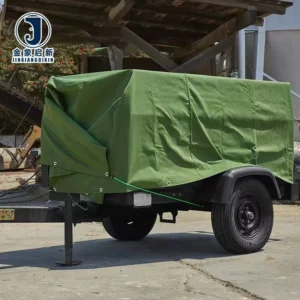
Lona de lona tejida laminada de PVC resistente al calor de muy pesado y de alta resistencia, tela de tienda impermeable para accesorios
¥195.00 Add to cart -
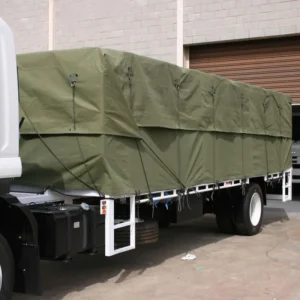
Custom PVC Coated Tarpaulin for Truck Trailer – Full Range
Read more -
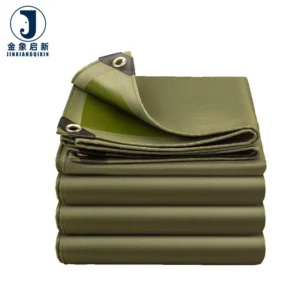
Lona de lona tejida laminada de PVC de 0.9 mm de grosor para camiones, toldo impermeable para exteriores, vela de sombra, accesorios para casas de mascotas.
¥20.00 Add to cart