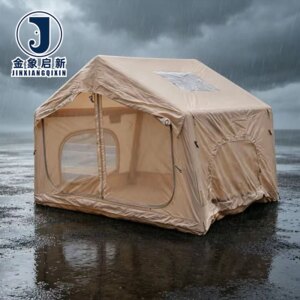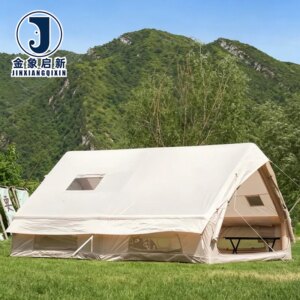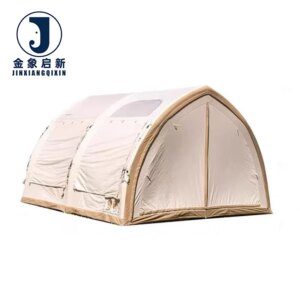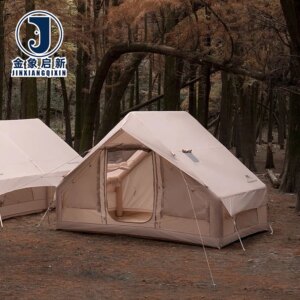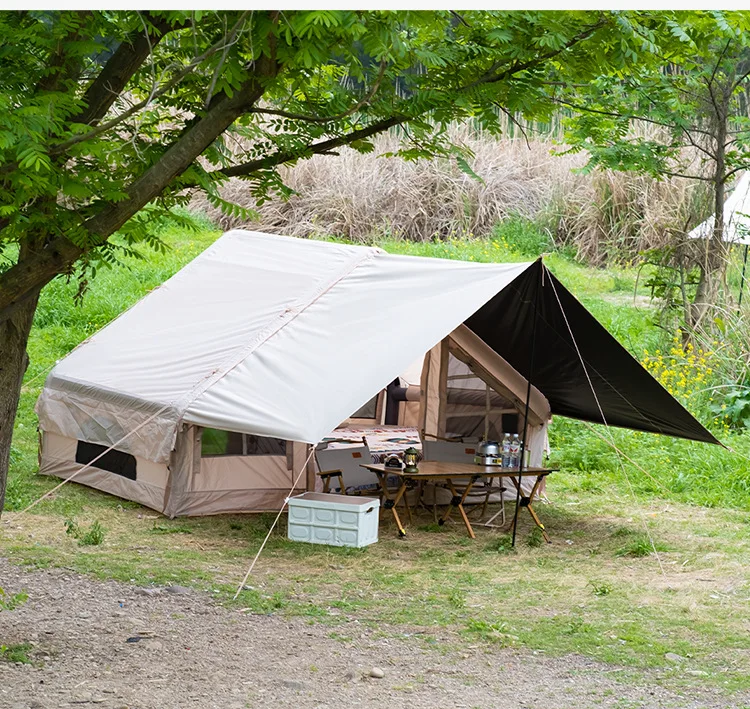
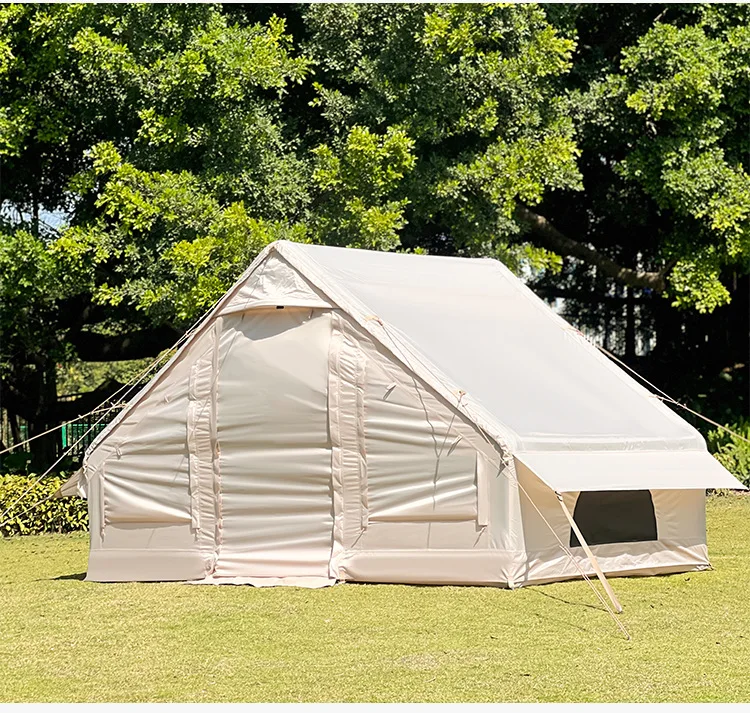
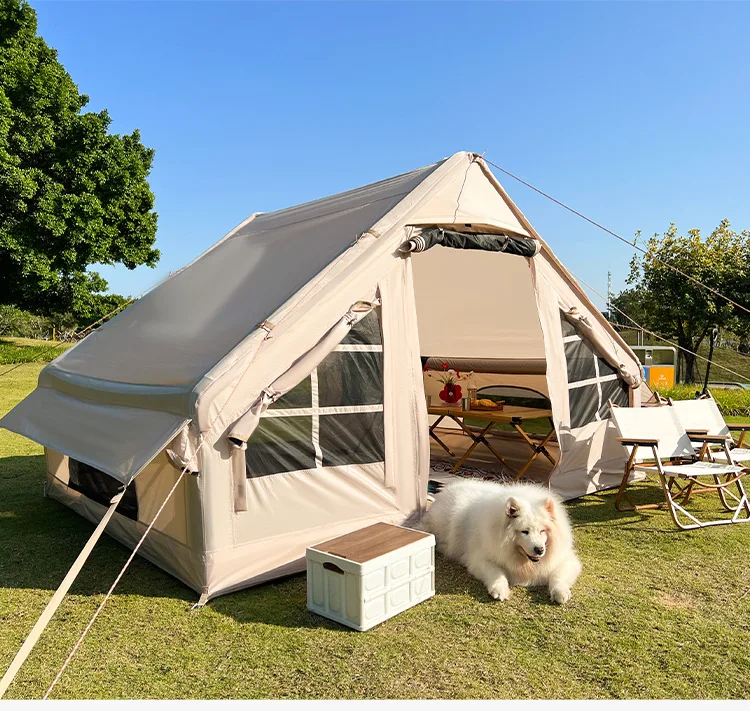
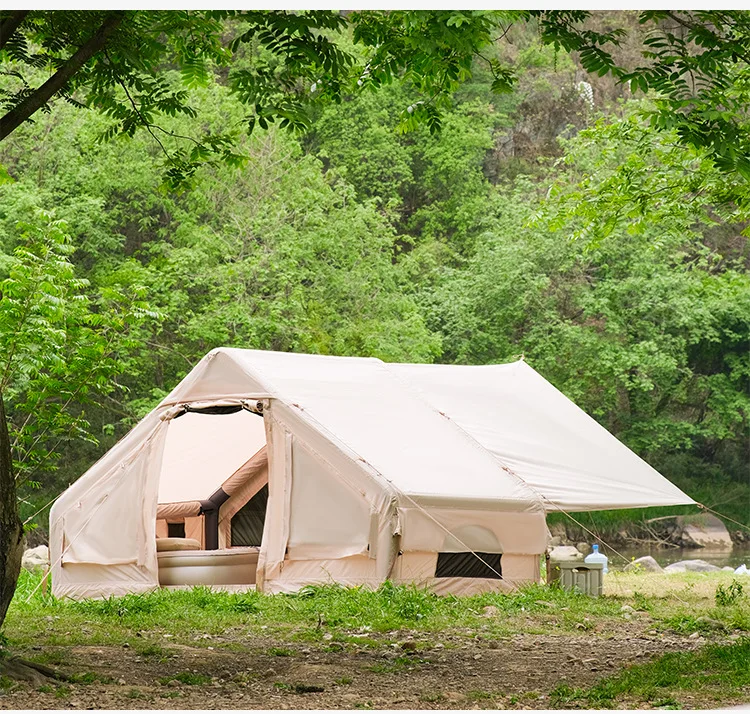
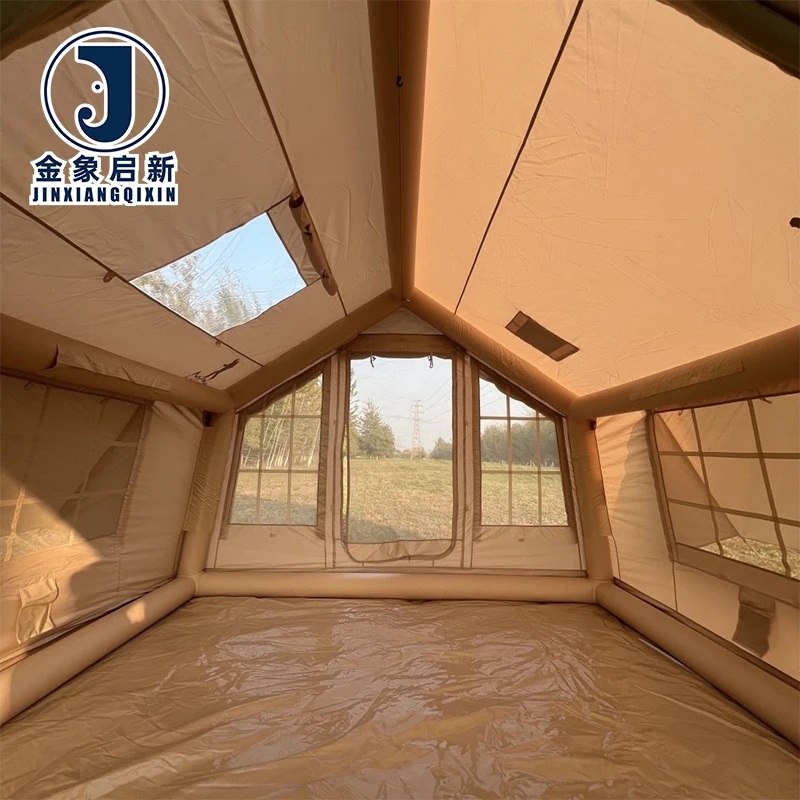
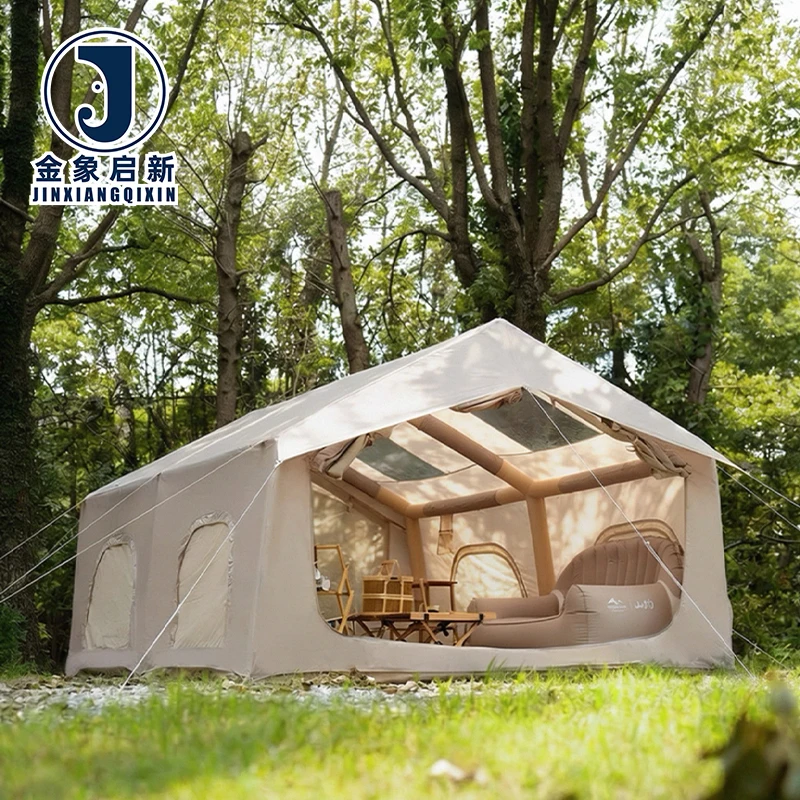
Inflatable Camping Tent — PVC tarpaulin construction, waterproof, UV resistant, tear resistant fabric rated for winds up to 50km/h
- Rapid deployment design for quick site setup across construction, event management, and logistics operations
- OEM & ODM customization with sample development, pattern printing, and branding options
- 2-3 person capacity with ISO and CE certified manufacturing across 3 full production lines
Supported by a 10-technician R&D team handling material selection and custom sizing, with 100% pre-shipment inspection on every unit.
Description
Deep Process Control Over Coated Fabric — Inflatable Camping Tent material benefits from three full production lines managing coating weight and adhesion with strict full-process quality inspection.
Technical Specifications
| Parameter | Value |
|---|---|
| Product Type | Inflatable Camping Tent |
| Core Material | PVC Tarpaulin |
| Key Performance | Waterproof, UV Resistant, Tear Resistant |
| Capacity | 2-3 Person |
| Wind Resistance | up to 50km/h |
| Customization Service | OEM & ODM (sample customization, pattern printing) |
| Production Facility | 9,180 m² facility with 3 full production lines |
| Processing Equipment | 36 sets of professional equipment |
| Quality Control | Dedicated QA&QC staff, full-process inspection |
| Standards | ISO9001, ISO14001, ISO45001, CE |
Application Suitability
| Application | Exposure & Requirement |
|---|---|
| Temporary Site Offices | Constant UV exposure, wind loads, daily abrasion from foot traffic and equipment movement |
| Mobile Storage Shelters | Permanent weather contact, heavy rain, protection of sensitive equipment from moisture |
| Event Management Facilities | Rapid deployment, frequent packing/unpacking, high visual presentation standards |
| Portable Logistics Storage | Wind resistance up to 50km/h, tear resistance required for handling and transport |
Why UV Resistance Claims Fail in the Field Without a Standard
A coating that degrades under continuous sunlight compromises the structural integrity of the entire inflatable camping tent, yet many suppliers provide no test basis for their UV claims.
When a manufacturer states a fabric is UV resistant without referencing a specific testing protocol, buyers have no way to verify how long the material will actually perform in outdoor industrial environments. [NEED_CITE: ISO 4892-2 methods for exposure to laboratory light sources] We have seen tents deployed on construction sites where the PVC surface began to chalk and embrittle within months because the UV stabilizer package was insufficient for the local solar radiation levels. An inflatable tent fabric manufacturer custom order must specify the exact UV test basis required for the target deployment climate to avoid premature failure and costly replacements.
Coated Fabric Selection for Commercial Inflatable Structures
Selecting the right PVC tarpaulin for an inflatable camping tent requires balancing waterproof performance with the flexibility needed for inflation systems and repeated folding. The material must maintain airtight seals at high-frequency welded seams while resisting the constant internal pressure cycles that characterize rapid-deployment shelters. Our inflatable tent fabric manufacturer custom production runs focus on consistent coating adhesion to prevent delamination at stress points where the structure flexes during inflation and deflation.
Managing Batch Consistency Across Multiple Tent Orders
Event management companies and construction contractors ordering multiple units face the challenge of colour variation between production batches, which becomes immediately visible when tents are deployed side by side at a site. [NEED_CITE: Delta E colour difference measurement for coated fabrics] Maintaining batch-to-batch colour consistency requires tight control over pigment dispersion during the coating process and standardized curing conditions across all 36 sets of professional processing equipment. Our R&D team of 10 technicians monitors colour reference standards throughout production to ensure that an inflatable tent fabric manufacturer custom order delivered in separate shipments will present a uniform appearance when installed together.
Understanding How Base Fabric and Coating Weight Determine Tear Performance
The tear resistance of an inflatable camping tent depends on the interaction between the base fabric denier, weave density, and the PVC coating weight applied to both sides. A heavier coating does not automatically translate to higher tear strength if the underlying polyester scrim has low yarn density or poor yarn-to-yarn adhesion. The coating method—whether knife-over-roll, lamination, or calendering—affects how well the PVC penetrates the weave and bonds to individual yarns, which directly influences weld strength and the material’s behaviour when a puncture begins to propagate. Waterproof performance is achieved through complete encapsulation of the base fabric, but the coating must remain flexible enough to withstand folding during transport and deployment without cracking in cold conditions.
The Cost of Specifying the Wrong Material Grade
Choosing a PVC tarpaulin with insufficient tear resistance for an inflatable camping tent application leads to seam failures at inflation points where the fabric experiences concentrated stress during setup. Tents deployed in exposed locations with wind loads approaching 50km/h require materials that can resist both steady pressure and sudden gusts without catastrophic tearing. [NEED_CITE: tensile and tear test methods for coated fabrics per ISO 1421] When the material specification does not match the actual deployment conditions, the result is frequent patching, shortened service intervals, and ultimately the need to replace entire units rather than repair localized damage.
Why Production Control Matters for Inflatable Tent Fabric
Our 9,180 m² facility operates three full production lines dedicated to PVC coated fabrics, providing the capacity to handle both sample development and bulk container loads without compromising delivery schedules. The 10-person R&D team supports pattern printing and custom dimensions, allowing buyers to specify exact panel sizes that minimize waste during tent fabrication. Every production run undergoes strict full-process quality inspection with dedicated QA&QC staff verifying coating weight, colour consistency, and weld integrity before materials leave the factory. Sample customization allows buyers to validate material behaviour under their specific welding equipment and inflation systems before committing to full production quantities.
Documentation & Verification
- Material specification sheet stating GSM, base fabric denier, and coating type for each roll
- Waterproof performance verification and UV resistance test report provided upon request
- Pre-shipment inspection record with photographs documenting roll condition before dispatch
- ISO9001, ISO14001, ISO45001, and CE certificates included with order documentation
- Colour reference standard and batch identification for traceability across multiple orders
Fabrication, Handling & Storage
- High-frequency welding parameters must be optimized for PVC tarpaulin thickness to ensure airtight inflatable chambers
- Reinforced stress points at inflation valves require additional fabric layers to distribute internal pressure loads
- Rolls should be stored upright on pallets to prevent permanent creasing that affects inflation symmetry
- Cold-weather deployment requires gradual unfolding to avoid coating embrittlement and surface cracking
- Cleaning with mild detergent preserves waterproof coating integrity without damaging UV stabilizer additives
- Panel nesting layouts should account for PVC tarpaulin width to minimize offcuts during tent fabrication
Requesting a Material Specification for Your Application
To receive an accurate quotation for an inflatable tent fabric manufacturer custom order, provide details on the intended deployment environment including expected wind loads, UV exposure duration, and temperature range. Specify whether you require raw fabric rolls for your own fabrication facility or finished panels cut to your tent design dimensions, along with any pattern printing or branding requirements. Confirm the certification standards your market requires so we can provide the appropriate test documentation with your shipment.
Frequently Asked Questions
Q: What customization options are available for inflatable tent fabric dimensions and branding?
A: Our OEM and ODM services support custom width and length specifications, pattern printing for logos or identification markings, and reinforced stress points at valve locations. The 10-person R&D team develops samples to validate material behaviour under your specific welding and inflation systems before bulk production begins.
Q: How do you control colour consistency across multiple production batches?
A: Dedicated QA&QC staff monitor pigment dispersion and curing conditions throughout each production run on our 36 sets of processing equipment. We maintain colour reference standards and provide batch identification documentation so that tents deployed side by side present a uniform appearance regardless of when each roll was manufactured.
Q: What UV resistance test basis supports the outdoor durability claim?
A: UV resistant treatment is available for extended outdoor exposure, but the specific test basis depends on your target market requirements. Request our test report documentation to verify the stabilizer package matches the solar radiation levels and deployment duration expected for your inflatable camping tent application.
Q: What is the sample development process and lead time for custom specifications?
A: Sample customization allows you to validate PVC tarpaulin performance under your fabrication equipment before committing to bulk quantities. Contact our R&D team with your material specifications, and we will provide a sample developed to your exact GSM, colour, and treatment requirements for evaluation.
Q: What certifications and documentation ship with each order?
A: Every order includes material specification sheets, pre-shipment inspection records with photographs, and ISO9001, ISO14001, ISO45001, and CE certificates. Waterproof and UV resistance test reports are provided upon request to support compliance verification in your target market.
Related products
-
Tienda Inflable Impermeable para Exteriores para Camping, Refugio de Tienda de Aire Portátil
Read more -
Tienda de Camping Inflable Impermeable Tienda de Aire Exterior para Camping Refugio de Tienda Inflable
Read more -
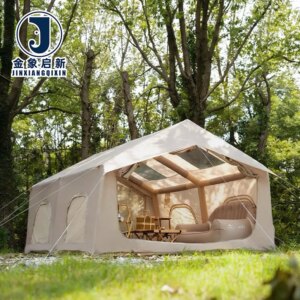
Tienda de campaña inflable resistente a los UV personalizable para cuatro estaciones, impermeable, de PVC, con apertura automática rápida, para 2-3 personas, exterior.
Read more -
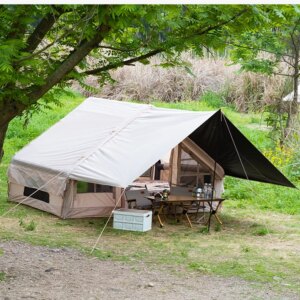
Tienda de Camping Inflable PVC Impermeable Resistente a los UV Cuatro Estaciones Apertura Automática Rápida Personalizable 2-3 Personas
Read more