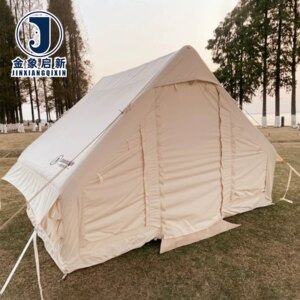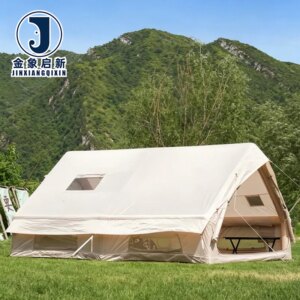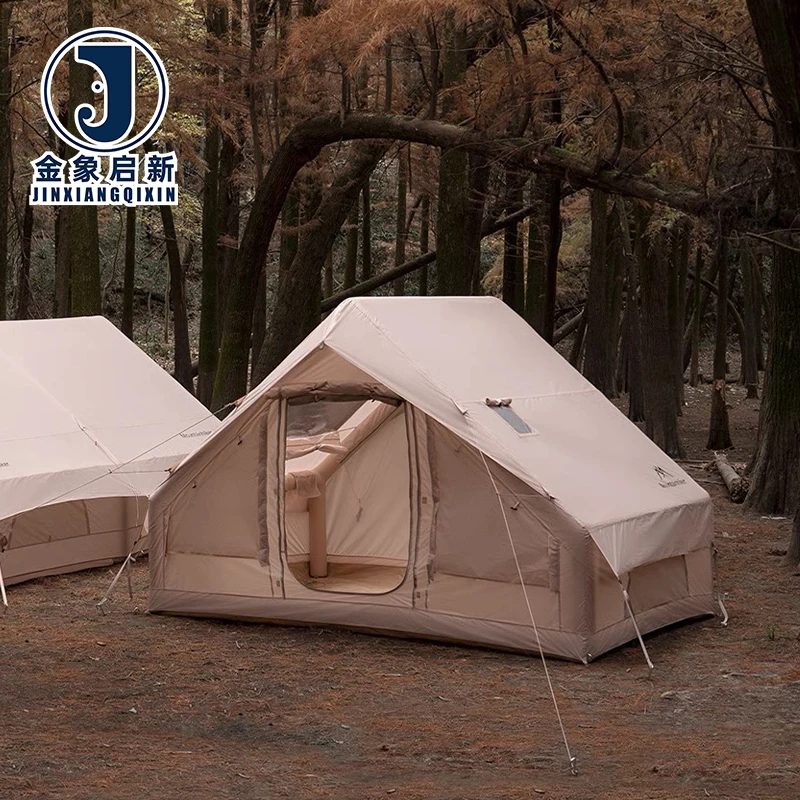
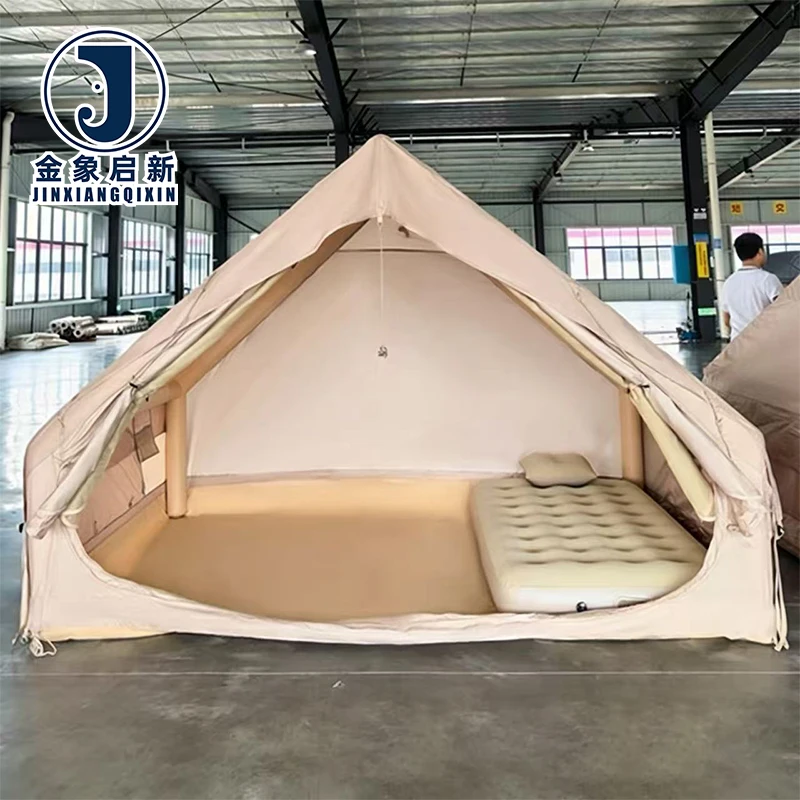
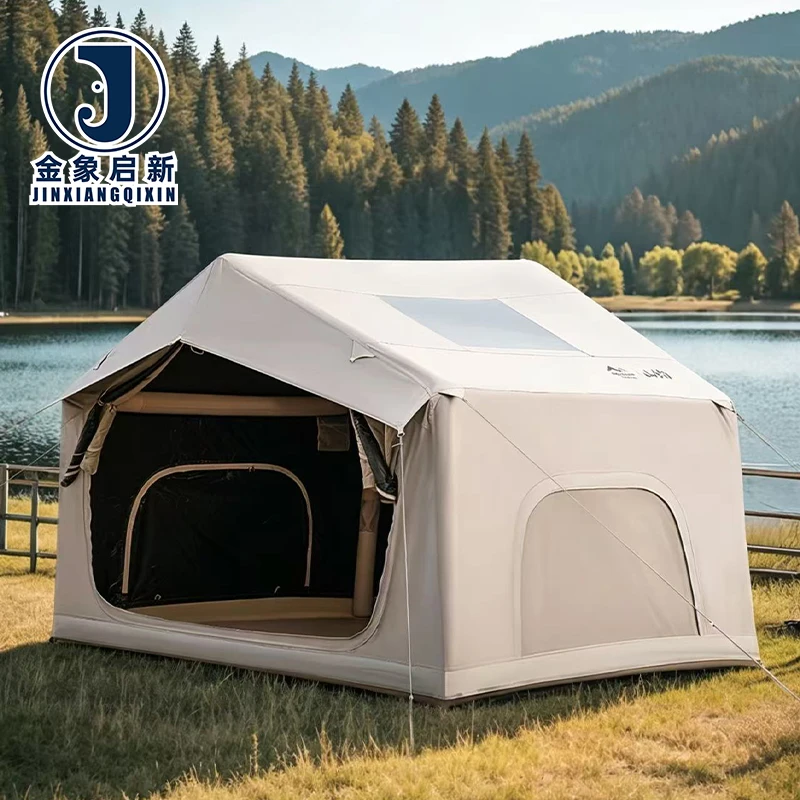
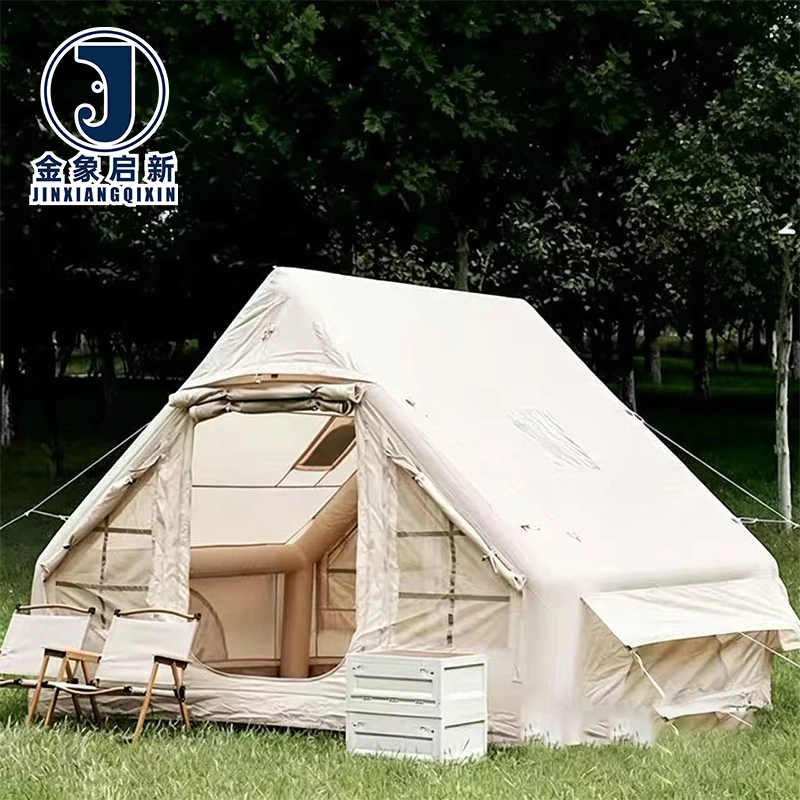
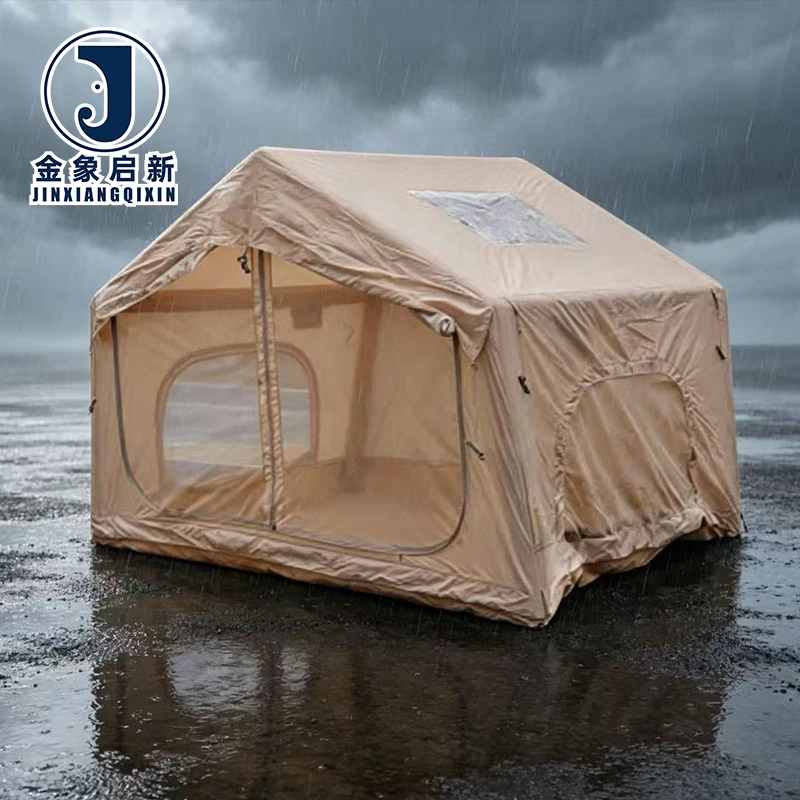
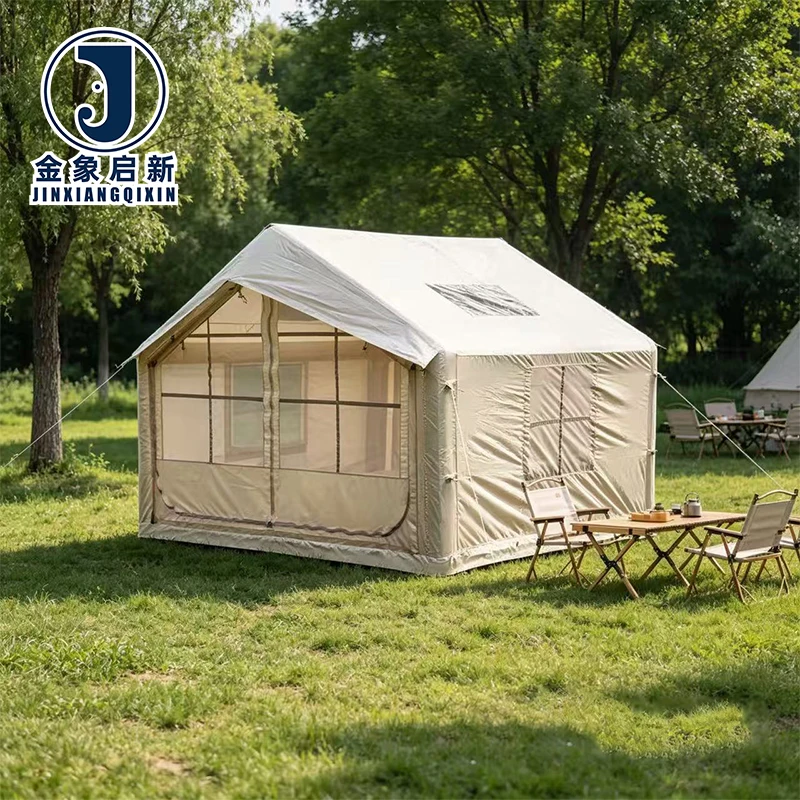
Heavy Duty Inflatable Camping Tent — PVC tarpaulin fabric, waterproof, UV-resistant, and tear-resistant for inflatable structures up to 12-person capacity. OEM & ODM services with sample customization and pattern printing available.
- Coating weight and base fabric adhesion controlled through nearly 30 years of coated fabric process expertise
- Custom width, length, and printing supported for one-stop inflatable tent fabrication
- Material spec sheet, UV test reports, and 100% pre-shipment inspection provided with every order
Description
Proven Coating Expertise — nearly 30 years of PVC coating process control ensures every roll of inflatable tent fabric meets stated weight, colour, and adhesion targets before it leaves the line.
Technical Specifications
| Parameter | Value |
|---|---|
| Product Type | Inflatable Tent |
| Core Material | PVC tarpaulin |
| Key Performance | Waterproof, UV-resistant (test basis not stated), tear-resistant |
| Product Forms | Inflatable structure |
| Capacity | 1–12 Person |
| Customization Service | OEM & ODM — sample customization, pattern printing |
| Fire & Static Treatment | Flame-retardant and anti-static grades available — confirm the grade required for your market |
| Standards | ISO 9001, ISO 14001, ISO 45001, CE |
Application Suitability
| Application | Exposure & Requirement |
|---|---|
| Temporary site offices for construction projects | Continuous outdoor UV exposure, wind loading on inflated walls, daily entry-point abrasion |
| Mobile command centers for outdoor events | Rapid deployment and teardown cycles, branded exterior printing, crowd-proximity fire safety codes |
| Equipment storage shelters for agricultural operations | Prolonged sun and rain exposure, internal humidity from stored machinery, puncture risk from sharp edges |
| Temporary workspace enclosures for remote industrial sites | Extreme temperature swings, high wind gusts on inflated envelope, compliance with site safety audits |
Why Consistent Colour Across Rolls Determines Whether Your Inflatable Structure Looks Professional On-Site
Batch-to-batch colour variation is the most common complaint inflatable tent fabric buyers raise after installation — and it is entirely preventable with in-process QA checkpoints.
When you source inflatable tent fabric from multiple production runs, even slight pigment drift between rolls becomes obvious once panels are heat-welded side by side on an inflated structure. Event contractors and tent manufacturers have faced situations where an entire branded facade had to be reprinted because one roll sat outside the agreed colour tolerance [NEED_CITE: colour tolerance standards for coated fabrics per ISO 105 series]. The cost of rework far exceeds the cost of upfront colour verification at the coating stage.
How Inflatable Tent Fabric Handles the Stress of Repeated Inflation Cycles
Every time an inflatable structure is inflated and deflated, the PVC tarpaulin envelope flexes at the same seam lines and corner radii. Inflatable tent fabric must resist crack propagation at these high-stress zones, which is why tear resistance and weld adhesion matter more than tensile strength alone. Our PVC tarpaulin base is engineered to maintain structural integrity through repeated inflation cycles without delamination at the coating-to-yarn interface.
What Custom Sizing and Pattern Printing Mean for Your Inflatable Shelter Project
Inflatable tent manufacturers need fabric cut to precise panel dimensions or supplied in roll widths that minimize waste during CNC or manual cutting. We offer custom width and length options alongside pattern printing for branded event structures. Whether you are producing a single large-span dome or a production run of branded promotional tents, the inflatable tent fabric is supplied with consistent coating weight across the entire order so that heat-weld parameters remain stable from the first panel to the last [NEED_CITE: heat welding parameters for PVC coated polyester fabrics].
Reading the Specifications That Actually Predict Inflatable Structure Performance
GSM alone does not tell you how an inflatable tent fabric will behave under wind load or repeated flexing. The base fabric denier and weave density determine how the material resists tear propagation once a puncture occurs, while the coating method — whether knife-over-roll, laminating, or calendering — controls peel strength at the weld line. A heavier coating does not automatically mean a stronger weld; excessive coating thickness can trap air during heat welding, creating weak points precisely where the inflated structure depends on seam integrity. UV-resistant treatment must be verified against a recognized test standard to predict outdoor service life, so always request the test basis before specifying anti-UV claims for a project.
The Hidden Cost of Specifying the Wrong Weld Strength for Inflatable Structures
When inflatable tent fabric is heat-welded at seams, the weld line must carry the same internal pressure load as the body of the fabric. If the coating formulation does not support stable weld adhesion, the seam fails before the fabric itself does — typically at the flex point nearest the inflation valve where pressure cycles concentrate [NEED_CITE: seam failure modes in inflated PVC structures]. Contractors have had to replace entire inflatable enclosures mid-project because the weld peeled under sustained wind gusts, a failure that traces back to coating-to-fabric adhesion rather than GSM or base fabric weight.
What 9,180 m² of Dedicated Production Capacity Means for Your Inflatable Fabric Order
Three full production lines and 36 sets of professional processing equipment allow us to run inflatable tent fabric in volume without compressing lead times on custom orders. A 10-person R&D team handles material selection, sample development, and pattern printing proofs so you can evaluate the fabric before committing to a production run. Dedicated QA and QC staff inspect every roll at each production stage — not just at final packing — which is how we maintain the colour and coating consistency that inflatable structure manufacturers depend on. Our ISO 9001, ISO 14001, ISO 45001, and CE certifications are not wall decorations; they reflect documented process controls that are audited regularly and available for your verification.
Documentation & Verification
- Material specification sheet confirming base fabric, coating weight, and colour reference per batch
- UV and flame-retardant test reports provided where the specified grade requires documented proof
- Pre-shipment inspection record showing 100% roll inspection results before dispatch
- Roll packing list with individual roll weights and dimensions for container loading planning
- Certificate of origin and customs documentation to support international shipment clearance
Fabrication, Handling & Storage
- Heat-weld temperature and dwell time should be calibrated to the specific PVC coating weight on each roll
- Store inflatable tent fabric rolls upright on pallets to prevent flat-spot creasing across the coating surface
- Use compatible PVC-based adhesives for field repairs to maintain coating-to-patch bond strength
- Avoid dragging rolls across abrasive surfaces during warehouse handling to protect the coated face
- Clean printed surfaces with mild, non-solvent detergents to preserve pattern sharpness and colour density
- Allow cold-stored rolls to reach ambient temperature before unrolling to prevent coating micro-cracking
How to Start Your Inflatable Tent Fabric Inquiry
To help us recommend the right specification, share your intended application, expected environmental exposure, and any fire-safety or compliance codes your end market requires. Let us know the roll widths or cut-panel dimensions you need, annual volume estimates, and whether pattern printing or branded colour matching is part of the project. If you need sample yardage for weld testing and structural prototyping before committing to a full production order, tell us at the inquiry stage so we can prioritize sample development.
Frequently Asked Questions
Q: What customization options are available for inflatable tent fabric sizing and minimum order quantities?
A: We supply inflatable tent fabric in custom widths and lengths to suit your panel cutting layout or CNC nesting plan. OEM and ODM services include size adjustments and pattern printing. Minimum order quantities depend on the specific colour, coating weight, and treatment grade you require. Share your target dimensions and volume so we can confirm the production minimum for your specification.
Q: How does the pattern printing and colour matching process work before mass production?
A: We develop printed samples using your artwork files and confirm colour accuracy against your reference before production begins. The sample approval step ensures the printed branding aligns with your design intent. Once you sign off on the sample, the approved colour and print parameters are locked for the entire production run to maintain consistency across all rolls.
Q: How is batch-to-batch colour consistency maintained across multiple rolls?
A: Dedicated QA and QC staff monitor pigment dosing and coating application at every production stage. Each roll is inspected before shipment against the approved colour reference for that order. This in-process control prevents the visible panel-to-panel colour variation that occurs when rolls from different batches end up side by side on a finished inflatable structure.
Q: What should fabricators know about heat welding inflatable tent fabric?
A: Weld temperature, pressure, and dwell time must match the specific PVC coating formulation on the fabric you receive. We recommend running weld test strips from each new roll batch to dial in machine settings before cutting production panels. Properly calibrated welds on our PVC tarpaulin achieve seam integrity that matches the body fabric through repeated inflation and deflation cycles.
Q: What test basis supports the UV-resistant claim, and what outdoor service performance can be expected?
A: UV-resistant treatment is available in multiple grades, and the applicable test standard depends on your target market and end-use environment. We provide test reports for the specific UV grade specified on your order. Contact us with your regional compliance requirements so we can confirm the grade and test basis that matches your project specification [NEED_CITE: UV exposure test methods for coated fabrics per ISO 4892].
Related products
-
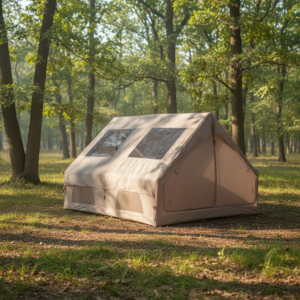
Tienda Inflable Cuatro Estaciones Apertura Automática Rápida PVC 3000mm Impermeable Plegable Ecológica para Uso Exterior 2-3/3-4/6-8 Personas
Read more -
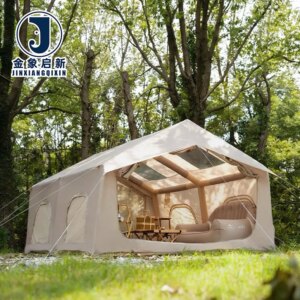
Tienda de Camping Inflable de Cuatro Estaciones - Recubierta de PVC, Impermeable, Ecológica, Inflación Rápida, Certificada CE, ODM/OEM Aceptado
Read more -
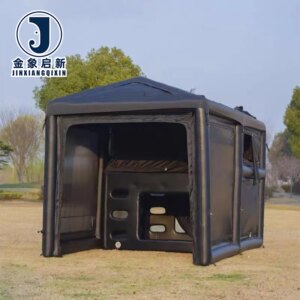
Tienda inflable premium para camping de cuatro estaciones, fácil de usar, espaciosa, portátil, impermeable, tienda exterior rápida.
Read more -
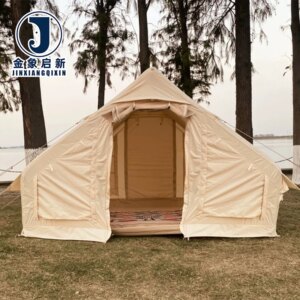
Tienda Inflable de Cuatro Estaciones Capa Única >3000mm Impermeable a Viento Apertura Automática Rápida Tela de PVC Ecológica
Read more