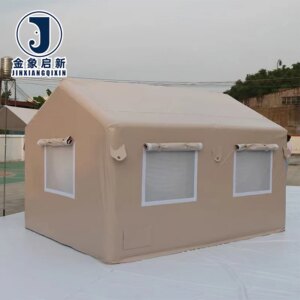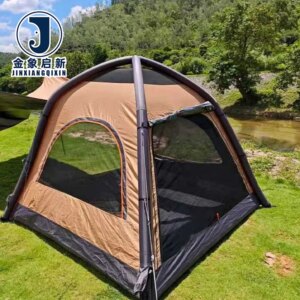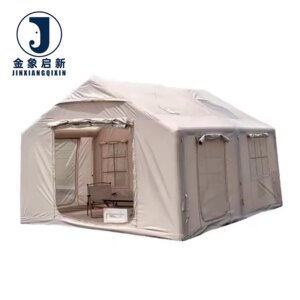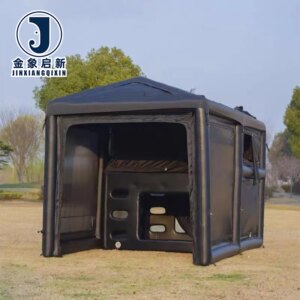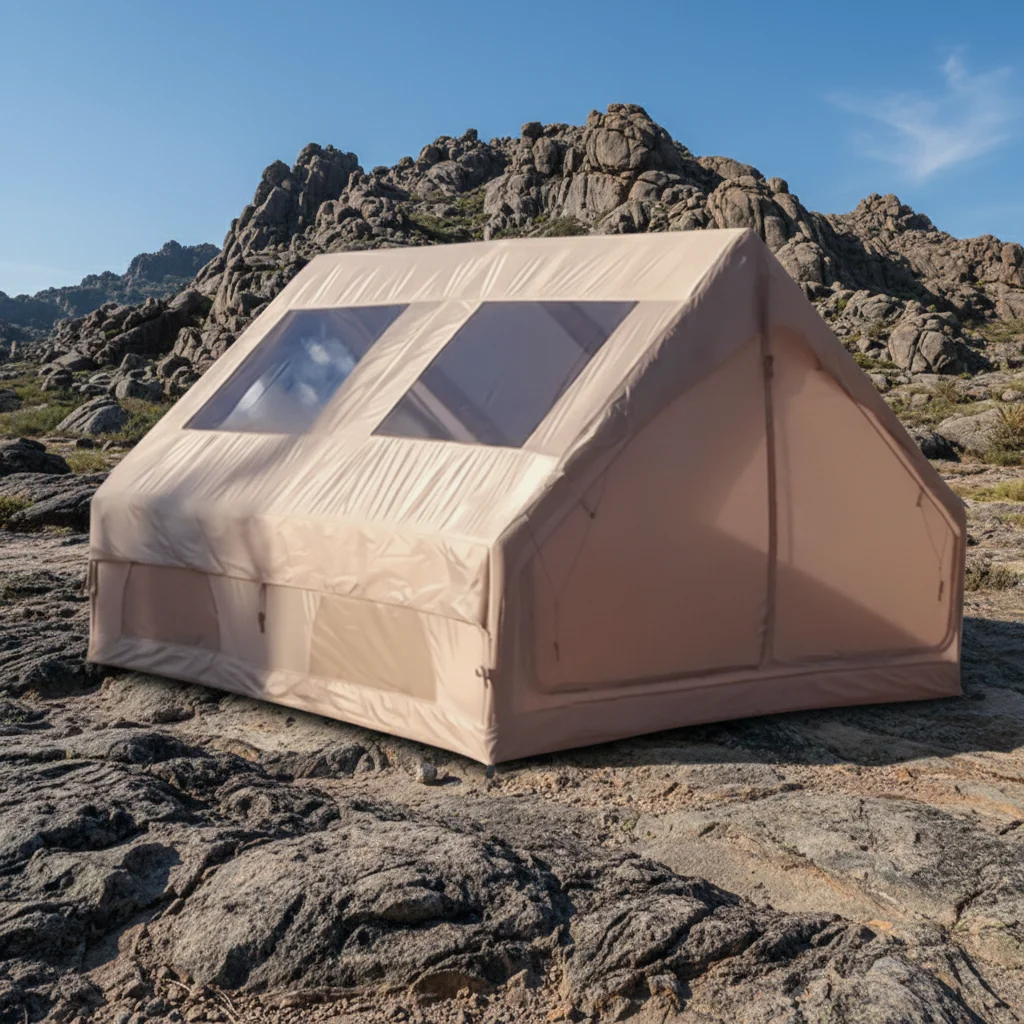
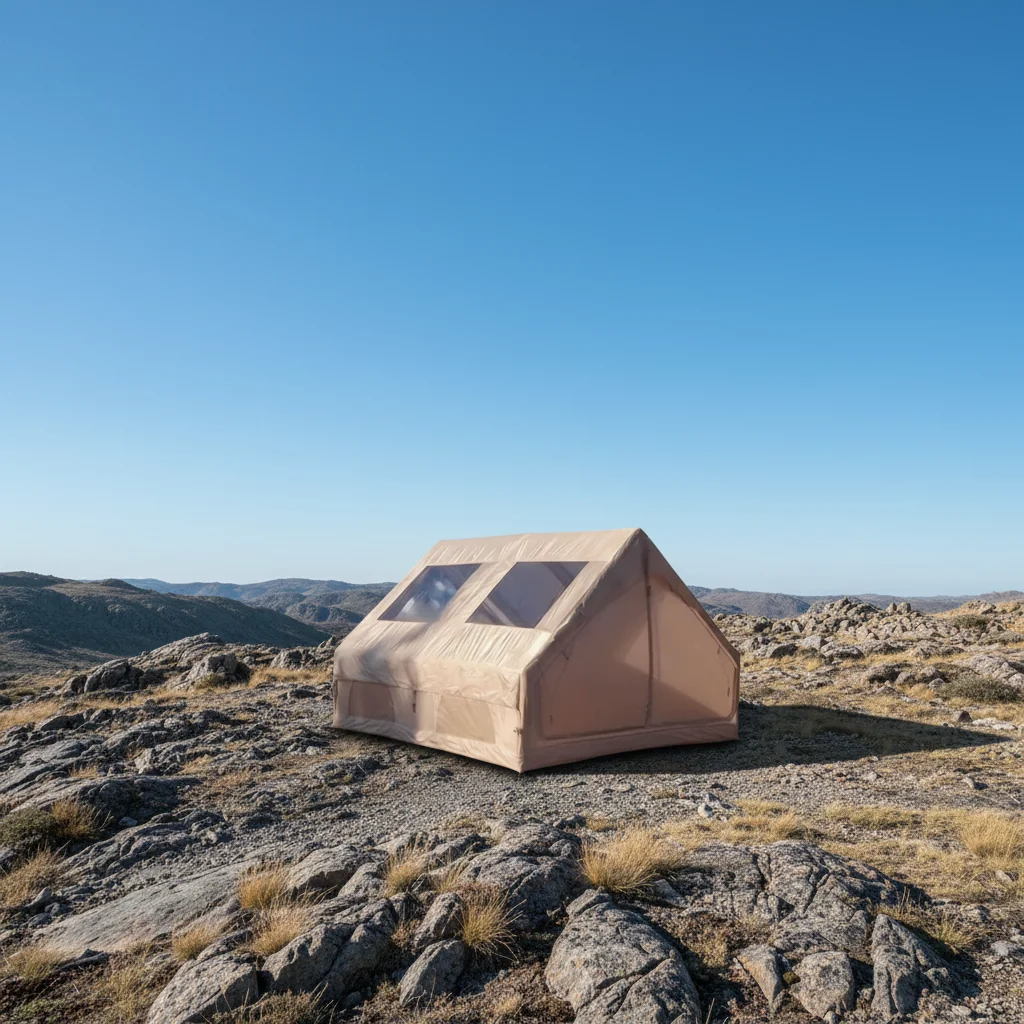
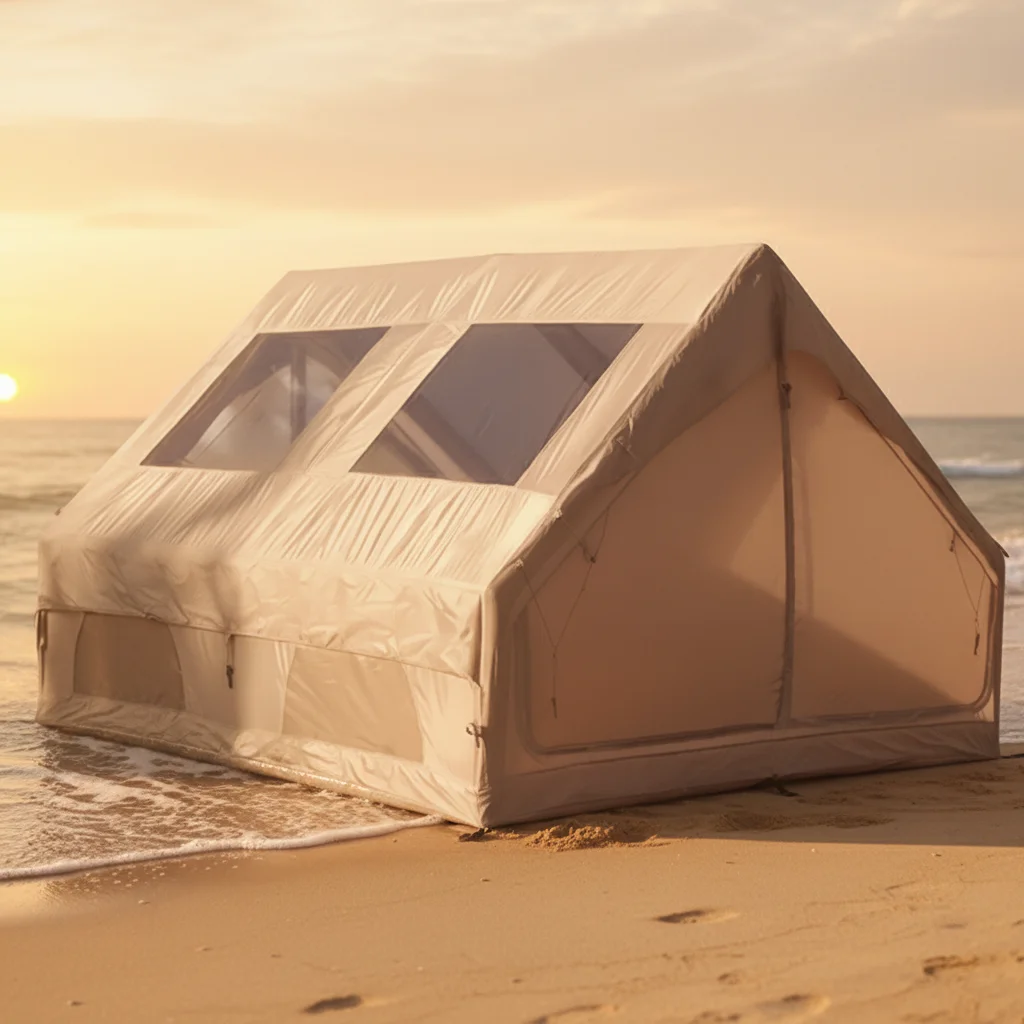
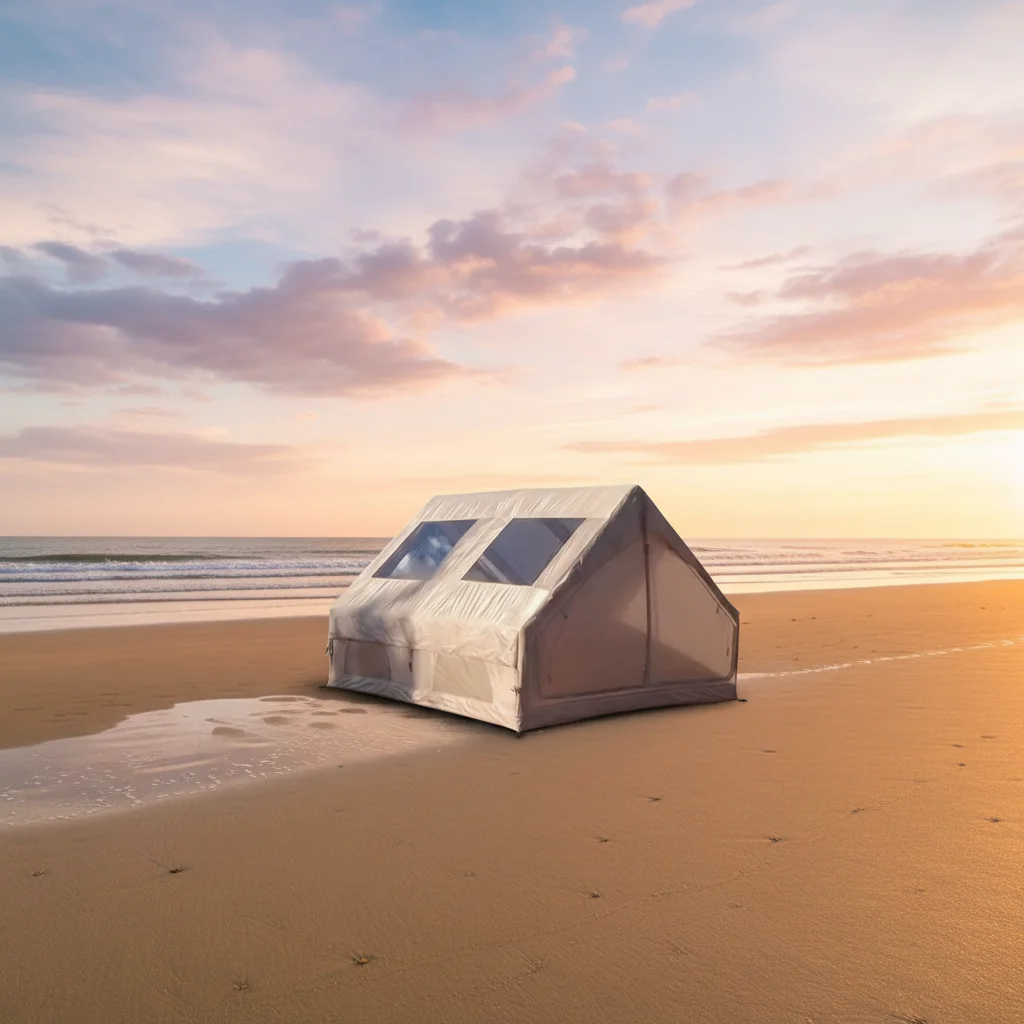
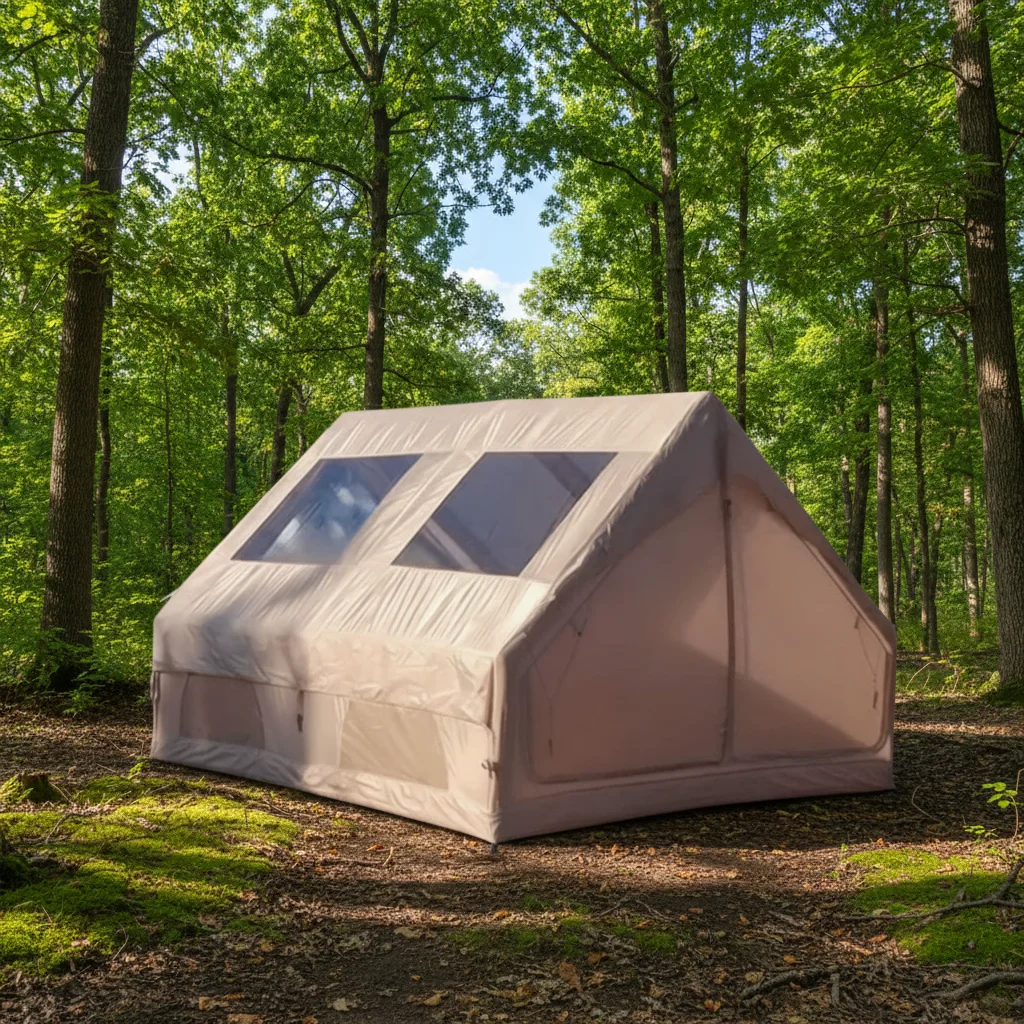
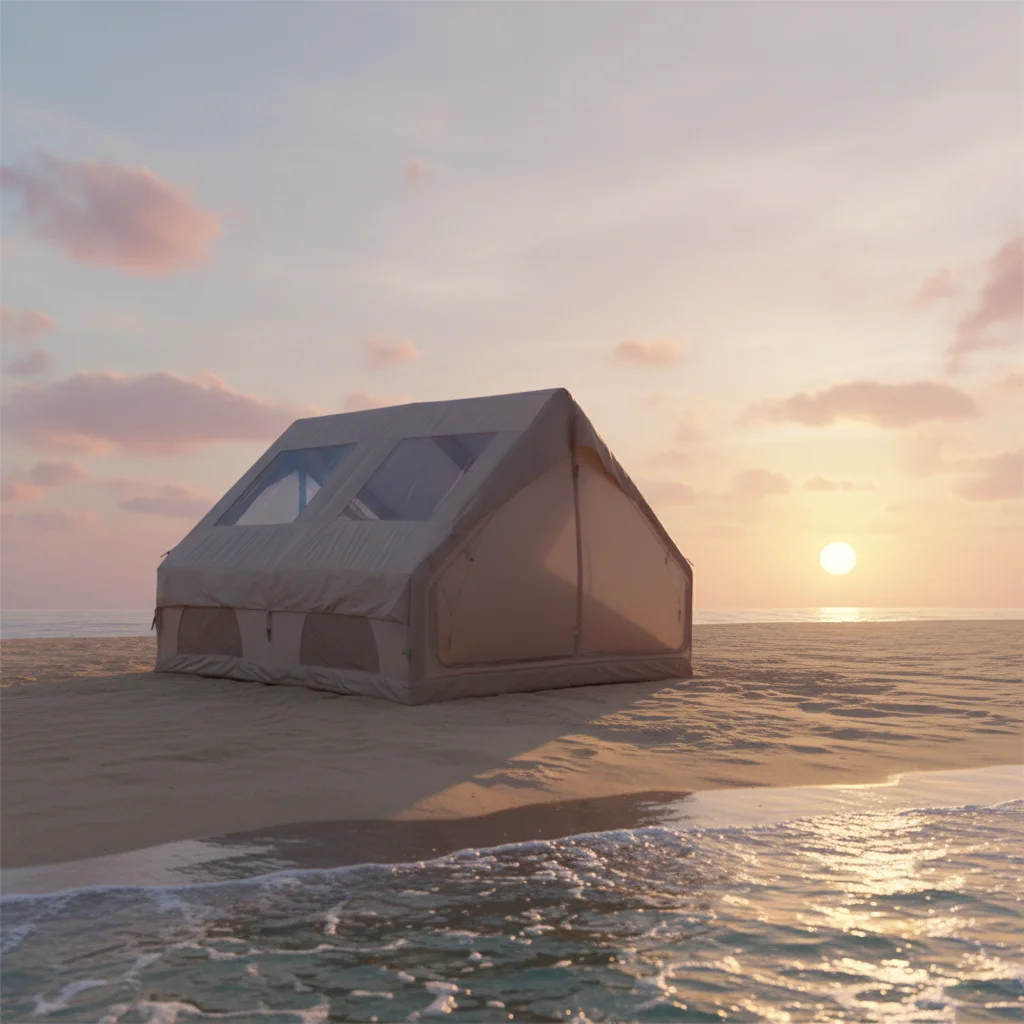
Four-Season Inflatable Tent — PVC knife-coated fabric, single-layer construction, 0.6mm to 1.2mm thickness range with UPF 50+ UV protection and ≥5000mm waterproof rating.
- Engineered for commercial outdoor operators requiring reliable temporary shelters across repeated setup cycles
- Coating weight and base fabric density balanced to deliver tear resistance without excessive pack weight
- Full OEM/ODM: custom dimensions, Pantone matching, logo printing, valve system modifications
Dedicated QA/QC at every production stage with 100% leak testing before shipment.
Description
Coated Fabric Expertise — nearly 30 years of PVC coating process control, applied to custom inflatable tent construction from fabric roll to finished unit.
Technical Specifications
| Parameter | Value |
|---|---|
| Product Type | Inflatable Tent |
| Core Material | PVC tarpaulin (PVC knife-coated fabric) |
| Tensile Strength | ≥3000 N/5 cm (test basis not stated in source) |
| Tear Strength | ≥500 N (test basis not stated in source) |
| UV Treatment | UPF 50+ (test duration not stated in source) |
| Waterproof Rating | ≥5000 mm water column |
| Fabric Thickness Range (custom) | 0.6 mm to 1.2 mm (source value — verify against manufacturer catalog) |
| Construction | Single layer |
| Customization | OEM & ODM: dimensions, Pantone color matching, logo/pattern printing, valve system modifications, thickness adjustment |
| Sample Lead Time | 7–10 working days |
| Standards | ISO 9001, ISO 14001, ISO 45001, CE |
Application Suitability
| Application | Exposure & Requirement |
|---|---|
| Commercial outdoor adventure operators | Multi-season deployment, frequent inflation/deflation cycles, high tensile and tear demand |
| Expedition outfitters in mountainous regions | Low-temperature flexibility, wind loading on inflated panels, sustained UV exposure |
| Coastal and lakeside adventure camps | Salt-laden moisture, constant humidity, waterproof integrity across seams |
| Event organizers — promotional activations | Rapid deployment, branded surface printing, repeated transport and setup |
| Guided tour operators | All-weather temporary shelter, abrasion from ground contact during positioning |
Why a Higher GSM Quotation Does Not Guarantee a Stronger Inflatable Tent Shell
Fabric weight alone never predicts how an inflatable camping tent performs under pressure. Buyers regularly compare two quotes by looking at the stated grams per square metre, assuming the heavier option will resist puncture and tearing longer. In practice, the base fabric denier, the weave density, and the coating adhesion method determine how the shell behaves during inflation and under wind load. An inflatable tent manufacturer quoting a lower GSM but using a tighter weave and knife-coated bonding can outperform a heavier roll that relies on laminated layers prone to delamination at the weld lines. [NEED_CITE: tensile and tear test methods for coated fabrics per ISO 1421]
Custom PVC Inflatable Camping Tent Built Around Your Deployment Scenario
Every commercial operator faces a different combination of climate, transport frequency, and branding requirement. Sourcing an Inflatable Tent from a fabric-first manufacturer means the material selection starts before the pattern is cut. The PVC knife-coated fabric used in this product family bonds coating to base yarn under controlled tension, giving the inflated panels the dimensional stability needed to hold shape without over-pressurizing. This matters when a single tent structure goes through dozens of setup and breakdown cycles across a season, because coating adhesion at the fold lines is typically where cheaper laminated materials begin to fail.
From Pantone Match to Finished Unit — OEM and ODM Without Supplier Handoff
Consolidating fabric production, color matching, printing, and final assembly under one roof removes the communication gaps that cause batch-to-batch variation. When the same facility that extrudes and coats the PVC also handles the valve system integration and seam welding, color reference and material thickness remain consistent across every unit in a multi-piece order. This inflatable tent manufacturing process supports full OEM and ODM paths, allowing buyers to specify custom dimensions, logo placement, and valve configurations while retaining a single quality control chain from raw yarn to packed product. [NEED_CITE: coating adhesion test methods for PVC tarpaulin per ISO 2411]
How Base Fabric and Coating Weight Interact to Define Shell Performance
The knife-coating process forces PVC paste into the interstices of the woven base fabric, locking the yarns in position and creating a monolithic panel that resists both tensile pull and tear propagation. GSM reflects the combined weight of base fabric and coating, but two fabrics at the same GSM can behave very differently depending on how that weight is distributed. A heavier coating with a lighter base will resist abrasion well but may lack the tear strength needed when an inflated panel is dragged across rocky ground. Conversely, a dense base with a thinner coating saves overall weight yet requires careful weld temperature control to avoid burning through the coating at seam junctions. Buyers specifying an Inflatable Tent for commercial use should request both the base fabric denier count and the coating weight separately, not just the total GSM figure.
The Real Cost When Batch Consistency Is Not Contractually Defined
Receiving an order where panels from different rolls show a visible shade difference once inflated side by side is one of the most expensive surprises in inflatable tent procurement. The entire batch may need reprinting or, worse, the operator has to mix units across locations because a single site cannot use mismatched panels. This problem typically traces back to coating batches mixed from different PVC resin lots without a spectrophotometer check against the original Pantone reference. The financial impact extends beyond the fabric itself — it includes freight, rework labor, and the reputational cost when branded structures look inconsistent at a public event. [NEED_CITE: spectrophotometric color measurement standards for coated textiles]
Why Sourcing Your Inflatable Tent Here Reduces Specification Risk
Deep process control over coating weight and adhesion means the GSM and bond strength stated on the quotation match what arrives at your warehouse. Three full production lines and 36 sets of professional processing equipment support bulk capacity, keeping delivery schedules intact even during peak seasonal demand. A 10-person R&D team handles material selection, pattern printing, custom sizing, and sample development, so custom inflatable camping tent specifications move from inquiry to approved sample without bouncing between separate vendors. Dedicated QA/QC at every production stage, including 100% pre-shipment inspection, catches coating defects, color drift, and weld weakness before the container is sealed.
Documentation & Verification
- Material specification sheet stating GSM, base fabric, coating type, and color reference per order
- Batch-specific test reports covering waterproof performance and UV resistance for inflatable tent fabric
- Pre-shipment inspection record including inflation pressure retention data for every unit
- ISO and CE certificates, certificate of origin, and customs documentation with each shipment
- Weight verification per roll against the stated GSM before dispatch
Fabrication, Handling & Storage
- Heat-weld seams at temperatures matched to the 0.6 mm–1.2 mm PVC coating thickness to avoid delamination
- Reinforce valve insertion points with additional PVC patches to distribute inflation pressure evenly
- Store rolled inflatable tent fabric vertically in climate-controlled space to prevent permanent crease marks
- Use mild, non-solvent cleaners on the knife-coated surface to preserve the UPF 50+ UV treatment layer
- Inspect welded seams after first inflation cycle and re-weld any micro-leaks before field deployment
- Plan panel cutting layout to maximize material yield from roll width and minimize cross-grain seams
What to Include in Your Next Inflatable Tent Inquiry
To move from initial inquiry to sample approval efficiently, share the intended deployment climate, expected inflation and deflation frequency, and any fire-retardant or anti-static requirements specific to your market. Provide target dimensions, Pantone color references, and artwork files if logo or pattern printing is needed. Confirm whether you require finished inflatable camping tent units or PVC fabric rolls for your own fabrication line, and indicate the expected annual volume so that production scheduling and pricing tiers can be aligned.
Frequently Asked Questions
Q: What customization options are available for dimensions, color, printing, and valve systems?
A: Full OEM and ODM customization is supported, including custom panel dimensions, Pantone color matching, logo and pattern printing, and valve system modifications. Fabric thickness can be adjusted within the product range to match the structural demands of your inflatable tent design. A sample is developed for approval before bulk production begins.
Q: How is batch-to-batch color consistency controlled across large inflatable tent orders?
A: Each production batch is matched against the approved Pantone reference using spectrophotometric verification. Coating mixes are prepared from the same resin lot where possible, and a color check is performed before the coated fabric proceeds to cutting. This prevents visible shade variation when multiple inflatable tent units are deployed side by side.
Q: Can you provide test reports for UV resistance and waterproof performance?
A: Yes. Batch-specific test reports covering waterproof rating and UV treatment are provided with each shipment. These reports document the measured values against the stated specification. Buyers are encouraged to request the reports during the sample approval stage to confirm alignment with their market requirements.
Q: What is the sample development process and lead time for custom inflatable tent specifications?
A: Custom samples are typically developed within 7 to 10 working days after specification confirmation. The process includes material selection, color matching, panel cutting, seam welding, and inflation testing. Approved samples serve as the production benchmark for bulk orders, ensuring every unit matches the agreed construction and performance criteria.
Q: What documentation is included with each shipment for compliance and audit purposes?
A: Each shipment includes a material specification sheet, batch-specific test reports, a pre-shipment inspection record, a roll or unit packing list, ISO and CE certificates, a certificate of origin, and full customs documentation. Additional fire-retardant or anti-static certificates are supplied when the applicable grade has been specified and tested for your inflatable tent order.
Related products
-
Tienda de Camping Inflable PVC para Cuatro Estaciones Impermeable al Aire Libre con Apertura Automática Rápida para 2-3 Personas
Read more -
Tienda Inflable de Camping al Aire Libre de Lujo para Uso en Todas las Estaciones PVC Impermeable de Apertura Automática Rápida a Prueba de Lluvia Aislada
Read more -
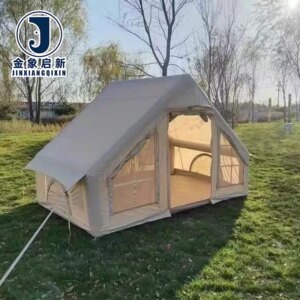
Tienda inflable portátil de camping al aire libre de lujo para uso en todas las estaciones, espacio grande, a prueba de lluvia, aislada, apertura automática rápida.
Read more -
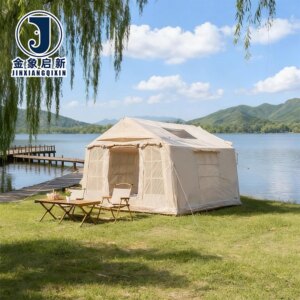
Tienda Inflable de Lujo para Glamping, Tienda de Aire Impermeable para Exterior con Bomba
Read more