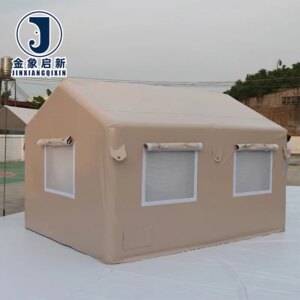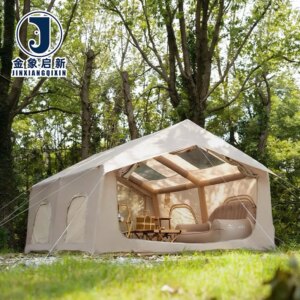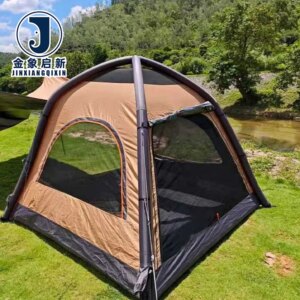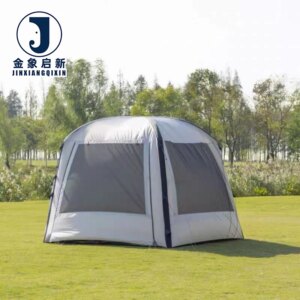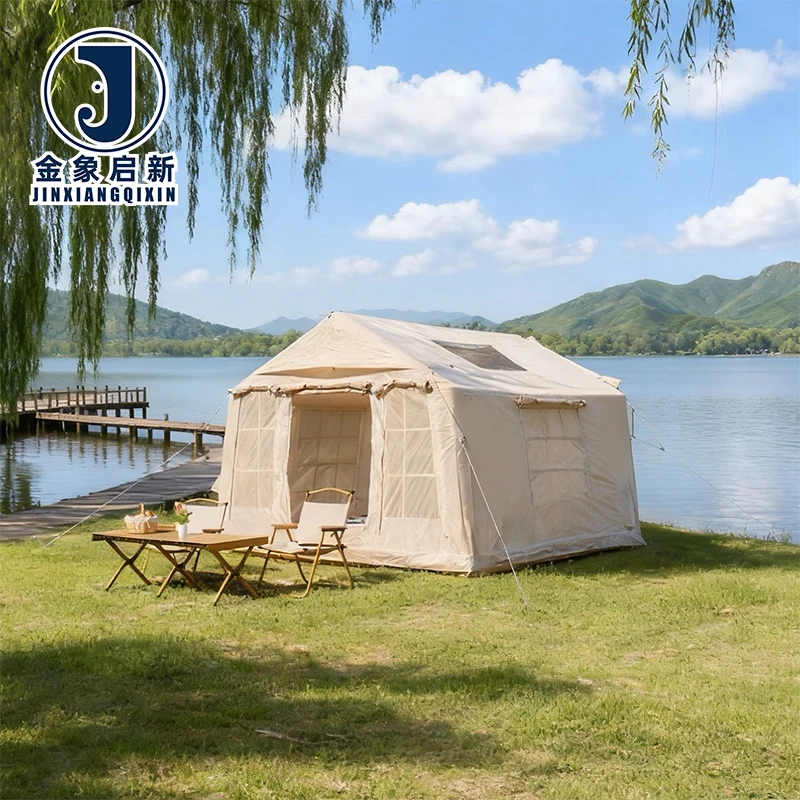
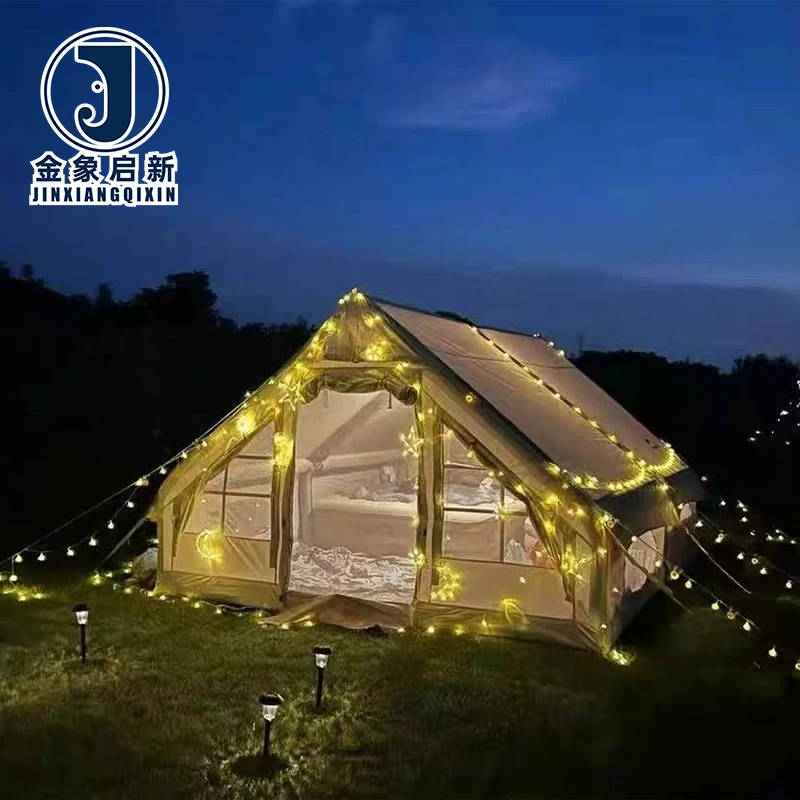
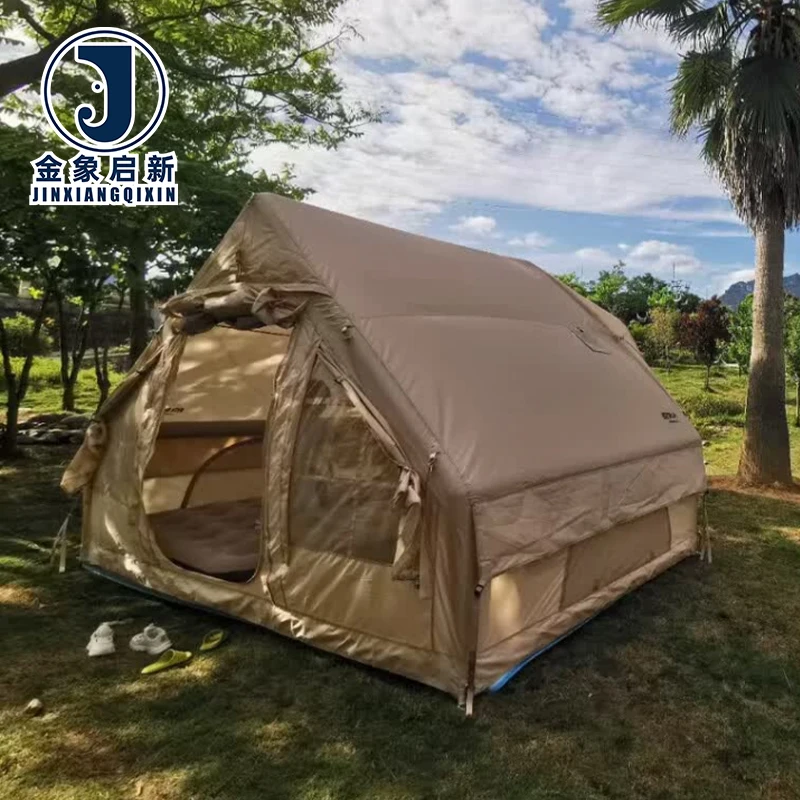
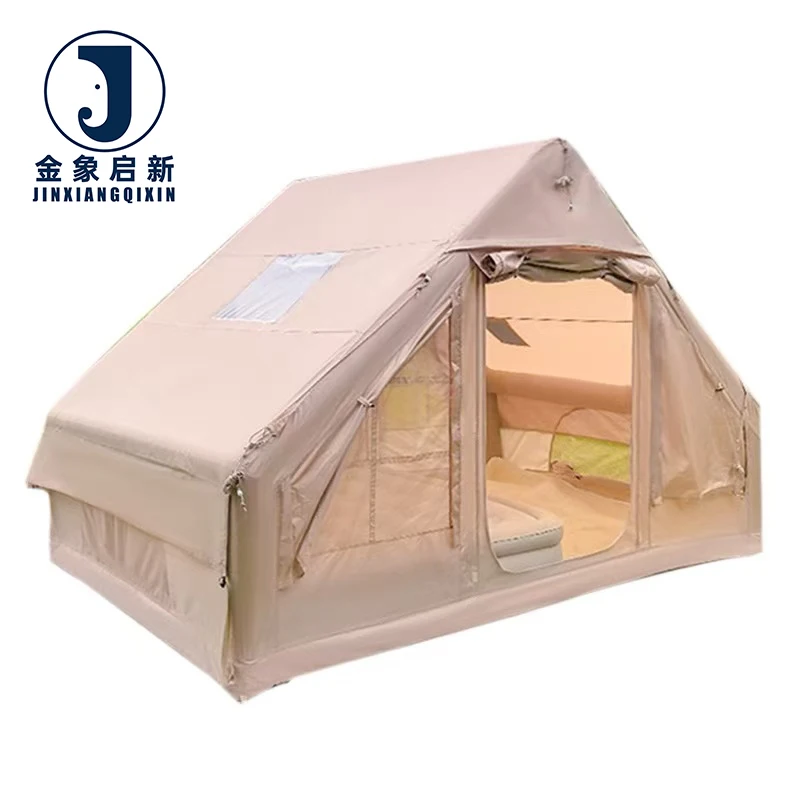
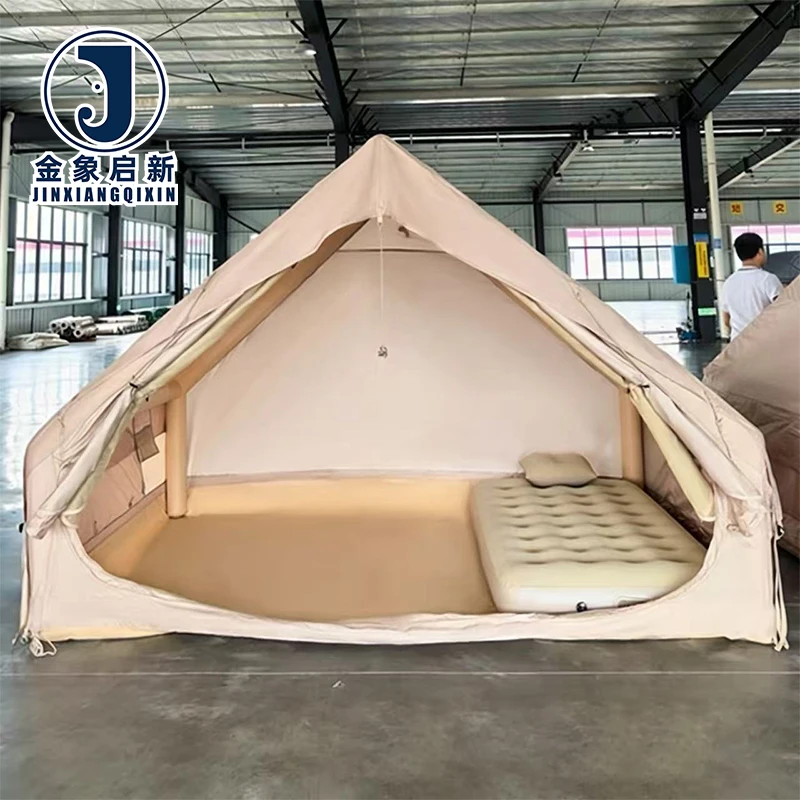
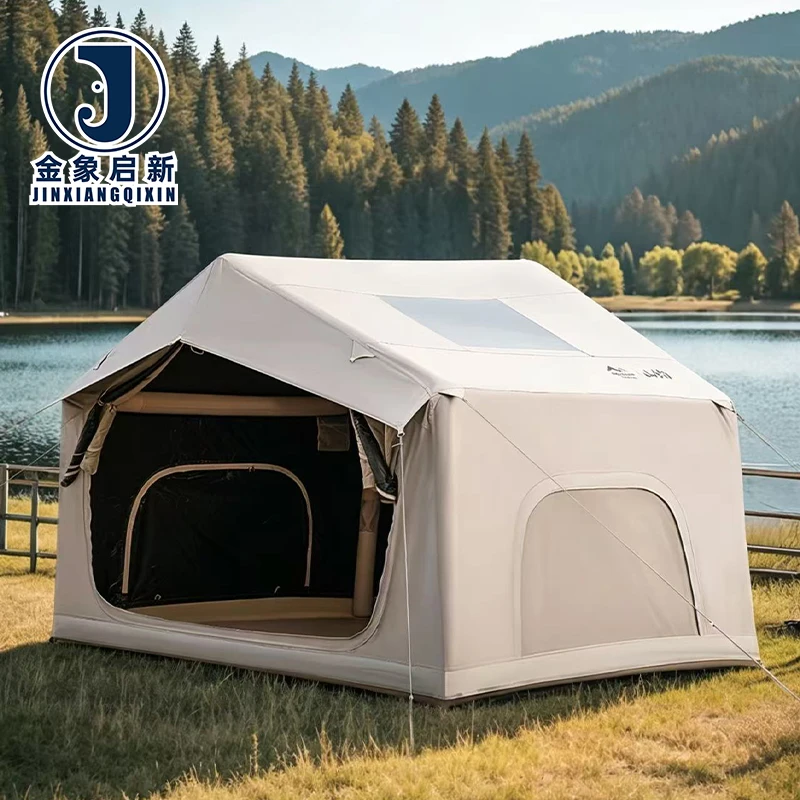
Inflatable Camping Tent 6-8 Person, 650g/m² PVC Knife-Coated Fabric, -20°C to 60°C — quick automatic opening with single-layer construction for repeated commercial deployment.
- Waterproof, UV-resistant, and tear-resistant PVC tarpaulin with 3000N tearing resistance
- Full customization: dimensions, color matching, logo printing, reinforced stress points
- 100% inflation test for 24 hours on every finished unit before dispatch
Backed by a 10-person R&D team delivering sample turnaround within days, three full production lines ensuring bulk capacity, and dedicated QA/QC inspection at every stage.
Description
In-House R&D Sampling — custom inflatable tent fabric specifications confirmed with physical samples developed in days, not weeks.
Technical Specifications
| Parameter | Value |
|---|---|
| Product Type | Inflatable Camping Tent 6-8 Person |
| Core Material | PVC knife-coated tarpaulin fabric |
| Material Weight | 650g/m² |
| Capacity | 6-8 Person |
| Operating Temperature Range | -20°C to 60°C |
| Construction | Single layer |
| Setup Mechanism | Quick automatic inflatable opening |
| Key Features | Waterproof, UV-resistant, tear-resistant, four-season design |
| Inflation Test | 100% inflation test for 24 hours on every finished unit |
| Customization Options | OEM & ODM, sample customization, pattern printing, custom dimensions, color matching, logo printing, reinforced stress points |
| Quality Control | Full-process QA/QC with dedicated on-site inspectors |
| Certifications | ISO 9001, ISO 14001, ISO 45001, CE |
Application Suitability
| Application | Exposure & Requirement |
|---|---|
| Industrial base camps for field teams | Continuous weather exposure, repeated assembly cycles, wind load on inflatable frame |
| Temporary storage at outdoor events | UV and rain exposure, rapid deployment and teardown, branding visibility |
| Mobile command centers on infrastructure projects | Dust and debris ingress prevention, temperature fluctuation, heavy foot traffic at entry points |
| Equipment housing at remote worksites | Abrasion from equipment movement, prolonged sun exposure, ground moisture contact |
| Commercial rental fleets | High-frequency deployment cycles, varied operator handling, transport compression |
| Expedition outfitting services | Extreme temperature swings, snow and rain loading, portability under field conditions |
Why Material Batch Consistency Matters More Than the Spec Sheet
A 650g/m² inflatable camping tent aftermarket supplier can only deliver what its coating process controls on every single roll.
When you order a batch of inflatable tents for a rental fleet or a remote worksite project, the specification sheet says 650g/m². But if one roll runs light and the next runs heavy, the inflatable frame stiffness varies from unit to unit. Operators notice it immediately — some tents hold pressure perfectly while others sag by afternoon. [NEED_CITE: coating weight variation impact on inflatable structure rigidity] I have seen coated fabric orders where the GSM drifted across the batch because the coating head was not recalibrated between runs, and the buyer only discovered the inconsistency after half the units were already deployed in the field.
Designing the Fabric Around the Inflatable Frame
The PVC knife-coated tarpaulin used in this inflatable tent is engineered to maintain structural integrity across an operating range of -20°C to 60°C. At the lower bound, the coating formulation resists embrittlement that would cause cracking at fold lines during winter deployment. At the upper bound, it prevents excessive softening that would let the inflatable beam deform under sustained internal pressure. The knife-coating process bonds the PVC layer directly to the base fabric, producing a peel strength that survives the repeated flex cycles of inflation and deflation over hundreds of commercial deployments.
Single-Layer Construction and the Strength-to-Weight Balance
A single-layer design reduces overall tent weight, which matters when rental operators load dozens of units onto a single transport vehicle. The trade-off is that every square meter of fabric must carry the full burden of weather resistance, structural tension, and abrasion protection. This is where the base fabric denier and weave density become critical — they determine whether the 650g/m² inflatable camping tent aftermarket supplier delivers a unit that handles commercial setup and teardown cycles without seam degradation or coating delamination at high-stress junctions. [NEED_CITE: single-layer coated fabric performance requirements for inflatable structures]
Reading Between the Numbers on the Data Sheet
GSM alone tells only part of the story. The 650g/m² weight here includes both the base fabric and the PVC coating applied by knife-coating. A higher GSM achieved by loading more filler into the coating does not improve tensile or tear performance — it can actually reduce it. Real strength comes from the base fabric denier and the thread count in the warp and weft directions. The coating weight then determines waterproofing, UV protection, and the surface characteristics needed for clean heat-welded seams. When these factors are balanced correctly, the fabric performs as a unified system rather than a heavy but brittle composite.
What Happens When the Coating Process Drifts
If the knife-coating head applies uneven pressure across the fabric width, one edge of the roll ends up with a thinner coating than the other. On an inflatable tent, this translates to panels with different stiffness levels joined at the seams. Under internal air pressure, the stiffer panel resists deformation while the lighter-coated panel stretches further. The seam sits right at the boundary, absorbing differential stress every time the wind gusts. [NEED_CITE: seam failure mechanisms in inflatable structures under cyclic pressure] Buyers who focus only on the quoted GSM miss this entirely, because the average weight across the roll can still match the specification while the distribution is dangerously uneven.
Why This Source Handles Custom Inflatable Tent Orders Differently
Three full production lines with 36 sets of professional processing equipment give this operation the throughput to handle fleet-scale orders without sacrificing per-unit attention. The 10-person R&D team manages material selection, pattern printing, and custom sizing with sample turnaround measured in days, allowing buyers to verify fabric behavior before committing to a production run. Every finished tent undergoes a 100% inflation test held for 24 hours, catching pressure loss issues that a quick visual inspection would miss. The dedicated QA/QC staff inspect at each production stage, not just at the packing bench, so coating weight deviations are caught before they reach the cutting table. Full customization — dimensions, color matching, logo printing, and reinforced stress points — is handled in-house rather than outsourced, keeping lead times predictable for commercial buyers.
Documentation & Verification
- Material specification sheet stating 650g/m² GSM, base fabric details, and coating type per roll
- Test reports for UV resistance treatment confirming performance grade where applicable
- Pre-shipment inflation test record with 24-hour hold results for each individual tent
- ISO and CE certificates covering quality management and product compliance standards
- Roll packing list with serialized batch data for traceability across multi-unit orders
- Certificate of origin and customs documentation supporting international shipment clearance
Fabrication, Handling & Storage
- Heat-weld seams at manufacturer-recommended temperature to match the PVC knife-coated layer adhesion profile
- Reinforce all stress points where inflatable beams meet the base panel using additional fabric patches
- Store rolled tents vertically on pallets to prevent compression creases in the 650g/m² coated fabric
- Avoid unfolding at temperatures below -20°C where the PVC coating reaches its lower flexibility boundary
- Use mild detergent and soft brush for cleaning — abrasive pads damage the coated surface finish
- Deploy patch kits using compatible PVC adhesive for field repairs on minor punctures or seam separation
Preparing Your Specification for Quotation
To get an accurate proposal, share your intended application and the environmental conditions the tents will face — whether that includes snow loading, sustained wind, or high-UV environments. Specify the exact dimensions and any color or logo printing requirements, and indicate the annual volume so batch consistency planning can be factored into the production schedule. Confirm whether your market requires specific fire classification documentation or UV resistance test reports for regulatory compliance.
Frequently Asked Questions
Q: What customization options are available for dimensions, color, and branding on commercial orders?
A: The in-house R&D team handles custom dimensions, color matching, logo printing, and pattern application. Samples are developed within days for buyer approval before production begins. Reinforced stress points can be specified for high-frequency deployment scenarios, and the full OEM and ODM service covers design adjustments through to final delivery.
Q: How is material consistency ensured across multiple tent units in a single batch?
A: The coating process is monitored at every production stage by dedicated QA and QC staff. Each roll is verified against the stated 650g/m² GSM before it reaches the cutting table. This prevents weight drift across the batch, ensuring uniform inflatable frame stiffness and panel behavior from the first unit to the last.
Q: What testing and certification documentation ships with each order?
A: Every order includes a material specification sheet, pre-shipment inflation test records showing 24-hour hold results, ISO and CE certificates, and a detailed packing list. UV resistance and flame-retardant test reports are provided where applicable to the specified grade, along with certificates of origin for customs processing.
Q: What is the typical sample development and production lead time for custom specifications?
A: Sample development for custom sizing, color, and branding is completed within days through the in-house R&D team. Production lead times for confirmed orders depend on order volume and customization complexity, with the three production lines providing capacity to manage fleet-scale deployments on schedule.
Q: How are welded seams and stress points reinforced for commercial-grade durability?
A: Welded seams are executed at controlled temperature and pressure settings matched to the PVC knife-coated fabric. Additional reinforcement patches are applied at beam junctions and high-flex areas identified during the design review. The 24-hour inflation test on every finished tent validates seam integrity before the unit leaves the facility.
Related products
-
Tienda Inflable de PVC de Lujo para Glamping al Aire Libre Impermeable con Apertura Automática Rápida Diseño Plegable de Cuatro Estaciones y Bomba
Read more -
Tienda de Camping Inflable de PVC A Prueba de Agua de Cuatro Estaciones Certificada por CE Apertura Automática Rápida 3000mm+ Venta Directa de Fábrica
Read more -
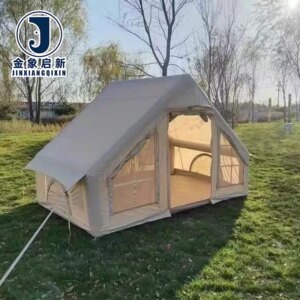
Tienda inflable portátil de camping al aire libre de lujo para uso en todas las estaciones, espacio grande, a prueba de lluvia, aislada, apertura automática rápida.
Read more -
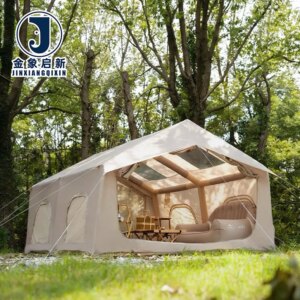
Tienda de Camping Inflable de Cuatro Estaciones - Recubierta de PVC, Impermeable, Ecológica, Inflación Rápida, Certificada CE, ODM/OEM Aceptado
Read more