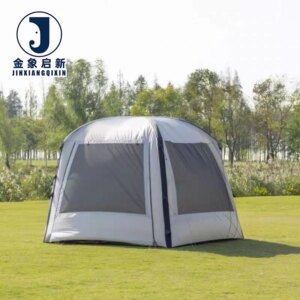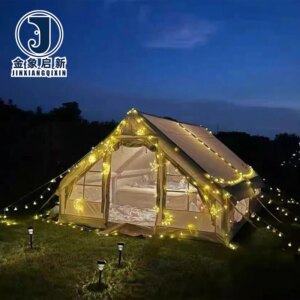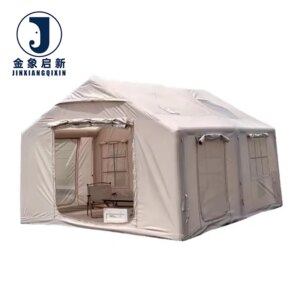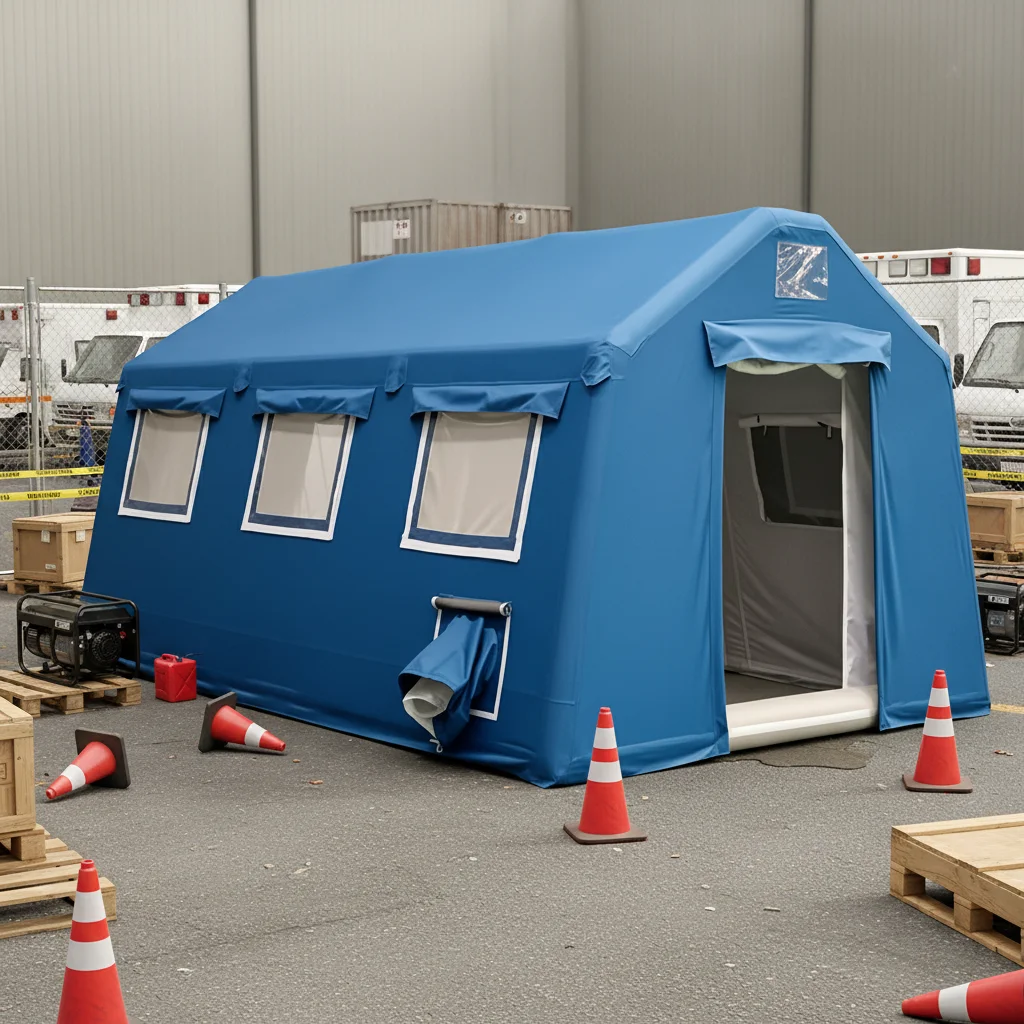
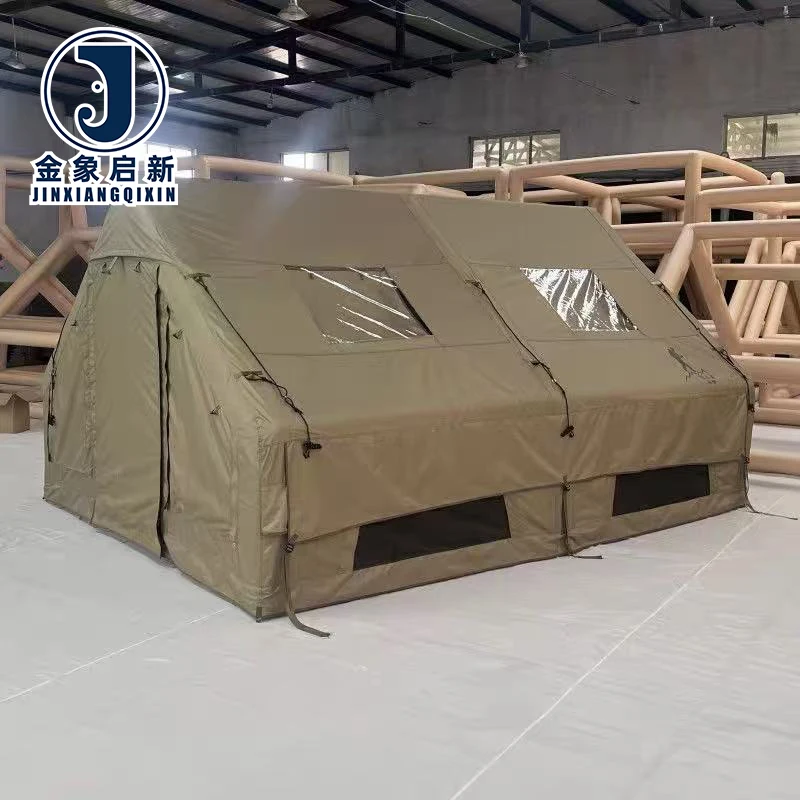
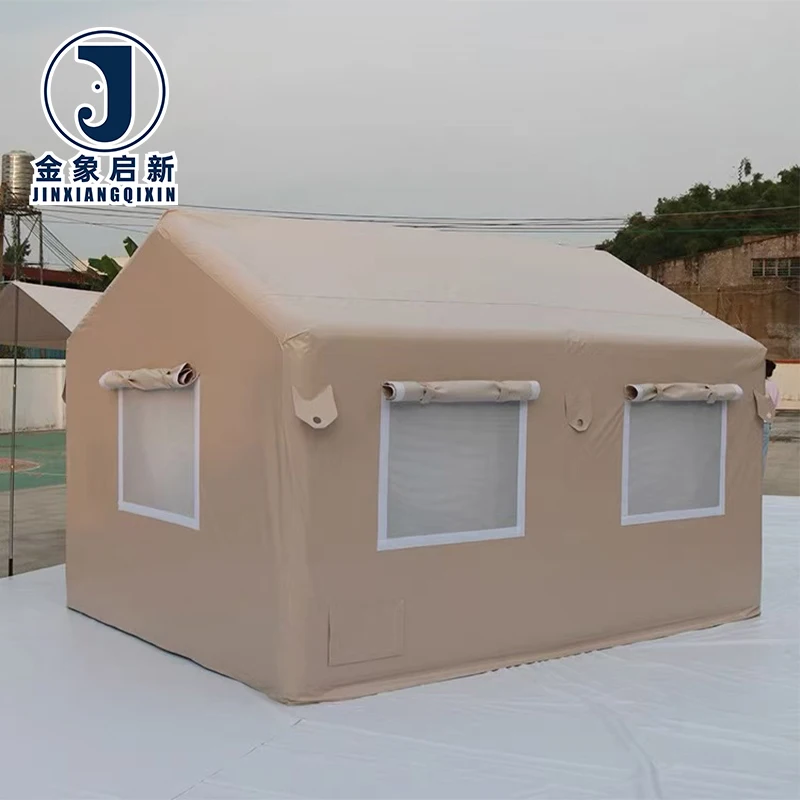
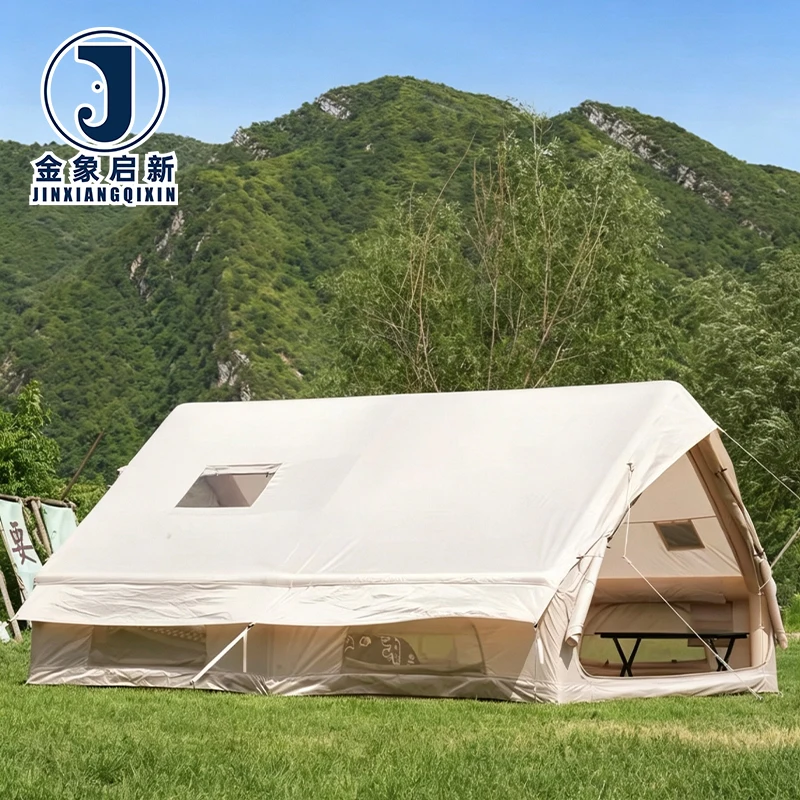
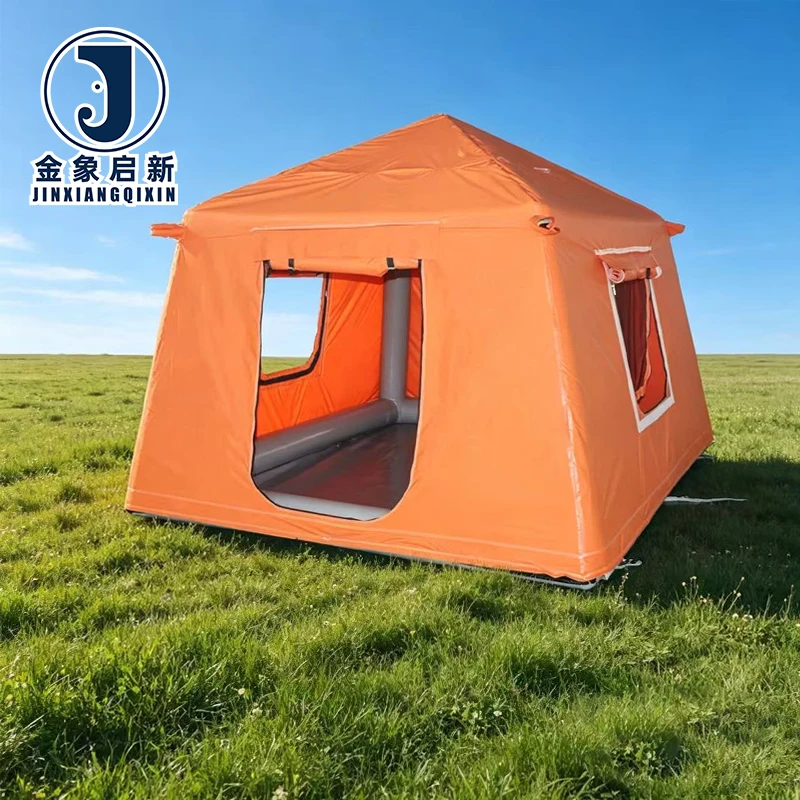
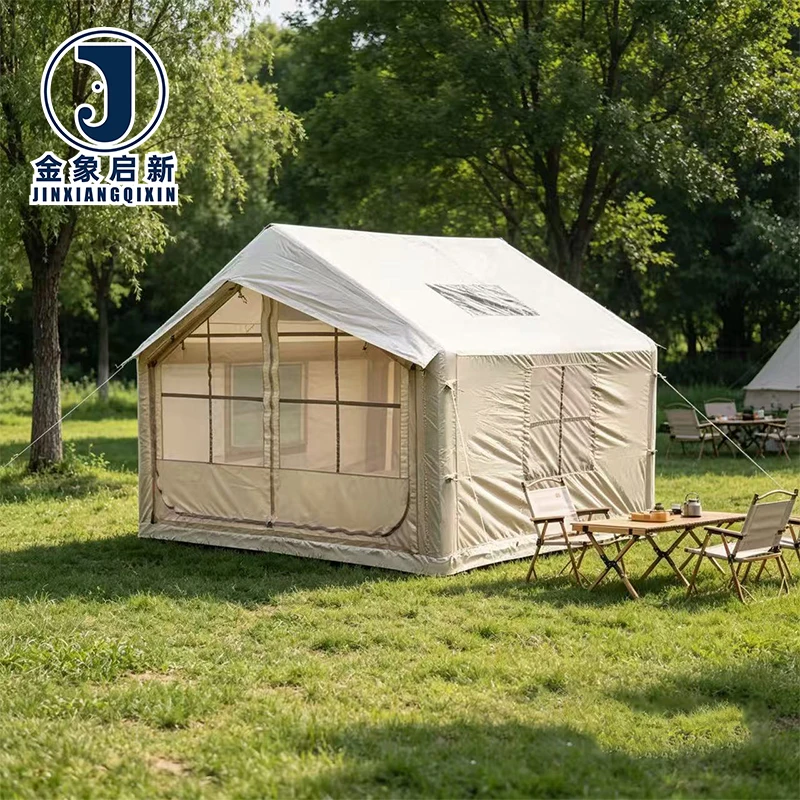
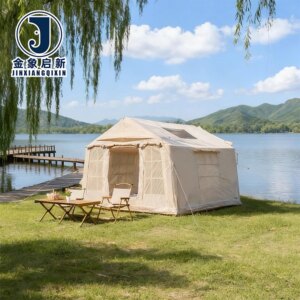
PVC Inflatable Tent — waterproof, UV-resistant, and tear-resistant single layer construction for portable commercial deployment.
- Coated fabric weight and base weave determine tensile behaviour under repeated inflation cycles and flex at seam joints
- Surface treatment balance affects cleanability after site use and long-term weather exposure
- 3 full production lines, 10-person R&D team, 100% pre-shipment inspection for batch-consistent output across custom sizes and printed patterns
Description
Coated fabric expertise — Nearly 30 years of PVC coating process control applied to inflatable tent production, ensuring batch-to-batch waterproof and structural consistency across every roll.
Technical Specifications
| Parameter | Value |
|---|---|
| Product Type | PVC Inflatable Camping Tent |
| Core Material | PVC Tarpaulin |
| Construction | Single Layer, Portable |
| Key Performance | Waterproof, UV-Resistant (test basis not stated), Tear-Resistant |
| Customization | OEM & ODM (sample customization, pattern printing) |
| Production Facility | 9,180 m² |
| Production Lines | 3 full production lines |
| Processing Equipment | 36 sets of professional equipment |
| R&D Team | 10 technicians |
| Quality Control | Full-process inspection with dedicated QA & QC staff |
| Certifications | ISO9001, ISO14001, ISO45001, CE |
Application Suitability
| Application | Exposure & Requirement |
|---|---|
| Outdoor event portable workspace | Repeated inflation cycles, public foot traffic, variable weather exposure, rapid setup and teardown |
| Temporary equipment storage on construction sites | Dust and debris ingress, moisture from ground contact, abrasion from equipment loading |
| Mobile facilities for industrial sites | UV exposure over extended deployment, wind loading on inflated structure, chemical exposure from site operations |
| Commercial emergency rapid deployment shelters | Immediate inflation reliability, waterproof integrity under rainfall, transport and redeployment durability |
| Wholesale distribution of temporary structures | Batch consistency across large orders, colour uniformity for brand-matched deployments, documentation for resale compliance |
Why Waterproof Claims Fail in the Field Without Verified Process Control
A stated waterproof rating means nothing if the coating weight drifts between production batches.
Purchasing teams for inflatable tent fabric regularly face a familiar pattern: the first sample performs flawlessly in rain testing, but by the third or fourth container the seams begin weeping at the weld lines. The root cause is rarely the base fabric — it is inconsistent coating application that leaves thin spots at stress concentrations [NEED_CITE: coating weight variance and waterproof failure rates in PVC tarpaulin]. When an Inflatable Tent manufacturer lacks in-line thickness monitoring, the waterproof performance of the finished shelter becomes a lottery that the end user ultimately pays for.
Single Layer Construction That Balances Portability and Structural Integrity
The single layer design of this PVC Inflatable Tent reduces packed weight and volume without compromising the airtight seal required for sustained inflation. For commercial event operators and construction procurement teams, this means fewer personnel are needed for deployment and the shelter can be relocated between sites within a single shift. The PVC tarpaulin core material provides the tear resistance needed to withstand the flexing that occurs each time the structure is inflated and deflated, a cycle that weaker laminates fail to survive beyond a few seasons.
OEM and ODM Customisation From Design Brief to Container Loading
A 10-technician R&D team handles the full custom Inflatable Tent development cycle — from interpreting the buyer’s dimension drawings to producing a physical sample within days for approval before mass production commits. Pattern printing, custom sizing, and colour matching are managed in-house rather than outsourced, which keeps the critical path short and the accountability clear. When specifications shift mid-project, the same team adjusts the production parameters without requiring the buyer to restart the approval loop from scratch.
Reading the Specifications That Actually Determine Field Performance
Waterproof integrity in an inflatable shelter depends on the interaction between the PVC coating weight and the base fabric’s weave density. A heavier coating does not automatically mean better performance if the underlying fabric has low denier count — the coating will bridge the gaps but will crack at fold points over repeated inflation cycles [NEED_CITE: relationship between base fabric denier and coating adhesion in PVC tarpaulin]. Tear resistance is governed more by the warp and weft yarn density than by total fabric weight alone, which is why two PVC tarpaulins at identical GSM can behave very differently when a puncture begins to propagate. UV resistance requires verified treatment rather than assumed protection; buyers should confirm the specific UV test standard applicable to their deployment region before committing to volume orders. The single layer construction concentrates all of these performance demands into one material pass, making coating uniformity non-negotiable.
The Hidden Cost of Specifying Inflatable Tent Fabric on Price Per Square Metre Alone
When procurement decisions rest primarily on unit cost, the PVC tarpaulin supplied for inflatable tent production tends to arrive with coating weights that sit at the absolute minimum of the quoted range. The shelter inflates correctly on day one, but the reduced coating thickness accelerates wear at the valve surround and the base-to-wall junction — the two points where flexing concentrates. Buyers then face warranty claims from their own customers, replacement costs that exceed the original savings, and the reputational damage of a shelter that fails during a paid event [NEED_CITE: warranty claim frequency related to PVC tarpaulin coating weight shortfall]. Colour variation between rolls in the same shipment compounds the problem when multiple shelters are deployed side by side at a single venue.
Production Capability Backed by Verifiable Process Controls
Three full production lines and 36 sets of professional equipment provide the capacity to fulfil large-volume custom Inflatable Tent orders without splitting production across external workshops where quality oversight weakens. Dedicated QA and QC staff inspect every production stage rather than relying on end-of-line sampling, catching coating irregularities before the fabric reaches the cutting table. The 9,180 m² facility supports raw material staging that prevents the rush-ordering of PVC resin batches with unverified properties. Sample development within days allows buyers to physically validate material hand-feel, weld behaviour, and colour accuracy before authorising the full production run. ISO9001, ISO14001, ISO45001, and CE certifications are maintained as active production standards rather than display certificates.
Documentation & Verification
- Material specification sheet stating PVC tarpaulin core material, performance treatments, and coating details per batch
- UV and waterproof test reports provided where applicable to support stated performance claims
- Pre-shipment inspection record with batch-specific quality data included in every consignment
- ISO9001, ISO14001, ISO45001, and CE certificates supplied for international customs clearance
- Roll packing list with individual roll identification for traceability back to production records
Fabrication, Handling & Storage
- Heat welding parameters must be calibrated to the specific PVC tarpaulin coating thickness to avoid seam failure at inflation pressure points
- Store rolls horizontally on pallets to prevent permanent creasing that compromises airtight integrity during inflation
- Avoid dragging cut panels across unprotected ground before assembly to preserve the waterproof coating surface
- Use PVC-compatible adhesives only for field repairs, as solvent-based products can dissolve the coating layer
- Allow material to acclimatise before inflation in cold conditions to prevent stiff-fabric cracking at fold lines
- Pattern printing should be specified during sample approval to confirm ink adhesion on the chosen PVC surface finish
What We Need to Move Your Inflatable Tent Project Forward
To provide an accurate specification recommendation and sample, share your target dimensions, anticipated deployment environment, and the volume of units or linear metres required per order. If your market mandates specific fire safety or UV performance grades, state the applicable standard so the correct treatment can be confirmed before sampling. Let us know whether you require finished shelters or roll stock for your own fabrication line, and whether pattern printing or custom colour matching forms part of the brief.
Frequently Asked Questions
Q: How is batch-to-batch waterproof and UV-resistant performance verified before shipment?
A: Every production batch undergoes in-process inspection by dedicated QA and QC staff, with coating weight checked against the agreed specification. Where UV or waterproof test reports are applicable to your order, they are included in the shipment documentation so you can verify performance claims independently upon receipt.
Q: What custom sizing, colour, and pattern printing options are available for inflatable tent fabric?
A: The 10-technician R&D team supports OEM and ODM customisation including non-standard dimensions, colour matching, and pattern printing directly onto the PVC tarpaulin surface. A physical sample is produced within days for your approval, ensuring the finished product meets your requirements before mass production begins.
Q: What is the sample approval process and lead time for OEM/ODM inflatable tent orders?
A: Once your specifications are confirmed, a sample is developed and dispatched for your evaluation. After you approve the sample, mass production proceeds with the same material batch and process parameters locked in, ensuring the bulk order matches the approved sample exactly.
Q: How are roll-to-roll consistency and colour variation controlled across large-volume orders?
A: All three production lines operate under the same full-process quality inspection system, with dedicated QA and QC staff monitoring coating application and colour output at each stage. This prevents the drift in shade and coating weight that causes visible differences when multiple shelters are deployed side by side.
Q: What certifications and documentation are provided for customs clearance in international shipments?
A: Each shipment includes ISO9001, ISO14001, ISO45001, and CE certificates alongside a roll packing list and certificate of origin. Additional documentation such as test reports and material specification sheets are supplied as applicable to your order to support smooth customs processing.
Related products
-
Tienda inflable portátil de camping al aire libre de lujo para uso en todas las estaciones, espacio grande, a prueba de lluvia, aislada, apertura automática rápida.
Read more -
Tienda de Camping Inflable Impermeable Tienda de Aire Exterior para Camping Refugio de Tienda Inflable
Read more -
Tienda Inflable Tamaño Familiar Cuatro Estaciones Apertura Automática Rápida Impermeable 2-8 Personas Venta Directa de Fábrica
Read more -
Tienda Inflable de Lujo para Glamping, Tienda de Aire Impermeable para Exterior con Bomba
Read more