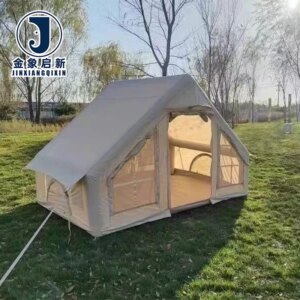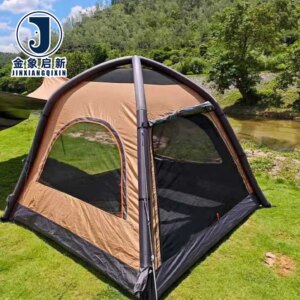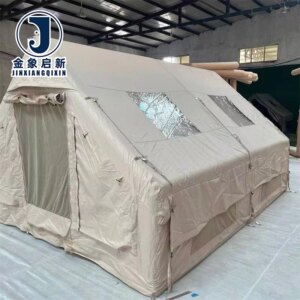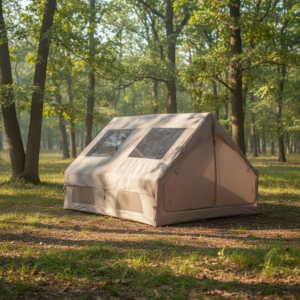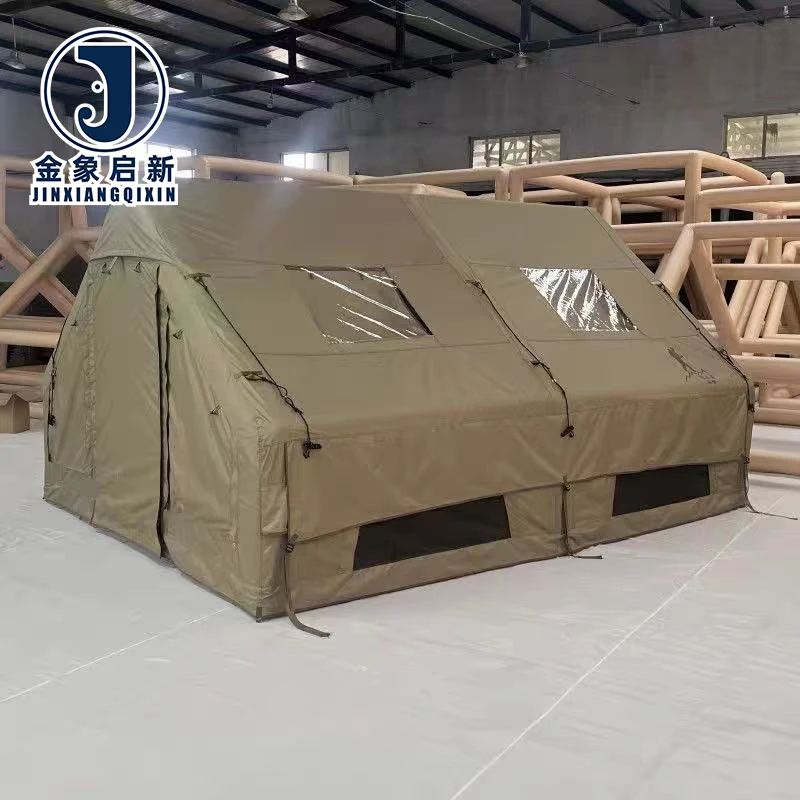
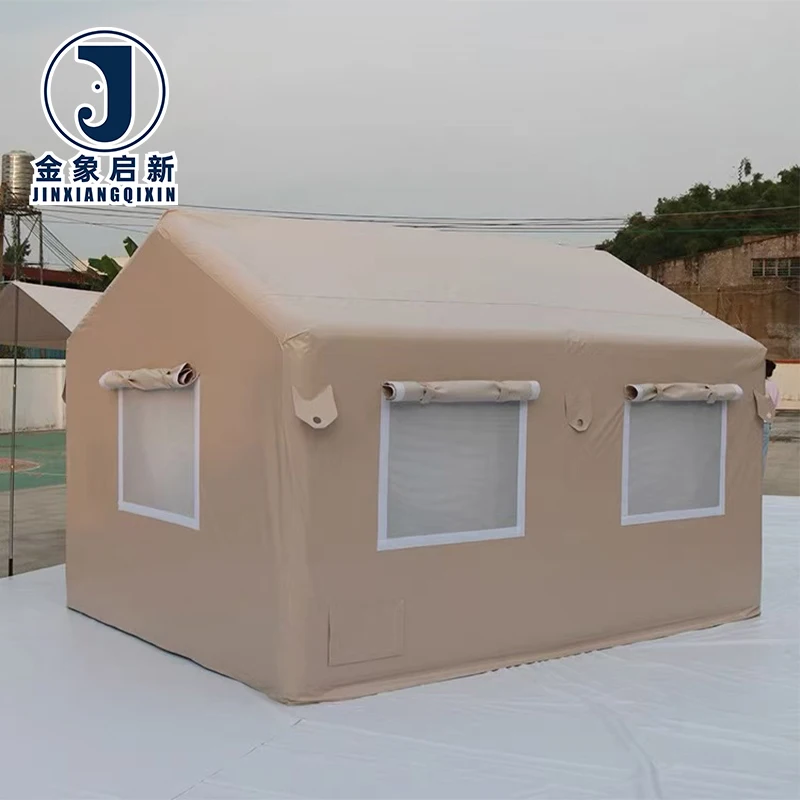
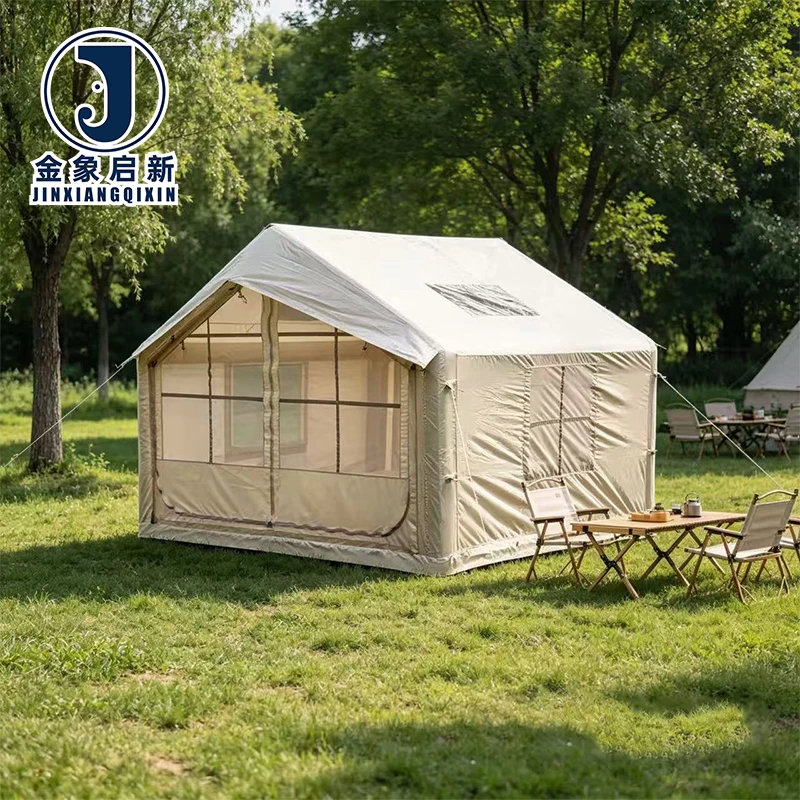
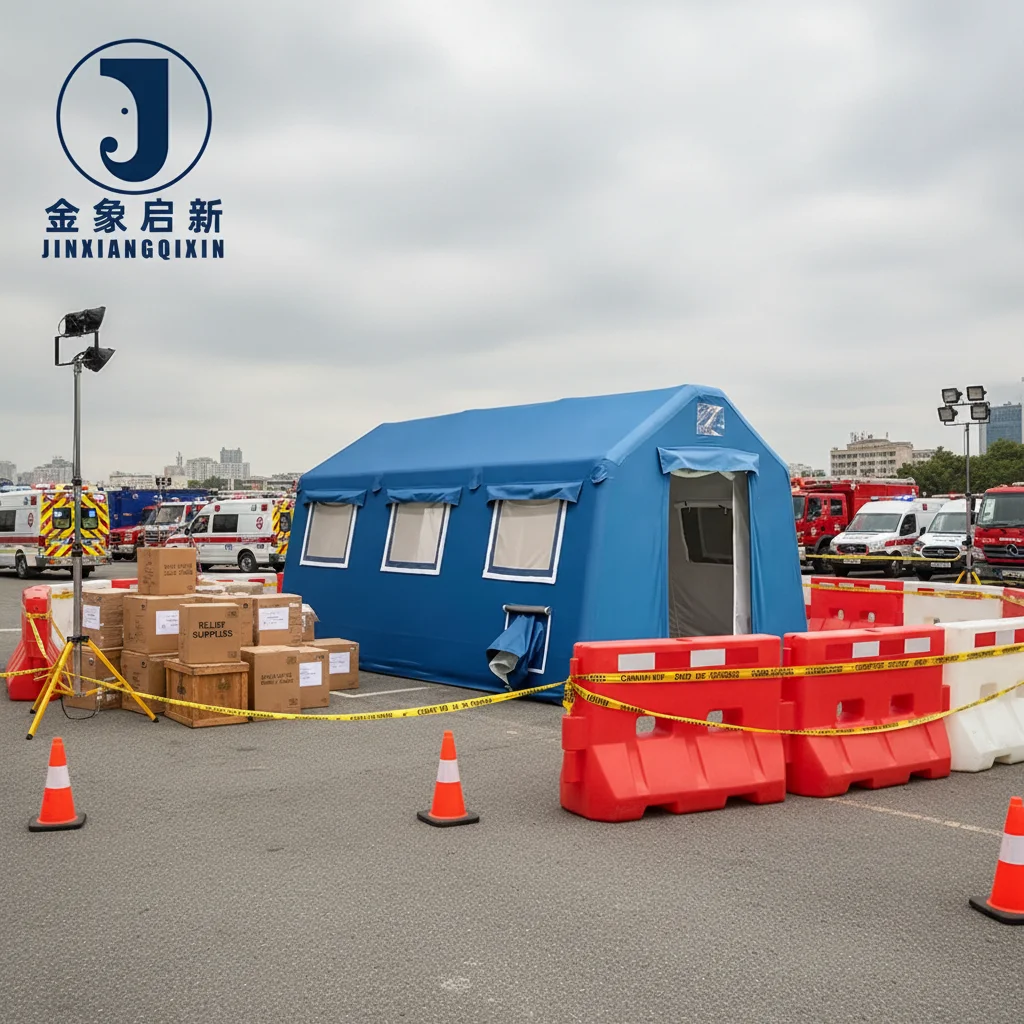
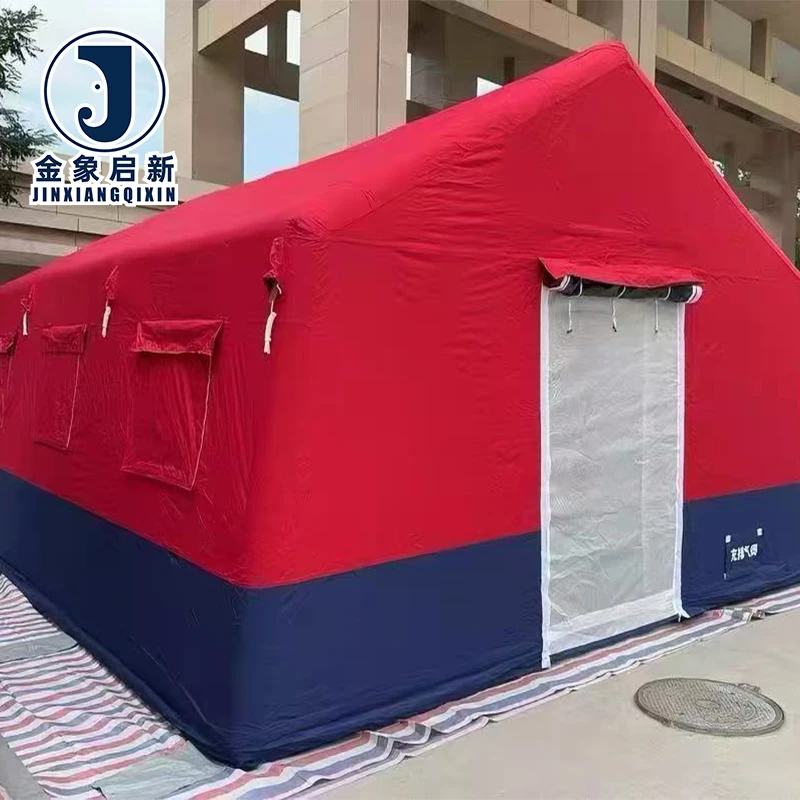
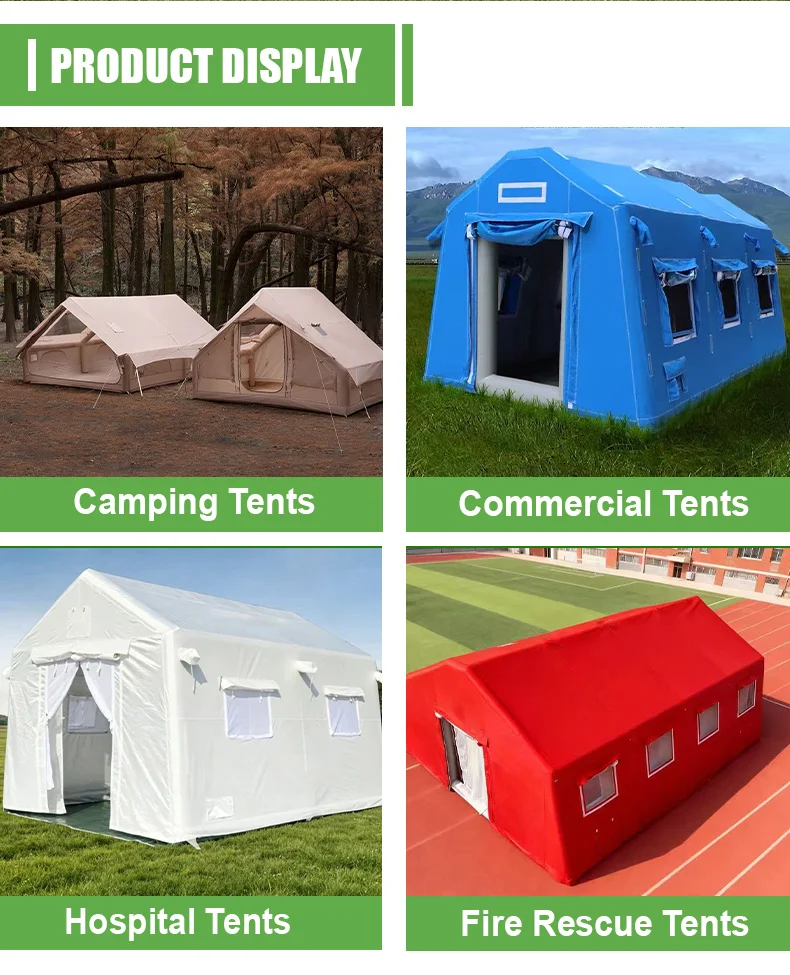
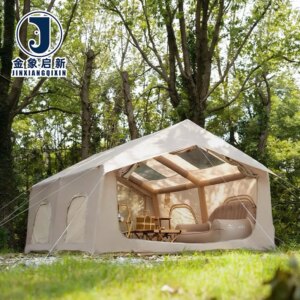
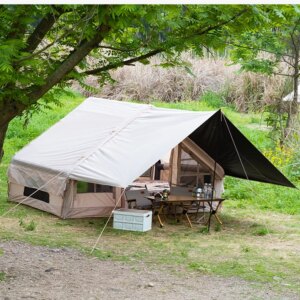
Waterproof Inflatable Camping Tent, PVC Tarpaulin, Single-Layer Four-Season — engineered for rapid-deploy shelters in remote and temporary sites.
- Coated PVC tarpaulin construction delivers waterproof integrity and structural air-beam stability across continuous outdoor exposure
- UV-resistant and tear-resistant treatment maintains fabric performance through repeated inflation cycles and transport handling
Supported by a 10-technician R&D team for custom dimensions, pattern printing, and pre-production sample approval.
Description
Process-Controlled Coated Fabric — Nearly 30 years focused on PVC coating weight and adhesion, applied here to inflatable tent structures where air-beam integrity depends on consistent fabric performance.
Technical Specifications
| Parameter | Value |
|---|---|
| Product Type | Inflatable Tent |
| Core Material | PVC Tarpaulin |
| Key Performance | Waterproof, UV-Resistant (test basis not stated in source), Tear-Resistant |
| Construction | Single layer |
| Season Rating | Four-season |
| Setup Type | Air tent / Automatic opening |
| Customization Service | OEM & ODM, sample customization, pattern printing |
| Standards | ISO 9001, ISO 14001, ISO 45001, CE |
Application Suitability
| Application | Exposure & Requirement |
|---|---|
| Outdoor event management | Rapid deployment, repeated inflation cycles, public visibility requiring colour consistency |
| Temporary site accommodations | Continuous weather exposure, wind loading on air beams, remote site logistics |
| Industrial storage shelters | UV and rain exposure over extended periods, interior dryness critical for stored goods |
| Commercial camping equipment manufacturing | Batch-to-batch fabric consistency for branded product lines, warranty-grade material reliability |
| Remote project site deployment | Transport abrasion during transit, setup by non-specialist crews, four-season temperature swings |
Why Consistent Coating Weight Matters More Than Stated GSM for Inflatable Tent Structures
Uniform coating adhesion across every roll determines whether air beams hold pressure through repeated inflation cycles.
When sourcing PVC tarpaulin for inflatable structures, many buyers focus on the GSM figure on the quotation without verifying that coating weight and base fabric denier are balanced. A lightweight base fabric overcoated to reach a target GSM may pass a scale check but fail under the cyclic stress of inflation and deflation. The coating-to-yarn bond is what transfers load across the air-beam wall [NEED_CITE: tensile and adhesion test methods for coated fabrics per ISO 1421]. Without controlled coating application, the material can delaminate at seam lines long before the fabric itself shows wear.
Air-Beam Fabric Demands That Standard Tarpaulin Grades Cannot Meet
An inflatable camping tent manufacturer requires fabric that performs as a structural component, not merely a weather barrier. Each air beam acts as a pressurised cylinder, placing continuous hoop stress on the PVC tarpaulin wall and demanding reliable tear resistance across both warp and weft directions. Our custom inflatable tent production starts with base fabric selection matched to the expected internal pressure of the beam design, ensuring the coated material supports the structure rather than simply containing air.
Controlling Batch Colour and Coating Uniformity Across Production Runs
Tent, awning and inflatable manufacturers buying fabric by the roll or as finished units need confidence that panels cut from different rolls will match once assembled side by side. Colour variation between batches is a frequent source of rejection in finished inflatable products, particularly when panels are joined along visible seam lines [NEED_CITE: colour fastness evaluation methods for PVC coated textiles]. Dedicated QA and QC inspection at every production stage, with 100% pre-shipment check, catches deviation before rolls leave the facility.
Reading the Specification Sheet Beyond the GSM Figure
The stated GSM of a PVC tarpaulin tells you the combined weight of base fabric and coating but reveals nothing about how that weight is distributed. A 1000-denier base fabric with a lighter coating will behave very differently under inflation pressure than a 500-denier fabric carrying a heavier coat to reach the same GSM. Tear propagation resistance depends primarily on the base fabric weave density and yarn tenacity, while waterproof integrity and surface durability come from the coating layer. For inflatable tent applications, both layers must be specified independently and verified against the test reports accompanying each batch. Base fabric denier and weave count should be reviewed alongside coating weight to confirm the material will withstand repeated pressurisation without seam creep or coating crack [NEED_CITE: DIN standard methods for determining tear strength of coated fabrics].
What Happens When Fabric Specification Does Not Match the Air-Beam Design
A roll that meets the GSM target on paper but carries insufficient coating adhesion will often fail at the welded seam rather than the fabric body — the exact point where inflation pressure concentrates during setup. Buyers who accept material without reviewing the adhesion test data risk receiving inflatable tents that pass initial inflation but develop micro-leaks along heat-welded joints after a few deployment cycles. Batch inconsistency compounds this problem: when rolls within the same order vary in coating thickness, welding parameters that work on one panel produce weak bonds on the next [NEED_CITE: heat welding behaviour of PVC coated fabrics at variable coating weights].
Production Capability Aligned with Inflatable Tent Requirements
Three full production lines and 36 sets of professional processing equipment provide the capacity to deliver roll stock or finished inflatable units within the timelines industrial buyers require. The 10-person R&D team handles material selection, pattern printing, custom sizing and sample development, allowing OEM and ODM projects to move from concept to approved sample in days rather than weeks. Strict full-process quality inspection with dedicated QA and QC staff ensures that every roll or finished tent is checked against the purchase specification before dispatch. Pattern printing and branding options are available for commercial camping equipment manufacturers who need consistent visual identity across production batches. Production runs are supported by complete documentation packages covering material data, test reports and compliance certificates for cross-border procurement.
Documentation & Verification
- Material specification sheet stating PVC tarpaulin base fabric denier, coating type and measured GSM per roll
- Test report for UV-resistant grades supplied where applicable to the ordered specification
- Pre-shipment inspection record confirming colour consistency and coating adhesion across all rolls in the order
- ISO 9001, ISO 14001, ISO 45001 and CE certificates included with every consignment
- Roll packing list with batch traceability for inflatable tent fabric and finished unit shipments
Fabrication, Handling & Storage
- Heat-weld seams using temperature and dwell settings matched to the PVC tarpaulin coating thickness to avoid burn-through or cold joints
- Store rolls upright on end-caps in a dry warehouse to prevent permanent creasing of the coated surface
- Allow cold-stored rolls to reach ambient temperature before unrolling to avoid coating crack at low flex points
- Use compatible PVC-based repair adhesive for field patching that bonds to the coating chemistry of the inflatable tent fabric
- Plan panel cutting layout to minimise off-cuts and position seams away from maximum-stress zones on air beams
Moving Your Inflatable Tent Project to the Quotation Stage
Provide the intended application environment, expected deployment frequency and any market-specific compliance requirements so the correct PVC tarpaulin grade and treatment package can be recommended. Confirm whether you require roll stock for in-house fabrication or finished inflatable units with air-beam assembly. Share target dimensions, colour references and any pattern printing specifications to allow sample development to begin without delay.
Frequently Asked Questions
Q: What customisation options are available for dimensions, air-beam layout and branding on inflatable tent orders?
A: OEM and ODM customisation covers size adjustments, air-beam configuration, pattern printing and colour matching. The R&D team develops pre-production samples based on your drawings or reference units for approval before bulk manufacturing begins. Sample turnaround is measured in days for standard configurations.
Q: How is batch colour consistency maintained across multiple rolls in a single inflatable tent fabric order?
A: Dedicated QA and QC staff inspect every production stage, with 100% pre-shipment verification against the approved colour reference. Rolls are grouped by production batch on the packing list so that panels cut from adjacent rolls are matched during fabrication, reducing the risk of visible shade variation on assembled units.
Q: What UV and waterproof test documentation accompanies each inflatable tent production batch?
A: Test reports for UV-resistant treatment and waterproof performance are supplied where applicable to the grade ordered. The material specification sheet included with each shipment confirms base fabric denier, coating type and GSM, providing full traceability from raw material through to finished roll or unit.
Q: What lead times apply to custom OEM and ODM inflatable tent orders?
A: Lead times depend on order volume, customisation complexity and current production line scheduling. After sample approval, the quotation confirms the delivery window. The facility operates three full production lines, supporting bulk capacity and reliable on-time dispatch for confirmed orders.
Related products
-
Tienda Inflable de PVC de Lujo para Glamping al Aire Libre Impermeable con Apertura Automática Rápida Diseño Plegable de Cuatro Estaciones y Bomba
Read more -
Tienda de campaña inflable resistente a los UV personalizable para cuatro estaciones, impermeable, de PVC, con apertura automática rápida, para 2-3 personas, exterior.
Read more -
Tienda de Camping Inflable Impermeable de PVC Tienda de Aire Exterior Montaje Fácil Refugio Familiar para Camping
Read more -
Tienda de Camping Inflable PVC Impermeable Resistente a los UV Cuatro Estaciones Apertura Automática Rápida Personalizable 2-3 Personas
Read more