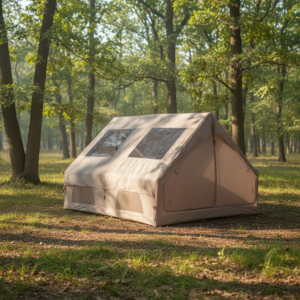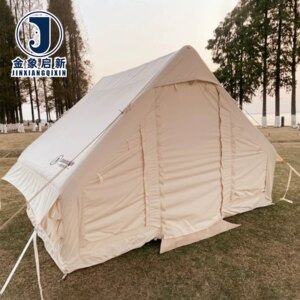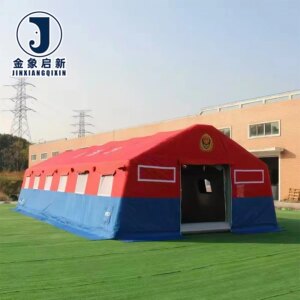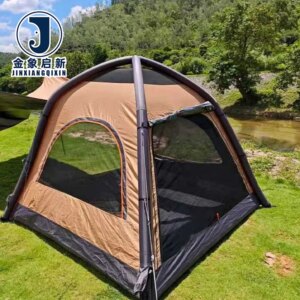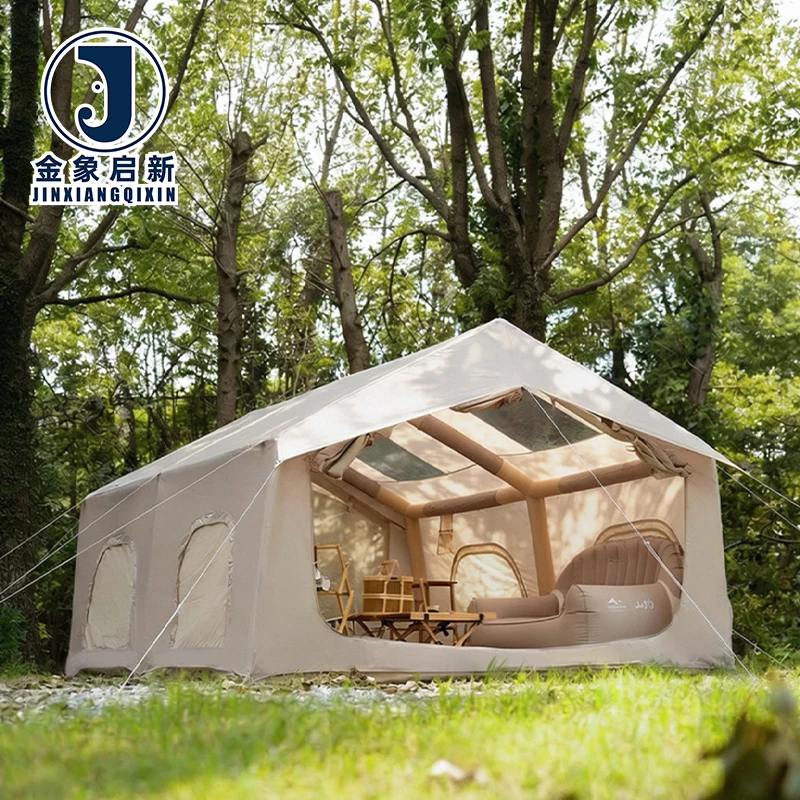
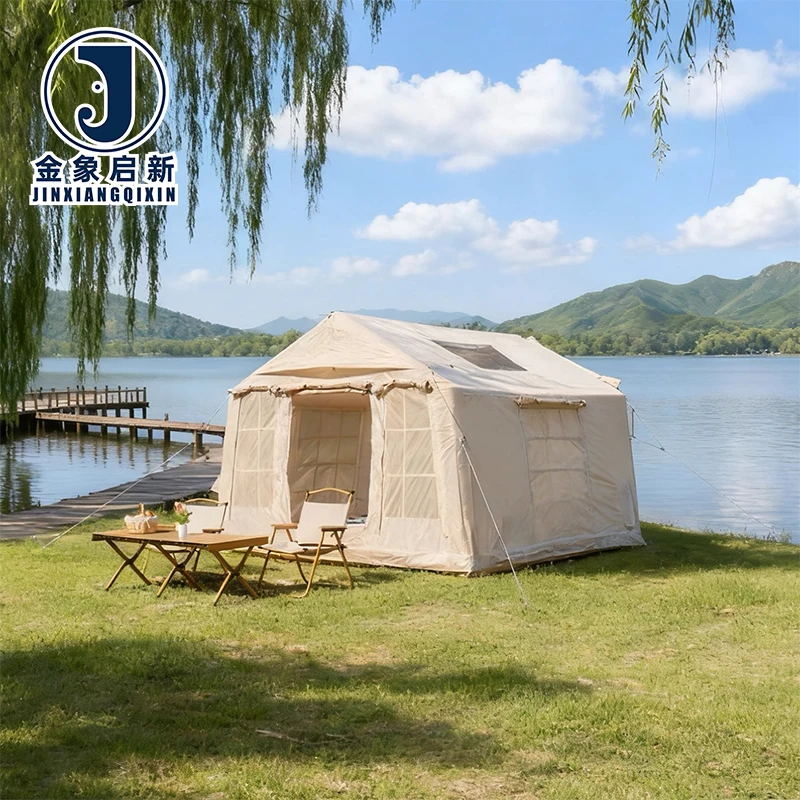
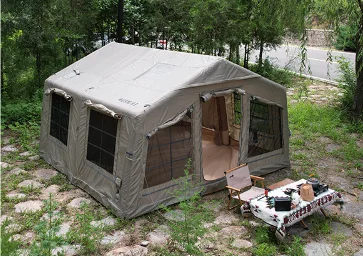
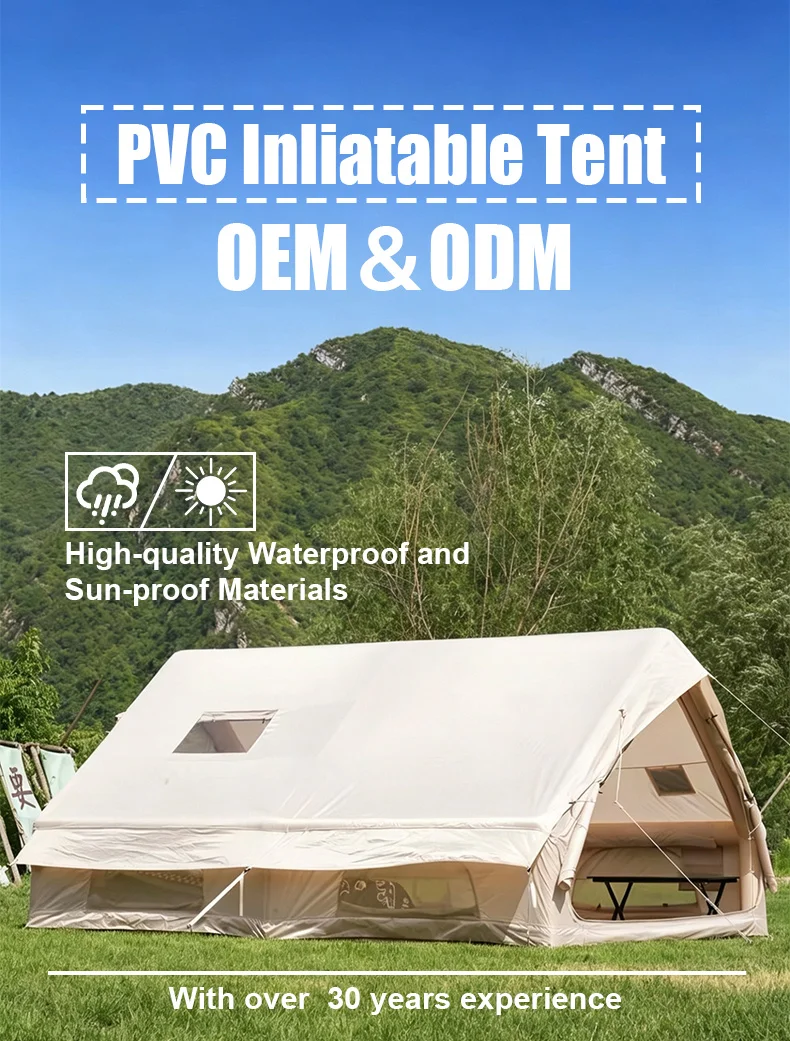
Four-Season Inflatable Tent for Camping, Durable PVC, Quick Automatic Opening — single layer construction designed for all-weather deployment across construction sites and remote workspaces.
Engineered for rapid field setup, this PVC inflatable tent addresses the demand for temporary shelter that withstands site abuse while maintaining batch consistency across multiple units. Anti-UV resistant treatment supports extended outdoor service life in varied climate conditions.
- Four-season suitability for year-round industrial operations
- OEM & ODM customization supported by 10-person R&D team
- 100% pre-shipment inspection with full documentation traceability
- Certified ISO9001, ISO14001, ISO45001, CE
Description
Full OEM & ODM Custom Capability — supported by a 10-technician R&D team handling material selection, pattern printing, and sample development from concept to confirmed specification before production begins.
Technical Specifications
| Parameter | Value |
|---|---|
| Product Type | Inflatable Tent |
| Core Material | Durable PVC material |
| Construction | Single layer construction |
| Key Performance | Quick automatic opening, all-weather suitability, four-season design |
| Waterproof | Yes (grade not stated in source) |
| UV Treatment | Anti-UV resistant (test basis not stated in source) |
| Flame Retardant | Available in flame retardant grades — confirm the grade required for your market |
| Customization | OEM & ODM support, pattern printing, sample customization |
| Certifications | ISO9001, ISO14001, ISO45001, CE |
Application Suitability
| Application | Exposure & Requirement |
|---|---|
| Temporary shelter at construction sites | Wind loading, rain exposure, abrasive dust, rapid deployment and teardown cycles |
| Outdoor equipment storage | Prolonged weather exposure, UV radiation, moisture ingress prevention, material theft deterrence |
| Temporary workspace in remote locations | Variable climate across seasons, ground moisture, wind uplift, need for quick inflation and relocation |
| Year-round industrial operations | Temperature fluctuation across four seasons, continuous UV exposure, operational uptime requirements |
Why Material Consistency Matters More Than Claimed Specifications for Inflatable Tents
The inflatable tent you evaluate in a sample must match the units that arrive on site, roll after roll.
When sourcing inflatable structures for project deployment, buyers frequently encounter material that feels lighter than the sample, seams that part under inflation pressure, or surfaces that chalk within months. These failures rarely appear in a single test piece — they emerge across batch production where coating weight, adhesion, and curing conditions drift. An inflatable tent manufacturer with controlled coating lines and in-process inspection catches these shifts before the fabric leaves the facility, rather than after the structure deflates at your work site. [NEED_CITE: tensile and tear test methods for coated fabrics per ISO 1421]
Coating Adhesion and Inflation Cycle Stress
Every inflation and deflation cycle places repeated stress on the bond between the PVC coating and the base fabric. When adhesion is insufficient, micro-delamination begins at fold lines and valve attachment points — areas invisible during a casual inspection but critical once the structure is pressurised. As an inflatable tent manufacturer producing on dedicated coating lines, we monitor peel strength at every production stage to ensure the single-layer construction maintains integrity through repeated setup and pack-down sequences.
Rapid Deployment Without Compromising Weather Protection
Construction timelines do not wait for ideal weather. The quick automatic opening mechanism allows crews to establish a weatherproof enclosure before conditions deteriorate, reducing the window where materials and equipment sit exposed. This deployment speed is only valuable if the PVC membrane underneath maintains stable waterproof performance once inflated. The four-season design addresses temperature-driven stiffness changes that can make lesser materials brittle in cold starts or overly soft in peak summer heat. [NEED_CITE: low-temperature flexibility testing standards for PVC coated fabrics]
Reading the Specifications Beyond the Surface
The durable PVC material used in this inflatable tent structure must be evaluated as a system — base fabric denier, coating weight, and surface treatment working together. A higher coating weight alone does not guarantee better tear resistance if the base fabric weave is loosely constructed. The single-layer construction reduces overall weight for transport across remote sites while relying on coating formulation rather than multiple bonded layers to deliver waterproof and anti-UV performance. Buyers specifying inflatable structures should request the base fabric specification alongside the total coated weight, as both determine how the material behaves under inflation pressure and wind load.
What Happens When Specifications Are Assumed Rather Than Verified
A tent that arrives underweight compared to the quoted GSM will flex more under wind load, accelerating fatigue at seam lines until the structure cannot hold pressure. Anti-UV treatment claimed without supporting test data leads to surface chalking and loss of tensile strength, shortening the interval between replacements and increasing project material costs. Colour variation between units in the same order creates a visible inconsistency when multiple tents are deployed side by side at a single site, undermining professional presentation at commercial installations. [NEED_CITE: UV degradation mechanisms in plasticised PVC outdoor fabrics]
Why Procurement Verification Secures Your Project Timeline
Each order is supported by a material specification sheet stating base fabric, coating type, and treatment details specific to your inflatable tent configuration. Batch quality inspection reports accompany shipments, giving site managers traceability from raw material input to finished product. Pre-production customised samples are developed for your confirmation before mass production begins, ensuring the colour, weight, and performance characteristics you approve are what gets manufactured. Our 10-technician R&D team handles pattern printing and custom sizing requests directly, reducing communication layers between your project requirements and the production floor.
Documentation & Verification
- Material specification sheet detailing base fabric denier, PVC coating type, and treatment parameters per order
- Batch-specific quality inspection report with coating weight verification for traceability
- UV resistance and waterproof test reports available upon request with confirmed order number
- Pre-shipment inspection record covering seam integrity and inflation valve attachment points
- Pre-production sample sign-off documentation before mass production release
Fabrication, Handling & Storage
- Heat welding parameters must match the single-layer PVC construction to avoid coating burn-through at seam lines
- Inflation valve reinforcement patches require compatible PVC formulation for lasting adhesion to the base membrane
- Store rolls vertically on pallets to prevent flat-spot creasing that weakens the coating at fold points
- Deploy in temperatures above the material’s cold-flex threshold to avoid surface cracking during initial inflation
- Clean with non-solvent detergents to preserve the anti-UV treated surface without stripping plasticiser
What to Include in Your Inquiry
Provide your intended deployment environment — climate zone, expected wind exposure, and duration of installation — so we can recommend the appropriate PVC formulation and treatment package. Specify whether you require pattern printing, branded panels, or custom sizing beyond standard dimensions, and indicate your target volume to align production scheduling. Confirm any site-specific fire safety or compliance requirements your market enforces for temporary structures.
Frequently Asked Questions
Q: What PVC coating and base fabric options are available for inflatable tent structures?
A: We offer a range of PVC coating weights over varying base fabric deniers, selected to match your inflation pressure requirements and deployment environment. Surface finish options and anti-UV treatment levels can be adjusted based on your expected outdoor exposure duration. Our R&D team provides material samples with full specification documentation so you can evaluate performance before committing to production volume.
Q: How is batch-to-batch colour and material consistency controlled across large orders?
A: Each production batch references a confirmed colour standard and coating weight target established during sample approval. In-process QA checks coating thickness and colour at defined intervals throughout the production run. Pre-shipment inspection compares finished rolls against the approved sample, and a batch-specific inspection report accompanies your shipment documenting the verified parameters for your records.
Q: What customization options exist for sizing, pattern printing, and branding?
A: Our OEM and ODM service covers custom cut sizes, panel configurations, and pattern printing directly onto the PVC surface. The 10-technician R&D team develops your layout and produces a printed sample for approval before full production. This ensures colour registration, print durability, and panel dimensions meet your specification before the complete order enters the coating and fabrication lines.
Q: What documentation and test reports are provided for waterproof and anti-UV claims?
A: We supply a material specification sheet with each order detailing the coating formulation and treatment applied. Waterproof and anti-UV test reports are available upon request, referenced to your specific order number for full traceability. ISO and CE certification documentation is included in the shipment package to support your site compliance audits and regulatory submissions.
Q: What is the sample development and approval process before mass production?
A: Once your application requirements and specifications are confirmed, our R&D team develops a customised sample reflecting your material, colour, and sizing choices. You review and approve this sample before production scheduling begins. Any adjustments identified during sample evaluation are incorporated into the production specification, ensuring the mass-produced units match the confirmed sample exactly.
Related products
-
Tienda Inflable de Lujo para Glamping, Tienda de Aire Impermeable para Exterior con Bomba
Read more -
Tienda de Camping Inflable PVC Impermeable Resistente a los UV Cuatro Estaciones Apertura Automática Rápida Personalizable 2-3 Personas
Read more -
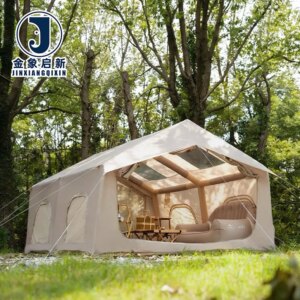
Tienda Inflable de Alta Calidad para Cuatro Estaciones para Acampar, Duradera, PVC Impermeable, Resistencia a Todas las Climas, Apertura Automática Rápida
Read more -
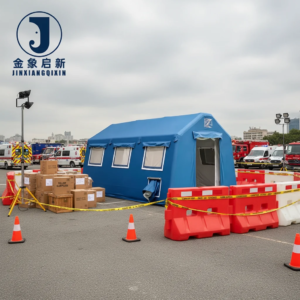
Tienda de Camping Inflable Impermeable PVC Tienda de Aire Exterior Fácil de Montar Refugio Familiar para Camping Cuatro Estaciones >3000mm Impermeable Rápido
Read more