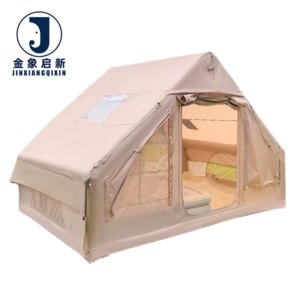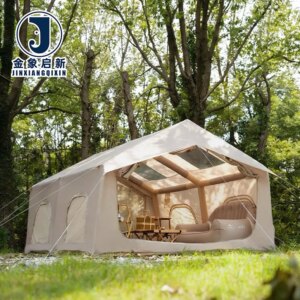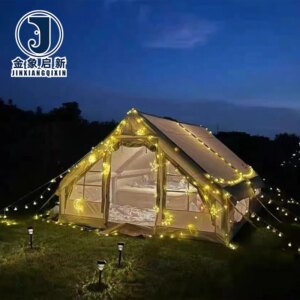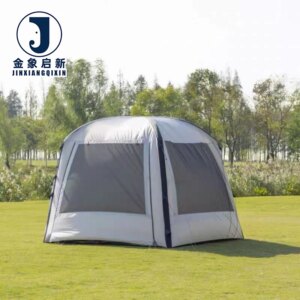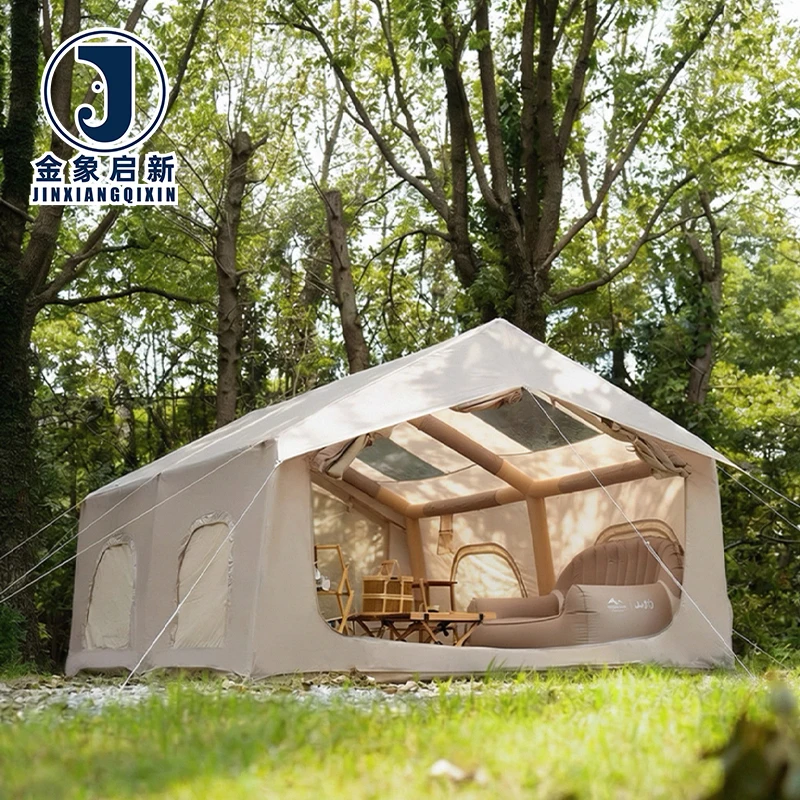
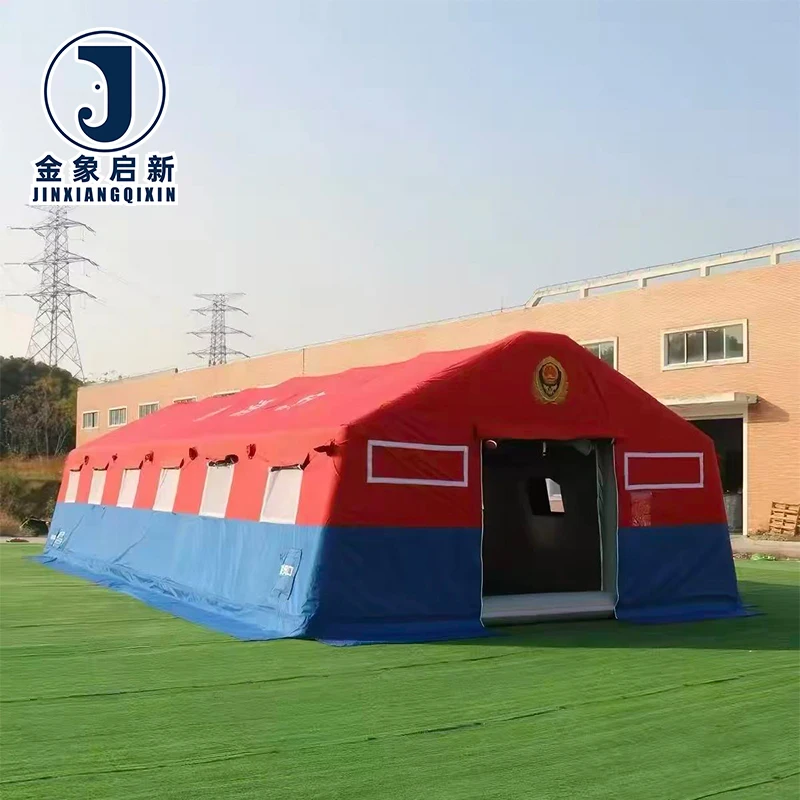
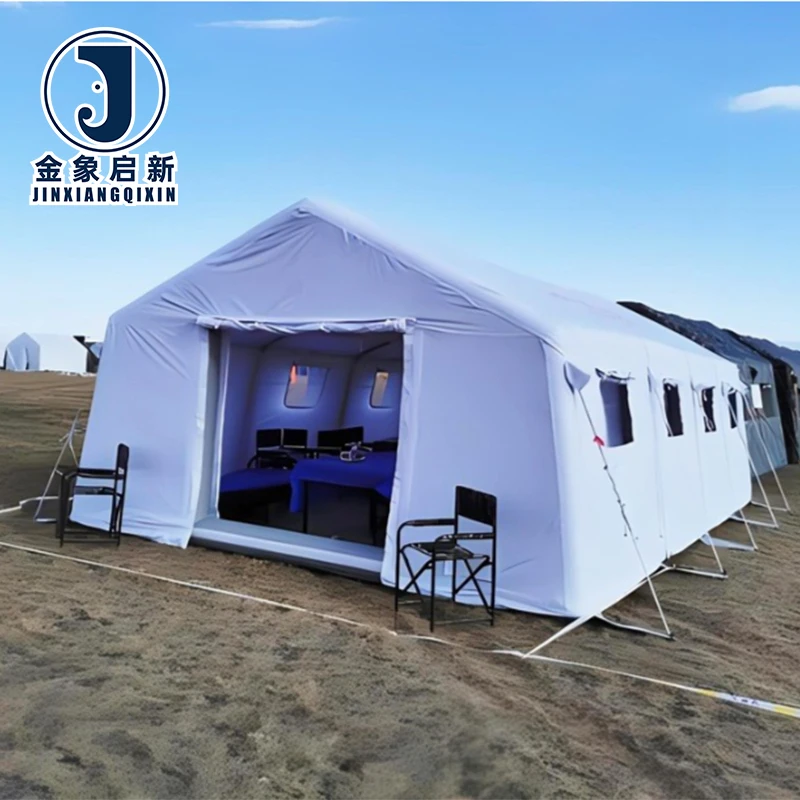
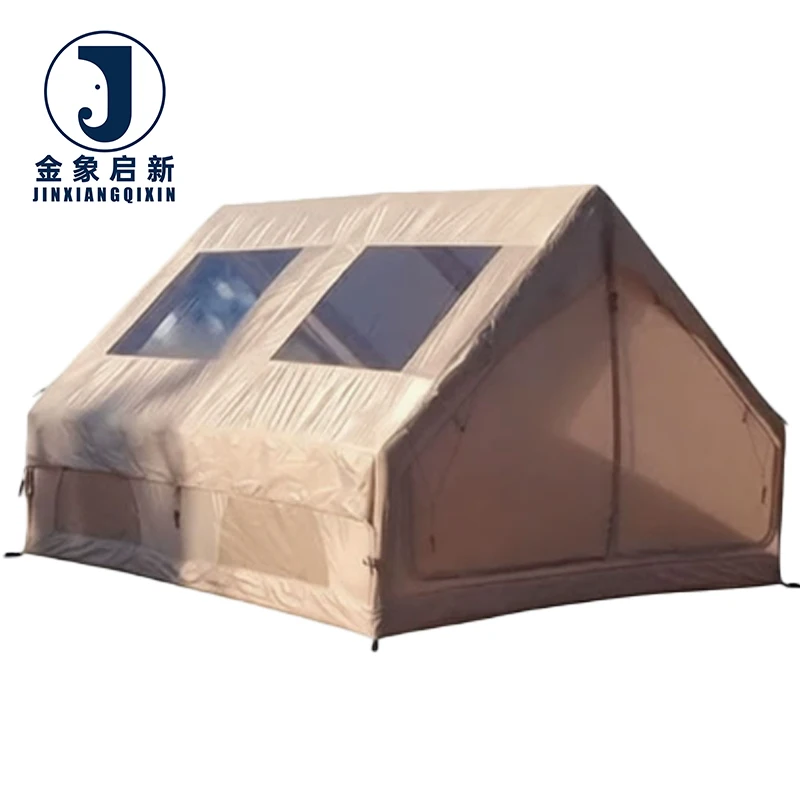
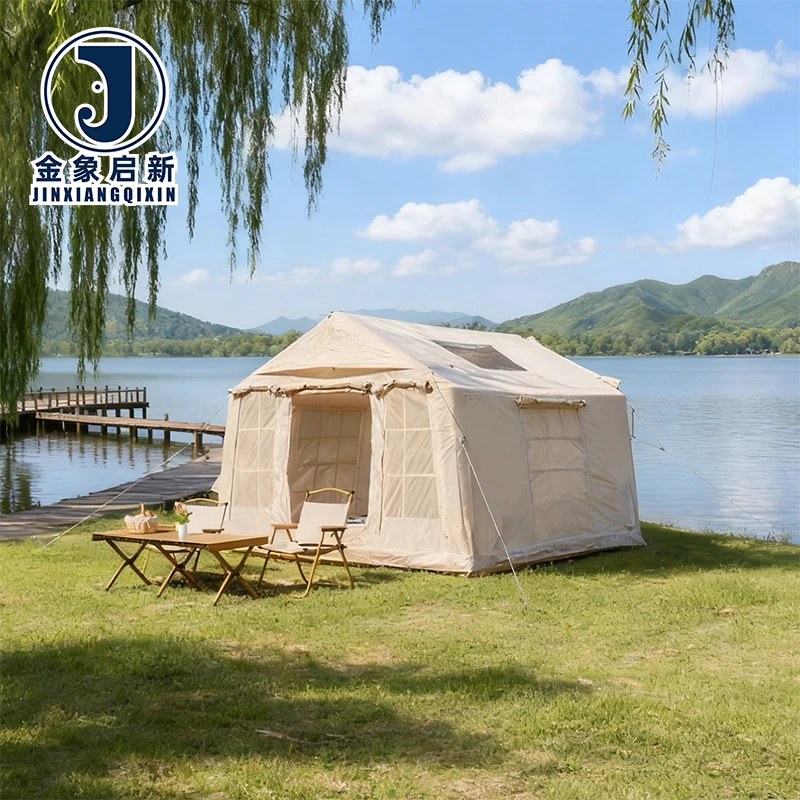
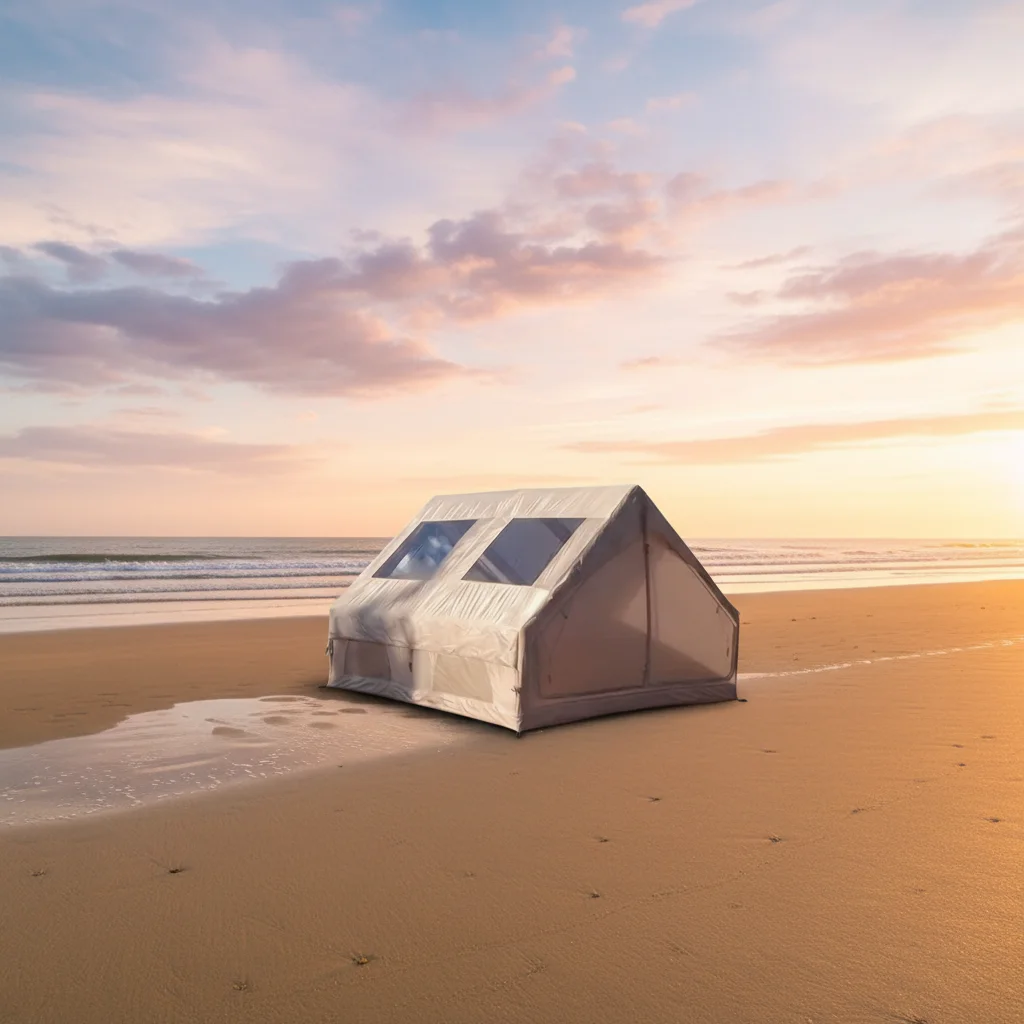
PVC Inflatable Tent, Waterproof & UV-Resistant, Four-Season Single Layer — made from PVC tarpaulin fabric for camping, construction shelters, and outdoor events.
Full OEM & ODM customization covers material selection, product design, and pattern printing to match your commercial product line requirements across diverse applications.
- Tear-resistant PVC coating with strict QA/QC at every production stage
- 10-person R&D team delivering samples within days
- 100% pre-shipment inspection backed by ISO and CE certification
Description
Full-Catalogue Capability — From PVC inflatable tent fabric roll to finished camping tent, every GSM and colour is verified by dedicated QA staff before leaving our 9,180 m² facility.
Technical Specifications
| Parameter | Value |
|---|---|
| Product Type | Inflatable Tent |
| Core Material | PVC Tarpaulin |
| Waterproof Performance | Waterproof (test basis not stated in source) |
| UV Treatment | UV-resistant (test basis not stated in source) |
| Tear Resistance | Tear-resistant (test basis not stated in source) |
| Design Configuration | Four-season, Single Layer Construction |
| Capacity | 2-3 Person |
| Customization Service | OEM & ODM (Material selection, Product design, Pattern printing) |
| Quality Control | Full-process inspection with dedicated QA & QC staff on site |
| Certifications | ISO 9001, ISO 14001, ISO 45001, CE |
Application Suitability
| Application | Exposure & Requirement |
|---|---|
| Commercial outdoor gear manufacturing | Roll-to-roll colour and GSM consistency across bulk orders for branded tent lines |
| Industrial camping equipment supply | Repeated inflation cycles, abrasion from ground contact, prolonged outdoor storage |
| Construction site temporary shelters | Wind loading on inflated beams, dust and debris impact, rapid deployment demands |
| Outdoor event facility deployment | Year-round UV exposure, frequent setup and teardown, public safety compliance |
Why Batch Colour Consistency Is the Real Test of an Inflatable Tent Fabric Manufacturer
Colour that shifts between rolls in the same shipment turns a professional tent range into a patchwork display.
When an Inflatable Tent Fabric manufacturer quotes a Pantone reference, the expectation is that every roll arriving at your cutting table matches that reference. What actually happens at many suppliers is that pigment dosing drifts between production runs, and the variation only becomes visible once two panels are heat-welded side by side on the factory floor. By that stage the rolls are already cut, the welding jigs are set, and re-ordering delays your entire product launch [NEED_CITE: batch colour consistency standards for PVC coated fabrics].
The financial exposure is rarely just the cost of the fabric. Downtime on the welding line, re-inspection of finished tents, and the credibility hit with your own retail or project customers compound the loss quickly. The problem is almost never the coating chemistry itself — it is the absence of in-process colour checks at the coating head and before dispatch.
What OEM Buyers Actually Need from Inflatable Tent Fabric
Commercial tent manufacturers do not buy fabric in isolation — they buy a component that must behave predictably through automated cutting, heat-welded seam assembly, and valve integration. The PVC tarpaulin used here is selected for its compatibility with high-frequency and hot-air welding, which is how most inflatable beam structures are assembled. When the coating weight and adhesion are consistent roll to roll, your welding parameters stay constant and seam rejection rates remain low.
Design Flexibility Without Sacrificing Production Stability
The OEM and ODM capability covers material selection, product design adjustments, and pattern printing — meaning you can specify the exact PVC tarpaulin grade for a two-person camping tent or scale the same material platform to a larger event shelter. A 10-technician R&D team develops samples within days, allowing you to validate weld strength, print registration, and inflation behaviour before committing to a full production run [NEED_CITE: OEM sample development workflow for inflatable structures].
Reading Between the Spec Sheet Lines
Single-layer four-season construction places every performance demand on one fabric: waterproofing, UV resistance, and tear strength must all come from the same coated material. Waterproof performance is stated, and UV-resistant treatment is applied to slow degradation from prolonged sunlight exposure — however, test basis for both properties is not stated in source documentation, so confirm the specific test methods your market requires. Tear resistance is likewise claimed; request the test report that corresponds to your destination market’s standards before finalising the specification.
The Hidden Cost of Skipping Pre-Shipment Fabric Verification
A specification sheet may state the correct PVC tarpaulin grade, but without a pre-shipment inspection record tied to your specific roll numbers, you have no evidence the material leaving the factory matches what was sampled. Weld failures in inflatable beams frequently trace back to a coating batch that was slightly off-specification — not enough to be caught visually, but enough to compromise peel strength under inflation pressure [NEED_CITE: weld peel strength testing for PVC inflatable structures]. The tent passes your incoming visual check, inflates correctly on the test rig, and then deflates at the seam in the field.
Why Procurement Teams Consolidate Here
Three full production lines and 36 sets of professional processing equipment mean your inflatable tent fabric order is not squeezed between unrelated product runs — capacity is dedicated and scheduled. The 10-technician R&D team handles material selection and pattern printing in-house, eliminating the coordination gap between a fabric supplier and a separate print house. Every roll undergoes 100% inspection before shipment, not spot-checking, which catches GSM drift, coating defects, and colour deviation before they reach your warehouse.
Documentation & Verification
- Material specification sheet stating PVC tarpaulin grade, coating type, and colour reference per batch
- Pre-shipment inspection record with 100% roll-by-roll verification before dispatch
- UV-resistant and waterproof test reports available on request per production batch
- ISO 9001, ISO 14001, ISO 45001, and CE certificates included with shipment documentation
- Roll packing list with individual roll numbers traceable to inspection records
Fabrication, Handling & Storage
- Heat-weld PVC tarpaulin seams using manufacturer-recommended temperature profiles; verify peel strength on test pieces before full production
- Store rolls horizontally on padded racks to prevent permanent creasing in the PVC coating layer
- Allow cold-stored rolls to reach workshop temperature before unrolling to avoid coating micro-cracking
- Use PVC-compatible cleaners only; solvent-based products may attack the plasticiser in the coating
- Repair minor field punctures with matching PVC tarpaulin patches and compatible adhesive
Starting Your Inflatable Tent Fabric Enquiry
Provide your target tent capacity, intended deployment environment, and the compliance requirements of your destination market — this determines which PVC tarpaulin grade and treatment package we recommend. Share your annual volume and whether you need roll stock, printed panels, or fully finished units so we can align production line scheduling accordingly. If your design includes custom pattern printing or non-standard beam geometry, request a sample early to validate welding parameters on your own equipment.
Frequently Asked Questions
Q: How is batch-to-batch colour consistency controlled across multiple rolls of inflatable tent fabric?
A: Dedicated QA and QC staff inspect colour at the coating head and again during pre-shipment inspection. Each roll is checked against the approved Pantone reference specified in your material specification sheet. If your order spans multiple production runs, we provide a colour consistency record showing all rolls fall within the agreed tolerance before dispatch.
Q: What customization options are available for material thickness, size, and pattern printing?
A: OEM and ODM customization covers PVC tarpaulin material selection, product design adjustments for your inflatable beam geometry, and pattern printing for branding. Our 10-technician R&D team develops samples within days so you can validate material behaviour through your cutting and welding processes before committing to full production volume.
Q: How is UV resistance verified, and what test documentation is provided with shipment?
A: UV-resistant treatment is applied to the PVC tarpaulin coating formulation to slow degradation from prolonged sunlight exposure. Test basis is not stated in source documentation, so we recommend confirming the specific UV test standard your destination market requires — such as ISO 4892 or ASTM G154 — and requesting the corresponding test report per batch before shipment.
Q: Which certifications accompany the product, and how are ISO and CE certificates issued per order?
A: The product is manufactured under ISO 9001, ISO 14001, and ISO 45001 management systems, and carries CE marking. Certificates are included with your shipment documentation package. If your market requires additional compliance — such as REACH or specific fire classifications for inflatable structures — raise this during the enquiry stage so testing can be arranged before production begins.
Related products
-
Tienda de Camping Inflable de Cuatro Estaciones - Recubierta de PVC, Impermeable, Ecológica, Inflación Rápida, Certificada CE, ODM/OEM Aceptado
Read more -
Tienda de Camping Inflable Impermeable Tienda de Aire Exterior para Camping Refugio de Tienda Inflable
Read more -
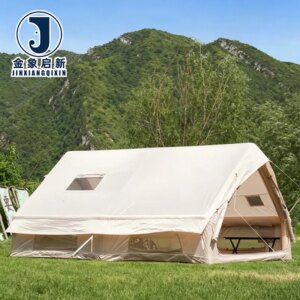
Tienda de Camping Inflable PVC para Cuatro Estaciones Impermeable al Aire Libre con Apertura Automática Rápida para 2-3 Personas
Read more -
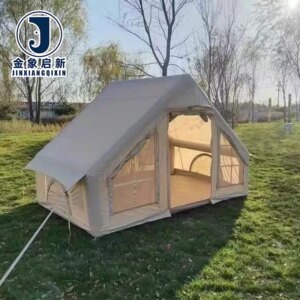
Tienda inflable portátil de camping al aire libre de lujo para uso en todas las estaciones, espacio grande, a prueba de lluvia, aislada, apertura automática rápida.
Read more