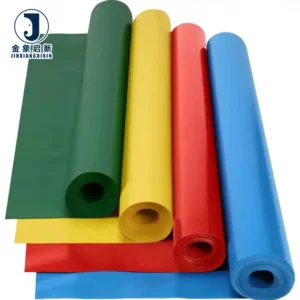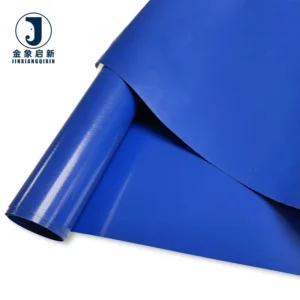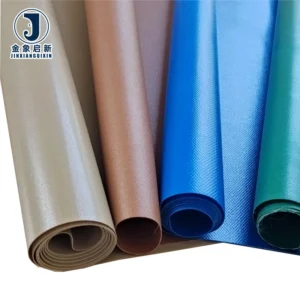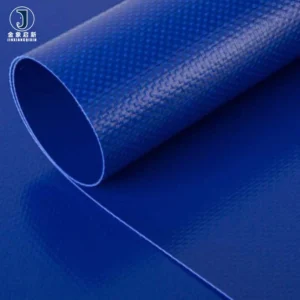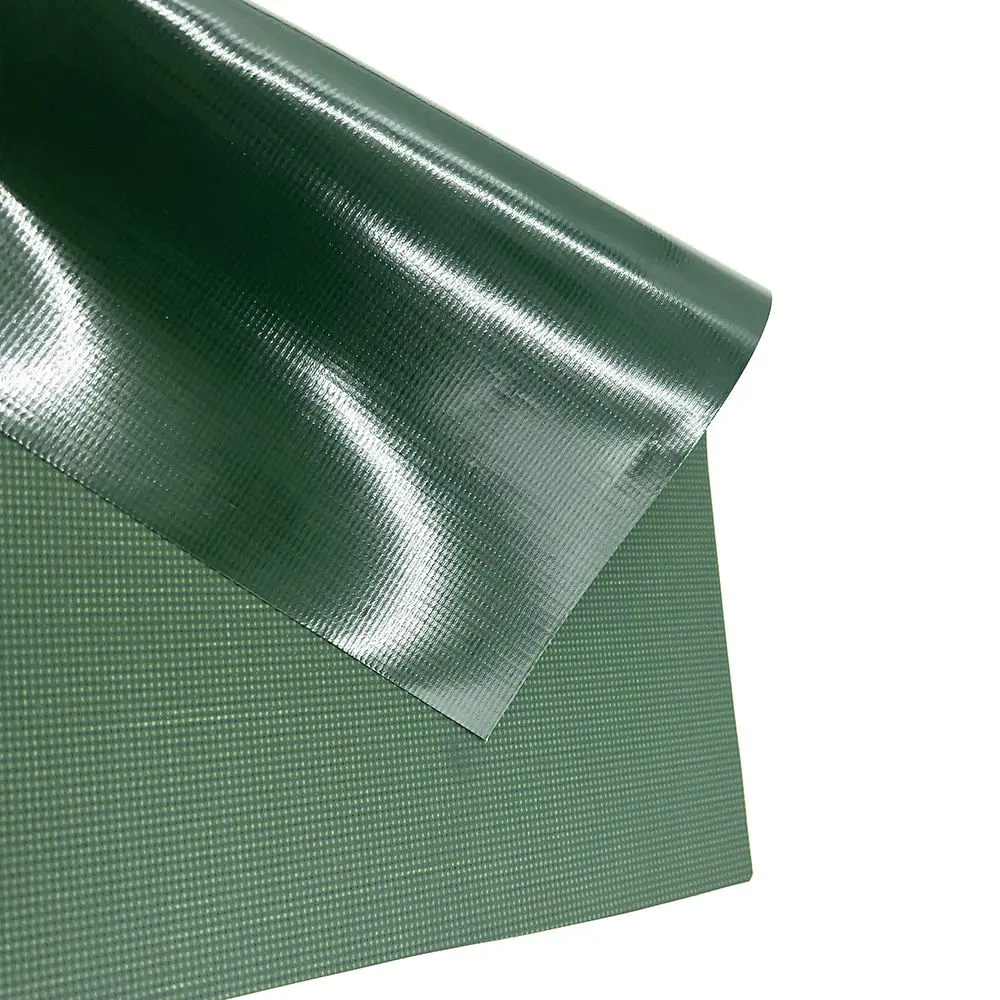
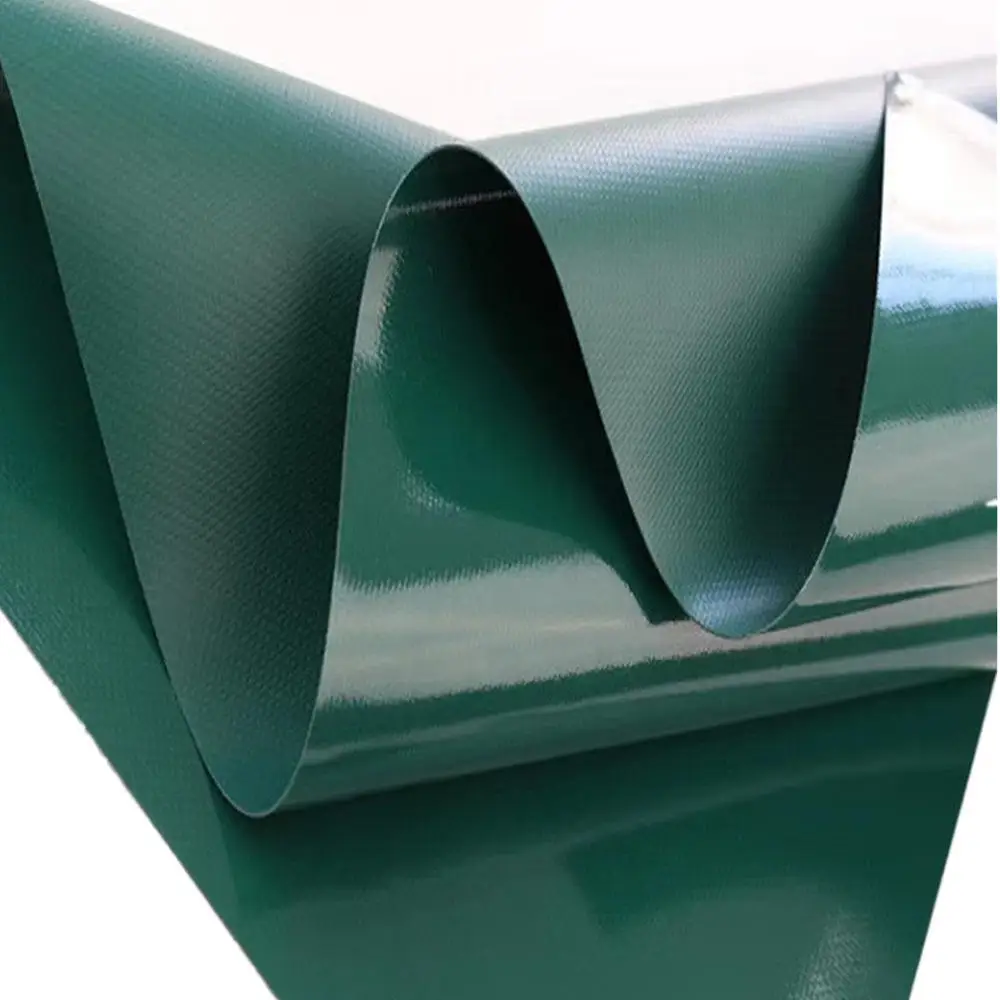
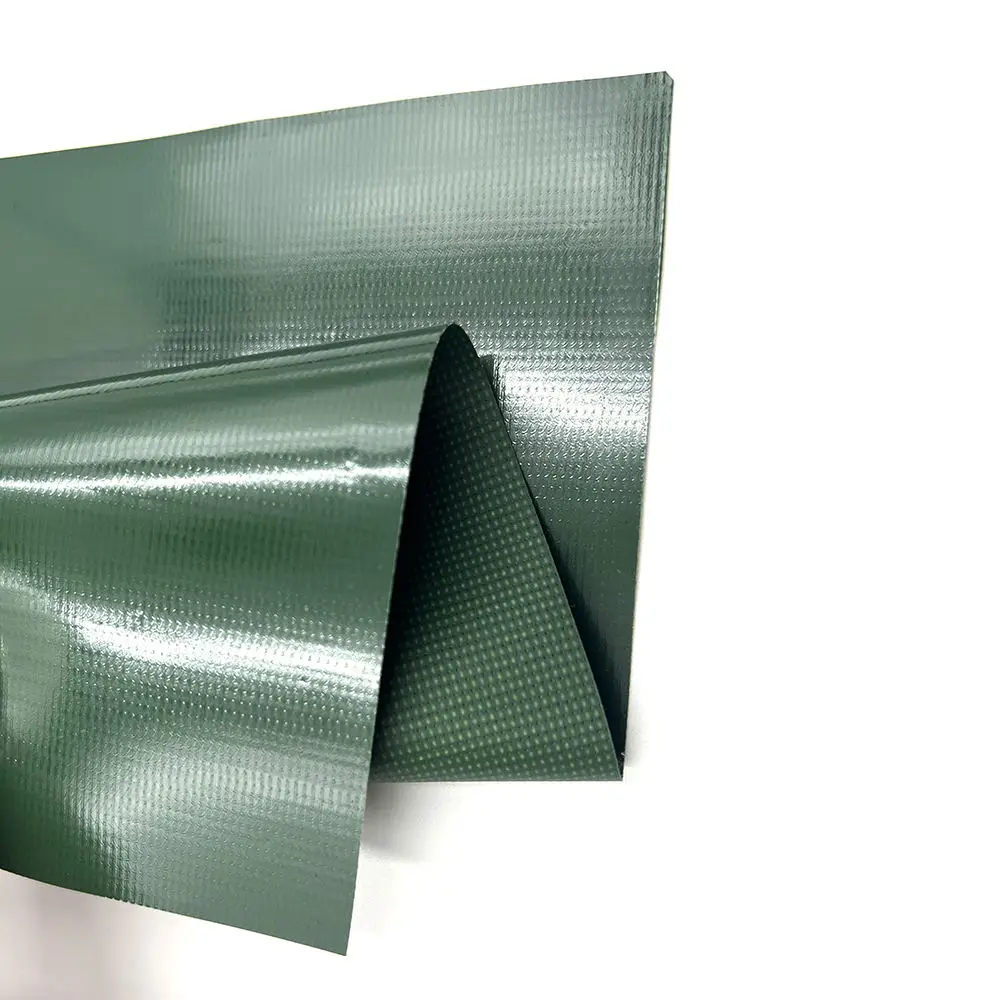
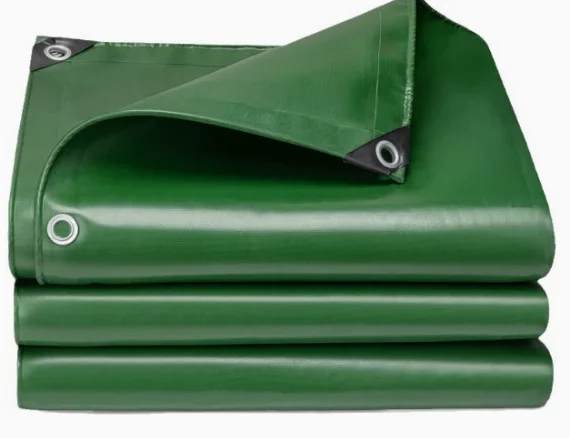
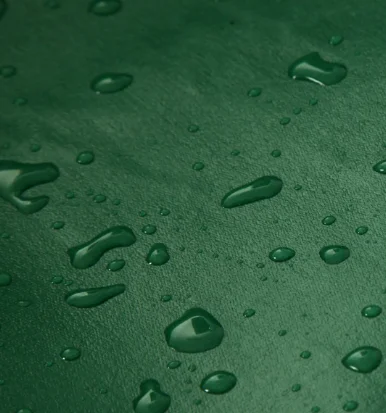
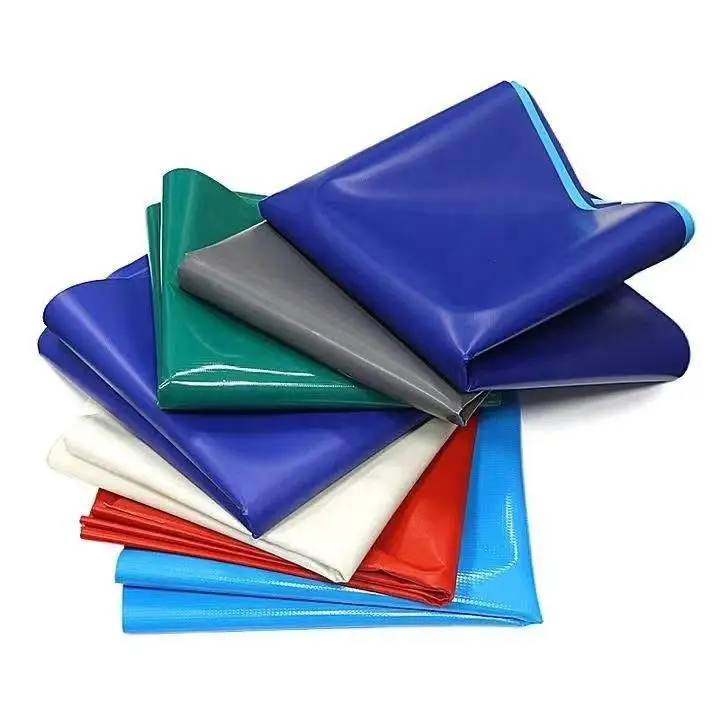
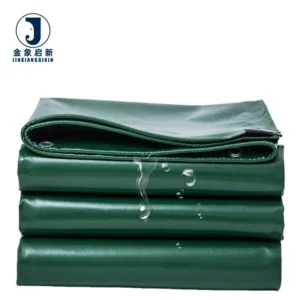
Green PVC Knife Coated Tarpaulin, Waterproof & Fire Retardant — heavy duty fabric for truck covers, tensile structures and industrial shelters.
- Knife coated construction ensures consistent coating weight and strong adhesion for reliable weld seams
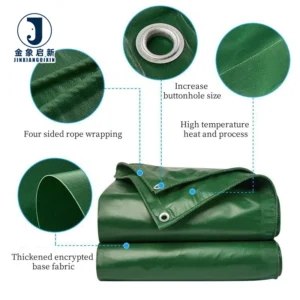
- Full treatment suite including UV, antibacterial, mildew and acid resistance with HF, hot air and sewing options
- Custom width, length, colour and branding available with rapid sample development
Backed by nearly 30 years of coated fabric process control, 100% pre-shipment inspection and a dedicated R&D team handling full custom specifications.
Description
Proven coating process control — nearly 30 years focused on PVC coated fabrics ensures every roll of Green PVC Knife Coated Tarpaulin Heavy Duty Waterproof Truck Cover Fabric leaves the line with verified GSM, uniform adhesion and documented batch consistency.
Technical Specifications
| Parameter | Value |
|---|---|
| Product Type | PVC Coated Tarpaulin Fabric |
| Material | PVC Knife Coated |
| Color | Green |
| Water Resistance | Waterproof |
| UV Resistance | UV Resistant (test basis not stated in source — confirm grade required for your market) |
| Fire Retardancy | Fire Retardant (grade not stated in source — confirm certification required for your project) |
| Additional Treatments | Antibacterial, Mildew Proof, Oil and Stain Resistant, Acid and Alkali Resistant |
| Temperature Resistance | High Temperature and Cold Resistant |
| Flexibility | Highly Flexible, Resistant to Cracking |
| Welding Options | HF, Hot Air, Sewing |
| Maintenance | Self-Cleaning System |
Application Suitability
| Application | Exposure & Requirement |
|---|---|
| Truck and trailer side curtains | Constant flexing at load points, road debris abrasion, prolonged UV and rain exposure, high-frequency welding for reinforced hems |
| Tensile and membrane structures | Sustained tension across large spans, wind-driven cyclic loading, long-term UV exposure, hot air welding at panel seams |
| Stadium and airport hangar roofs | High wind uplift, thermal expansion and contraction, UV degradation risk, fire retardant compliance for public occupancy |
| Shade systems and awnings | Direct solar exposure, thermal cycling, color stability over seasons, sewing or HF welding for edge finishing |
| Portable storage and industrial shelters | Abrasion from stored goods, moisture ingress, chemical splash resistance, hot air welded seams for watertight enclosures |
Why a Quoted GSM Does Not Guarantee the Fabric You Receive
Every roll of this PVC Coated Tarpaulin Fabric ships with a material specification sheet and a pre-shipment inspection record, so the weight you order is the weight that arrives at your dock.
A common complaint among transport fabricators is receiving PVC coated tarpaulin rolls that feel noticeably lighter than the GSM stated on the original quotation. The shortfall often surfaces only after the material has been cut, welded and installed on a truck or trailer — by which time return logistics are impractical and the project schedule is already delayed. A PVC Coated Tarpaulin manufacturer custom approach means we verify coating weight and base fabric density at multiple in-process checkpoints rather than relying on a single batch-average figure. [NEED_CITE: in-process GSM verification methods for knife coated PVC fabrics]
Knife Coated Construction and What It Means for Fabricators
Knife coating deposits a precise PVC layer onto the polyester base fabric, producing a uniform coating weight with strong mechanical adhesion between layers. For fabricators welding tensile structures or truck side curtains, this consistent coating profile translates directly into predictable hot-air and HF welding behaviour — the seam fuses at a stable temperature without delamination. The self-cleaning surface treatment reduces dirt accumulation on large-area installations such as stadium canopies and shade systems, cutting routine maintenance visits.
Full Treatment Matrix for Diverse Operating Environments
This PVC Coated Tarpaulin Fabric is available with antibacterial, mildew-proof, oil-resistant and acid-alkali-resistant treatments alongside UV and fire retardant options — confirm the specific grades required for your market or project specification. The combination of high-temperature and cold resistance keeps the material flexible across seasonal extremes without cracking at fold lines or welded seams. Fabricators working on airport hangar roofs or mining ventilation covers can specify the exact treatment package, then validate it through the test documentation shipped with each roll. [NEED_CITE: flame retardant classification standards for architectural membrane fabrics]
Reading the Specification Sheet Beyond the GSM Number
GSM alone does not define how a PVC coated tarpaulin will perform under load. The base fabric denier and weave density work together with the coating weight to determine tensile and tear resistance — a heavy coating on a loosely woven base can still tear easily under point stress. Knife coating, as used on this fabric, produces higher peel strength between the PVC layer and the polyester scrim compared with laminated alternatives, which matters when welded seams are subjected to repeated flexing on truck curtains. The self-cleaning surface finish involves an acrylic or PVDF top coat that not only repels dirt but also provides a stable surface for pattern printing and branding adhesion. Fire retardant grades available for this fabric must be matched to the building code or transport regulation in the destination market, as classifications such as DIN 4102 B1, NFPA 701 and M2 address different test scenarios and acceptance criteria. Roll width and length directly affect cutting yield and the number of welded seams in a finished cover, so specifying the correct dimensions at the inquiry stage reduces waste downstream.
The Hidden Cost of Specifying on Price Alone
When a roll arrives lighter than quoted, the immediate saving is erased by early failures at stress points — seams split, hems tear under tie-down loads and the fabric degrades faster under UV exposure. Fabricators who skip treatment verification often discover at the installation site that the flame retardant certificate does not cover the specific batch delivered, leading to inspection failures and costly rework. [NEED_CITE: common causes of coated fabric failure in transport and architectural applications] Batch-to-batch colour variation between rolls in a single order becomes visible once panels are installed side by side on a shade structure or truck fleet, forcing partial replacement and project delays that far outweigh the initial material discount.
Why Fabricators Source This Roll Stock from Jinxiang
Three dedicated production lines and 36 sets of professional equipment support bulk volume without sacrificing coating consistency across rolls. A 10-person R&D team handles custom colour matching, width adjustment and sample development, typically delivering confirmation samples within days rather than weeks. Dedicated QA and QC stages at every production step culminate in a 100% pre-shipment inspection, so each roll is checked against the material specification sheet before packing. The knife coating process is calibrated for strong PVC-to-polyester adhesion, giving fabricators confidence that hot air and HF welds will hold at flex points. Deep process control built over nearly 30 years of coated fabric production means GSM, colour and treatment levels remain consistent from the first roll to the last in a container-load order.
Documentation & Verification
- Material specification sheet stating GSM, base fabric denier and coating weight for every roll shipped
- Test reports for UV resistance and fire retardant grades matched to the specific production batch
- 100% pre-shipment inspection record with roll-by-roll weight verification against quoted specification
- Colour reference card and roll packing list enabling traceability across multi-roll orders
- Certificate of origin and customs documentation prepared for export shipments
Fabrication, Handling & Storage
- HF and hot air welding both compatible; set temperature based on the knife coated PVC layer thickness for consistent seam fusion
- Sewn seams should use UV-stable polyester thread and sealed stitch holes to maintain waterproof integrity across truck curtain panels
- Store rolls upright on pallets in a shaded, ventilated area to prevent flat-spot deformation and surface marking on the self-cleaning finish
- Allow cold-stored rolls to acclimatise before unrolling to avoid creasing the highly flexible PVC coating at low temperatures
- Use mild, non-solvent cleaners on the self-cleaning surface to preserve the top coat and maintain dirt-release performance
- Plan cutting layout around the available roll width to minimise off-cuts and reduce the number of welded seams in finished covers
Start Your Specification Conversation
Share your end-use application, the environmental exposure conditions and any fire retardant or UV performance grades required by your local building code or transport regulation. Let us know the target roll width, annual volume and whether you need the PVC Coated Tarpaulin Fabric supplied as raw roll stock or in pre-cut panels with welded hems. If colour matching to an existing fleet livery or architectural palette is critical, request a physical sample for sign-off before committing to bulk production.
Frequently Asked Questions
Q: How is GSM verified before shipment and what documentation is provided with each roll?
A: Each roll is weighed during the pre-shipment inspection and the result is recorded against the quoted GSM. A material specification sheet covering base fabric denier, coating weight and treatment levels accompanies every dispatch, along with a roll packing list that enables batch traceability from our production line to your workshop floor.
Q: What fire retardant grades are available and which test standards do they meet?
A: Fire retardant treatment is available in multiple grades — confirm the classification your project requires, such as DIN 4102, NFPA 701 or M2. Once the target grade is agreed, we supply a test report matched to the production batch so your inspection authority can verify compliance without additional third-party testing.
Q: How is batch-to-batch colour consistency controlled across multiple rolls in one order?
A: We maintain a master colour reference for each approved shade and verify every roll against it during the in-process QC stage. This ensures panels cut from different rolls within the same order install side by side without visible shade variation, which is critical for truck fleet liveries and architectural shade canopies.
Q: What custom widths, roll lengths and printing options are available for large-volume orders?
A: Custom widths and roll lengths are available to match your cutting layout and minimise off-cuts. Pattern printing and branding can be applied to the self-cleaning surface. Samples are developed within days for your approval on colour, weight and print clarity before bulk production is scheduled.
Q: Which welding methods are recommended for knife coated PVC and what seam strength can be expected?
A: High-frequency welding, hot air welding and sewing are all compatible with this knife coated construction. HF welding typically produces the strongest bond on PVC-to-PVC overlaps, while hot air suits curved seams on tensile structures. We recommend running test welds on sample pieces to dial in temperature and speed before full production.
Related products
-
Venta caliente de lona de camping grande y resistente al agua para uso exterior, lona laminada de PVC de 500gsm.
¥3.20 Add to cart -
Fabricante de Lona de PVC Resistente al Agua de Poliéster de 650gsm de Mejor Calidad
¥1.25 Select options This product has multiple variants. The options may be chosen on the product page -
Tela de tarpaulina de PVC Industria Tarpaulina de PVC 620gsm para fábrica de estanques de peces Cubierta de piscinas PE Tarpaulina
¥0.90 Select options This product has multiple variants. The options may be chosen on the product page -
Nuevo diseño de cubierta de piscina resistente al agua con recubrimiento, cubiertas de carga, lona para camiones.
¥1.15 Add to cart