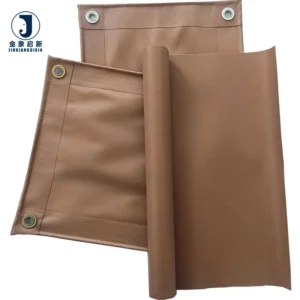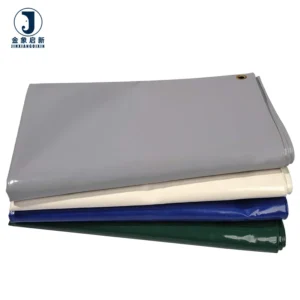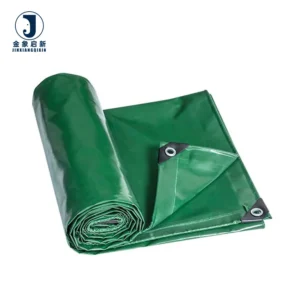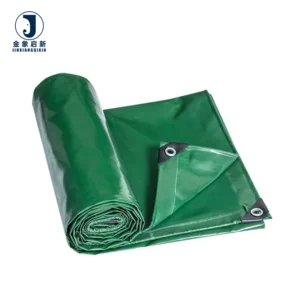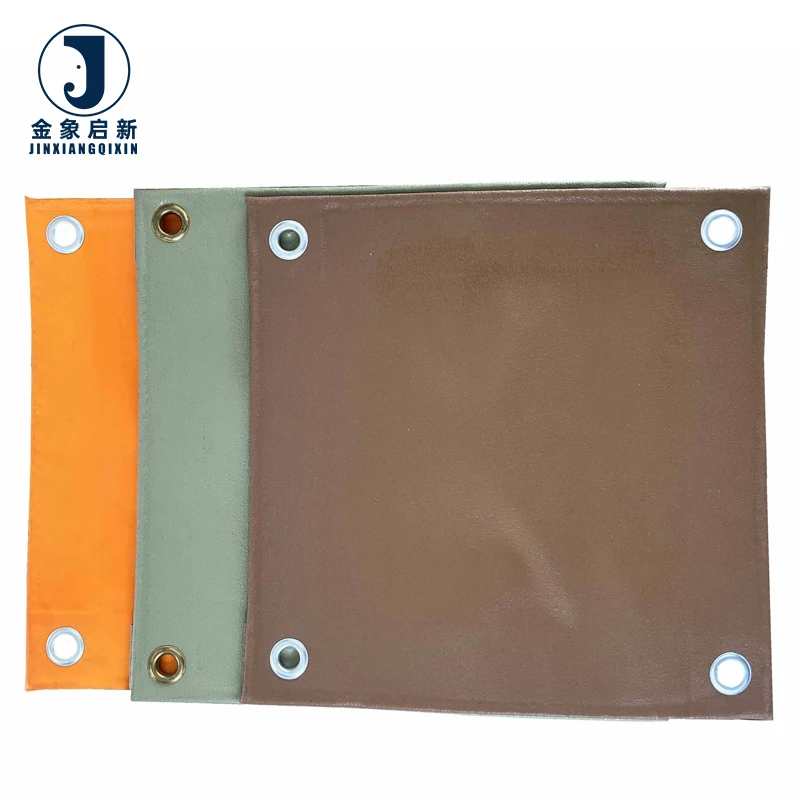
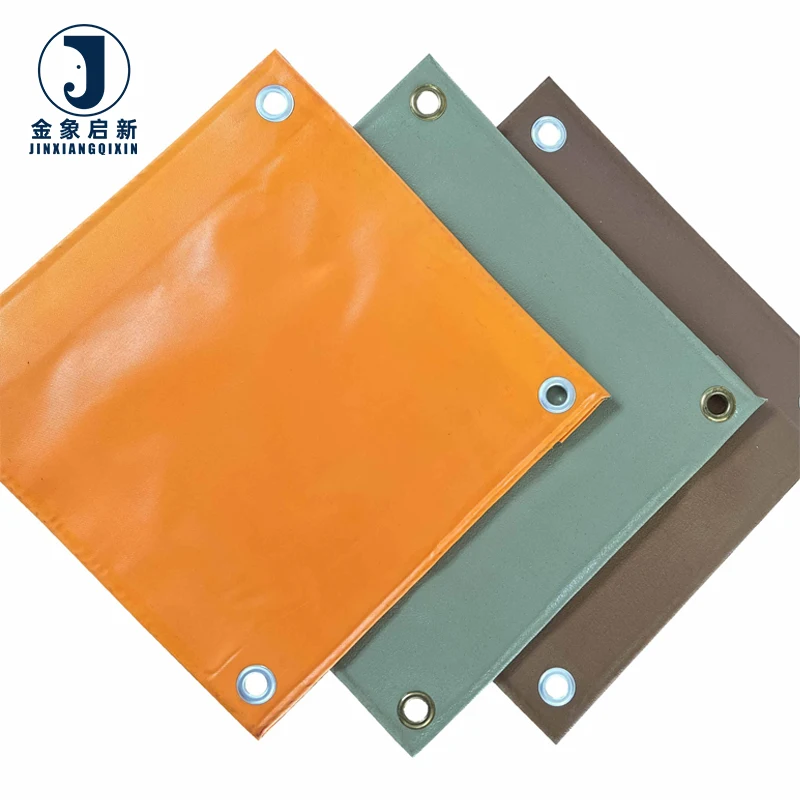
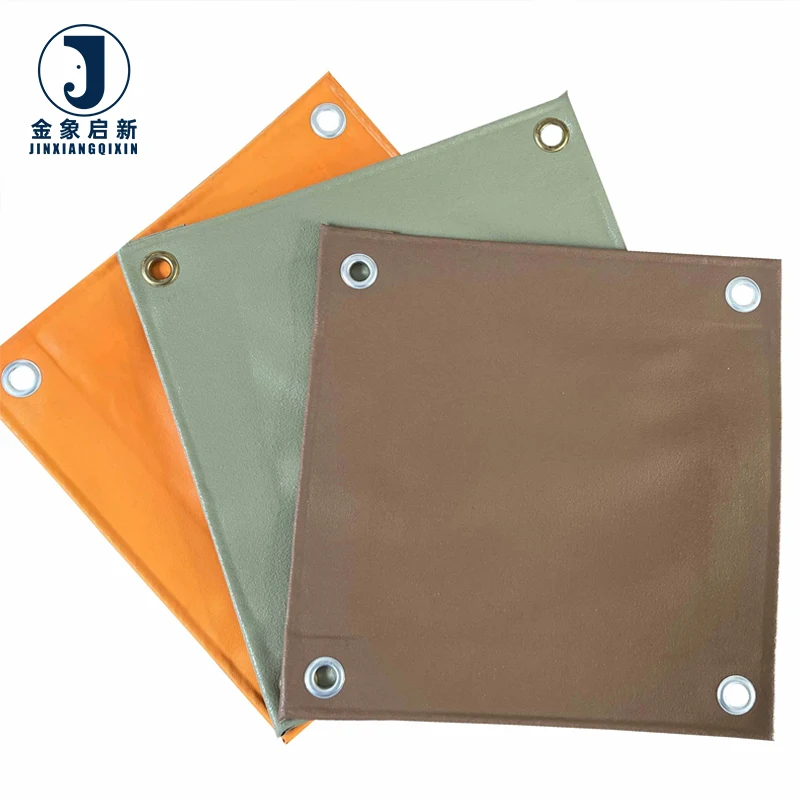
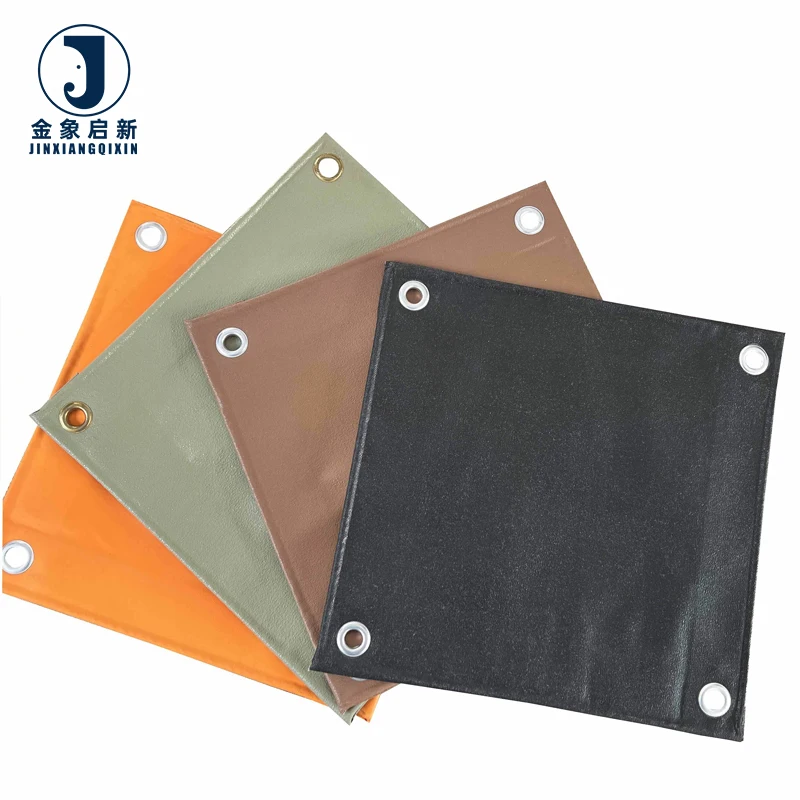
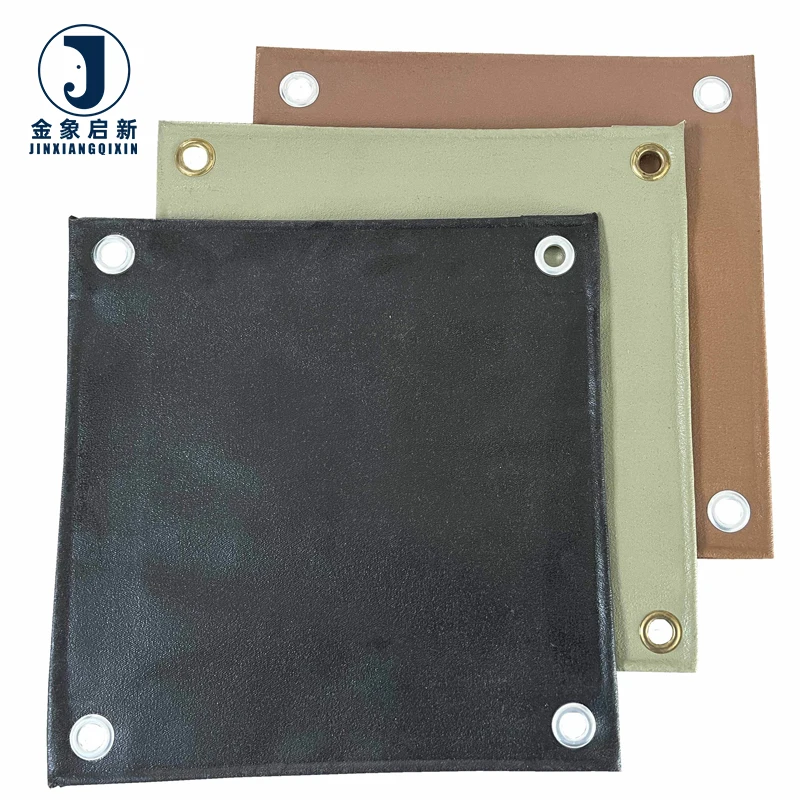
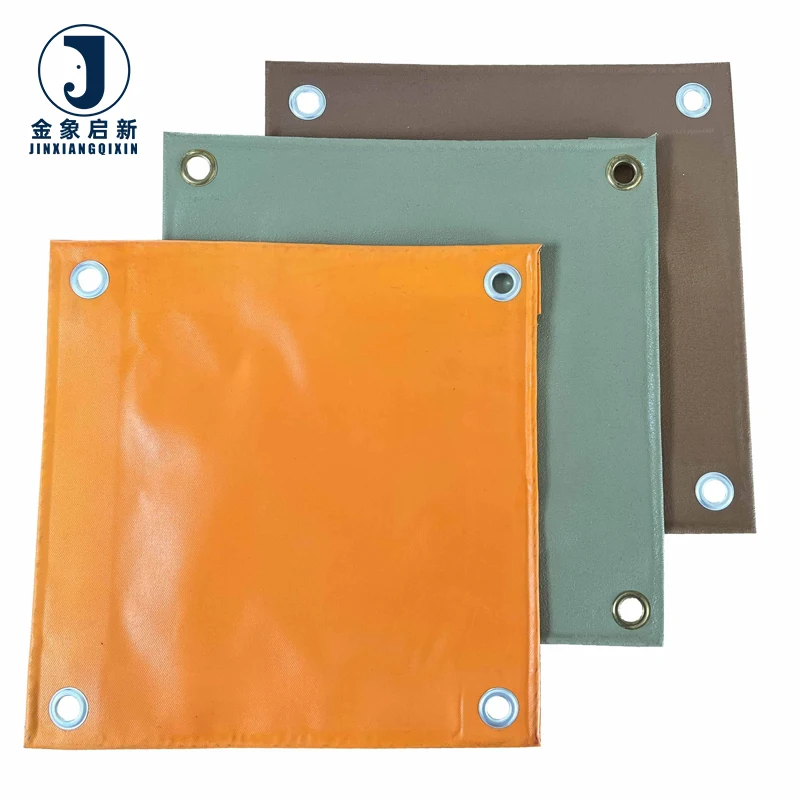
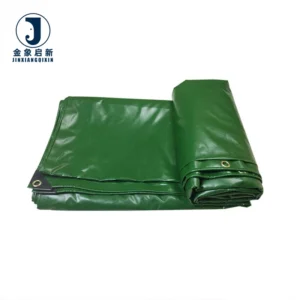
PVC Coated Tarpaulin Waterproof Fireproof Cover with flame retardant, anti-static, anti-cold and anti-mildew treatment options, available in custom sizes and colors for trucks, construction and industrial use.
GSM and coating weight directly determine tensile and tear performance — our production lines maintain strict coating weight control so quoted specifications match arrival weight, verified on every pre-shipment inspection record. Each roll undergoes 100% QA before dispatch.
- Custom width, length, eyelet spacing and reinforced hems to your drawing
- Roll-to-roll colour consistency verified across full order quantity
- Flame retardant and UV test reports provided with shipment documentation
- ISO and CE certified, exporting to 20+ countries across North America, Europe and Asia
Description
Proven Coating Adhesion — Nearly 30 years of PVC coated fabric production gives us deep process control over coating weight and adhesion, ensuring your custom PVC tarpaulin arrives with verified GSM and consistent performance across every roll.
Technical Specifications
| Parameter | Value |
|---|---|
| Product Type | PVC Coated Tarpaulin |
| Coating Material | PVC |
| Flame Retardant | Available (grade not stated in source) |
| Anti-Static | Available (standard not stated in source) |
| Anti-Cold | Available |
| Anti-Mildew | Available |
| Weather Resistance | 1-3 years outdoor life (test basis not stated in source) |
| Customization | Size, color, treatment options |
| Certifications | ISO, CE |
Application Suitability
| Application | Exposure & Requirement |
|---|---|
| Truck and Trailer Covers | Constant flexing, road abrasion, UV exposure, tie-down tension at eyelets |
| Construction Site Protection | Impact from falling debris, wind loading, prolonged weather exposure |
| Equipment and Machinery Covers | Dust ingress, moisture, chemical splash, repeated handling and folding |
| Tent and Awning Fabric | Tension under frame loads, wind uplift, solar radiation, seasonal storage |
| Agricultural and Outdoor Storage | Rain saturation, animal contact, mildew in humid conditions, temperature swings |
Why Claimed Treatments Fail the Moment You Ask for the Test Report
A PVC coated tarpaulin is only as reliable as the documentation that backs its treatment claims.
Buyers regularly receive material quoted with flame retardant or anti-UV additives, only to find the shipment arrives without any test report confirming the grade. The coating may contain the additive, but without a recognised standard behind it, the fabric cannot pass a site inspection or a fire safety audit. We have seen entire container loads held at customs because the importer could not produce a flame retardant certificate matching the destination market’s requirements [NEED_CITE: fire classification standards for temporary structures and covers].
When treatments are applied without process control, the result is uneven distribution across the roll — one section may pass a burn test while another fails. This is not a defect you can spot visually. It only reveals itself during compliance testing or, worse, in a real fire event. The same applies to anti-static claims in mining or aviation ventilation contexts, where a missing test report means the duct cannot be installed underground regardless of what the quotation stated.
Full Treatment Range Under One Production Roof
This PVC coated tarpaulin is available with flame retardant, anti-static, anti-cold and anti-mildew treatments, each applied during the coating stage rather than as a surface afterthought. The treatment is integrated into the PVC compound so it does not wash out or degrade with surface abrasion. Confirm the specific grade required for your market before production, and we will align the formulation and provide the matching test documentation.
Colour and Finish Consistency Across Your Entire Order
Batch-to-batch colour variation is one of the most visible failures when tarpaulin panels are installed side by side. Our production lines run colour calibration checks at every stage, ensuring that a custom PVC tarpaulin order spanning multiple rolls maintains uniform shade from the first metre to the last [NEED_CITE: colour fastness and batch consistency methods in coated fabric production]. Glossy and matte finish options are available, and the surface choice affects both cleaning behaviour and print adhesion for branded covers.
How Coating Weight, Base Fabric and Treatment Interact
GSM alone does not determine strength. A heavier coating on a low-denier base fabric can produce a stiff material that cracks at fold lines, while a lighter coating on a high-density woven base delivers better tear resistance and flexibility. The PVC coating method — whether knife-over-roll, dip, or calender — affects peel strength between the coating and the yarn, which directly influences how the fabric behaves at welded seams. Flame retardant additives can alter the thermal behaviour of the PVC during heat welding, meaning weld temperature and dwell time must be adjusted to match the specific grade. Anti-cold formulations shift the low-temperature brittleness point, but the trade-off can be a softer hand feel at ambient temperature that affects handling during fabrication. Anti-mildew treatment is critical in high-humidity storage or agricultural applications where organic matter accumulates on the surface [NEED_CITE: relationship between coating formulation and weld parameters in PVC fabrics per ISO 1421].
The Real Cost of Specifying on Quotation Instead of Verification
When a buyer accepts a PVC coated tarpaulin based on quoted GSM without pre-shipment verification, the material may arrive lighter than agreed, cutting service life short. Flame retardant claims without a supporting test report mean the fabric cannot be used on regulated construction sites or public event venues, forcing a costly last-minute replacement. Welded seams on covers carrying heavy loads often fail before the fabric itself does, because the weld parameters were not matched to the specific coating formulation and thickness — a mismatch that only becomes apparent when the load flexes under transport conditions [NEED_CITE: common failure modes at welded seams in heavy-duty tarpaulin covers]. Colour inconsistency across rolls in the same shipment becomes visible the moment panels are hung adjacent to each other, triggering rejection and rework.
Why Sourcing This PVC Tarpaulin Here Makes Sense
Three full production lines and 36 sets of professional equipment support bulk capacity without sacrificing the process control that keeps coating weight and adhesion within tolerance. A 10-person R&D team handles material selection, custom sizing, colour matching and sample development in-house, with samples ready within days for confirmation before your full order runs. Every production stage has dedicated QA/QC, and 100% inspection before shipment means GSM, colour, and treatment verification are completed before the rolls leave the facility. The documentation package — specification sheet, test reports, certificates of origin and pre-shipment inspection records — is assembled per order so your customs and compliance paperwork is complete on arrival. Custom widths, lengths, eyelet spacing and reinforced hems are all produced on the same lines, eliminating the need to coordinate multiple suppliers for a single cover specification.
Documentation & Verification
- Material specification sheet stating GSM, base fabric construction, coating type and colour reference for your order
- Test reports for flame retardant and UV-treated grades supplied against the specific standard applicable to your market
- ISO and CE certificates included with each shipment for customs and compliance review
- Pre-shipment inspection record confirming GSM and treatment verification before dispatch
- Roll packing list and certificate of origin provided for import documentation
Fabrication, Handling & Storage
- Heat weld temperature and dwell time must be calibrated to the specific PVC formulation and any flame retardant additive in the coating
- Reinforced hems should be folded and welded rather than stitched to maintain waterproof continuity across the seam line
- Store rolls upright on pallets in a shaded, ventilated area to prevent flat-spotting and surface adhesion between layers
- Allow cold-stored PVC tarpaulin rolls to acclimatise before unrolling to avoid cracking the coating at low temperature
- Clean with mild detergent and soft brush; avoid solvents that can soften the PVC coating and compromise the surface finish
- Field repairs on minor tears can be heat-patched using offcuts from the same material batch to maintain colour match
What to Include in Your Inquiry
Tell us the application and the environmental exposure the cover will face — whether it is daily UV, chemical contact, or sub-zero storage. Specify the target market so we can align flame retardant or anti-static grades to the correct local standard. Confirm whether you need rolls at a specific width and length, or finished covers cut and welded to your drawings, and whether custom colour or printed branding is required. If you need a sample for testing before committing to a production run, state the specifications you want the sample to match.
Frequently Asked Questions
Q: How do I verify the flame retardant grade against my market’s fire safety requirements?
A: Share the specific standard your project or destination country requires — such as DIN 4102, NFPA 701, or a local building code classification. We formulate the PVC compound to meet that grade and supply the matching test report with your shipment. If you are unsure which standard applies, tell us the end-use and country and we will recommend the appropriate grade for your confirmation.
Q: What test basis supports the anti-UV and weather resistance claims?
A: Our standard PVC tarpaulin formulations carry outdoor life assurance of 1-3 years depending on the grade selected. The test basis varies by formulation, so request the specific test report for your chosen grade. For applications requiring extended UV exposure, we can adjust the stabiliser package and provide the corresponding test data before production begins.
Q: How is batch-to-batch colour consistency controlled across custom colours?
A: Each custom colour is developed as a master batch and calibrated on the production line before the full run. In-process checks compare every roll against the approved colour standard. This ensures that panels cut from different rolls in the same order will match when installed side by side, eliminating the visible banding that causes site rejection.
Q: What custom widths, lengths and printing options are available, and what are the minimums?
A: We produce custom widths and lengths on our coating lines, and pattern printing or branding can be applied during finishing. Minimums depend on the specific width, colour and treatment combination. Share your required dimensions, quantity and print artwork, and we will confirm the production minimum and lead time for your specification.
Q: How are welded seams tested to ensure they outlast the fabric at flex points?
A: Welded seams are the most common failure point on PVC tarpaulin covers, particularly where the load flexes during transport. We calibrate weld temperature and pressure to the specific coating formulation and verify peel strength on production samples. This ensures the weld holds beyond the fabric’s service life under real flexing and tension conditions.
Related products
-
Cubierta de carga para camiones de PVC impermeable personalizable JX Fireproof 500gsm 600gsm
¥0.79 Select options This product has multiple variants. The options may be chosen on the product page -

Venta caliente Proveedor de China Personalizado Super Resistencia Grado Industrial 680GSM RIPSTOP Lona de PVC para Techos de Constructores y Envolturas
¥2.80 Add to cart -
Lona para camiones de servicio pesado 1000d PVC Lona impermeable de lona de PVC
¥1.20 Add to cart -
Lona verde impermeable multiusos de 500gsm para refugio de emergencia contra la lluvia. Cubierta para exteriores.
¥7.72 Select options This product has multiple variants. The options may be chosen on the product page