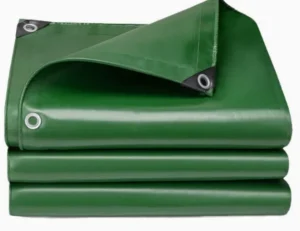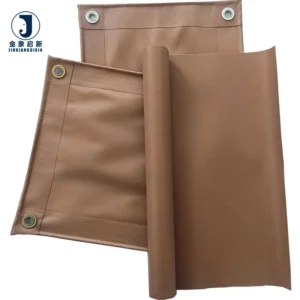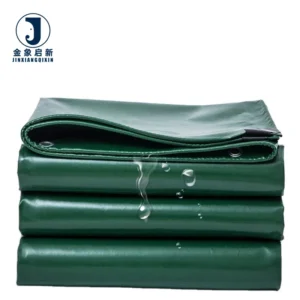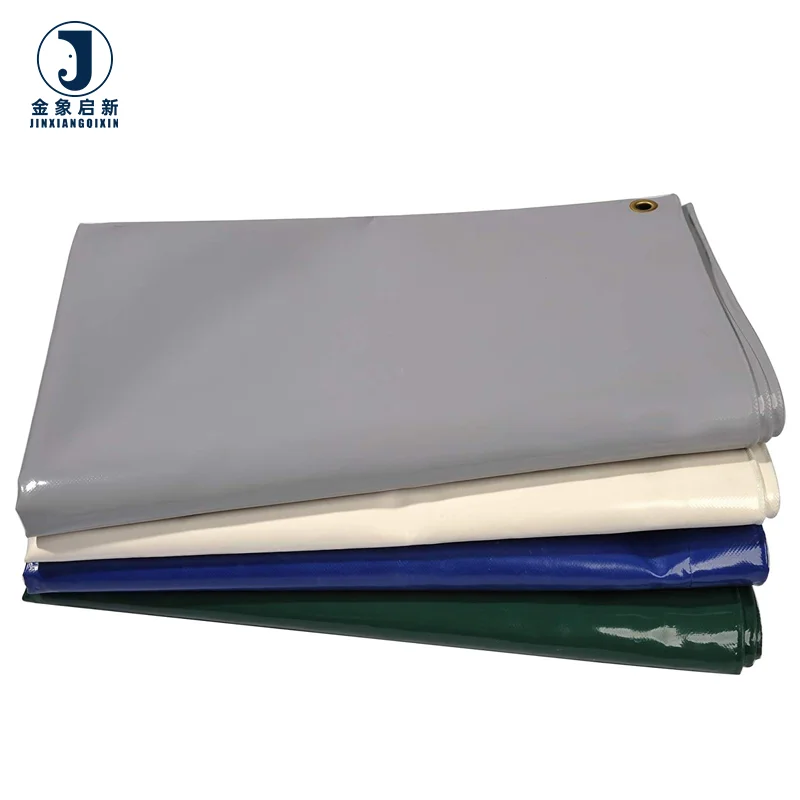
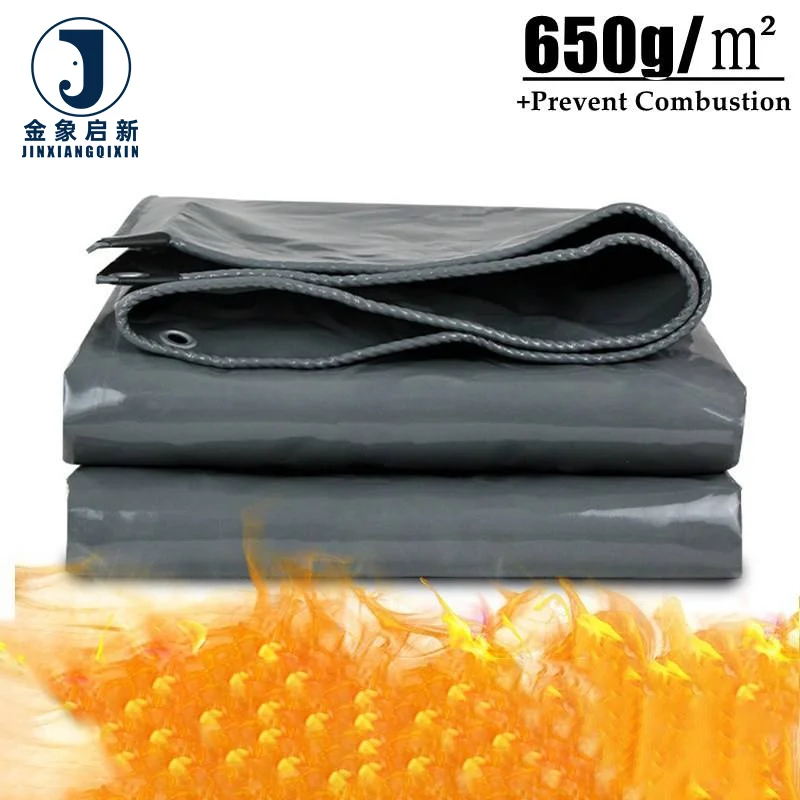
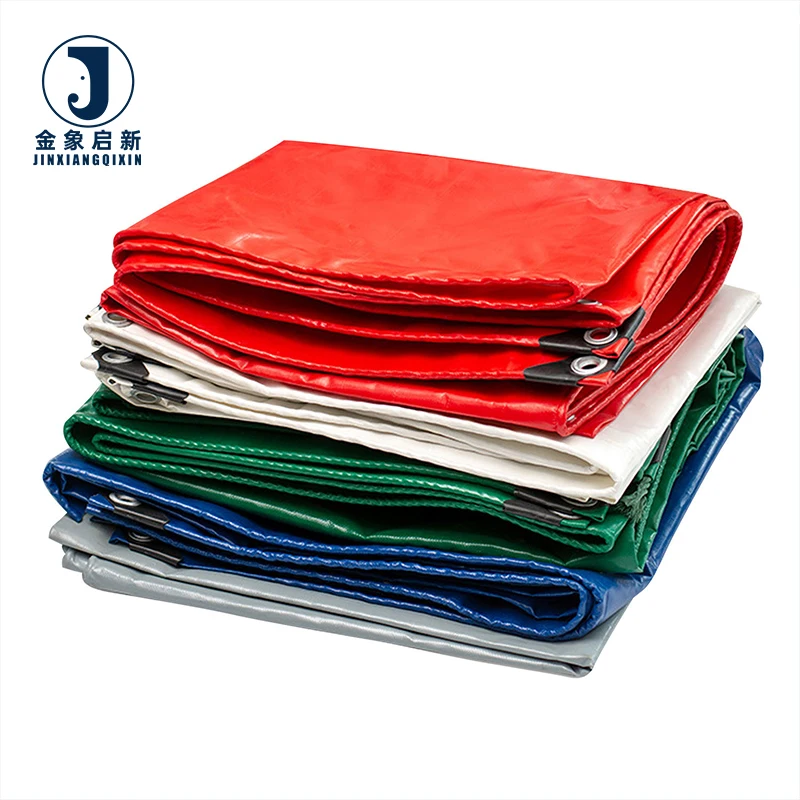
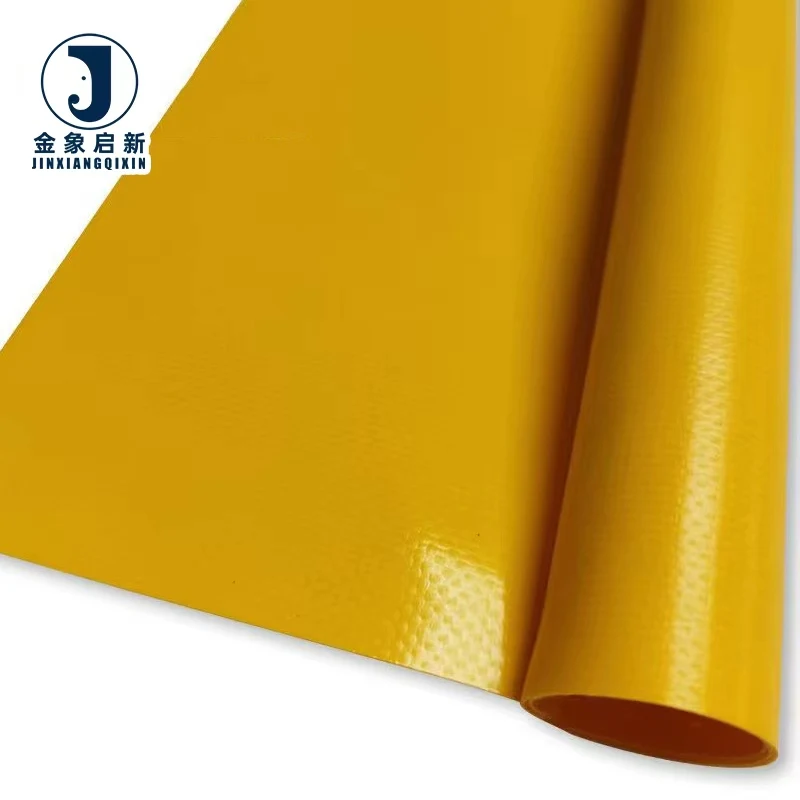
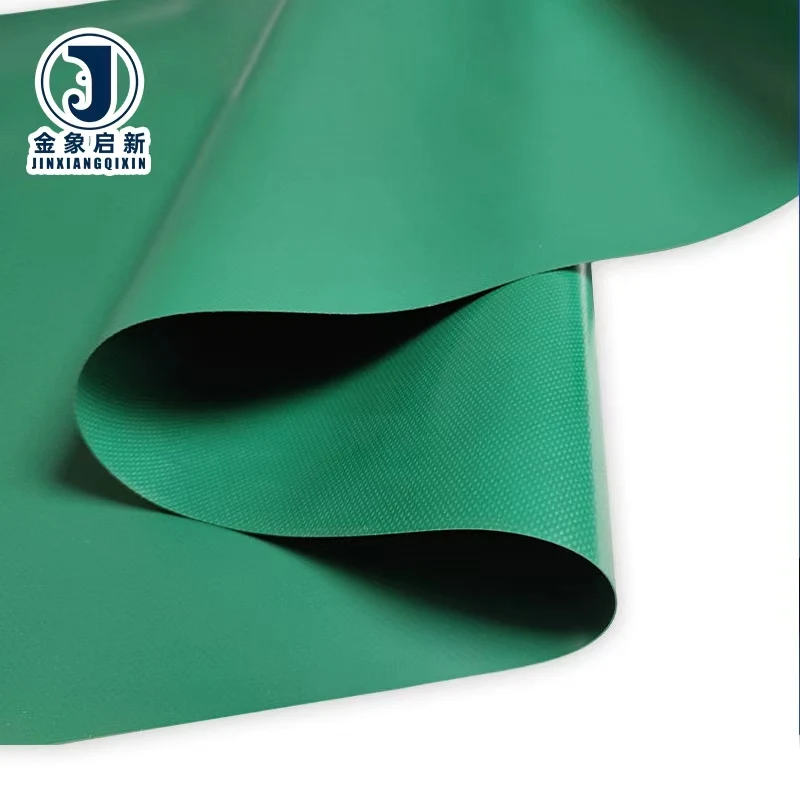
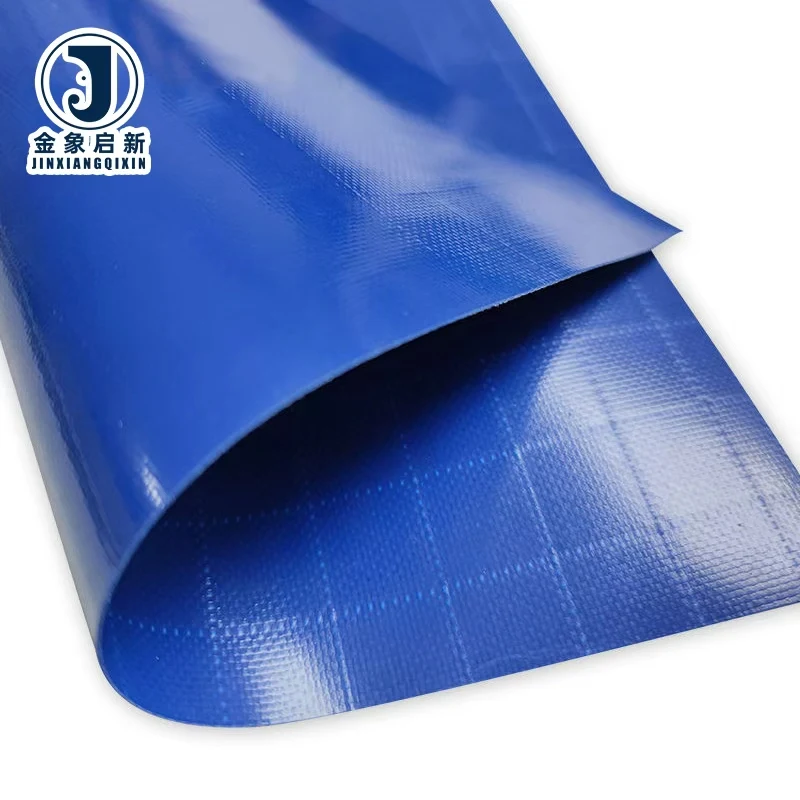
Gray Flame-Retardant PVC Coated Tarpaulin with 500D–1300D polyester base, 350–900g/m² weight range and heat-sealed edge wrapping for truck covers, tents and outdoor enclosures.
- Weight and base fabric density together determine tensile and tear behaviour; select GSM matched to your flex-point and load requirements
- Edge seams are high-temperature heat sealed to prevent failure where the material flexes under load
- Reinforced corners and 3cm enlarged aluminum alloy buttonholes distribute tie-down stress evenly
- Flame-retardant and anti-UV treatments available with test reports on request
10-person R&D team delivers samples within days for custom sizing and colour. Every roll undergoes 100% pre-shipment inspection backed by nearly 30 years of coating process control.
Description
Coated fabric expertise — Nearly 30 years focused on PVC coating process control, with 10-person R&D handling custom specifications from denier selection through to finished roll delivery.
Technical Specifications
| Parameter | Value |
|---|---|
| Product Type | PVC Coated Tarpaulin |
| Material | PVC & Polyester |
| Yarn Count Options | 500D×840D / 500D×1000D / 1000D×1000D / 1000D×1300D / 1300D×1300D / 1000D×2000D |
| Weight Range | 350 g/m² – 900 g/m² |
| Thickness Range | 0.29 mm – 0.65 mm |
| Density | 1.15 – 2.00 g/cm³ |
| Warp Strength | 1650 N – 3900 N |
| Pick Strength | 1600 N – 3500 N |
| Tensile Strength | 50 – 80 MPa |
| Brittle Temperature | ≤ -50 to -60 ℃ |
| Softening Temperature | ≥ 80 ℃ |
| Melting Point | 212 ℃ |
| Flame Retardant | Available in flame retardant grades — confirm the grade required for your market |
| Anti-UV Treatment | Available upon specification |
| Key Features | Water resistant, waterproof, flame retardant options, anti-UV options |
| Edge Treatment | High temperature heat sealed seamless edge wrapping |
| Corner Reinforcement | Reinforced corners on all sides |
| Rope | 5 mm thick, without splicing |
| Buttonhole | 3 cm enlarged aluminum alloy |
| Standards | ISO, CE |
Application Suitability
| Application | Exposure & Requirement |
|---|---|
| Truck and trailer side curtain | Constant flexing at load points, road debris abrasion, UV exposure during transit, wind loading at highway speed |
| Tent and awning fabric | Extended sun and rain exposure, frame tension stress, repeated folding and unfolding, crowd fire safety compliance |
| Pergola and canopy cover | Permanent UV exposure, water pooling load, thermal expansion and contraction across seasons |
| Machine and equipment cover | Dust and moisture ingress, outdoor storage conditions, chemical splash in workshop environments |
| Groundsheet and site cover | Foot traffic abrasion, soil contact moisture, puncture from sharp aggregates, UV during extended site use |
| Garden and plant cover | Seasonal weather cycling, humidity build-up underneath, lightweight handling for seasonal installation |
When "Flame Retardant" Is Just a Label Without Proof
Always request the test report that matches your local fire classification before the order goes to production.
I have seen fabric arrive on site with a flame retardant claim on the invoice, only for the fire inspector to ask for a DIN 4102 or equivalent certificate that nobody had. The PVC coated tarpaulin aftermarket supplier you work with should be able to match the grade your market demands — whether that is B1, M2, or NFPA 701 — and put the test report in the shipping documents, not just in the sales pitch [NEED_CITE: DIN 4102 fire classification for building materials].
Gray Flame-Retardant PVC Coated Tarpaulin 420~1000g/㎡ – Custom Made is available across a weight range, but the retardant chemistry and loading must be specified up front. A generic "FR" note on a quotation does not survive a real inspection.
Custom Sizing and Finish Options for Tarpaulin Projects
This PVC coated tarpaulin is produced with multiple base fabric denier options, from 500D×840D for lighter covers up to 1000D×2000D for heavy-duty transport and construction applications. Each yarn count pairs differently with the coating weight, and the R&D team selects the combination based on the end use — a pergola canopy needs different drape and stiffness than a flatbed truck cover.
The heat sealed edge wrapping and reinforced corners address the points where most covers fail first: the perimeter under tension. Aluminum alloy buttonholes at 3 cm diameter accommodate standard tie-down hardware without tearing the surrounding fabric during repeated use.
Coating Weight and Base Fabric Interaction
The weight range of 350 g/m² to 900 g/m² spans multiple application classes, but weight alone does not determine performance. A 500 g/m² fabric woven at 1000D×1000D will have different tear behaviour than the same weight at a higher denier with lower pick density [NEED_CITE: tensile and tear test methods for coated fabrics per ISO 1421]. The warp strength of 1650 N to 3900 N and pick strength of 1600 N to 3500 N reflect this range, and the right value depends on whether the cover will be stitched, heat welded, or clamped.
Thickness from 0.29 mm to 0.65 mm also tracks with the coating application method. Heavier coatings improve water resistance and abrasion tolerance but reduce flexibility, which matters when the PVC coated tarpaulin must fold or roll repeatedly in the field.
How Temperature Range Affects Field Performance
The stated brittle temperature of ≤ -50 to -60 ℃ and softening point at ≥ 80 ℃ define the working envelope. In cold climates the PVC compound must remain flexible enough for the cover to be unfolded without cracking the coating at fold lines. The melting point at 212 ℃ matters during heat welding: the weld bar temperature must be high enough to fuse the coating layers but controlled so the base yarn does not lose tensile integrity. This balance is where process control separates consistent output from rolls that delaminate at the weld line after a season of use.
What Happens When Specifications Do Not Match the Application
I once saw a batch of covers returned because the colour shifted visibly between rolls when they were installed side by side on a truck fleet. Batch consistency in coating weight and pigment loading is not a luxury — it is a requirement for any buyer covering multiple units in the same livery [NEED_CITE: batch colour consistency standards for coated textiles]. Similarly, specifying a lighter grade to save cost on a trailer side curtain leads to early failure at the flex points where the load shifts during braking. The seam or weld fails before the fabric itself because the base cloth cannot carry the cyclic load. Getting the denier, coating weight, and treatment right on the sample stage avoids these returns.
Why Source This PVC Coated Tarpaulin Here
Three full production lines with 36 sets of professional equipment support bulk roll output with controlled lead times, so fleet orders and distributor container loads stay on schedule.
The 10-person R&D team develops custom samples within days, including pattern printing and colour matching, before the main production run locks in the specification.
QA/QC covers every production stage with 100% inspection before shipment, so the roll you receive matches the GSM, colour reference, and treatment level stated on the quotation.
Deep process control over coating weight and adhesion, built over nearly 30 years of focused coated fabric production, means the PVC bond to the polyester base holds through welding and field stress.
Material specification sheets, test reports, and pre-shipment records ship with every order, giving you documentation that satisfies site inspectors and import compliance.
Documentation & Verification
- Material spec sheet listing GSM, base yarn count, coating type, and colour reference per roll
- Flame retardant test report matched to the grade specified on the purchase order
- Anti-UV test result included where UV treatment is applied to the coating
- Pre-shipment inspection record confirming weight and dimensions against the quotation
- Roll packing list with net and gross weights for container loading plans
- ISO and CE certificates provided with commercial invoice for customs clearance
Fabrication, Handling & Storage
- Heat weld at temperatures matched to the coating thickness, typically within the 0.29 mm to 0.65 mm range, to avoid delamination
- Use the 3 cm aluminum alloy buttonholes as primary tie-down points; avoid punching additional holes through the coated surface
- Store rolls upright or on flat racks to prevent permanent crease marks in the PVC coating
- Unfold in moderate temperatures; below the brittle threshold the coating may crack at fold lines
- Clean with mild detergent only; solvents will degrade the PVC surface and compromise the flame retardant loading
- Allow for thermal expansion when fixing the 5 mm rope into perimeter channels on large covers
Before You Request a Quotation
To specify this PVC coated tarpaulin accurately, share the intended application, the environmental exposure it will face, and any fire classification your local regulations require. Let us know whether you need rolls at stock widths or custom cut sizes with finished edges and buttonholes. Colour references, annual volume, and any pattern or branding requirements will help the R&D team develop a sample that matches your production needs before the main order runs.
Frequently Asked Questions
Q: How do you verify the GSM on each roll matches what was quoted?
A: Every roll goes through weight verification during pre-shipment inspection. The measured GSM is recorded against the stated specification on the quotation. The inspection record travels with the shipment so you can cross-check on arrival. Any deviation outside tolerance triggers a hold before dispatch.
Q: Can you supply test reports for flame retardant certification?
A: Yes. When flame retardant treatment is specified on the order, the corresponding test report for the agreed grade — such as B1 per DIN 4102 or equivalent — is included in the shipping documentation. Confirm your required standard during inquiry so the correct chemistry is applied.
Q: What is the typical lead time for custom widths or colours?
A: Custom widths, colours, and printed branding require sample approval before the production run begins. Lead times vary with order volume and specification complexity. Share your target delivery date during inquiry and the production schedule will be confirmed with the quotation.
Q: How do you maintain colour consistency across multiple rolls in one order?
A: Pigment loading and coating weight are controlled per batch through in-process QA checks. Rolls from the same production run are grouped for dispatch. If your order spans multiple runs, the colour reference is matched against the approved sample before each batch ships.
Q: What documentation ships with the PVC coated tarpaulin order?
A: Each shipment includes a material specification sheet, test reports for any specified treatments, ISO and CE certificates, a roll packing list, certificate of origin, and the pre-shipment inspection record. Customs support documentation is provided as required by the destination market.
Related products
-
Lona de tarpaulin impermeable recubierta de PVC, lona de alta resistencia para techos de tiendas, lote de existencias de madera.
¥1.60 Add to cart -
Material de tela de PVC Lona tejida Lona impermeable Tela tejida de lona
¥0.50 Add to cart -

Venta caliente Proveedor de China Personalizado Super Resistencia Grado Industrial 680GSM RIPSTOP Lona de PVC para Techos de Constructores y Envolturas
¥2.80 Add to cart -
Lona de alta resistencia para exteriores, engrosada para impermeabilidad, lona grande con 3 metros de ancho.
¥7.78 Add to cart