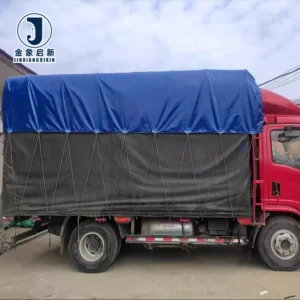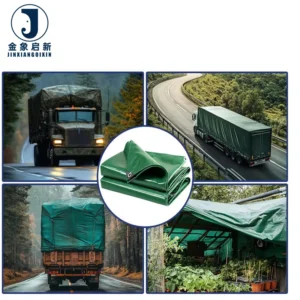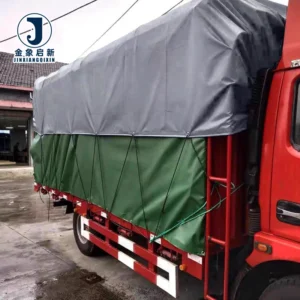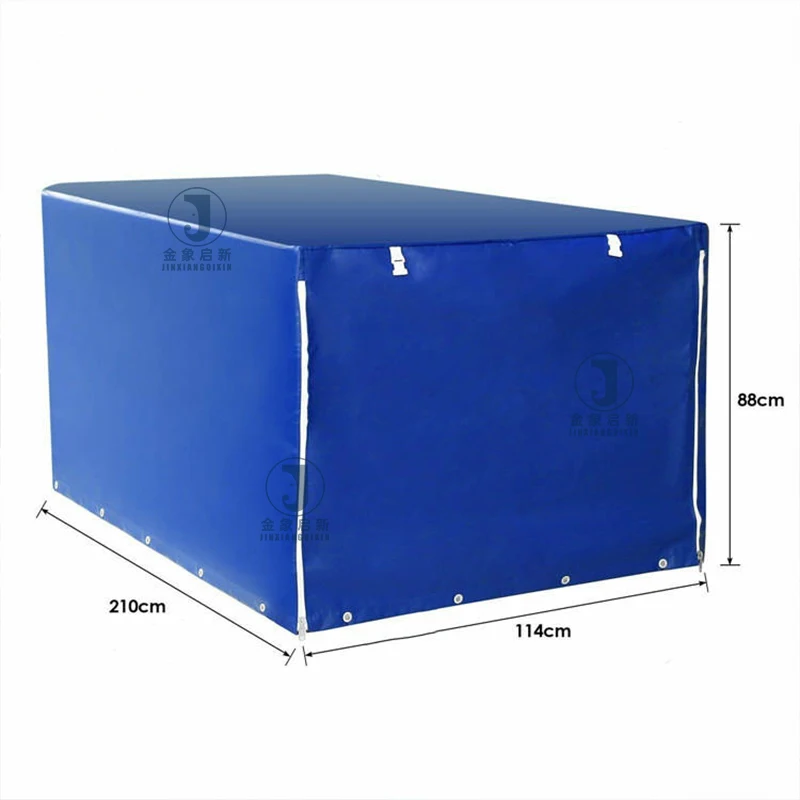
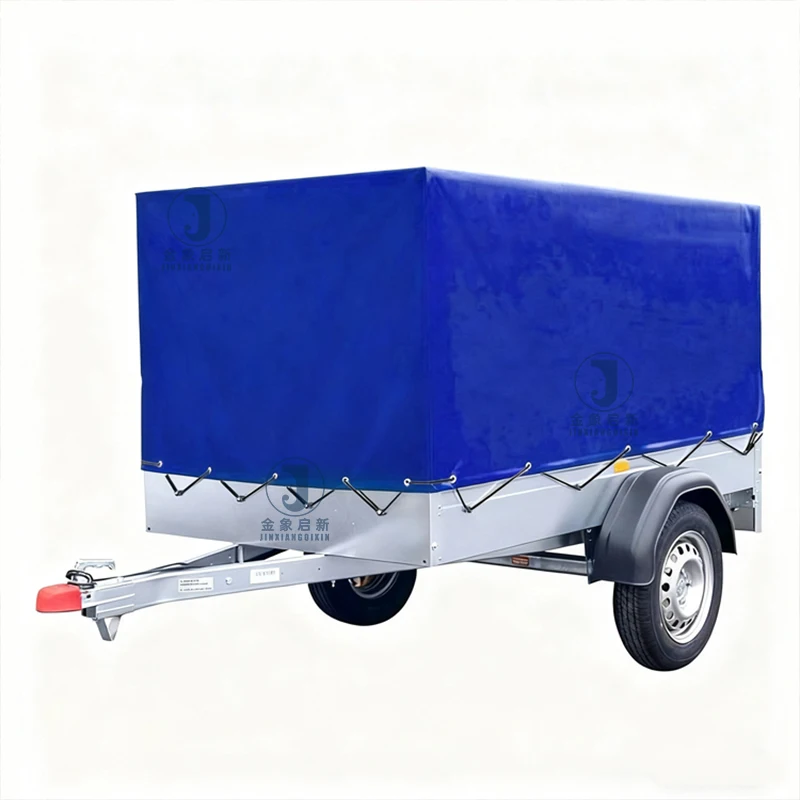
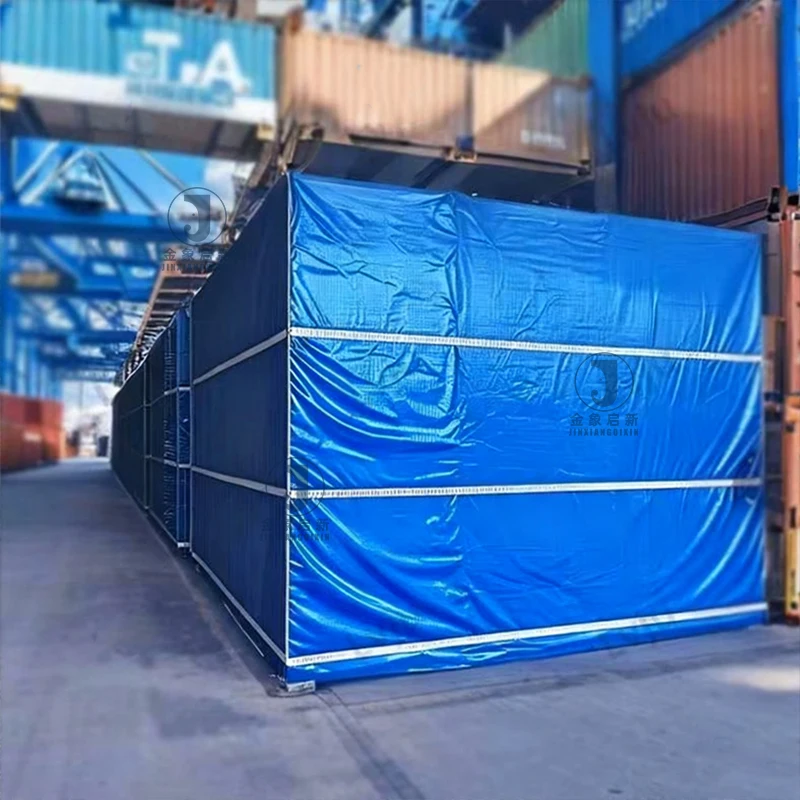
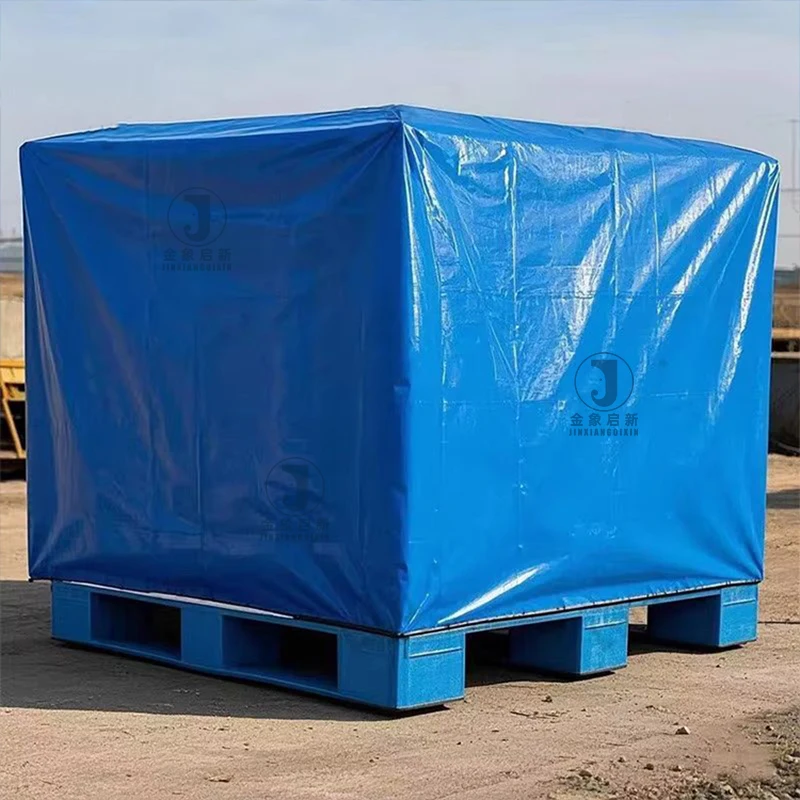
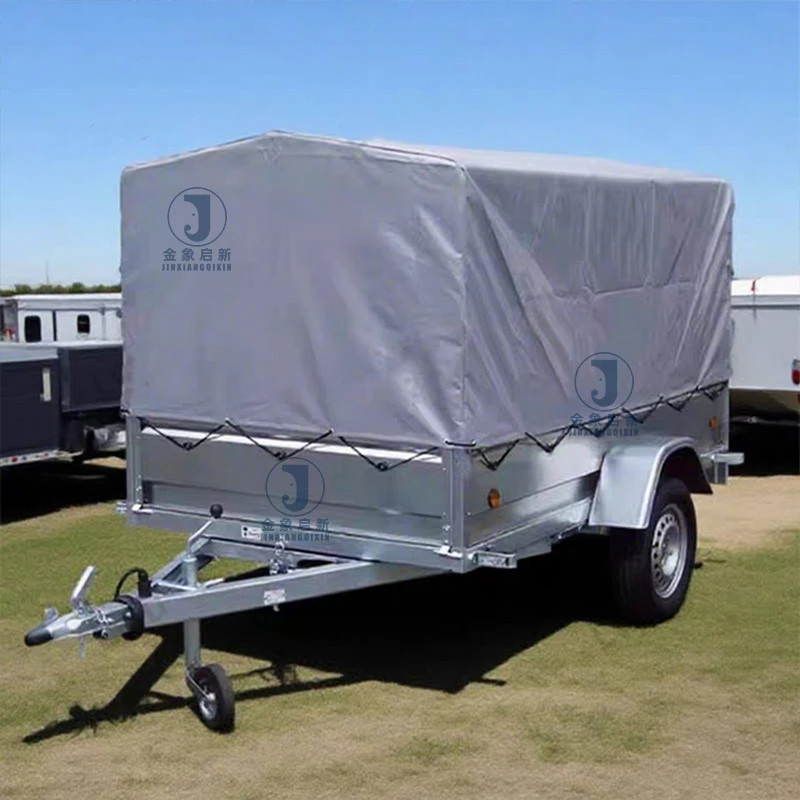
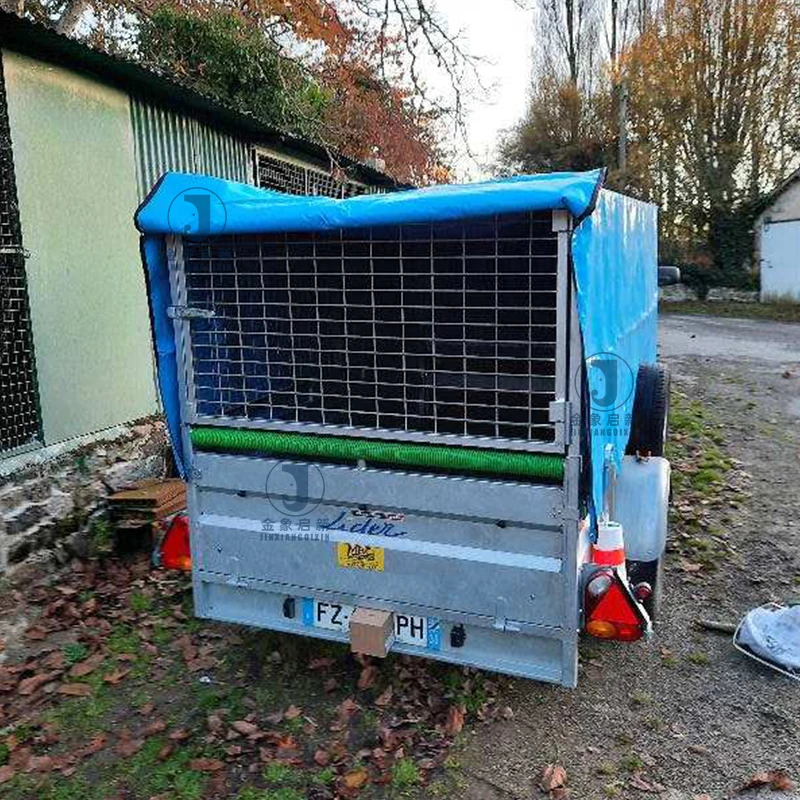
PVC Truck Cover — PVC coated tarpaulin with high-strength polyester mesh base, available in 350gsm to 750gsm and 0.32mm to 0.65mm thickness.
- Hot-melt coated for strong adhesion and reliable heat-welded seams at flex points
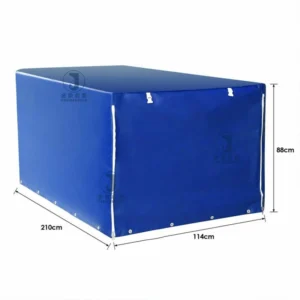
- Custom cut to exact trailer dimensions with eyelets, zippers, and velcro options
Covers engineered for open trailers and cargo ships, balancing GSM selection with base fabric construction to achieve the right tear strength for transport loads. Backed by 100% pre-shipment inspection covering weld strength and colour consistency.
Description
Coating adhesion mastery — Double-sided hot-melt lamination on high-tenacity polyester mesh ensures the PVC coating bonds at the fibre level, preventing delamination under the constant flex and road abrasion a PVC Truck Cover faces on long-haul routes.
Technical Specifications
| Parameter | Value |
|---|---|
| Product Type | PVC Coated Tarpaulin Truck Cover |
| Base Fabric | High-strength polyester mesh fabric |
| Coating Technology | Laminated technology & Hot-melt Coating technology |
| Weight (GSM) | 350gsm / 420gsm / 500gsm / 550gsm / 600gsm / 750gsm |
| Total Thickness | 0.32mm / 0.35mm / 0.4mm / 0.45mm / 0.5mm / 0.65mm |
| Color Options | Blue / Red / Yellow / Light blue / Grey (Customized) |
| Key Features | Waterproof, sunproof, cold crack resistance, anti-mildew, anti-static treatment, best color fastness |
| Hem Construction | Hot welded hem at the bottom |
| Closure Options | Eyelets, zipper, velcro as option |
| UV Treatment | UV treated material (test basis not stated in source — confirm the standard required for your market) |
| Flame Retardant | Flame-retardant type customizable (grade not stated in source — confirm the grade required for your market) |
| Service Life | 5-10 years under normal circumstances (source value — verify against manufacturer catalog) |
| Standards | ISO, CE |
Application Suitability
| Application | Exposure & Requirement |
|---|---|
| Long-haul open trailer cover | Rain, dust, road debris, UV exposure, constant wind flap at speed |
| Flatbed truck cargo cover | Abrasion from load shifting, tie-down strap pressure, sun and weather |
| Side curtain fabric for new trailer builds | Continuous flex cycles, weld integrity at curtain rails, colour consistency across fleet |
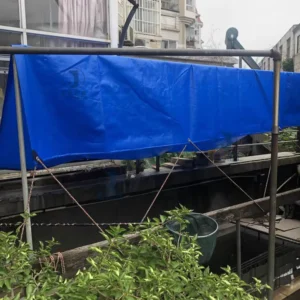
| Construction equipment cover on site | Puncture risk from sharp edges, UV exposure, dust ingress prevention |
| Cargo ship deck cover | Salt spray, sustained moisture, heavy wind loads on open water |
Why a Generic-Size PVC Truck Cover Fails Before the Fabric Does
A cover that does not match your trailer’s exact dimensions will flap, abrade and tear at the hem long before the coated fabric itself reaches the end of its service life.
Fleet operators replacing covers every season often blame the material, but the root cause is usually a cover cut to a standard size that leaves excess fabric vibrating in the slipstream. That vibration concentrates stress at the eyelets and the hem weld. When the hem is stitched instead of hot-welded, the needle holes create a perforation line that splits under load [NEED_CITE: tensile and tear test methods for coated fabrics per ISO 1421]. Specifying a PVC Truck Cover custom-cut to your trailer model, with hot-welded hems and correctly spaced eyelets, eliminates the failure point that generic covers introduce.
Hot-Welded Hems at the Flex Points That Matter
Every time a trailer cover flexes under wind load or as the suspension articulates, the hem absorbs the peak stress. Our hot-welded hem construction fuses the PVC coating layers together, creating a bond that is as strong as the base fabric rather than relying on thread that cuts through the weave. This matters most at the bottom edge where the cover meets the trailer rail and at the corners where tie-down straps apply concentrated force.
Colour Consistency Across a Fleet Order
When you order multiple PVC Truck Cover units for a mixed-model fleet, visible colour variation between covers undermines the professional appearance of the fleet and can signal inconsistent coating weight. Batch colour matching is controlled at the coating stage, with the colour reference documented before production begins so that every cover in the same order reads as one uniform batch once installed on the vehicles.
Reading the GSM and Thickness Grades for Your Load
The 350gsm to 750gsm range covers everything from light dust covers for enclosed-yard trailers to heavy-duty sheets for open-top loads exposed to highway-speed wind and debris. Higher GSM does not automatically mean better; a 750gsm cover on a small box trailer adds dead weight and handling difficulty without proportional benefit. The correct grade depends on the load profile, the exposure conditions and the expected handling frequency. Hot-melt lamination ensures that coating adhesion remains consistent across all grades, so the peel strength between the PVC and the polyester mesh does not drop on the lighter options [NEED_CITE: DIN 53354 peel strength test for coated fabrics]. Thickness tracks with GSM but the relationship is not linear — a tighter weave base fabric can deliver the same tear resistance at a lower coating weight, which is why GSM alone is an incomplete specification.
The Hidden Cost of Specifying on Price Per Kilogram Alone
When buyers select a truck cover based on the lowest price per kilogram, the supplier often compensates by reducing coating weight below the quoted GSM. The base fabric may be lighter denier, the eyelet spacing wider, or the hem left stitched instead of welded. The result is a cover that measures correctly on the scale but fails at the first high-wind stretch on the motorway. Pre-shipment weight verification on sample cuts, compared against the material specification sheet, catches this discrepancy before the goods leave the factory [NEED_CITE: pre-shipment inspection protocols for coated textile goods].
Why Procurement Teams Source This PVC Truck Cover Here
Production runs on three full lines with 36 sets of professional equipment, giving the capacity to handle fleet-scale orders without splitting production across subcontractors. The 10-person R&D team develops samples for custom sizes, colours and closure configurations within days, not weeks. Every roll and finished cover passes 100% inspection before dispatch, with a pre-shipment record documenting weld integrity, eyelet spacing and colour match. Deep process control over coating weight and adhesion, built across nearly 30 years focused on coated fabric, means the GSM on the quotation is the GSM that arrives.
Documentation & Verification
- Material specification sheet stating exact GSM, base fabric denier and coating weight for each PVC Truck Cover ordered
- Pre-shipment inspection record confirming dimensions, weld integrity, eyelet placement and colour consistency
- Colour reference documented per order to ensure fleet-wide batch uniformity
- Test report for UV treatment and flame-retardant grades provided where applicable, with stated standard
- Certificate of origin and roll packing list for customs clearance and inventory reconciliation
Fabrication, Handling & Storage
- Hot-weld hem temperature and dwell time must match the PVC coating grade — confirm parameters for the specific GSM ordered
- Eyelet spacing and reinforcement patch size should be scaled to the cover grade; heavier GSM accepts wider spacing under tie-down load
- Store rolls and finished covers flat or on core, never standing on edge, to prevent permanent crease marks in the coating
- Unfold covers at ambient temperature; cold PVC coating becomes stiff and risks micro-cracking at the fold line
- Clean with mild detergent only; solvent-based cleaners can soften the plasticiser in the PVC coating and reduce surface tension
- Field repairs require PVC-compatible adhesive patches matched to the coating technology — hot-melt and laminated coatings respond differently to heat reactivation
Requesting the Right Specification for Your Fleet
Tell us the trailer make, model and year for each vehicle in the order so the PVC Truck Cover is cut to the exact dimensions rather than a generic size. Specify the operating environment — highway exposure, off-road construction sites, or coastal salt spray — so we recommend the correct GSM grade, closure configuration and treatment package. If your market requires a specific flame-retardant or UV standard, name the regulation so we confirm compliance before production starts.
Frequently Asked Questions
Q: How is the PVC Truck Cover sized to fit my specific trailer model?
A: We request the trailer make, model and year, plus any aftermarket modifications such as raised side rails or tail lifts. The cover is then cut and welded to those exact dimensions, with hem placement and eyelet spacing engineered for that specific chassis. This eliminates the excess fabric that causes flapping and premature wear on generic-size covers.
Q: How do you verify GSM weight on arrival matches the quotation?
A: Every production run includes in-process coating weight checks and a 100% pre-shipment inspection. Sample cuts from each batch are weighed and recorded on the inspection report, which accompanies the shipment. You can cross-check the documented GSM against your material specification sheet upon receipt.
Q: What eyelet spacing, hem reinforcement and closure options are available?
A: Eyelets, zippers and velcro closures are available as options, with spacing and reinforcement sized to the cover grade and the tie-down method your fleet uses. Hot-welded hems are standard at load-bearing edges. Confirm your preferred configuration and strap type during the specification stage so the reinforcement matches.
Q: What UV treatment test basis supports the outdoor service life claim?
A: UV treatment is applied to the coating formulation, but the specific test standard varies by market. We supply test reports where applicable when you specify the regulation your end-use market requires. Confirm the UV standard for your region so we can match the treatment grade and provide the corresponding documentation.
Q: What is the sample development and approval process for custom sizes and colours?
A: Once we receive your trailer dimensions and colour reference, the R&D team develops a sample cover for fit and colour approval. You evaluate the sample on the actual vehicle before we proceed to full production. This step catches any sizing or colour mismatch before the bulk order is cut and welded.