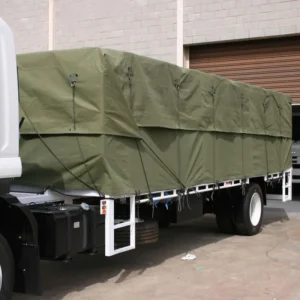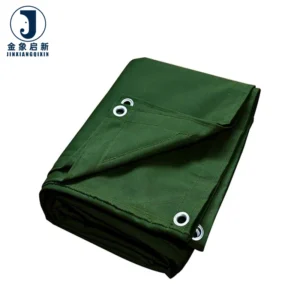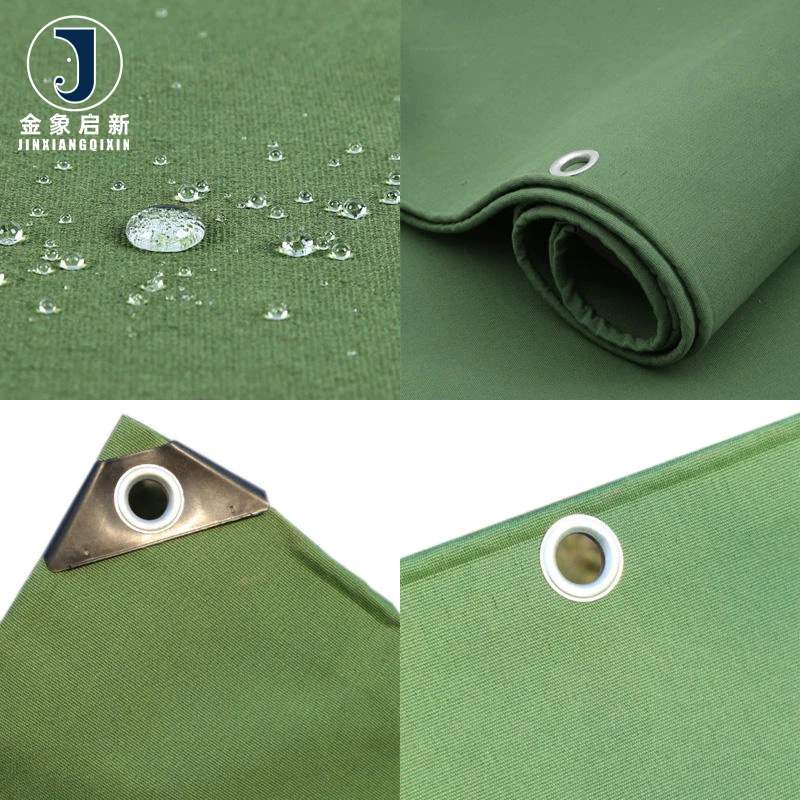
Heavy Duty Canvas Tarpaulin 600gsm, 0.5–0.7mm thick, silicone waterproof coated with rustproof aluminum grommets every 1 metre.
Polyester-cotton woven base delivers reliable tensile and tear resistance for tent, truck cover and construction applications. Full custom capability on width, length, colour and pattern printing — samples developed within days to confirm specification before production.
- 100% pre-shipment inspection covering grommet pull strength, seam integrity and dimensional tolerance
- Three full production lines with 36 sets of equipment ensuring reliable on-time delivery
- Material specification sheet confirming GSM, base fabric and coating weight supplied with every order
Description
Proven Process Control — Nearly 30 years focused on woven and coated fabric production, with dedicated QA at every stage ensuring each canvas tarpaulin roll meets stated GSM and dimensional tolerance before leaving the facility.
Technical Specifications
| Parameter | Value |
|---|---|
| Product Type | Canvas Tarpaulin |
| Material | Polyester cotton industrial textile with 8-12 strands of fine cotton yarn |
| Fabric Weight | 600gsm |
| Thickness | 0.5mm / 0.6mm / 0.7mm (grade dependent) |
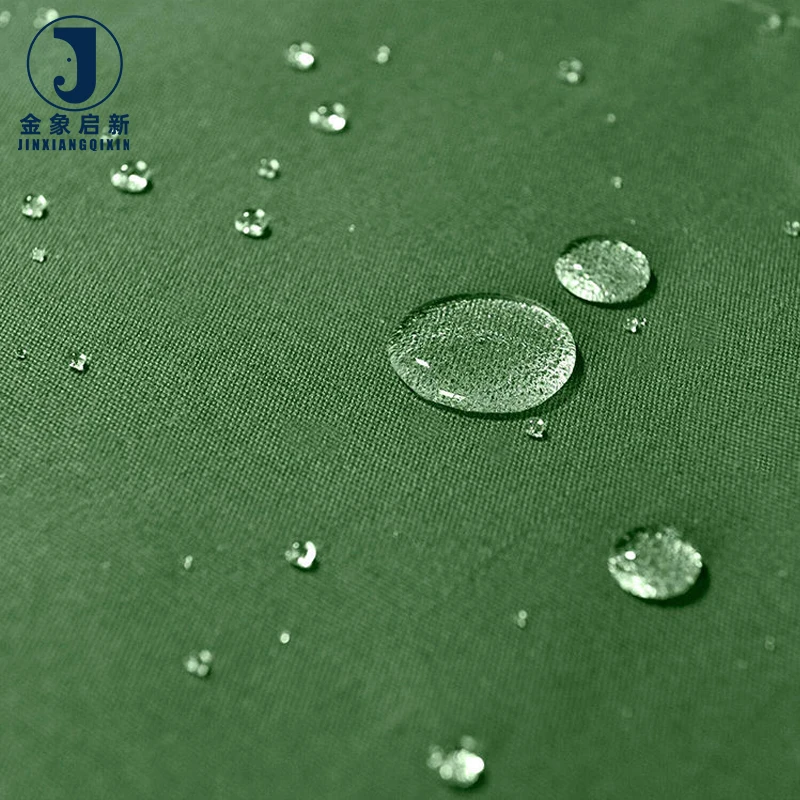
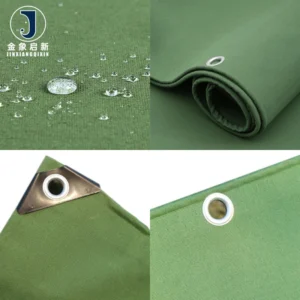
| Waterproofing | Silicone canvas coating |
| Roll Size | 2m width × 100m length |
| Finish Product Size | Custom cut sizes as per customer requirements or inventory stock |
| Color | Army Green Camouflage / Custom |
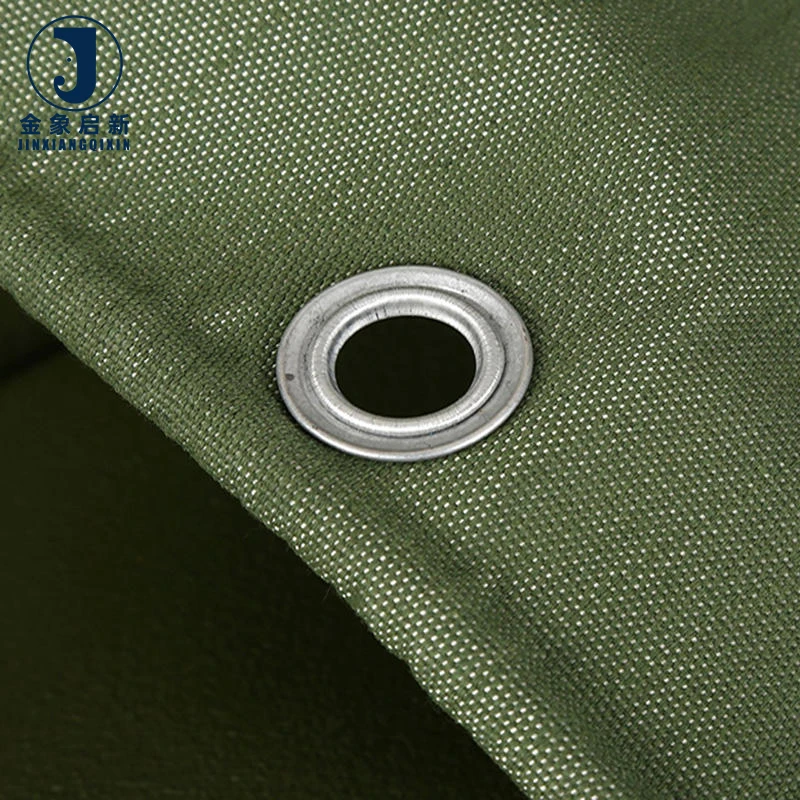
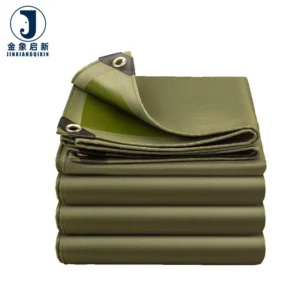
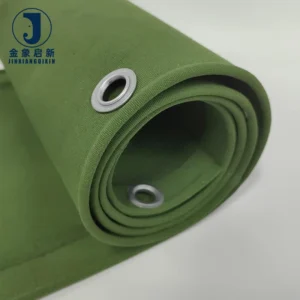
| Grommets | Rustproof aluminum grommets every 1 meter at corners and hem |
| Construction | Folded and seams welded and sewn with poly rope reinforcement |
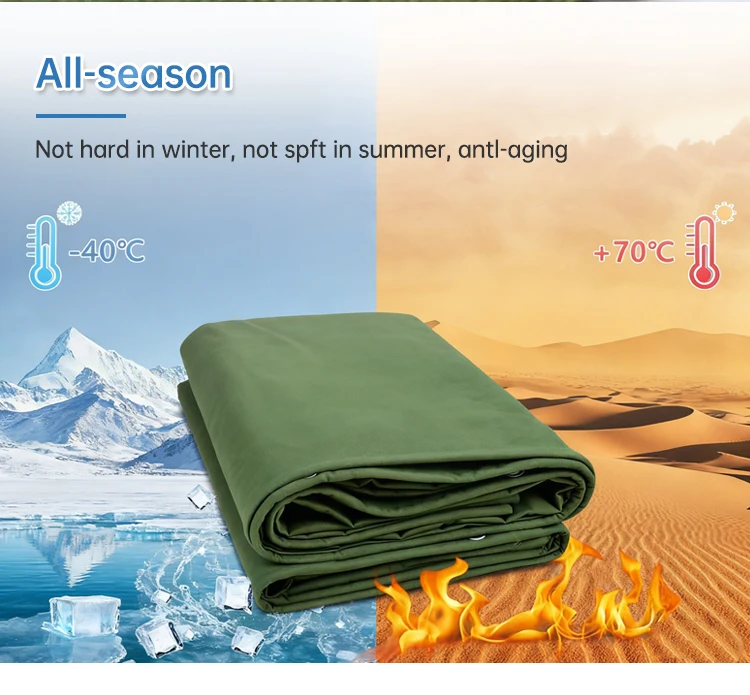
| Key Features | Wear-resistant, corrosion-resistant, tensile-resistant, high- and low-temperature resistant |
| Service Life | 5-8 years under normal conditions (source value — verify against manufacturer catalog) |
| Standards | CE, ISO |
Application Suitability
| Application | Exposure & Requirement |
|---|---|
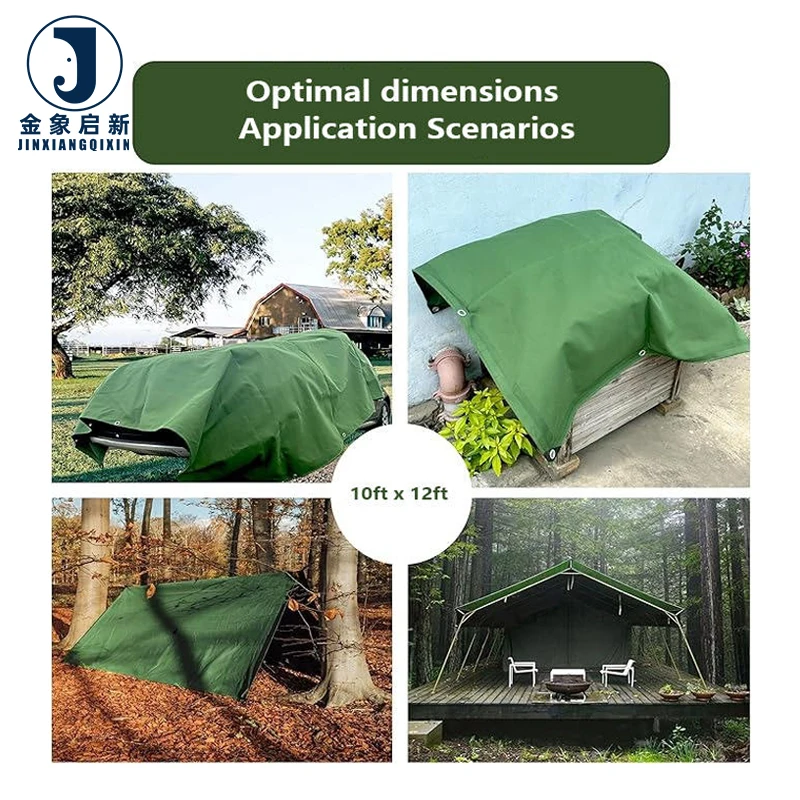
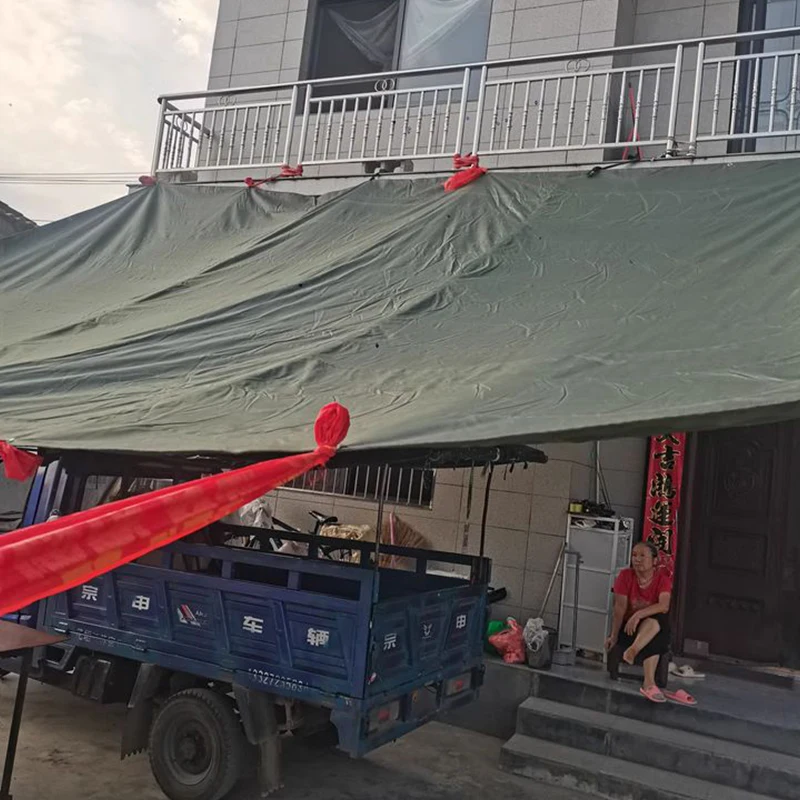
| Tent and canopy tent roof | Continuous UV exposure, rain load, wind uplift on grommet points, repeated assembly and teardown |
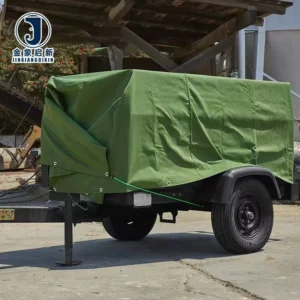
| Truck and trailer cover | Road abrasion, wind flap fatigue, fuel and chemical splash, secure tie-down under highway speed |
| Construction site cover | Equipment protection from dust and rain, asphalt blanket use, heavy handling and dragging across rough ground |
| Open-air storage and woodpile | Long-term weather exposure, moisture ingress prevention, mold and mildew resistance |
| Camping and outdoor shelter | Lightweight handling requirement, fold-and-pack durability, water resistance in variable conditions |
Why GSM Verification Matters More Than the Number on the Quotation
A 600gsm canvas tarpaulin is only as reliable as the inspection process behind it. Buyers who have received rolls lighter than quoted know that stated weight means nothing without roll-by-roll verification at the factory gate.
When a fabric arrives 40 or 50 grams lighter than specified, the tensile reserve drops accordingly. Seams that should hold through a season of wind load start pulling apart at the grommet line. The buyer pays for heavy duty but installs something closer to mid-range. [NEED_CITE: coated fabric weight tolerance standards per ISO 2286]
This heavy duty canvas tarpaulin is QA-checked for weight and coating consistency before dispatch. Every roll is weighed and measured against the specification sheet, so the fabric you receive matches what you approved at the sample stage.
Material Construction and What It Means for Your Application
The base fabric uses 8-12 strands of fine cotton yarn woven into a polyester cotton industrial textile. This combination gives the canvas tarpaulin manufacturer the ability to deliver high tensile strength without the stiffness that makes pure polyester fabrics difficult to handle and fold on site.
The silicone waterproofing treatment penetrates the weave rather than sitting as a surface film. Unlike PVC laminates that can crack at fold lines during cold weather deployment, silicone-treated canvas retains flexibility across temperature swings, making it suited for seasonal tent assembly and transport cover applications where the fabric is repeatedly folded and unfolded.
Full Custom Capability from Roll Stock to Finished Panels
Buyers sourcing canvas tarpaulin for tent manufacturing or truck fleet outfitting need consistent colour and weight across every roll in the order. A visible shade difference between adjacent panels on a canopy roof or a truck side curtain signals poor batch control and undermines the end customer’s confidence.
Colour consistency is verified under controlled lighting before shipment. Custom colours beyond Army Green Camouflage are developed as production samples within days, allowing buyers to confirm shade, hand feel and grommet placement before the full order runs. [NEED_CITE: colour fastness test methods for textile products]
Reading the Specification Sheet Beyond the GSM Number
The 600gsm weight reflects the combined mass of the polyester-cotton base fabric and the silicone coating. A higher GSM achieved by loading more coating compound can mask a lighter, weaker base weave — one that tears easily despite the impressive number on the data sheet. The 8-12 strand fine cotton yarn specification tells you the base fabric itself carries structural load, not just the surface treatment.
Thickness options of 0.5mm, 0.6mm, and 0.7mm correspond to different coating build levels within the same product family. Thicker grades offer greater abrasion resistance for applications like asphalt blankets and construction site dragging, while thinner grades reduce roll weight and improve handling for tent and canopy assembly crews who deploy and strike fabric daily.
The 2m × 100m roll format allows fabricators to cut panels with minimal waste for standard tent bay widths, while custom cut sizes eliminate off-cuts entirely for buyers who need finished dimensions with grommets already installed. Rustproof aluminum grommets at 1-meter intervals distribute tie-down load across the hem, reducing the point stress that causes eyelet pull-out under wind load. Poly rope reinforcement in the welded and sewn seams adds a structural backbone at the most common failure point on any tarpaulin.
The Hidden Cost of Skipping Sample Approval
Orders placed without a confirmed production sample often arrive with grommet spacing that does not match the buyer’s tie-down hardware, hem reinforcement that is sewn without rope core, or colour that shifts noticeably from roll to roll. Rectifying these issues after the fabric has been shipped means bearing return freight, project delays, and reputational damage with the end user. [NEED_CITE: common tarpaulin specification disputes in international trade]
A pre-production sample resolves all of these variables — weight, colour, grommet pull strength and seam construction — before bulk weaving and coating begin. The cost of sampling is negligible against the cost of a container load that fails acceptance inspection.
Why Buyers Source This Canvas Tarpaulin Here
Three full production lines and 36 sets of professional equipment support bulk capacity with reliable on-time delivery, whether the order is ten rolls or a full container load.
A 10-person R&D team handles material selection, custom colour matching, pattern printing and sample development in-house, so specification changes do not require re-quoting through third-party finishers.
Dedicated QA and QC operates at every production stage, with 100% inspection covering GSM verification, dimensional tolerance, grommet pull strength and seam integrity before any roll is packed.
Samples for custom size, colour and print requirements are developed within days, compressing the approval cycle and protecting the buyer’s project timeline.
Deep process control over coating weight and adhesion, built across nearly 30 years of focused woven and coated fabric production, ensures the silicone treatment bonds consistently to the polyester-cotton base.
Documentation & Verification
- Material specification sheet confirming 600gsm weight, polyester-cotton base fabric and silicone coating
- Pre-shipment inspection record with 100% QA check on grommet pull, seam integrity and dimensions
- Roll packing list detailing roll count, net and gross weight for container loading planning
- Certificate of origin and customs documentation for export compliance
- UV and weathering test reports supplied for treated grades where applicable
Fabrication, Handling & Storage
- Seal cut edges on the 600gsm canvas to prevent yarn fraying before grommet installation
- Weld seams at temperature settings matched to the silicone coating to avoid delamination
- Store rolls upright on pallets to prevent flat spots and permanent creases on the woven base
- Allow cold-stored rolls to reach ambient temperature before unrolling to avoid coating crack
- Use mild detergent for cleaning; avoid solvent-based products that degrade the silicone finish
- Plan panel layout around the 2m roll width to minimise seams and maximise fabric yield
What to Include in Your Enquiry
To receive an accurate specification and lead time, share your application and exposure conditions — whether the canvas tarpaulin will face continuous UV, mechanical abrasion or chemical contact. Confirm the finished dimensions, grommet spacing and hem reinforcement you require, or indicate that you need full roll stock for in-house fabrication. If your market requires specific fire classification or UV test documentation, state the standard your end user expects so the correct treatment grade is selected from the outset.
Frequently Asked Questions
Q: What GSM and thickness options are available for canvas tarpaulin?
A: This product is specified at 600gsm with thickness options of 0.5mm, 0.6mm and 0.7mm depending on the coating build required. Thicker grades suit high-abrasion applications such as construction site covers and asphalt blankets, while thinner grades offer lighter handling for tent and canopy use. Request a sample to confirm the grade that matches your exposure conditions.
Q: Can you match a specific Pantone or custom colour across an entire order?
A: Custom colours are developed as production samples before bulk runs begin. Roll-to-roll colour consistency is verified under controlled lighting before dispatch. Provide your Pantone reference or physical swatch with the enquiry, and a sample will be prepared within days for your approval.
Q: What is the lead time for custom width, length and grommet spacing?
A: Custom cut sizes and non-standard grommet spacing are produced after sample approval. Typical multi-week lead times apply depending on order volume and treatment requirements. Confirming your specification early in the project cycle protects your installation schedule.
Q: Do you supply canvas tarpaulin in full rolls, cut sizes, or both?
A: Both formats are available. Standard roll stock ships at 2m width × 100m length for fabricators who cut and finish in-house. Custom cut-to-size panels with rustproof aluminum grommets and poly rope reinforced hems are produced for buyers who need installation-ready dimensions.
Related products
-
Lona de lona tejida laminada de PVC resistente al calor de muy pesado y de alta resistencia, tela de tienda impermeable para accesorios
¥195.00 Add to cart -
Lona de lona tejida laminada de PVC de 0.9 mm de grosor para camiones, toldo impermeable para exteriores, vela de sombra, accesorios para casas de mascotas.
¥20.00 Add to cart -
Canvas Tarps for Truck Cover – Custom Made
Read more -
Heavy Duty Canvas Tarpaulin for Canopy Tent – Custom Made
Read more