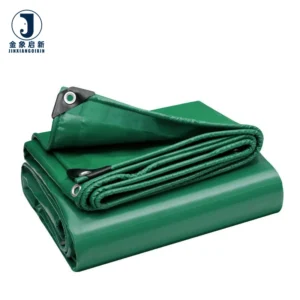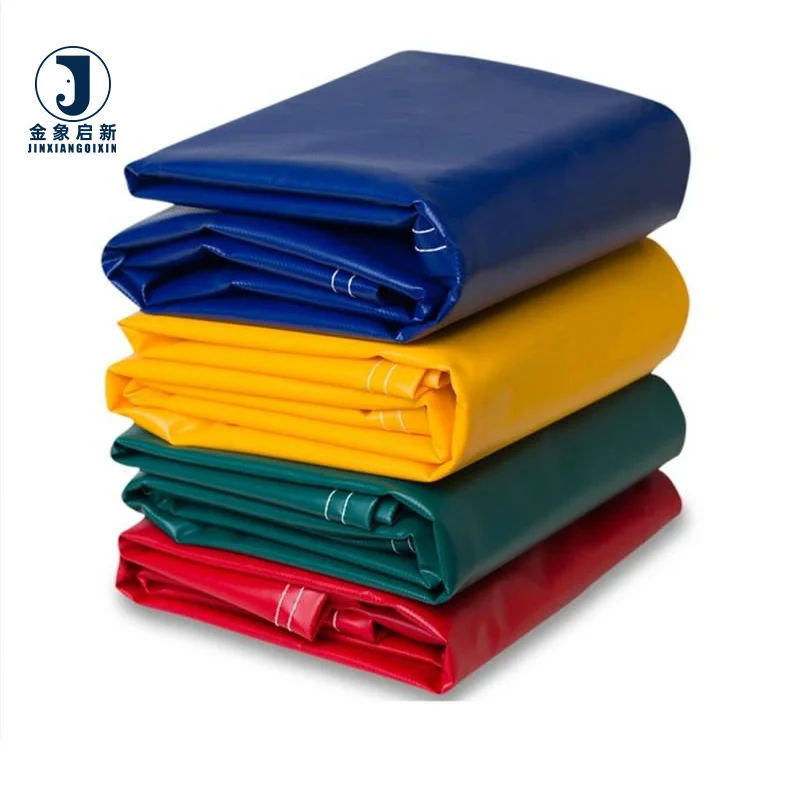
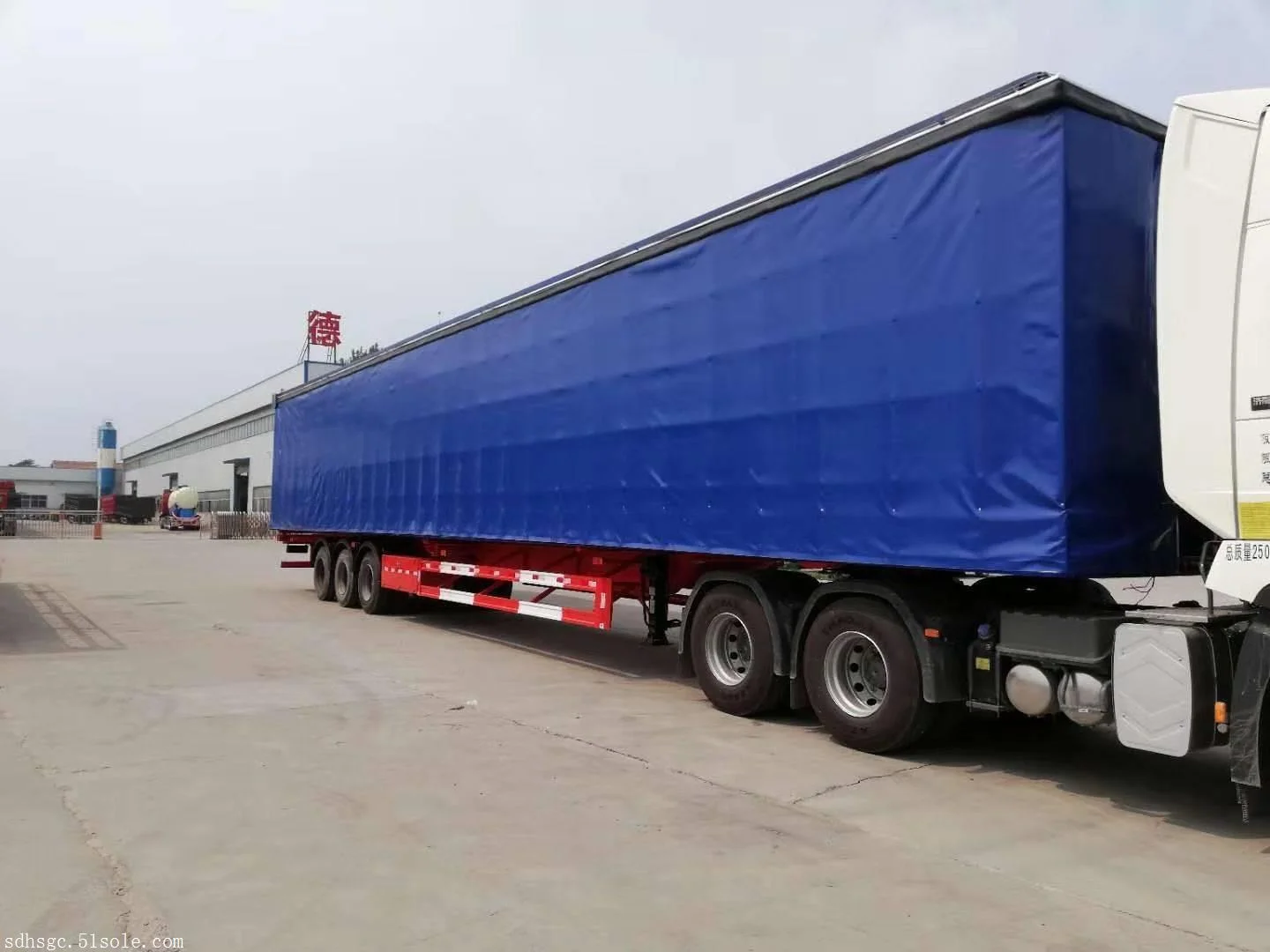
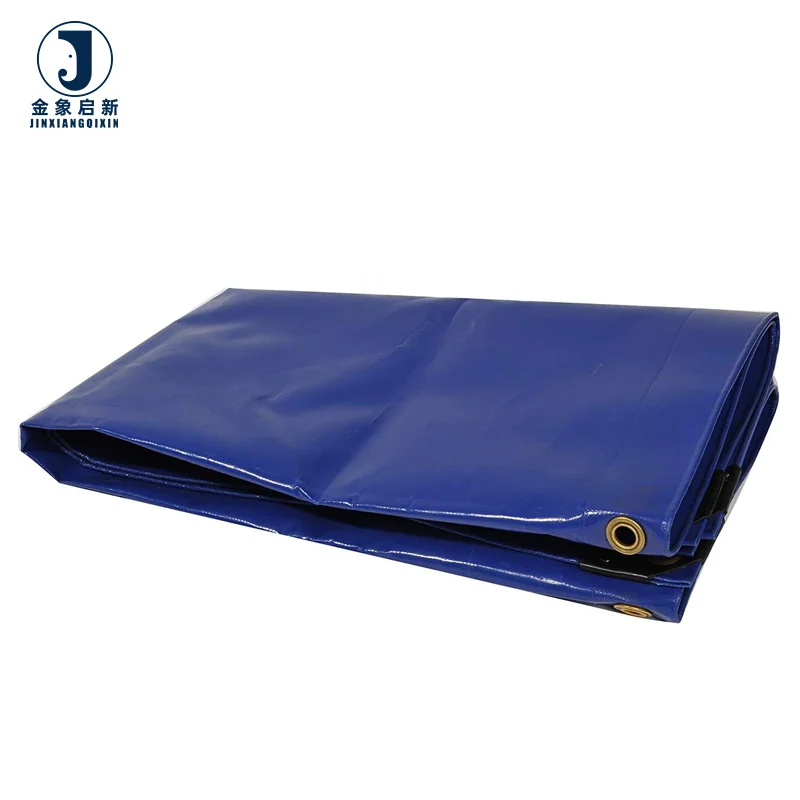
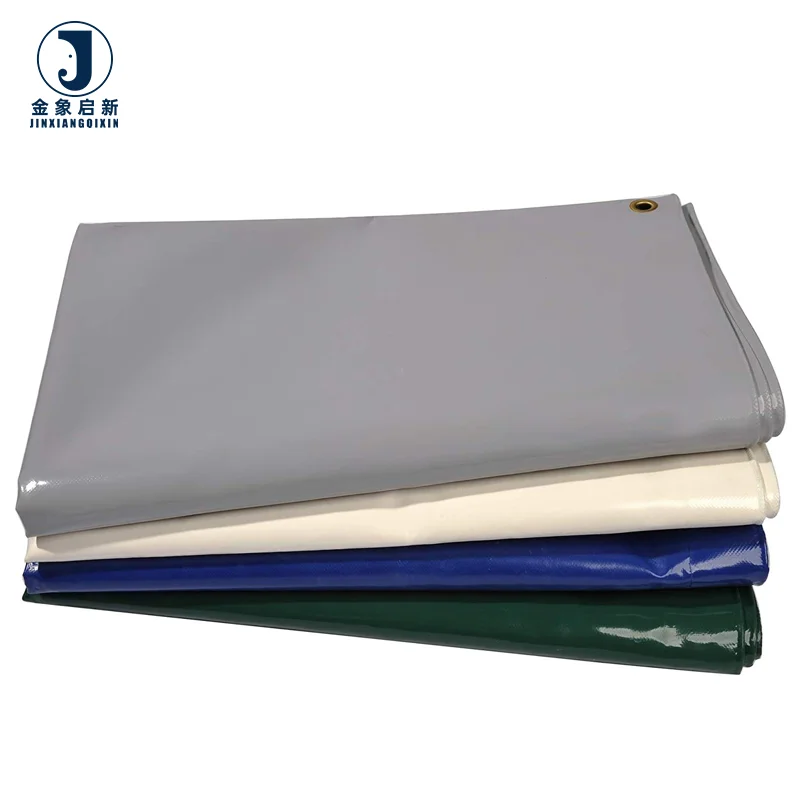
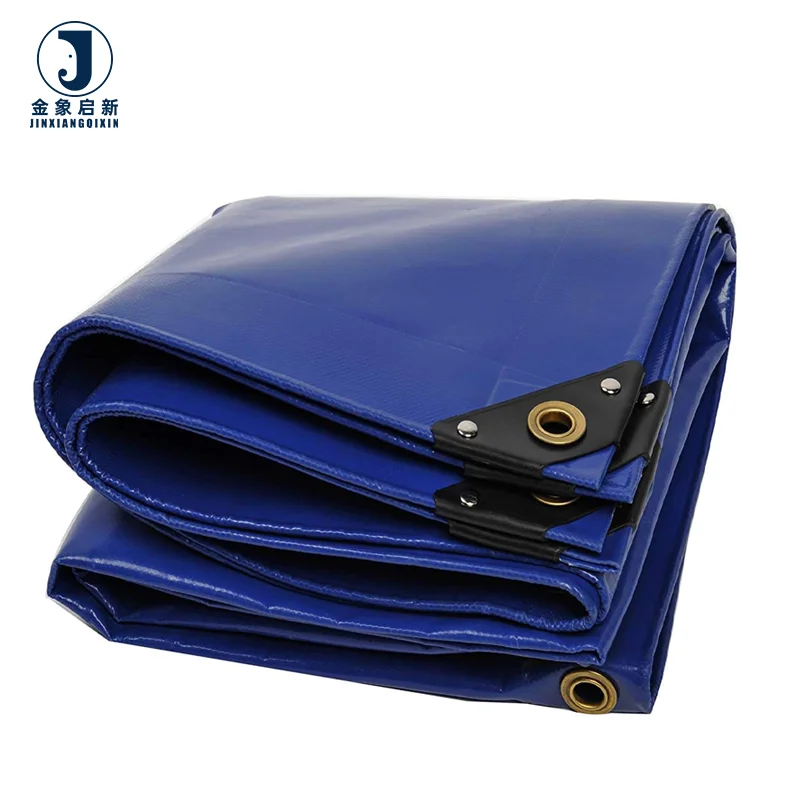
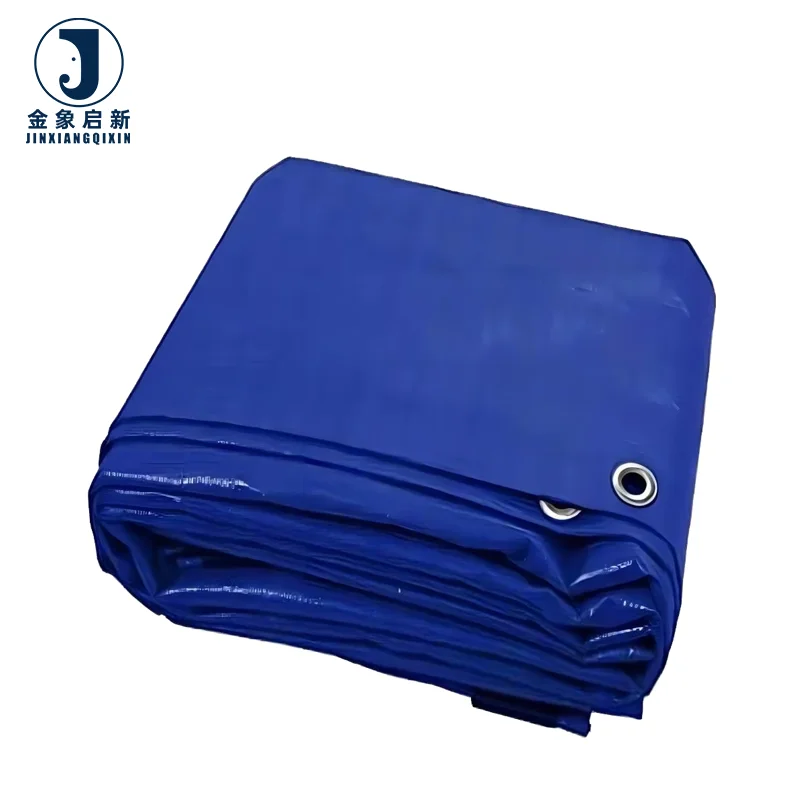
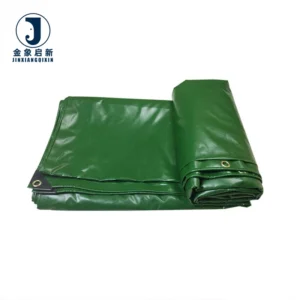
Heavy Duty PVC Coated Tarpaulin, 350gsm – 900gsm, 1000D×1000D Base — double-sided coated polyester fabric with heat-sealed edges and reinforced corners for truck, trailer and outdoor protection.
- Base fabric denier and weave matched to tensile requirements across multiple grades
- Fire retardant and anti-UV treatments available with supporting test reports
- 5mm rope edging and 3cm aluminum alloy eyelets for high-flex tie-down points
Nearly 30 years of coated fabric process control ensures GSM arrives as quoted, with dedicated QA inspection and full pre-shipment documentation.
Description
Precision Coating Control — Every roll of Heavy Duty PVC Coated Tarpaulin is verified against the quoted GSM at the coating head, ensuring the material you specify is the material you receive on the dock.
Technical Specifications
| Parameter | Value |
|---|---|
| Product Type | PVC Coated Tarpaulin |
| Base Fabric | Polyester Base Fabric + Double-Sided PVC Coating |
| Weight Range | 350gsm – 900gsm |
| Thickness Range | 0.29mm – 0.65mm |
| Yarn Count Options | 500D×840D / 500D×1000D / 1000D×1000D / 1000D×1300D / 1300D×1300D / 1000D×2000D |
| Weave Density | 20×20 / 30×15 / 30×19 |
| Tensile Strength (Warp) | 1650N – 3900N |
| Tensile Strength (Pick) | 1600N – 3500N |
| Edge Construction | 5mm thick rope, heat sealed seamless edge wrapping, reinforced corners |
| Eyelets | 3cm enlarged aluminum alloy buttonhole |
| Key Features | Waterproof, Fire Retardant (grade not stated), Anti UV (grade not stated), Heavy Metal Free, Anti Mildew, Flexible, Self Clean |
| Fabrication Method | High Frequency Hot Melt / Hot Air Welding / Sewing |
| Printing | Customizable |
| Certification | ISO, CE |
Application Suitability
| Application | Exposure & Requirement |
|---|---|
| Truck and Trailer Side Curtains | Constant flexing at load points, road spray abrasion, UV exposure, tie-down stress at eyelets |
| Top Roof and Pallet Covers | Standing water pooling, wind flap fatigue, UV degradation, forklift contact abrasion |
| Outdoor Event and Block-Out Tents | Crowd contact, repeated rigging and de-rigging, sun exposure, wind loading on seams |
| Awnings and Rain Shelters | Long-term UV exposure, water runoff channeling, bracket point stress, mildew in humid climates |
| Inflatable and Membrane Structures | Internal air pressure tension, fold-line creasing during packing, puncture from ground contact |
| Construction and Site Covers | Heavy equipment contact, soil and debris abrasion, prolonged weather exposure, wind uplift |
Why Stated GSM Means Nothing Without Base Fabric Context
A 650gsm sheet with a loose 500D×840D weave will tear faster than a 550gsm sheet built on a tight 1000D×1000D base.
I have seen buyers focus entirely on the GSM number when specifying a PVC Coated Tarpaulin aftermarket supplier, only to find the material tears at the first flex point because the base fabric denier was too low for the application. The coating weight fills the gaps between the yarns, but it is the yarns themselves — their thickness, their density, and how tightly they are woven — that carry the tensile and tear load. A heavy coating on a light base simply gives you a stiff, brittle sheet that cracks before it stretches. [NEED_CITE: tensile and tear test methods for coated fabrics per ISO 1421]
Matching Denier to the Load Path
The yarn count options in this range run from 500D×840D up to 1000D×2000D, and each step changes how the fabric behaves under stress. A truck side curtain that flexes with every corner turned needs a higher denier warp yarn to resist the repeated bending fatigue. A pallet cover sitting flat on a static load can work with a lighter base. Choosing the right denier is not about picking the heaviest option — it is about matching the yarn structure to the direction and type of force the fabric will face in service.
Coating Weight and What It Actually Protects
The PVC coating on both sides of the base fabric serves a specific purpose: it seals the weave against water ingress, protects the polyester yarns from UV degradation, and provides the surface that heat-welded seams bond to. When the coating weight is too thin for the base fabric denier, the yarns remain partially exposed at the weave intersections, and that is where water penetration and UV damage start. The double-sided PVC coating process here is controlled to ensure full encapsulation across the available GSM range, from the lighter 350gsm grades up through the heavy-duty 900gsm options. [NEED_CITE: coating adhesion and peel strength testing for PVC coated polyester]
Reading the Weave Density Numbers
The density options — 20×20, 30×15, 30×19 — describe how many yarns sit in each direction per unit of measure. A 30×19 weave packs more yarns into the warp direction, which increases tensile strength along the length of the roll but may reduce flexibility across it. For a side curtain application where the fabric hangs vertically and takes wind load across its width, the balance between warp and weft density matters as much as the total GSM. Understanding this relationship helps you specify a PVC Coated Tarpaulin aftermarket supplier product that actually performs, rather than one that simply looks correct on paper.
How Coating Method Affects Seam Integrity
The fabrication methods listed — high frequency hot melt, hot air welding, and sewing — each interact differently with the PVC coating. Hot melt welding fuses the coating layers directly, creating a bond that can match or exceed the fabric strength if the coating weight and formulation are consistent. Hot air welding relies on surface temperature and pressure, and it is more sensitive to coating thickness variation across the roll. When the coating is uneven, the weld line becomes the weakest point in the assembly, and that is where failures appear first under load flex. [NEED_CITE: hot air versus high frequency welding performance on PVC coated fabrics]
The Cost of Specifying on GSM Alone
When a buyer selects material based on GSM without checking the base fabric denier, the weave density, or the coating adhesion, the result is a cover that looks right on arrival but fails within months at the stress points. Eyelet pull-out, seam delamination, and crack propagation from fold lines all trace back to a mismatch between the fabric construction and the forces it faces. I have seen entire container loads rejected at destination because the buyer specified a weight but not a construction, and the supplier filled the order with the cheapest base fabric that hit the target GSM. The return freight alone exceeded the material cost. [NEED_CITE: common failure modes in PVC coated tarpaulin field applications]
Why Source This PVC Coated Tarpaulin Here
Three full production lines and 36 sets of professional equipment give this operation the capacity to hold tight GSM tolerances across large orders, which is where single-line producers struggle with consistency from roll to roll. The 10-person R&D team handles material selection and sample development directly, meaning a custom width or colour request gets engineering attention rather than a generic substitution. A dedicated QA/QC process runs at every production stage with full pre-shipment inspection, so the roll packing list you receive reflects what was actually measured, not what was planned. Nearly 30 years of focused coated fabric production means the process variables that cause colour drift, coating pinholes, and adhesion failure are controlled at the source, not caught after the fact.
Documentation & Verification
- Material specification sheet stating the exact GSM, base fabric denier, and coating weight per roll
- Test report for fire retardant and anti UV grades where the specific treatment has been applied
- Pre-shipment inspection record with measured values against the quoted specification
- Roll packing list with individual roll weights and dimensions for container loading verification
- Certificate of origin and customs documentation matched to the destination market requirements
Fabrication, Handling & Storage
- Set hot air welding temperature based on the specific GSM and double-sided PVC coating thickness to avoid surface scorch on lighter grades
- Position the 3cm enlarged aluminum alloy buttonhole eyelets away from fold lines to prevent stress concentration at the reinforced corners
- Store rolls upright on their cores to prevent flat-spot creasing that weakens the coating at the contact point
- Allow cold-stored rolls to reach ambient temperature before unrolling to prevent PVC cracking on heavier grades in low conditions
- Use mild detergent for cleaning; solvent-based cleaners can degrade the self-clean surface treatment on the PVC coating
What to Include in Your Inquiry
To match the right construction from this range, share the specific application and the type of mechanical stress the fabric will face — whether that is constant flexing on a side curtain, static load covering, or inflatable structure pressure. Confirm the fire safety or UV resistance grade required by your destination market, as treatment levels vary by regulation. Indicate whether you need rolls in standard widths or custom dimensions, and whether finished fabrication with the 5mm rope edge and eyelet reinforcement is required or if you are converting the fabric in-house.
Frequently Asked Questions
Q: How do I verify the actual GSM matches what was quoted?
A: Every roll is checked against the stated specification during pre-shipment inspection, and the measured values are recorded on the roll packing list. You can request the inspection record before dispatch to confirm the coating weight and base fabric construction match your purchase order. Random weight checks on arrival with a calibrated scale and sample cutter will verify consistency.
Q: Can I get a test report for fire-retardant or anti-UV treatment?
A: Test reports are provided for fire retardant and anti UV grades where those treatments have been specifically applied to your order. The grade and test basis are stated on the documentation. Confirm the grade required for your market before ordering, as fire safety classifications differ by region and application.
Q: Will colour vary between rolls if I order multiple?
A: Colour consistency is controlled through the coating process with dedicated QA at each production stage. Rolls within the same production run are matched against the approved colour reference. For orders placed across separate production runs, request a colour comparison sample before the second batch enters coating to ensure visual continuity.
Q: How are welded seams reinforced for heavy flex applications?
A: The edge construction uses a 5mm thick rope with heat sealed seamless edge wrapping, and the corners are reinforced to handle concentrated stress at tie-down points. For side curtain and trailer applications where the fabric flexes repeatedly, the seam specification is matched to the base fabric denier and coating weight to ensure the weld does not fail before the fabric itself.
Related products
-
Fábrica de lonas de polietileno aisladas para clima frío de 12ftx20ft, lona pesada para curado de concreto, rollo de lona.
¥0.66 Add to cart -
Cubierta de lona de PVC impermeable de alta resistencia para carpa de camión, almacenamiento al aire libre y uso industrial
¥1.48 Add to cart -
Lona impermeable de alta resistencia Funda impermeable Fabricante de lonas
¥1.48 Add to cart -
Lona verde impermeable multiusos de 500gsm para refugio de emergencia contra la lluvia. Cubierta para exteriores.
¥7.72 Select options This product has multiple variants. The options may be chosen on the product page