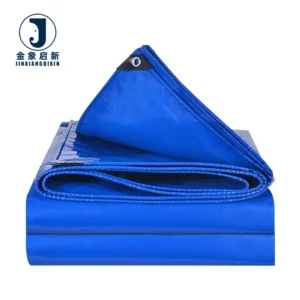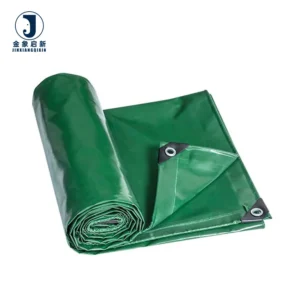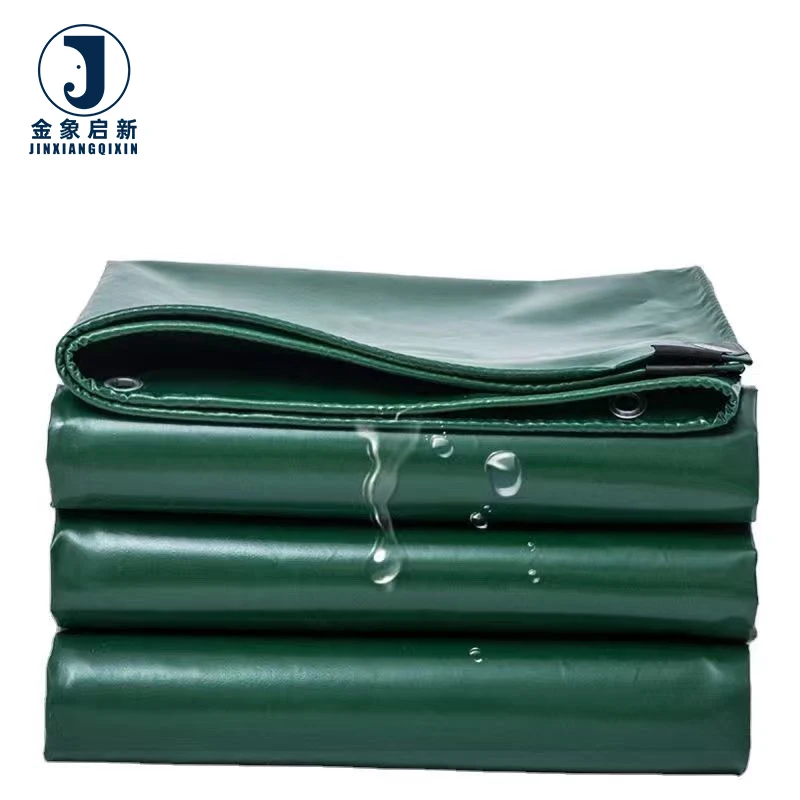
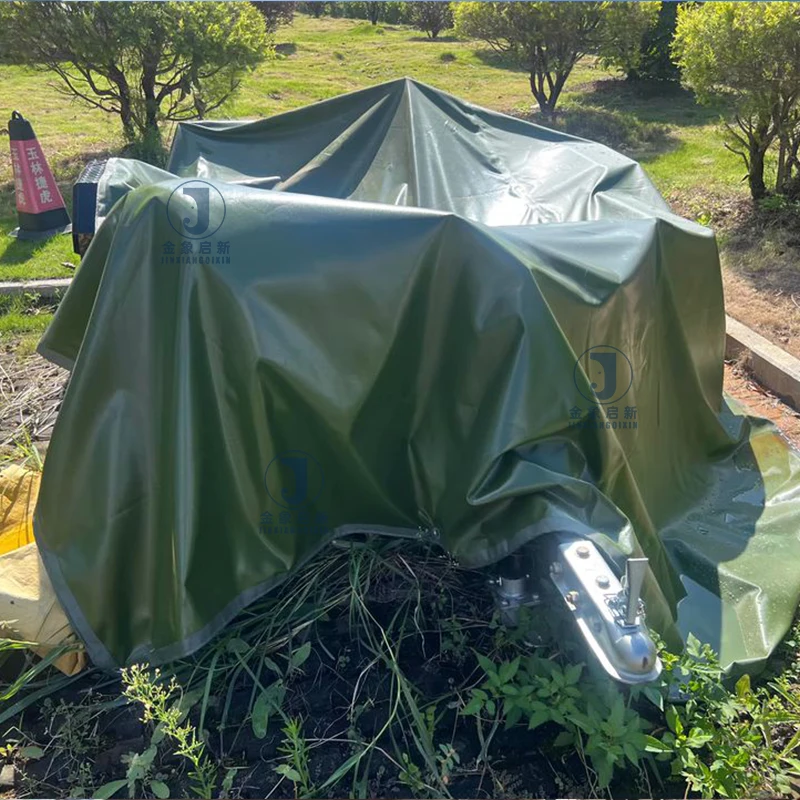
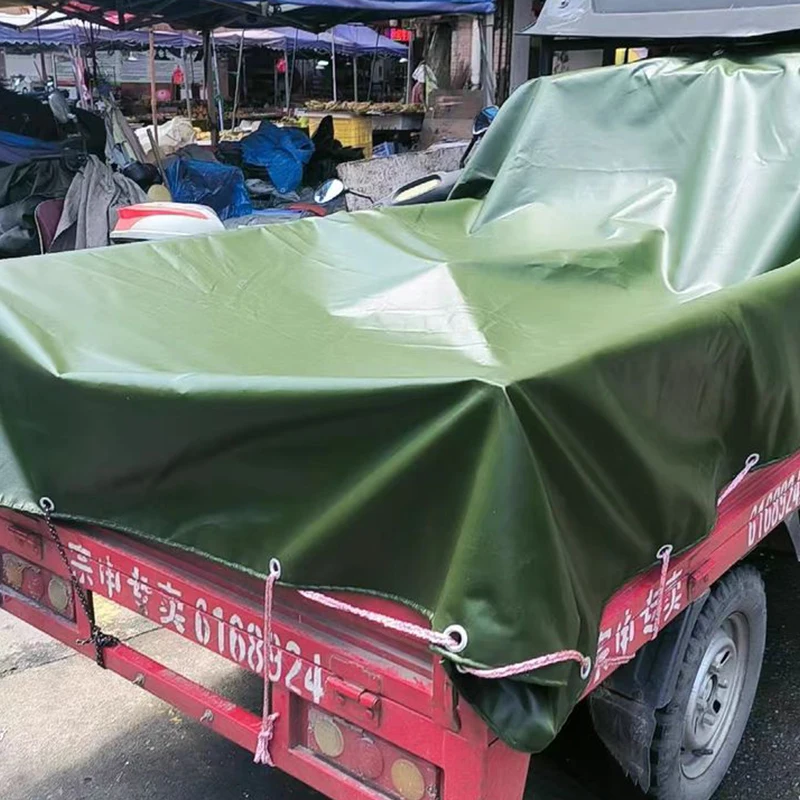
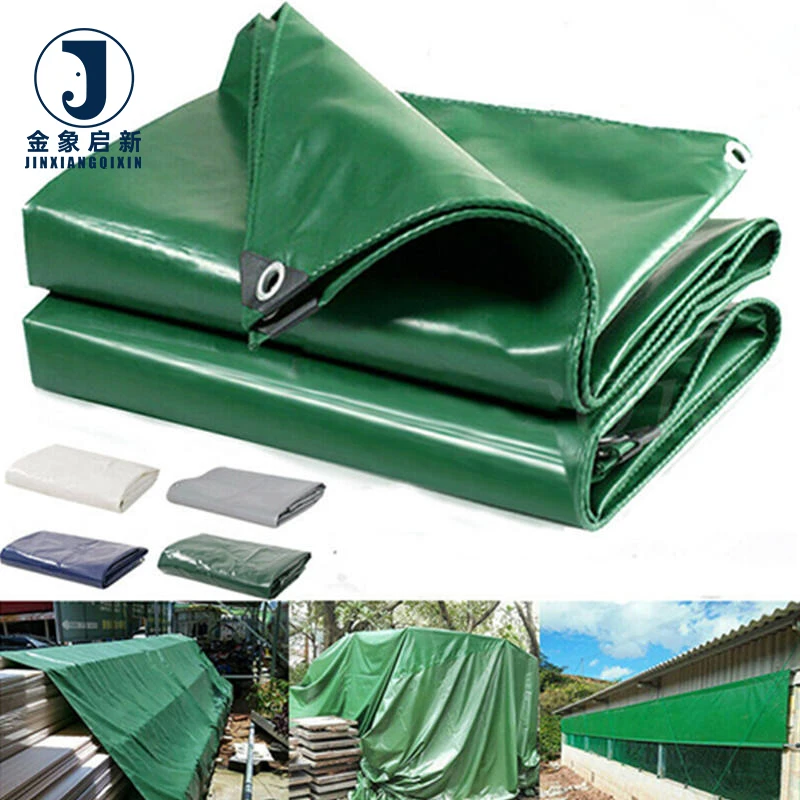
PVC Coated Waterproof Tarpaulin, 250gsm–1500gsm, 1000D×1000D denier, waterproof and tear-resistant fabric for tent roofs and industrial coverage.
- Glossy or matte surface finish with single or double-side color options
- UV and flame-retardant treatment available with supporting test reports
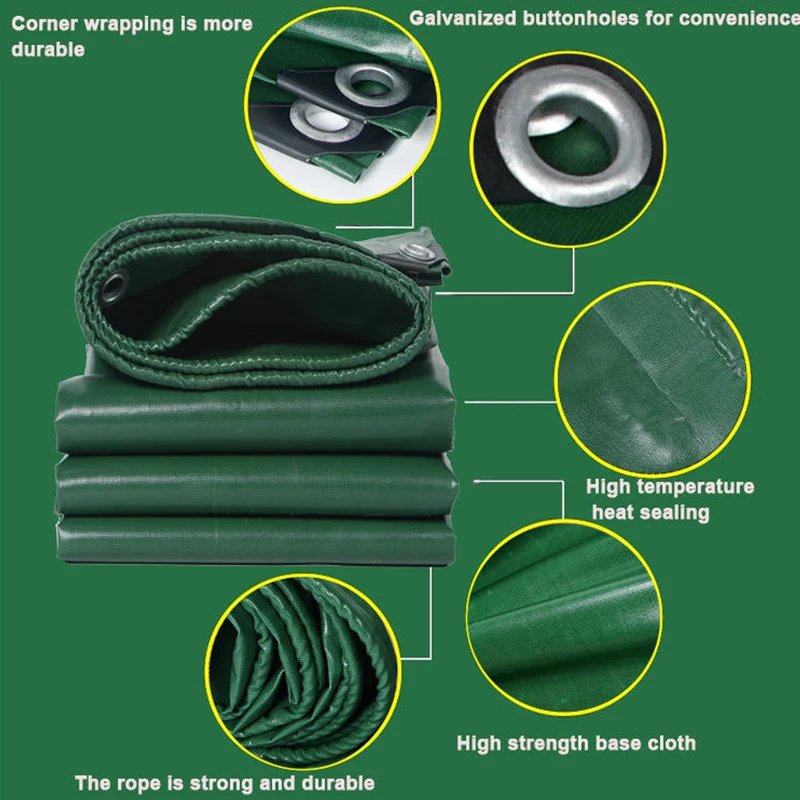
- Custom sizing from 3x4m to 10x12m with reinforced hems and eyelets
Three full production lines and 36 sets of professional equipment ensure bulk capacity and reliable on-time delivery for orders of any scale.
Description
Process-Controlled Coating — Every roll of PVC coated tarpaulin passes through dedicated QA stages that verify coating weight and adhesion before the material leaves the line, ensuring the GSM you receive matches the specification you approved.
Technical Specifications
| Parameter | Value |
|---|---|
| Product Type | PVC Coated Tarpaulin |
| Base Fabric Denier | 200D×300D, 500D×500D, 840D×840D, 1000D×1000D options |
| Weight Range | 250gsm–1500gsm (confirm grade for application) |
| Coating Material | PVC |
| Surface Finish | Glossy or matte options |
| Color Options | Blue, yellow, black, green, white, or custom |
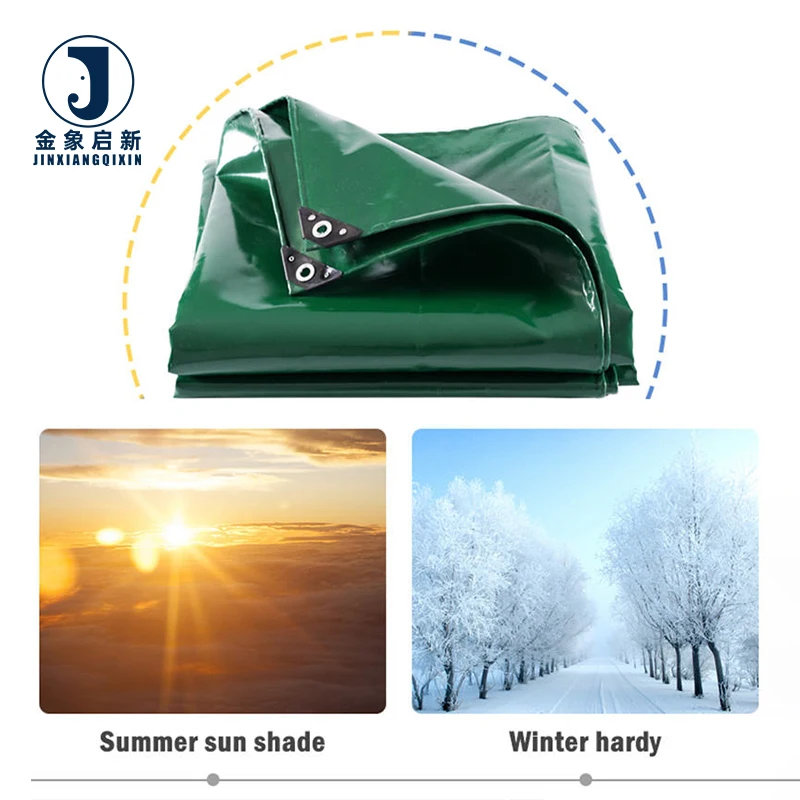
| Temperature Range | -15°C to 70°C |
| Waterproof | Yes, fully coated construction |
| UV Treatment | Available — confirm test basis for your market |
| Flame Retardant | Available in treated grades — confirm the grade required for your market |
| Anti-Mildew | Anti-fungal treated |
| Size Options | 3×4m, 6×8m, 8×10m, 10×12m, or custom dimensions |
| Printing | Custom branding and pattern printing accepted |
| Working Life | Suited to extended outdoor exposure depending on environment |
| Standards | ISO and CE certified production |
Application Suitability
| Application | Exposure & Requirement |
|---|---|
| Tent and awning roof | Sustained UV exposure, rain load, wind uplift stress at anchor points |
| Construction site cover | Abrasion from debris, repeated deployment and folding, chemical dust |
| Lumber and stockpile cover | Long-term weathering, moisture ingress prevention, UV degradation resistance |
| Equipment protection | Impact from falling objects, outdoor temperature fluctuation, dust and moisture |
| Tarpaulin distribution | Roll-to-roll batch consistency, colour matching across orders, documentation compliance |
Why a Stated GSM Without Verification Costs More Than You Think
GSM on paper means nothing if the roll arriving at your dock weighs less than the roll you approved.
As a PVC coated tarpaulin manufacturer, we see buyers compare quotations on GSM alone, then discover the delivered material feels lighter and fails earlier. When coating weight drifts downward during production, tensile and tear margins shrink silently — the fabric looks identical but performs below the threshold your application demands. Generic suppliers often blend production runs, so the first roll meets spec while subsequent rolls drift. [NEED_CITE: tensile and tear test methods for coated fabrics per ISO 1421]
Full Catalogue Coverage Across Weight and Denier
Our PVC coated tarpaulin range spans from lightweight 200D×300D base fabric for temporary covers to heavy-duty 1000D×1000D for permanent outdoor structures. Each denier grade pairs with a specific coating weight window, meaning you select the combination that matches your mechanical load and service environment rather than accepting a one-size-fits-all product. Glossy and matte finishes are both available, and custom single or double-side colour runs can be developed for project-specific requirements.
Treatment Options Require Documentation, Not Promises
UV and flame-retardant treatments are available across this product family, but the critical step is confirming which grade your end market mandates. A tent roof installed in a European campground faces different fire classification requirements than a temporary structure in a mining camp. We supply test reports tied to the specific treatment grade used on your batch, so compliance audits reference actual data rather than generic claims. [NEED_CITE: fire classification standards for temporary structures and tent materials]
How Denier, Weave Density and Coating Weight Work Together
The base fabric denier determines the individual yarn thickness — 1000D×1000D yarns carry substantially higher tensile loads than 200D×300D yarns. However, denier alone does not define final strength. Weave density, measured in ends and picks per unit length, controls how that yarn strength translates into fabric-wide tear resistance. Coating weight then adds abrasion protection and waterproofing, but excessive coating on a light base fabric creates stiffness without proportional strength gain. The -15°C to 70°C operating range reflects the PVC compound’s flexibility boundary: below the lower limit, the coating stiffens and risks micro-cracking under flex; above the upper limit, softening reduces dimensional stability. Selecting the right combination requires matching all three variables to your actual load and climate conditions.
The Hidden Cost of Selecting the Wrong Specification
Ordering a 250gsm grade for an application that demands heavy-duty performance leads to premature tearing at stress concentration points, particularly where the fabric flexes over rigid frames. Conversely, specifying a 1500gsm grade for a lightweight temporary cover adds unnecessary weight, making deployment difficult and increasing transport costs. Batch colour variation across rolls from different production runs becomes visible once panels are installed side by side, forcing costly replacements. When flame-retardant treatment is claimed but not documented to a recognized grade, site inspectors can reject the entire installation, leaving you with unusable inventory and project delays. [NEED_CITE: PVC coated fabric performance failures linked to specification mismatch]
Why Buyers Survey Our Complete Range Before Specifying
Our production facility runs three full lines with 36 sets of professional equipment, allowing simultaneous production of multiple denier grades and finishes without cross-contamination between batches. The 10-person R&D team develops samples within days when you need to evaluate a specific weight, colour, or treatment combination before committing to volume. Every roll undergoes dedicated QA inspection at each production stage, with coating weight verified against the quoted GSM before dispatch. Custom sizing — from standard 3×4m panels to full project dimensions — is handled in-house with reinforced edge construction and pattern printing for brand identification.
Documentation & Verification
- Material specification sheet listing base fabric denier, coating weight, and colour reference for each roll
- Test reports for UV and flame-retardant treatments tied to the specific batch grade produced
- Pre-shipment inspection record confirming GSM verification and visual consistency across the order
- ISO and CE certificates covering the production facility and coating process
- Roll packing list with individual roll weights and dimensions for customs and receiving
Fabrication, Handling & Storage
- Heat-weld seams at temperatures matched to the specific PVC coating weight to prevent delamination at flex points
- Reinforce edge hems and eyelet zones according to the base fabric denier to distribute tie-down loads evenly
- Store rolls vertically on pallets to prevent flat-spot deformation across the 250gsm–1500gsm range
- Allow cold-stored rolls to reach ambient temperature before unrolling to avoid coating micro-cracking below -15°C
- Use mild detergent and soft brush on glossy or matte surfaces — avoid solvent-based cleaners that attack the PVC coating
- Plan panel cutting layout around standard and custom sizes to minimise off-cuts and weld seams
What to Include in Your Enquiry
To match the correct denier, weight, and treatment grade to your project, share the intended application and the environmental conditions the fabric will face — including expected UV exposure duration, wind load, and any fire compliance requirements in your target market. Specify whether you need rolls in stock widths or cut-to-size panels with edge finishing, and indicate your annual volume so we can address batch consistency across multiple shipments. If colour matching or custom branding is required, provide reference samples or Pantone codes for the R&D team to develop against.
Frequently Asked Questions
Q: How do you ensure GSM consistency across all rolls in my order?
A: Every roll passes through in-process QA checkpoints where coating weight is measured and recorded. We run 100% pre-shipment inspection, comparing each roll against the GSM stated on your specification sheet. Any roll falling outside tolerance is held and reworked before dispatch.
Q: Can you supply test certificates for flame-retardant grades?
A: Yes. When flame-retardant treatment is specified, we provide a test report referencing the specific grade applied to your production batch. Confirm which fire classification your local authority or project specification requires so we match the correct treatment level.
Q: What is the sample lead time for custom colours and sizes?
A: Our R&D team typically develops custom samples within days, covering your requested denier, GSM, colour, and finish combination. Sample approval is required before bulk production begins to ensure the finished product matches your project requirements.
Q: How do you handle roll packing for long-distance shipment?
A: Rolls are packed in protective wrapping with individual weight and dimension labels, secured on pallets to prevent movement during transit. A detailed packing list accompanies each shipment, listing roll counts and weights for receiving verification and customs clearance.
Q: Do you offer cut-to-size panels or only full rolls?
A: Both options are available. We supply full rolls for distributors and fabricators who cut in-house, and pre-cut panels in standard or custom dimensions with reinforced edge hems for contractors who need ready-to-deploy covers.
Related products
-
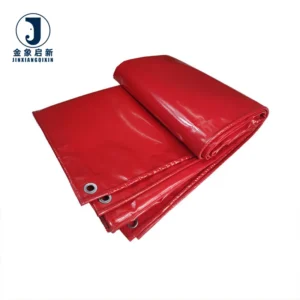
Lona de venta caliente 30M X 30M Lona de PVC terminada para agricultura Lona
¥1.48 Add to cart -
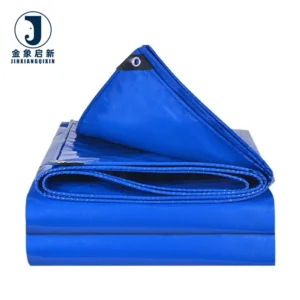
Factory Custom 9×11 Poultry Curtains Tarpaulin PVC Coated Waterproof Anti-Static Eco-Friendly Tarp for Chicken Coop Boys Girls
¥0.90 Select options This product has multiple variants. The options may be chosen on the product page -
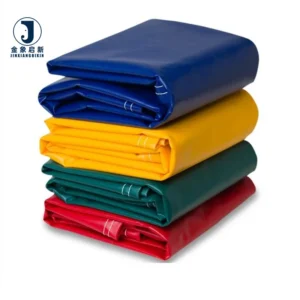
Cubierta de lona de PVC impermeable de alta resistencia para carpa de camión, almacenamiento al aire libre y uso industrial
¥1.48 Add to cart -
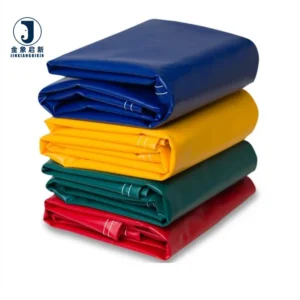
Lona para camiones de servicio pesado 1000d PVC Lona impermeable de lona de PVC
¥1.20 Add to cart