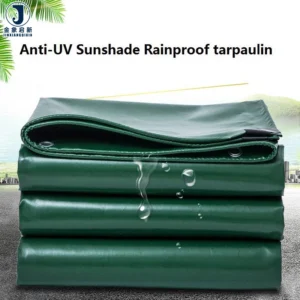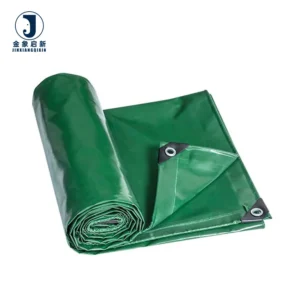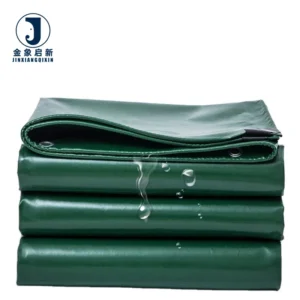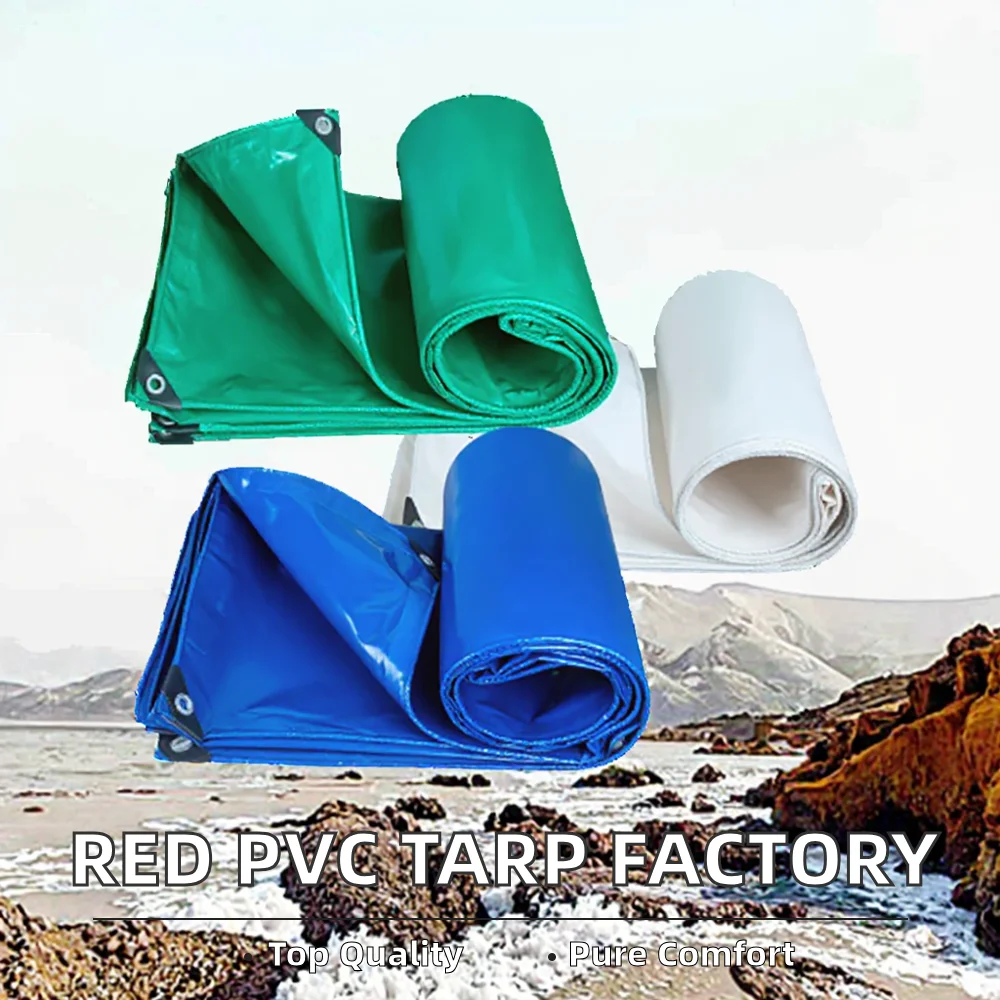
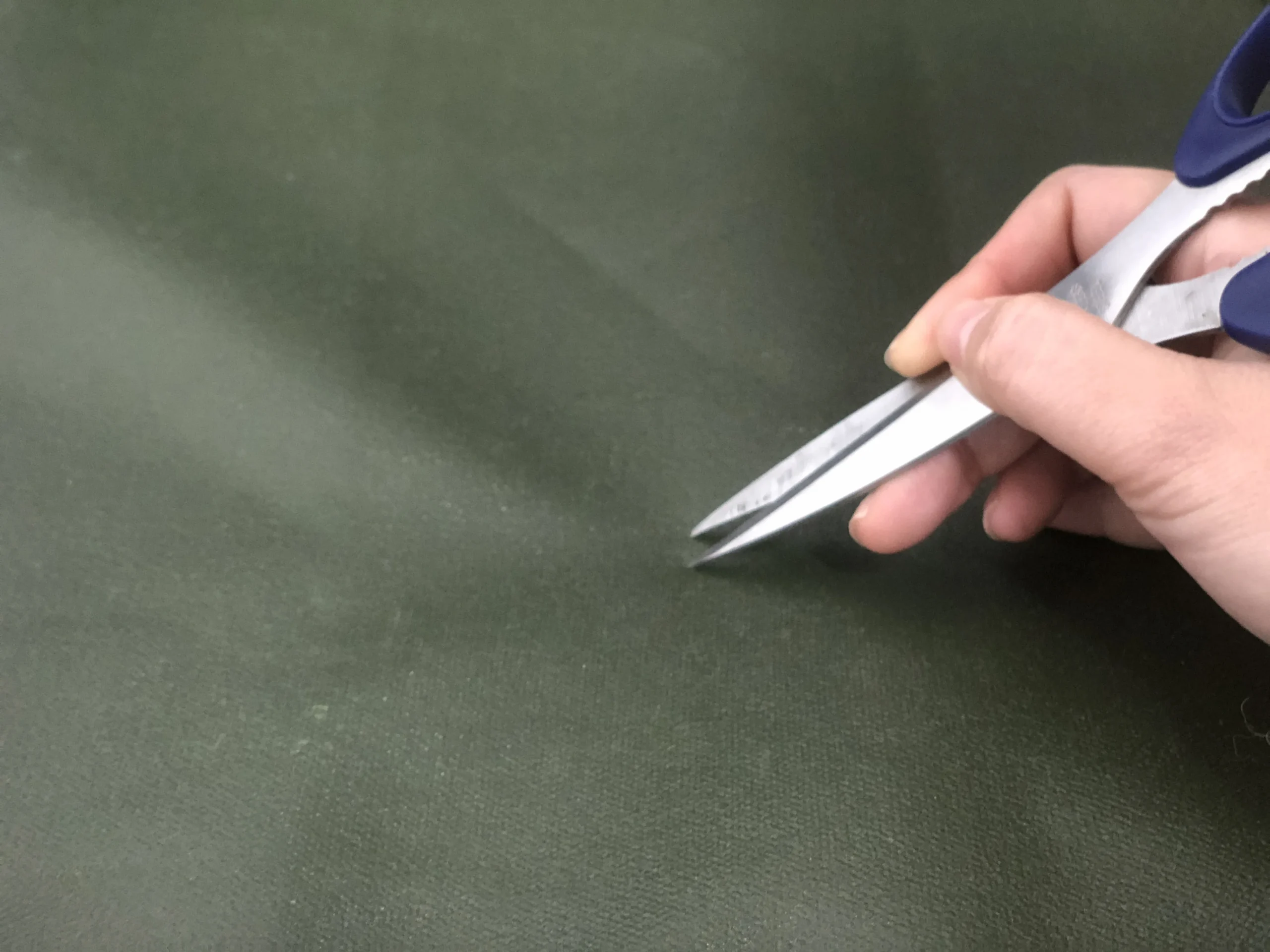
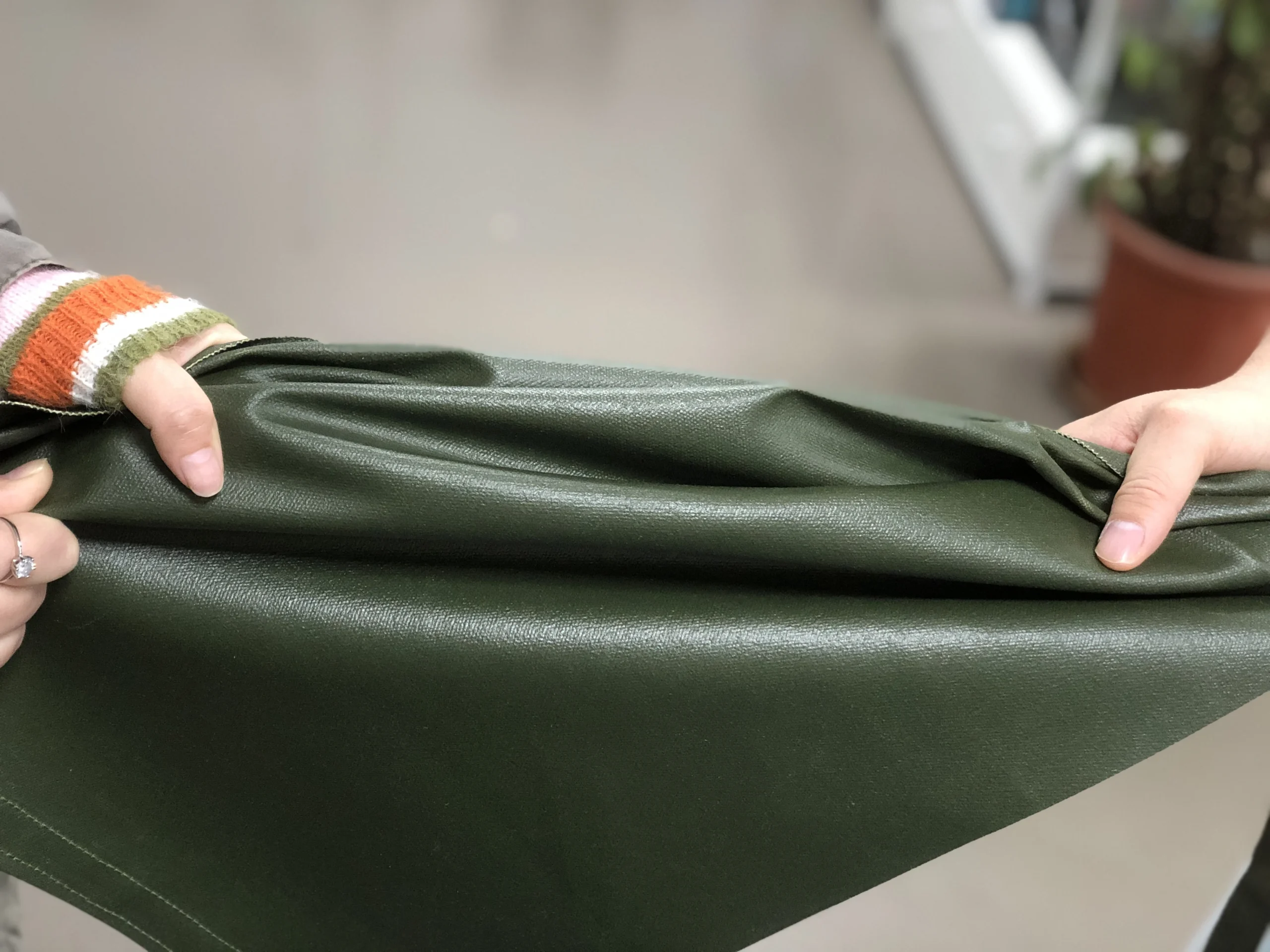
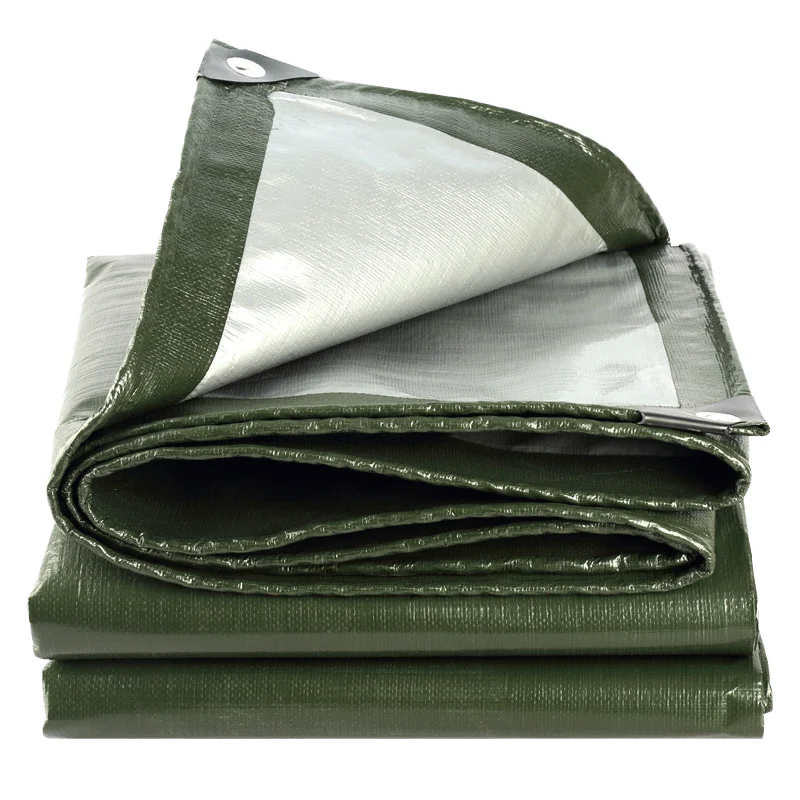
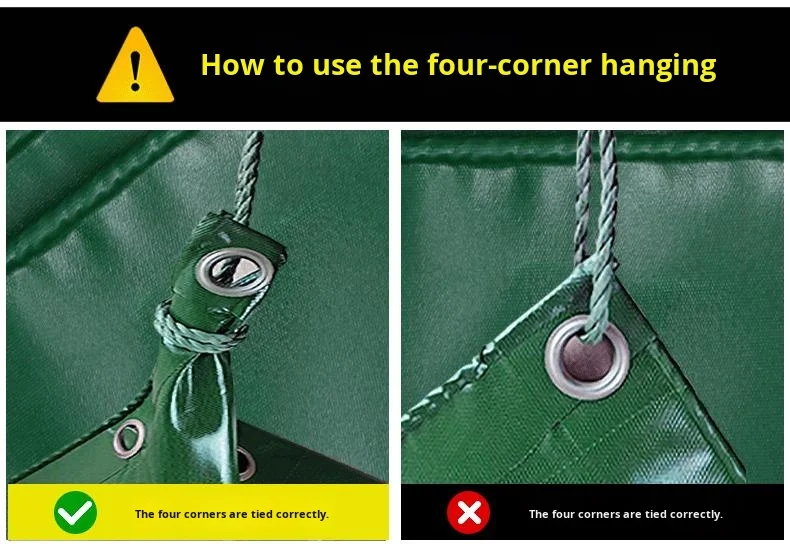
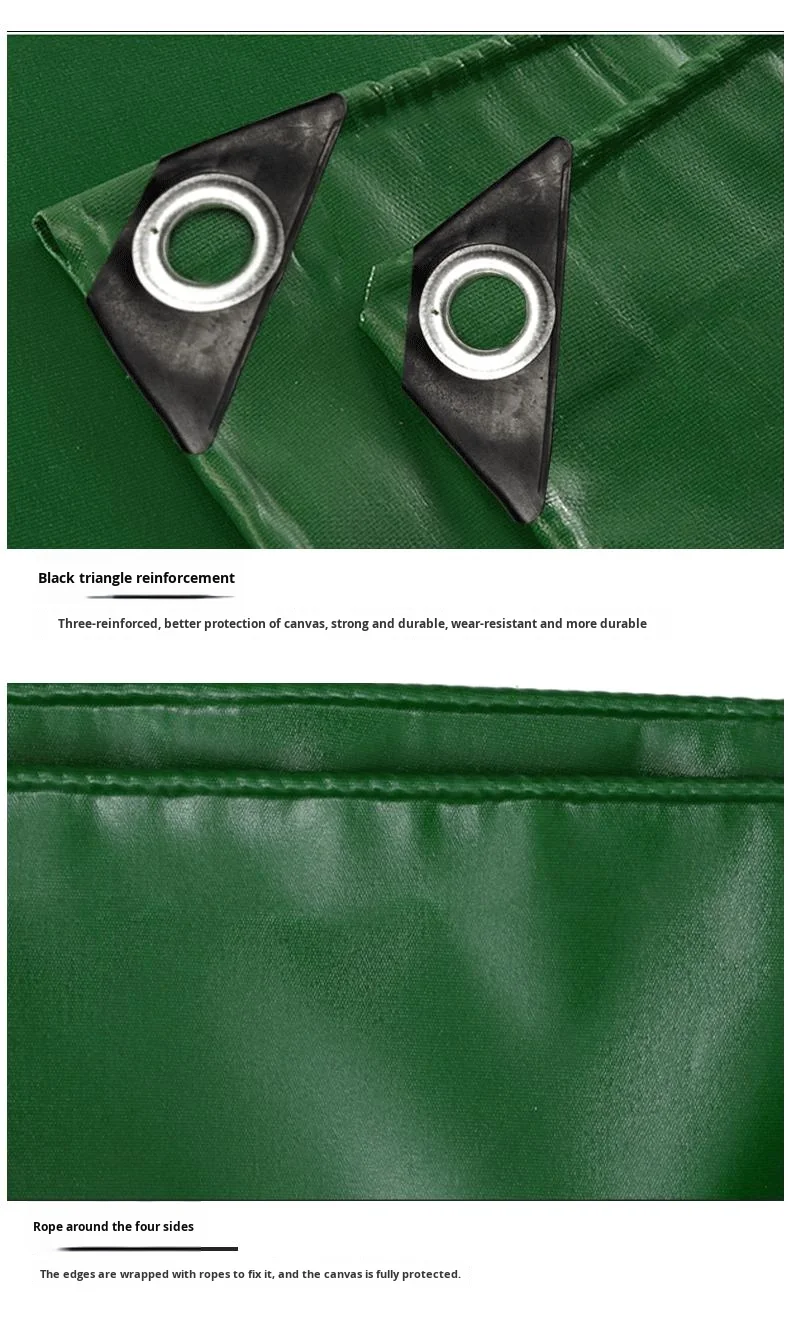
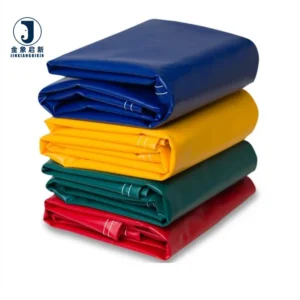
PVC Coated Tarpaulin — 3–5 year outdoor service life, glossy or matte finish, with flame retardant, anti-static, anti-cold, anti-mildew and 3P treatment options.
- Custom size, colour and pattern printing for truck covers, tents, trailer side curtains, equipment covers and industrial banners
- Roll-to-roll colour matching with defined references ensures consistency across multi-roll orders, while coating weight control delivers batch-to-batch GSM accuracy
Backed by 100% pre-shipment inspection and samples developed within days for custom requirements.
Description
Proven Coating Control — every roll of PVC coated tarpaulin passes through dedicated QA inspection for coating weight and adhesion before it leaves the line, so the GSM on the quote is the GSM you receive.
Technical Specifications
| Parameter | Value |
|---|---|
| Product Type | PVC Coated Tarpaulin |
| Coating Material | PVC |
| Coating Method | Knife Coated |
| Base Fabric Denier | 1000×1000 |
| Weight | 420 GSM |
| Flame Retardant Grade | Available — confirm grade required for your market |
| Anti-Static | Available — confirm standard required for your market |
| Anti-Mildew Treatment | Available |
| UV Treatment | Available — confirm test basis for your application |
| Waterproof Rating | Fully waterproof coated construction |
| Finish Options | Available in glossy or matte finish |
| Colour Options | Custom colour and black back available |
| Custom Sizing | Custom width and length |
| Outdoor Service Life | 3–5 years |
| Available Treatments | Flame retardant, anti-static, anti-cold, anti-mildew, 3P |
| Standards | ISO, CE |
Application Suitability
| Application | Exposure & Requirement |
|---|---|
| Outdoor tent covers | Prolonged UV and rain exposure, repeated assembly flex, need for flame retardant compliance at event venues |
| Truck cover fabric | Road abrasion, wind-induced flapping, constant tension at tie-down points, UV degradation |
| Car covers | Weather exposure, dust and debris contact, surface abrasion during installation and removal |
| Trailer side curtains | Continuous high-frequency flexing, load-shift friction, UV and road spray |
| Industrial cover applications | Chemical dust, equipment grease, puncture from sharp edges, fire code compliance |
Why Quoted Weight Alone Does Not Guarantee Cover Strength
The number on the spec sheet means nothing without verified coating adhesion at the point where the fabric is welded or flexed.
Buyers have received rolls that matched the stated 420 GSM on the label yet failed at the seams within months. The coating peeled away from the base fabric because adhesion was never tested at each production stage. When a PVC coated tarpaulin roll manufacturer custom builds your order, the real question is whether coating weight and bond strength are both controlled — not just one. [NEED_CITE: peel strength testing for knife coated PVC per ISO 2411] Without that discipline, a lighter coating may be hidden under a heavier filler load, giving the illusion of the right weight on the scale while the fabric underperforms in the field.
What Knife Coating Delivers for Tarpaulin Performance
The 1000×1000 base fabric receives a knife-applied PVC coating that penetrates and bonds with the woven yarns. This method produces a uniform coating layer that resists delamination during welding and flexing. For buyers sourcing a PVC coated tarpaulin roll manufacturer custom capable of consistent output, knife coating provides the adhesion baseline that cheaper paste or calender methods cannot match at this weight class.
Treatment Verification Before the Roll Ships
Flame retardant, anti-static, anti-cold and anti-mildew treatments are available across this product range, but availability without documentation is a liability. Each treatment option should be matched to a test report that your end market will accept — whether that is a building fire code for tent structures or an anti-static standard for industrial environments. Requesting the test basis before production approval prevents shipment rejection at the destination port. [NEED_CITE: flame retardant classification standards for coated textiles]
Reading the Specifications Beyond the Weight Number
The 420 GSM weight sits in a mid-to-heavy range that balances roll manageability with tensile performance. At this weight, the 1000×1000 denier base fabric provides a dense weave that limits tear propagation — a lighter denier at the same GSM would rely more heavily on coating thickness, which can crack in cold conditions. Knife coating ensures the PVC penetrates rather than sitting on the surface, which directly affects how the fabric behaves when welded at seam lines. The glossy or matte finish choice influences more than appearance: glossy surfaces shed dirt and water more readily, while matte finishes reduce glare for tent and awning applications. Anti-cold treatment extends the usable temperature range, preventing the PVC from stiffening and cracking in winter installations.
The Hidden Cost of Specifying on Weight Alone
When procurement focuses only on GSM, coatings with poor adhesion pass the scale test but fail in the field. Seams tear away from the fabric at flex points because the coating was never bonded properly to the base weave. Colour drift between rolls in the same order becomes visible once installed side by side on a truck or tent structure, forcing a full replacement. Without verified treatment grades, flame retardant covers may fail a site inspection, leaving the contractor unable to operate until compliant material arrives — weeks after the project deadline. [NEED_CITE: seam failure modes in coated tarpaulin installations]
What This Manufacturer Controls at Every Stage
Coating weight and adhesion are monitored at each production stage, not sampled once per batch, so 420 GSM rolls arrive at the weight you specified. A 10-person R&D team develops samples within days for custom width, colour, or treatment combinations before bulk production begins. Three full production lines with 36 sets of professional equipment support bulk volume without sacrificing the lead times that fleet operators and tent builders depend on. Every roll undergoes 100 percent inspection before dispatch — not spot-checking, but roll-by-roll verification against your order specification. Custom sizing in width, length, and printed branding is handled in-house rather than outsourced to a converter.
Documentation & Verification
- Material specification sheet listing GSM, base fabric denier, coating type, and colour reference per roll
- UV and flame retardant test reports provided where applicable to confirm treatment grade
- Pre-shipment inspection record documenting roll-by-roll weight and adhesion verification
- Roll packing list with colour reference matched to your approved sample
- Certificate of origin and customs documentation for international shipment clearance
Fabrication, Handling & Storage
- Hot air welding at controlled temperature preserves the knife coated PVC bond without delamination at seam lines
- Store rolls upright on pallets to prevent flat-spot compression marks on the 420 GSM coated surface
- Unroll in temperatures above freezing to avoid cracking untreated PVC before anti-cold treatment is confirmed
- Use compatible PVC-based cleaners only — solvent-based products will degrade the coating finish over time
- Allow seam areas to cool fully under tension before folding to maintain weld integrity on the 1000×1000 base fabric
Requesting the Right Specification for Your Application
To receive an accurate quotation, specify the end-use environment, required roll width and length, and whether the material will be fabricated into finished covers or used as roll stock. Indicate which treatments your market mandates — flame retardant grade, anti-static standard, or anti-mildew requirement — along with preferred finish and colour references. Sample rolls can be developed for approval before your full production order is released.
Frequently Asked Questions
Q: How is the GSM verified on each roll before it ships?
A: Every roll is individually inspected for coating weight and adhesion as part of a 100 percent pre-shipment QA process. The inspection record accompanies your shipment so you can cross-reference the actual measured weight against the 420 GSM stated on your specification sheet and quotation.
Q: Which flame retardant grades are available and how are they documented?
A: Flame retardant treatment is available across this product range, but the specific grade depends on your market requirement. Request the applicable test report — such as DIN 4102 or NFPA 701 — before approving bulk production so the delivered material matches the compliance standard your end application demands.
Q: How is colour consistency controlled across multiple rolls in one order?
A: A defined colour reference is established from your approved sample and used as the benchmark for every roll in the batch. Roll-to-roll colour matching is verified during the pre-shipment inspection, and the packing list includes the colour reference so you can confirm consistency before installation begins.
Q: What custom widths, lengths, and printing options can be ordered?
A: Rolls are produced in custom widths and lengths beyond standard stock sizes, with pattern printing and branding available. Minimum order quantities apply to non-standard specifications. Sample material is developed within days for your approval before the full production run is scheduled.
Q: How are welded seams tested to prevent failure at flex points?
A: Welded seams are tested for peel strength against the base fabric adhesion to ensure the seam outlasts the coating bond at high-flex areas. This verification is part of the in-process QA at each production stage, addressing the common failure point where truck covers and tent structures experience repeated load movement.
Related products
-
Lona de alta resistencia para exteriores, engrosada para impermeabilidad, lona grande con 3 metros de ancho.
¥7.78 Add to cart -
Cubierta de lona de PVC impermeable de alta resistencia para carpa de camión, almacenamiento al aire libre y uso industrial
¥1.48 Add to cart -
Fábrica de lonas de polietileno aisladas para clima frío de 12ftx20ft, lona pesada para curado de concreto, rollo de lona.
¥0.66 Add to cart -
Lona para camiones de servicio pesado 1000d PVC Lona impermeable de lona de PVC
¥1.20 Add to cart