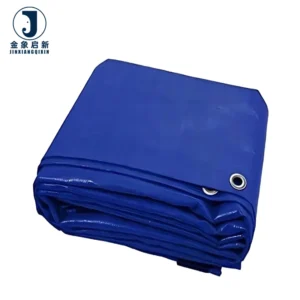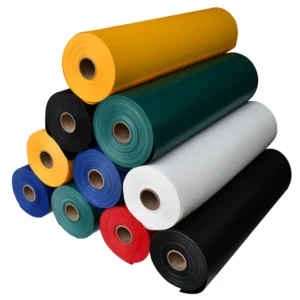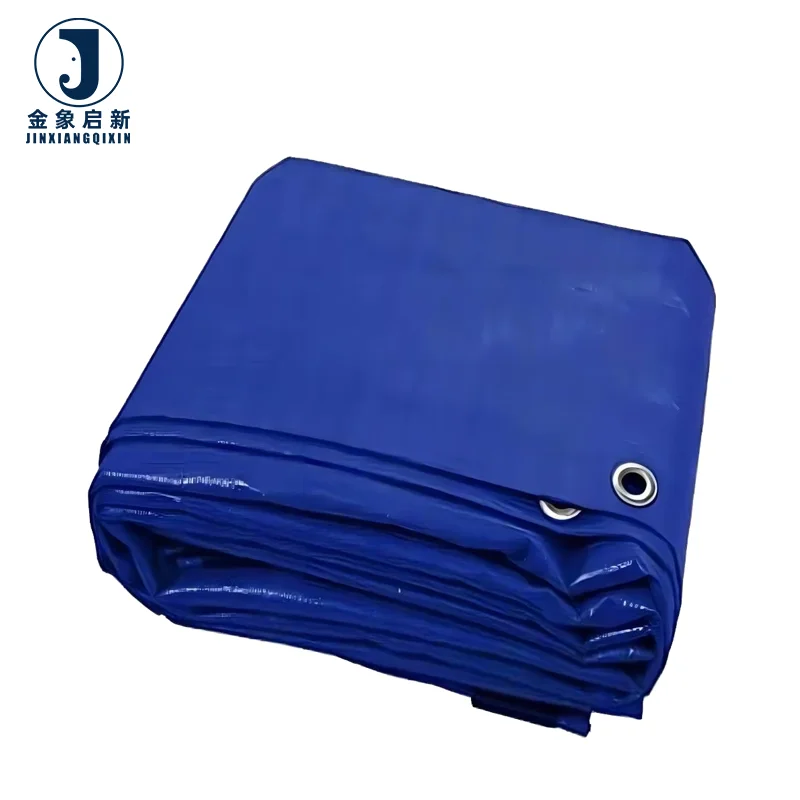
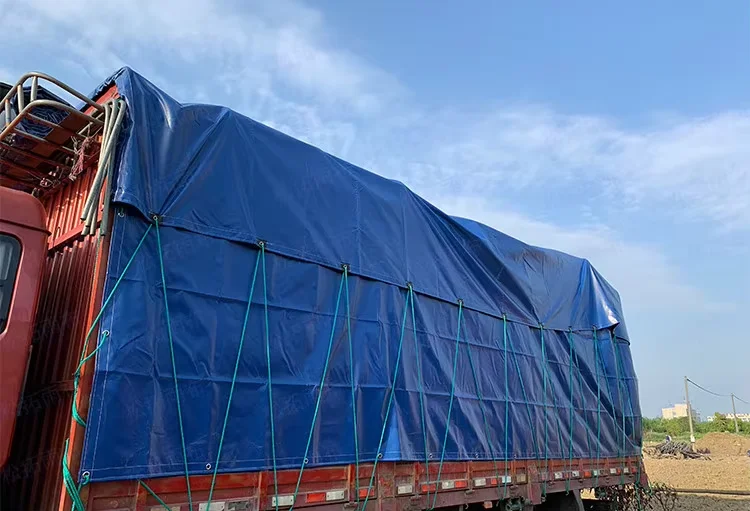
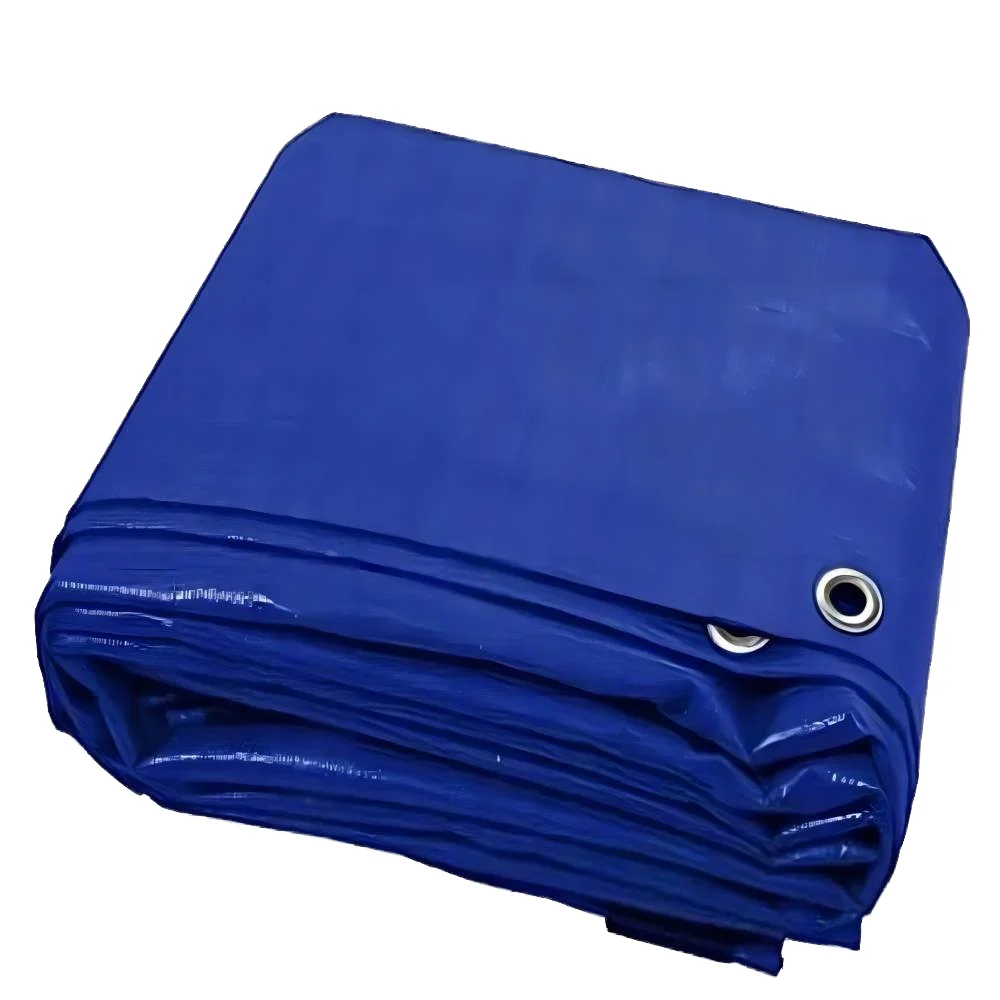
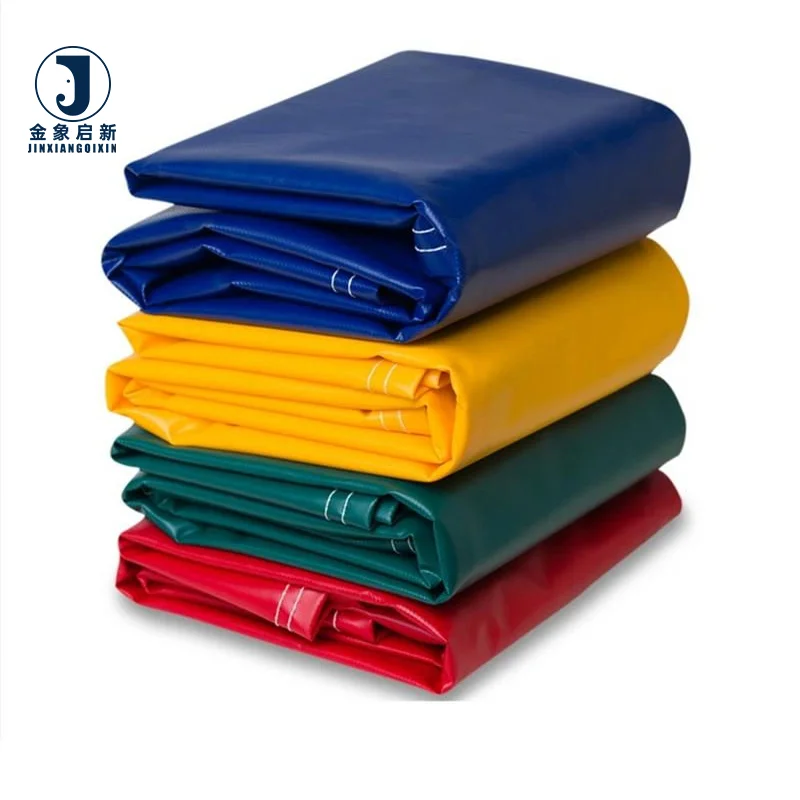
PVC Coated Tarpaulin 350-750gsm, High-Strength Polyester Mesh — available in multiple weight options with hot-melt coating and laminated technology for superior adhesion between fabric and coating layers. The complete tarpaulin range supports full customization from roll stock to finished truck covers, with coating weight control ensuring stated GSM matches actual delivered material. Backed by 100% pre-shipment inspection, three full production lines for reliable bulk capacity, and nearly 30 years of specialized coating process control.
Description
Precision coating control — Every roll of PVC coated tarpaulin is measured for coating weight and adhesion before leaving our Jinan facility, ensuring the GSM on your paperwork matches what arrives at your warehouse.
Technical Specifications
| Parameter | Value |
|---|---|
| Product Type | PVC Coated Tarpaulin |
| Base Material | High-strength polyester mesh fabric with PVC coating |
| Weight Options | 350gsm / 420gsm / 500gsm / 550gsm / 600gsm / 750gsm |
| Thickness Options | 0.32mm / 0.35mm / 0.4mm / 0.45mm / 0.5mm / 0.65mm |
| Coating Technology | Laminated technology & Hot-melt Coating technology |
| Standard Roll Widths | 2m / 2.1m |
| Standard Roll Lengths | 50m / 75m |
| Colour Options | Blue / Red / Yellow / Light blue / Grey (Customized) |
| Key Features | High tenacity polyester yarns, good flexibility and adhesion strength, outstanding tearing strength for welding, cold crack resistance, anti-mildew, anti-static treatment (grade not stated), waterproof, sunproof, best color fastness |
| Certifications | ISO, CE |
Application Suitability
| Application | Exposure & Requirement |
|---|---|
| Truck and lorry tarpaulin | Highway speeds, constant wind loading, tie-down abrasion, UV and rain exposure |
| Trailer side curtains | Repeated flexing at load-bearing points, road debris impact, lateral tension during transit |
| Cargo ship deck covers | Salt spray, standing water, heavy wind shear, prolonged sun exposure |
| Equipment protection covers | Dust ingress, outdoor storage weathering, handling and forklift contact |
| Tent and awning structures | Structural wind load, ponding water on low-slope panels, seasonal UV cycles |
Why Coating Weight Alone Will Not Predict Cover Life on a Moving Truck
A heavy PVC tarpaulin truck cover aftermarket supplier still delivers a poor product if the adhesion between coating and base fabric is inconsistent.
I once held back an entire shipment of covers intended for a Nordic fleet because my pre-dispatch test showed the coating weight was below what we quoted. The rolls looked right on the outside, but the GSM reading told a different story. When a truck cover flexes thousands of times per journey, the bond between the PVC layer and the polyester mesh carries the load. If that bond is weak, the coating delaminates at the fold lines long before the base fabric reaches its tensile limit. Buyers often focus on the GSM number because it is easy to compare on a spreadsheet, but without checking the coating adhesion and the base fabric denier, that number gives a false sense of security [NEED_CITE: tensile and tear test methods for coated fabrics per ISO 1421].
From Roll Stock to Finished Covers Cut to Your Trailer Dimensions
The range spans from 350gsm for lighter equipment wraps up to 750gsm for heavy-duty side curtains and cargo ship covers. As a PVC tarpaulin truck cover aftermarket supplier operating our own coating lines, we cut finished panels to the exact dimensions of your trailer or lorry body. This eliminates the generic sizing problem where a cover is close but not exact, leaving gaps at the corners or excessive fabric that flaps in transit and abrades against the load.
Controlling Colour Consistency Across a Multi-Roll Order
When a fleet orders twenty finished covers in the same colour, those covers must match once they hang side by side on the vehicles. Batch-to-batch colour variation is one of the most common complaints in coated fabric supply. Our R&D team sets the colour reference at the coating stage and monitors pigment dispersion through the production run. If a PVC tarpaulin truck cover aftermarket supplier cannot hold colour tolerance within a single order, the visual mismatch reflects poorly on the fleet operator every time those trucks line up at a depot [NEED_CITE: colour fastness testing standards for PVC coated textiles].
What the Specification Numbers Actually Mean for Your Truck Covers
Coating technology directly shapes how the finished cover performs in the field. Hot-melt coating drives the PVC into the mesh under heat and pressure, producing strong adhesion that resists delamination at welded seams — critical where a truck cover flexes at the load-bearing rail. Laminated technology bonds a pre-formed PVC film to the base fabric, offering a smoother surface finish at a different cost point. The high-tenacity polyester yarns in the base mesh determine the tear propagation resistance; when a puncture starts from a sharp corner on a load, a dense weave limits how far the tear runs before it stops. Thickness and GSM move together but are not interchangeable — two fabrics at 600gsm can have different thickness readings depending on the coating formulation and base fabric density, which in turn affects how the material folds, drapes, and responds to heat welding.
The Cost of Ignoring Weld Strength in Side Curtain Fabric
A truck side curtain lives and dies at its welded seams. The fabric may survive years of sun and road exposure, but if the weld parameters were set for a generic PVC grade rather than the specific coating chemistry on your rolls, the seam becomes the first failure point. We see this when operators switch suppliers and the new fabric has a slightly different plasticiser content, causing the existing welding equipment to run too hot or too cold. The result is a seam that peels apart under lateral wind load while the surrounding fabric remains intact [NEED_CITE: hot air welding parameters for PVC coated polyester fabrics].
What Sets Our Coating and Fabrication Process Apart
Three full production lines and 36 sets of professional equipment give us the capacity to handle bulk roll orders alongside custom-finished truck covers without one product line delaying the other. Our 10-person R&D team develops samples within days when you need a specific weight, colour, or dimension validated before committing to volume. Dedicated QA/QC runs at every stage — base fabric inspection, coating weight measurement, adhesion testing, and 100% pre-shipment inspection on finished rolls and cut panels. The hot-melt and laminated coating technologies running on our lines give buyers a choice of adhesion strength and surface finish to match the welding equipment used by their fabricators. We support full customization on width, length, colour, and finished dimensions, which matters when your trailer fleet runs several different body sizes.
Documentation & Verification
- Material specification sheet stating exact GSM, base fabric construction, and coating type for each roll
- UV and flame-retardant test reports provided where applicable grades are specified
- Pre-shipment inspection record documenting coating weight checks against the quoted GSM
- ISO and CE certificates accompanying every export shipment
- Roll packing list with individual roll numbers for traceability
- Certificate of origin and customs documentation for destination clearance
Fabrication, Handling & Storage
- Hot-melt coated rolls require adjusted welder temperature settings compared to standard calendered PVC
- Store rolls vertically on end caps to prevent flat-spot creasing across the 2m or 2.1m width
- Allow cold-stored 750gsm rolls to acclimatise before unrolling to avoid coating crack at low temperature
- Use mild detergent for cleaning; avoid solvents that attack the PVC plasticiser in the coating layer
- Plan cut layouts to maximise yield from standard 75m or 50m roll lengths and minimise offcuts
- Repair minor field damage with PVC-compatible adhesive patches matched to the coating chemistry
What We Need to Quote Your Project Accurately
Tell us the vehicle models or trailer dimensions you are covering, the exposure conditions your fleet operates in, and the annual volume you expect to order. If your destination market requires a specific fire classification or anti-static grade for tunnel or underground use, specify the standard so we can match the treatment and supply the corresponding test report. Let us know whether you need roll stock for your own fabrication facility or finished covers cut, welded, and fitted with reinforcement at stress points.
Frequently Asked Questions
Q: How do you verify GSM matches what was quoted?
A: We measure coating weight on every roll during production and again at pre-shipment inspection. The inspection record travels with your documentation, so you can cross-check the GSM reading against the figure on your quotation before the container leaves our facility.
Q: Can you match colour across multiple rolls in one order?
A: Yes. Our coating line sets the pigment reference at the start of each production run and monitors dispersion throughout. All rolls for a single order are produced in one continuous batch to eliminate the colour shift that occurs when orders are split across different production dates.
Q: What reinforcement options exist for high-stress tie-down points?
A: We add extra PVC patches and heat-welded reinforcement panels at D-ring and eyelet positions where strap tension concentrates. The high-tenacity polyester mesh base gives the weld a strong substrate to bond to, preventing the reinforcement from peeling under load.
Q: How do you handle custom widths beyond standard roll sizes?
A: Our coating lines support custom widths. Provide the exact width you need and the order volume, and we will confirm the production run minimum. Custom widths are quoted with the same GSM and coating specification as our standard 2m and 2.1m rolls.
Q: What test reports accompany UV or flame-retardant grades?
A: When you specify a UV-stabilised or flame-retardant grade, we supply the relevant test report documenting the treatment level and the classification achieved. Confirm the standard required for your market — such as the fire classification for your destination country — so we supply the correct documentation.