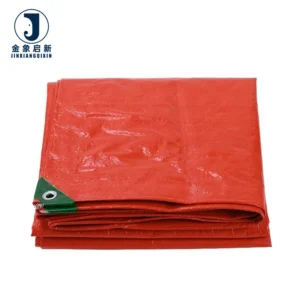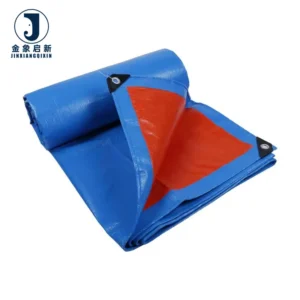
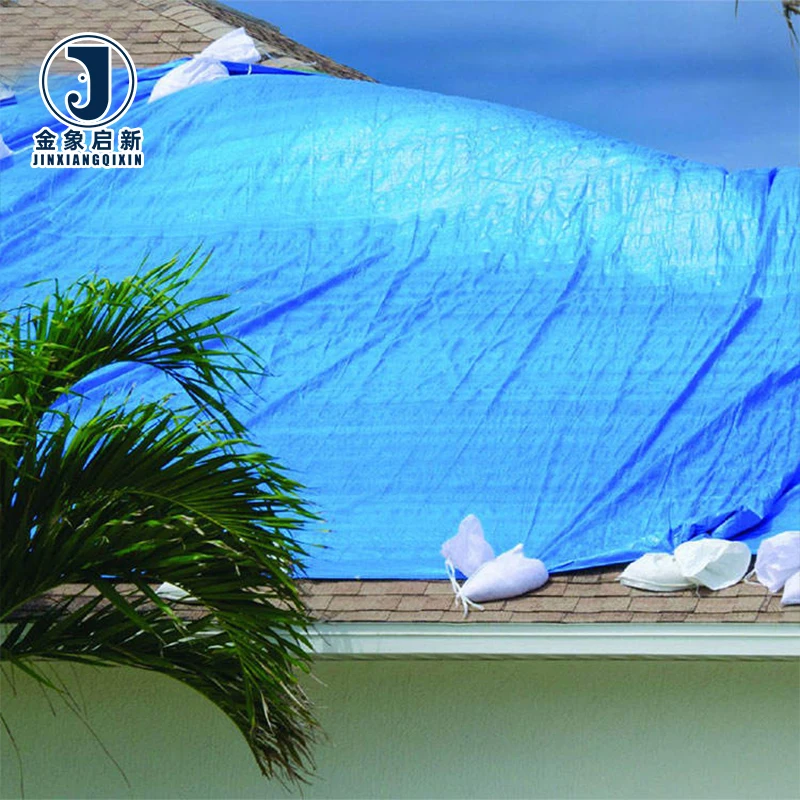
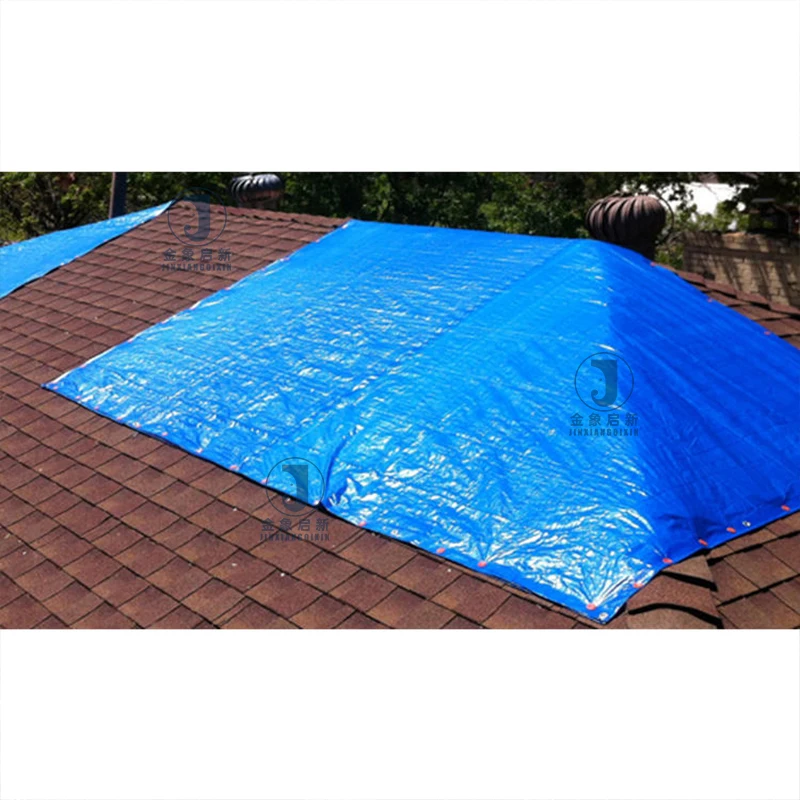
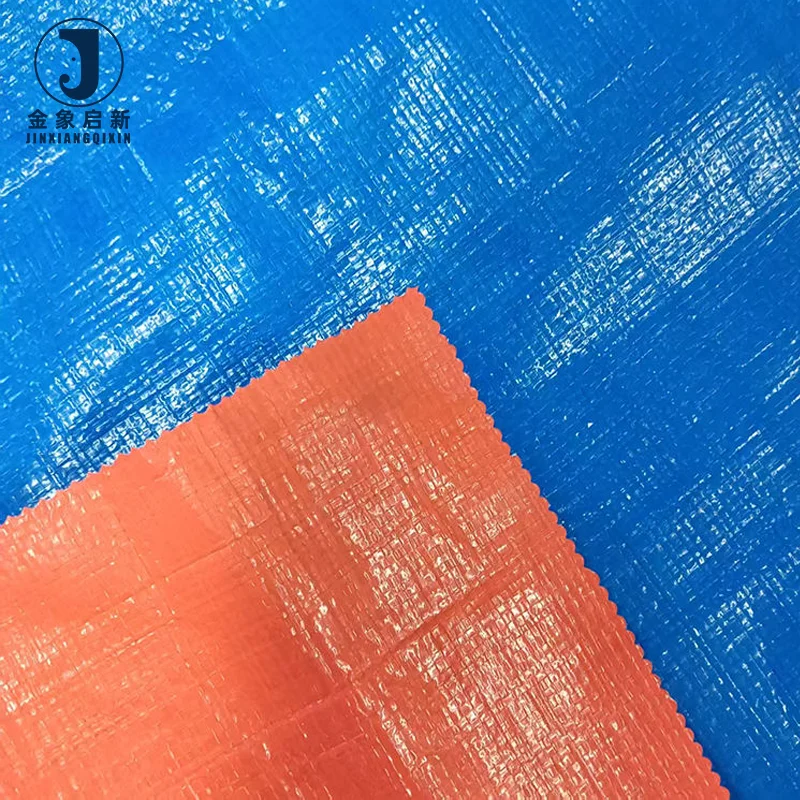
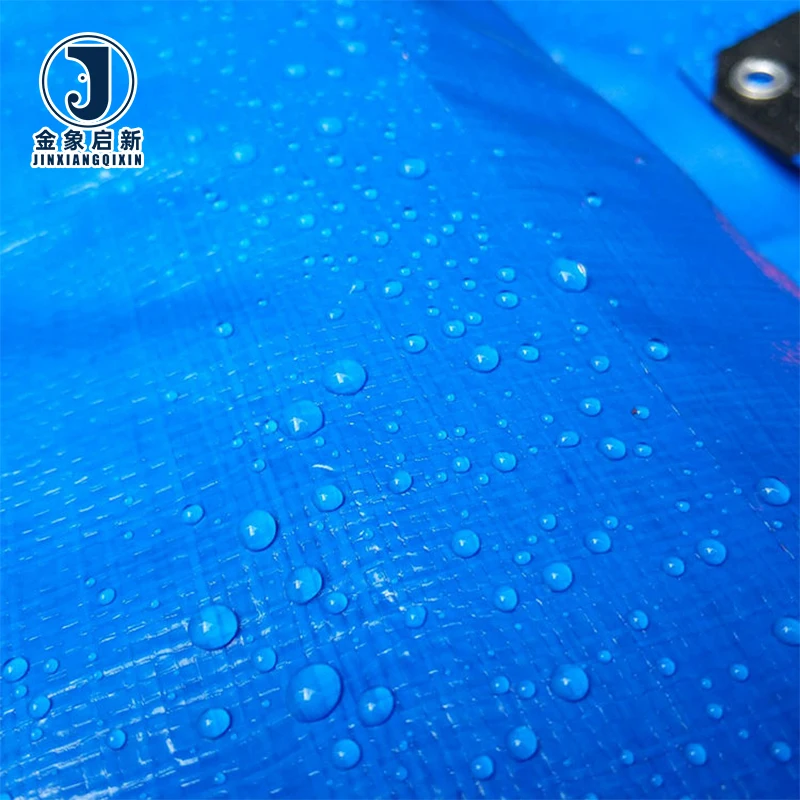
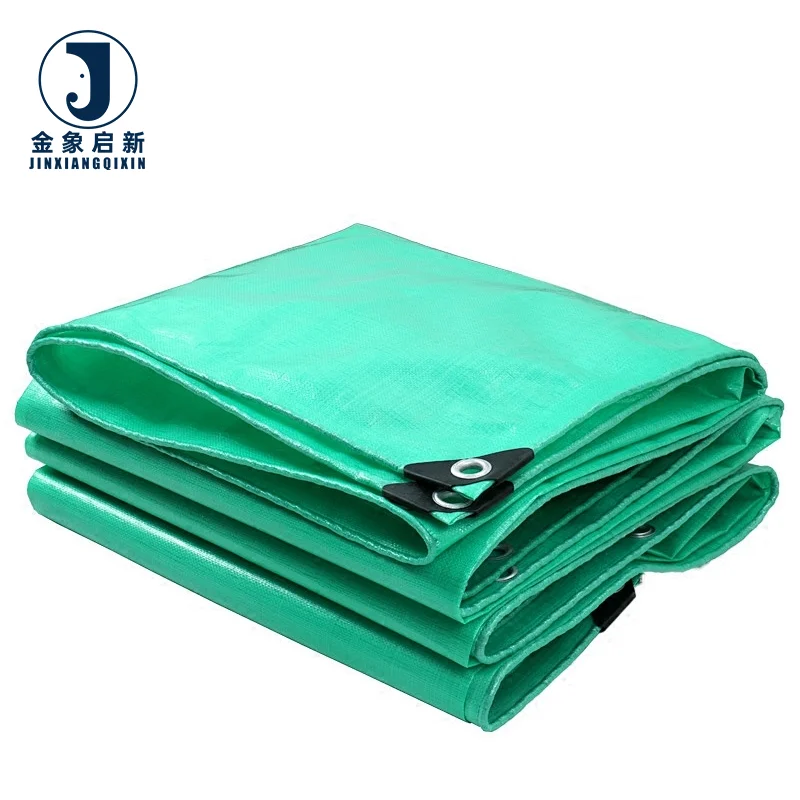
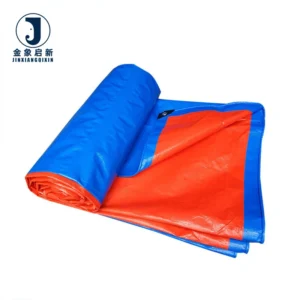
HDPE Coated PE Tarpaulin, 50–300g/m², 6×6–14×14 Weave, 2–6m Roll Width — dual-side LDPE lamination over woven HDPE base, with PP rope hem reinforcement and galvanized eyelets at 1m intervals.
Sourcing finished sheets and roll stock from one line eliminates colour shift between batches and gives you a single point of accountability for every seam and eyelet on site.
- Weave density from 6×6 to 14×14 paired with GSM selection controls tear and tensile performance per application
- Custom width, length and colour with roll-to-roll consistency verified before dispatch
- 100% pre-shipment inspection on hem weld strength and eyelet pull-out, backed by 30 years of coated fabric process control
Description
Coating Weight Precision — Every roll leaves the line with a verified GSM record tied to the production batch, eliminating the gap between quoted weight and delivered fabric that causes rejections at the receiving dock.
Technical Specifications
| Parameter | Value |
|---|---|
| Product Type | HDPE Coated PE Tarpaulin |
| Material | HDPE weaving with LDPE lamination on both sides |
| Thickness | 0.2–0.4 mm / 8–16 mil |
| GSM Range | 50 g/m² – 300 g/m² |
| Weave Density Options | 6×6, 6×7, 7×7, 7×8, 8×8, 9×9, 8×10, 10×10, 12×12, 14×14, 14×16 |
| Roll Width Options | 6 ft, 8 ft, 10 ft, 12 ft / 2 m, 4 m, 6 m |
| Roll Length Options | 100 yards, 100 meters, or custom |
| Finished Edge | All four edges reinforced with PP rope in hem |
| Eyelet Interval | Galvanized eyelets every 3 ft or 1 m |
| Corner Reinforcement | Reinforced plastic corners |
| Color Options | Blue, Blue/Orange, Green, Grey, Black, Clear, Grey/Green, Orange, or custom |
| Key Features | Waterproof, washable, tear resistant, UV treatment available (confirm grade required for your market), mildew proof, anti-aging |
| Container Loading (20’GP) | By Roll 17 Tons / By Bale 12 Tons / By Carton 9 Tons |
| Container Loading (40’HQ) | By Bale 28 Tons / By Carton 20 Tons |
| Standards | ISO, CE |
Application Suitability
| Application | Exposure & Requirement |
|---|---|
| Truck and trailer covers | Road abrasion, wind uplift at flex points, repeated tie-down stress on eyelets and hems |
| Boat and container covers | Salt spray, standing water, UV exposure during long-haul shipping |
| Construction scaffolding wraps | Debris impact, sustained wind load, scaffold tube abrasion on fabric face |
| Roofing and road repair covers | Direct sunlight, pooled water, puncture from tools and aggregate |
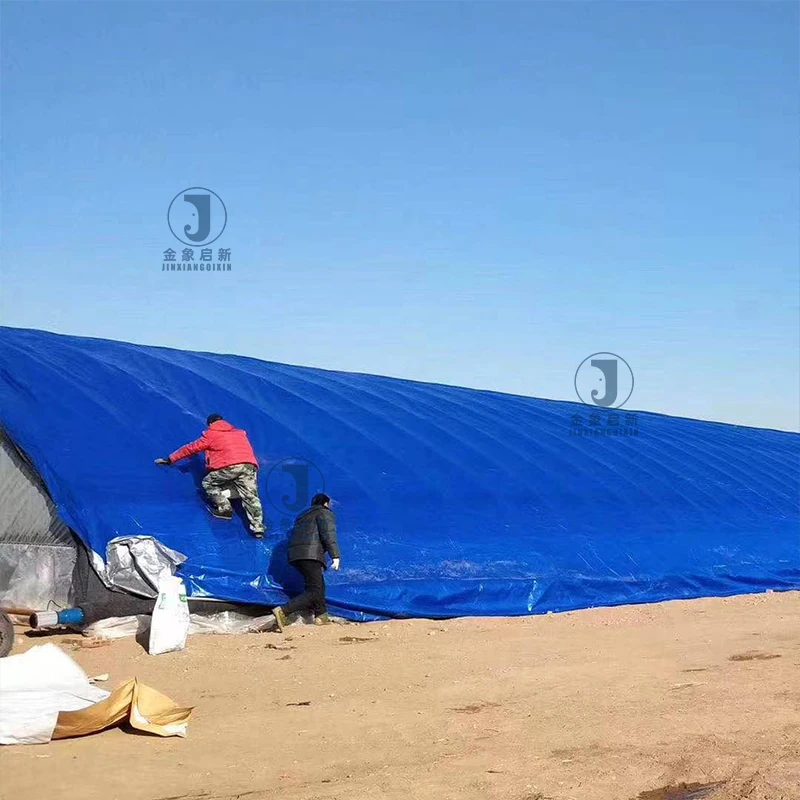
| Agricultural crop and timber covers | Moisture ingress, mildew in stacked conditions, UV during open-air storage |
| Garden furniture and gazebo covers | Seasonal UV, rain pooling, repeated folding and unfolding |
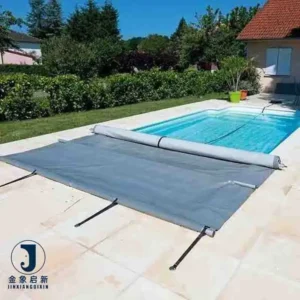
| Swimming pool covers | Constant water contact, chemical exposure from treatment agents |
Why Quoted GSM Does Not Guarantee the Tarpaulin Strength You Receive
The actual protection level depends on weave density and lamination integrity, not the number printed on the quotation.
I have watched buyers sign off on a 300 g/m² spec, then receive rolls that weigh noticeably less when cut and scaled at the warehouse. The gap between what the paperwork says and what the scale reads is where load protection breaks down. One European distributor found that entire batches came in below the agreed weight — the LDPE lamination layer had been reduced to offset rising resin costs, and the tear resistance dropped with it [NEED_CITE: GSM verification and tensile test methods for coated fabrics]. A PE tarpaulin aftermarket supplier who controls their own coating line can weigh every roll before it ships, closing that gap entirely.
How Weave Density and Lamination Work Together on Load Protection
The HDPE woven base fabric carries the mechanical load. Weave density options from 6×6 up to 14×16 determine how many yarns share the stress when a strap pulls tight or a forklift arm catches a corner. Higher density weaves spread that force across more intersection points, reducing the chance of a single yarn snapping and starting a tear. The dual-side LDPE lamination locks those yarns in place and provides the waterproof barrier. If the lamination is thin or poorly bonded, the weave can shift under load, and water finds the gaps.
Edge Reinforcement Is Where Most Field Failures Begin
A finished sheet only performs as well as its perimeter. The PP rope hem on all four edges distributes tie-down load across the full edge rather than concentrating it at the eyelet. Reinforced plastic corners take the extra stress at the points where straps pull at an angle. When a truck cover flexes at highway speed, the corners and hems absorb the repeated stress cycles. Galvanized eyelets spaced at 1 m or 3 ft intervals give consistent attachment points, so the load is shared evenly and no single eyelet carries disproportionate force [NEED_CITE: tie-down load distribution across reinforced tarpaulin edges].
Reading the Spec Sheet Before You Commit to a Bulk Order
GSM alone does not tell you how the fabric will behave under strain. A 14×16 weave at a given weight will resist tearing differently than a 6×6 weave at the same weight, because the yarn count changes how stress propagates through the fabric. Thickness from 0.2 mm to 0.4 mm reflects both the base fabric denier and the lamination build-up — a thicker sheet is not automatically stronger if the extra material sits only in the coating. UV treatment availability should be confirmed with a test report matched to your market’s exposure requirements, not assumed from a catalogue claim [NEED_CITE: UV stability test standards for polyethylene laminated fabrics]. Roll widths from 2 m to 6 m and lengths of 100 yards or 100 meters determine how many seams your fabrication shop will need to join for large covers.
What Happens When the Wrong Spec Ships to a Job Site
A logistics fleet ordered light-grade sheets for daily trailer use, expecting them to hold up under constant tie-down tension. Within weeks, eyelets pulled through the hem because the fabric around them lacked the weave density to resist concentrated load. In another case, a construction contractor received rolls with slight colour variation between batches — visible once installed as scaffold wraps side by side on the same building façade. Both failures trace back to decisions made at the quotation stage, where the spec was treated as a formality rather than a performance contract [NEED_CITE: colour consistency standards across roll batches in coated fabric production].
Why Buyers Source This Range From One Line
Three full production lines with 36 sets of professional equipment keep roll output moving without pushing lead times into territory that forces buyers to carry excess stock. A 10-person R&D team develops samples in days when custom width, colour, or GSM is required, so approval cycles do not stall a project timeline. Every production stage carries dedicated QA/QC checkpoints, with 100 percent inspection before dispatch — meaning the eyelet pull-out strength, hem weld integrity, and waterproof continuity are verified roll by roll. Pre-shipment inspection records travel with the documentation pack, so you have a traceable chain from order to delivery. Deep process control over coating weight and adhesion comes from nearly 30 years focused on coated fabric, not from a catalogue promise.
Documentation & Verification
- Material spec sheet listing GSM, HDPE weave density, and LDPE lamination per roll batch
- Test report for UV-treated grades confirming the treatment level applied
- Pre-shipment inspection record covering eyelet pull-out, hem weld, and waterproof checks
- Roll packing list with weight and dimensions matched to container loading plan
- Certificate of origin and customs documentation for cross-border shipment
Fabrication, Handling & Storage
- Heat-seal at temperatures suited to LDPE lamination to avoid delamination at the weld line
- Allow eyelet spacing at 1 m intervals to spread tie-down load across the PP rope hem
- Store rolls horizontally on pallets to prevent creasing through the LDPE coating layers
- Unfold in temperatures above freezing to avoid cracking the lamination at the fold
- Clean with mild detergent; avoid solvents that attack the LDPE surface coating
- Cut with sharp blades to prevent fraying the HDPE weave at panel edges
Moving From Enquiry to Production
To specify the right sheet, share the cover dimensions, the tie-down method, and the environmental conditions the fabric will face — open highway, construction dust, salt air, or standing water. Let us know whether you need roll stock for your own fabrication line or factory-finished sheets with hems and eyelets already in place. If colour matching across a full container load matters for the installation, flag that early so dye lots are held consistent from the first roll to the last.
Frequently Asked Questions
Q: How do I choose the right GSM and weave density for my application?
A: Match the weave density to the mechanical stress the cover will face. A truck cover pulled tight by straps daily needs a tighter weave like 12×12 or higher to resist eyelet pull-out and edge tearing. A static agricultural cover protecting hay stacks from rain can perform well with a lighter weave at the same GSM. Send us the application and exposure details so we can recommend the combination.
Q: Can I order mixed sizes and colours in one container load?
A: Yes. The 20’GP and 40’HQ container loading plans accommodate mixed roll widths, colours, and finished sizes within a single shipment. We plan the loading sequence to keep weight distribution within limits and group batches so your warehouse can identify each variant on arrival.
Q: What test reports are provided for UV treatment?
A: UV-treated grades ship with a test report confirming the treatment level applied to that batch. If your market requires a specific UV stability standard, share the reference before sampling so we match the treatment chemistry and documentation to the requirement.
Q: How is roll-to-roll colour consistency controlled across a bulk order?
A: Dye lots are managed at the resin compounding stage so that every roll in an order draws from the same batch. Pre-shipment inspection includes a visual panel check where adjacent rolls are laid side by side under controlled lighting to confirm the colour match before packing.
Q: What reinforcement options are available for high-wind or heavy-load tie-down?
A: Standard reinforcement includes PP rope on all four hems, reinforced plastic corners, and galvanized eyelets at 1 m or 3 ft intervals. For extreme load conditions, corner patches and closer eyelet spacing can be specified during sampling so the pull-out resistance meets the strap tension your operation requires.
Related products
-
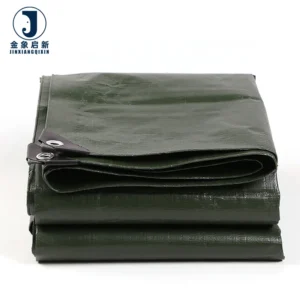
Lonas de polietileno de alta resistencia 5/10/12/16/20 Mil cubierta impermeable de lona 701 retardante de fuego, anti-UV y a prueba de viento para coches y tiendas.
¥0.20 Select options This product has multiple variants. The options may be chosen on the product page -
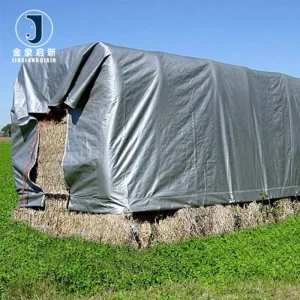
Rollo de Lona PE Impermeable de Oscurecimiento Orgánico Recubierto Baisite 4mx50m Carpa Exterior Personalizada 4mx6m Cubierta para Camiones
¥0.77 Select options This product has multiple variants. The options may be chosen on the product page -
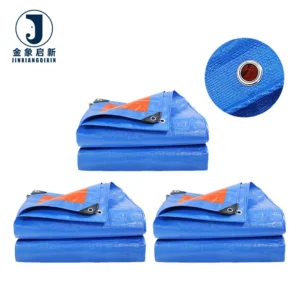
Multi-color & Size Waterproof Breathable Organic Blackout Coated PE Tarpaulin with UV Customizable Weft Knitted for Boys & Girls
¥0.21 Select options This product has multiple variants. The options may be chosen on the product page -
Custom Made PE Tarpaulin with Eyelets – Waterproof Tear-Resistant
Read more