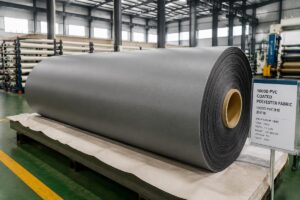
PVC Coated Fabric for Refugee Emergency Shelter: China Wholesale Manufacturer
Thicker is not always better. In the harsh reality of humanitarian aid, a heavy tarp without specific chemical stabilization will fail faster than a lighter, properly formulated one.
Sourcing PVC coated fabric for refugee shelters requires prioritizing UV stability and fire retardancy over mere thickness; standard industrial specs often fail in harsh camp environments because they lack the additive ratios necessary for prolonged outdoor exposure and strict safety compliance.
I still remember the smell of burnt plastic and the sight of shredded material fluttering across the red dust of a settlement in East Africa. It was not a storm that destroyed the shelters, but the sun. A procurement officer had ordered what he thought was robust material based on weight alone, ignoring the specific environmental demands of high-altitude equatorial regions. The fabric, while thick, became brittle within weeks. This was not an isolated incident of bad luck, but a systematic failure in understanding the technical requirements of PVC coated fabric for refugee shelters. Having started my career on the factory floor, cutting and welding these materials before moving into international trade, I have seen how small deviations in formulation lead to catastrophic field failures. The difference between a shelter that lasts a season and one that lasts years lies in the invisible chemistry, not just the visible gauge.
The transition from industrial use to humanitarian application is not merely a change in customer, but a change in physics. Standard truck covers or warehouse tarps are designed for intermittent exposure or protected environments. Refugee camps, however, expose materials to continuous ultraviolet radiation, extreme temperature fluctuations, and rigorous safety standards that general industry ignores. When buyers approach manufacturers with generic requests, they often receive generic products. The result is waste, logistical nightmares, and, most importantly, compromised safety for displaced populations. Understanding the specific technical barriers is the first step in securing reliable PVC coated fabric for refugee shelters that performs when it matters most.
Why Standard Industrial PVC Fails in Refugee Camps?
The assumption that all waterproof fabrics are interchangeable is the most common and costly error in humanitarian sourcing. Industrial PVC tarpaulins are engineered for different stress profiles. A truck cover needs to resist abrasion from cargo and occasional rain. A refugee shelter needs to withstand constant solar radiation, potential fire hazards from cooking activities, and high wind loads without tearing.
In many cases, manufacturers default to standard formulations to keep costs low. These standard mixes often contain minimal UV stabilizers because the expected lifespan of an industrial tarp under direct sun is short. For emergency shelters, which may remain in place for months or even years, this lack of stabilization is fatal. The polymer chains break down, leading to micro-cracks that expand rapidly. Once the surface integrity is compromised, water resistance fails, and the material loses its tensile strength.
Furthermore, fire safety is non-negotiable in dense camp settings. Standard industrial PVC may be self-extinguishing to a degree, but it does not meet the stringent fire retardancy ratings required by international aid agencies. Without specific flame-retardant additives, the fabric can contribute to rapid fire spread, turning a manageable incident into a disaster. [NEED_CITE: ISO standards for fire retardancy in temporary structures]
The failure mode is rarely immediate. It begins with discoloration, followed by a loss of flexibility. By the time visible cracks appear, the structural integrity is already gone. This is why relying on visual inspection or simple weight checks is insufficient. The chemical composition must be verified through documentation and testing, ensuring that the PVC coated fabric for refugee shelters is specifically engineered for long-term outdoor durability and safety compliance.
Critical Specs for Emergency Shelter Fabric?
When evaluating options, buyers must look beyond the basic GSM (grams per square meter) rating. While weight correlates with durability, it does not guarantee performance against environmental stressors. The critical specifications fall into three categories: UV resistance, fire retardancy, and mechanical strength.
UV resistance is measured in hours of exposure before significant degradation occurs. For refugee shelters, this metric must be high, as the fabric will face daily sun exposure. Fire retardancy is classified by international standards, such as B1 or M2, which indicate the material’s ability to resist ignition and slow flame spread. Mechanical strength involves tensile strength and tear resistance, ensuring the fabric can withstand wind loads and physical handling during installation.
| Specification | Standard Industrial Tarps | Emergency Shelter Grade | Impact on Performance |
|---|---|---|---|
| UV Stabilization | Basic/None | High/Additive-Rich | Prevents brittleness and cracking |
| Fire Rating | Non-certified/Basic | B1/M2 Certified | Reduces fire spread risk in camps |
| Tensile Strength | Moderate | High/Reinforced | Resists tearing in high winds |
| Waterproofing | Surface Coating | Integrated Layer | Ensures long-term leak prevention |
| Flexibility | Stiff at Low Temps | Cold-Crack Resistant | Maintains integrity in varied climates |
A common misconception is that higher GSM automatically means better quality. However, a 600gsm fabric with superior UV additives and fire retardants will outperform an 800gsm fabric lacking these features in a camp environment. The additives do not significantly increase weight but drastically improve longevity and safety. [NEED_CITE: Technical data sheets on PVC additive efficacy]
Buyers should request detailed technical data sheets that specify the type and concentration of UV stabilizers used. Similarly, fire certificates must be current and issued by recognized testing bodies. Mechanical tests, such as tensile and tear strength assessments, provide objective data on how the fabric will handle physical stress. These specs form the backbone of a reliable sourcing strategy for PVC coated fabric for refugee shelters.
How to Verify Manufacturer Claims?
Verifying claims in the manufacturing sector requires more than trust; it requires evidence. Many suppliers claim their products meet international standards, but few can provide immediate, verifiable proof. The burden of verification lies with the buyer, who must request specific documentation before placing an order.
First, ask for recent test reports from accredited laboratories. These reports should cover UV resistance, fire retardancy, and tensile strength. Be wary of reports that are several years old or from unknown testing facilities. Reputable manufacturers will have up-to-date certifications readily available. [NEED_CITE: Importance of accredited lab testing for construction materials]
Second, request samples for independent testing. While this adds time and cost, it is the only way to confirm that the bulk production matches the sample quality. Test the samples for flexibility, smell (which can indicate poor quality additives), and ease of welding or sewing. A simple burn test can also provide preliminary insights into fire retardancy, though it is not a substitute for formal certification.
Third, inquire about the manufacturer’s quality control processes. Do they perform batch-level testing? Can they trace raw materials back to their source? A transparent supply chain is a good indicator of consistent quality. Manufacturers who are open about their processes are more likely to deliver reliable products.
In my experience, manufacturers who specialize in humanitarian aid supplies are more accustomed to these rigorous verification steps. They understand the stakes and are prepared to provide the necessary documentation. For instance, Jinxiang has developed protocols to provide custom fire-retardant and anti-UV certifications specifically for aid projects, along with flexible MOQs to accommodate the varying scales of humanitarian operations. This level of responsiveness is crucial when time is of the essence.
Avoid suppliers who hesitate to provide documentation or who offer vague assurances. If a manufacturer cannot prove their product meets the required standards, they are not a viable partner for sourcing PVC coated fabric for refugee shelters. Verification is not an obstacle; it is a safeguard against failure.
Common Sourcing Pitfalls & Solutions?
Sourcing for humanitarian aid is fraught with pitfalls that can derail entire projects. One of the most common issues is miscommunication regarding specifications. Buyers may use generic terms like "waterproof" or "durable," which mean different things to different manufacturers. This ambiguity leads to products that do not meet the actual needs of the end-users.
Another pitfall is focusing solely on price. While budget constraints are real, choosing the cheapest option often results in higher long-term costs due to premature failure and replacement needs. The total cost of ownership includes logistics, distribution, and potential reputational damage if the shelters fail. Investing in quality upfront saves resources in the long run.
Logistical delays are also a significant risk. Humanitarian aid often operates on tight timelines. Manufacturers who cannot guarantee delivery schedules or who lack experience with export documentation can cause critical delays. It is essential to work with suppliers who have a proven track record of timely delivery and comprehensive export support.
To avoid these pitfalls, establish clear communication channels from the start. Use detailed specification sheets that leave no room for interpretation. Define acceptable tolerances for weight, dimensions, and performance metrics. Agree on inspection protocols before production begins.
Additionally, build relationships with manufacturers who understand the humanitarian context. They are more likely to prioritize your order and offer solutions tailored to your specific challenges. For example, some manufacturers offer customized packaging to facilitate easier distribution in remote areas. Others provide technical support for installation and maintenance.
By anticipating these common pitfalls and implementing proactive solutions, buyers can ensure a smoother sourcing process. The goal is to secure PVC coated fabric for refugee shelters that is not only compliant with technical standards but also delivered efficiently and reliably. This approach minimizes risk and maximizes the impact of humanitarian aid efforts.
Conclusion
Quality in humanitarian sourcing is defined by specificity, not just volume.
Sourcing PVC coated fabric for refugee shelters demands a shift from general industrial thinking to specialized technical evaluation. Prioritizing UV stability, fire retardancy, and verified mechanical strength ensures that shelters provide safe and durable protection. By verifying manufacturer claims through rigorous documentation and avoiding common pitfalls like ambiguous specifications, procurement officers can secure materials that truly serve the needs of displaced populations. The right fabric is not just a commodity; it is a critical component of humanitarian relief.