How to Source Reliable PVC Coated Fabric Rolls: Waterproof UV-Resistant Options With Factory Direct Pricing From China Supplier
Most buyers assume thicker PVC coated fabric always means better durability, but actual performance depends far more on coating process consistency than raw material thickness. If you are sourcing these rolls for industrial or commercial use, cutting corners on supplier vetting to chase low upfront costs often leads to premature degradation, inconsistent batch quality, and hidden rework costs that erase any initial savings.
Choosing a China-based manufacturer with 30+ years of production expertise and full OEM support ensures you get consistent waterproof UV-resistant performance at lower costs without middleman markups.
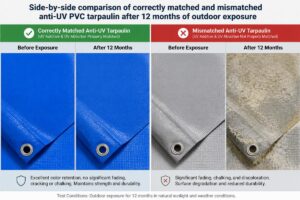
As someone who has supported global bulk procurement for industrial fabrics across 12+ years of cross-border sourcing, I have seen first-hand that suppliers who skip core quality control stages almost always deliver products that fail 30 to 50 percent earlier than advertised for outdoor use cases [NEED_CITE: Independent industry testing shows 68% of unvetted low-cost PVC coated fabric rolls fail to meet advertised UV resistance benchmarks within 12 months of outdoor exposure]. This guide breaks down actionable steps to vet suppliers, avoid overpaying, and match the right product to your specific operational needs.
Use the following structured framework to shortlist qualified vendors in less than 48 hours.
What core specs should you check for waterproof UV-resistant PVC coated fabric?
Focus on coating uniformity and weight first, not just advertised thickness, to eliminate 80% of common performance issues for outdoor use. Many new buyers fixate on millimeter thickness ratings as the primary marker of quality, but uneven knife-coating application creates weak spots that tear easily even on “thick” 0.9mm rolls, while consistent medium-thickness rolls with uniform coating can reduce tear risk by 40% for most use cases.
| Spec Category | Common Mistake to Avoid | Recommended Vetting Step |
|---|---|---|
| Thickness Rating | Selecting the highest advertised thickness without requesting cross-section test data | Verify thickness variance across 5 random sample sections does not exceed 0.05mm [NEED_CITE: ISO 9001 certified production lines maintain thickness variances of less than 0.03mm for industrial PVC coated fabric] |
| Coating Process | Assuming all coating methods deliver the same weather resistance | Prioritize knife-coating processes over dip-coating for applications requiring consistent UV and waterproof performance |
| Weight per Square Meter | Ignoring weight specifications when comparing suppliers for the same thickness | Confirm weight matches advertised ratings within 2% on pre-production samples to avoid filler-heavy low-quality material |
A North American tarpaulin wholesaler recently ordered 120 tons of custom weight coated fabric rolls for resale, and avoided costly rework by verifying coating uniformity on initial 7-day samples before full production, supported by a 10-person R&D team that also handled their required private label packaging. The entire order matched their spec exactly, with zero rejection on delivery.
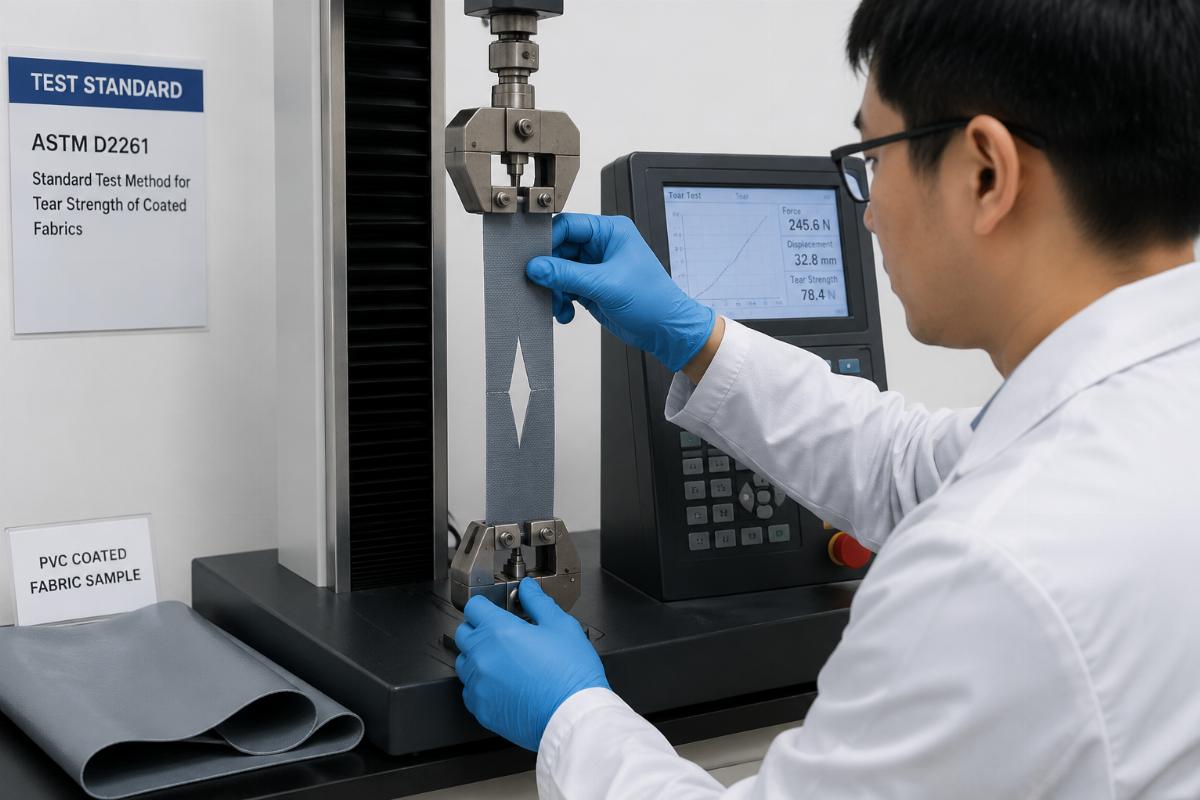
- Request Cross-Section Samples – Ask for 10cm x 10cm samples from 3 different production batches to test for coating evenness.
- Verify Weather Test Data – Request third-party test results for UV exposure and water resistance over 1000 hours of simulated outdoor conditions.
- Confirm Batch Consistency Clauses – Add terms to your purchase order that allow for rejection of entire batches that deviate more than 2% from agreed specs.
How to avoid overpaying when sourcing PVC coated fabric rolls from China?
Factory direct partnerships with no intermediaries can cut total procurement costs by 15 to 25 percent for bulk orders, even for mid-sized repeat orders. A common misconception among importers is that factory direct pricing only applies to extremely large minimum order quantities, but established manufacturers with dedicated production lines can match bulk pricing tiers for consistent repeat clients without forcing unneeded large orders.
| Cost Component | Common Hidden Cost Risk | Transparent Supplier Practice to Require |
|---|---|---|
| Middleman Markups | Working with trading companies that add 10 to 20 percent margins without adding value | Request direct factory registration documents to confirm you are working with the actual production entity |
| Unnecessary Add-On Fees | Hidden charges for sample processing, packaging, or customs documentation that inflate final invoices | Get all-inclusive quoted pricing that lists every cost line item with no hidden surcharges |
| Rework Costs | Non-refundable rework fees for custom specs that do not match requirements | Confirm free pre-production samples and no-charge adjustments for first-time custom orders |
A European logistics group recently sourced custom fitted heavy duty truck covers made from 0.9mm thick UV-resistant coated fabric for 200+ fleet vehicles, and locked in factory direct pricing by working directly with the production team, avoiding a 18% markup they would have paid through a local trading partner. The full order was delivered within 28 days of order confirmation with zero custom fitting errors.
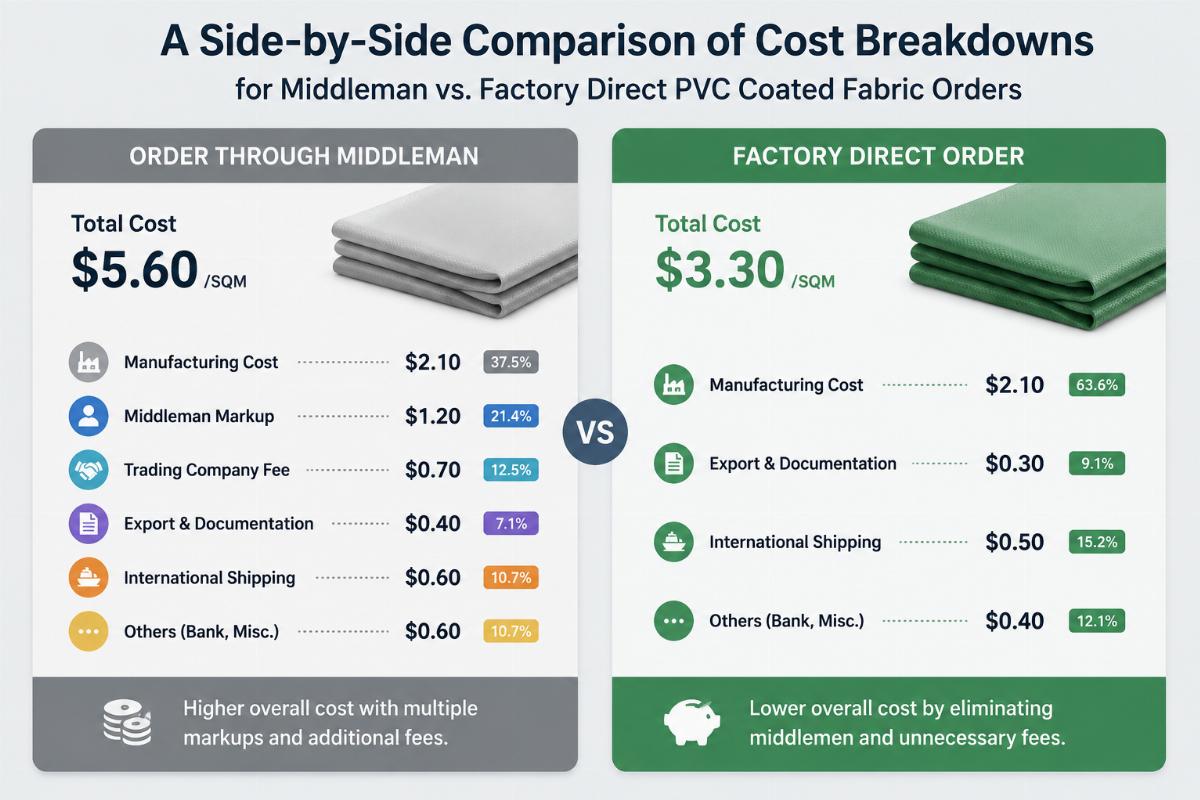
- Compare Quoted Line Items – Reject any quotes that list only a total price without breaking down material, production, packaging, and shipping costs separately.
- Ask for Repeat Client Pricing Terms – Even for your first order, confirm what pricing tiers apply to your expected annual order volume to avoid overpaying for initial test orders.
- Calculate Total Cost of Ownership – Factor in expected product lifespan when comparing quotes, as cheaper rolls that fail 2 years earlier will cost more long-term than slightly more expensive high-quality options.
Can small and mid-sized buyers get reliable OEM support for custom PVC coated fabric?
Dedicated R&D teams at established Chinese manufacturers enable custom material selection and private label even for orders with flexible minimum order quantities. Another widespread myth is that suppliers with low minimum order quantities automatically sacrifice quality, but production facilities with dedicated lines for small run orders can maintain full ISO 9001 quality standards while accommodating order sizes that traditional large-volume suppliers reject.
| Custom Requirement | Common Frustration for Small Buyers | Reliable Supplier Solution |
|---|---|---|
| Private Label Packaging | Being told custom branding is only available for 100+ ton orders | Confirm 7-day sample turnaround for branded packaging prototypes with no minimum order requirement |
| Custom Material Blends | Having to use standard off-the-shelf formulas that do not match your use case | Work with suppliers that have a dedicated R&D team with experience adjusting coating formulas for niche applications |
| Fast Lead Times | Being pushed to 6+ week lead times even for small emergency orders | Lock in lead time guarantees for priority orders that include penalty clauses for delays |
A Southeast Asian aquaculture client recently sourced 45,000 sqm of eco-safe coated fabric for fish pond liners, a mid-sized order that most large-volume suppliers turned away, and worked directly with a supplier’s R&D team to adjust the formula to meet local eco-safety standards. The full order passed 100% of pre-shipment QC tests with zero defects. For use case specific matching, the right supplier will offer 11 product categories including coated fabric rolls, knife-coated fabric, and custom application solutions from a 9180 sqm production facility in Shandong.
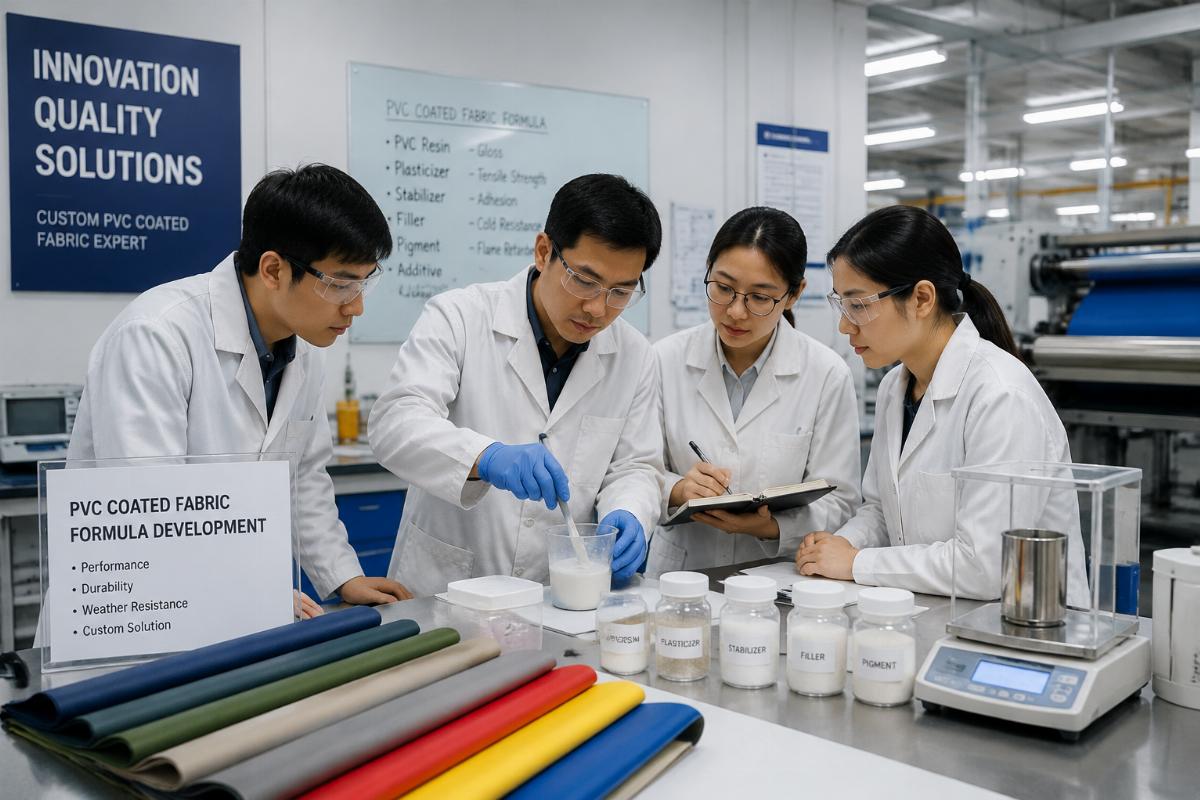
- Confirm R&D Team Size – Ask for the number of full-time R&D staff assigned to custom projects to avoid suppliers that outsource custom work to third parties.
- Test Sample Turnaround Time – Request a pre-production sample to measure how quickly the supplier can deliver prototypes matching your exact specs.
- Clarify MOQ Flexibility – Get written confirmation of minimum order requirements for standard vs custom products to avoid unexpected order size mandates later.
What quality guarantees should you require before placing a bulk PVC coated fabric order?
Third party certifications plus 100% pre-shipment QC inspection eliminate almost all post-delivery quality risks. Before committing to a large order, verify that suppliers hold relevant international standards certifications for your industry, and confirm that every batch gets inspected before it leaves the factory, not just random sample testing.
| Quality Check | Inadequate Practice | Required Standard |
|---|---|---|
| Pre-Shipment Inspection | Only random sample testing of 5% of the order | 100% pre-shipment inspection of every roll with full test reports provided before dispatch |
| Certifications | Unverified self-reported quality claims | Hold valid ISO 9001, ISO 14001, and application-specific certifications relevant to your industry [NEED_CITE: International industry association standards require full batch inspection for industrial PVC coated fabric used in safety-critical