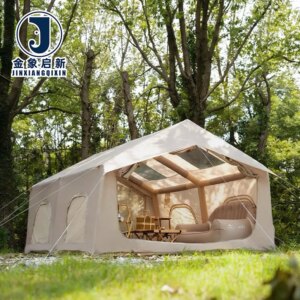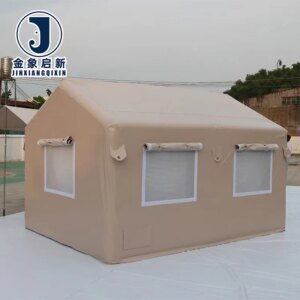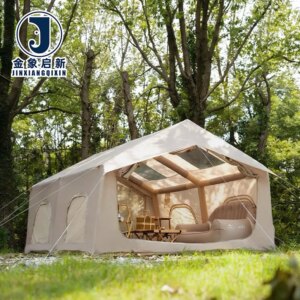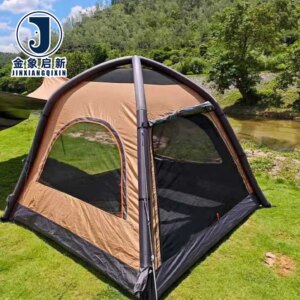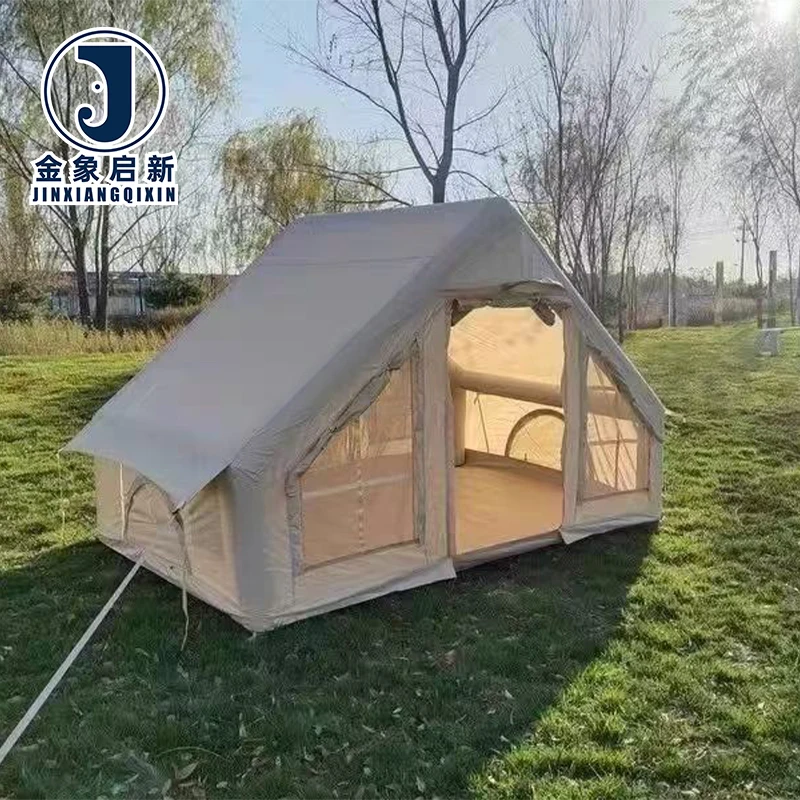
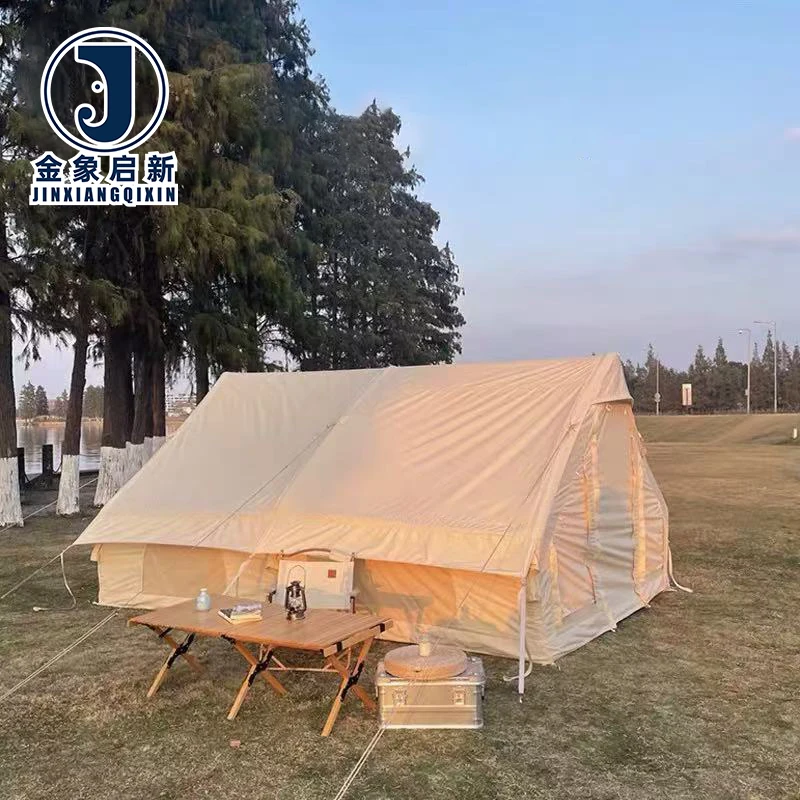
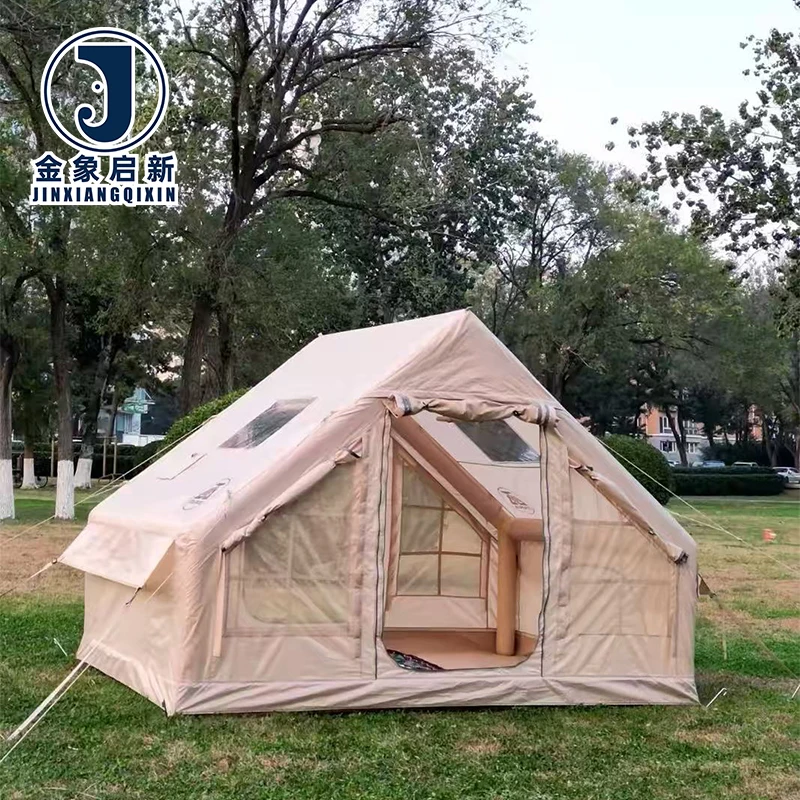
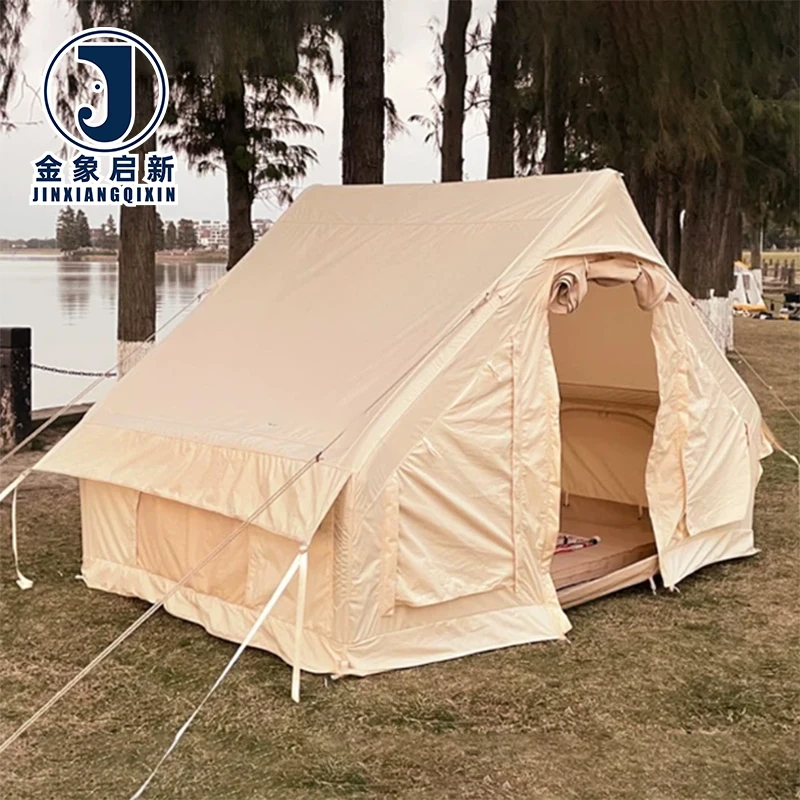
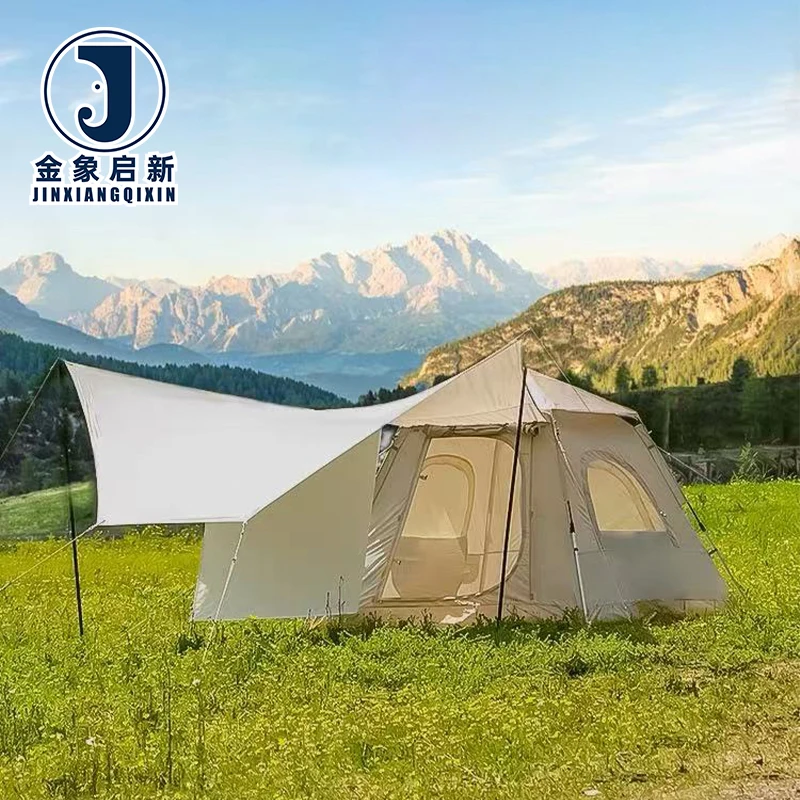
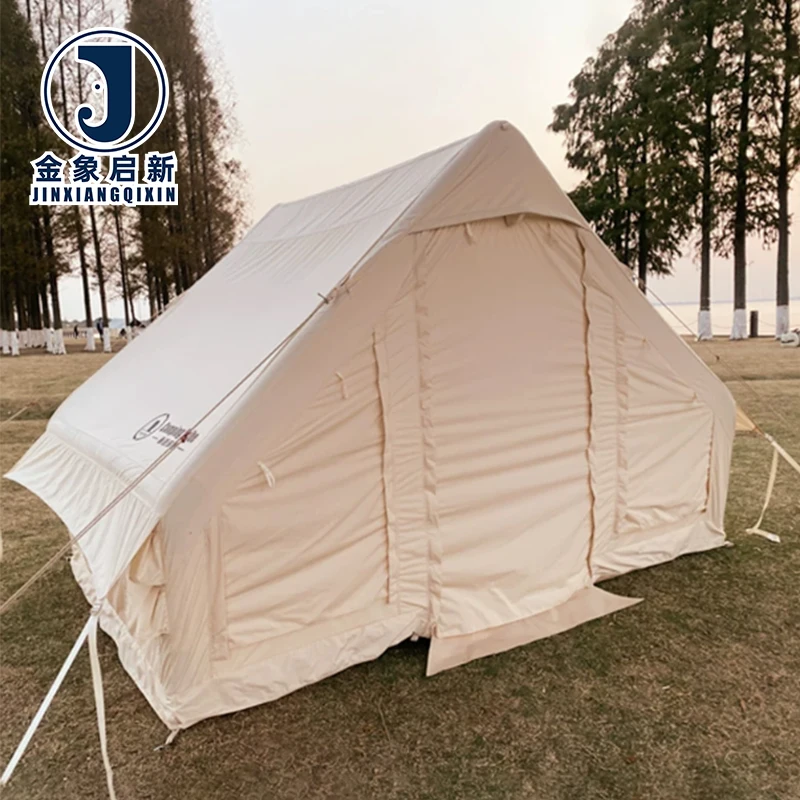
PVC Inflatable Camping Tent, Waterproof, UV-Resistant — single-layer construction with quick automatic opening mechanism, built for commercial outdoor operations and temporary shelters.
- Knife-coated PVC fabric with verified coating weight and adhesion control across production batches
- Fire-retardant to EN 13501-1, meeting compliance requirements for public event and industrial site deployments
- Custom dimensions, color matching, logo printing and specialized valve configurations available
Supported by a 10-person R&D team handling material selection and sample development, with 100% pre-shipment inspection and digital QA records retained for full traceability.
Description
Process Control — nearly 30 years focused on PVC coated fabric enables deep command over coating weight consistency and adhesion across every roll of inflatable tent material we produce.
Technical Specifications
| Parameter | Value |
|---|---|
| Product Type | Inflatable Tent Fabric / Inflatable Camping Tent |
| Core Material | PVC tarpaulin (knife-coated fabric) |
| Coating Method | Knife coated |
| Construction | Single layer |
| Flame Retardant Grade | EN 13501-1 |
| UV Resistance | UV-resistant coating (test basis not stated — confirm hours for your application) |
| Tear Strength | 300N/5cm (test standard not stated — request report) |
| Waterproof Rating | Exceeds industry benchmarks (verify against current batch data) |
| Key Features | Quick automatic opening mechanism, fully waterproof, all-season suitability |
| Customization | OEM & ODM, custom dimensions, color matching, logo printing, pattern printing, specialized valve configurations |
| Sample Lead Time | 5-7 business days |
| Production Lead Time | 15-day standard, 30-day buffer stock maintained |
| Certifications | ISO9001, ISO14001, ISO45001, CE |
Application Suitability
| Application | Exposure & Requirement |
|---|---|
| Event management temporary structures | Rapid deployment, public safety compliance, repeated inflation cycles, UV exposure |
| Adventure tourism base camps | All-season weather, wind loading, ground moisture, transport abrasion |
| Industrial site weather-resistant shelters | Continuous outdoor exposure, chemical dust, mechanical contact, fire safety codes |
| Commercial outdoor operations | Frequent setup and teardown, branding visibility, structural air retention |
| Field logistics support | Remote deployment, temperature fluctuation, puncture risk from ground debris |
Why Stated Flame Retardancy Without a Grade Creates Compliance Exposure
EN 13501-1 classification means the fabric has been tested and graded, not simply described as "flame retardant" on a data sheet.
When an inflatable camping tent manufacturer quotes a product as fire-resistant but cannot produce a test certificate tied to a specific standard, the buyer assumes liability at the installation site. Event venues, municipal authorities, and insurance assessors request the grade, not the claim. [NEED_CITE: EN 13501-1 reaction to fire classification for construction and event materials] A tent deployed at a public festival without documented classification can be shut down before the first guest arrives. We supply the grade with the batch.
Coating Adhesion and Air Retention Under Pressure
An inflatable camping tent holds its shape through continuous internal pressure, placing constant stress on every welded seam and coated surface. The knife-coated PVC construction used here bonds the polymer layer directly into the base fabric weave, producing adhesion values that resist delamination when the structure flexes under wind load. This matters most at ridge lines and valve surrounds, where stress concentrates. Each custom inflatable tent we produce goes through inflation pressure retention verification during in-process inspection.
Batch Consistency Across Multi-Roll Orders
When a large event organizer orders several custom inflatable tents in the same colour, visible shade variation between units undermines the professional appearance of the entire installation. Our production protocol matches colour reference codes at the coating stage, not after the rolls leave the line. [NEED_CITE: colour consistency control methods for PVC coated fabrics in batch production] Digital quality records are stored for five years and retrievable by order number, so reorders match the original batch.
Reading the Specification Sheet Beyond GSM
GSM tells you the weight of a square metre of fabric but nothing about how that weight is distributed between base yarn and coating. A knife-coated PVC inflatable tent fabric achieves its tear resistance through the interplay of base fabric denier, weave density, and coating penetration. The 300N/5cm tear value reflects the combined system, not one component alone. Flame retardant performance to EN 13501-1 depends on coating chemistry, which must remain consistent across production runs to maintain classification. Single-layer construction reduces weight while keeping the structure suitable for rapid inflation and deflation cycles. UV-resistant treatment is available — confirm the test duration required for your target climate before placing a bulk order.
The Hidden Cost of Specifying on Price per Kilogram Alone
A lighter PVC inflatable tent fabric may meet the quoted GSM but fail at the heat-welded seams after repeated inflation cycles because the coating thickness is insufficient to absorb the thermal input without degrading. [NEED_CITE: weld seam failure modes in PVC coated fabrics under cyclic stress] Fire-retardant grades that are claimed but unsupported by EN 13501-1 documentation can result in rejected site inspections, forcing last-minute tent replacement at premium cost. Colour drift between production batches causes visible mismatch when tents are installed side by side, triggering rework claims.
Why Procurement Teams Specify From This Line
Three full production lines and 36 sets of processing equipment give us the capacity to run custom inflatable tent orders at volume while maintaining coating weight control. A 10-technician R&D team handles material selection, pattern layout, and valve configuration engineering before production begins. Dedicated QA and QC staff execute a 7-point inspection protocol — from raw material tensile testing through to inflation pressure retention — with every data point recorded digitally and stored five years. Pre-production samples are developed within 5-7 business days so buyers validate dimensions, colour, and valve placement before mass production commits.
Documentation & Verification
- Material specification sheet stating GSM, base fabric denier, coating type, and colour reference per order
- EN 13501-1 flame retardant test report supplied with applicable batches
- UV resistance test documentation provided where treatment is specified
- Pre-shipment inspection record with dimensional accuracy and inflation retention data
- ISO9001, ISO14001, ISO45001, and CE certificates included with shipment documentation
- Third-party inspection at facility available before dispatch
Fabrication, Handling & Storage
- Heat-weld seams using temperature profiles matched to knife-coated PVC to avoid coating burn-through
- Store rolls upright on pallets to prevent permanent creasing across the coated surface
- Allow cold-stored single-layer fabric to reach ambient temperature before unrolling to prevent cracking
- Use PVC-compatible cleaners only; solvent-based agents may degrade the knife-coated surface
- Repair minor punctures with compatible PVC adhesive patches applied to clean, dry fabric
- Plan cutting layouts to minimize off-cuts when working with custom widths for tent panels
Before You Send the Inquiry
Provide your deployment environment — climate zone, expected wind loading, and any fire safety codes your local authority enforces. Specify whether you require finished custom inflatable tents with valve configurations or roll stock for your own fabrication line. Confirm target dimensions, colour references, and whether pattern printing or logo application is needed so we can prepare an accurate sample.
Frequently Asked Questions
Q: How is fabric GSM verified before shipment and what proof accompanies the order?
A: Every roll is weighed against the stated GSM during our 7-point inspection. A material specification sheet listing GSM, base fabric details, coating type, and colour reference is included with the shipment. Digital inspection records are retained for five years and accessible by order number for future reference.
Q: Does the tent fabric carry EN 13501-1 and will it satisfy my local fire code?
A: The fabric is classified to EN 13501-1, and we supply the test report with applicable batches. Fire safety requirements vary by jurisdiction, so share your local code with us during inquiry and we will confirm whether this classification meets the specific standard your venue or authority requires.
Q: What customization options exist for dimensions, colour, printing, and valve layout?
A: We offer full OEM and ODM capability including custom dimensions, Pantone-matched colours, logo and pattern printing, and specialized valve configurations. A pre-production sample is developed within 5-7 business days so you can validate every detail before mass production begins.
Q: How do you control colour consistency when multiple tents are ordered together?
A: Colour reference codes are matched at the coating stage on each production line. Digital quality records track shade data per batch. If you place a reorder months later, we retrieve the original batch record to ensure the new rolls match the initial delivery.
Q: What is the sample process before I commit to a full production run?
A: Submit your application requirements, dimensions, and any treatment specifications. Our 10-technician R&D team prepares a sample within 5-7 business days. You evaluate material feel, colour accuracy, valve placement, and welding quality before approving mass production.
Related products
-
Luxury Inflatable Tent for Glamping Outdoor Waterproof Air Tent with Pump
Read more -
Inflatable Tent Four-Season Quick Automatic Opening PVC 3000mm Waterproof Foldable Eco-Friendly 2-3/3-4/6-8 Person Outdoor Use
Read more -
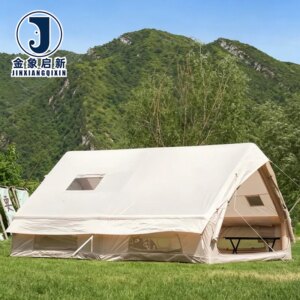
Inflatable Camping Tent PVC Four-Season Waterproof Outdoor Air Tent with Quick Automatic Opening for 2-3 Person
Read more -
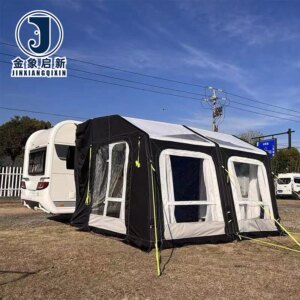
Outdoor Camping Inflatable Tent Luxury All-Season Use PVC Waterproof Quick Automatic Opening Rainproof Insulated
Read more