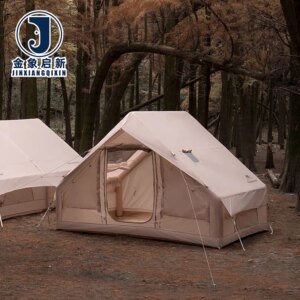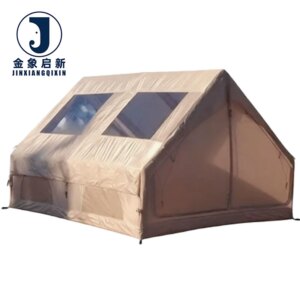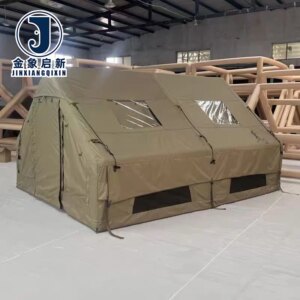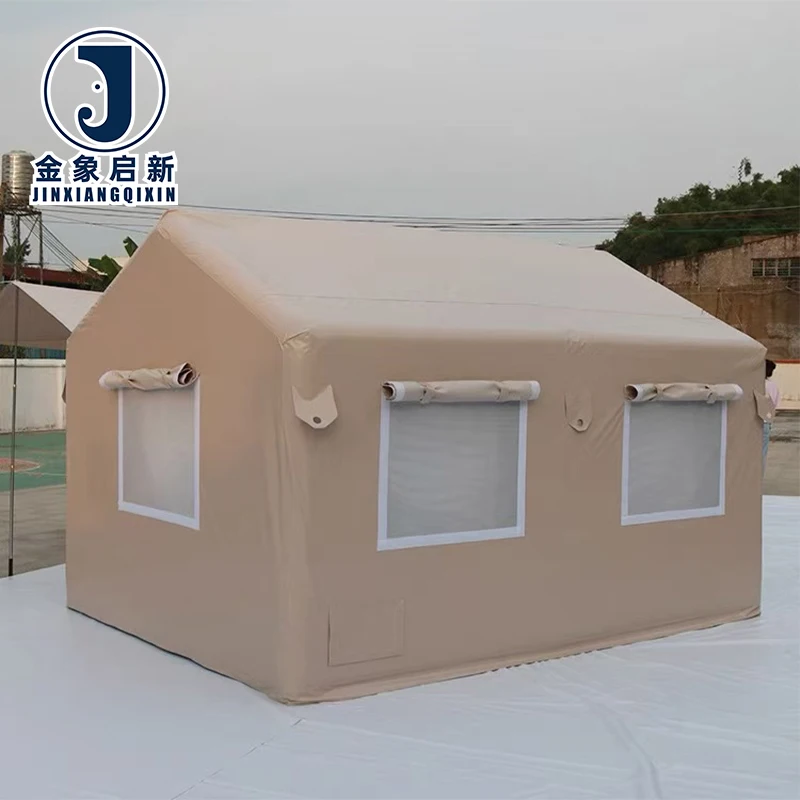
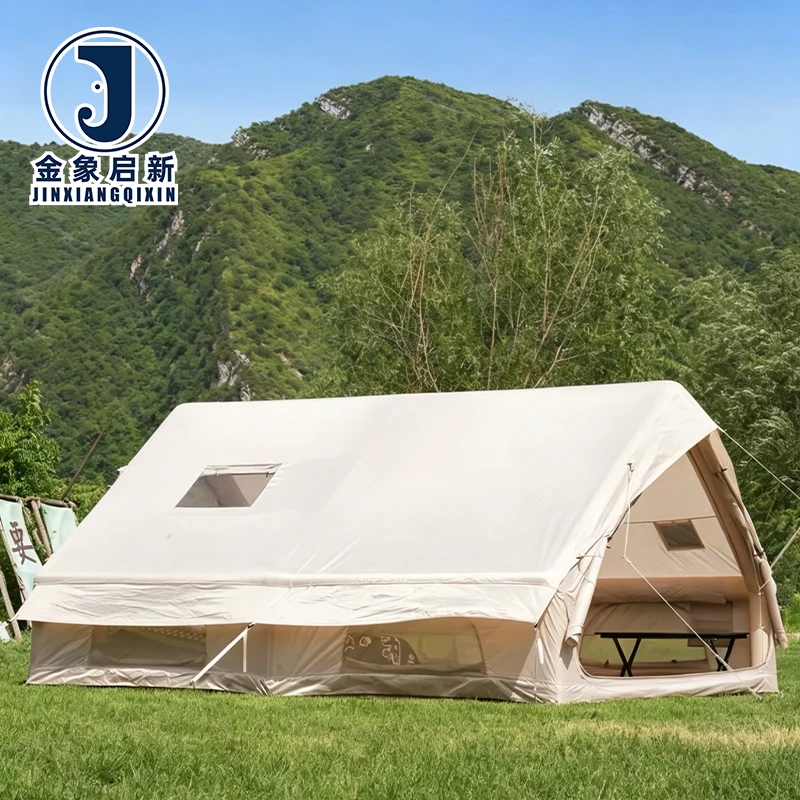
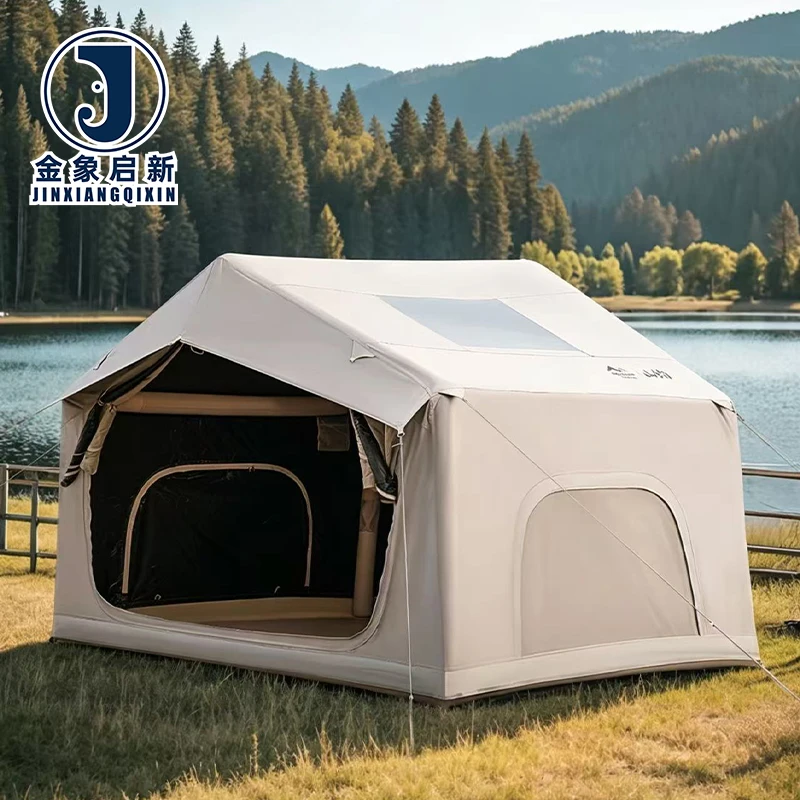
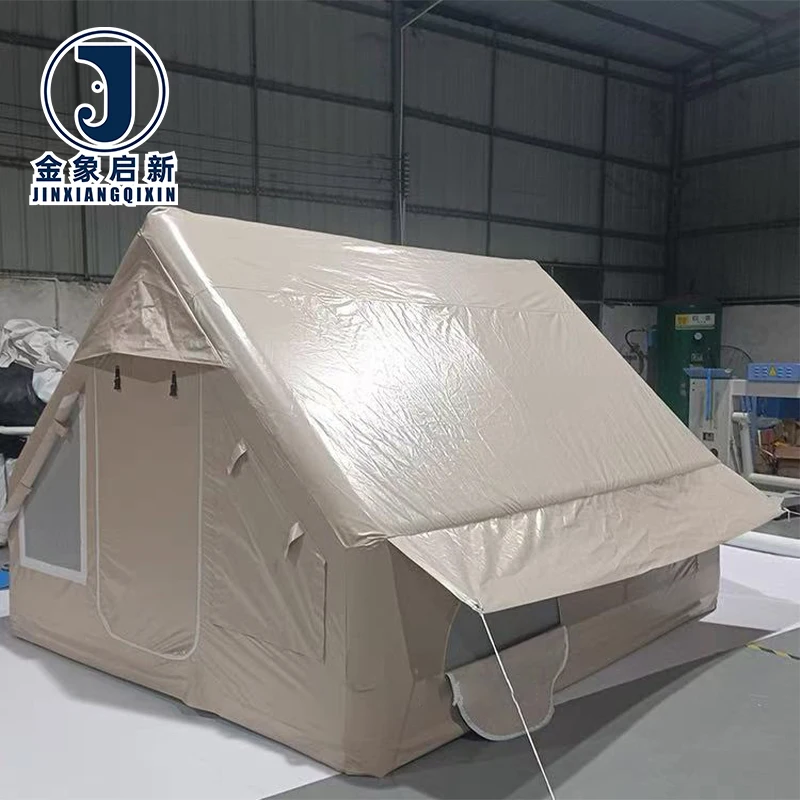
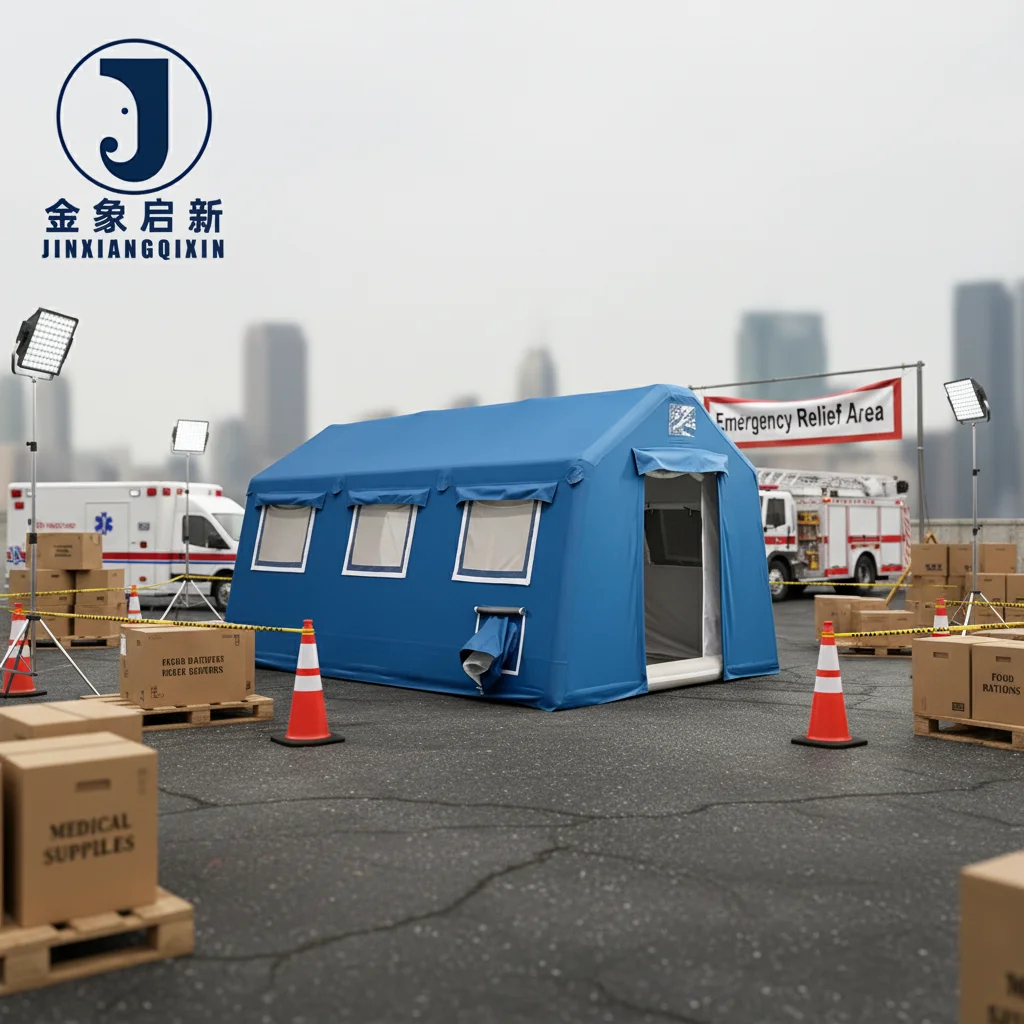
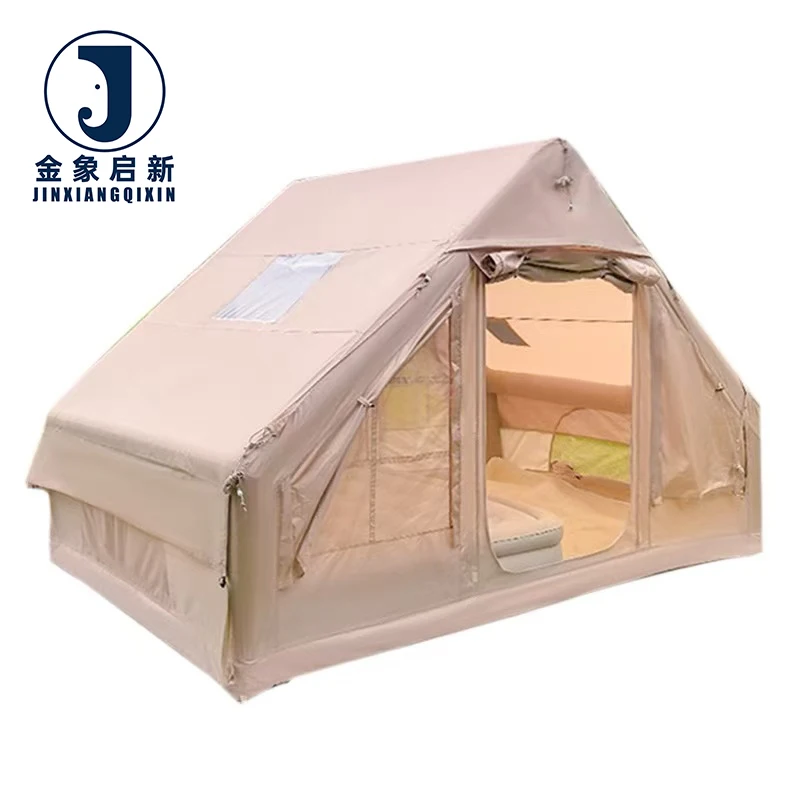
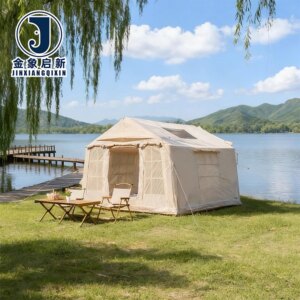
PVC Inflatable Tent — waterproof, four-season design, quick automatic opening, 3-4 person capacity, single-layer construction with OEM & ODM support.
- Multi-layered waterproof coating with heat-sealed seams maintains air retention under variable weather loads
- Anti-UV formulation prevents material degradation during prolonged outdoor deployment across all seasons
- 8-point pressure testing ensures structural stability for construction field offices, event infrastructure and emergency staging
Backed by three full production lines and a dedicated 10-technician R&D team delivering custom sizing, pattern printing and full-process quality inspection from design to dispatch.
Description
Full custom capability — 36 sets of professional processing equipment handling material selection, heat-sealing, and pattern printing under one roof for inflatable structure fabric.
Technical Specifications
| Parameter | Value |
|---|---|
| Product Type | Inflatable Tent Fabric |
| Core Material | PVC tarpaulin |
| Capacity | 3-4 person |
| Construction | Single layer |
| Seam Construction | Heat-sealed seams |
| UV Treatment | Anti-UV formulation (test basis not stated in source — confirm grade required for your market) |
| Flame Retardant | Grade not stated in source — available in flame retardant grades, confirm the grade required for your market |
| Waterproof Rating | Grade not stated in source — confirm rating required for your application |
| Testing Protocol | 8-point pressure testing for air retention and structural stability |
| Customization | OEM & ODM, sample customization, pattern printing |
| Certifications | ISO9001, ISO14001, ISO45001, CE |
Application Suitability
| Application | Exposure & Requirement |
|---|---|
| Construction site field offices | Prolonged outdoor weathering, frequent inflation cycles, puncture risk from site debris |
| Outdoor event infrastructure | Rapid deployment, UV exposure over multi-day events, wind load on inflated structure |
| Expedition base camps | Four-season temperature swings, snow load, high-altitude UV degradation |
| Emergency response staging areas | Immediate deployment under variable conditions, repeated packing and unpacking |
| Mobile commercial operations | Daily inflation and deflation, transport abrasion, branding visibility requirements |
Why Inflatable Structures Fail at the Seams Before the Fabric Does
Heat-sealed seams must withstand internal air pressure and structural flex simultaneously — inconsistent sealing temperature or pressure is the primary cause of premature failure.
When an inflatable tent fabric is subjected to cyclic loading from wind gusts or occupant movement, the flex concentrates at the seam junction. I have seen heavy-grade coated rolls fail at the weld line while the body fabric remains intact. The heat-sealing process must match the specific PVC formulation and coating weight; a generic temperature profile across different material batches produces weak bonds that separate under sustained pressure [NEED_CITE: tensile and tear test methods for coated fabrics per ISO 1421].
Custom Sizing and Pattern Integration for Commercial Tent Lines
Tent and inflatable structure manufacturers sourcing fabric by specification need rolls that accept custom pattern printing without compromising coating integrity. Our Inflatable Tent Fabric manufacturer process supports OEM and ODM workflows where branding, colour matching, and panel dimensions are defined before production begins. Samples are developed within days so that print registration and colour consistency can be verified against physical references before the full order runs.
Pressure Testing as a Production Gate
Every finished inflatable unit undergoes an 8-point pressure testing protocol that checks air retention and structural stability across all seams and valve points. This goes beyond a simple leak check — the structure is held at working pressure while each seam zone is inspected for creep or micro-separation [NEED_CITE: DIN 4102 fire classification for building materials]. Units that show pressure decay outside tolerance are rejected before packing, ensuring that only verified product reaches the site.
How Coating Weight and Base Fabric Interact in Inflatable Applications
In inflatable tent construction, the PVC coating weight and the base fabric denier together determine how the material behaves under internal air pressure. A heavier coating improves waterproofing and abrasion resistance but adds stiffness, which increases stress at heat-sealed joints during inflation cycles. The base fabric weave density controls tear propagation — a tighter weave limits tear spread if the surface is punctured by site debris. Selecting the right combination requires balancing deployment speed against four-season durability expectations. Anti-UV formulation is available to reduce polymer degradation during prolonged sun exposure, though the specific grade should be confirmed against the target market’s climate profile. Single-layer construction reduces packed weight and cost, making it suitable for rapid-deploy commercial shelters where thermal insulation is not the primary concern.
The Hidden Cost of Specifying on Price Per Roll Alone
When inflatable tent fabric is sourced on a lowest-cost basis without verifying coating adhesion and seam integrity, the failure pattern is predictable: seams separate during the first season of use while the body fabric remains serviceable. This forces the buyer to either repair in the field — which is difficult on inflated structures — or replace entire units. Batch colour variation between rolls compounds the problem when panels from different rolls are assembled side by side, producing visible shade differences on the finished structure [NEED_CITE: colour fastness and batch consistency standards for coated textiles].
Production Infrastructure Behind Every Order
Three full production lines and 36 sets of professional processing equipment provide the capacity to fulfil bulk orders without splitting production across multiple facilities, maintaining roll-to-roll consistency. A 10-person R&D team handles material selection, pattern printing layout, and sample development, ensuring that custom specifications are resolved before mass production begins. Dedicated QA and QC staff inspect at every production stage, with 100% inspection before shipment — not a sampling plan, but a full check. ISO9001, ISO14001, ISO45001, and CE certifications are maintained across the production system. Samples are developed within days for custom requirements, compressing the approval cycle.
Documentation & Verification
- Material specification sheet stating base fabric, coating weight, and treatment details for the inflatable tent fabric ordered
- Test report for UV and flame-retardant grades where applicable, matched to the batch shipped
- Pre-shipment inspection record with 8-point pressure test results for each finished inflatable unit
- ISO and CE certificates included with every shipment for compliance documentation
- Roll packing list with individual roll identification for traceability
Fabrication, Handling & Storage
- Heat-sealing temperature must be calibrated to the specific PVC coating formulation before production runs begin
- Store rolls flat or upright on cores to prevent permanent creasing in the single-layer construction
- Allow cold-stored rolls to reach ambient temperature before unrolling to avoid coating micro-cracking
- Use PVC-compatible cleaners only — solvent-based products may degrade the anti-UV formulation surface layer
- Pattern printing registration should be verified on a test panel before full-run printing commences
What to Include in Your Enquiry
Provide the intended application environment, expected deployment frequency, and any flame-retardant or anti-static grades required by your local regulations. Specify the target panel dimensions, colour references or print artwork, and annual volume estimate so we can confirm roll widths and lead time. Indicate whether you require raw fabric rolls or finished heat-sealed panels ready for assembly.
Frequently Asked Questions
Q: How is the stated coating weight verified before shipment?
A: Every roll is sampled and weighed against the material specification sheet during pre-shipment inspection. The inspection record documents the actual coating weight measured and is included with the shipment documentation. Rolls falling outside the agreed tolerance are withheld from dispatch.
Q: What heat-sealing parameters should our fabrication team use?
A: Sealing temperature, pressure, and dwell time depend on the specific PVC formulation and coating weight of your order. We provide a recommended parameter sheet with each batch. We advise running test seals on a sample piece before committing to full production panels.
Q: What UV protection level does this fabric carry?
A: The fabric is produced with an anti-UV formulation, but the specific test basis and rating are not stated on the standard product. If your market requires a certified UV resistance grade, provide the standard you need and we will arrange testing and documentation accordingly.
Q: Can we order custom widths and printed patterns for our tent line?
A: Yes. OEM and ODM customization includes custom roll widths, pattern printing, and colour matching. A sample is developed within days so you can verify print registration, colour accuracy, and material handling before approving the full production run.
Q: What certifications are supplied with each shipment?
A: ISO9001, ISO14001, ISO45001, and CE certificates are included with every shipment. Additional compliance documentation such as certificates of origin and customs support papers are provided based on the destination market requirements.
Related products
-
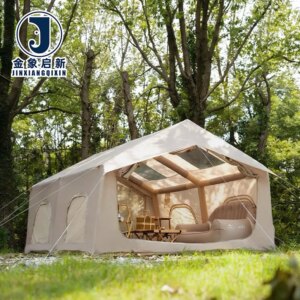
Inflatable Four-season Camping Tent-PVC Coated Waterproof Eco-Friendly Quick Inflation CE Certified ODM/OEM Accepted
Read more -
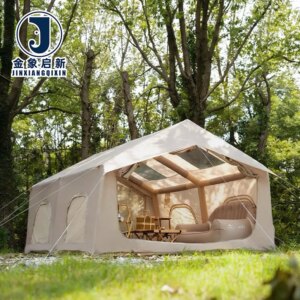
Camping Tent Inflatable UV Resistant Customizable Four-season Waterproof PVC Quick Automatic Opening 2-3 Person Outdoor
Read more -
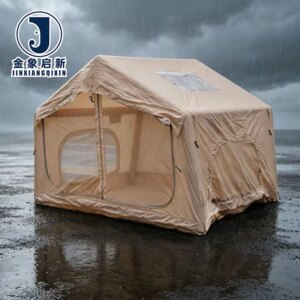
Inflatable Camping Tent Waterproof Outdoor Air Tent for Camping Inflatable Tent Shelter
Read more -
Luxury Inflatable Tent for Glamping Outdoor Waterproof Air Tent with Pump
Read more