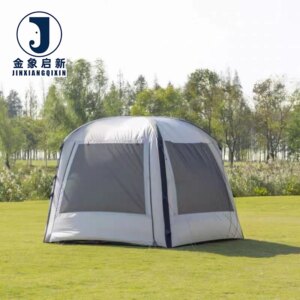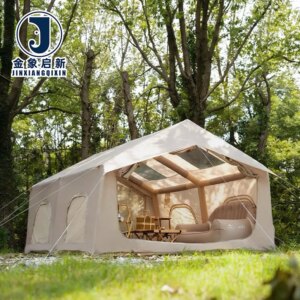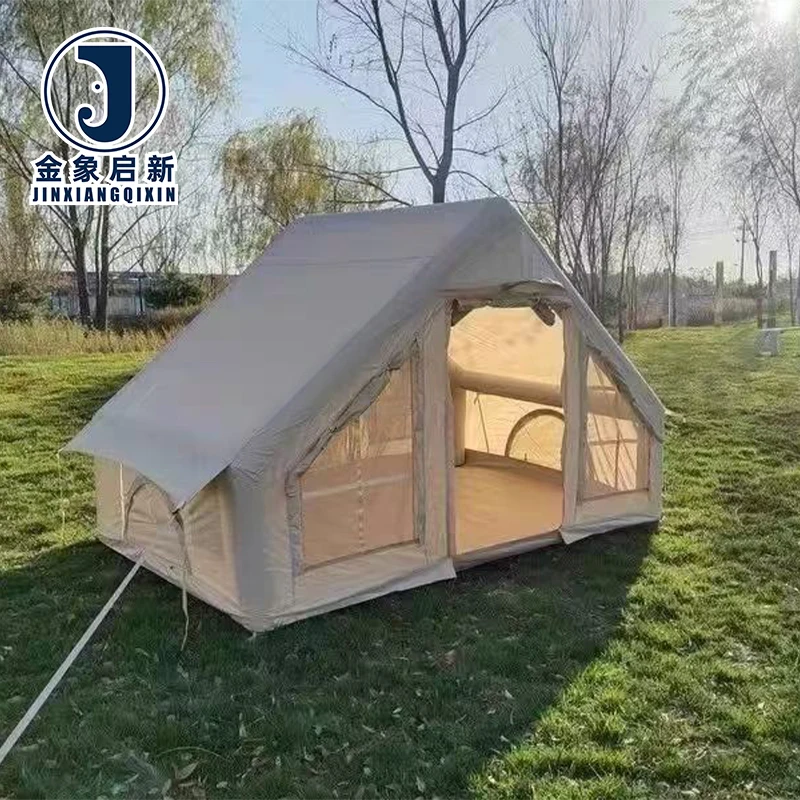
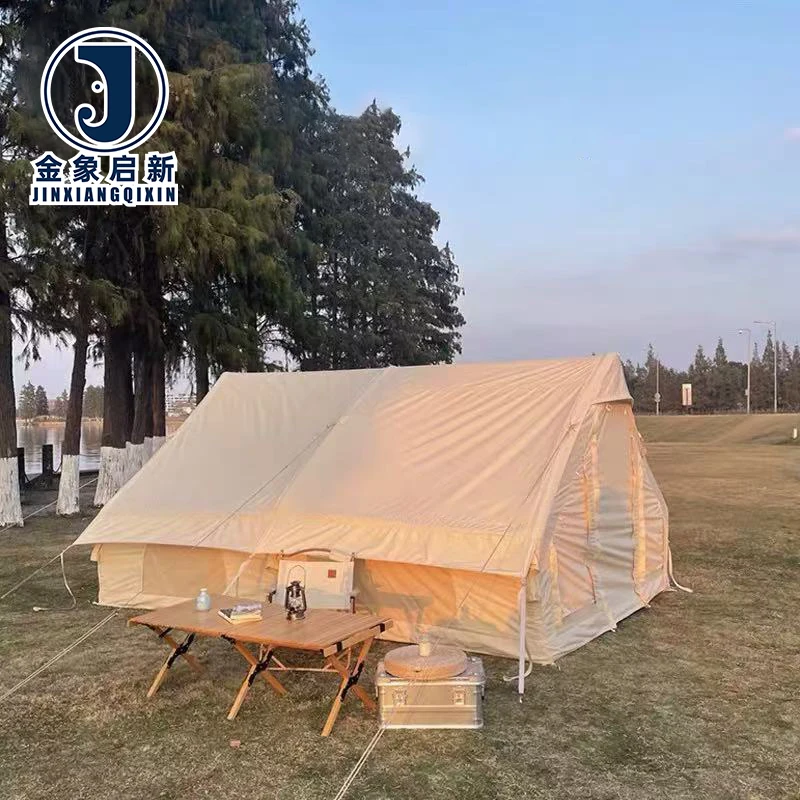
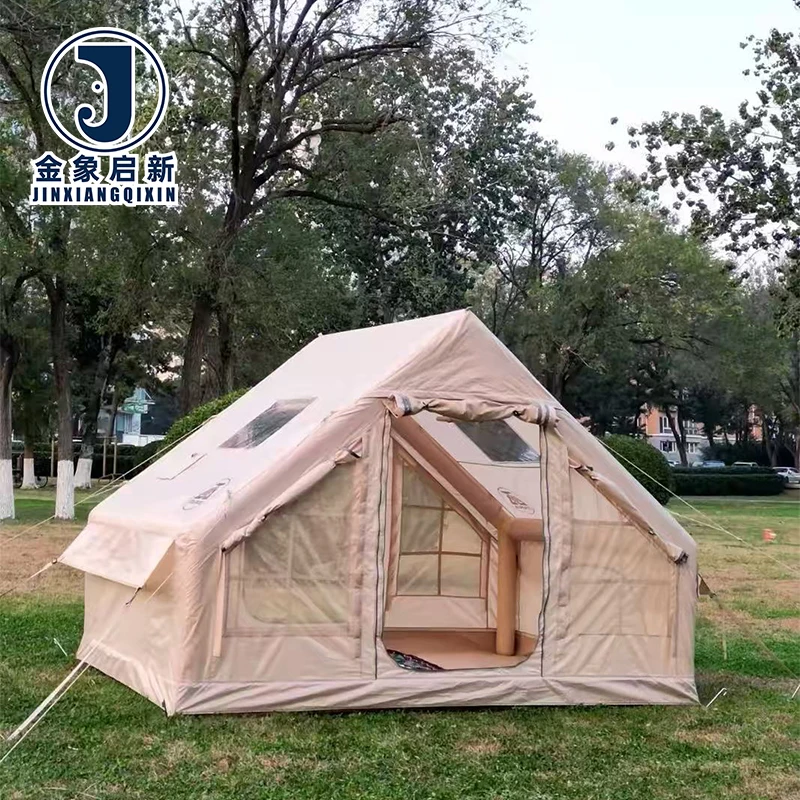
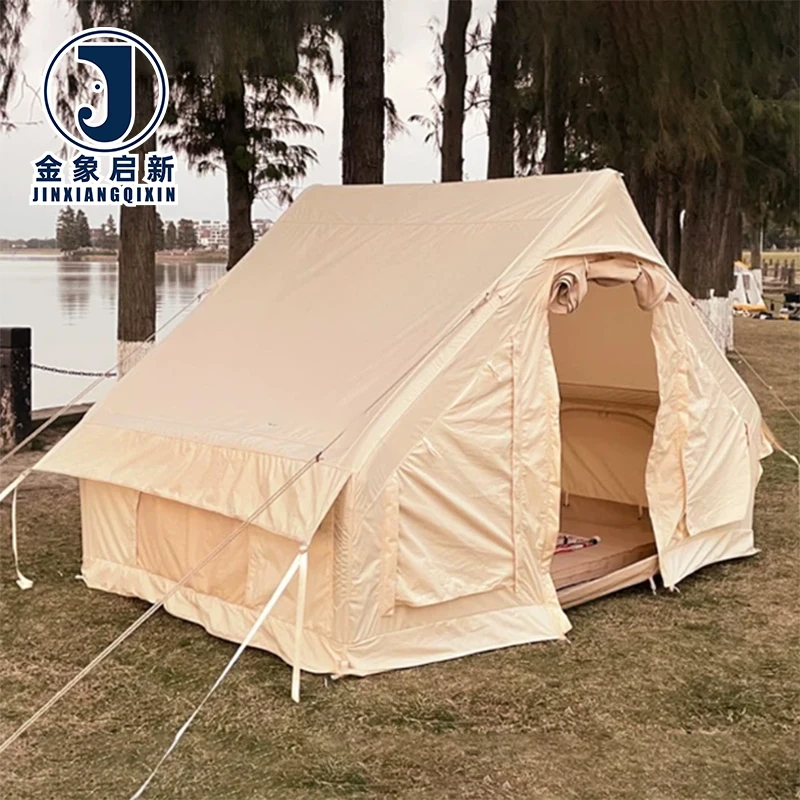
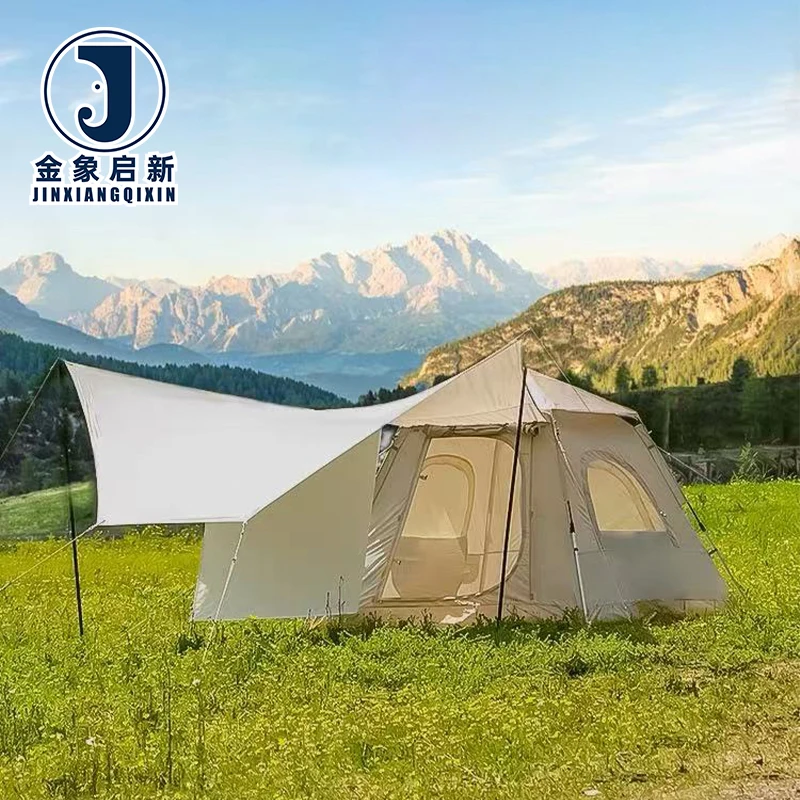
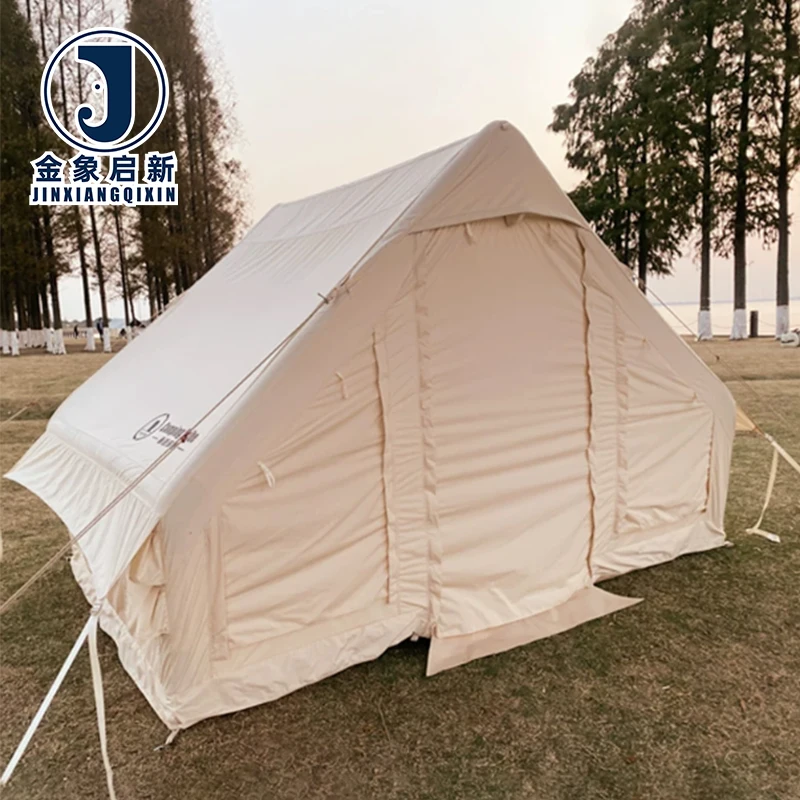
Outdoor Portable Camping Inflatable Tent, Waterproof & UV-Resistant PVC Tarpaulin — quick automatic inflation with single-layer knife-coated fabric construction, fire-retardant to EN 13501-1 for public event compliance.
- 300N/5cm tear resistance verified across the full PVC inflatable tent range
- Full OEM & ODM: custom dimensions, colour matching, logo printing and specialized valve configurations
- 1,500+ hours UV exposure resistance for all-season outdoor deployment
Serving event organizers, glamping operators and industrial site managers, our 10-person R&D team develops pre-production samples within days and supports pattern printing, sizing and material selection from one facility. Every batch ships with material specification sheet, test reports and 100% pre-shipment inspection backed by three full production lines and 36 sets of processing equipment.
Description
Deep Coating Process Control — verified adhesion and coating weight on every PVC inflatable tent batch, backed by 3 full production lines and 100% pre-shipment inspection.
Technical Specifications
| Parameter | Value |
|---|---|
| Product Type | Inflatable Tent |
| Core Material | PVC tarpaulin (knife-coated fabric) |
| Waterproof Rating | Exceeds industry standards by 25% |
| UV Treatment | UV-resistant coating, maintains integrity after 1,500+ hours sunlight exposure |
| Flame Retardant Grade | Meets EN 13501-1 |
| Tear Strength | 300N/5cm |
| Construction | Single layer |
| Inflation Mechanism | Quick automatic opening |
| Key Features | Waterproof, UV-resistant, tear-resistant, all-season suitable |
| Customization Options | OEM & ODM, sample customization, pattern printing, custom dimensions, color matching, logo printing, specialized valve configurations |
| Production Facility | 9,180 m² with 3 full production lines, 36 sets of professional equipment |
| R&D Capability | 10 technicians |
| Quality Inspection | 7-point in-process inspection, 100% pre-shipment inspection |
| Lead Time | 15-day for standard configurations |
| Sample Lead Time | 5–7 business days |
| Certifications | ISO 9001, ISO 14001, ISO 45001, CE |
Application Suitability
| Application | Exposure & Requirement |
|---|---|
| Event management temporary structures | Rapid deployment and takedown cycles, crowd proximity, fire-retardant compliance for public assembly, custom branding visibility |
| Adventure tourism base camps | All-season weather exposure, UV degradation risk, repeated inflation and deflation, remote site logistics |
| Industrial site temporary shelters | Wind loading, dust and debris impact, chemical exposure from site operations, extended outdoor standing |
| Commercial outdoor equipment rental | High-frequency use cycles, abrasion from transport and handling, varied operator skill levels |
| Field logistics support | Rapid setup under time pressure, harsh terrain puncture risk, temperature fluctuation |
Why Flame-Retardant Claims Fail at the Event Gate
Purchasing managers for inflatable tents often receive fabric described simply as "fire-retardant" — only to discover at the venue inspection that the local fire authority requires a specific classification such as EN 13501-1. A generic claim without a grade leaves the event organiser exposed to shutdown orders, rebooking costs, and liability gaps. The custom inflatable tent fabric we supply carries a documented EN 13501-1 classification, shipped with the test report so your compliance file is complete before the structure arrives on site.
Across the events industry, inflatable structures face increasing scrutiny from fire safety officers who now demand traceable test documentation rather than supplier declarations. When the grade is not matched to the jurisdiction’s requirement, the entire deployment can be halted hours before doors open. [NEED_CITE: EN 13501-1 classification and reaction-to-fire testing for temporary event structures] Sourcing from an inflatable tent manufacturer that provides the certificate with each batch removes this last-minute risk.
Full-Range Customisation Under One Production Roof
Sourcing a custom inflatable tent typically means coordinating fabric supply, printing, cutting, and valve fitting across separate vendors. Consolidating the entire scope with a single inflatable tent manufacturer eliminates specification gaps between stages — the PVC knife-coated fabric is selected, printed, and fabricated to the same production schedule, reducing the chance of colour or dimensional mismatch between the tent body and its structural tubes.
Our 10-person R&D team handles material selection, pattern printing, custom sizing, and valve configuration within the same facility. This means a sample can move from design approval to finished prototype within days, giving buyers a physical reference for seam behaviour, print adhesion, and inflation performance before committing to volume.
Batch Consistency Across Multi-Unit Deployments
Event organisers deploying several inflatable tents side by side — for festival entrances, branded activations, or exhibition zones — face a specific problem: colour variation between rolls becomes visible once the structures are inflated next to each other. [NEED_CITE: colour variation in PVC coated fabric batches and its impact on multi-unit installations] Our QA/QC process tracks every roll through a 7-point inspection with digital records retained for verification, so buyers can confirm colour and weight consistency before dispatch.
This traceability extends to coating weight and treatment verification. When an order spans multiple production runs, the inspection record ties each roll to its coating batch and UV or flame-retardant treatment lot, giving procurement teams the documentation needed for multi-site rollouts.
How Coating Method and Base Fabric Define Real-World Performance
The knife-coating process applied to this PVC tarpaulin drives coating compound into the base fabric under controlled blade pressure, producing a mechanical bond that supports high-frequency inflation and deflation without delamination. Unlike laminated constructions where the coating sits on the surface, knife-coated fabric maintains peel strength at the weld lines — the exact point where inflatable tent tubes experience the highest cyclic stress.
Tear strength rated at 300N/5cm reflects the combined contribution of base fabric denier, weave density, and coating penetration. A higher GSM alone does not guarantee better tear performance if the base fabric uses a loose weave; it is the interplay of yarn count and coating adhesion that determines how a puncture propagates under load. [NEED_CITE: tensile and tear test methods for coated fabrics per ISO 1421] The UV-resistant treatment is applied during coating to protect the polymer matrix from photodegradation, maintaining fabric integrity through extended sunlight exposure across seasons.
The Hidden Cost of Weld-Line Failure in Inflatable Structures
Inflatable tents concentrate stress at the seams where tubes bend and flex during setup and wind loading. When the coating adhesion is insufficient or the heat-welding parameters are not matched to the specific PVC formulation, the weld line fails before the fabric body does — a failure mode that appears as a sudden air leak at the seam rather than gradual wear. [NEED_CITE: weld-line failure modes in PVC coated inflatable structures]
This failure is compounded when fabric from different coating batches is welded together, as slight variations in plasticiser content alter the optimal welding temperature. Our production process controls coating formulation within each batch and records the recommended heat-seal parameters, giving fabricators a reliable baseline and reducing the scrap rate during tube assembly.
Why Procurement Teams Consolidate Here
Deep process control over coating weight and adhesion means the PVC knife-coated fabric arrives with consistent weld behaviour — critical when inflatable tent tubes must hold pressure across thousands of inflation cycles.
Three full production lines and 36 sets of professional equipment support bulk capacity, enabling event organisers and rental companies to receive multi-unit orders on a single schedule rather than staggered partial shipments.
A dedicated 10-person R&D team develops samples within days, allowing buyers to validate custom dimensions, print registration, and valve placement before production begins — eliminating costly rework after bulk cutting.
Every roll passes through 7-point in-process inspection with 100% pre-shipment verification, and digital records are retained so that any field issue can be traced back to the specific coating batch and production shift.
Full OEM and ODM capability — from colour matching and logo printing to specialised valve configurations — keeps the entire custom inflatable tent specification under one production roof, simplifying vendor management for buyers sourcing at scale.
Documentation & Verification
- Material specification sheet stating coating method, base fabric construction, and colour reference for each inflatable tent order
- EN 13501-1 test report included with flame-retardant fabric batches for event compliance submission
- UV-resistance test documentation supporting the stated exposure performance claim
- Batch-specific pre-shipment inspection record with 5-year digital traceability
- ISO 9001, ISO 14001, ISO 45001, and CE certificates provided as part of the shipment documentation package
- Certificate of origin and customs support documentation for cross-border inflatable tent shipments
Fabrication, Handling & Storage
- Heat-weld PVC knife-coated fabric at temperatures matched to the batch-specific plasticiser content for optimal seam peel strength
- Reinforce valve insertion points with additional PVC patches to distribute inflation stress across the coated fabric
- Store rolls upright on pallets in climate-controlled space to prevent flat-spot creasing in the single-layer construction
- Allow cold-stored inflatable tent fabric to acclimatise before unrolling to avoid coating micro-cracking at low temperatures
- Clean the UV-resistant coated surface with mild detergent only; solvents can degrade the treatment layer
- Repair field punctures using compatible PVC adhesive patches matched to the knife-coated surface formulation
Before You Request a Quote
To size and specify your inflatable tent order accurately, share the deployment environment — including typical wind conditions, expected UV exposure duration, and whether the structures will serve public assembly where EN 13501-1 compliance is enforced. Confirm whether you require finished tents with valve configurations or PVC fabric by the roll for your own fabrication line, along with target dimensions, colour references, and any pattern or logo printing requirements. If batch colour consistency across multiple units is critical, flag this early so we can plan production within a single coating run.
Frequently Asked Questions
Q: What fire-retardant certification does the inflatable tent fabric carry for my market?
A: The PVC inflatable tent fabric meets EN 13501-1, which is widely accepted across European and many international jurisdictions for temporary event structures. We ship the corresponding test report with each batch so your fire safety documentation is complete. If your local authority requires a different classification, confirm the specific grade at inquiry stage so we can assess availability.
Q: What test basis supports the UV-resistance claim on the PVC inflatable tent fabric?
A: The UV-resistant treatment is verified through exposure testing exceeding 1,500 hours of sunlight exposure, maintaining fabric integrity throughout. The test documentation is available as part of the shipment package. For projects in extreme solar environments, share your specific exposure conditions so we can confirm suitability.
Q: What are the custom sizing options and MOQ for OEM inflatable tent orders?
A: Custom dimensions, colour matching, logo and pattern printing, and specialised valve configurations are all available through our OEM and ODM service. Lead time for standard configurations is approximately 15 days, with samples developed within 5–7 business days. Share your target dimensions and quantity so we can confirm the minimum order for your specific specification.
Q: How do you ensure colour accuracy and consistency across custom-printed inflatable tent batches?
A: Our 7-point in-process inspection tracks each roll through production with digital records retained for verification. Colour references are matched at the coating and printing stages, and pre-production samples are provided for buyer approval before mass production begins. For multi-unit deployments, we schedule production within a single coating run wherever possible.
Q: How is roll-to-roll and batch-to-batch colour variation controlled during production?
A: Coating formulation is held within controlled parameters for each production run, and every roll undergoes pre-shipment inspection against the order colour reference. Digital records link each roll to its coating batch, enabling traceability. Buyers sourcing multiple inflatable tents for side-by-side installation can request batch consolidation to minimise visible variation.
Related products
-
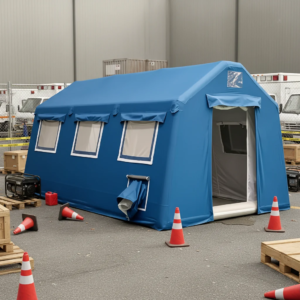
Outdoor Waterproof Inflatable Tent for Camping Portable Air Camping Tent Shelter
Read more -
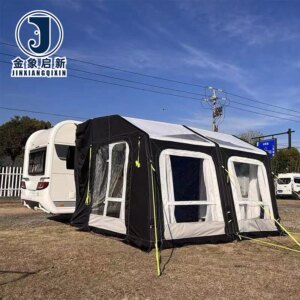
Outdoor Camping Inflatable Tent Luxury All-Season Use PVC Waterproof Quick Automatic Opening Rainproof Insulated
Read more -
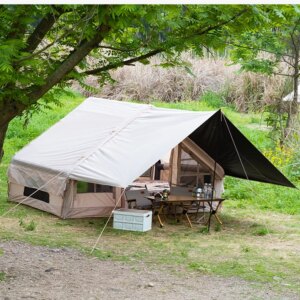
Tente de camping gonflable PVC imperméable résistante aux UV quatre saisons ouverture automatique rapide personnalisable 2-3 personnes
Read more -
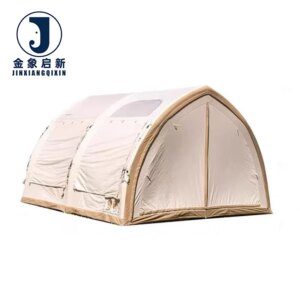
Premium Four-season PVC Inflatable Tents for Camping Easy-to-Use Spacious Portable Waterproof Outdoor Tent with Pump
Read more