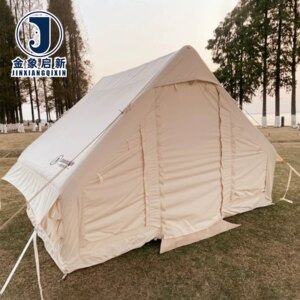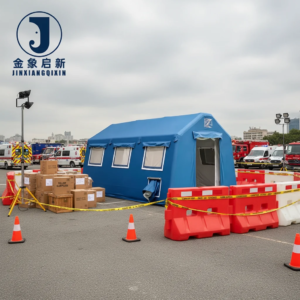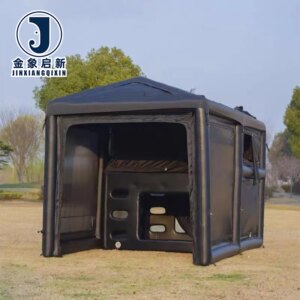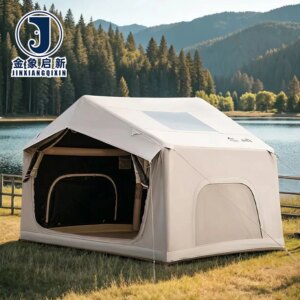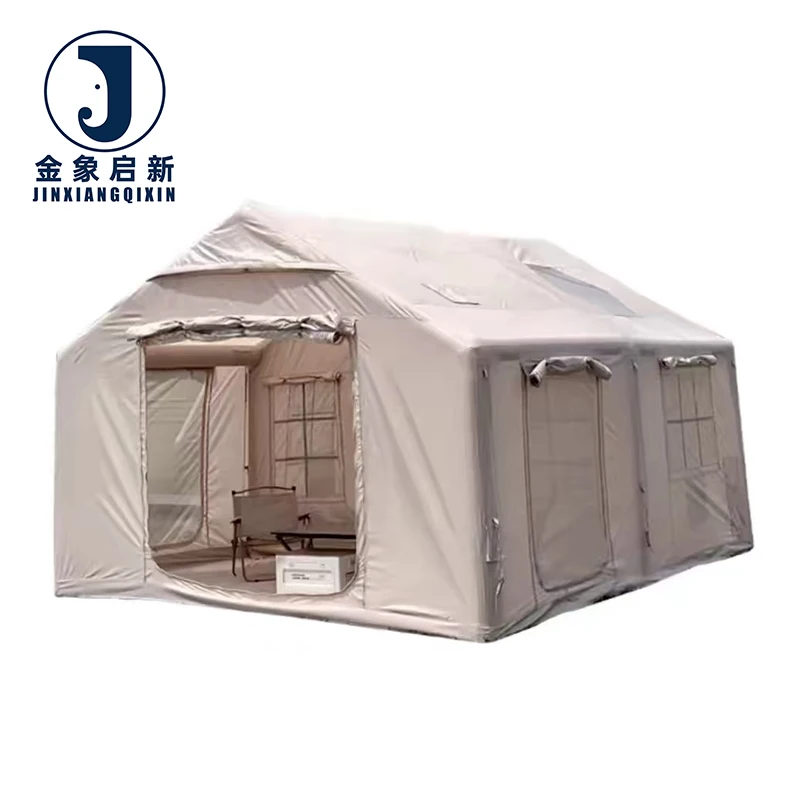
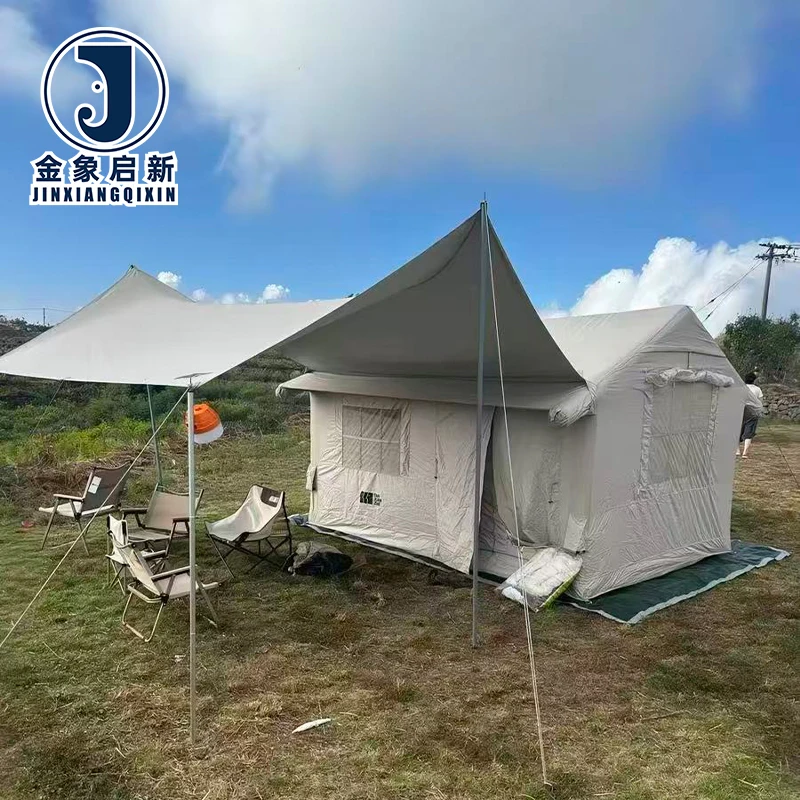
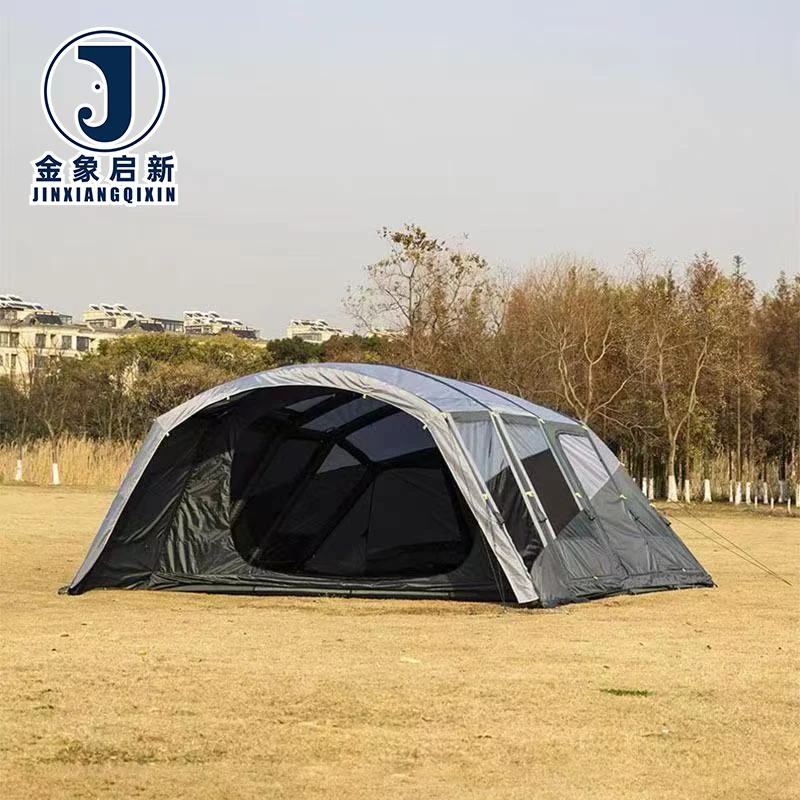
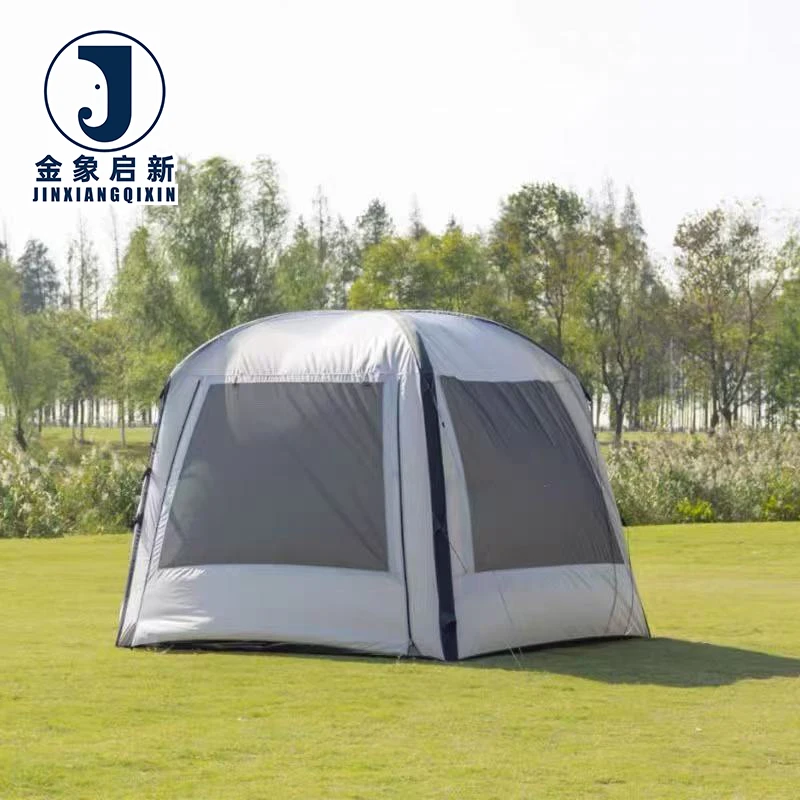
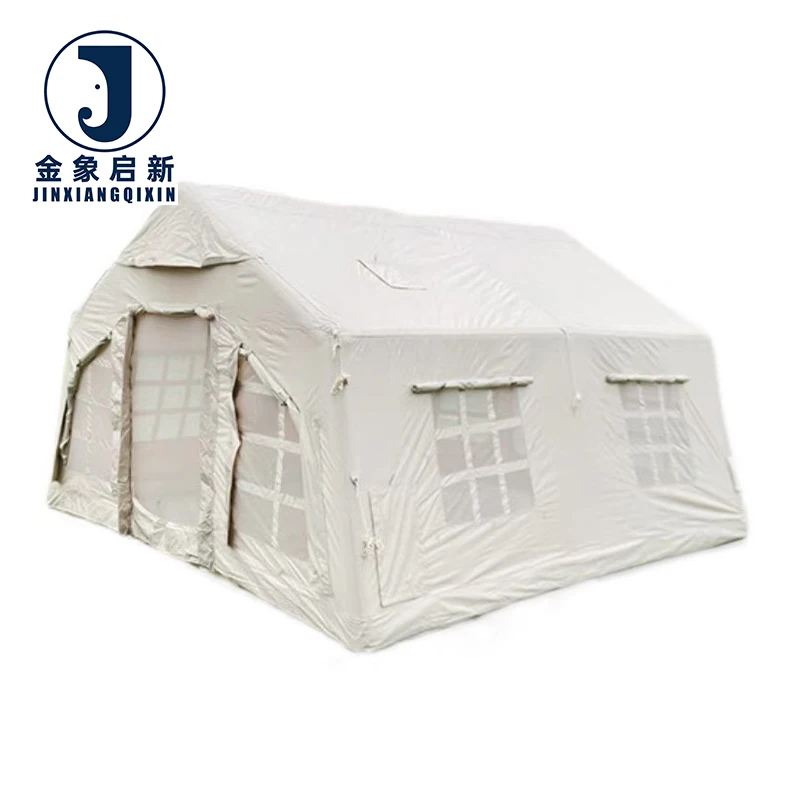
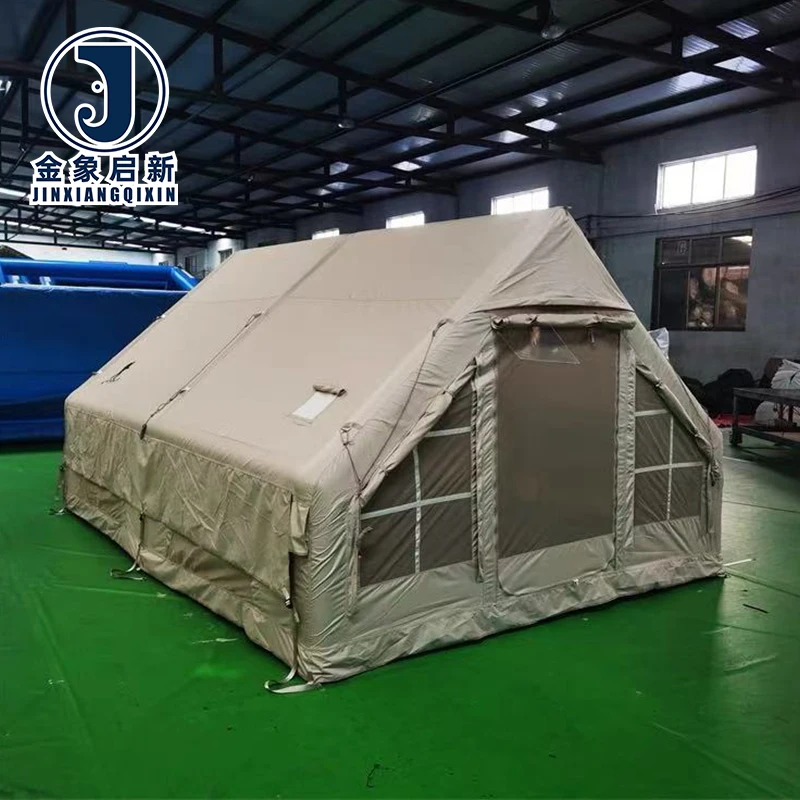
Luxury Automatic Inflatable Four-season PVC Tent 3-5 Person — single-layer PVC knife-coated fabric construction with UV protection and waterproof rating for emergency and field deployment.
- Material thickness range from 0.4mm to 1.2mm, supporting diverse climate conditions from -20°C to 60°C
- Welded seams tested alongside fabric performance to prevent failure at flex and stress points
- 24-hour pre-shipment inflation hold test on every unit before dispatch
- Full certification documentation including ISO9001, CE, and RoHS with batch-specific test reports for waterproof rating and UV resistance
Delivered with complete specification sheets and pre-shipment inspection records from a facility operating 3 full production lines with dedicated QA at every stage.
Description
Production Control — Every inflatable tent batch undergoes 100% pre-shipment inspection with 24-hour inflation hold testing, ensuring structural reliability before dispatch.
Technical Specifications
| Parameter | Value |
|---|---|
| Product Type | Inflatable Tent |
| Core Material | PVC Tarpaulin (knife-coated fabric) |
| Construction | Single Layer, Automatic Inflatable |
| Capacity | 3-5 Person |
| Material Thickness Range | 0.4mm to 1.2mm (customizable) |
| Waterproof Rating | ≥3000mmH₂O (hydrostatic pressure testing) |
| Flame Retardancy | UL94 V-2 |
| Tear Resistance | 200N/5cm |
| Temperature Range | -20°C to 60°C |
| Dimensional Tolerance | ±2cm |
| UV Protection | Available with UV treatment — confirm test basis required for your market |
| Customization | Dimensions, valve types, color, pattern printing |
| Standards | ISO9001, ISO14001, ISO45001, CE, RoHS |
Application Suitability
| Application | Exposure & Requirement |
|---|---|
| Disaster relief shelters | Rapid deployment, prolonged weather exposure, frequent packing and redeployment |
| Temporary site command posts | Continuous inflation cycles, personnel traffic, equipment ingress and egress abrasion |
| Emergency response centers | Multi-season outdoor standing, wind load resistance, verified flame retardant compliance |
| Field equipment storage | Water ingress prevention, UV degradation resistance, secure valve system operation |
Why Flame Retardant Claims Fail Without Batch-Specific Documentation
Sourcing an inflatable tent with flame retardancy that cannot be proven per batch is a deployment liability.
Emergency shelters deployed in disaster zones or construction sites face immediate fire safety audits. When a manufacturer quotes UL94 V-2 but ships without a batch-specific test certificate, the entire installation can be rejected at the first inspection. [NEED_CITE: UL94 vertical burn testing protocol for plastic materials]. The consequence is not a return shipment — it is a failed relief operation or a shut-down project site. Procurement teams increasingly require the test report number printed on the dispatch documentation itself, not a generic reference to a laboratory file.
Seam Integrity at Inflation Stress Points
An inflatable tent places unique demands on welded seams. The air tubes and structural chambers flex under internal pressure and external wind load simultaneously. Every custom inflatable tent produced on these lines undergoes weld strength verification at the highest-stress junctions — where tubes meet base panels and where valve housings anchor into the membrane. Seam failure at these points is not a cosmetic defect; it renders the structure uninflatable in the field.
Pre-Dispatch Inflation Testing Protocol
Before any unit leaves the production floor, it is inflated and held under pressure for 24 continuous hours. This test reveals micro-leaks, valve seating failures, and seam separation that visual inspection cannot detect. Each inflatable tent manufacturer claiming field-ready delivery should provide a documented inflation hold record per unit. [NEED_CITE: hydrostatic and pneumatic pressure retention standards for inflatable structures].
Reading the Specification Sheet Beyond Thickness
Material thickness alone — whether 0.4mm or 1.2mm — does not predict field performance. The base fabric denier and weave density determine how the material resists puncture and tear propagation once deployed on uneven ground. A thicker coating on a low-density base will crack under repeated folding before the fabric itself fails. The knife-coating process used here bonds the PVC layer to the base at the filament level, which directly affects peel strength and the reliability of heat-welded seams during fabrication and field repair. Buyers specifying for cold-climate deployment should verify the low-temperature flexibility of the chosen thickness, as PVC stiffens approaching the lower boundary of the stated temperature range.
The Cost of Skipping Batch Verification
When color, thickness, or flame retardant performance varies between batches of the same inflatable tent order, the problem surfaces only after deployment. Mismatched panels on a disaster-relief tent create visible inconsistency across a camp. A flame retardant grade that passes one batch but not the next means the site inspector’s report is valid for some units and not others. [NEED_CITE: batch-to-batch consistency requirements in textile procurement contracts]. These are not edge cases — they represent the most common complaints in emergency shelter procurement.
Why Production Control Matters Here
The 3 full production lines and 36 processing units allow parallel runs without line-sharing between different specifications, which directly protects batch consistency. The 10-technician R&D team develops samples within days for custom dimensions, valve configurations, and printed graphics before bulk production begins. Dedicated QA and QC staff inspect at every production stage rather than sampling at the end. The ISO9001, ISO14001, and ISO45001 certifications cover the management systems, not just the finished product. Monthly capacity supports orders of 500+ units without splitting production across uncontrolled subcontractors.
Documentation & Verification
- Material specification sheet confirming thickness, base fabric, and coating composition per order
- Batch-specific test reports for waterproof rating, tear strength, and UL94 V-2 flame retardancy
- RoHS compliance certificate for PVC components per shipment
- Pre-shipment 24-hour inflation hold test record per unit
- Certificate of origin and customs clearance documentation pack
Fabrication, Handling & Storage
- Heat-weld seams at temperatures matched to the selected PVC thickness (0.4mm–1.2mm) to prevent coating burn-through
- Reinforce valve housing attachment points with additional welding passes suited to the knife-coated fabric bond strength
- Store rolled tent material in a dry environment above -20°C to prevent low-temperature coating embrittlement
- Avoid stacking heavy loads on packed units to prevent permanent crease marks in the PVC tarpaulin
- Clean deployed surfaces with mild detergent — solvent-based cleaners can degrade the coating layer
Specification Guidance for Your Inquiry
Provide the intended deployment environment, including temperature range and expected weather exposure, so the correct material thickness and treatment package can be recommended. Confirm the flame retardant or fire safety standard required by your destination market before sampling begins. Specify whether you need finished units with valve systems and graphic printing or fabric-only supply for your own fabrication line.
Frequently Asked Questions
Q: What certifications and test reports ship with each inflatable tent batch?
A: Each shipment includes a batch-specific test report covering waterproof rating, tear strength, and UL94 V-2 flame retardancy results, along with RoHS compliance documentation, pre-shipment inflation test records, and full customs clearance paperwork including certificate of origin.
Q: Can dimensions, material thickness, and valve systems be customized?
A: Yes. Material thickness from 0.4mm to 1.2mm, overall tent dimensions, valve types, and color or pattern printing are all configurable. The R&D team develops samples for approval within days before bulk production begins.
Q: How is batch-to-batch consistency controlled across large orders?
A: Dedicated production lines run single specifications without cross-contamination. Full-process quality inspection covers coating weight, color matching, and weld integrity at every stage, with 100% pre-shipment inspection including the 24-hour inflation hold test.
Q: How does the 24-hour inflation test confirm structural reliability?
A: Each unit is fully inflated and monitored for 24 hours before dispatch. This reveals micro-leaks, valve failures, and seam weaknesses that visual inspection misses, ensuring only field-ready units ship.
Q: What flame retardant certification is included, and does it meet international requirements?
A: The standard certification is UL94 V-2, tested and documented per batch. If your destination market requires a different fire safety standard, confirm this before sampling so the appropriate treatment and test protocol can be applied.
Related products
-
Camping Tent Inflatable UV Resistant Customizable Four-season Waterproof PVC Eco-Friendly Windproof Foldable Quick Automatic
Read more -
High Quality Four-Season Inflatable Tent for Camping Durable PVC Waterproof All-Weather Resistance Quick Automatic Opening
Read more -
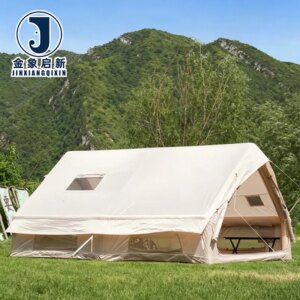
Inflatable Camping Tent PVC Four-Season Waterproof Outdoor Air Tent with Quick Automatic Opening for 2-3 Person
Read more -
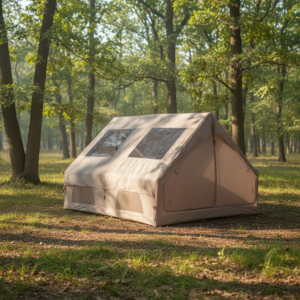
Inflatable Tent Four-Season Quick Automatic Opening PVC 3000mm Waterproof Foldable Eco-Friendly 2-3/3-4/6-8 Person Outdoor Use
Read more