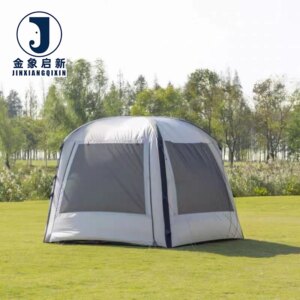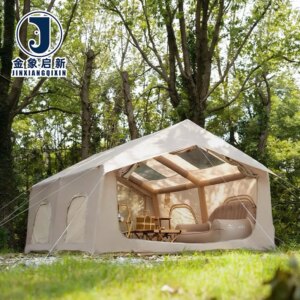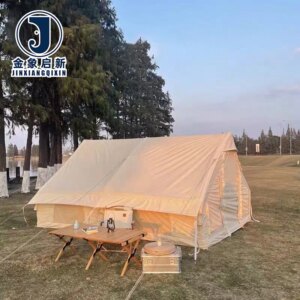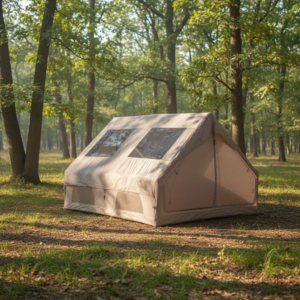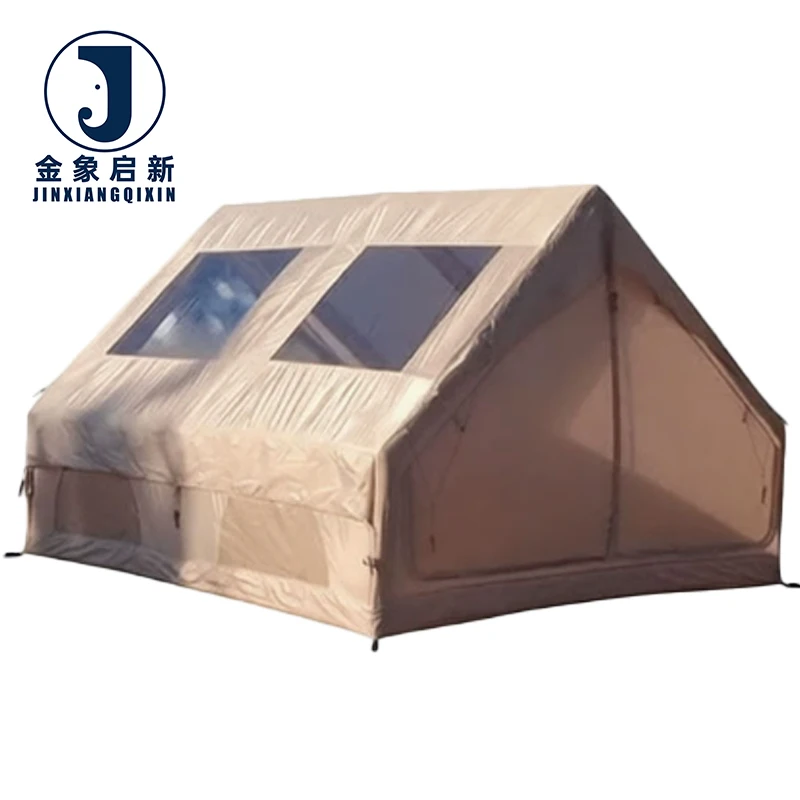
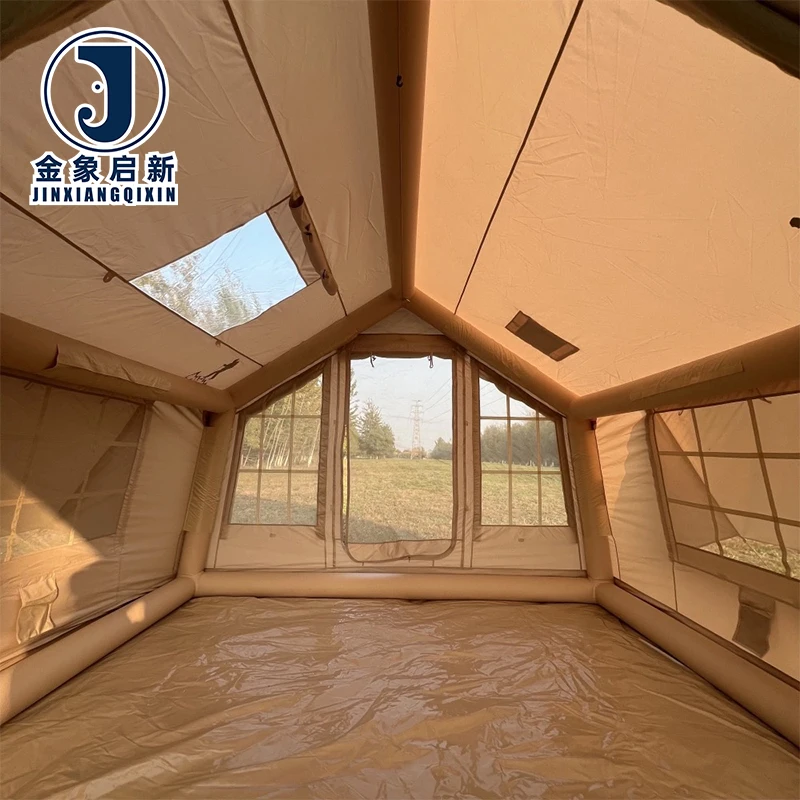
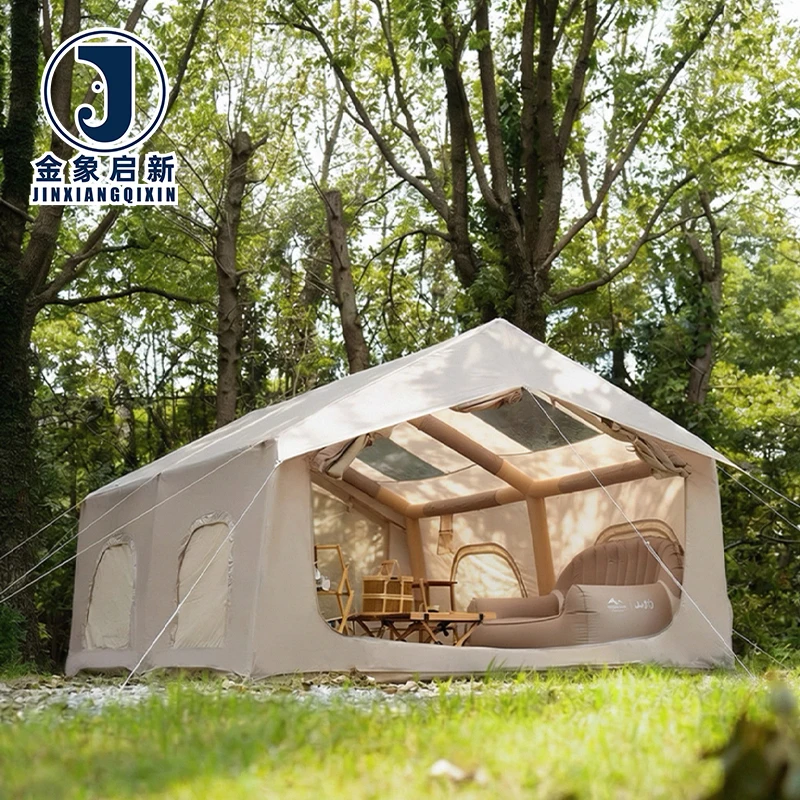
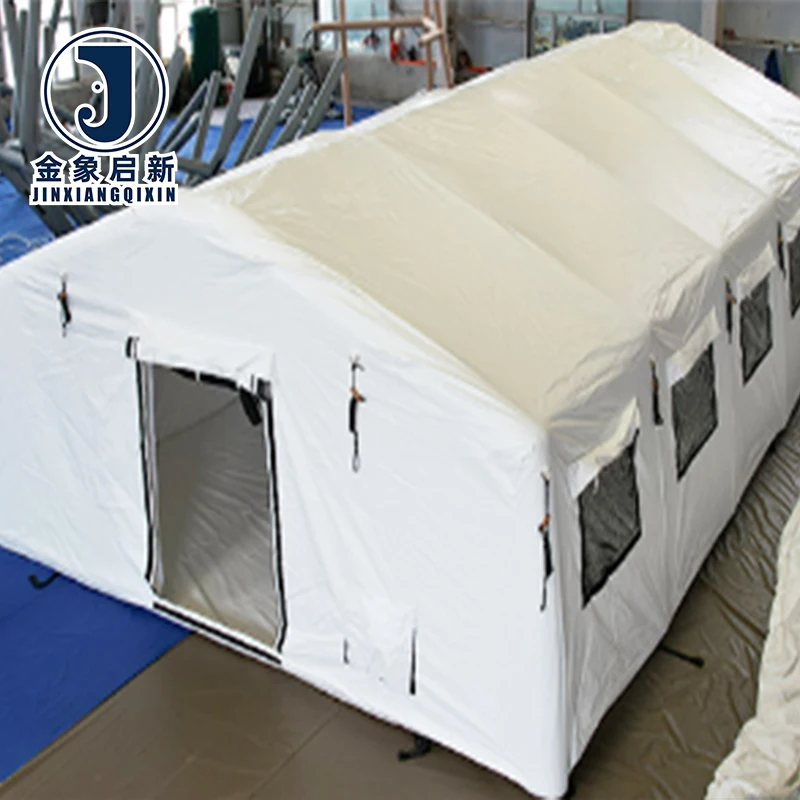
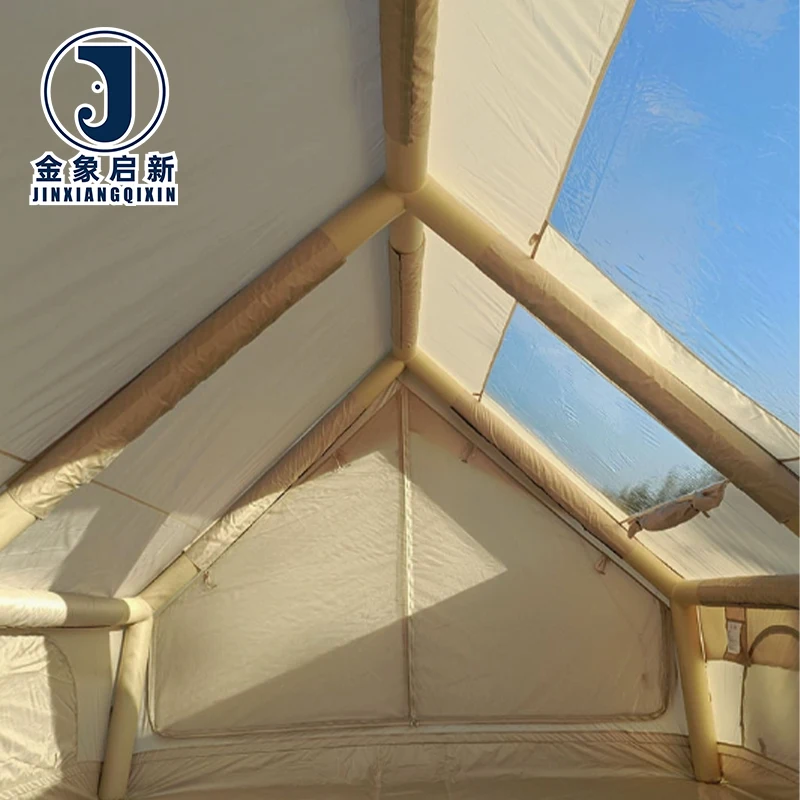
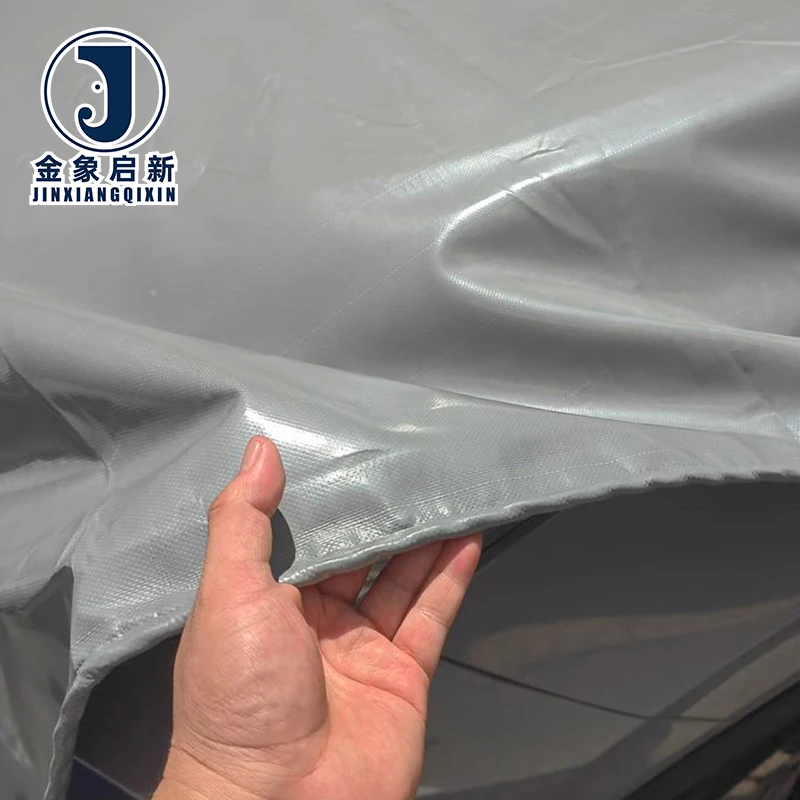
Luxury Inflatable Camping Tent with 6-8 person capacity, waterproof PVC tarpaulin and waterproof seam welding — engineered for commercial glamping deployments requiring rapid setup and repeated assembly cycles.
- Knife coating process ensures uniform PVC thickness and structural integrity during high winds
- Fire-retardant and anti-static additives integrated into PVC formulation for commercial venue compliance
- UV-resistant treatment prevents material degradation across multiple camping seasons
Backed by 100% pre-shipment inspection, 10-person R&D team handling custom sizing and sample development within days, and three full production lines supporting reliable bulk delivery.
Description
Process Control Over Coating Weight — Verified GSM and uniform knife-coated PVC adhesion across every inflatable tent fabric roll, backed by 100% pre-shipment inspection and batch-traceable quality records.
Technical Specifications
| Parameter | Value |
|---|---|
| Product Type | Inflatable Tent |
| Core Material | PVC tarpaulin |
| Coating Method | Knife coated |
| Waterproof Rating | Waterproof (grade not stated in source) |
| UV Treatment | UV-resistant (test basis not stated in source) |
| Flame Retardant Grade | Fire-retardant (grade not stated in source) |
| Anti-Static | Anti-static (standard not stated in source) |
| Tear Resistance | Tear-resistant (test basis not stated in source) |
| Seam Construction | Welded seams |
| Capacity | 6–8 person |
| Features | Skylight |
| Customization | OEM & ODM: sample customization, pattern printing, size adjustments, color matching, logo printing, structural modifications |
| Production Facility | 9,180 m² with 3 full production lines |
| Processing Equipment | 36 sets |
| R&D Team | 10 technicians |
| Quality Control | 12-point inspection, dedicated QA/QC on site |
| Certifications | ISO 9001, ISO 14001, ISO 45001, CE |
Application Suitability
| Application | Exposure & Requirement |
|---|---|
| Commercial glamping resorts | Continuous four-season outdoor exposure, UV degradation resistance, guest-facing aesthetic consistency |
| Outdoor event management — festivals and corporate retreats | Rapid deployment and teardown cycles, repeated inflation and deflation, crowd safety compliance |
| Tourism and hospitality operations | Temporary luxury accommodation, weather resistance under varying climate conditions, professional-grade durability |
| Semi-permanent inflatable structures | Long-term wind load stress, structural membrane integrity, fire safety in public-facing venues |
Why Coated Fabric Sourcing Fails When Specifications Are Taken at Face Value
A stated GSM on the quotation means nothing if the coating adhesion and base fabric density are not verified together.
Inflatable tent structures place continuous tension on every welded seam and coated surface. Buyers who specify only by weight frequently discover that the membrane flexes unevenly under wind load, or that seams delaminate at stress points long before the fabric itself shows wear [NEED_CITE: tensile and tear test methods for coated fabrics per ISO 1421]. An Inflatable Tent Fabric manufacturer that does not control the knife-coating process in-house cannot guarantee that coating weight matches the quoted specification across an entire production run. The consequence is field failure during peak operating season — the exact moment a glamping operator cannot afford structural downtime.
Knife Coating Delivers Uniform Thickness Where Inflatable Structures Need It Most
The knife-coated PVC process forces coating compound through a precisely gauged blade gap onto the base fabric, producing a membrane with consistent thickness from edge to edge. For inflatable tent applications, this uniformity matters because air pressure pushes against every square centimetre of the structure simultaneously. Any thin spot becomes a point of concentrated stress during inflation cycles, and repeated setup and teardown amplifies the risk. Our Inflatable Tent Fabric manufacturer process maintains coating consistency through continuous line monitoring across all three production lines.
Welded Seam Integrity Under Repeated Inflation Pressure
Stitched seams create needle holes that compromise waterproof performance, a critical weakness for inflatable tent structures exposed to rain and humidity. Welded seam construction fuses the PVC coating layers together using controlled heat and pressure, producing a joint that is as continuous as the membrane itself. For commercial glamping deployments where tents are inflated and deflated across multiple seasons, this construction method prevents the seam-line failures that plague stitched alternatives [NEED_CITE: welded seam peel strength testing for PVC coated fabrics].
Reading Between the Specification Sheet Lines
Knife coating versus alternative methods such as calendering or laminating produces fundamentally different performance characteristics in PVC tarpaulin. The knife-coating process bonds coating directly into the base fabric weave under controlled tension, which improves peel strength and makes the material more receptive to high-frequency welding — essential for inflatable tent fabrication. Fire-retardant and anti-static additives are integrated into the PVC compound during coating rather than applied as a surface treatment, meaning these properties persist through abrasion and cleaning cycles. Available in fire-retardant grades — confirm the grade required for your market and target jurisdiction. UV-resistant formulation slows polymer degradation across prolonged outdoor exposure, though specific weathering data should be requested per production batch.
The Hidden Cost of Selecting on Price Per Kilogram Alone
When an inflatable tent membrane is specified primarily on unit cost, manufacturers often compensate by reducing coating weight while holding base fabric density constant. The resulting material may meet the quoted GSM on paper but delivers lower tear resistance under wind load because the coating-to-fibre ratio is unbalanced. Welded seams on under-coated fabric tend to fail at the joint line because there is insufficient PVC compound to form a proper fusion bond [NEED_CITE: coating adhesion failure modes in PVC tarpaulin structures]. For glamping operators running four-season programmes, the replacement cost of a single failed tent unit far exceeds the material savings from the original purchase.
Why Procurement Teams Specify With This Facility
Process control starts with coating formulation — the 10-technician R&D team develops PVC compounds matched to the mechanical demands of inflatable structures rather than using generic tarpaulin grades. Thirty-six sets of professional processing equipment support high-volume runs without sacrificing the line-speed control that knife coating requires for uniform thickness. The 12-point quality inspection includes air pressure leakage testing on completed units, catching seam and membrane defects before they leave the 9,180 m² production facility. OEM and ODM customization covers structural modifications, color matching, and pattern printing, all developed through sample approval before full production begins. Every order ships with batch-specific documentation traceable back to the coating run.
Documentation & Verification
- Material specification sheet stating base fabric, coating method, and GSM for the inflatable tent fabric batch
- Pre-shipment inspection record covering 12-point quality check including seam weld integrity
- Fire-retardant and anti-static test reports aligned to destination market requirements where applicable
- Batch-specific test data retrievable via unique production code on each roll or unit label
- ISO 9001, ISO 14001, ISO 45001, and CE certification documents included with every shipment
- Certificate of origin and customs documentation for cross-border inflatable tent fabric orders
Fabrication, Handling & Storage
- Heat welding parameters must match the knife-coated PVC compound grade to achieve full seam fusion on inflatable tent panels
- Store rolls vertically in climate-controlled conditions to prevent permanent creasing in the PVC coating layer
- Clean welded seams with pH-neutral agents only to preserve fire-retardant and anti-static additive integrity
- Allow cold-transported PVC tarpaulin to reach ambient temperature before unrolling to avoid coating micro-cracking
- Inflate structures gradually during first deployment to let welded seams settle under controlled air pressure
- Cut patterns with thermal or rotary tools to seal edges and prevent base fabric fraying at panel borders
What We Need to Move Your Inquiry Forward
Provide the intended deployment climate and expected annual setup cycles so we can recommend the appropriate UV and fire-retardant treatment level. Specify target market safety regulations — particularly fire classification requirements for public-facing glamping or event structures — to ensure documentation matches local compliance. Confirm whether you require finished inflatable tent units with welded skylight ports and ventilation openings, or coated fabric rolls for your own fabrication line.
Frequently Asked Questions
Q: What customization options are available for inflatable tent structures?
A: We support full OEM and ODM customization including size adjustments, color matching, logo printing, pattern printing, skylight port integration, and structural modifications. The 10-technician R&D team develops samples against your specifications before full production begins, ensuring the knife-coated PVC compound and welded seam configuration meet your deployment requirements.
Q: How is seam integrity verified before shipment?
A: Every inflatable tent unit undergoes a 12-point quality inspection that includes air pressure leakage testing on all welded seams. Our QA and QC staff verify weld adhesion at stress concentration points — particularly around corners, valve openings, and skylight ports — before approving the unit for dispatch. Inspection records accompany each shipment.
Q: What fire-retardant and anti-static certifications are provided?
A: Fire-retardant and anti-static additives are integrated into the PVC coating compound during knife coating. Test reports are generated per production batch. Confirm the specific fire classification your target market requires — such as local building material or temporary structure standards — and we will align the formulation and documentation accordingly.
Q: What is the sample development process before committing to full production?
A: Submit your structural drawings, target dimensions, and performance requirements. The R&D team produces a physical sample using the specified knife-coated PVC formulation and welded seam configuration. You evaluate the sample under your own conditions, request any adjustments, and approve the final version before we schedule the production run.
Q: How do you ensure color consistency across bulk tent orders?
A: Color matching is controlled at the PVC compound mixing stage before knife coating begins. Each production batch is referenced to a master color standard, and rolls from the same batch are grouped for dispatch. Pre-shipment inspection includes visual comparison across rolls to identify any variation before the order ships.
Related products
-
Outdoor Camping Inflatable Tent Luxury All-Season Use PVC Waterproof Quick Automatic Opening Rainproof Insulated
Read more -
Inflatable Camping Tent PVC Waterproof Four-Season Outdoor Air Tent with Quick Automatic Opening for 3-4 Person
Read more -
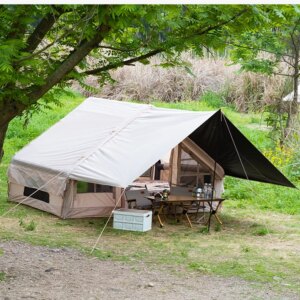
Tente de camping gonflable PVC imperméable résistante aux UV quatre saisons ouverture automatique rapide personnalisable 2-3 personnes
Read more -
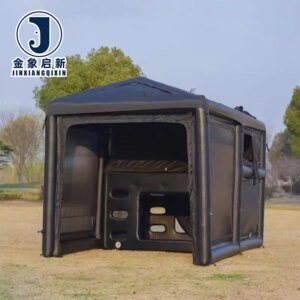
Premium Four-season Inflatable Tents for Camping Easy-to-Use Spacious Portable Waterproof Outdoor Tent Quick
Read more