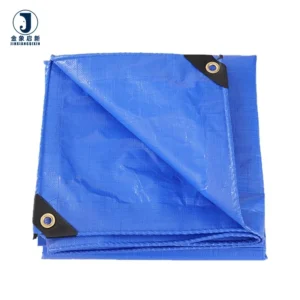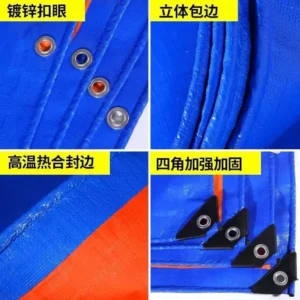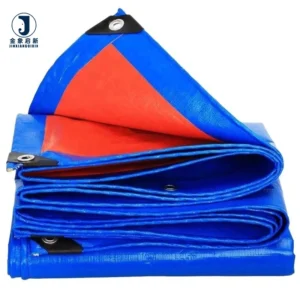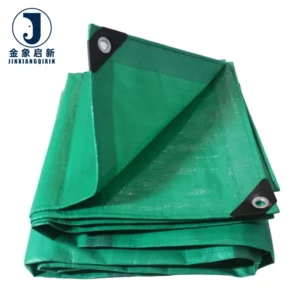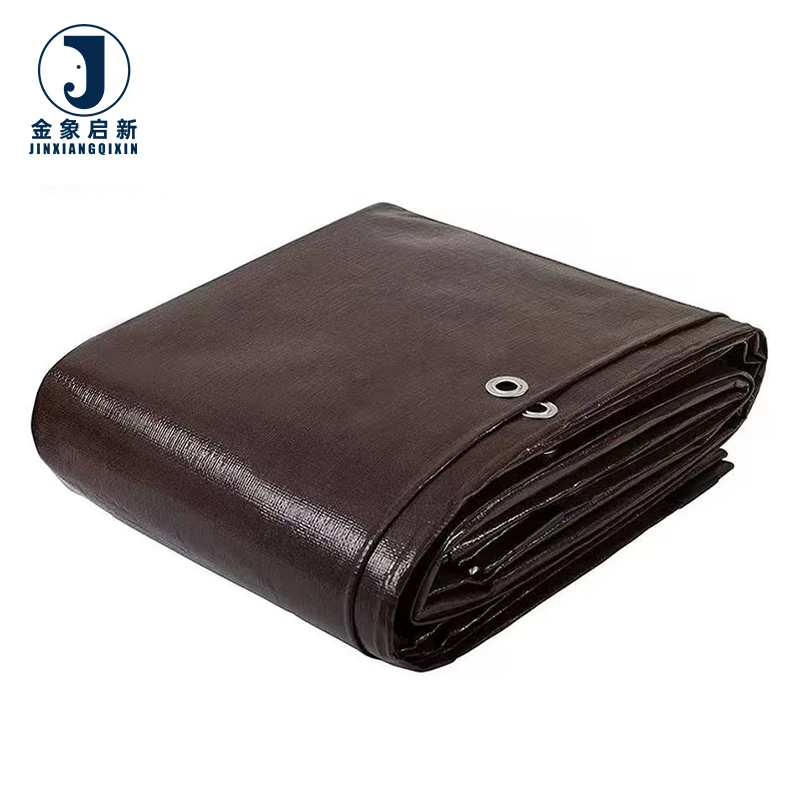
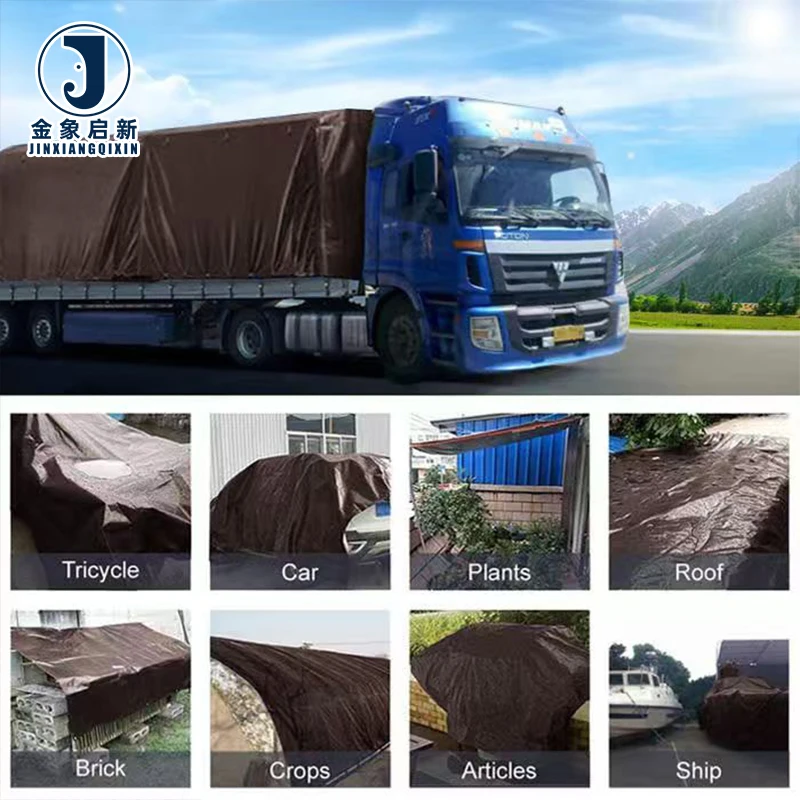
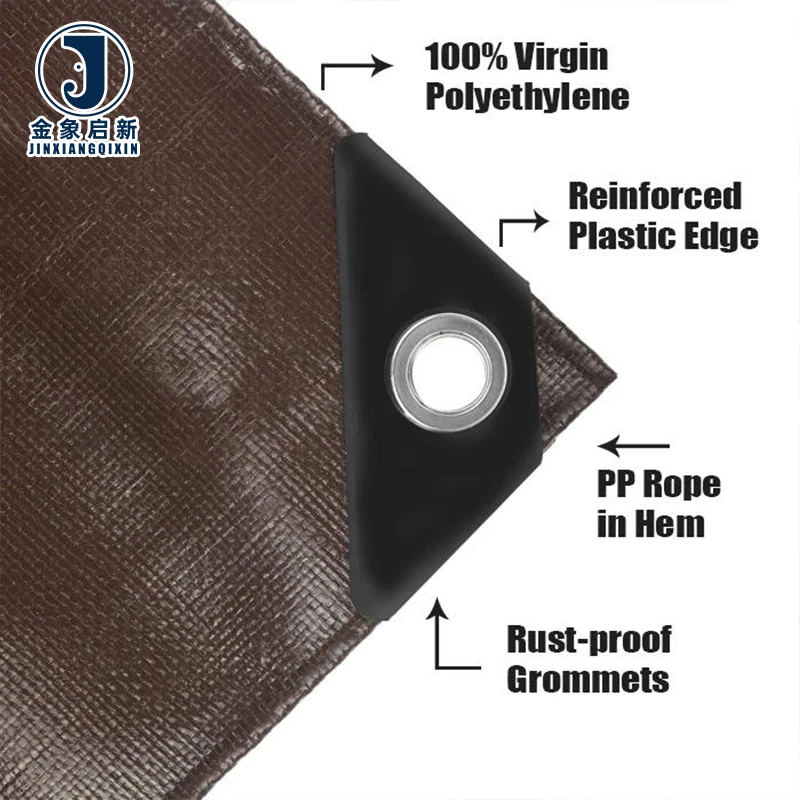
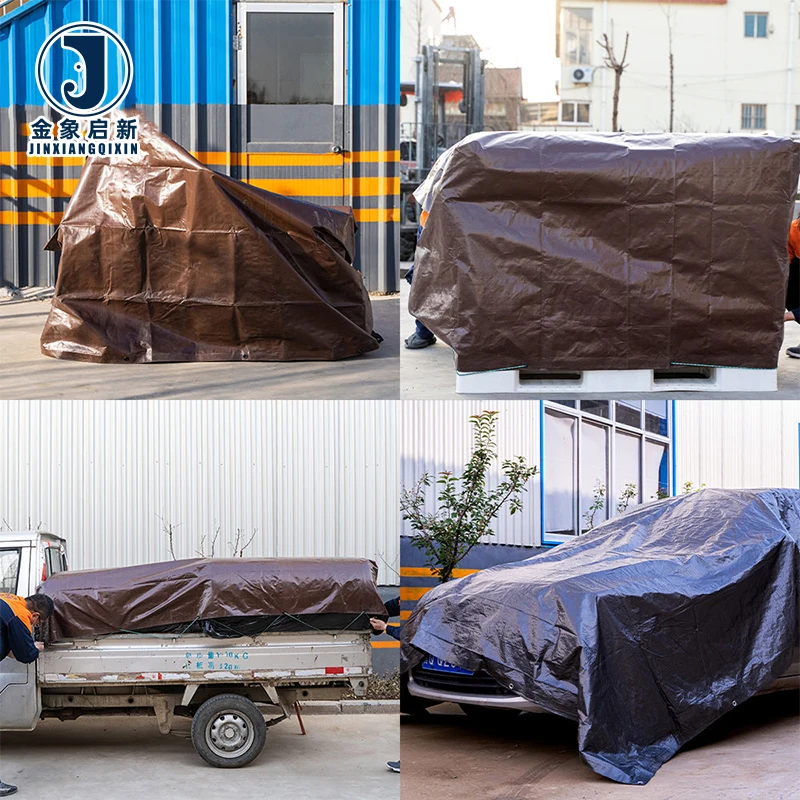
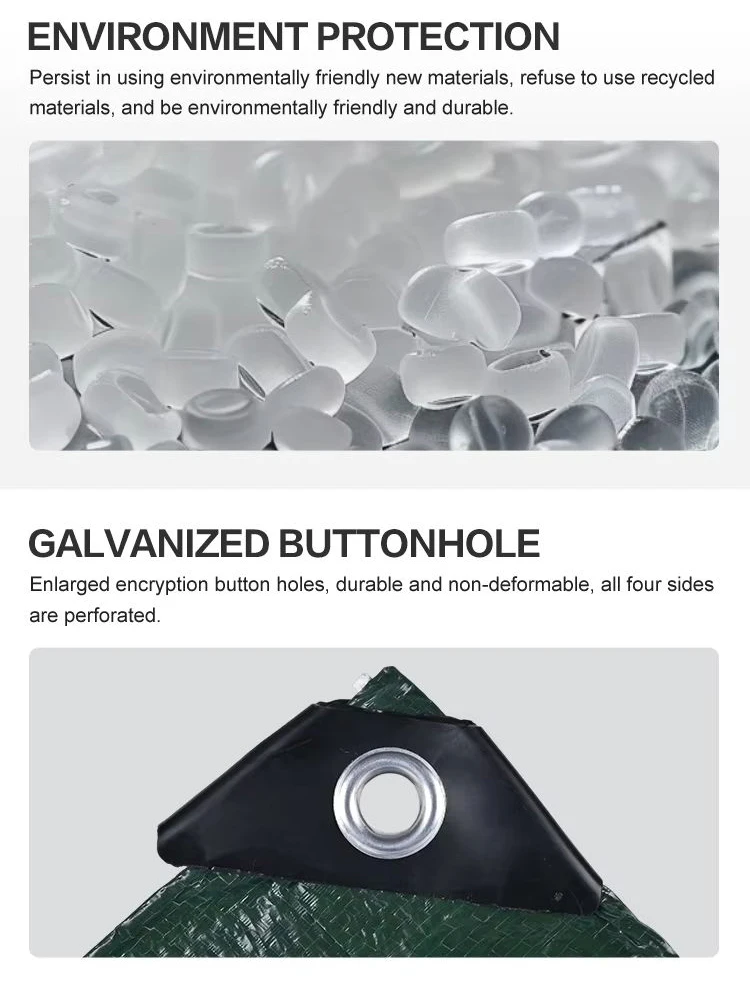
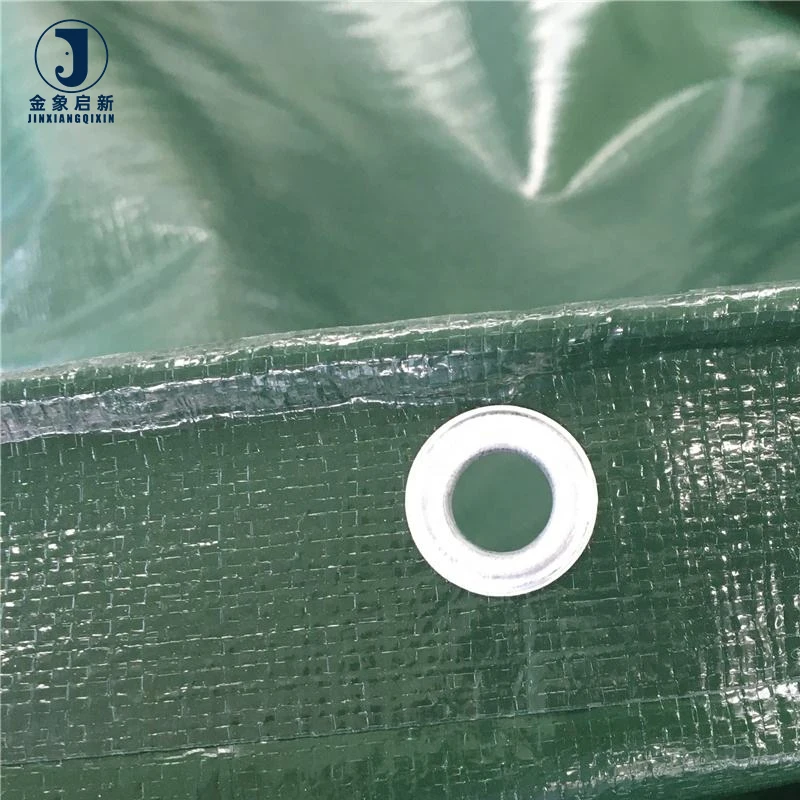
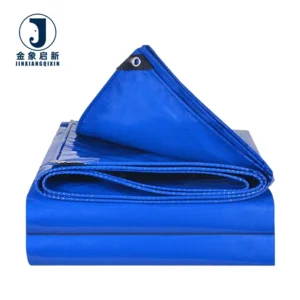
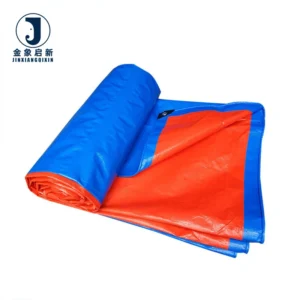
PE Tarpaulin 40g~500g/m², 8×8 / 10×10 / 12×12 Knitting Density — polyethylene woven with double waterproof surfaces and reinforced corners for reliable coverage.
- Anti-UV and mildew treatment with test documentation, custom sizing and color matching to fit truck, warehouse or agricultural use
- GSM weight verified against quotation specs; batch consistency across rolls ensures uniform appearance on site
- Heat-sealed seams and corner patches hold at flex points where loads shift most
ISO and CE certified production with 100% pre-shipment inspection and full test documentation on every order.
Description
Verified Weight Assurance — Every roll of PE Tarpaulin undergoes 100% pre-shipment inspection with dedicated QA/QC at each production stage, ensuring the GSM on the material specification sheet matches the weight received at your dock.
Technical Specifications
| Parameter | Value |
|---|---|
| Product Type | PE Tarpaulin |
| Material | Polyethylene |
| Weight Range (GSM) | 40g~500g/m² (range covers product family — confirm the grade for this item) |
| Lightweight Grade Thickness | 0.18–0.22 mm |
| Lightweight Grade Weight | 80–110 g/m² |
| Lightweight Grade Knitting Density | 8×8 |
| Lightweight Grade Tensile Strength | Meridian 300–500 / Latitude 250–450 N/5cm (test basis not stated in source) |
| Medium Grade Thickness | 0.22–0.28 mm |
| Medium Grade Weight | 120–150 g/m² |
| Medium Grade Knitting Density | 10×10 |
| Medium Grade Tensile Strength | Meridian 500–800 / Latitude 400–700 N/5cm (test basis not stated in source) |
| Heavy-Duty Grade Thickness | 0.30–0.35 mm |
| Heavy-Duty Grade Weight | 160–240 g/m² |
| Heavy-Duty Grade Knitting Density | 12×12 |
| Heavy-Duty Grade Tensile Strength | Meridian 900–1200 / Latitude 700–1000 N/5cm (test basis not stated in source) |
| Size | Custom size |
| Color | Custom color |
| Water Resistance | Double waterproof surfaces, reinforced corners |
| UV Treatment | UV treatment available — confirm the grade required for your market |
| Anti-Mildew | Mildew proof and anti-aging treatment available (test basis not stated in source) |
| Key Features | Water-resistant, washable, tear-resistant, mildew proof, reinforced corners, double waterproof surfaces |
Application Suitability
| Application | Exposure & Requirement |
|---|---|
| Agricultural crop and stock covers | Prolonged sun exposure, wind abrasion, moisture contact, need for breathability in certain grades |
| Truck and trailer load protection | Road debris impact, tie-down friction, UV exposure, flex at corner stress points |
| Warehouse and construction site covers | Standing water, dust ingress, equipment puncture risk, repeated deployment and folding |
| Pond and reservoir liners | Permanent water contact, soil chemistry interaction, installation puncture risk |
| Industrial equipment wraps | Chemical splash proximity, abrasive surfaces, warehouse stacking compression |
Why Quoted GSM and Delivered Weight Do Not Always Match in PE Tarpaulin Orders
Weight verification at every production gate is the only reliable defence against short-weight delivery.
Buyers regularly report receiving PE Tarpaulin rolls that weigh measurably less than the quotation stated. The coating weight is reduced while the base fabric denier stays the same, cutting cost on the supplier side but leaving the buyer with a material that underperforms under load and weather exposure. Across bulk container orders, even a small per-square-metre deficit compounds into significant total material shortfall. [NEED_CITE: pre-shipment weight verification methods for coated polyethylene fabrics]
How the PE Tarpaulin Product Family Covers Your Application Range
The product family spans from lightweight agricultural grades at 80–110 g/m² through medium-duty covers at 120–150 g/m² to heavy-duty industrial grades at 160–240 g/m². Each grade corresponds to a specific knitting density — 8×8, 10×10, or 12×12 — which directly governs how the fabric behaves under tension and at stress concentration points. When sourcing a PE Tarpaulin manufacturer for mixed-use requirements, specifying the exact grade per application prevents over-engineering light covers or under-specifying transport-grade material.
Customisation That Matches the Roll to the Requirement
Size, color, and treatment options are configurable per order rather than limited to a fixed catalog list. Double waterproof surfaces with reinforced corners address the most common failure points where loads shift and tie-down hardware concentrates force. UV and mildew-resistant treatments are available — confirm the specific treatment grade required for your operating environment and destination market regulations before order confirmation. [NEED_CITE: UV degradation test methods for polyethylene coated fabrics]
Reading the Specification Sheet Beyond the GSM Number
GSM alone does not determine how a PE Tarpaulin performs in the field. Knitting density governs how load distributes across the weave — a 12×12 density at 160–240 g/m² spreads point loads differently than an 8×8 density at the same weight, because the tighter weave limits yarn displacement under tension. Tensile strength values across the meridian and latitude axes reveal directional weakness; if your application involves asymmetric loading such as side wind on a truck cover, the latitude tensile value matters as much as the meridian. Thickness ranges from 0.18 mm to 0.35 mm across the grades, and this physical dimension correlates with puncture resistance more directly than weight alone.
The Cost of Selecting the Wrong Grade for the Job
Deploying a lightweight 80–110 g/m² grade in a heavy-duty transport application leads to early tearing at corner reinforcement points, where the tie-down load concentrates beyond the fabric’s tensile capacity. Conversely, specifying a heavy-duty grade for short-term agricultural covering wastes material cost and makes handling unnecessarily difficult for field crews. When color consistency is not verified roll-to-roll within the same shipment, visible shade variation appears once adjacent panels are installed — a problem that only surfaces after deployment. [NEED_CITE: batch colour consistency standards for polyethylene tarpaulin production]
What Supports Reliable PE Tarpaulin Supply Here
Three full production lines and 36 sets of professional equipment maintain capacity for bulk roll orders without compressing lead times at the expense of coating consistency. A 10-person R&D team handles material selection, custom sizing, and sample development — samples are developed within days rather than weeks for non-standard width or color requirements. Dedicated QA/QC operates at every production stage with 100% inspection before dispatch, not spot-check sampling. Nearly 30 years of focused coated fabric production provides process control over coating weight and adhesion that generic suppliers cannot match. The sales process moves from inquiry through sample approval to production with in-process QA, so specification drift is caught before the roll leaves the facility.
Documentation & Verification
- Material specification sheet stating exact GSM, base fabric, and coating composition per roll
- UV and mildew-resistant treatment test reports where applicable to your specification
- Pre-shipment inspection record confirming weight, dimensions, and color against purchase order
- Roll packing list detailing roll count, net weight, and gross weight per container
- Certificate of origin prepared for destination market customs clearance
- ISO and CE certificates included with each shipment documentation set
Fabrication, Handling & Storage
- Heat-seal temperature must match the polyethylene coating grade — confirm parameters for 80–110 g/m² versus 160–240 g/m² before welding
- Reinforced corner patches should extend beyond the tie-down load zone to distribute stress into the body fabric
- Store rolls upright on pallets to prevent flat-spot compression marks on the coated surface
- Allow cold-stored rolls to reach ambient temperature before unrolling to avoid coating crack at low-temperature flex points
- Use mild detergent and soft brush for cleaning — abrasive pads damage the waterproof surface coating layer
- When cutting to custom size, plan panel layout to place seams away from highest-stress load-bearing zones
How to Structure Your PE Tarpaulin Inquiry
Provide the specific application and exposure conditions so the correct weight grade and treatment can be recommended. State your required dimensions, eyelet spacing, and any color or printing requirements per roll. Confirm whether your destination market requires specific UV or fire classification documentation, as treatment grades vary by regional regulation. Indicate whether you need finished cut-to-size panels or roll stock for your own fabrication line.
Frequently Asked Questions
Q: How is the GSM of each PE Tarpaulin grade verified before shipment?
A: Every roll undergoes weight measurement during 100% pre-shipment inspection. The QA team samples each roll and records actual GSM against the material specification sheet. Any roll falling outside the stated tolerance for its grade — whether lightweight 80–110 g/m² or heavy-duty 160–240 g/m² — is held before dispatch. Buyers receive the inspection record with their shipment documentation.
Q: What test basis supports the UV treatment and anti-mildew claims?
A: UV and mildew-resistant treatments are available across the product family, but the specific test standard depends on the treatment grade selected. Before order confirmation, request the test report corresponding to your chosen treatment. This ensures the documentation matches your destination market requirements and the exposure conditions your PE Tarpaulin will face in service.
Q: How do I select the right knitting density and weight for my specific application?
A: Knitting density — 8×8, 10×10, or 12×12 — determines how tensile load distributes across the weave. Lighter agricultural covers typically suit 8×8 at 80–110 g/m², while transport and industrial applications require 10×10 or 12×12 at higher GSM. Share your application and loading conditions so the correct grade can be matched to your performance requirement.
Q: How do you ensure color consistency across multiple rolls in a bulk order?
A: Color is matched per production batch with in-process QA checks between rolls. The pre-shipment inspection includes a visual comparison of adjacent rolls from the same order to detect shade variation before packing. If your order spans multiple batches, this is flagged during the quotation stage so you can approve the color tolerance range in advance.
Q: What documentation comes with each shipment?
A: Each dispatch includes a material specification sheet with GSM and coating details, pre-shipment inspection record, roll packing list, certificate of origin, and ISO and CE certificates. Where UV or mildew treatment is specified, the corresponding test report is included. All documents are prepared to support customs clearance at the destination port.
Related products
-
Custom PE Tarpaulin for Industrial Use – Full Range
Read more -
Waterproof Coated Organic Blackout Polyethylene Tarpaulin Sheets for Outdoor Garden Greenhouses and Tents
¥0.59 Select options This product has multiple variants. The options may be chosen on the product page -
Hot Selling Heavy Duty PVC Coated Tarpaulin Covers Waterproof Plastic for Truck Tent Outdoor
¥3.10 Select options This product has multiple variants. The options may be chosen on the product page -
JX Tear-Resistant PE Coated Polyethylene Eco-Friendly Tarpaulin Waterproof Blackout Organic with Eyelets
¥1.31 Select options This product has multiple variants. The options may be chosen on the product page