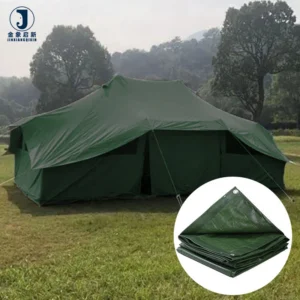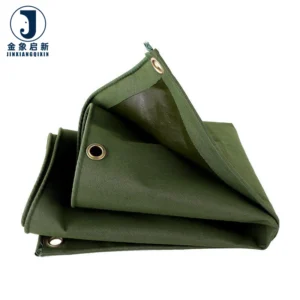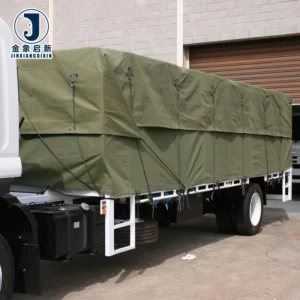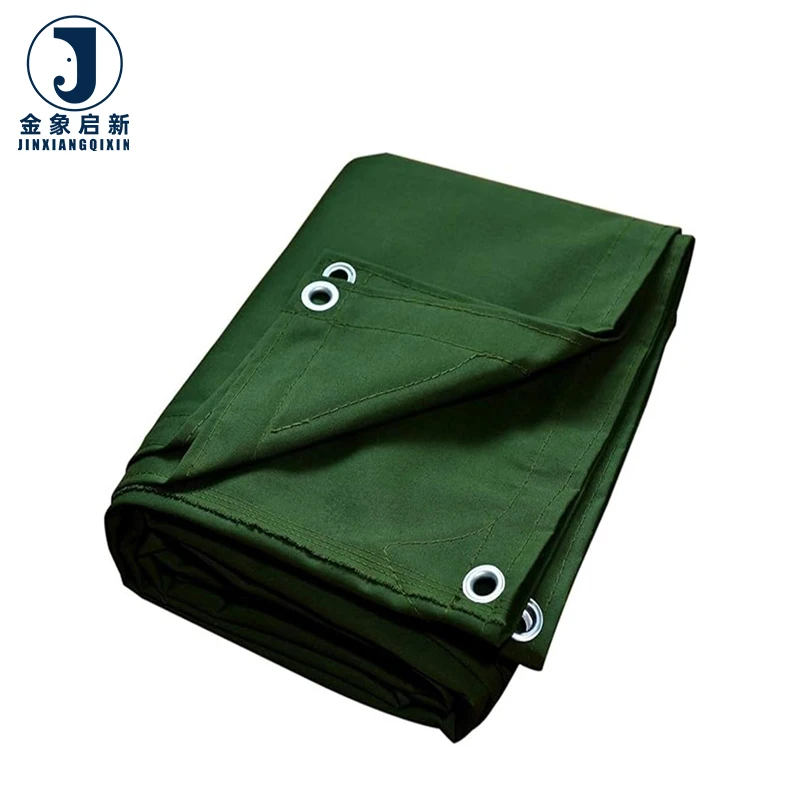
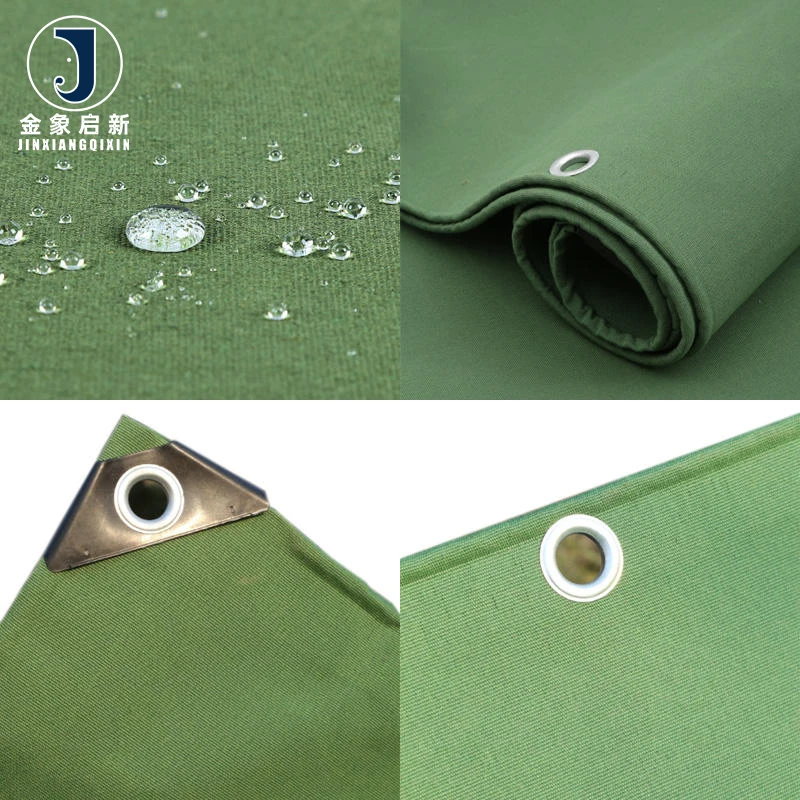
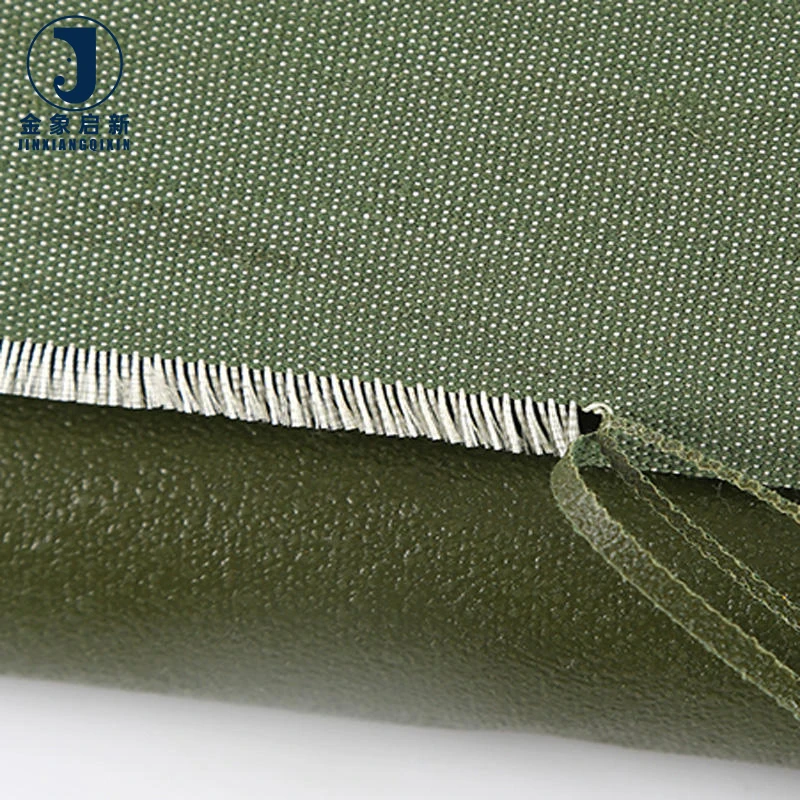
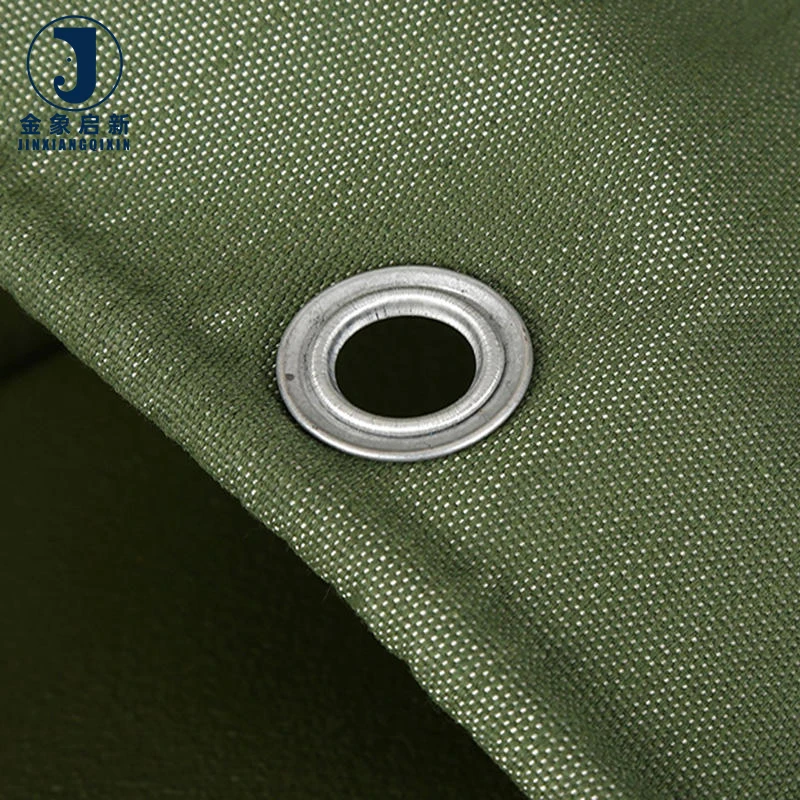

PVC Coated Tarpaulin 600gsm, 2m Width — laminated canvas with polyester-cotton base, 0.5–0.7mm thickness, rust-proof aluminum eyelets every meter and welded-and-sewn edges with poly rope reinforcement.
From roll stock to custom-cut truck covers, material choice balances tensile strength at weld points against flex fatigue in daily use. Each roll is weighed and colour-checked under controlled lighting before dispatch to ensure batch consistency matches your sample approval.
- Custom sizes or full roll stock with CE and ISO documentation
- 100% pre-shipment inspection with weight verification record included
Description
Specification Control — we verify coating weight and adhesion at every production stage on this 600gsm PVC laminated canvas, shipping with a full inspection record so the roll you receive matches the material specification sheet you approved.
Technical Specifications
| Parameter | Value |
|---|---|
| Product Type | PVC Laminated Canvas Tarpaulin |
| Specification | 600gsm |
| Base Material | Polyester cotton industrial textile, 8-12 strands of fine cotton yarn |
| Coating / Lamination | PVC laminated backing (low-density reinforced) |
| Weight | 600gsm |
| Total Thickness | 0.5mm / 0.6mm / 0.7mm |
| Roll Size | 2m width × 100m length |
| Finish Product Size | Custom cut-to-size or sold by full roll inventory |
| Colour | Army Green Camouflage / Custom |
| Key Features | Waterproof, UV treated (test basis not stated in source — confirm grade required for your market), mildew resistant, corrosion resistant, high- and low-temperature resistant |
| Eyelet & Hem | Rust-proof aluminium eyelets every 1m at corners and hem; edges folded and seams welded and sewn with poly ropes |
| Standards | CE, ISO |
Application Suitability
| Application | Exposure & Requirement |
|---|---|
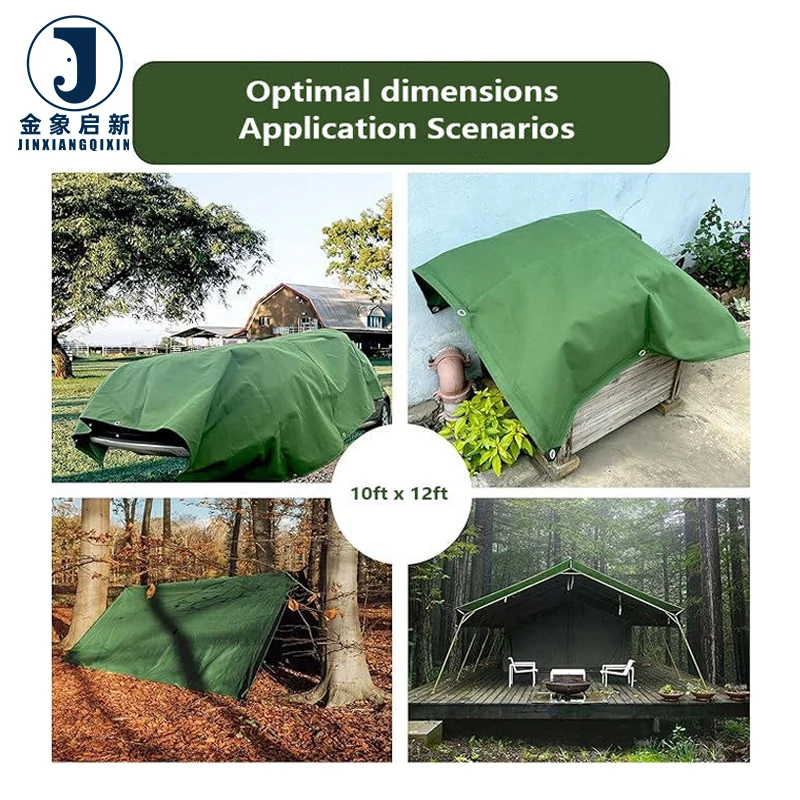
| Truck and trailer cover | Constant road vibration, tie-down stress at eyelets, flexing at load contact points, rain and wind abrasion |
| Tent and awning fabric | Tension under wind load, batch colour consistency across multiple panels, repeated folding and deployment |
| Construction site equipment cover | UV exposure over extended outdoor periods, dust and debris abrasion, handling by site crews |
| Asphalt and timber load cover | Heat retention from fresh asphalt loads, moisture protection for timber, secure strapping over uneven loads |
| Outdoor and camping cover | Repeated packing and unpacking, mildew risk in humid storage, mild chemical exposure from soil contact |
Why Quoted GSM and Actual Delivered Weight Rarely Match Without Process Control
The PVC laminated canvas tarpaulin manufacturer that controls coating weight at every line produces fabric that matches its own quotation.
A recurring problem in industrial fabric procurement is the gap between the weight stated on the commercial invoice and the GSM measured when the roll arrives at the fabrication shop. A 600gsm PVC laminated canvas tarpaulin that tests lighter on arrival means the base fabric was under-counted, the lamination was thinner than specified, or both. Either scenario reduces tensile capacity and shortens service life at the exact locations where the cover flexes most under load. [NEED_CITE: tensile and tear test methods for coated fabrics per ISO 1421]
Lamination Bond Integrity Across the Full Roll Length
A PVC laminated canvas tarpaulin depends on the adhesion between the woven polyester cotton upper layer and the reinforced backing. Delamination typically begins at the roll edges where tension variation is highest during the lamination pass. Maintaining consistent pressure and temperature across the full 2m roll width is what prevents edge lift and keeps the laminate bonded through repeated flex cycles on a loaded trailer or a tensioned tent frame.
Seam Construction at the Points Where Covers Actually Fail
Most field failures on heavy-duty covers occur at the welded and sewn seams rather than across the fabric face. This PVC laminated canvas tarpaulin is finished with poly rope reinforcement at fold lines and seams that are both welded and stitched. The combination addresses the two failure modes independently: welding seals against water ingress at the joint, while the stitched poly rope carries the mechanical load when the cover is strapped down under wind pressure.
What the Weight and Weave Mean for Real-World Performance
The 600gsm weight of this PVC laminated canvas tarpaulin is a function of both the base fabric density and the lamination layer. The polyester cotton industrial textile woven from 8-12 strand fine cotton yarn provides the tensile structure, while the PVC backing contributes waterproofing and abrasion resistance. Evaluating GSM without accounting for the base fabric denier gives an incomplete picture, because two fabrics at the same weight can differ substantially in tear propagation resistance depending on whether the mass sits in the weave or in the coating. [NEED_CITE: relationship between base fabric weave density and tear strength in laminated technical textiles]
The Hidden Cost of Batch Colour Variation Across Rolls
When a fleet operator orders multiple rolls to cover a uniform trailer fleet, or a tent manufacturer cuts panels from several rolls for a single structure, colour consistency between rolls becomes critical. A visible shade shift between adjacent panels after installation forces a costly replacement or an accepted visual defect. Controlling dye lots and checking every roll under standardised lighting before packing is the only reliable way to prevent this. [NEED_CITE: standardised lighting conditions for colour assessment in coated fabric inspection]
Why Procurement Teams Specify This Grade for Transport and Site Cover
This PVC laminated canvas tarpaulin is produced on lines that run the full lamination cycle under continuous QA monitoring, with a 10-person R&D team handling custom colour development, pattern printing and cut-to-size sampling within days. Pre-shipment inspection covers every roll individually, checking weight against the stated 600gsm, verifying eyelet spacing at every 1 metre, and confirming the welded and sewn hem construction. The aluminium eyelets and poly rope hem reinforcement are specified together so that tie-down loads transfer into the fabric body rather than concentrating at the hole edge.
Documentation & Verification
- Material specification sheet confirming exact GSM, base fabric composition, and colour reference for each order
- Pre-shipment inspection record with roll-by-roll weight verification before dispatch
- UV and flame retardant test reports supplied where applicable grades are specified — confirm requirements for your market
- ISO and CE certificates included with full shipment documentation package
- Roll packing list with individual roll dimensions and net weight for customs and receiving
Fabrication, Handling & Storage
- Heat-weld seams at temperatures matched to the PVC laminated backing to avoid delamination at the bond line
- Space rust-proof aluminium eyelets at the specified 1m intervals to distribute tie-down load across the 600gsm fabric
- Store rolls upright on a flat surface to prevent permanent creasing in the 0.5–0.7mm thickness range
- Avoid dragging finished covers over sharp edges that can score the PVC laminated surface before deployment
- Clean with mild detergent and water; avoid solvent-based cleaners that may soften the PVC lamination layer
What to Include in Your Specification Enquiry
Provide the end-use application, the environmental exposure conditions, and the target market’s fire or safety compliance requirements so we can confirm the correct treatment grade. Specify whether you need full rolls at 2m × 100m or custom cut-to-size finished covers with eyelet layout matched to your tie-down points. Include colour requirements or pattern printing details and whether you need a sample roll or panel approved before bulk production begins.
Frequently Asked Questions
Q: How is the 600gsm weight verified at production and on arrival?
A: Weight is checked at the lamination stage and again during pre-shipment inspection on every roll. We ship a weight verification record so your receiving team can cross-check the GSM stated on your material specification sheet against our inspection data before the roll enters your fabrication workflow.
Q: What UV or flame retardant test basis supports the treatment claims?
A: UV and flame retardant treatments are available in multiple grades. We supply the relevant test report for the grade you specify. Confirm the standard required in your market — such as DIN 4102 or NFPA 701 — at the enquiry stage so we match the correct formulation to your compliance obligation.
Q: How do you control colour consistency across multiple rolls in one order?
A: All rolls in a single order are produced from the same dye lot and inspected under standardised lighting before packing. We hold a colour reference sample from your approved batch so that any re-order can be matched against the original standard.
Q: What eyelet spacing and custom sizing options are available?
A: Standard configuration is rust-proof aluminium eyelets every 1 metre at corners and hem, with edges folded and seams welded and sewn with poly ropes. Custom eyelet spacing, cut-to-size dimensions, and finished cover configurations are produced to your drawing or vehicle model template.
Q: How are samples developed and approved before bulk production?
A: Our R&D team develops samples within days based on your colour, weight, width and treatment requirements. You receive the physical sample with a material specification sheet for approval. Bulk production only begins once the sample specification is signed off.
Related products
-
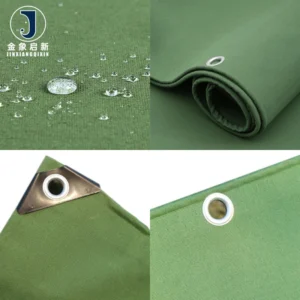
13oz 10ftx12ft Woven Plain Heavy Duty Canvas Tarpaulin with Rustproof Grommets for Canopy Tent Roof Camping Woodpile
¥10.59 Add to cart -
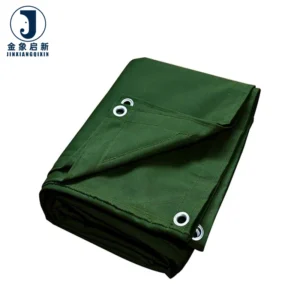
Custom Heavy Duty Woven PVC Laminated Canvas Tarpaulin – Full Range
Read more -
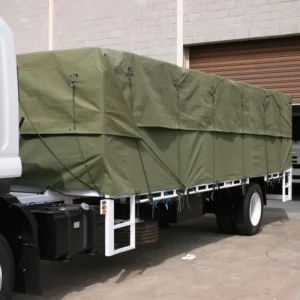
Custom PVC Coated Tarpaulin for Truck Cover – Full Range
Read more -
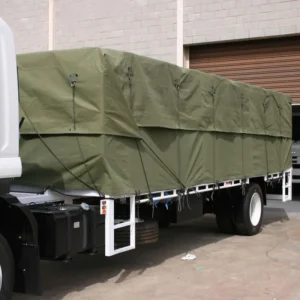
Commercial Custom Plain Boys 4 Foot Retractable Vinyl Canvas Truck Tarps Cover Heavy Duty Trailer Cargo Tarp for Sale
¥1.10 Select options This product has multiple variants. The options may be chosen on the product page