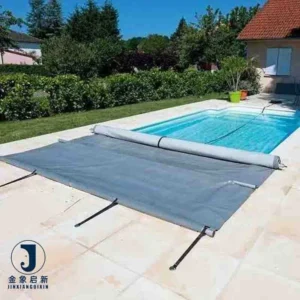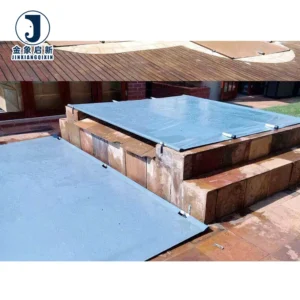
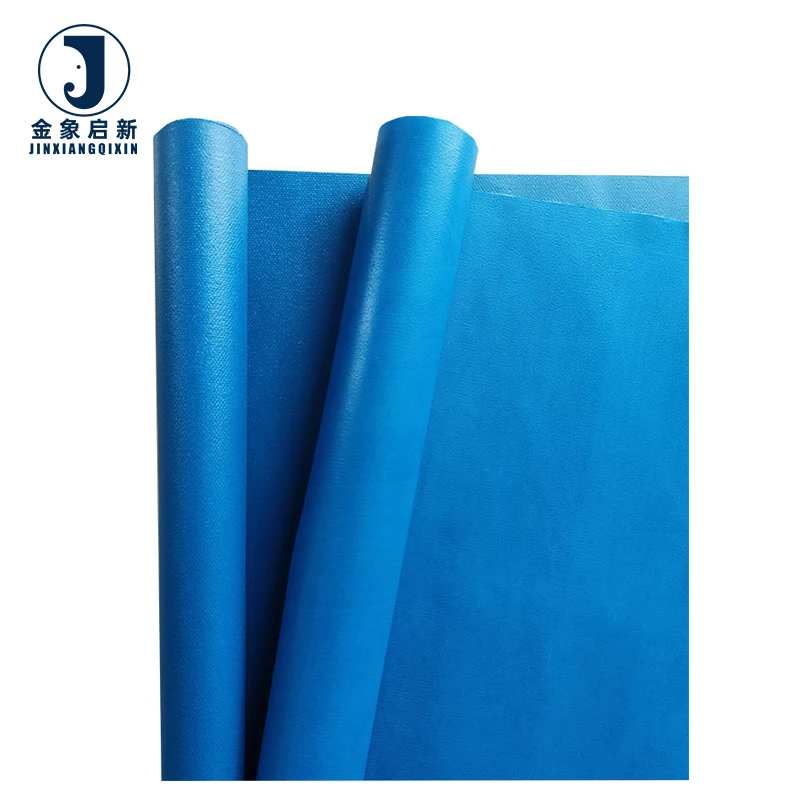
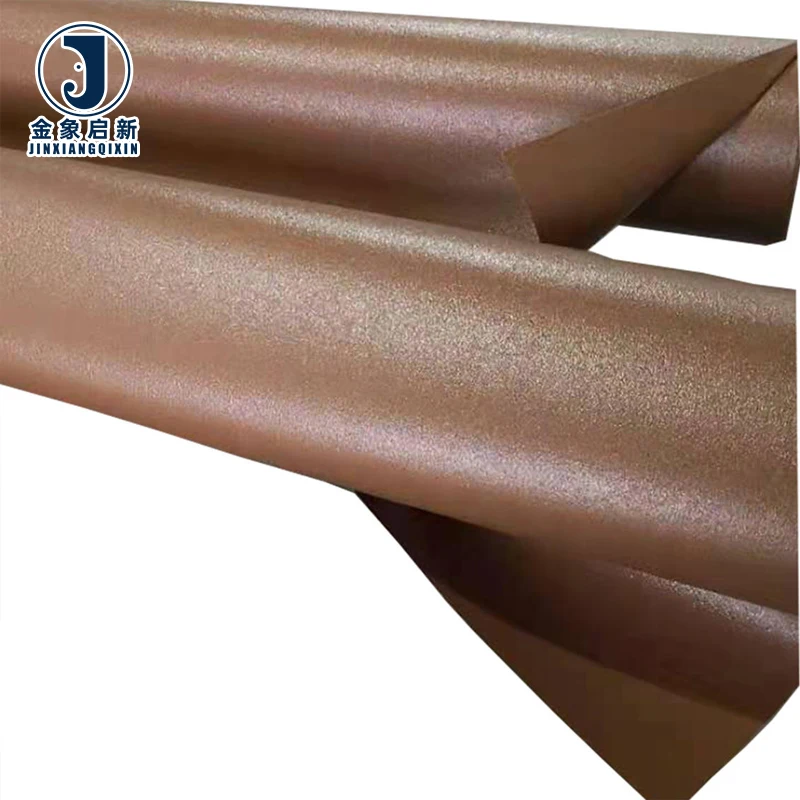
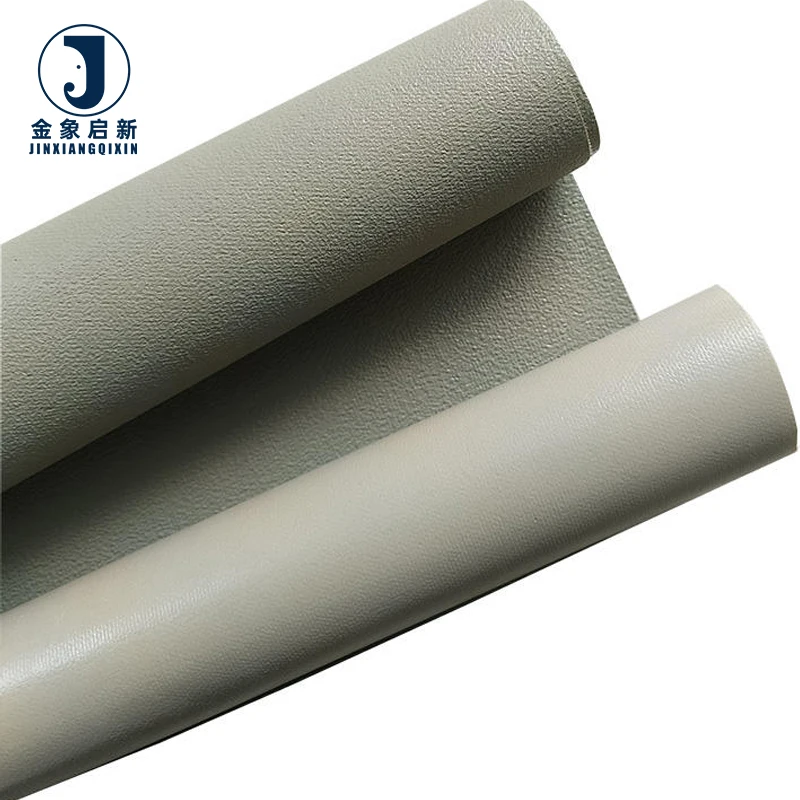
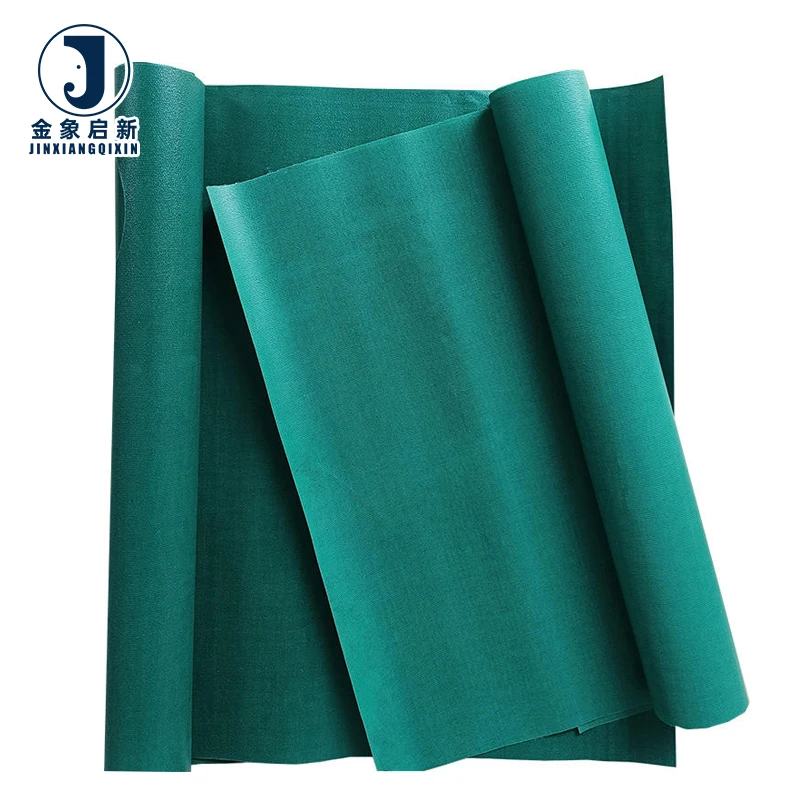
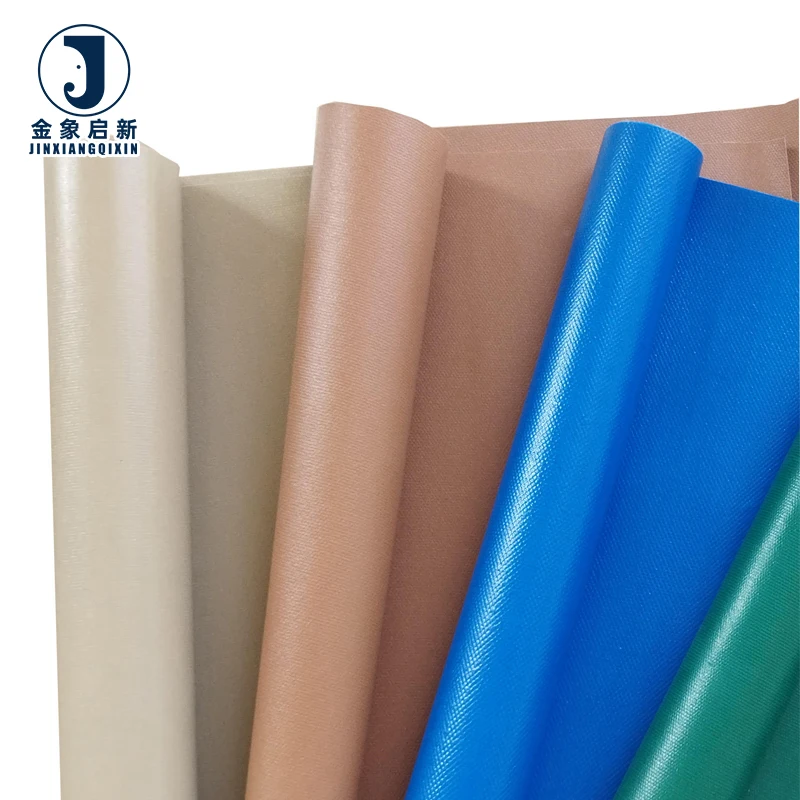
PVC Pool Cover Tarpaulin — 350gsm to 750gsm, PVC + high-strength polyester mesh, laminated & hot-melt coated
- Anti-UV, anti-mildew, flame retardant and anti-static treatments available with test reports
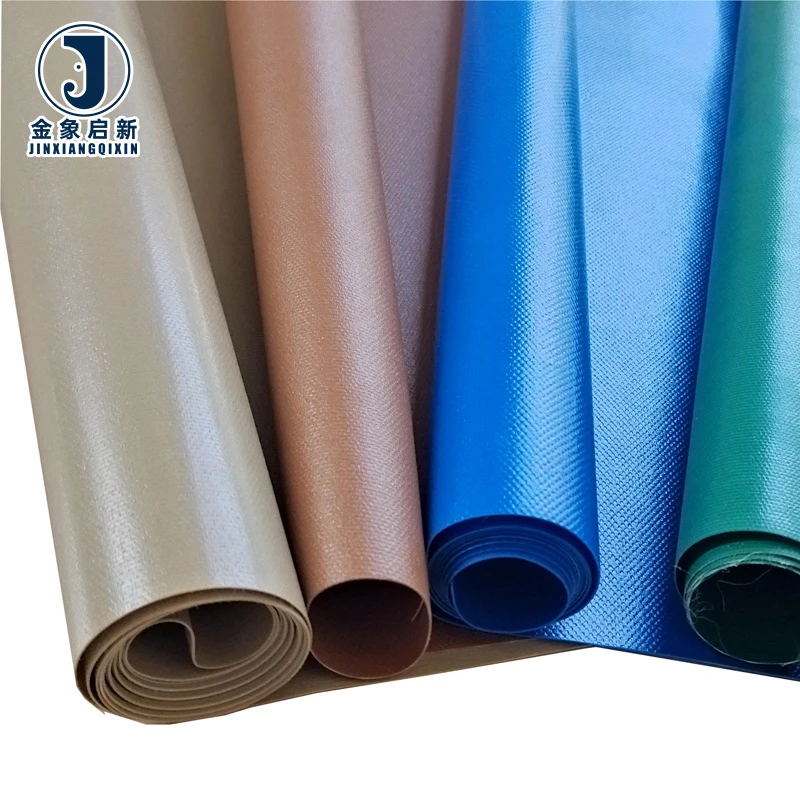
- Roll-to-roll colour consistency maintained across the full order, verified before dispatch
- Custom sizing and contour cutting for residential and commercial pool installations
- Welded seam integrity tested at flex points to outlast the fabric under tension
Supported by 10-person R&D for sample development within days, 36 sets of professional equipment for reliable bulk capacity, and 100% pre-shipment inspection with full documentation.
Description
Coating Process Mastery — Every roll leaves the line with a documented GSM reading, verified against the quoted specification before packing.
Technical Specifications
| Parameter | Value |
|---|---|
| Product Type | PVC Coated Tarpaulin / Swimming Pool Cover |
| Base Fabric | High-strength polyester mesh |
| Coating Material | PVC |
| Coating Method | Laminated Technology & Hot-melt Coating Technology |
| Weight Options | 350gsm / 420gsm / 500gsm / 550gsm / 600gsm / 750gsm |
| Thickness Options | 0.32mm / 0.35mm / 0.4mm / 0.45mm / 0.5mm / 0.65mm |
| Roll Width | 2m / 2.1m |
| Roll Length | 75m (for 2m width) / 50m (for 2.1m width) |
| Finish Product Size | Custom cut-to-size or sold by inventory roll |
| Color Options | Blue / Red / Yellow / Light Blue / Grey (Customized) |
| Key Features | Waterproof, Sunproof, Cold Crack Resistance, Anti-Mildew, Color Fastness, Outstanding Tearing Strength for Welding |
| Special Treatments | Flame Retardant (grade not stated — confirm required grade), Anti-Static (test basis not stated), Anti-Cold |
| Service Life | 3–7 years under normal circumstances |
| Standards | ISO, CE (certifications referenced at company level) |
Application Suitability
| Application | Exposure & Requirement |
|---|---|
| Residential swimming pool cover | Seasonal UV exposure, rain, debris accumulation, tensioned across pool edges requiring cold crack resistance in winter months |
| Commercial and public pool cover | Daily deployment and retraction, constant moisture contact, anti-mildew demand, high foot-traffic environment around the perimeter |
| Fish tank and aquaculture pond cover | Permanent water immersion, algae and organic growth, chemical exposure from water treatment agents |
| Tent and awning fabric (roll stock) | Prolonged sun exposure, wind load flexing at seams, requirement for consistent colour across multiple panels |
| Cargo ship and truck awning | Road salt, diesel exhaust, constant vibration and flex at welded seams, abrasion from tie-down straps |
Why Coated Fabric Fails at the Weld Line Before the Fabric Itself Does
Seam integrity is decided by coating adhesion and base fabric construction, not by GSM alone.
When a PVC pool cover tarpaulin fails in the field, the tear rarely starts in the middle of a panel. It begins at the welded seam — the exact point where the material is asked to flex, carry tension, and resist peeling forces simultaneously [NEED_CITE: tensile and tear test methods for coated fabrics per ISO 1421]. A laminated coating that has not fully penetrated the polyester mesh will delaminate under heat-welding pressure, leaving a joint that peels apart long before the surrounding fabric shows any sign of wear. This is why quoting a pool cover on weight alone misses the failure mechanism entirely: two fabrics at the same 550gsm can behave completely differently at the seam depending on whether the coating was laminated, knife-over-roll coated, or hot-melt bonded. Buyers who specify only GSM often receive covers that pass a weight check on the cutting table but fail at the first flex cycle once installed over a pool frame.
How Laminated Coating Holds the Pool Cover Together Under Tension
The laminated and hot-melt coating process forces PVC into the interstices of the high-strength polyester mesh, creating a mechanical bond that survives repeated heat-welding cycles during fabrication. For a PVC pool cover tarpaulin manufacturer, controlling coating weight and penetration depth is what separates a cover that holds its welds from one that delaminates at the hem. The hot-melt stage ensures the PVC flows into the yarn structure rather than sitting on the surface, which directly determines how well the welded seam resists peeling when the cover is tensioned across a pool.
Why Roll-to-Roll Colour Consistency Matters Once Panels Are Installed Side by Side
Colour drift between rolls is invisible in the warehouse but obvious the moment two panels are joined and stretched over a pool or laid across a pond. A PVC pool cover tarpaulin custom order spanning several rolls must maintain the same pigment dispersion and coating thickness from first roll to last [NEED_CITE: colour fastness and batch consistency standards for coated textiles]. Even a slight shift in hue becomes a visible line across the installed surface, triggering rejection on commercial projects where appearance is part of the contract specification.
Reading the Specification Sheet Beyond the Weight Number
GSM tells you how much material is present, but the base fabric denier and weave density determine how that weight translates into tear and tensile performance. A 500gsm fabric built on a loosely woven 500-denier base will tear more easily than a 500gsm fabric on a tightly woven 1000-denier yarn, because the load is distributed across fewer, thicker yarns with larger gaps between them. Coating method compounds this difference: laminated fabric bonds PVC to both faces of the mesh simultaneously, preserving yarn alignment, while single-side coating can shift the yarn structure during curing. For pool covers that are repeatedly folded, dragged, and tensioned, the combination of yarn count, weave density, and coating adhesion defines the real-world service life far more than weight alone. Thickness values from 0.32mm to 0.65mm correspond to different duty levels — lighter grades suit seasonal residential covers, while heavier gauges handle permanent commercial installations. Anti-mildew treatment prevents biological growth on the underside where condensation collects against the water surface. Cold crack resistance keeps the PVC flexible in freezing temperatures, preventing brittle fracture when the cover is removed in winter.
What Happens When the Wrong Grade Meets the Wrong Climate
Specifying a standard PVC formulation for a pool cover in a region with harsh winters leads to brittle cracking along fold lines the first time the cover is handled below freezing [NEED_CITE: cold crack resistance testing for flexible PVC compounds]. Conversely, installing a lightweight 350gsm grade on a commercial pool with daily mechanical retraction accelerates abrasion at the guide rails, thinning the coating until the base fabric is exposed to water ingress. Colour inconsistency across rolls in a single shipment forces the fabricator to sort and match panels manually, adding labour cost and delaying project handover. When flame retardant treatment is claimed without a supporting test report, the cover may pass visual inspection but fail the fire safety audit required for public aquatic facilities.
Why Sourcing PVC Pool Cover Tarpaulin from a Dedicated Coating Line Changes the Outcome
Deep process control over coating weight and adhesion means the GSM stated on the quotation is the GSM measured at the pre-shipment inspection — not a nominal figure that drifts downward on arrival. Three full production lines equipped with 36 sets of professional equipment give the capacity to run large custom orders without splitting production across different machines, which is a primary cause of roll-to-roll variation. A 10-person R&D team develops colour-matched samples within days, letting buyers confirm hue, weight, and hand-feel before committing to bulk yardage. Dedicated QA and QC at every production stage catches coating defects, weave faults, and colour deviation before the roll reaches the packing area. The combination of laminated and hot-melt coating technologies on the same line allows the factory to match coating method to the specific performance requirement of each pool cover project.
Documentation & Verification
- Material specification sheet stating exact GSM, base fabric construction, coating method, and colour reference per roll
- UV and flame retardant test reports supplied where applicable — confirm grade required for your market before ordering
- Pre-shipment inspection record with measured weight values compared against the quotation specification
- Roll packing list with batch number traceable to production date and coating line
- Certificate of origin and full customs documentation package included with every export shipment
- ISO and CE certificates available as part of the shipping document set
Fabrication, Handling & Storage
- Heat-weld at temperatures matched to the laminated PVC grade — test weld parameters on a scrap piece of the same GSM before running production seams
- Reinforce eyelet and hem areas with additional PVC strip overlays, especially on heavier 600gsm and 750gsm grades where tension concentrates at attachment points
- Store rolls upright on end-caps in a shaded, dry warehouse to prevent flat-spotting and permanent creasing of the coated surface
- Allow cold-stored rolls to acclimatise to workshop temperature before unrolling — laminated PVC becomes stiff and prone to cracking when handled below its cold crack threshold
- Clean finished covers with mild detergent and soft brush; avoid solvent-based cleaners that can soften the hot-melt coating bond
- Plan panel layout to minimise cross-grain seams on the 2m and 2.1m roll widths, keeping weld lines aligned with the primary tension direction
What to Include in Your Pool Cover Tarpaulin Inquiry
Provide the intended application environment — residential seasonal cover, commercial year-round installation, or aquaculture liner — along with the expected temperature range and any local fire safety requirements that apply to the installation site. Specify whether you need roll stock at standard widths of 2m or 2.1m, or finished cut-to-size covers with hem and eyelet details. Include your target colour and whether colour matching against an existing structure or brand palette is required, so that a sample can be developed for approval before bulk production begins.
Frequently Asked Questions
Q: How is the GSM of the PVC pool cover tarpaulin verified before shipment?
A: Every roll is weighed and measured during the pre-shipment inspection. The recorded GSM is compared against the value stated on your quotation, and the results are documented in an inspection record that ships with your order. Any roll falling outside tolerance is held back before packing.
Q: Can you supply test reports for UV or flame retardant treatments?
A: Anti-UV and flame retardant grades are available as special treatments on this PVC pool cover tarpaulin range. Confirm the specific grade or standard required for your market at inquiry stage so that the correct treatment is applied and the matching test report is included with your shipment documentation.
Q: How do you control colour consistency when an order spans multiple rolls?
A: Pigment batches are mixed for the full order quantity at one time, and each roll is checked against the approved colour reference during production. A batch consistency record accompanies the shipment so you can trace every roll back to the same coating run.
Q: What custom sizing and finishing options are available for pool covers?
A: Beyond standard 2m and 2.1m roll widths, we produce custom-cut panels to your dimensions. Hem reinforcement, eyelet spacing, and edge finishing are configured to your specification, and a sample is developed for your approval before the full order enters production.
Q: What is the process for ordering a sample before placing a bulk order?
A: Share your required GSM, colour, and any special treatment needs. A sample is developed within days and shipped for your review. Once you approve the sample for weight, colour, and hand-feel, bulk production is scheduled on the same coating line to ensure consistency.
Related products
-
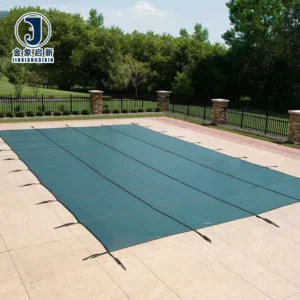
JX China Manufacturer Organic Blackout 500gsm Heavy Duty PVC Coated Tarpaulin Swimming Pool Cover
¥1.78 Select options This product has multiple variants. The options may be chosen on the product page -
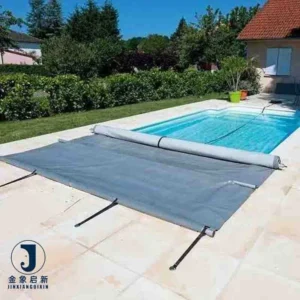
JX PVC Laminated Waterproof Breathable Anti-UV Blackout Organic Plain Weft Swimming Pool Covers Tarpaulin Coated
¥1.78 Select options This product has multiple variants. The options may be chosen on the product page -
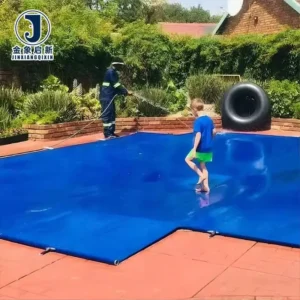
PVC Laminated Waterproof Breathable Anti-UV Blackout Organic Plain Weft Swimming Pool Covers Tarpaulin Coated
¥1.78 Select options This product has multiple variants. The options may be chosen on the product page -
JX PVC Laminated Waterproof Breathable Anti-UV Blackout Organic Plain Weft Swimming Pool Covers Tarpaulin Coated
¥1.78 Select options This product has multiple variants. The options may be chosen on the product page