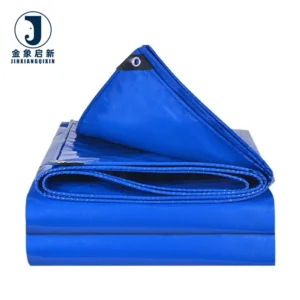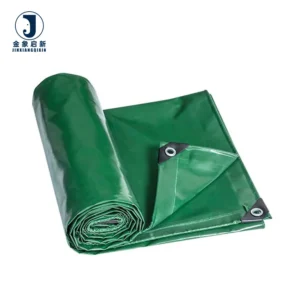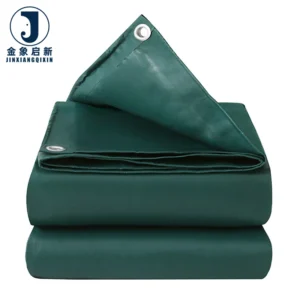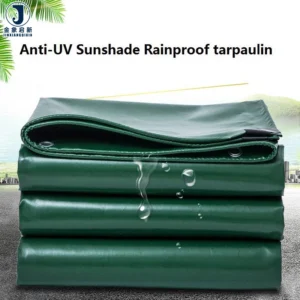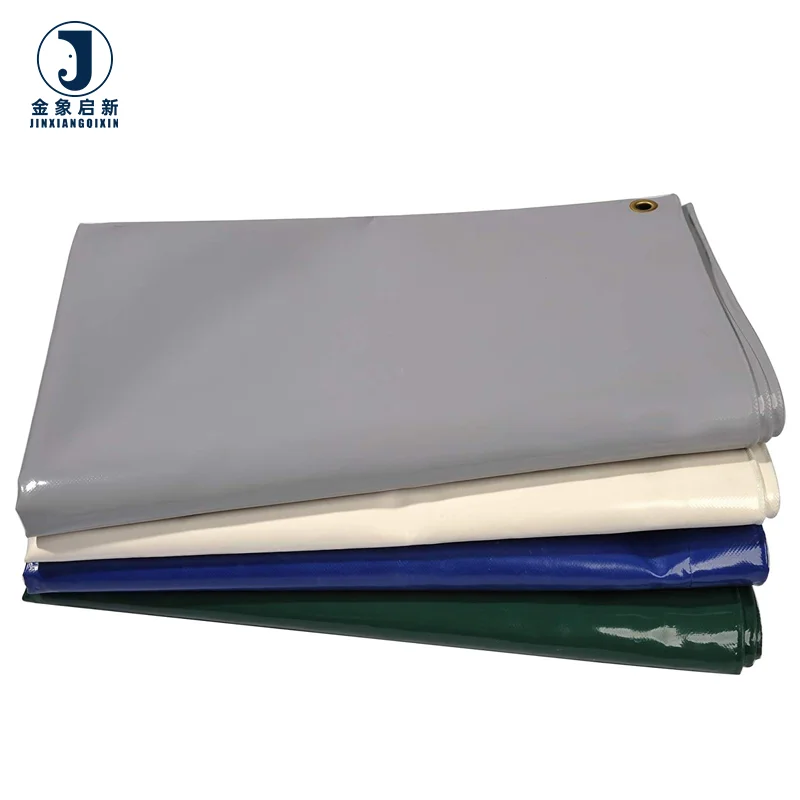
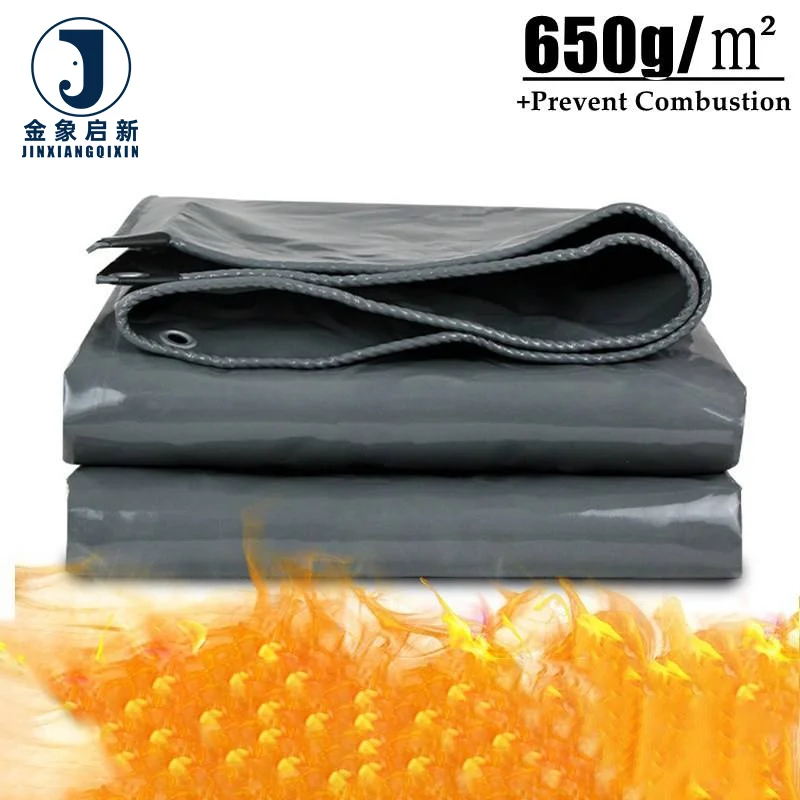
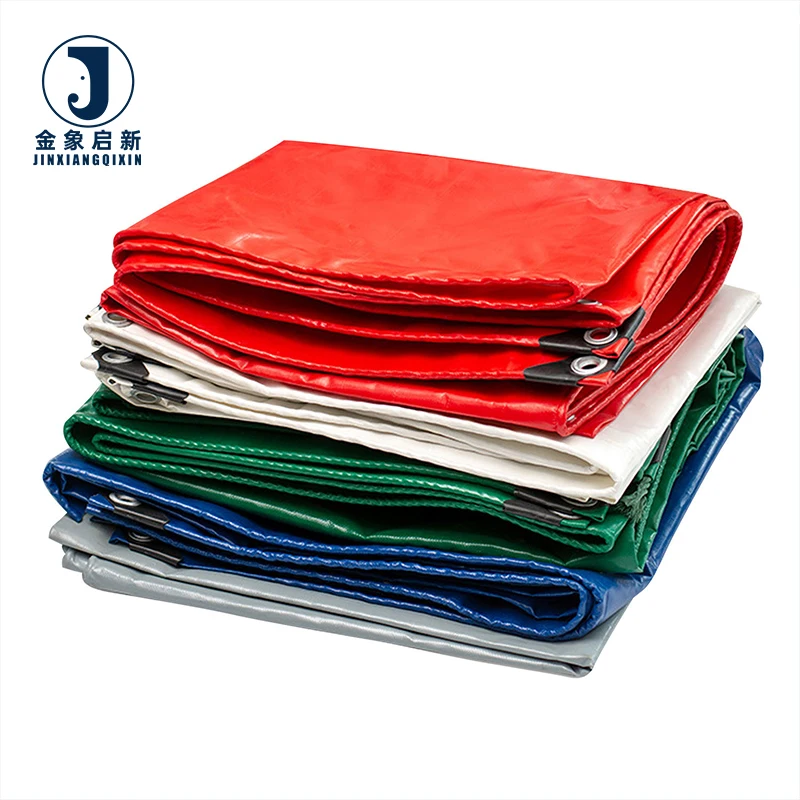
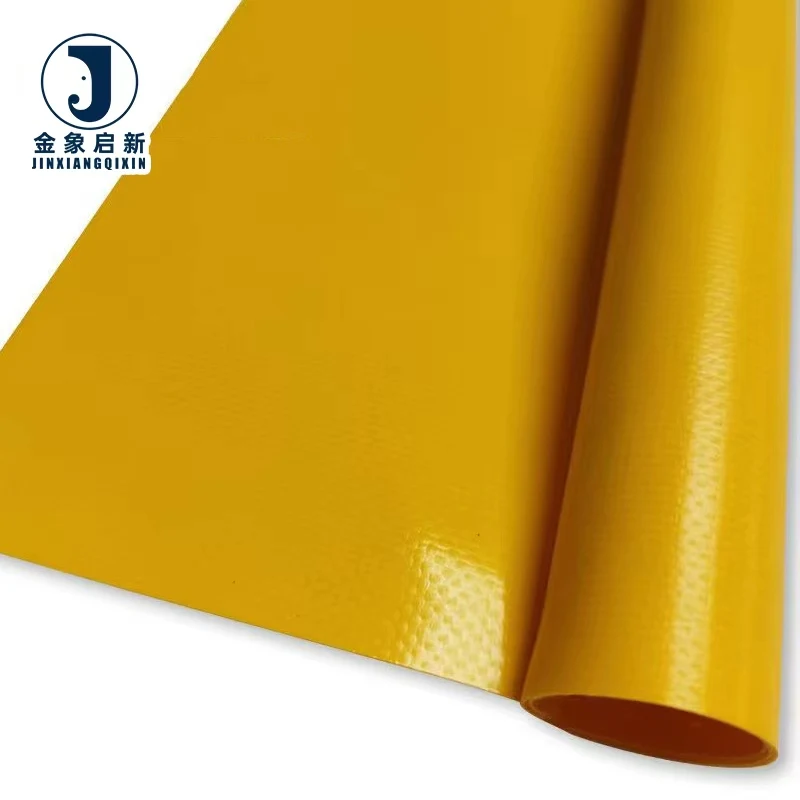
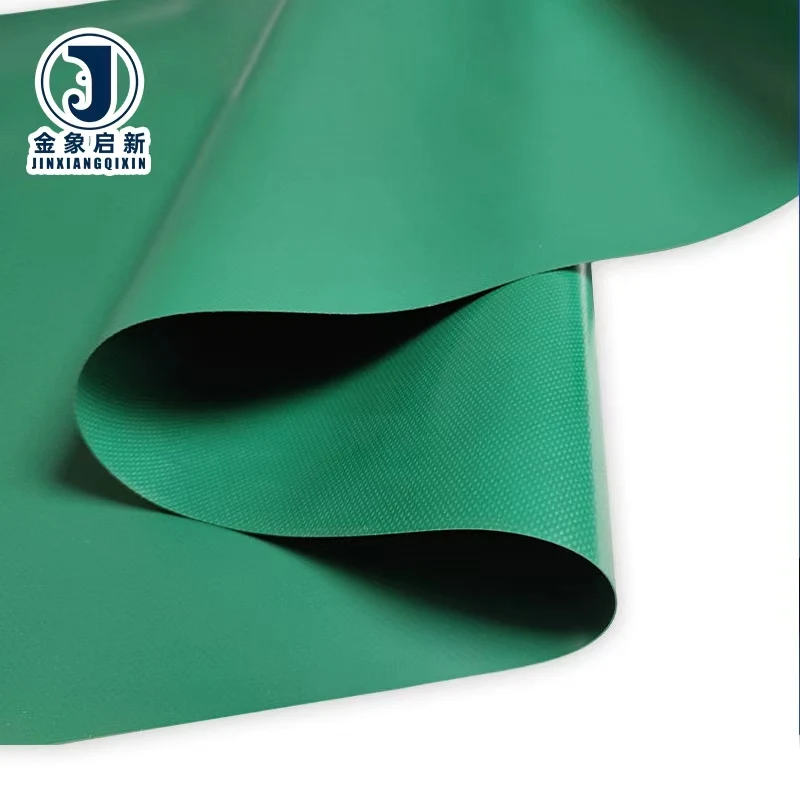
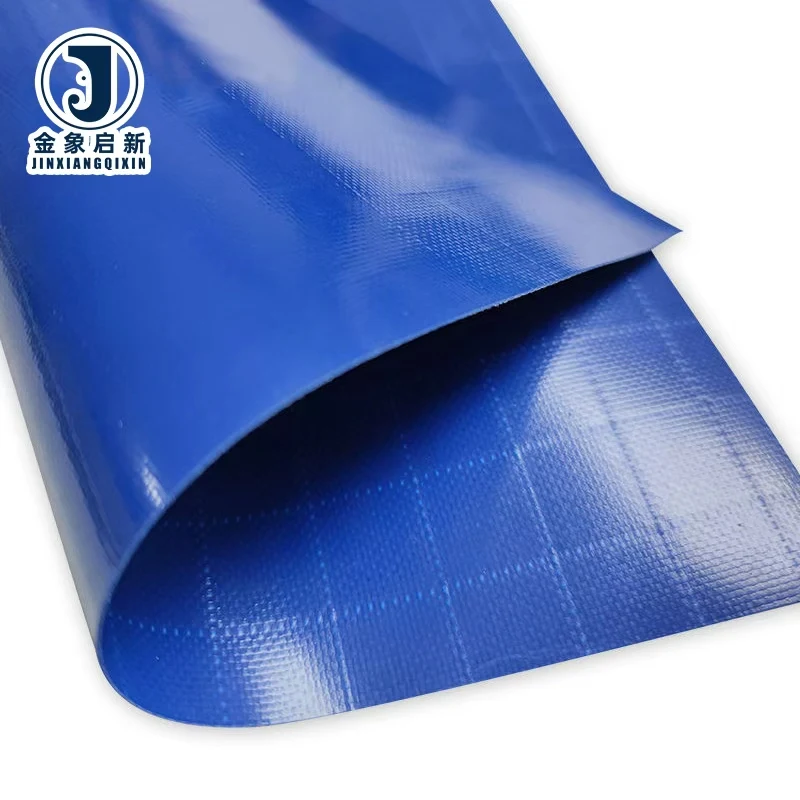
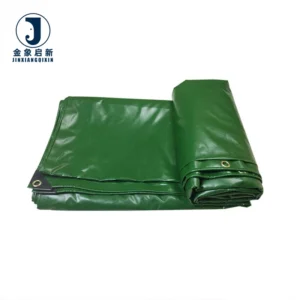
Flame-Retardant PVC Coated Tarpaulin — 350g/m² to 900g/m² weight range, 500D×840D to 1300D×1300D base fabric, heat-sealed seamless edge wrapping with 3cm aluminum alloy eyelets and reinforced corners.
- Full catalogue and custom capability from roll stock to cut-to-size finished covers, with batch-to-batch colour consistency control across rolls in the same order.
- Base fabric denier and yarn count work together with coating weight to determine tensile and tear performance; higher GSM alone does not guarantee stronger material.
- 10-person R&D team handles material selection and sample development, with dedicated QA/QC at every production stage and 100% pre-shipment inspection before dispatch.
Description
Coating Weight Control — Every roll undergoes in-process QA and 100% pre-shipment inspection, ensuring the PVC coating adhesion and GSM you specify is exactly what arrives at your warehouse.
Technical Specifications
| Parameter | Value |
|---|---|
| Product Type | PVC Coated Tarpaulin |
| Weight Options | 350, 400, 420, 500, 600, 650, 750, 900 GSM |
| Base Fabric Denier | 500D×840D (350–420 GSM), 500D×1000D (500 GSM), 1000D×1000D (600 GSM), 1000D×1300D (650 GSM), 1300D×1300D (750 GSM), 1000D×2000D (900 GSM) |
| Total Thickness | 0.29mm (400 GSM) to 0.65mm (900 GSM) |
| Mesh Count | 30×19 (350–500 GSM), 20×20 (600–750 GSM), 30×15 (900 GSM) |
| Tensile Strength (Warp) | 1650 N (350 GSM) to 3900 N (900 GSM) (test standard not stated) |
| Tensile Strength (Weft) | 1600 N (350 GSM) to 3500 N (900 GSM) (test standard not stated) |
| Coating Material | PVC & Polyester |
| Key Features | Water resistant, flame retardant (grade not stated), anti-UV (test basis not stated) |
| Edge Finishing | 5mm rope, high temperature heat sealed seamless edge wrapping |
| Eyelet | 3cm enlarged aluminum alloy buttonhole |
| Corner Reinforcement | Reinforced corners on all sides |
Application Suitability
| Application | Exposure & Requirement |
|---|---|
| Truck and trailer covers | Constant road abrasion, wind flexing, UV exposure, rain ingress at high speed — requires high tensile base fabric and heat-sealed seams at flex points |
| Construction site covers | Debris impact, scaffolding contact, potential flame exposure — demands puncture resistance and verified flame-retardant treatment |
| Tent and awning fabrication | Roll-fed cutting and welding, long-term outdoor tension, colour presentation — needs batch consistency and reliable coating adhesion for welded joints |
| Machine and equipment covers | Static outdoor storage, dust and moisture ingress, repeated handling — benefits from waterproof coating and reinforced eyelets for tie-down |
| Pergola and canopy structures | Permanent tension, sun exposure, wind uplift — requires dimensional stability and anti-UV treatment suited to the installation climate |
Why a Quoted GSM Does Not Guarantee the Strength You Paid For
Verified coating weight at every stage is the only way to ensure the PVC coated tarpaulin you ordered matches the fabric you receive.
Buyers across logistics, construction and outdoor fabrication regularly face a familiar problem: the specification sheet says one weight, but the roll on the cutting table feels lighter. When GSM is not checked after coating, the base fabric may meet denier requirements while the PVC coating layer falls short — reducing overall tensile performance, weld integrity and weather resistance [NEED_CITE: common causes of coated fabric weight discrepancy in shipment]. A custom PVC tarpaulin ordered at 650 GSM but delivered at an unverified lower weight will not deliver the 2550 N warp strength the design assumed. The consequences show up later, at the weld line or the eyelet, when the load shifts in transit or the wind catches a site cover.
Coating Weight, Base Denier and the Strength Chain
When sourcing a PVC coated tarpaulin, weight alone is an incomplete indicator. A 650 GSM fabric built on 1000D×1300D polyester delivers different tear propagation behaviour than a 650 GSM fabric on a lighter weave with thicker coating to compensate. The base fabric denier and mesh count determine how a puncture or cut spreads under tension, while the PVC coating weight governs surface abrasion resistance and weld seam strength. Our specification sheet breaks down each component separately so you can match the construction to the mechanical demands of your application.
Flame-Retardant and Anti-UV Options for Regulated Markets
Construction sites, public venues and transport operations often require documented fire performance and UV stability. This PVC coated tarpaulin is available in flame retardant grades — confirm the grade required for your target market before ordering, as regional standards vary from DIN 4102 classifications to NFPA 701 or local building code references [NEED_CITE: flame retardant classification systems for coated textiles in construction]. Anti-UV treatment is also available, and the appropriate test basis should be matched to the expected installation climate and service exposure. We provide test reports for both treatments with shipment when specified on the purchase order.
How Denier, Mesh and Coating Interact in Practice
The relationship between base fabric and coating determines real-world performance. Higher denier yarns such as 1300D×1300D at 750 GSM resist tear propagation across the weave, while the 20×20 mesh count keeps yarn spacing tight enough to prevent coating penetration gaps. At the lighter end, a 500D×840D base at 350 GSM with a 30×19 mesh count provides flexibility for applications where drape and fold behaviour matter more than ultimate tensile figures. The PVC coating bonds to the polyester substrate through a controlled process that balances adhesion strength with the thermal behaviour needed for reliable heat-sealed seams — a factor that directly affects fabrication yield when you are welding panels to size.
What Happens When Specification Gaps Reach the Production Floor
A batch of covers that arrives underweight may pass visual inspection but fail during fabrication. Heat-sealed seams on a coating layer that is thinner than specified will peel under tension before the base fabric reaches its rated strength. Colour variation between rolls in the same shipment becomes visible once panels are installed side by side on a truck or awning frame — forcing selective panel matching or outright rejection [NEED_CITE: batch colour consistency challenges in PVC coated fabric production]. These are not cosmetic issues; they represent material cost, labour waste and delivery delays that compound across a production run.
Process Control That Stays with the Fabric
Our coating lines run with dedicated QA checkpoints that measure coating weight and adhesion during production, not only at final inspection. The 10-person R&D team develops samples within days for custom width, colour and print requirements, allowing you to validate material behaviour before committing to a production order. Three full production lines and 36 sets of professional equipment support bulk volume while maintaining the batch-to-batch consistency that distributors and fabricators depend on. Every roll receives 100% inspection for coating weight, colour uniformity and seam integrity before it leaves the facility, and pre-shipment records document what was actually measured.
Documentation & Verification
- Material specification sheet listing exact GSM, base fabric denier, coating type and colour reference per roll
- Flame-retardant and anti-UV test reports provided with shipment when treatment is specified on the order
- Pre-shipment inspection record documenting measured coating weight and adhesion results before dispatch
- Roll packing list with batch identification for colour consistency traceability across the shipment
- Certificate of origin and customs documentation prepared for destination-country import clearance
Fabrication, Handling & Storage
- Heat-seal temperature and dwell time should be matched to the specific GSM grade to avoid coating burn-through on lighter weights or incomplete bonding on 900 GSM material
- The 3cm aluminum alloy eyelets and reinforced corners distribute tie-down loads; place additional webbing reinforcement at high-stress panel junctions
- Store rolls upright on pallets in covered areas to prevent flat-spot deformation that affects unwinding and cutting accuracy
- Unroll and allow the PVC coated tarpaulin to relax at ambient temperature before cutting in cold conditions to reduce crease memory
- Use mild detergent and soft brush for cleaning; avoid solvent-based cleaners that may affect the PVC coating surface and printed branding adhesion
Before You Request a Quote
Tell us the end-use application and the mechanical or environmental exposure the fabric will face — this determines which GSM grade, denier and treatment combination fits. Specify your target market so we can confirm the appropriate flame-retardant grade and test documentation. Let us know whether you need roll stock in standard widths or cut-to-size finished covers with eyelets and edge wrapping, and whether colour matching or pattern printing is part of the requirement.
Frequently Asked Questions
Q: How is the actual GSM verified before my order ships?
A: Each roll is measured during production and again at pre-shipment inspection. We record the actual coating weight against the specified GSM and include the inspection record with your documentation. If you need to re-check on arrival, a calibrated scale and a measured sample cut confirm the weight per square metre against the stated value.
Q: Which flame-retardant grade applies to my market?
A: Requirements differ by region and application — construction sites may reference DIN 4102, while public event structures often follow NFPA 701 or local equivalents. Tell us your destination market and end-use, and we will confirm the available grade and provide the corresponding test report with your shipment.
Q: Can I order custom width, colour or print with reasonable minimums?
A: Custom widths, colours and pattern printing are available across the weight range. Our R&D team develops samples within days so you can approve material and colour before production. Minimum order quantities vary by specification — share your requirements and we will confirm lead time and volume thresholds.
Q: How do you maintain colour consistency across multiple rolls?
A: Rolls within the same production batch are matched against a defined colour reference and inspected side by side before packing. The roll packing list includes batch identification so you can trace which rolls belong together, reducing the risk of visible panel variation during installation.
Related products
-
Heavy Duty Truck Tarpaulin 1000d Pvc Tarp Waterproof Pvc Canvas
¥1.20 Add to cart -
Wholesale Pvc Tarpaulin Wear-resistant Waterproof Multi-purpose Heat-resistant Tarpaulin
¥2.00 Add to cart -

Hotsale Custom China Supplier Super Strength Industrial Grade 680GSM RIPSTOP PVC Tarpaulin for Builders Roof Tarp and Sheeting
¥2.80 Add to cart -
500gsm MULTI-PURPOSE Green Waterproof Green Tarp for Emergency Rain Shelter. Outdoor Cover
¥7.72 Select options This product has multiple variants. The options may be chosen on the product page