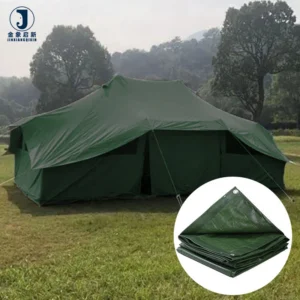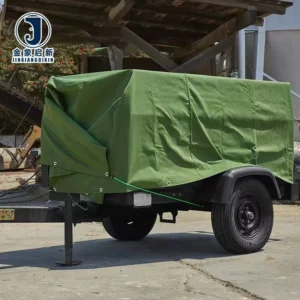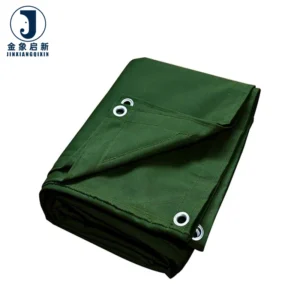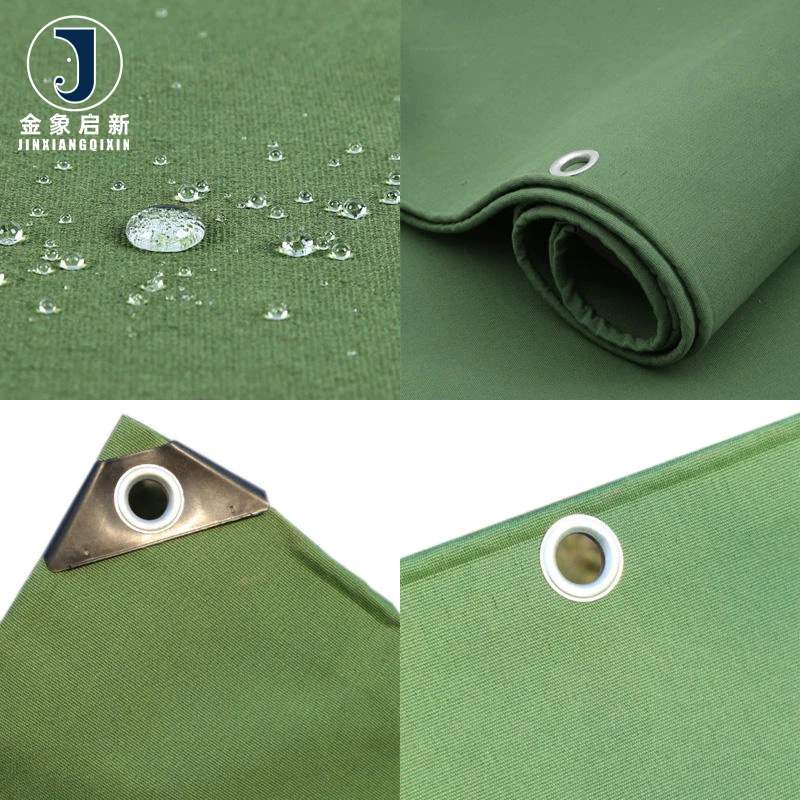
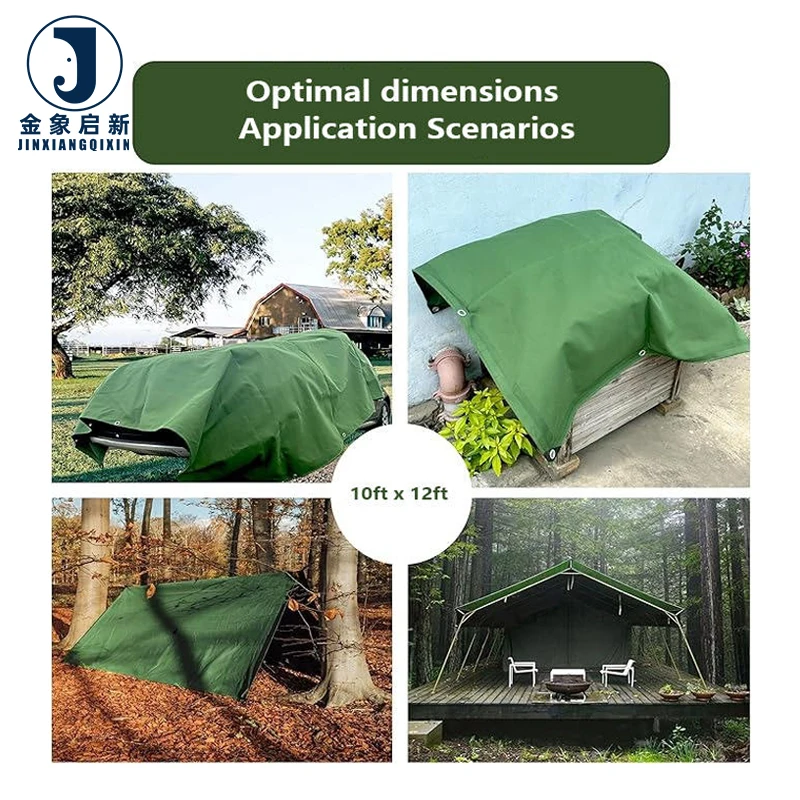
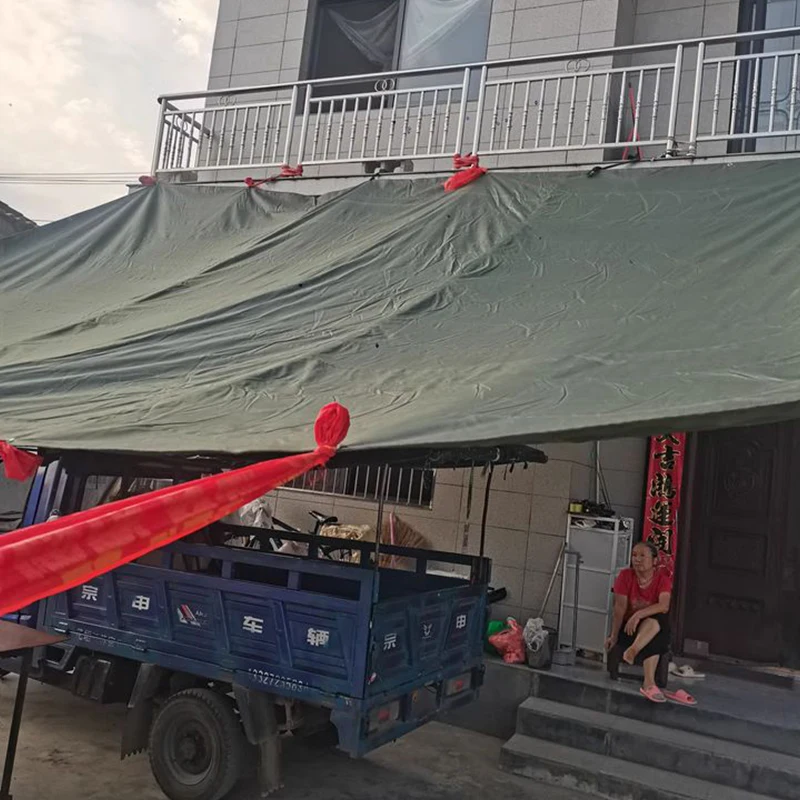
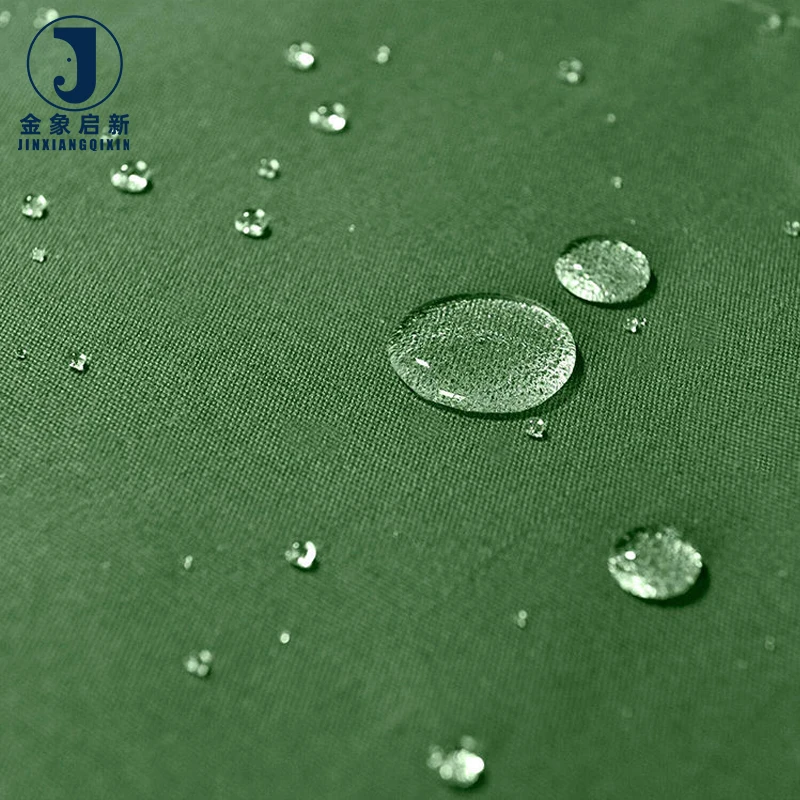
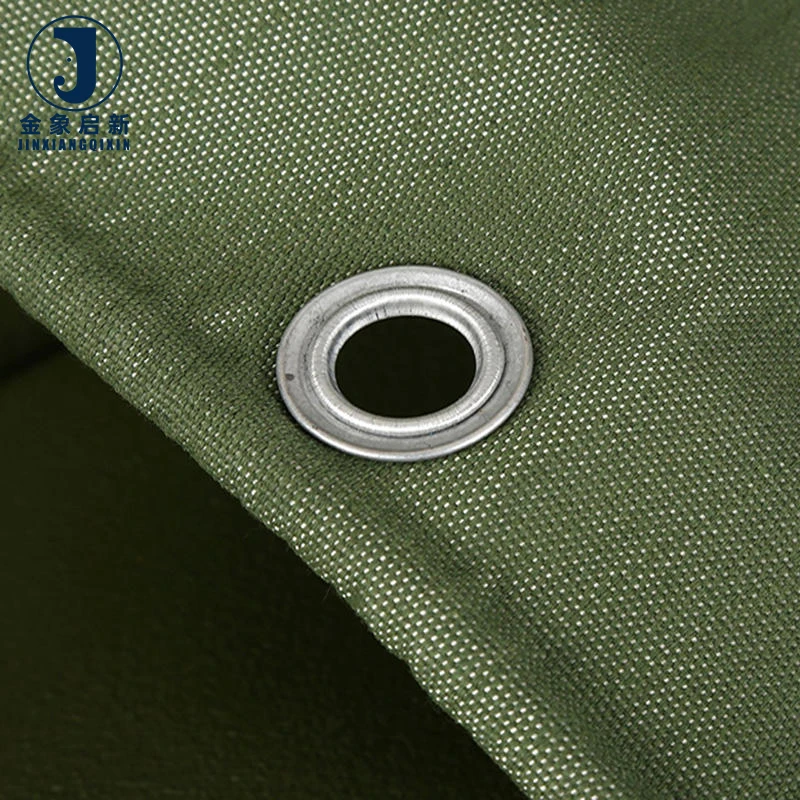
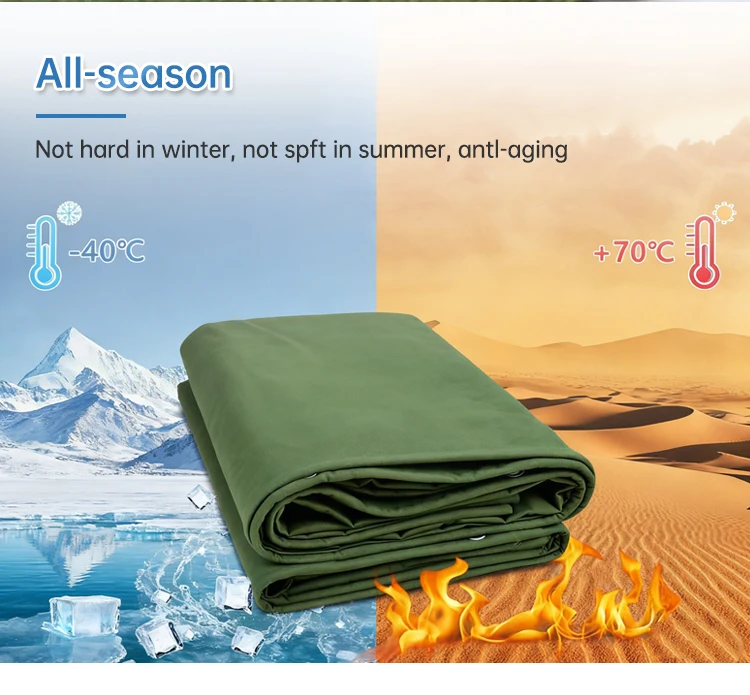
Heavy Duty Canvas Tarpaulin — 600gsm polyester cotton base with 8-12 strand fine yarn, rustproof aluminum grommets every 1 meter, folded and sewn poly-rope edges for reinforced tie-down points.
- Woven density and yarn strand count together determine tensile and tear behaviour, making this 600gsm grade a practical balance between handling flexibility and structural load resistance for tents, truck covers, and canopy panels.
- Grommet spacing and edge reinforcement are matched to your tie-down hardware and flex points, with custom cut sizes produced to your exact frame or vehicle dimensions.
Backed by 100% pre-shipment inspection, in-process QA at every stage, and samples developed within days for custom sizing and colour requirements.
Description
[Proven Fabric Engineering] — Nearly 30 years of process control over woven and coated textiles, applied here to polyester-cotton canvas with full material traceability from yarn selection to finished roll inspection.
Technical Specifications
| Parameter | Value |
|---|---|
| Product Type | Canvas Tarpaulin |
| Base Material | Polyester cotton industrial textile with 8–12 strands of fine cotton yarn |
| Weight | 600gsm |
| Thickness Options | 0.5mm / 0.6mm / 0.7mm |
| Roll Width | 2m |
| Roll Length | 100m |
| Colour Options | Army Green Camouflage / Custom colours available on request |
| Edge Construction | Folded and sewn with poly ropes for reinforcement |
| Eyelet Specification | Rust proof aluminum grommets every 1 meter at corners and hem |
| Resistance Features | Wear-resistant, corrosion-resistant, tensile-resistant, high- and low-temperature resistant |
| Waterproof Rating | Waterproof (test basis not stated) |
| UV Treatment | UV resistant (test basis not stated) |
| Anti-Mildew | Mold resistant (test basis not stated) |
| Standards | CE, ISO (specific certificate numbers not stated) |
Application Suitability
| Application | Exposure & Requirement |
|---|---|
| Truck cover | Road debris impact, wind flex at highway speed, tie-down load at grommets, prolonged sun exposure |
| Tent and canopy roof | Continuous weather load, wind uplift tension, pooling water drainage, frame abrasion at contact points |
| Open-air construction cover | Direct sunlight, dust and moisture ingress prevention, material handling abrasion, repeated folding |
| Woodpile and stockpile wrap | Moisture penetration, ground contact, UV degradation over extended outdoor storage |
| Asphalt cover | Heat retention, material adhesion risk, heavy rolling load from equipment access |
| Camping shelter | Compact storage and repeated deployment, branch and ground contact abrasion |
Why Quoted Weight Alone Fails to Predict Real-World Durability
GSM tells you mass per square metre, but it does not tell you how that mass is distributed between base yarn and coating.
When a canvas tarpaulin arrives lighter than agreed, the consequence is rarely obvious at first unroll. The failure shows up weeks later — a truck cover tearing at the grommet line under highway wind load, or a canopy roof developing pinhole wear at frame contact points. Buyers frequently discover that a quoted 600gsm canvas was achieved by using a heavier coating on a lighter base fabric, which shifts the balance away from tensile strength and toward surface stiffness. For polyester-cotton woven constructions, the relationship between yarn count, weave density, and final weight determines whether the fabric holds up to flexing or cracks along fold lines [NEED_CITE: relationship between base fabric density and tensile performance in woven canvas per ISO 1421]. Without a material specification sheet that declares both the base fabric construction and the total GSM, you are essentially buying blind.
How This Canvas Tarpaulin Fits Into a Broader Product Range
The 600gsm polyester-cotton canvas sits within a complete tarpaulin range that extends from lighter utility grades through to heavy industrial constructions. Buyers sourcing canvas tarpaulin by the roll can evaluate this weight grade against their specific end-use — whether that is finished cut sizes with eyelets for truck fleets, or continuous roll stock for tent and awning fabricators cutting panels to their own frame dimensions. The full catalogue approach means you can consolidate multiple fabric types in a single shipment, matching canvas grades to different applications without managing separate supplier relationships.
Custom Capability From Material Selection to Finished Delivery
Beyond standard Army Green Camouflage, custom colours are available to match project branding or site visibility requirements. The canvas tarpaulin manufacturer handles pattern printing, custom sizing, and edge treatment specification as part of an integrated production process rather than outsourced finishing. For buyers who need finished tarpaulins cut to specific vehicle or structure dimensions, the production workflow moves from material selection through sample development to bulk runs with in-process quality checks [NEED_CITE: custom tarpaulin fabrication workflow from design through pre-shipment inspection].
What the 600gsm Specification Means for Tear and Tensile Performance
At 600gsm, the polyester-cotton base with 8–12 strands of fine cotton yarn produces a woven density that balances tear resistance with handling flexibility. The interlocking yarn structure distributes point loads across multiple warp and weft threads — when a grommet takes tie-down tension, the force spreads into the surrounding weave rather than concentrating at the puncture point. Thickness options of 0.5mm, 0.6mm, and 0.7mm allow buyers to select the construction that suits their abrasion environment: thinner variants for applications prioritising foldability and pack size, thicker builds for ground contact and heavy material handling. The poly-rope reinforced hems and rust proof aluminum grommets spaced at one-metre intervals create a load path that moves tension from the tie-down point into the sewn edge, reducing the risk of eyelet pull-through that plagues lighter canvas constructions.
What Happens When Specification Gaps Go Uncaught Until Delivery
A batch of canvas tarpaulin that varies in shade between rolls creates visible colour banding once panels are installed side by side on a canopy or truck fleet — forcing the buyer into a full replacement cycle rather than a simple reorder. Welded seams that fail before the fabric itself does represent a different category of loss: the cover is structurally sound but the joining method was not matched to the flex profile of the application. Anti-UV or mold-resistant treatments claimed without supporting test results leave the buyer unable to demonstrate compliance when a site inspector or end client requests documentation [NEED_CITE: verification methods for UV and mold resistance claims on coated and woven fabrics]. These failures share a common root — specification was treated as a line item rather than a verified production parameter.
What the Production Process Delivers for Canvas Buyers
Deep process control over yarn selection and coating weight ensures the stated 600gsm is measured and verified, not assumed from raw material input. Three full production lines and 36 sets of professional equipment support volume orders with consistent lead times, whether you need roll stock or finished cut sizes. A dedicated 10-person R&D team handles material selection, sample development, and custom sizing before bulk production begins — reducing the risk of specification mismatch. Every roll undergoes QA/QC at each production stage, with 100% pre-shipment inspection confirming weight, colour, and edge construction against the agreed specification. Samples for custom requirements are developed within days, allowing buyers to confirm hand feel, colour accuracy, and grommet placement before committing to production volume.
Documentation & Verification
- Material specification sheet declaring exact GSM, polyester-cotton base fabric construction, and colour reference for every roll
- Test reports for UV and mold resistance available upon request for market compliance documentation
- Pre-shipment inspection record confirming weight, colour consistency, and grommet placement against order specification
- Roll packing list detailing quantity, dimensions, and weight for container loading and customs clearance
- Certificate of origin and customs documentation supporting export logistics to international markets
Fabrication, Handling & Storage
- Sewn seams with poly rope reinforcement withstand repeated flexing at stress points better than heat-welded joins on this 600gsm canvas
- Rust proof aluminum grommets at one-metre intervals distribute tie-down load; specify closer spacing for high-wind truck cover applications
- Store rolls upright in dry conditions to prevent permanent creasing across the 2m roll width
- Avoid prolonged contact with solvents that may degrade the cotton yarn component of the polyester-cotton weave
- For on-site repair, patch with matching canvas weight and overlap seams by at least 50mm on each side
- Plan cutting layout on the 100m roll length to minimise off-cuts when producing multiple finished tarpaulin sizes
Before You Request a Quote
To specify the right canvas construction for your application, share your end-use environment and the exposure conditions the fabric will face — whether that involves continuous UV load, ground contact moisture, or repeated deployment cycles. Provide your target dimensions or confirm whether you require roll stock, along with preferred grommet spacing and edge treatment details. If your market mandates specific fire or safety classifications, state the required standard so the correct treatment grade can be confirmed before sampling.
Frequently Asked Questions
Q: How can I confirm the 600gsm weight matches the quotation when the shipment arrives?
A: Every order is supported by a material specification sheet stating the exact GSM and base fabric construction. You can request a pre-shipment sample cut from your production batch to verify weight independently. The 100% pre-shipment inspection record documents measured values for each roll before dispatch.
Q: What options exist for custom sizing and grommet spacing?
A: Finished tarpaulins are cut to your exact dimensions rather than generic stock sizes. Grommet spacing can be adjusted from the standard one-metre interval to match your tie-down hardware configuration. Poly rope reinforced hems are standard, and edge treatment can be specified based on your load and wind exposure requirements.
Q: How is colour consistency controlled across multiple rolls in one order?
A: Production follows a batch dyeing process with colour reference checks at each stage. The pre-shipment inspection includes a visual consistency review across all rolls in the order. For Army Green Camouflage or custom colours, a physical sample is approved before bulk production to lock the shade standard.
Q: Can I order both finished cut sizes and roll stock in the same shipment?
A: Yes. The production lines handle both finished tarpaulins with eyelets and hems and raw roll stock. Consolidating both formats in a single container is standard practice, and the packing list itemises each format separately for receiving and inventory purposes.
Q: What documentation accompanies each shipment for import clearance?
A: Shipments include a roll packing list, certificate of origin, material specification sheet, and customs support documentation. CE and ISO certificates are available. Test reports for UV or mold resistance can be included where applicable to support compliance in your destination market.
Related products
-
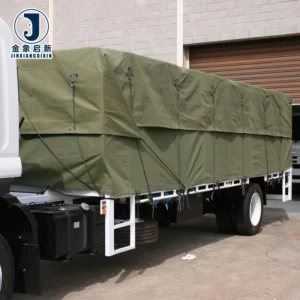
Heavy Duty Waterproof PVC Coated Abrasion-Resistant Very Heavyweight Asphalt Truck Cover Cotton Canvas Tarpaulin
¥10.29 Add to cart -
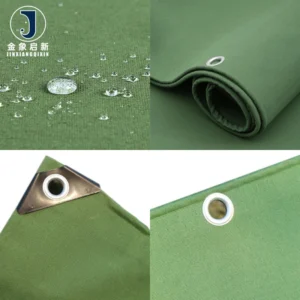
13oz 10ftx12ft Woven Plain Heavy Duty Canvas Tarpaulin with Rustproof Grommets for Canopy Tent Roof Camping Woodpile
¥10.59 Add to cart -
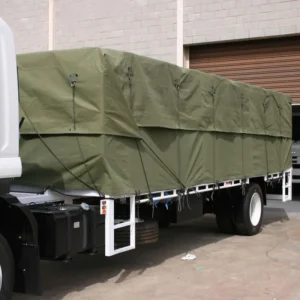
Commercial Custom Plain Boys 4 Foot Retractable Vinyl Canvas Truck Tarps Cover Heavy Duty Trailer Cargo Tarp for Sale
¥1.10 Select options This product has multiple variants. The options may be chosen on the product page -
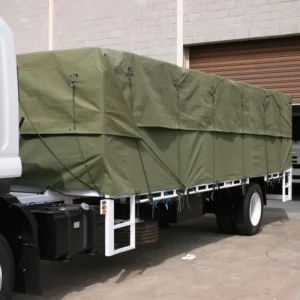
Custom PVC Coated Tarpaulin for Truck Cover – Full Range
Read more