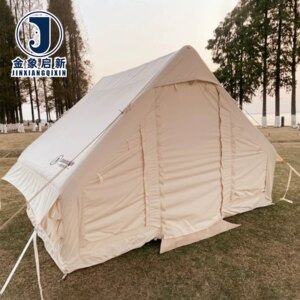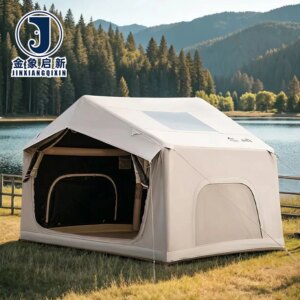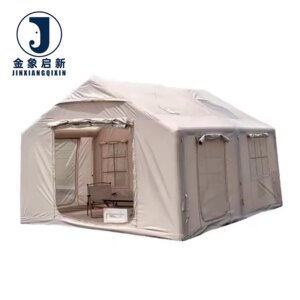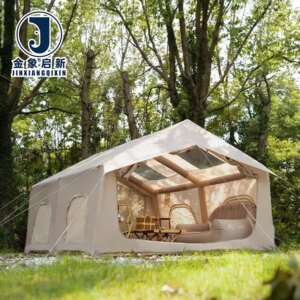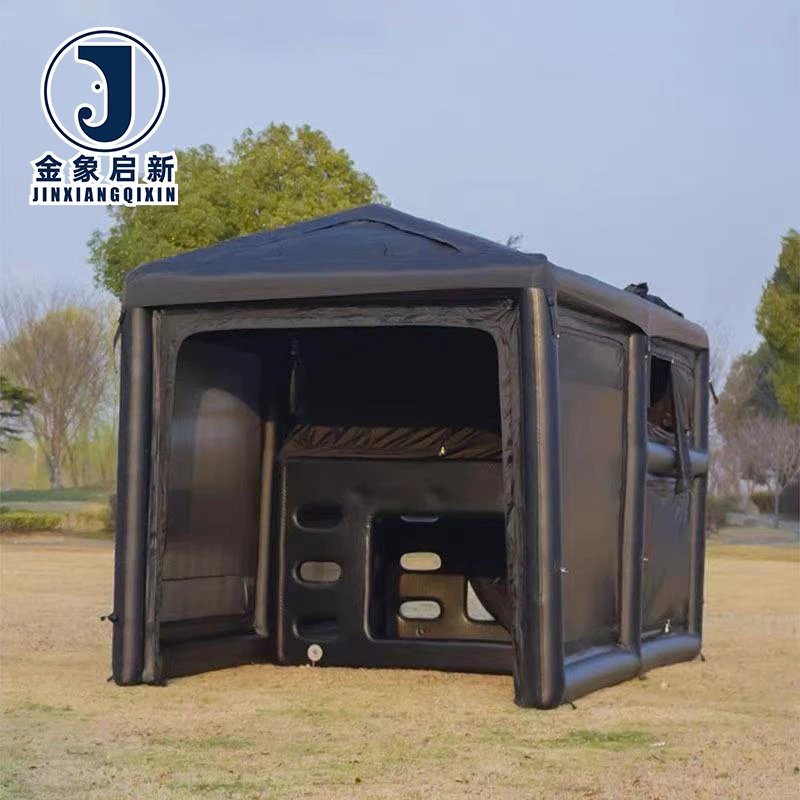
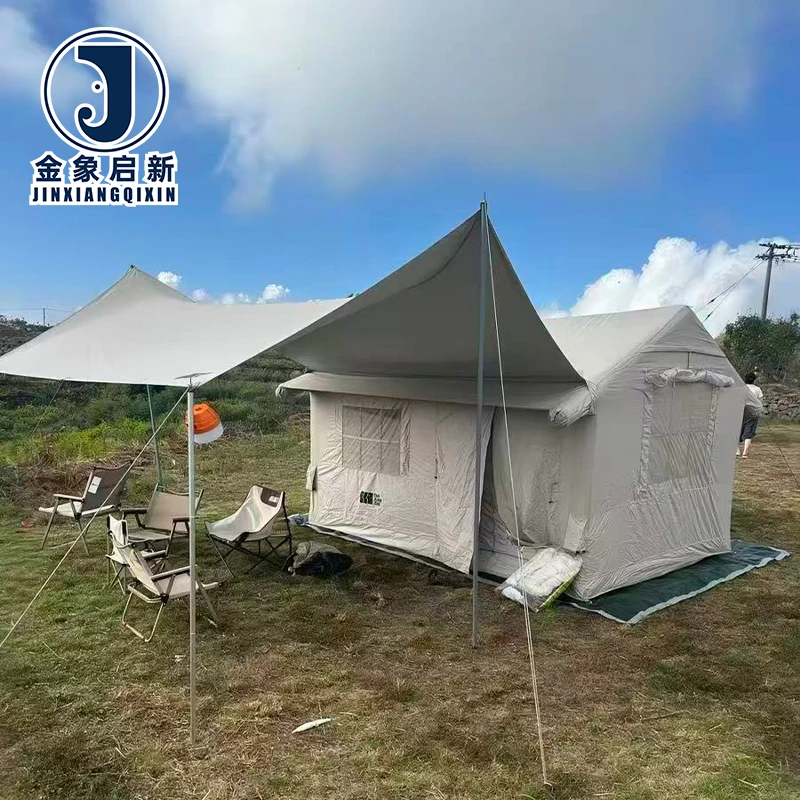
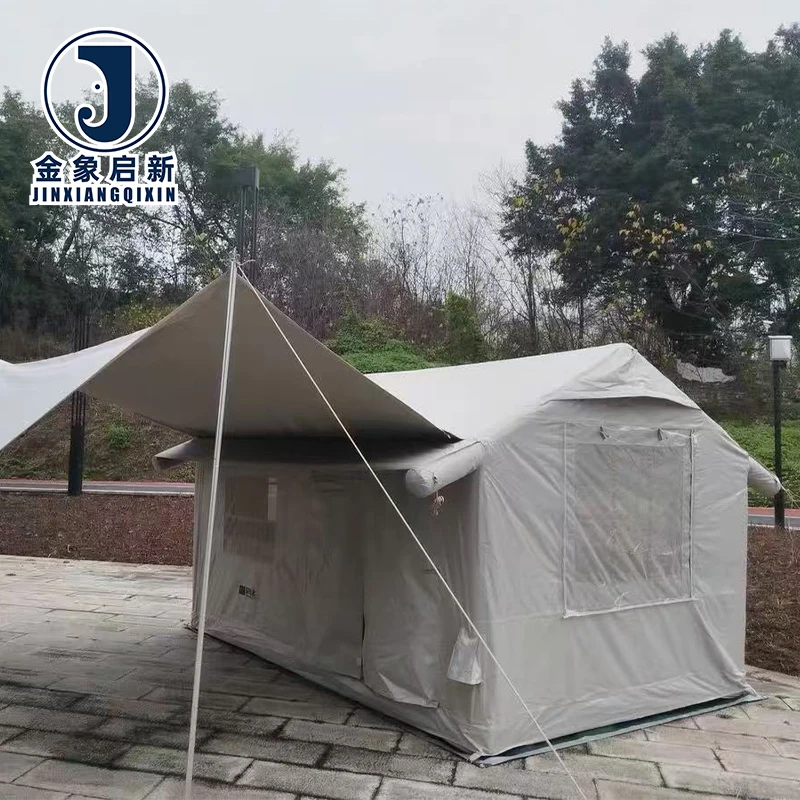
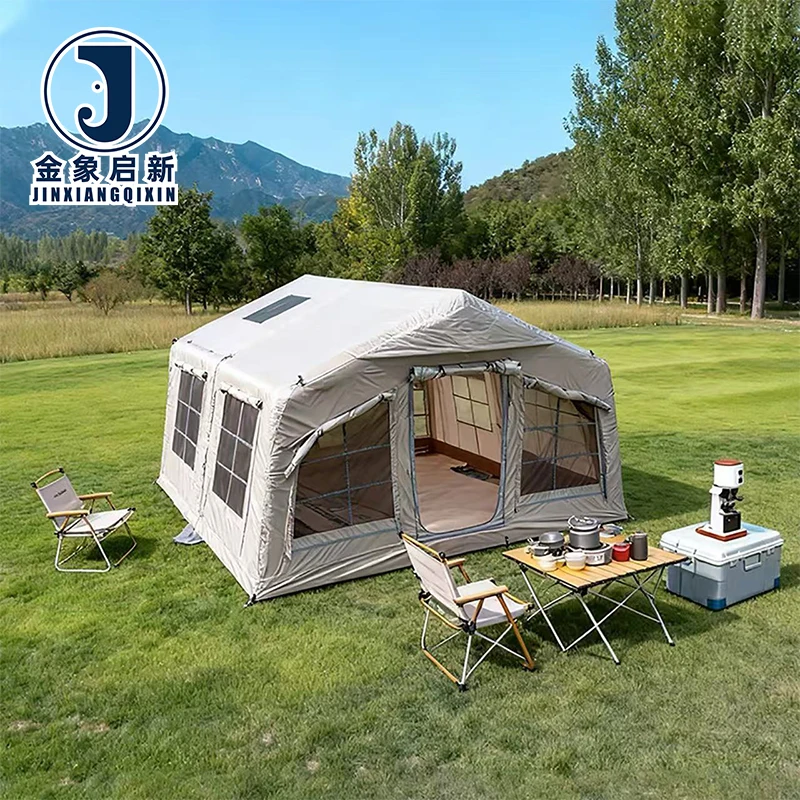
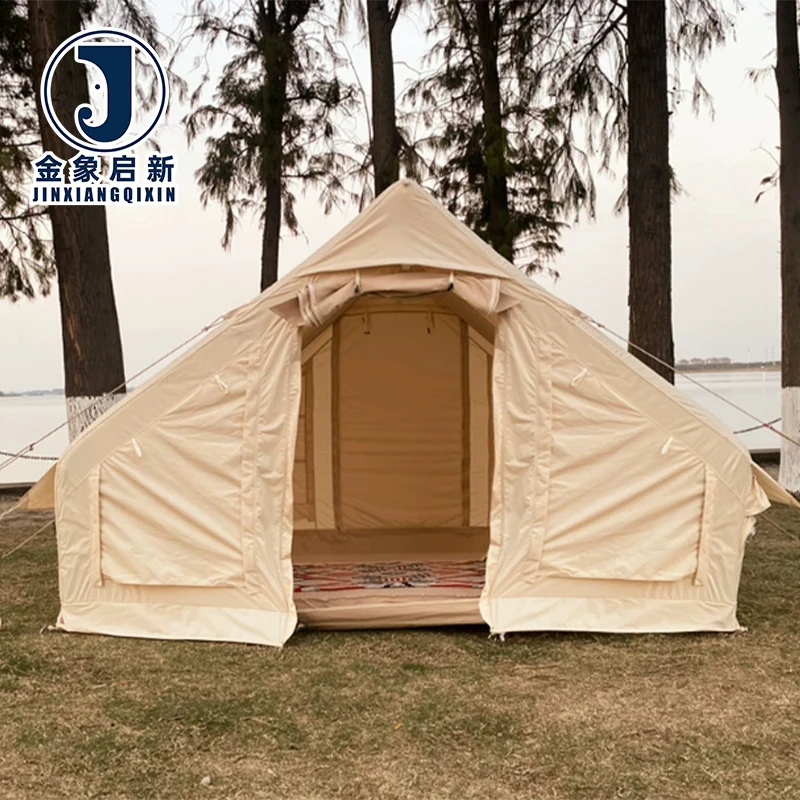
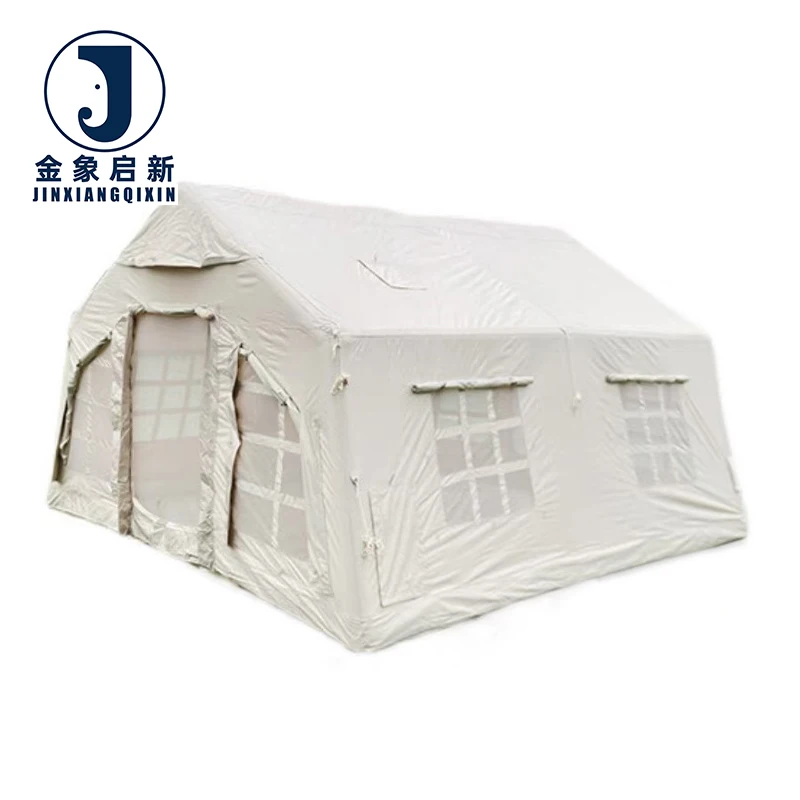
Inflatable Tent with waterproof, UV-resistant, and fire-retardant PVC tarpaulin for continuous commercial deployment.
- Full OEM/ODM customization available for dimensions, pattern printing, and material thickness
- Welded seam integrity verified through pre-shipment inflation testing
- Batch-to-batch colour and weight consistency across large project orders
Engineered from PVC-coated fabric where coating weight and base fabric adhesion determine long-term pressure retention and structural stability. Material selection balances tensile strength with weld performance at critical stress points.
Backed by dedicated QA/QC inspection at every production stage, 100% pre-shipment verification, and complete documentation packages including material specification sheets and test reports for site compliance audits.
Description
Proven coating process control — Our 30 years focused on PVC coated fabric translates directly into predictable weld behavior and reliable pressure retention for inflatable structures.
Technical Specifications
| Parameter | Value |
|---|---|
| Product Type | Inflatable Tent |
| Core Material | PVC tarpaulin |
| Product Form | Inflatable structure |
| Key Performance | Waterproof, tear-resistant |
| Fire-Retardant Treatment | Available in flame retardant grades — confirm the grade required for your market |
| Anti-Static Treatment | Available upon request — surface resistance or standard to be confirmed |
| UV Resistance | UV-resistant treatment available — test basis to be confirmed for your application |
| Certifications | ISO9001, ISO14001, ISO45001, CE |
| Customization | OEM & ODM (sample customization, pattern printing, material selection, product design, size adjustment, material thickness modification, custom color matching) |
| Quality Control | Strict full-process inspection; inflation testing before shipment to verify pressure retention and seam integrity |
Application Suitability
| Application | Exposure & Requirement |
|---|---|
| Construction site temporary command post | Continuous outdoor exposure, wind load, equipment abrasion, rapid deployment and relocation |
| Outdoor event logistics shelter | High foot traffic, weather variability, frequent inflation/deflation cycles, visual branding requirements |
| Emergency response command center | All-weather reliability, fast erection under time pressure, interior climate containment |
| Mobile field station for industrial surveys | Remote deployment, UV and temperature cycling, repeated packing and transport |
Why "Flame Retardant" on a Data Sheet Means Nothing Without the Grade
A fire classification is only useful when it matches the standard enforced on your specific job site or event venue.
When sourcing an inflatable tent for construction, mining, or public event use, the safety officer will ask for the test standard — not a marketing claim. We see buyers receive fabric labeled "flame retardant" only to discover the grade does not satisfy the local fire marshal or the site’s insurance auditor. Without a documented classification tied to a recognized standard such as DIN 4102, NFPA 701, or the equivalent in your market, the shelter may fail inspection before it is ever inflated [NEED_CITE: fire classification standards for temporary structures in industrial and public event settings]. Specify the exact grade your project demands and request the corresponding batch test report before production begins.
Full OEM and ODM Scope for Inflatable Tent Projects
Working with a dedicated inflatable tent manufacturer means every dimension, seam layout, and material choice can be matched to the deployment scenario. Our R&D team of 10 technicians handles product design, size adjustment, material thickness modification, and custom color matching from initial sketch through sample approval. Pattern printing and branding integration are managed in-house, so logos and safety markings remain aligned with panel seams and inflation chambers. Whether the requirement is a single prototype for field evaluation or a repeat order of identical units, the custom inflatable tent workflow stays under one quality system from coating to final inflation test.
Coating Weight, Base Fabric, and the Balance That Holds Pressure
The ability of an inflatable structure to maintain internal pressure over a full shift depends on the interplay between the PVC coating weight and the base fabric’s tensile properties. A heavier coating does not automatically deliver higher burst resistance if the underlying yarn denier and weave density are insufficient to carry the load. Conversely, a tightly woven base fabric with too thin a coating may resist tearing but allow micro-leakage at flex points. Our three full production lines and 36 sets of professional processing equipment let us adjust coating application and base fabric selection together, ensuring the composite material meets the pressure retention and handling demands of your specific inflatable tent design [NEED_CITE: relationship between coating weight and base fabric tensile strength in PVC coated fabrics per ISO 1421].
Reading the Specification Sheet Beyond the Headline Number
Buyers often focus on a single figure when evaluating coated fabric, yet real-world performance depends on several parameters acting together. The base fabric denier and weave density govern how a puncture or cut propagates under tension — a high-denier yarn in a ripstop weave limits tear spread far more effectively than a plain weave of the same thread count. The coating method, whether knife-over-roll, laminating, or calendering, directly influences peel strength at welded seams, which is the most common failure point on inflatable structures. Fire-retardant and anti-static treatments must be verified against the specific test standard your project requires, because grades that satisfy one jurisdiction may not satisfy another. Surface finish, whether glossy or matte, affects both cleanability in dusty site conditions and the adhesion of printed graphics that must survive repeated inflation cycles. Understanding these interactions prevents specification gaps that only surface during deployment.
The Hidden Cost of a Specification Mismatch on Inflatable Structures
When batch-to-batch coating weight drifts below the agreed value, the inflatable structure may hold pressure during the pre-shipment test yet slowly sag midway through an event or a night shift on site. Color variation between rolls becomes visible the moment two panels are welded side by side, forcing a rework cycle that delays the entire project schedule. A fire-retardant grade that does not match the site’s enforced standard can shut down a venue or construction zone until compliant replacement fabric arrives. Welded seams that fail before the fabric itself are almost always traceable to inconsistent coating thickness at the joint, where heat and pressure during welding require a predictable material profile [NEED_CITE: common causes of welded seam failure in PVC coated inflatable structures]. Each of these scenarios is preventable through disciplined process control and thorough pre-shipment documentation.
Why Project Teams Source Their Inflatable Tent Here
Nearly 30 years of continuous PVC coated fabric production have given us deep process knowledge that directly affects weld consistency and pressure retention on inflatable structures. Our 9,180 square meter facility runs three full production lines with 36 sets of professional equipment, providing the capacity to fulfill repeat orders without shifting material between machines. A 10-person R&D team supports each custom inflatable tent project from material selection through sample development, typically delivering prototypes within days for approval. Dedicated QA and QC staff conduct inspections at every production stage, culminating in a 100 percent inflation test before dispatch that verifies pressure retention and seam integrity on every unit. This production discipline is backed by ISO9001, ISO14001, ISO45001, and CE certifications, giving your compliance team the documentation framework they need for project submissions.
Documentation & Verification
- Material specification sheet detailing base fabric, coating type, and confirmed performance parameters for each inflatable tent order
- Batch-specific quality inspection report recording inflation test results, seam integrity checks, and dimensional verification
- Fire-retardant and anti-static test reports matched to the grade requested for your project jurisdiction
- ISO9001, ISO14001, ISO45001, and CE certificates available for compliance submission packages
- Pre-shipment inspection record including pressure retention test and photographic evidence per unit
- Certificate of origin and customs documentation supporting international shipment of inflatable structures
Fabrication, Handling & Storage
- Weld temperature and dwell time must match the specific PVC coating thickness to achieve full peel strength at inflatable chamber seams
- Reinforce all inflation valve mounting points with additional PVC tarpaulin layers to distribute stress across the base fabric weave
- Store rolled inflatable tent material upright in a dry environment to prevent permanent creasing of the coated surface
- Allow cold-stored PVC tarpaulin to reach ambient temperature before unfolding to avoid coating micro-cracking at fold lines
- Clean with mild detergent only; solvent-based cleaners can degrade the PVC coating surface and compromise future weld adhesion
- Field repairs require compatible PVC adhesive and patch material matching the original coating weight for reliable bond strength
Request a Specification Proposal for Your Inflatable Tent Project
To move from inquiry to sample, provide your intended deployment environment and the weather conditions the structure must withstand, along with the fire-retardant or anti-static grade required by your local authority or site safety plan. Include target dimensions, preferred inflation pressure range, and any pattern printing or branding requirements so our R&D team can recommend the appropriate material thickness and base fabric construction. If your project calls for multiple identical units, indicate the annual volume and delivery schedule so we can plan production runs for maximum batch consistency.
Frequently Asked Questions
Q: What fire-retardant and anti-static grades are available for inflatable tent fabric?
A: We offer PVC tarpaulin in multiple fire-retardant grades and can supply anti-static treatment for your inflatable tent. Because required standards vary by country and site, confirm the specific classification your project enforces, such as DIN 4102, NFPA 701, or an equivalent, and we will match the formulation and provide the corresponding batch test report.
Q: How is batch-to-batch color and material consistency controlled across large orders?
A: Every production run of our custom inflatable tent material is monitored by dedicated QA and QC staff who verify coating weight, color reference, and base fabric parameters against the approved sample. A batch-specific inspection report accompanies each shipment so you can confirm consistency before fabrication or deployment begins.
Q: What OEM/ODM customization options are available for size, printing, thickness, and color?
A: Our 10-person R&D team supports full OEM and ODM for inflatable tent projects, including size adjustment, material thickness modification, custom color matching, and pattern printing. Samples are developed within days for your approval before bulk production begins on any of our three full production lines.
Q: How do you verify seam integrity and pressure retention before shipment?
A: Every inflatable tent undergoes a full inflation test at our facility prior to dispatch. Dedicated QA staff measure pressure retention over a defined period and inspect all welded seams for leaks, documenting the results in the pre-shipment inspection record that ships with your order.
Q: What documentation is included for customs and project compliance submissions?
A: Each inflatable tent order ships with a material specification sheet, batch quality inspection report, fire-retardant or anti-static test reports where applicable, ISO and CE certificates, pre-shipment inspection record, packing list, and certificate of origin to support both customs clearance and site compliance audits.
Related products
-
Waterproof Inflatable Camping Tent Outdoor Easy Setup Air Tent for Camping
Read more -
Outdoor Portable Camping Inflatable Tent Luxury All-Season Use Overnight Large Space Rainproof Insulated Quick Automatic Opening
Read more -
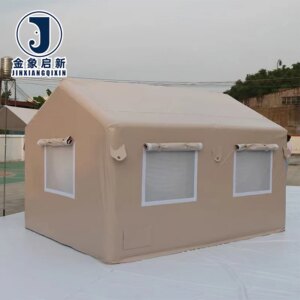
Inflatable Camping Tent PVC Waterproof Four-Season Outdoor Air Tent with Quick Automatic Opening for 3-4 Person
Read more -
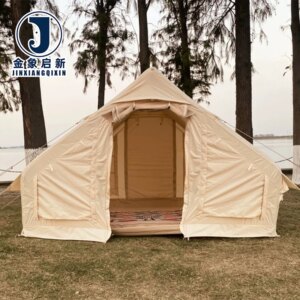
Four-Season Inflatable Tent Single Layer >3000mm Waterproof Windproof Quick Automatic Opening PVC Fabric Eco-Friendly
Read more