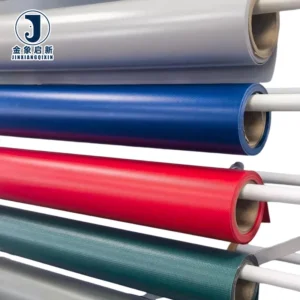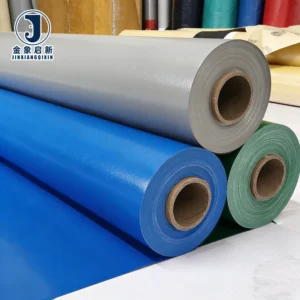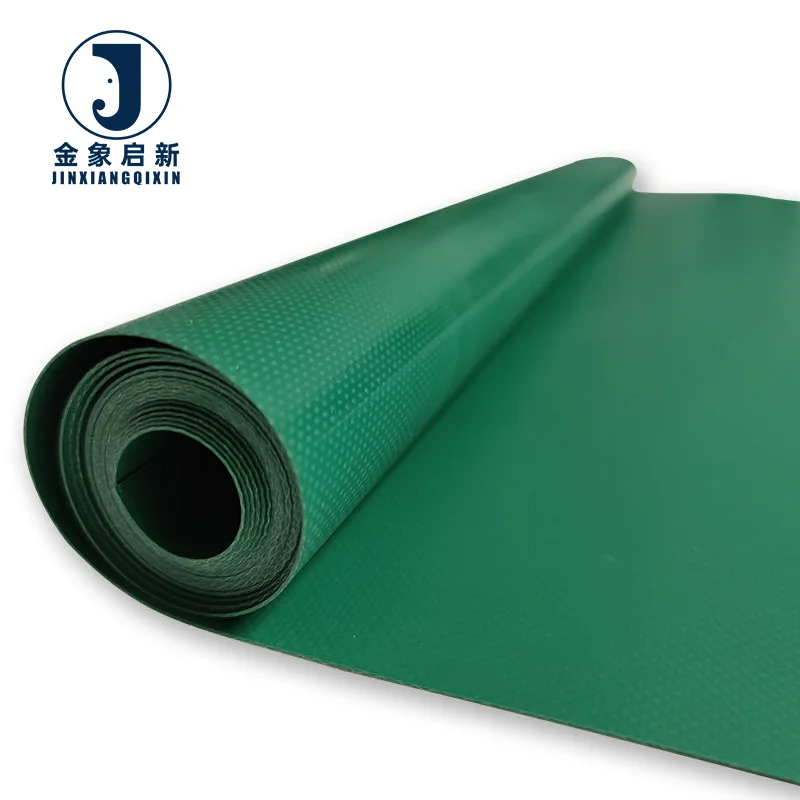
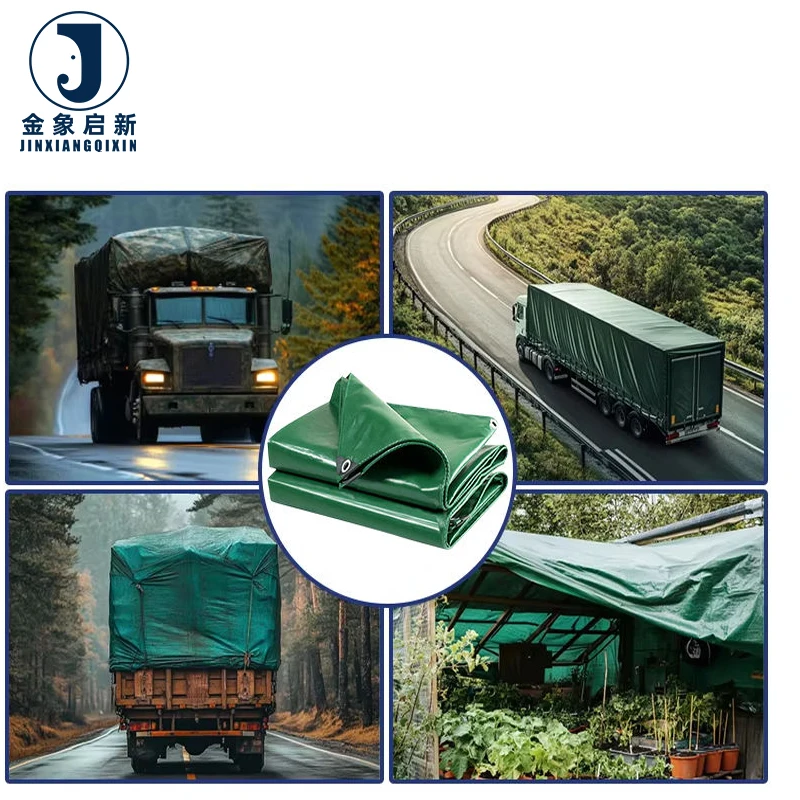
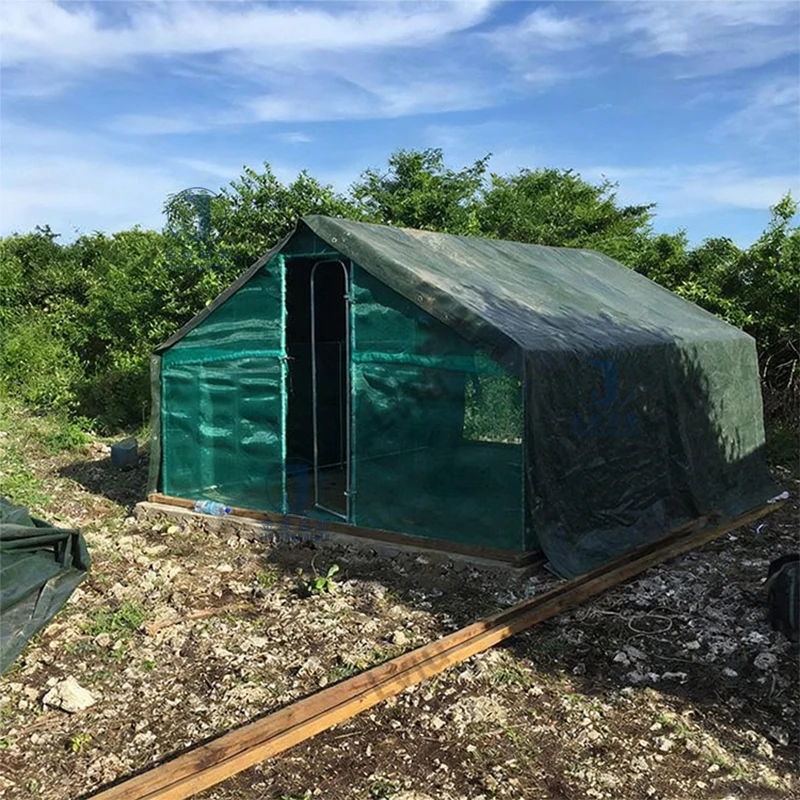
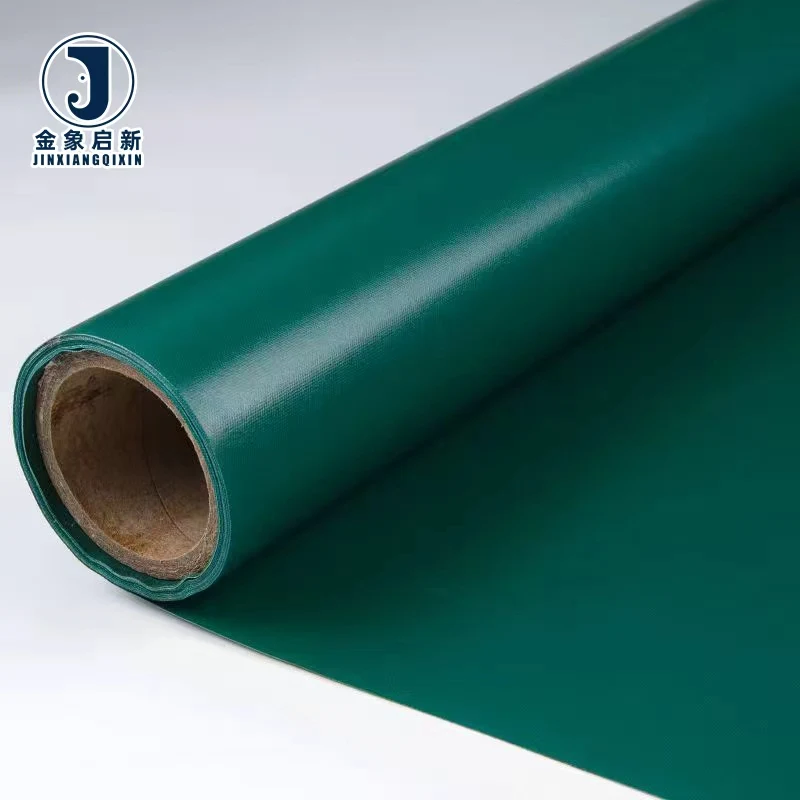
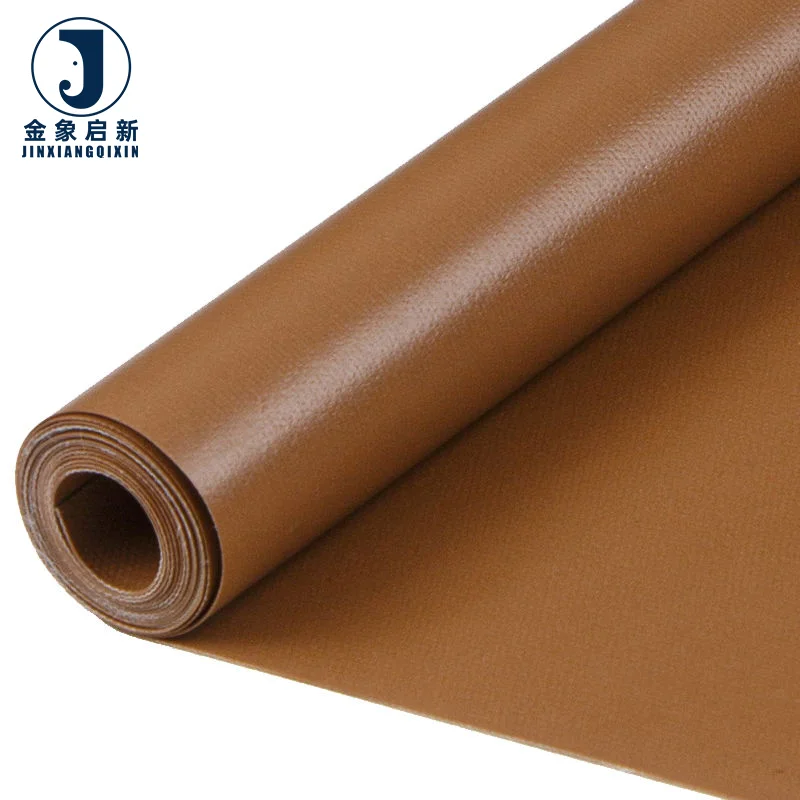
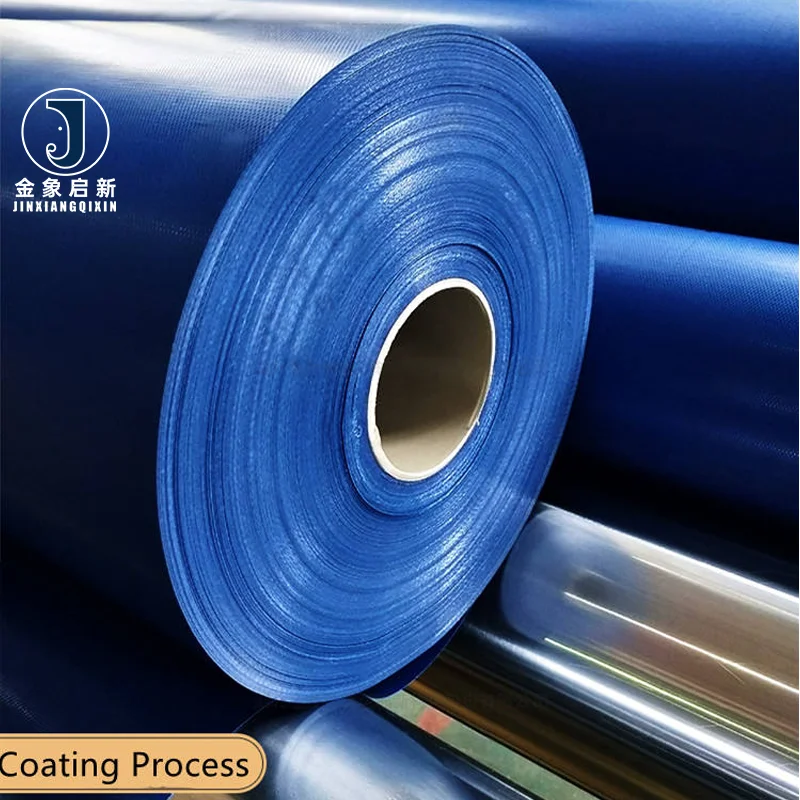
PVC Tarpaulin Roll — available in 350–900 g/m² GSM with base fabrics from 500D to 2000D, water resistant and anti-UV treated options across multiple thickness grades.
- Deep process control over coating weight ensures GSM accuracy on delivery
- Roll-to-roll color consistency supports side-by-side installation without visible variation
- Custom width, length and printing available with sample development in days
Backed by nearly 30 years of coated fabric expertise and 100% pre-shipment inspection on every roll.
Description
Deep Process Control — Every PVC coated tarpaulin roll is subject to stage-by-stage QA with 100% pre-shipment inspection, ensuring the coating weight and base fabric denier you specify are exactly what arrives at your warehouse.
Technical Specifications
| Parameter | Value |
|---|---|
| Product Type | PVC Coated Tarpaulin Roll |
| Base Fabric Material | Polyester |
| Yarn Count Options | 500D×840D / 500D×1000D / 1000D×1000D / 1000D×1300D / 1300D×1300D / 1000D×2000D |
| Weight Range | 350 / 400 / 420 / 500 / 600 / 650 / 750 / 900 GSM |
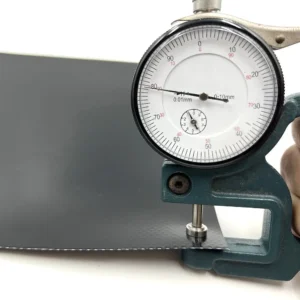
| Total Thickness | 0.29 mm – 0.65 mm |
| Density (Mesh Count) | 30×19 / 20×20 / 30×15 |
| Tensile Strength (Warp) | 1650 N – 3900 N |
| Tensile Strength (Weft) | 1600 N – 3500 N |
| Coating Material | PVC |
| Waterproof | Yes |
| Flame Retardant | Available in flame retardant grades — confirm the grade required for your market |
| UV Treatment | Available with anti-UV treatment — test basis to be confirmed per order |
| Color | Customizable |
| Edge Treatment | High-temperature heat-sealed seamless edge wrapping |
| Certifications | ISO, CE |
Application Suitability
| Application | Exposure & Requirement |
|---|---|
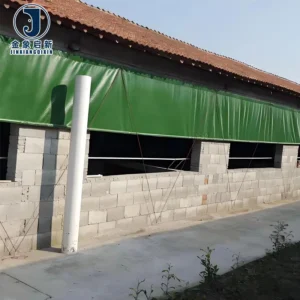
| Truck and trailer side curtains | Constant flexing at load points, road debris abrasion, continuous UV exposure, wind-driven rain ingress |
| Tent and awning fabrication | Prolonged sun exposure, wind uplift stress on seams, repeated folding and deployment cycles |
| Construction site and equipment covers | Puncture risk from sharp edges, standing water, dust and chemical splash, high wind loading |
| Pond and reservoir liners | Permanent water contact, soil chemistry, root penetration, sustained hydrostatic pressure |
| Inflatable and membrane structures | Internal air pressure load, UV degradation at high altitude, welded seam integrity under tension |
| Balcony and pergola rain covers | Residential aesthetic requirement, UV colour stability, lightweight handling and easy installation |
Why Your Roll Specification Needs More Than a GSM Number
A quoted GSM figure alone does not tell you how the PVC coated tarpaulin roll will perform once fabricated and installed. Base fabric denier, mesh density, and coating adhesion together determine real-world behaviour — not weight per square metre in isolation. I have reviewed too many incoming shipments where the roll weight matched the quotation but the base fabric was a lighter construction, compensating with a thicker coating that delaminated under flex stress [NEED_CITE: relationship between coating weight and base fabric tensile contribution in PVC coated fabrics]. When a distributor installs side-by-side panels from such rolls, the inconsistency becomes visible under load, and the weaker construction fails first at the weld line or eyelet zone.
Full Catalogue Coverage Across Light to Heavy-Duty Grades
This PVC tarpaulin roll range spans six base fabric constructions from 500D×840D through to 1000D×2000D, giving buyers sourcing multiple product lines a single point of supply. Each yarn count pairs with specific mesh densities and GSM grades, so a 500 GSM roll on a 30×19 weave behaves differently from a 500 GSM roll on a 20×20 construction — and the tensile data reflects that distinction. Warp strength ranges from 1650 N on the lighter grades to 3900 N on the heaviest, which matters when you are specifying fabric for a tensioned membrane versus a simple equipment dust cover.
Coating Consistency Across Container-Volume Orders
Batch-to-batch colour and coating uniformity is where many bulk orders fall short. When multiple PVC coated tarpaulin rolls from the same container are unrolled side by side on a truck curtain or awning frame, even minor shade variation becomes obvious to the end user [NEED_CITE: batch colour consistency challenges in PVC coated fabric production]. Our dedicated in-process QA at every production stage addresses this directly — coating weight is checked during the coating run, not only at final inspection, and colour is verified against the agreed reference before rolls are packed for dispatch.
Reading the Numbers: How Denier, Density and GSM Interact
The yarn count designation tells you the thickness of the polyester filaments in the warp and weft directions. A 1000D×2000D base fabric uses heavier yarns than a 500D×840D, which directly increases the load each individual thread can carry before breaking. However, denier alone does not set the tear resistance — the mesh count (threads per unit area) determines how many yarns share the load and how far a tear propagates before it is arrested by a perpendicular thread. This is why a 750 GSM roll on a 20×20 mesh can show lower warp tensile than a 900 GSM roll on a 30×15 mesh despite the GSM gap being relatively narrow. Thickness, measured from 0.29 mm to 0.65 mm across the range, correlates with coating volume but should never be used as a substitute for GSM verification, since a thicker coating on a lighter base fabric inflates thickness without adding structural strength.
The Hidden Cost of Specifying on Price Per Kilogram
When procurement decisions are driven by cost per kilogram rather than verified performance per square metre, the consequences surface at the fabrication stage. A PVC tarpaulin roll with the correct GSM achieved through excessive coating on a thin base fabric will pass a weight check but fail a tensile test — and it is the tensile and tear values that determine whether a truck curtain survives its first season of highway flexing. Welded seams on such material tend to fail where the load cycles most, because the coating-peel strength cannot compensate for the weaker substrate [NEED_CITE: weld failure modes in PVC coated fabrics with high coating-to-base-fabric ratio]. For distributors, this means warranty claims and replacement costs that erase any initial savings.
What Backs the Specification Sheet
Our 10-person R&D team handles material selection, sample development and custom formulation for every PVC coated tarpaulin roll order, so specification recommendations are based on your application rather than a default catalogue pick. Three full production lines and 36 sets of professional equipment provide the capacity to deliver container-volume orders within typical multi-week lead times for standard grades. Samples for custom widths, colours and treatments are developed within days, allowing you to verify material hand, weld behaviour and colour accuracy before committing to bulk production. Dedicated QA at each production stage — not just end-of-line sampling — means coating weight, colour reference and tensile values are checked while the roll is still on the line. Pre-shipment inspection covers 100% of rolls before packing, with inspection records included in the shipping documentation.
Documentation & Verification
- Material specification sheet stating GSM, base fabric denier, and coating weight per roll grade
- UV and flame retardant test reports supplied for treated grades — verify requirements for your market
- Pre-shipment inspection record covering 100% roll inspection before dispatch
- Roll packing list with individual roll weight and dimensions for container loading plans
- ISO and CE certificates available with every shipment upon request
- Certificate of origin and customs documentation provided for international dispatch
Fabrication, Handling & Storage
- High-temperature heat-sealed edge wrapping withstands standard hot-air welding temperatures without delamination
- Store rolls upright on end-caps to prevent flat-spot deformation on the 0.29 mm – 0.65 mm coating surface
- Allow cold-stored rolls to reach ambient temperature before unrolling to avoid coating micro-cracking
- Reinforce eyelet zones with additional PVC patches when fabricating from lighter GSM grades for tensioned applications
- Use compatible PVC welding tape for field repairs, matching the coating formulation of the roll grade specified
Before You Send the Inquiry
To specify the right PVC tarpaulin roll grade, share your end-use application, the mechanical and environmental loads the fabric will face, and any fire-safety or compliance requirements in your destination market. Let us know the width and roll length you need, whether custom colour or printed branding is required, and your estimated annual volume — this determines production scheduling and pricing tiers. If you are fabricating downstream, tell us your welding method so we can recommend the grade with the best peel-strength match.
Frequently Asked Questions
Q: How is GSM verified per roll and what documentation accompanies shipment?
A: Every PVC coated tarpaulin roll is weighed and measured during in-process QA, with actual GSM recorded against the specification. A material specification sheet stating base fabric denier, coating weight, and GSM accompanies each order, along with a pre-shipment inspection record confirming 100% roll check before dispatch.
Q: What flame-retardant and anti-UV test reports can be supplied?
A: Flame retardant and anti-UV treatments are available across the roll range. Specific test reports are provided for treated grades — buyers should confirm the certification standard required by their destination market so we match the correct treatment grade and documentation to your order.
Q: How is colour consistency controlled across multiple rolls in one order?
A: Colour is verified against the agreed reference at the coating stage and again at final inspection. Rolls from the same production run are grouped for dispatch to ensure side-by-side colour match. For large orders spanning multiple runs, we retain reference samples for batch-to-batch comparison.
Q: What is the MOQ for custom width, colour or printed branding?
A: Minimum order quantities vary by specification — standard widths and colours from stock grades carry lower minimums, while custom colours, non-standard widths and printed branding require dedicated production runs. Share your required specification and volume for a confirmed MOQ and lead time.
Related products
-
PVC Tarpaulin Glossy 650GSM 1000D*1000D 23*23 1.50*50M/R for Multi-purpose Cover SAMPLE FREE
¥2.70 Add to cart -
Heavy Duty Fire Retardant Waterproof PVC Coated Tarpaulin Rolling Tarp Materials for Truck Cover Tents Outdoor Usage
¥1.40 Add to cart -
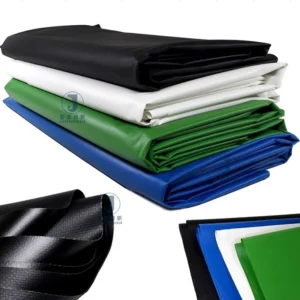
Custom Reinforced Edges Rip-Stop Rubberized PVC Tarpaulin Industry Covering Vinyl Coated Polyester Tarps for Trucks
¥8.00 Select options This product has multiple variants. The options may be chosen on the product page -
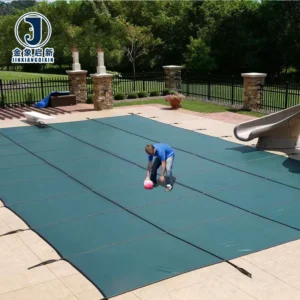
JX Manufacturer Direct Sales PVC Coated Swimming Pool Cover. Durable Waterproof and UV Resistant Floor Swimming Pool Cover Cloth
¥1.78 Select options This product has multiple variants. The options may be chosen on the product page