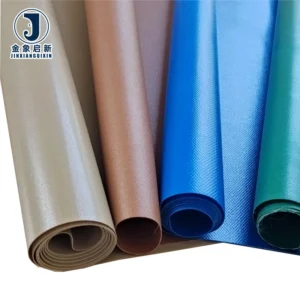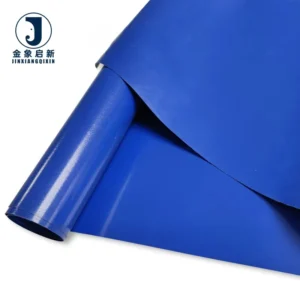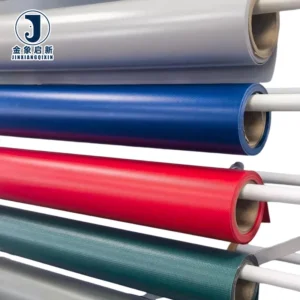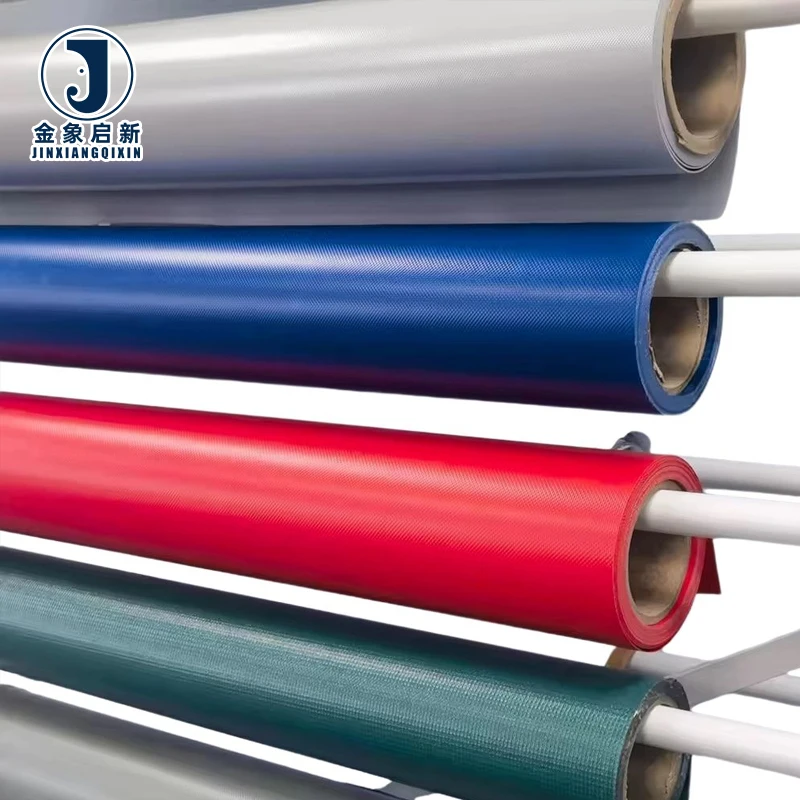
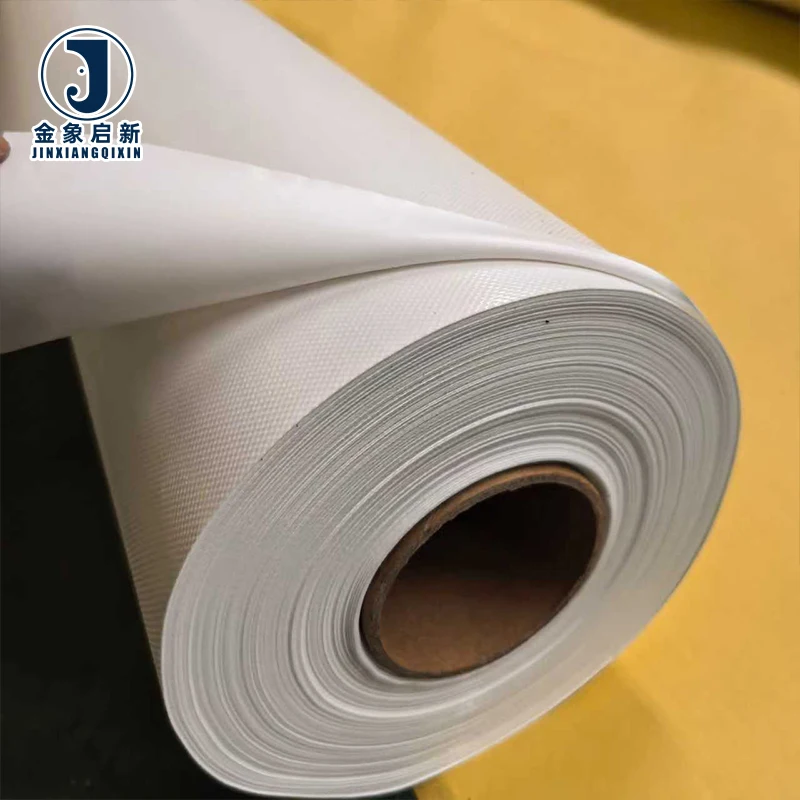
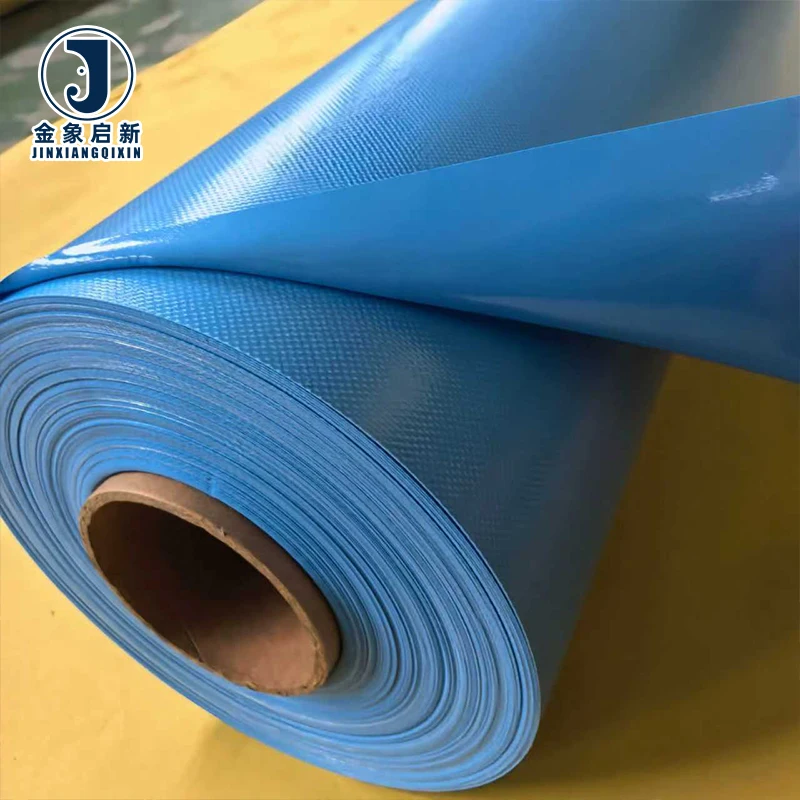
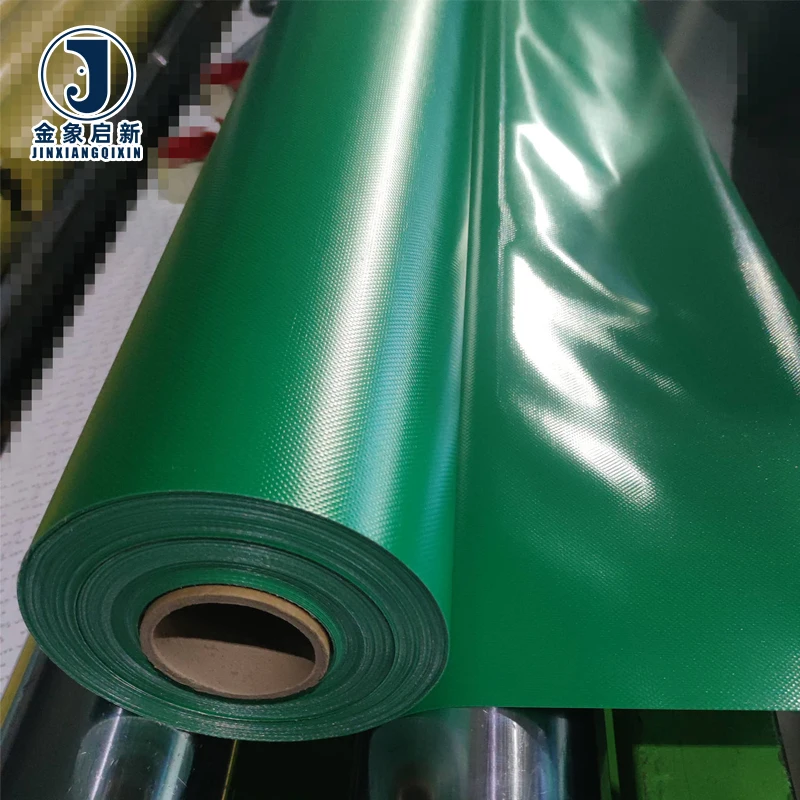
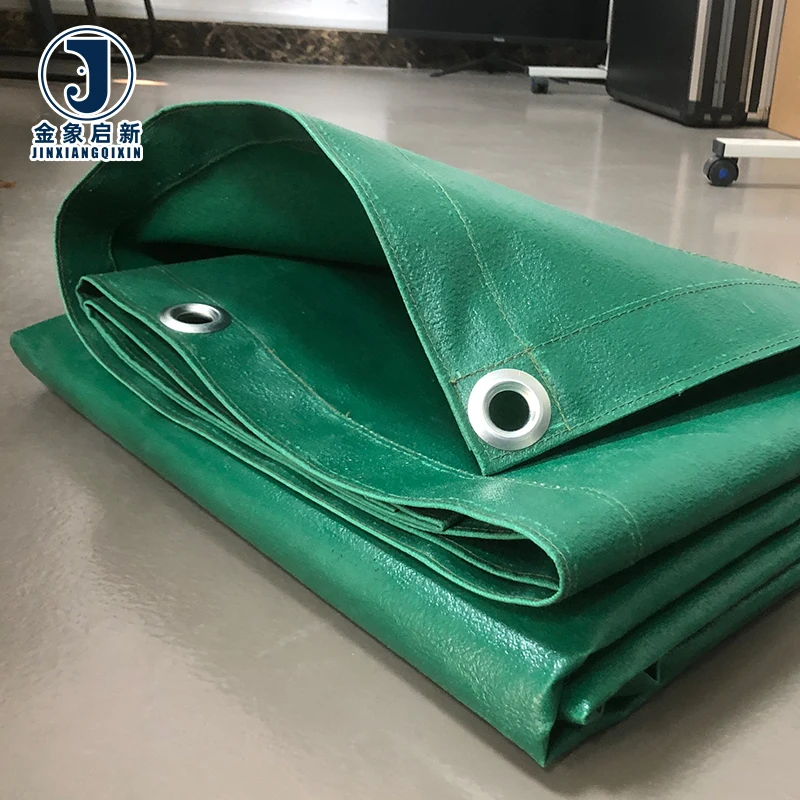
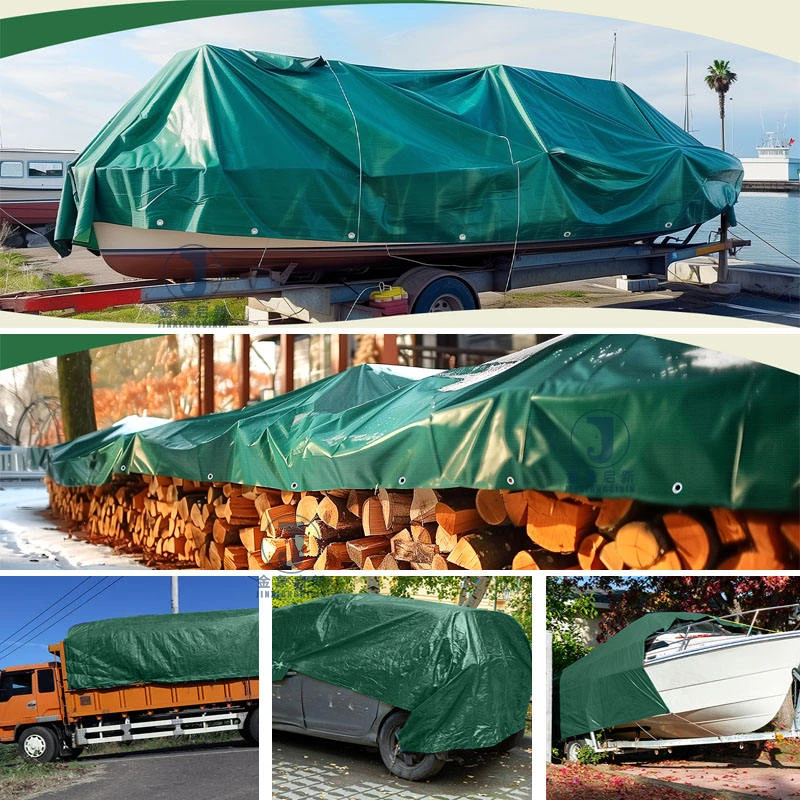
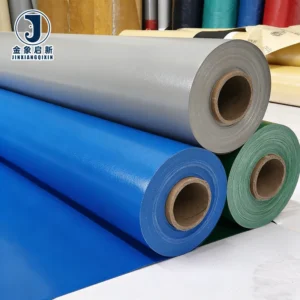
PVC Coated Tarpaulin Fabric — 1000D base, blackout finish, anti-UV & fire retardant treatment
- Full light blocking for tents, shade systems and tensile structures
- HF welding, hot air welding and sewing compatible for flexible fabrication
- Self-cleaning surface with oil, stain, acid and alkali resistance
- Consistent colour across rolls verified through 100% pre-shipment inspection
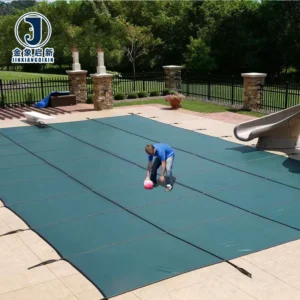
Tensile and membrane structure contractors specify material on coating weight, adhesion and weld behaviour — not just GSM. Blackout coating paired with 1000D base delivers reliable light control for exhibition tents, airport hangars and architectural shade systems where appearance and performance matter side by side.
Backed by dedicated QA/QC at every production stage with 100% inspection before shipment — every roll checked for coating adhesion, surface defects and dimensional accuracy.
Description
Precision coating control — Every roll of PVC coated tarpaulin passes dedicated QA/QC stages with 100% pre-shipment inspection, ensuring the GSM you ordered is the GSM you receive.
Technical Specifications
| Parameter | Value |
|---|---|
| Product Type | PVC Coated Tarpaulin Fabric |
| Base Fabric Denier | 1000D |
| Coating Material | PVC |
| Finish | Blackout |
| Flame Retardant | Available in flame retardant grades — confirm the grade required for your market |
| UV Treatment | Anti-UV treatment available — confirm test basis for your application |
| Antibacterial & Mildew Proof | Yes |
| Oil & Stain Resistance | Yes |
| Acid & Alkali Resistance | Yes |
| Temperature Resistance | High temperature and cold resistance |
| Anti-Oxidation & Weather Resistance | Yes |
| Flexibility | Highly flexible, resistant to cracking |
| Self-Cleaning Surface | Yes |
| Welding Options | HF welding, hot air welding, sewing |
| Tensile / Tear / Peel Resistance | Excellent tensile, tearing and peeling resistance |
Application Suitability
| Application | Exposure & Requirement |
|---|---|
| Event and exhibition tents | Constant assembly and teardown, UV exposure, crowd proximity requiring flame retardant compliance |
| Tensile and membrane structures | Long-term tension loading, wind flutter, architectural fire codes, UV degradation resistance |
| Stadium architectural covers | Large span tension, weather cycling, public assembly fire safety standards |
| Airport hangars and portable storage | Wide unsupported spans, wind uplift, fuel and chemical splash exposure |
| Shade systems and shadings | Continuous solar radiation, thermal cycling, blackout performance for light control |
Why Specified GSM Does Not Guarantee Structural Performance
Coating weight alone tells you nothing about how the base fabric carries load under tension.
When sourcing PVC tarpaulin roll for tensile or shade structures, buyers often anchor decisions on GSM. Yet two rolls at the same stated weight can behave completely differently once installed on a frame. The 1000D base fabric in this PVC coated tarpaulin roll provides the structural backbone — the denier and weave density determine how the material handles tensile forces at anchor points and along weld lines. Coating weight contributes to weather resistance and surface durability, but it is the yarn construction that resists tearing when a corner gusset flexes in high wind [NEED_CITE: tensile and tear test methods for coated fabrics per ISO 1421]. Requesting a material specification sheet that separates base fabric denier from coating weight is the first step in comparing like for like.
Full Welding Compatibility for Complex Tensile Geometry
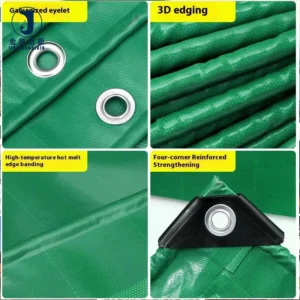
This PVC coated tarpaulin roll supports HF welding, hot air welding and sewing, giving fabricators freedom to choose the joining method that matches their production line and the structural demands of the project. HF welding creates a molecular bond between PVC layers, which is critical for high-tension seams on stadium canopies and airport hangar roofs where seam failure is not an option. Hot air welding works well for on-site adjustments and field repairs during installation.
Blackout Construction for Light-Sensitive Environments
The blackout finish blocks light transmission entirely, which matters for exhibition tents where exhibitors need controlled interior lighting, and for portable storage structures where UV-sensitive inventory is housed. Unlike standard translucent PVC fabrics, this 1000D blackout PVC coated tarpaulin roll eliminates the need for a secondary liner fabric, reducing both material cost and installation time on shade systems and event structures. The self-cleaning surface with oil and stain resistance further reduces maintenance intervals once the structure is in service [NEED_CITE: DIN 4102 fire classification for building materials].
How Base Fabric Denier and Coating Method Define Real-World Behaviour
The 1000D base fabric establishes the mechanical ceiling for this material. Denier refers to the linear mass density of the yarn — higher denier yarns resist tearing propagation better than lighter yarns when a puncture or cut occurs under load. In tensile structures, where the membrane is pre-tensioned across steel or cable frameworks, tear resistance at anchor points and along welded seams is the most frequent failure mode. The PVC coating method — whether knife-over-roll, dip, or calender — determines how well the coating adheres to the base fabric, which directly affects peel strength at welded joints. A coating that delaminates under thermal cycling will expose the base fabric to moisture and UV degradation. The blackout construction adds an opaque layer within the coating structure, which also contributes to overall coating thickness and stiffness, influencing how the fabric drapes over curved frameworks and how it responds to heat during HF welding.
The Hidden Cost of Batch-to-Batch Colour Variation
When ordering multiple rolls for a single tensile structure or a row of exhibition tents, colour inconsistency between rolls becomes immediately visible once the panels are installed side by side. This is not a cosmetic concern — it signals inconsistent coating formulation or curing conditions between production batches, which can also mean variation in UV stabiliser loading and flame retardant distribution. Buyers who accept delivery without verifying roll-to-roll consistency often face costly panel replacement or client rejection after installation [NEED_CITE: colour fastness testing standards for coated architectural fabrics]. Specifying batch-level colour inspection before dispatch prevents this.
Why Sourcing This PVC Tarpaulin Roll Through Jinxiang Works
Three full production lines with 36 sets of professional equipment provide the capacity to fulfil container-load orders of PVC coated tarpaulin roll without splitting production across disconnected shifts. A 10-person R&D team handles custom width, colour matching, pattern printing and sample development, with samples typically ready within days for evaluation. Dedicated QA/QC stations at every production stage — from coating weight measurement to final roll inspection — mean that each roll of this 1000D blackout fabric is verified before it ships. ISO and CE certified processes underpin the documentation package that accompanies every export shipment to over 20 countries. Nearly 30 years of focused coated fabric production means the process controls that prevent GSM drift, colour shift and coating adhesion failures are built into the production routine, not added as an afterthought.
Documentation & Verification
- Material specification sheet stating exact GSM, 1000D base fabric denier, blackout coating and colour reference per roll
- Test reports for anti-UV and flame retardant grades where applicable — supplied with shipment, not upon separate request
- Pre-shipment inspection record covering coating adhesion, surface defects, roll dimensions and weight verification
- ISO and CE certificates with certificate of origin and full customs documentation for export
Fabrication, Handling & Storage
- HF welding parameters must account for blackout layer thickness to achieve full molecular bond without scorching the PVC surface
- Hot air welding temperature and speed should be validated on sample cuts before joining full-width 1000D panels
- Store rolls vertically on pallets in shaded, dry conditions to prevent flat-spot deformation and coating tack in high heat
- Use PVC-compatible cleaners only — solvent-based agents may attack the coating and compromise self-cleaning surface treatment
- Plan panel layout to minimise cross-welds; weld seams parallel to primary load paths on tensile structures for optimal peel strength
Preparing Your PVC Tarpaulin Roll Enquiry
Share the specific tensile or shade structure application, expected span dimensions, and the fire safety code applicable in your target market. Let us know the roll widths and lengths you need, any colour or branding requirements, and whether you need sample rolls for weld testing before committing to bulk. If your project involves multiple rolls installed side by side, flag this so batch colour consistency inspection is included in the production plan.
Frequently Asked Questions
Q: How is GSM verified on arrival and what documentation accompanies each roll?
A: Every roll of PVC coated tarpaulin roll is weighed at dedicated QA/QC stages during production and again at pre-shipment inspection. A material specification sheet accompanies each shipment, stating the exact GSM, base fabric denier, coating type and colour reference. This lets you verify on arrival that the coating weight matches what was quoted, rather than discovering a lighter material after it is on the framework.
Q: Which flame retardant grades are available and how do they align with target market fire safety codes?
A: This 1000D blackout fabric is available in flame retardant grades to meet various market requirements. The specific grade needed depends on your local building or public assembly fire code — for example, European projects may reference DIN 4102 classification while other markets use different standards. Confirm the required grade at enquiry stage so the correct formulation is applied and the matching test report is included with your documentation.
Q: What is the test basis for anti-UV treatment and expected outdoor service life?
A: Anti-UV treatment is available for this PVC coated tarpaulin roll, with the test basis confirmed at the specification stage based on your installation climate and expected exposure duration. UV stabiliser type and loading are matched to the application environment. Request the UV test report with your sample or first shipment to verify the treatment level before committing to full production volume.
Q: How is batch-to-batch colour consistency controlled across multiple rolls for one project?
A: When multiple rolls are ordered for a single installation, production is scheduled within the same batch cycle and coating formulation lot. Roll-to-roll colour inspection is conducted before dispatch to catch any visible variation. If your project is particularly sensitive to colour matching — such as adjacent panels on a tensile canopy — note this in your enquiry so additional checkpoint inspections are scheduled.
Q: What welding methods are compatible with this 1000D blackout PVC coated tarpaulin roll?
A: This fabric supports HF welding, hot air welding and sewing. HF welding delivers the strongest bond for structural seams on tensile and architectural applications. Hot air welding suits field repairs and on-site adjustments. Sewing with UV-resistant thread works for non-structural joins or temporary installations. Always run weld tests on sample cuts to dial in temperature, speed and pressure settings for your specific equipment.
Related products
-
Hot Selling Heavy Duty Waterproof Large Camping Tarp Outdoor Use 500gsm Pvc Laminated Tarpaulin Tent
¥3.20 Add to cart -
PVC Tarpaulin Glossy 650GSM 1000D*1000D 23*23 1.50*50M/R for Multi-purpose Cover SAMPLE FREE
¥2.70 Add to cart -
Wholesale PVC Coated Breathable Tarpaulin Fabric Rolls Waterproof Fire-Retardant for Boys & Girls Outdoor Use
¥0.79 Select options This product has multiple variants. The options may be chosen on the product page -
PVC Tarpaulin Waterproof Triangular Tarpaulin Folha De Tarpaulina Truck Tarpaulin
¥0.90 Select options This product has multiple variants. The options may be chosen on the product page