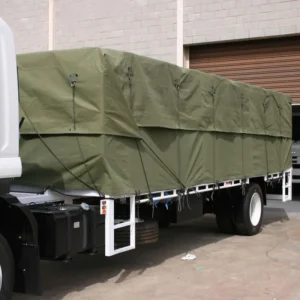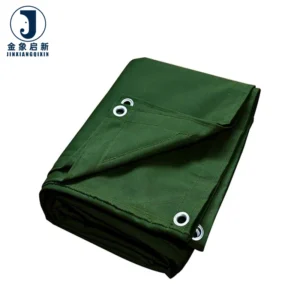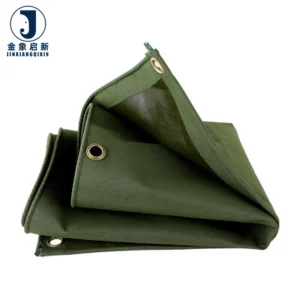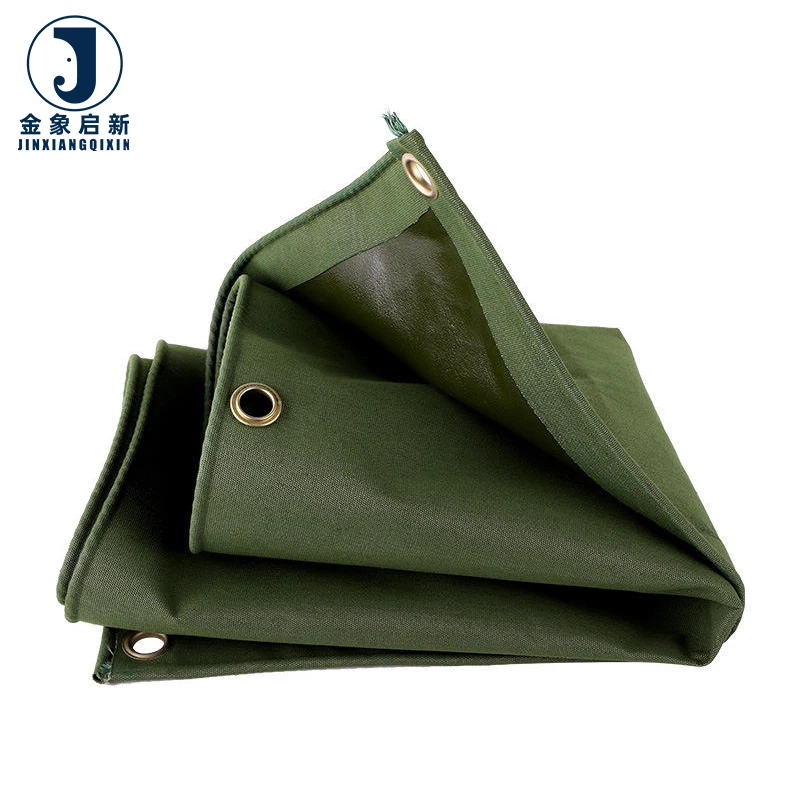
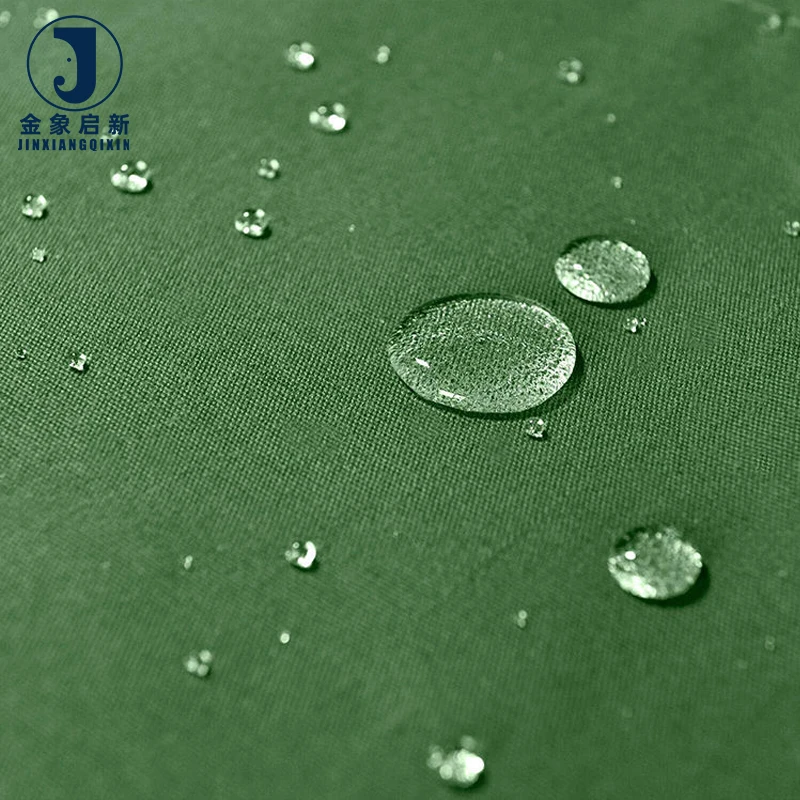
PVC Laminated Canvas Tarpaulin 600gsm, 0.5mm–0.7mm Thickness, 2m Roll Width — polyester-cotton base with 8-12 strand fine cotton yarn, rust-proof aluminum eyelets every 1 meter, welded and sewn seams with poly rope reinforcement.
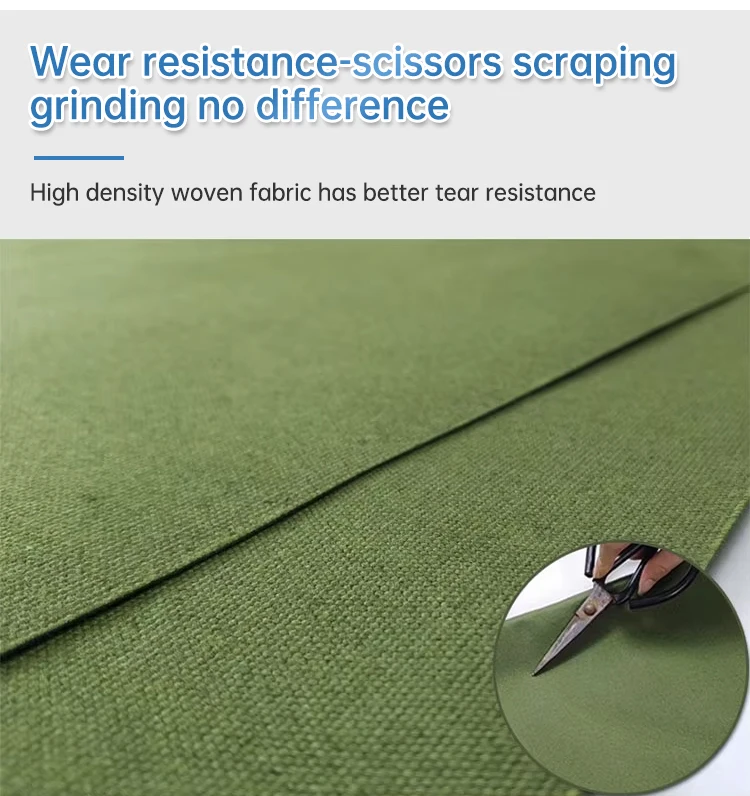
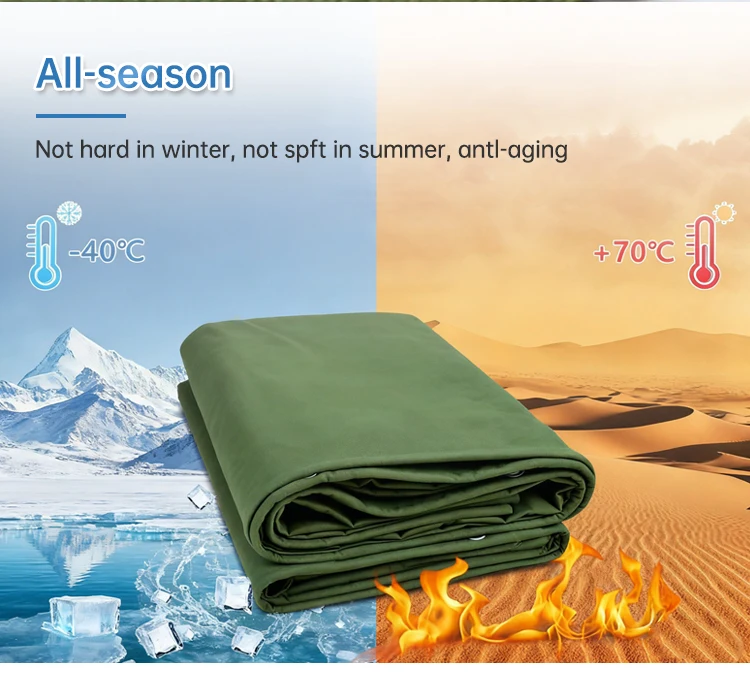
- Lamination bonds PVC to the woven base, balancing tensile strength with flexibility at high- and low-temperature exposure
- Reinforced hems and corner eyelets handle tie-down loads on truck covers and construction site tarps without tearing out
Backed by 100% pre-shipment inspection, 30 years of coated fabric process control, and a 10-person R&D team supporting custom cut-to-size orders.
Description
Nearly 30 years in coated fabrics — this PVC laminated canvas tarpaulin benefits from three full production lines with in-process QA controlling GSM, colour batch consistency and seam reinforcement at every stage.
Technical Specifications
| Parameter | Value |
|---|---|
| Product Type | Canvas Tarpaulin |
| Base Material | Polyester cotton industrial textile, 8-12 strands fine cotton yarn |
| Coating | PVC lamination |
| Weight | 600gsm |
| Total Thickness | 0.5mm / 0.6mm / 0.7mm |
| Roll Width | 2m |
| Roll Length | 100m |
| Colour Options | Army Green Camouflage / Custom |
| Eyelets | Rust-proof aluminum, spaced every 1 metre at corners and hem |
| Edge Reinforcement | Folded hems, welded and sewn with poly rope |
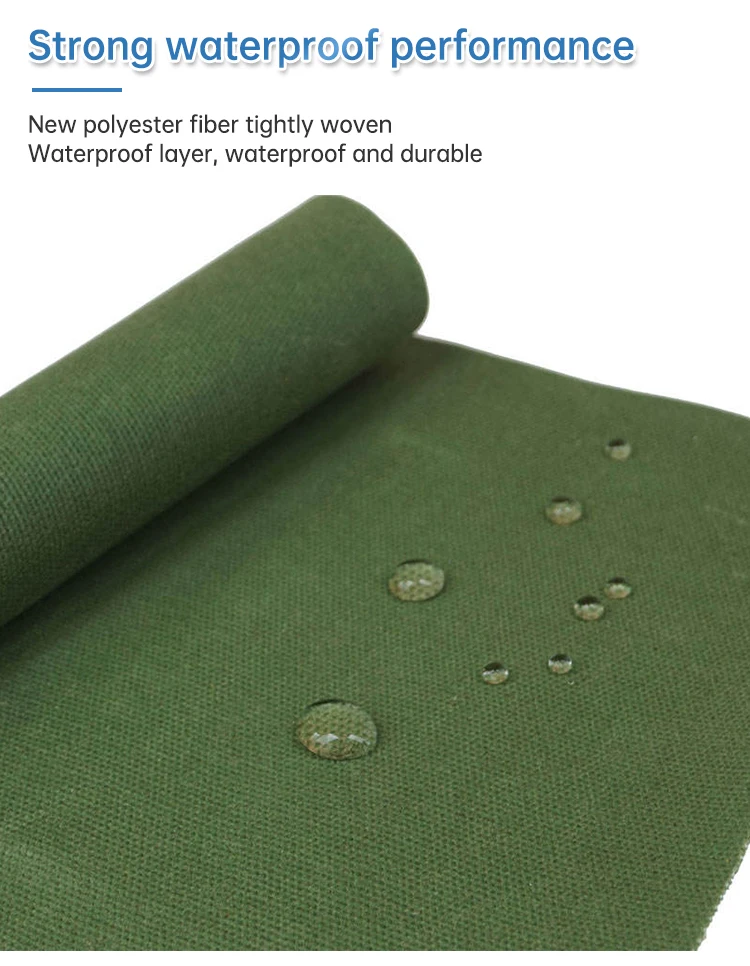
| Water Resistance | Waterproof (rating not stated) |
| UV Treatment | UV resistant (test basis not stated) |
| Flame Retardant | Available in flame retardant grades — confirm the grade required for your market |
| Anti-Static | Not stated — enquire for specific site compliance needs |
| Certification | CE, ISO |
Application Suitability
| Application | Exposure & Requirement |
|---|---|
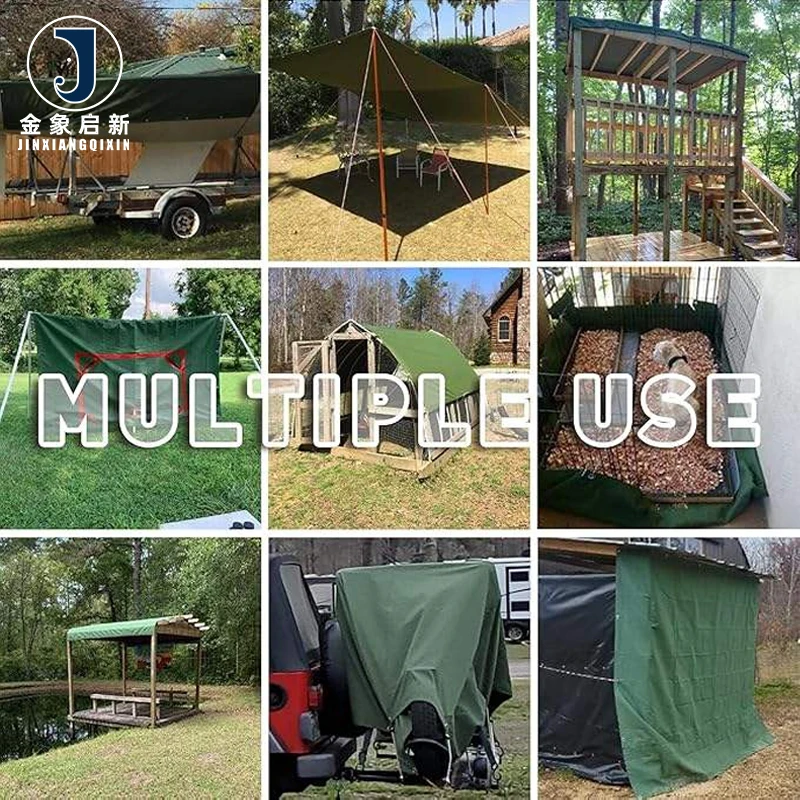
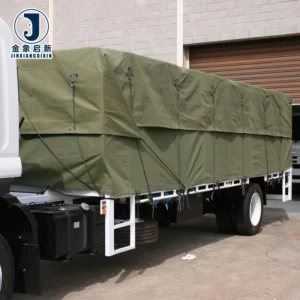
| Truck and trailer covers | Wind load on tie-down points, road debris abrasion, constant flex at fold lines, weather exposure |
| Construction site and equipment covers | Puncture from sharp materials, dust and water ingress, UV exposure over extended outdoor periods |
| Asphalt and hot material covers | Elevated surface temperatures, heavy folding and dragging, chemical contact with bitumen residues |
| Outdoor awnings and shading sails | Continuous solar exposure, wind uplift on eyelets, seasonal folding and storage |
| Camping and event tents | Frequent assembly and teardown, varied weather, weight and packability requirements |
Why GSM Alone Does Not Tell You How Strong Your Canvas Tarp Really Is
A 600gsm canvas tarpaulin with a loosely woven base and thin PVC lamination will tear before a lighter tarp built on a dense polyester-cotton weave.
When buyers compare canvas tarps on weight alone, they miss the factor that actually determines performance under load: the interplay between base fabric density, yarn strand count and coating adhesion. Two tarps both quoted at 600gsm can behave completely differently when a truck cover flexes at highway speed or a construction tarp drags across rebar. The polyester-cotton base in this PVC laminated canvas tarpaulin uses 8-12 strands of fine cotton yarn, which distributes tensile stress across more fibre contact points than a coarser weave at the same weight. [NEED_CITE: tensile and tear test methods for coated fabrics per ISO 1421]
Request a material specification sheet that states base fabric composition alongside GSM, and verify both on arrival rather than assuming the quoted weight tells the full story.
PVC Lamination and Its Effect on Fabric Behaviour
A canvas tarpaulin manufacturer working with PVC lamination rather than single-side coating gains an advantage in dimensional stability. The lamination process bonds the PVC layer through the full weave structure of the polyester-cotton base, reducing the chance of delamination when the material is repeatedly folded or exposed to temperature swings. This matters for truck covers that are rolled and unrolled daily and for construction tarps dragged across rough surfaces.
Seam and Edge Construction for Load-Bearing Covers
The weakest point on any canvas tarp is not the fabric itself — it is where the hem meets the eyelet under wind load. This PVC laminated canvas tarpaulin uses rust-proof aluminum eyelets spaced every 1 metre, with hems that are both welded and sewn around a poly rope core. The poly rope distributes point loads across a wider area of fabric, and the welded-sewn combination prevents seam failure from starting at a single stitch hole. [NEED_CITE: common failure modes at tarpaulin hem and eyelet points under wind uplift]
Understanding the 600gsm Specification in Practice
The 600gsm weight of this canvas tarpaulin includes both the polyester-cotton base fabric and the PVC lamination layer together. In coated fabric construction, the base fabric typically accounts for roughly 40-60% of total weight, with the remainder in coating. A heavier base weave with 8-12 strand yarn contributes to tensile and tear resistance, while the PVC lamination provides waterproofing and surface durability. Thickness options of 0.5mm, 0.6mm and 0.7mm allow selection based on whether the priority is packability for temporary covers or abrasion resistance for long-term site use. Choosing the wrong thickness for the application means either paying for material weight that adds no benefit or installing a tarp that wears through at contact points before the project ends.
The Hidden Cost of Inconsistent Colour and Finish Across Rolls
When a fleet operator orders multiple truck covers or a contractor orders tarps for a visible construction site, colour variation between rolls becomes a problem the moment two panels are installed side by side. This happens when pigment dosing is not controlled per batch or when rolls from different production runs are mixed in the same shipment. For custom colour orders on this PVC laminated canvas tarpaulin, confirming colour reference matching before production and verifying consistency on the pre-shipment inspection record prevents the cost and delay of rejecting an entire container load. [NEED_CITE: batch colour consistency standards for coated industrial fabrics]
Sourcing Canvas Tarps With Verified Specifications and Documentation
Every roll of this PVC laminated canvas tarpaulin is produced on one of three full production lines with dedicated QA checking weight, thickness and coating adhesion at each stage. The 10-person R&D team handles material selection, custom sizing and sample development, so a buyer can request a finished tarp cut to a specific trailer drawing or a roll in a custom colour before committing to bulk volume. A 100% pre-shipment inspection verifies GSM and dimensions against the purchase order, and the dispatch package includes a material specification sheet, packing list, certificate of origin and CE/ISO certificates — removing the guesswork from customs clearance and site compliance checks.
Documentation & Verification
- Material specification sheet stating 600gsm weight, polyester-cotton base composition and PVC lamination type
- Pre-shipment inspection record confirming GSM, thickness and dimensions per roll against order
- Colour reference verification across all rolls within the same production batch
- CE and ISO certificates included with dispatch documentation for customs and site compliance
- Certificate of origin and full packing list for container load traceability
Fabrication, Handling & Storage
- Weld hems using temperature settings matched to the PVC lamination layer to avoid burning through the 600gsm base
- Space rust-proof aluminum eyelets at 1-metre intervals to match the poly rope reinforcement line
- Store 2m-wide rolls upright on pallets to prevent creasing across the 100m length
- Avoid dragging the PVC-coated surface over sharp edges during installation to protect the lamination bond
- Clean with mild detergent only; solvents may degrade the PVC lamination surface over time
- Patch field damage with PVC-compatible adhesive patches matching the lamination chemistry
Planning Your Canvas Tarpaulin Order
To specify the right configuration, share the application type and exposure conditions, whether you need roll stock at 2m × 100m or finished tarps cut to vehicle or structure dimensions, your target market’s fire classification requirements if applicable, and any custom colour or branding needs. Sample development is available within days for colour and finish confirmation before bulk production begins.
Frequently Asked Questions
Q: Can you supply finished canvas tarps cut to my truck or trailer dimensions?
A: Yes. Provide the vehicle model or dimensional drawing and we produce custom-cut finished tarps with eyelets and hem reinforcement placed to match the tie-down points on your specific trailer. Samples can be developed to confirm fit and finishing before bulk production runs.
Q: How do you guarantee the 600gsm weight matches what is quoted?
A: Every roll undergoes 100% pre-shipment inspection where GSM is measured and recorded against the purchase order specification. The inspection report accompanies the shipment so you can cross-check on arrival. We recommend spot-weighing a sample panel from each roll upon receipt.
Q: What is the lead time for custom sizes and colours?
A: Lead times depend on the order volume and complexity of custom requirements such as non-standard colour, width or printed branding. Sample development for custom specifications typically takes days. Confirm timing at quotation stage based on your exact configuration and delivery schedule.
Q: Are UV and flame-retardant treatments available with test reports?
A: UV-resistant and flame-retardant formulations are available, but the specific grade must be confirmed against your market’s regulatory requirements. Request the test report for the grade applicable to your project so you can verify compliance with local building or transport codes before ordering.
Q: Can I order mixed sizes and colours in one container shipment?
A: Yes. Roll stock and custom-cut finished tarps in different sizes or colours can be consolidated into a single container load. Each roll and finished piece is individually labelled and listed on the packing list for easy identification on arrival.
Related products
-
Heavy Duty Canvas Tarpaulin 600 GSM | Custom Made
Read more -
Custom PVC Coated Tarpaulin for Truck Cover – Full Range
Read more -
Thick 0.9mm PVC Laminated Woven Plain Canvas Tarpaulin Truck Canopy Waterproof Outdoor Awning Shading Sail Pet House Accessories
¥20.00 Add to cart -
Heavy Duty Waterproof PVC Coated Abrasion-Resistant Very Heavyweight Asphalt Truck Cover Cotton Canvas Tarpaulin
¥10.29 Add to cart