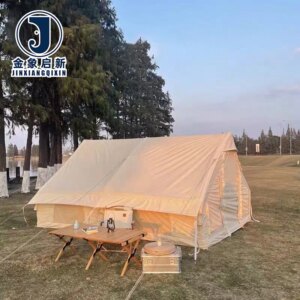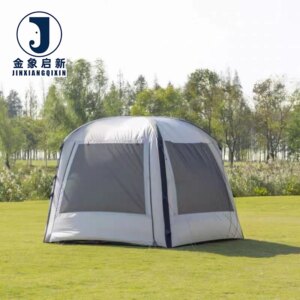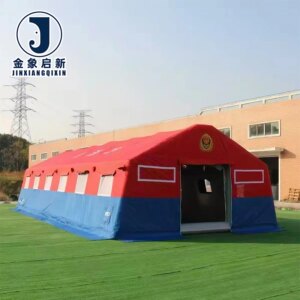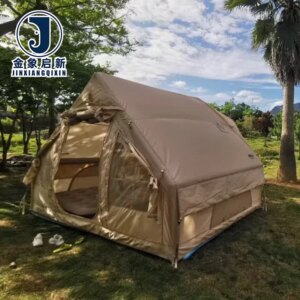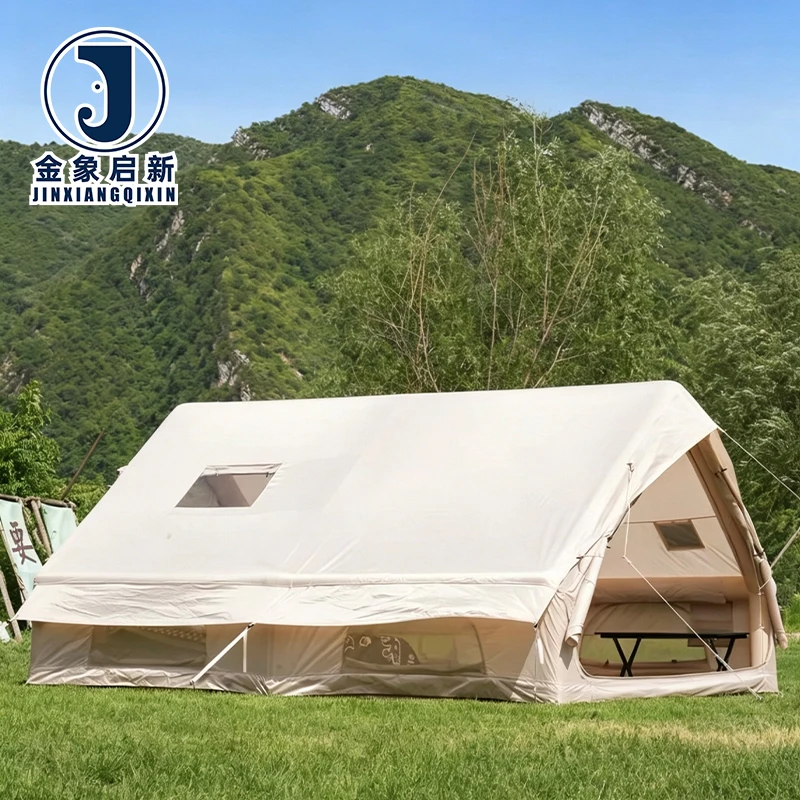
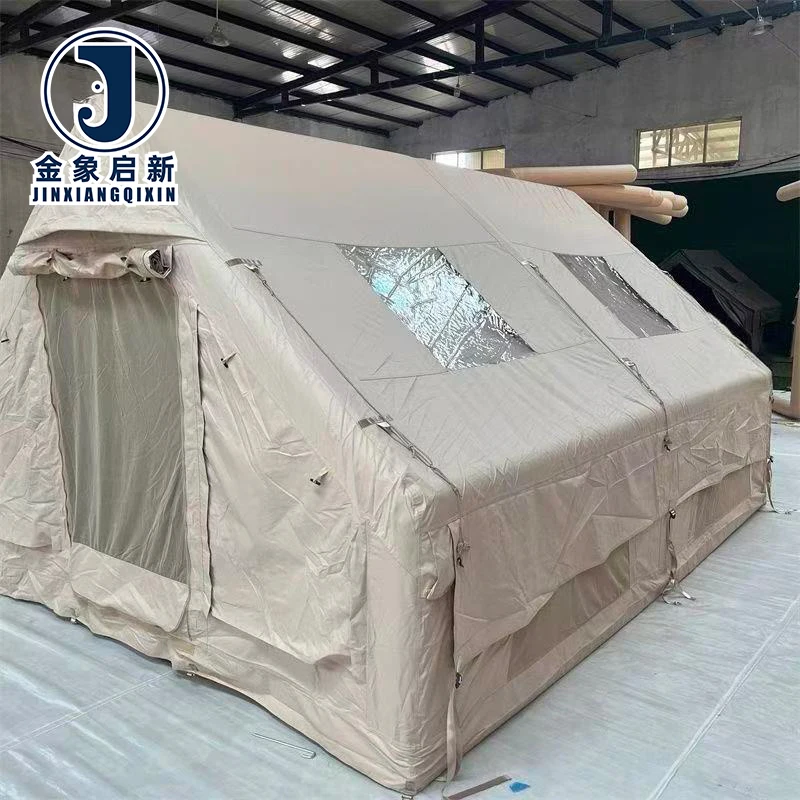
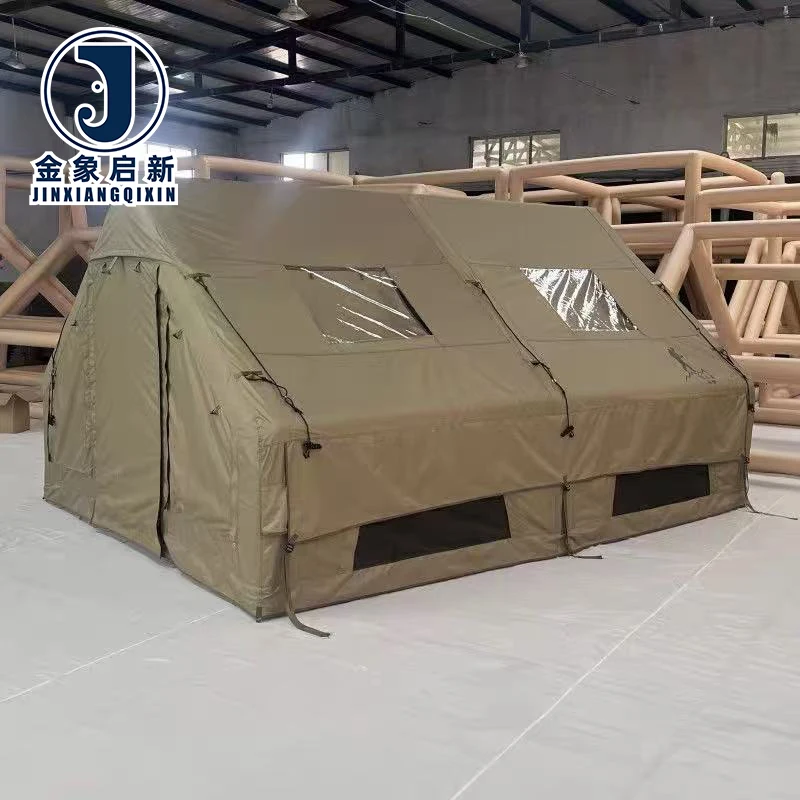
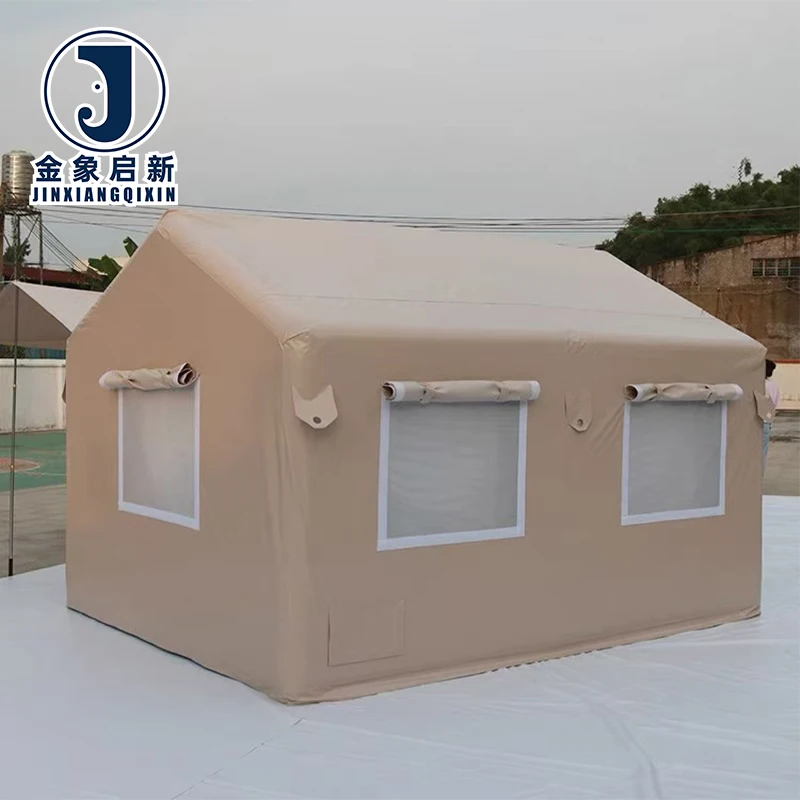
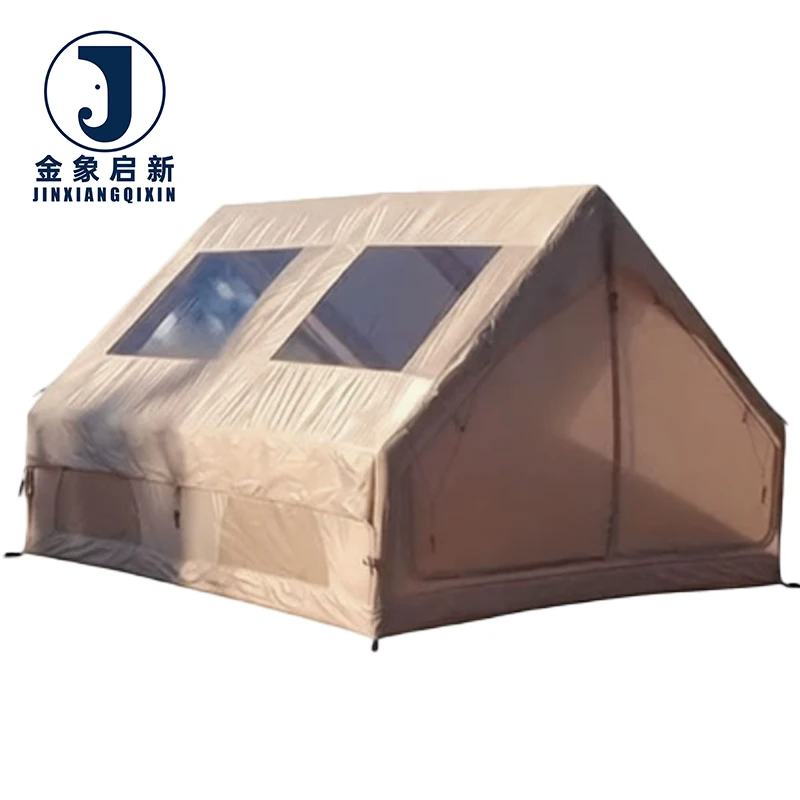
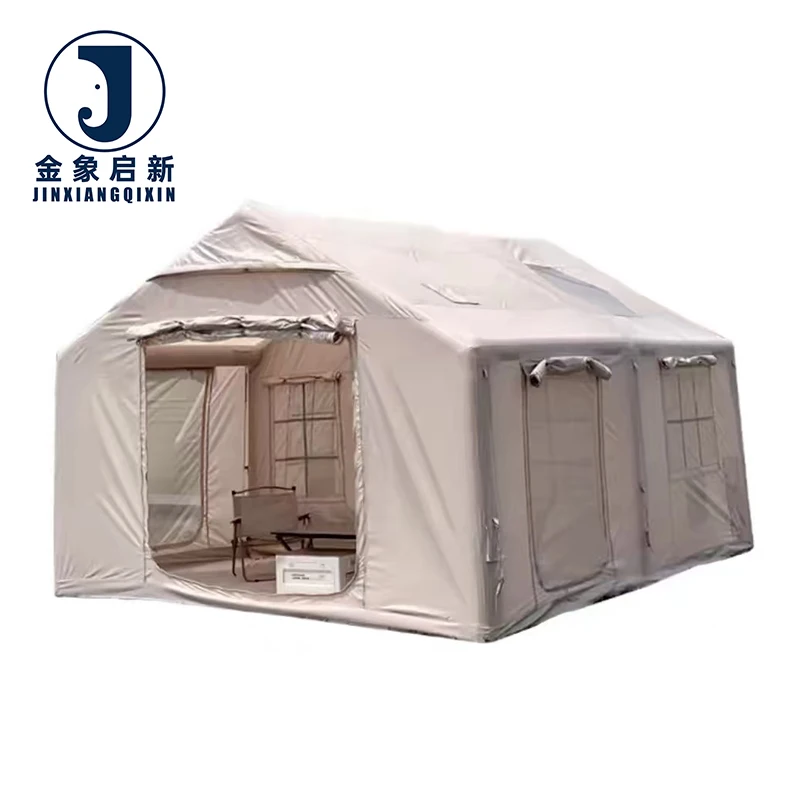
Inflatable Tent with PVC tarpaulin core material, waterproof and UV-resistant, tear-resistant fabric for commercial deployment. Covers temporary event pavilions, industrial site shelters and mobile exhibition spaces requiring rapid setup. Full OEM/ODM customization including material selection, product design and pattern printing supported by in-house production.
- Verified waterproof and UV-resistant treatment with material specification sheet
- 100% pre-shipment inspection with batch-level quality documentation
- ISO and CE certified production across 3 full production lines
Ten-person R&D team handles sample development within days for custom sizing and printing requirements.
Description
Proven Coating Control — Nearly 30 years focused on PVC tarpaulin production with dedicated QA/QC at every stage, ensuring inflatable tent fabric meets consistent weight and adhesion standards across commercial batches.
Technical Specifications
| Parameter | Value |
|---|---|
| Product Type | Inflatable Tent |
| Core Material | PVC tarpaulin |
| Waterproof Rating | Waterproof (grade not stated in source) |
| UV Treatment | UV-resistant (test basis not stated in source) |
| Tear Resistance | Tear-resistant (grade not stated in source) |
| Customization | OEM & ODM, sample customization, pattern printing |
| Production Facility | 9180 square meters |
| Production Lines | 3 full production lines |
| Processing Equipment | 36 sets |
| R&D Team | 10 technicians |
| Certifications | ISO9001, ISO14001, ISO45001, CE |
Application Suitability
| Application | Exposure & Requirement |
|---|---|
| Temporary event pavilions | Rapid deployment, crowd safety, wind load stability, UV exposure |
| Mobile exhibition spaces | Frequent inflation/deflation cycles, transport abrasion, visual branding clarity |
| Industrial site shelters | Dust, handling stress, weather exposure, equipment clearance requirements |
| Outdoor equipment storage | Prolonged sun exposure, moisture ingress prevention, structural rigidity under load |
| Temporary work areas | Worker safety compliance, ventilation compatibility, repeated relocation |
Why Inflatable Tent Fabric Consistency Matters More Than You Think
Batch-to-batch variation in coated fabric is the silent cause of project delays and structural failures on commercial sites.
When sourcing inflatable tent fabric for repeated deployment, buyers often receive material from different production runs within the same order. The coating weight drifts, the colour shifts under direct sunlight, and welded seams behave unpredictably during fabrication. These inconsistencies rarely show up in the sample approval stage because samples are typically cut from a single controlled roll [NEED_CITE: ISO 1421 tensile and tear test methods for coated fabrics]. The real problem surfaces when the fabricator attempts to heat-weld panels from two different rolls and the seam strength falls below acceptable limits on one side.
Material Selection for Inflatable Structure Performance
Selecting the right PVC tarpaulin for inflatable tent applications requires attention to how the base fabric and coating interact under internal air pressure. The denier of the yarn and the weave density determine how the material distributes stress across the panel when inflated. An Inflatable Tent Fabric manufacturer custom approach ensures the coating adhesion matches the flexing demands of repeated pressurisation cycles without delamination.
Coating Weight and Air Retention Behaviour
The coating layer serves as the primary barrier against air permeability in inflatable structures. Uniform coating application across the full width of the roll directly influences how well the tent maintains pressure between blower cycles. Inconsistent coating thickness leads to localized air bleed, forcing the inflation system to work harder and increasing energy consumption on site [NEED_CITE: air permeability testing standards for coated technical textiles].
Understanding How Fabric Construction Affects Inflatable Tent Durability
The relationship between base fabric construction and final performance is often misunderstood in the inflatable tent segment. GSM alone does not define strength — a lighter fabric with a tighter weave and high-tenacity yarn can outperform a heavier material with a loose construction. The coating method also plays a critical role: knife-over-roll coating produces a thicker, more uniform layer suited to air-holding applications, while laminated constructions may offer cost advantages but can separate at the bond line under cyclic stress. Surface finish selection — glossy or matte — affects both cleaning behaviour and the adhesion of printed graphics applied for branding purposes.
The Hidden Cost of Overlooking Weld Seam Compatibility
A specification that ignores how the fabric behaves under heat welding creates vulnerability at every panel junction. When the coating formulation is not matched to the welding temperature and dwell time used by the fabricator, seams fail before the body fabric shows any sign of degradation. This failure mode is particularly dangerous in inflatable structures because a single seam opening causes rapid deflation, potentially endangering occupants or damaging stored equipment [NEED_CITE: hot air welding parameters for PVC coated polyester fabrics].
Why Procurement Verification Protects Your Inflatable Tent Investment
In-house PVC tarpaulin production gives direct control over coating weight and base fabric selection, removing the variable of third-party material supply. Each roll of Inflatable Tent Fabric undergoes inspection against the stated specification before it leaves the production line. The 10-person R&D team develops samples within days for custom sizing and pattern printing requirements, allowing buyers to verify material behaviour before committing to bulk production. Three full production lines and 36 sets of processing equipment support volume orders without sacrificing the batch consistency that inflatable structures demand. Full OEM and ODM capability covers material selection through to finished product design.
Documentation & Verification
- Material specification sheet confirming base fabric denier, coating weight, and GSM for each roll
- Test reports for UV resistance and flame retardant grades where applicable to your market
- Pre-shipment inspection record with batch-level quality data and visual defect mapping
- ISO9001, ISO14001, ISO45001, and CE certificates supporting international compliance
- Certificate of origin and customs documentation for cross-border inflatable tent fabric shipments
Fabrication, Handling & Storage
- Heat weld parameters must be matched to the specific PVC coating formulation for seam integrity
- Store rolls upright on pallets to prevent permanent creasing across the coated surface
- Allow cold-transported rolls to reach ambient temperature before unrolling to avoid coating crack
- Use compatible PVC adhesive and patch material for on-site repair of punctured inflatable panels
- Plan panel cutting layout to minimise waste and reduce the number of welded seams in high-stress zones
Requesting a Specification That Fits Your Deployment Model
Provide the intended inflation pressure range, expected deployment frequency, and the environmental conditions at your typical sites. Specify any fire safety classification required by local regulations for temporary structures, along with colour references and whether pattern printing is needed for branding. Confirm the roll width and length format that matches your fabrication equipment, and indicate whether sample approval is required before production release.
Frequently Asked Questions
Q: How can I verify material consistency across multiple rolls in a single order?
A: Each roll is inspected against the stated specification before dispatch. The pre-shipment inspection record documents coating weight, colour reference, and visual quality per batch. For large orders, request that rolls be grouped by production run to minimise variation, and cross-check the material specification sheet upon receipt.
Q: Are test reports available for UV resistance and flame retardancy?
A: Test reports are provided for UV-resistant and flame retardant grades where applicable. Confirm the specific grade or standard required for your target market during the inquiry stage, as requirements vary by region. Available in flame retardant grades — confirm the grade required for your market before production.
Q: What is the process for custom sizing, printing, and sample approval?
A: Submit your dimensional requirements, pattern artwork, and colour references. The R&D team develops a sample within days for your evaluation. Once the sample is approved, bulk production proceeds with in-process QA checks. This ensures the final Inflatable Tent Fabric matches your exact specification.
Q: How is colour consistency controlled when ordering large volumes?
A: Colour is managed through controlled pigment formulation and verified against the reference standard during production. Rolls from the same production run are grouped together for dispatch. For critical applications, request a physical colour swatch from the actual batch before the full order ships.
Q: What causes welded seams to fail before the fabric itself degrades?
A: Seam failure typically results from a mismatch between the welding temperature and the coating formulation. When the heat input is insufficient, the bond does not fully penetrate the coating layer. Share your fabrication welding parameters during the inquiry so the material can be matched to your process.
Related products
-
Inflatable Camping Tent Waterproof PVC Outdoor Air Tent Easy Setup Family Camping Shelter
Read more -
Inflatable Camping Tent PVC Waterproof Four-Season Outdoor Air Tent with Quick Automatic Opening for 3-4 Person
Read more -
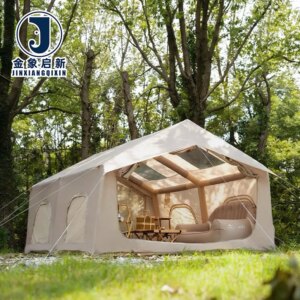
High Quality Four-Season Inflatable Tent for Camping Durable PVC Waterproof All-Weather Resistance Quick Automatic Opening
Read more -
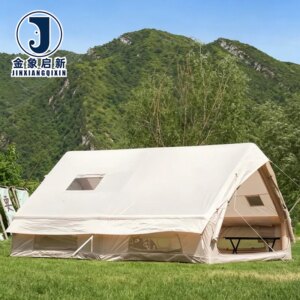
Inflatable Camping Tent PVC Four-Season Waterproof Outdoor Air Tent with Quick Automatic Opening for 2-3 Person
Read more