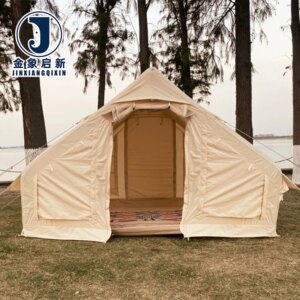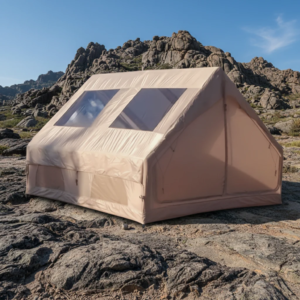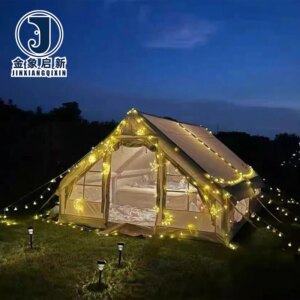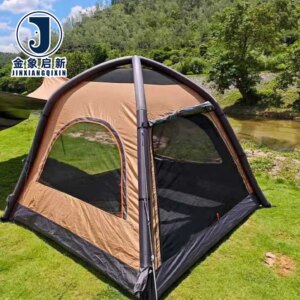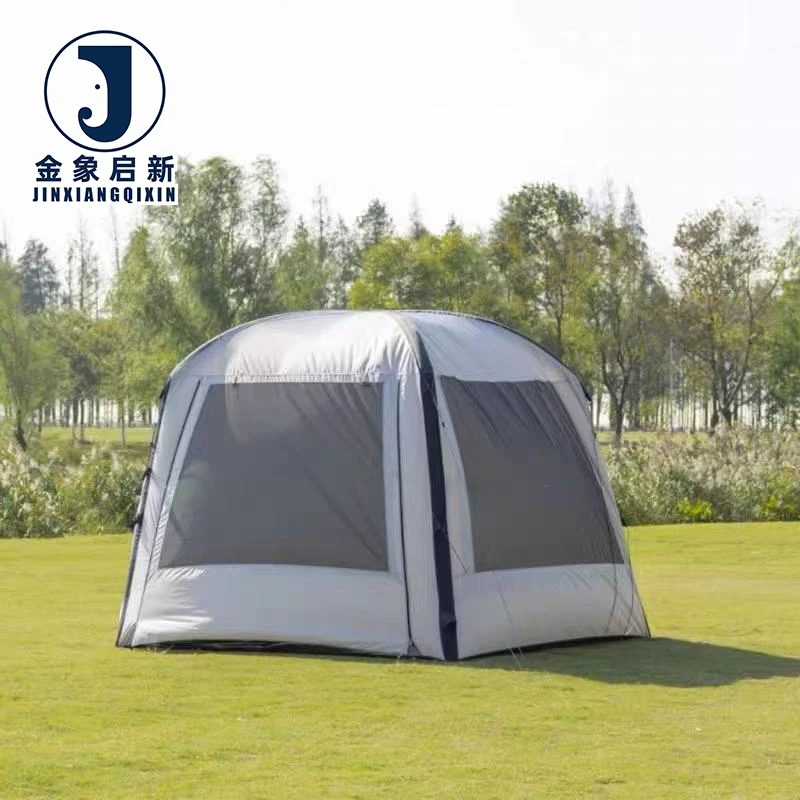
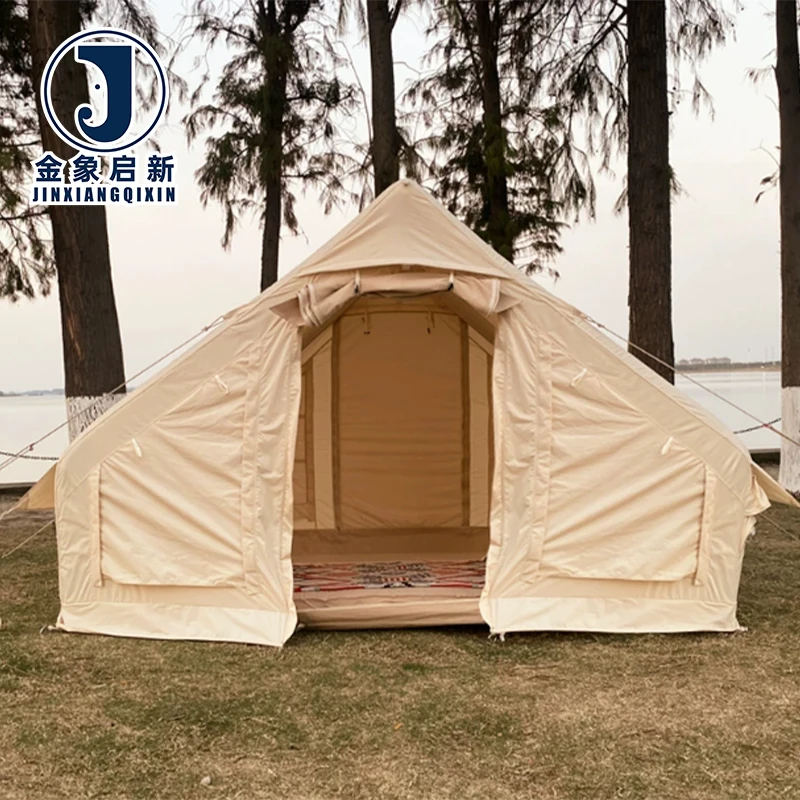
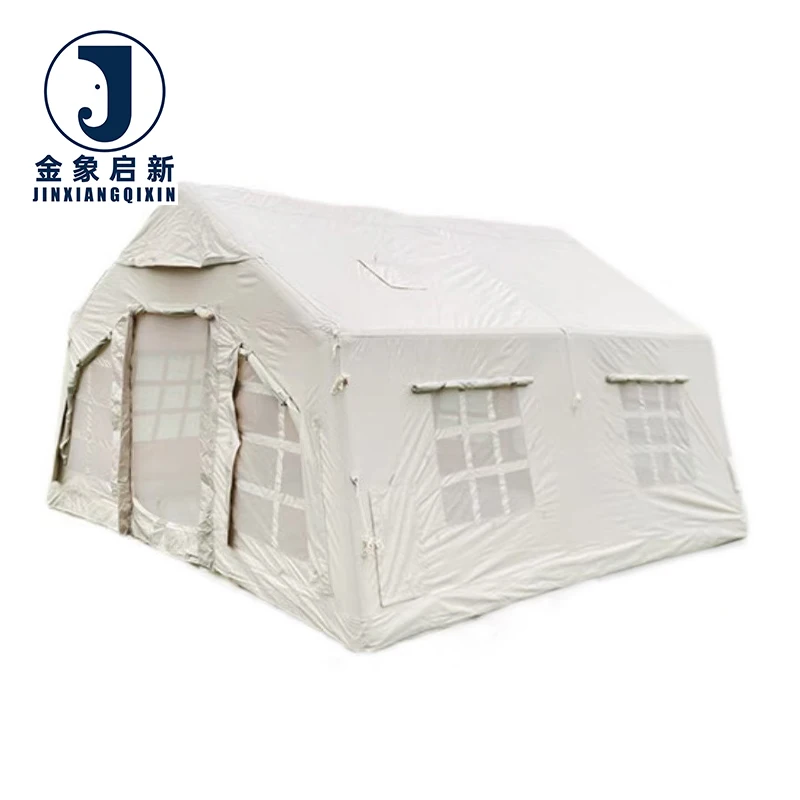
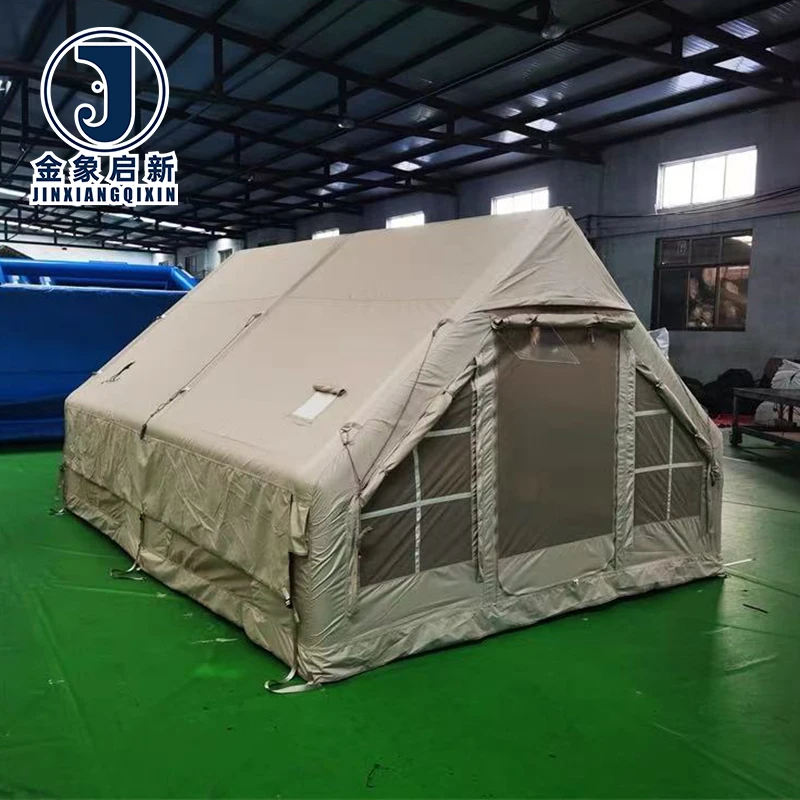
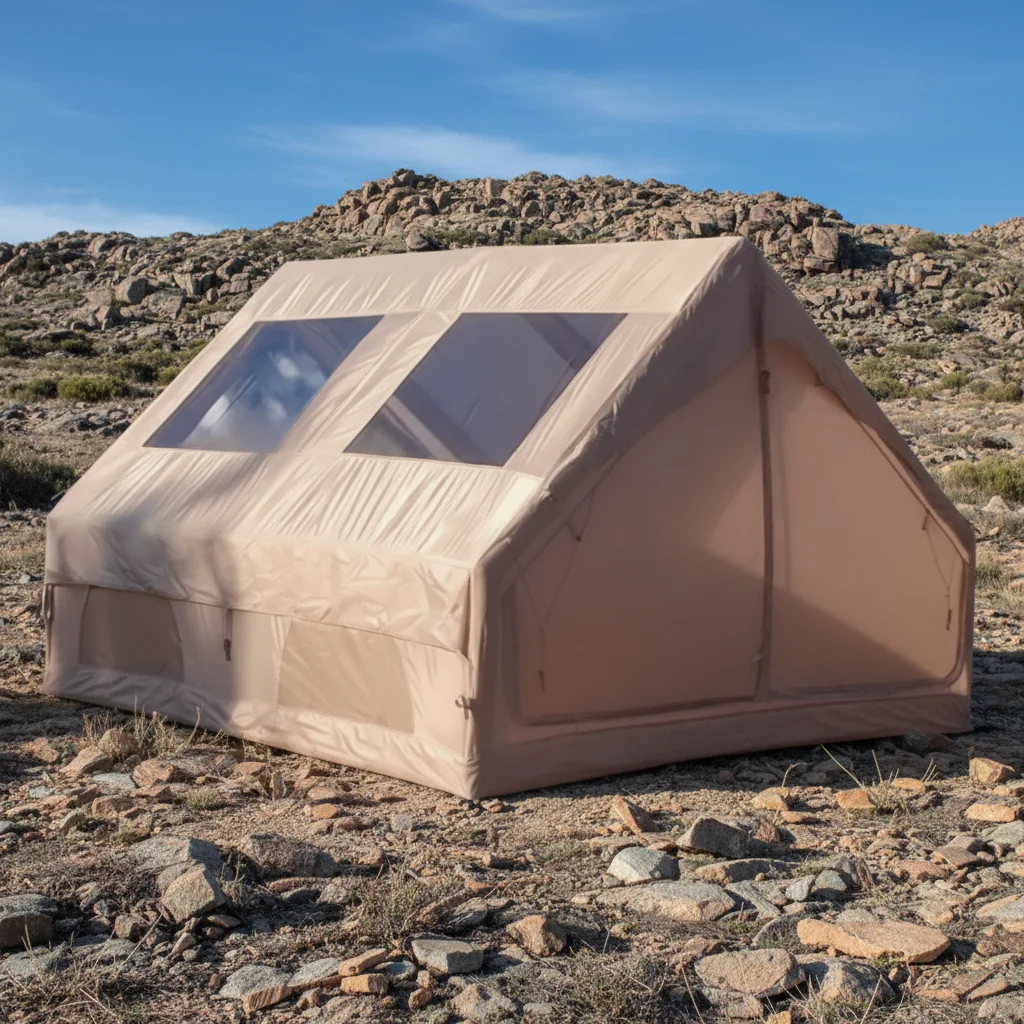
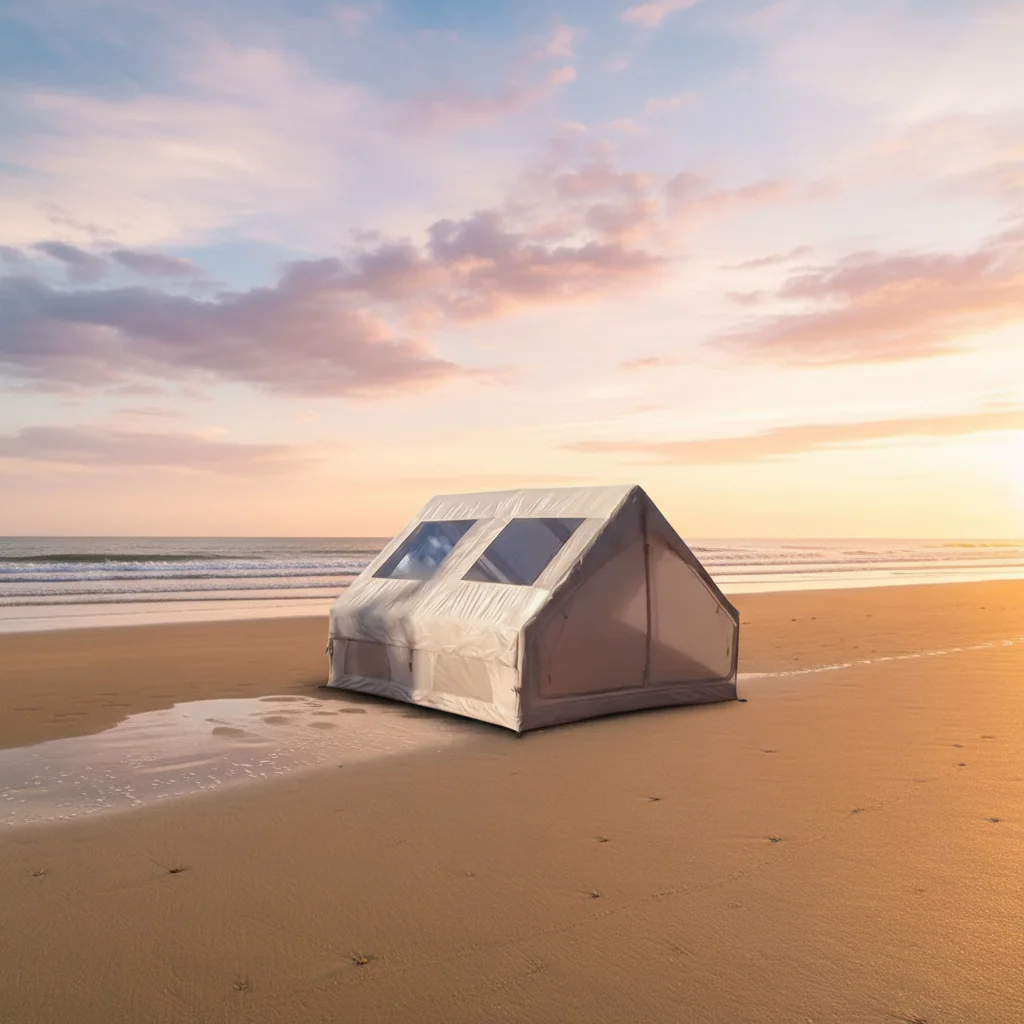
PVC Inflatable Tent — waterproof, UV-resistant, and fire-retardant to EN 13501-1, featuring single-layer inflatable structure with PVC knife-coated fabric for commercial outdoor deployments.
- Tear-resistant material maintains structural integrity under high-wind conditions
- Waterproof seam welding protects against heavy rainfall during multi-day events
- Custom sizing, color, and pattern printing available for festival, glamping, and construction site applications
ISO-certified facility with 3 full production lines delivers pre-shipment inspection records and complete material documentation for every order.
Description
Deep Coating Process Control — Every roll of PVC knife-coated fabric used in our inflatable tent structures undergoes in-process adhesion and weight verification before leaving the 9,180 m² facility.
Technical Specifications
| Parameter | Value |
|---|---|
| Product Type | PVC Inflatable Tent |
| Core Material | PVC tarpaulin (knife-coated fabric) |
| Construction | Single layer inflatable structure |
| Water Resistance Rating | IPX6 (seam welding) |
| Fire-Retardant Compliance | EN 13501-1 (grade not stated in source — confirm the class required for your market) |
| UV Resistance | UV-resistant proprietary coating (test basis not stated in source — request report) |
| Key Features | Waterproof, tear-resistant, four-season design |
| Customization | OEM & ODM: sample customization, pattern printing, size modifications, color adjustments, logo integration |
| Quality Control | 100% leak testing, 24-hour water submersion test, accelerated aging test |
Application Suitability
| Application | Exposure & Requirement |
|---|---|
| Glamping resort accommodations | Prolonged sun and rain exposure, repeated inflation cycles, guest comfort demands |
| Festival and event staff quarters | High foot traffic, rapid deployment and teardown, variable weather |
| Remote construction site offices | Wind loading, dust and abrasion, temporary utility connections |
| Agricultural equipment storage | Seasonal humidity, UV degradation risk, chemical contact from fertilizers |
| Commercial beach camping | Sand abrasion, salt spray, intense direct sunlight |
Why "Waterproof" Means Nothing If the Weld Fails First
A PVC inflatable tent is only as waterproof as its weakest seam. Buyers regularly receive tents rated for heavy rainfall, only to discover leaks at the welded joints after the first real storm. The fabric itself may hold, but the bond between panels separates under inflation pressure and flexing load [NEED_CITE: tensile and tear test methods for coated fabrics per ISO 1421].
Seam integrity must be verified under sustained pressure, not just a quick bench check.
Most manufacturers test a sample weld and assume the rest of the batch behaves the same. In practice, welding temperature, dwell time, and fabric surface condition vary across a production run. A PVC inflatable tent manufacturer custom building units for commercial deployment needs a protocol that catches these variances before shipment, not after the tent is inflated on-site in front of guests.
Knife-Coated Fabric as the Structural Backbone
The knife-coating process applies PVC compound directly onto the base fabric under controlled tension, forcing the coating into the weave interstices. This produces a bond that resists delamination during repeated inflation and deflation cycles. For an inflatable structure that must hold internal pressure against wind load, the adhesion between coating and base fabric determines whether the tent performs through its intended service life or begins peeling at stress points within the first season. When sourcing a PVC inflatable tent, the coating method is as critical as the stated weight.
Welded Seams Engineered to Outlast the Fabric Itself
Every seam on this inflatable structure is hot-air welded and then subjected to a 24-hour water submersion test. This is not a spot check — it is applied to every production batch. The rationale is straightforward: if a seam is going to fail, it will fail under sustained hydrostatic pressure before the tent ever ships. Accelerated aging tests further validate that the welded bond does not degrade faster than the surrounding PVC membrane when exposed to thermal cycling [NEED_CITE: seam strength evaluation for PVC coated fabrics]. This matters for glamping operators who cannot afford mid-season tent closures due to seam leaks.
Reading the Specification Sheet Beyond Surface Numbers
The base fabric denier and weave density work together with the PVC coating weight to determine overall tensile and tear strength. A heavier coating on a loosely woven base will not outperform a moderate coating on a tight weave — the base fabric carries the structural load while the coating provides environmental protection. Knife-coated PVC delivers superior peel strength compared to laminated alternatives, which directly affects how well the material holds together at welded joints during high-wind events. Fire-retardant treatment referenced to EN 13501-1 addresses commercial event compliance, but the specific classification must match the local authority’s permit requirements — always confirm the grade before placing a bulk order. The single-layer construction reduces packed weight and setup time while still delivering four-season weather resistance through the coating system rather than insulation layers.
The Hidden Cost of Skipping Pre-Shipment Verification
When a batch of inflatable tents arrives with inconsistent seam quality or coating weight that does not match the quotation, the buyer faces a choice: accept the loss or initiate a return that delays the project by weeks. Color variation between production batches becomes visible the moment two tents are erected side by side at a glamping site. Missing fire-retardant documentation can halt a commercial event entirely if the local fire marshal requests certification at the inspection [NEED_CITE: EN 13501-1 fire classification for building materials]. These failures are preventable with proper pre-shipment inspection records and material traceability per roll.
What This Production Setup Delivers for Your Order
Three dedicated production lines running within a 9,180 m² facility provide the capacity to fulfill bulk inflatable tent orders without sacrificing lead time reliability. The 10-person R&D team handles custom sizing, pattern printing, and branding integration, developing samples within days so buyers can approve dimensions and visual details before full production begins. Every unit receives 100% leak testing with documented results — not a sampling protocol that leaves untested units in the shipment. The 36 sets of professional processing equipment support consistent welding parameters across the entire production run, reducing the seam-to-seam variation that causes field failures. ISO 9001, ISO 14001, and ISO 45001 systems govern the workflow from material intake through dispatch.
Documentation & Verification
- Material specification sheet stating base fabric denier, coating method, and IPX6 waterproof rating for each order
- Pre-shipment inspection record with 100% leak test results documented before dispatch
- EN 13501-1 fire-retardant test report supplied where applicable to support commercial event permits
- UV resistance test data available upon request to validate prolonged outdoor exposure claims
- ISO 9001, ISO 14001, ISO 45001, and CE certificates included with customs documentation
- Roll-level traceability linking each inflatable tent to its production batch and QC record
Fabrication, Handling & Storage
- Hot-air welding temperature must be calibrated to the specific PVC knife-coated fabric thickness to prevent burn-through or cold joints
- Store inflated or folded tents in dry conditions away from direct sunlight to preserve UV-resistant coating performance
- Avoid dragging the single-layer PVC membrane across abrasive surfaces during deployment to prevent coating scratches
- Use mild detergent for cleaning; solvents can degrade the fire-retardant treatment and compromise EN 13501-1 compliance
- Repair minor punctures with compatible PVC adhesive patches matched to the knife-coated fabric composition
- Allow adequate ventilation during storage to prevent condensation buildup inside folded inflatable structures
Moving from Inquiry to Production Sample
To specify the right inflatable tent for your operation, provide the intended application environment, expected wind and weather exposure, and any fire-safety classification your local authority requires. Share your target dimensions, color preferences, and whether pattern printing or logo integration is needed for branding. Confirm whether you require a pre-production sample for dimensional and visual approval before authorizing bulk manufacturing, and indicate your annual volume to align production scheduling.
Frequently Asked Questions
Q: How is GSM and coating weight verified on arrival against the quotation?
A: Each order ships with a material specification sheet documenting base fabric denier, coating method, and measured weight. We conduct in-process weight verification during production and include a pre-shipment inspection record. Buyers can cross-check the documented values against their quotation upon receipt to confirm the PVC inflatable tent fabric matches the agreed specification.
Q: What fire-retardant certification documentation is supplied for commercial event permits?
A: Where fire-retardant treatment is specified, we supply a test report referenced to EN 13501-1. The specific classification must match your local permit requirements, so we recommend confirming the required grade with your fire authority before ordering. Documentation is included with customs paperwork for each PVC inflatable tent shipment.
Q: How is batch-to-batch colour consistency controlled across multiple inflatable tent orders?
A: Colour formulation is locked after sample approval and recorded per production batch. The 100% pre-shipment inspection includes a visual consistency check against the approved reference. Buyers ordering multiple batches over time receive units matched to the original colour standard, reducing visible variation when tents are deployed side by side.
Q: What custom sizing, pattern printing, and logo integration options are available?
A: OEM and ODM services cover dimensional modifications, pattern printing, color adjustments, and logo integration. The R&D team develops samples within days for buyer approval before bulk production begins. Minimum order requirements vary by customization scope — confirm your specific needs during the inquiry stage to align on feasible options.
Q: How are welded seams tested to ensure they outlast the fabric at structural flex points?
A: Every production batch undergoes a 24-hour water submersion leak test on completed inflatable structures. Accelerated aging tests further validate that the welded bond maintains integrity through thermal cycling. This ensures seams at high-flex zones hold pressure as long as the surrounding PVC knife-coated fabric membrane.
Related products
-
Inflatable Camping Tent Waterproof PVC Outdoor Air Tent Easy Setup Family Camping Shelter Four-Season >3000mm Waterproof Quick
Read more -
Outdoor Portable Camping Inflatable Tent Luxury All-Season Use Overnight Large Space Rainproof Insulated Quick Automatic Opening
Read more -
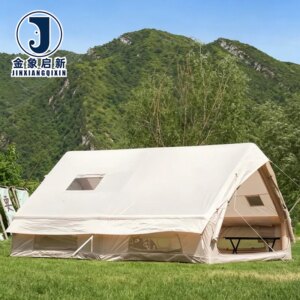
Inflatable Camping Tent PVC Four-Season Waterproof Outdoor Air Tent with Quick Automatic Opening for 2-3 Person
Read more -
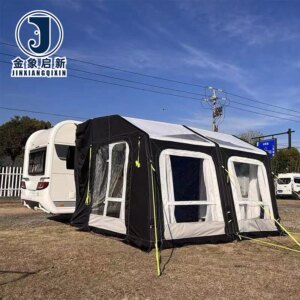
Outdoor Camping Inflatable Tent Luxury All-Season Use PVC Waterproof Quick Automatic Opening Rainproof Insulated
Read more