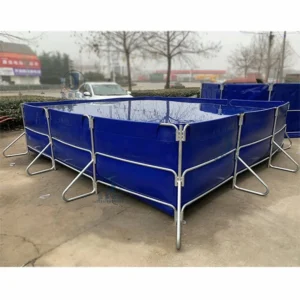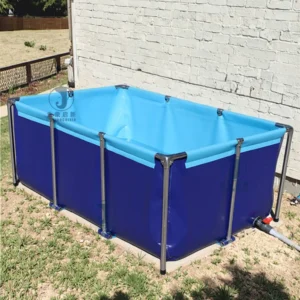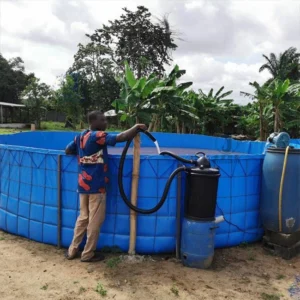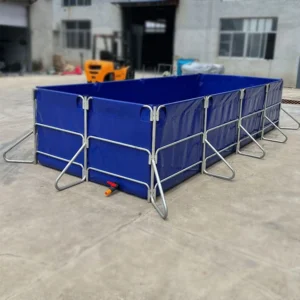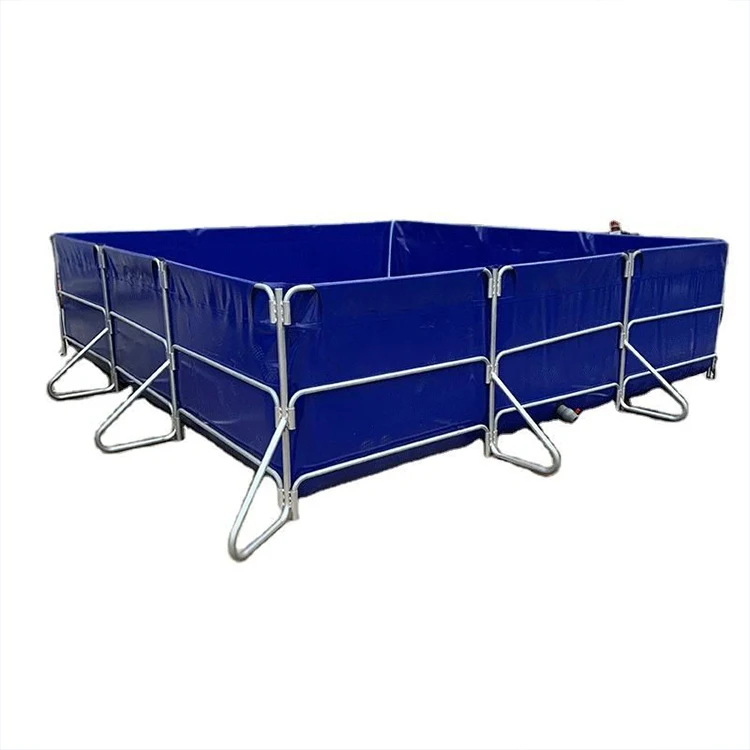
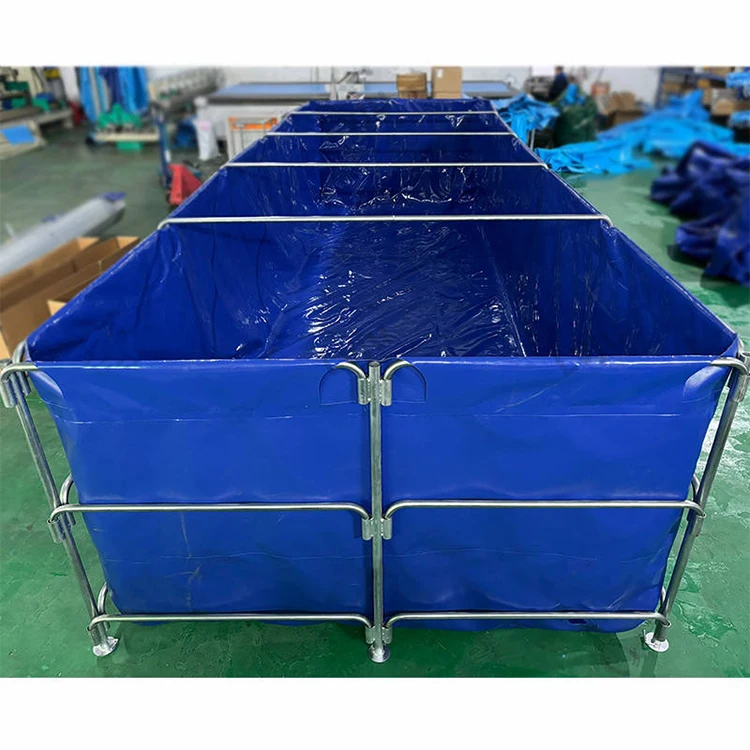
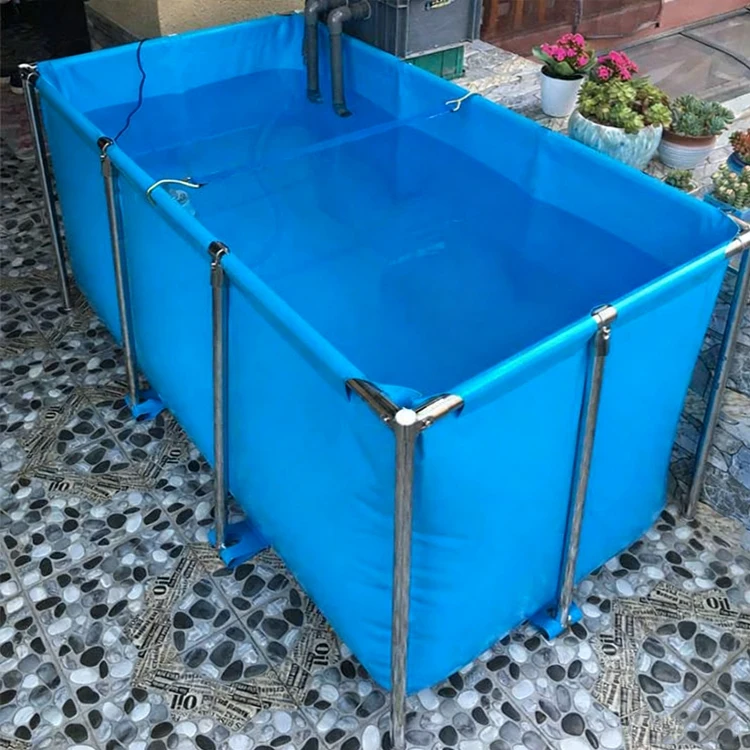
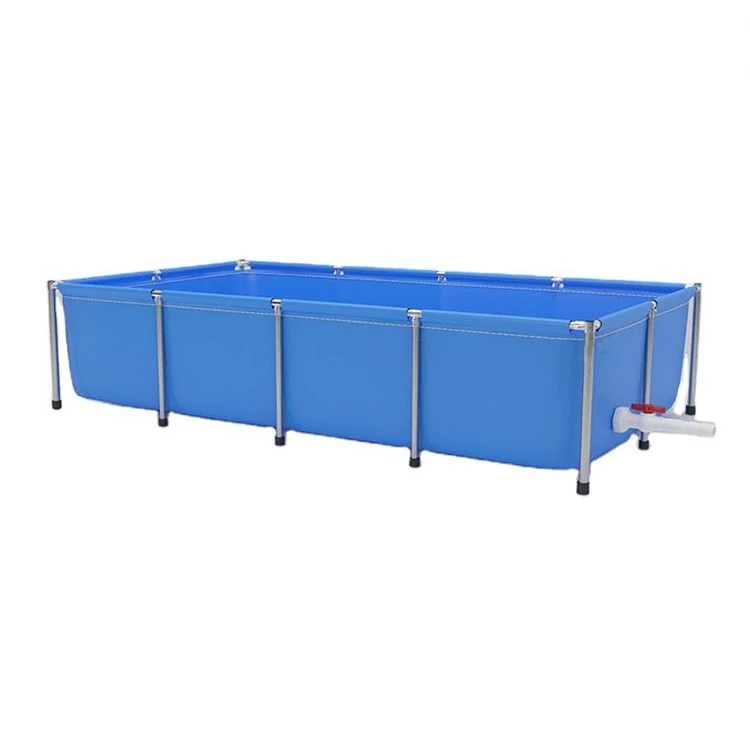
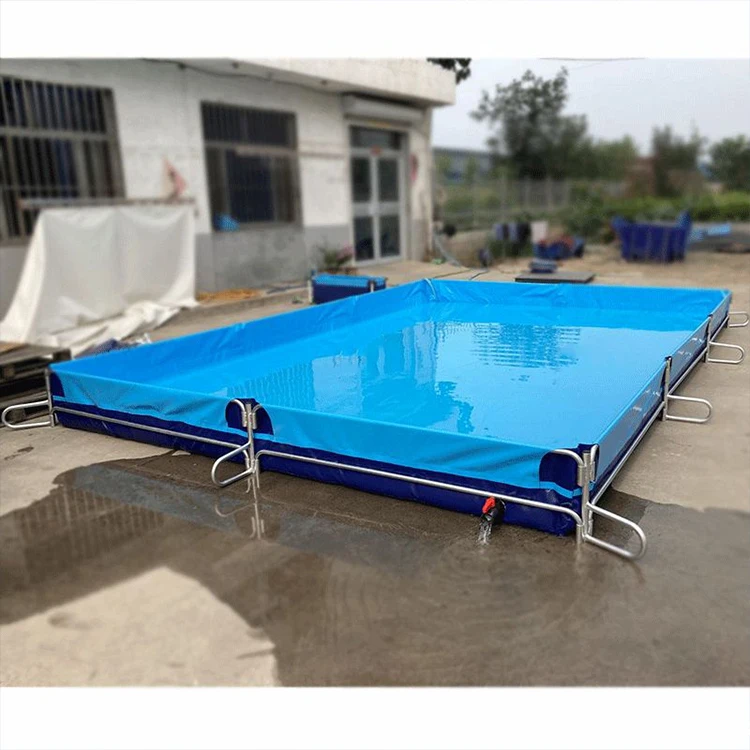
Foldable PVC Tarpaulin Fish Pond, Circular & Rectangular — engineered for reliable water containment in aquaculture setups.
- PVC coated fabric with controlled GSM for puncture and tear resistance
- Welded seams hold under continuous water pressure at flex points
- Foldable design for efficient shipping and rapid on-site deployment
- Custom width, length, and shape to match your pond frame dimensions
Developed with full custom sizing capability, backed by 100% pre-shipment inspection and dedicated QA at every production stage.
Description
Coating Weight Control — Every roll of PVC tarpaulin fish pond liner is weighed and verified against the quoted GSM before it leaves the line, because long-term water containment depends on consistent coating mass, not just surface appearance.
Technical Specifications
| Parameter | Value |
|---|---|
| Product Type | PVC Fish Pond |
| Material | PVC Tarpaulin |
| Shape Options | Circular / Rectangular |
| Feature | Foldable |
| Application | Fish Tank / Fish Pond |
| Standards | ISO, CE |
Application Suitability
| Application | Exposure & Requirement |
|---|---|
| Commercial aquaculture ponds | Continuous water immersion, biological load, puncture risk from substrate |
| Ornamental fish breeding tanks | Clean water retention, aesthetic appearance, repeated draining and refilling |
| Hatchery containment | Temperature stability, chemical treatment exposure, frequent handling |
| Agricultural water storage | Standing water pressure, soil chemistry contact, seasonal UV exposure |
Why GSM Verification Matters More Than You Think for Pond Liners
A quoted GSM that does not match the delivered roll is the single most common reason aquaculture operators reject an entire shipment.
When a pond liner arrives lighter than specified, the coating layer is thinner than engineered, and the fabric loses the puncture and tear margin that water pressure demands. I once watched a batch of coated fabric get turned away at the dock because the scale read well below the agreed weight — the material looked correct, but the numbers did not lie. For fish farming operations where a leak means lost stock and weeks of downtime, that discrepancy is not a rounding error. It is a containment failure waiting to happen [NEED_CITE: material verification methods for coated fabrics per ISO standards].
How PVC Coated Fabric Holds Water Where Other Materials Fail
The PVC tarpaulin fish pond liner relies on a fully coated construction that seals the base fabric inside a continuous polymer layer. Unlike laminated sheets where the coating sits on top and can delaminate under hydrostatic pressure, a proper PVC coated fabric encapsulates the yarns so water has no pathway into the weave structure. This is why a PVC Fish Pond Tarpaulin aftermarket supplier with control over the coating process can deliver liners that hold water season after season without blistering or peeling at the seams.
Welded Seams Are the Real Test of Pond Liner Integrity
Every pond liner eventually fails at the seam before the field of the fabric gives way. The welded joints on circular and rectangular ponds must withstand constant water pressure that pushes outward and downward, cycling with temperature changes and water level adjustments. Our production team sets weld parameters based on the specific PVC compound and coating weight in use, then tests peel strength at the joint [NEED_CITE: weld integrity testing for PVC coated fabrics]. A foldable pond liner that ships flat and deploys on-site depends entirely on those seams holding when the frame is filled.
Reading Between the Specs: What Actually Drives Pond Liner Performance
The relationship between base fabric denier, weave density, and coating weight determines how the liner behaves under load. A heavier GSM does not automatically mean a stronger liner if the base fabric is loosely woven — the coating fills gaps rather than reinforcing yarns. Coating method matters equally: knife-over-roll coating builds thickness and adhesion differently than dip or calender processes, affecting how well the material heat-welds and how it resists puncture from sharp substrate. Surface finish influences cleaning between cycles; a gloss face sheds algae and biofilm more readily than a matte face, which matters for hatchery hygiene. Available UV and flame retardant treatments should be confirmed against the specific requirements of your installation environment — request the applicable test grade before placing the order.
The Hidden Cost of Skipping Pre-Shipment Weight Checks
When a pond liner is lighter than quoted, the missing coating mass shows up first at high-stress points: the welded corners of rectangular tanks, the fold lines where the liner wraps over a circular frame, and the base where gravel or uneven ground concentrates load. Operators discover the shortfall only after filling, when a puncture or seam split drains the pond and stresses the stock. Batch colour inconsistency across multiple pond units compounds the problem if the installation is visible — matching shades require consistent coating weight from roll to roll [NEED_CITE: quality control standards for batch-to-batch colour in coated textiles]. The rework cost of replacing a failed liner in an active aquaculture site far exceeds the price of a verified inspection before dispatch.
Why Procurement Teams Specify This PVC Fish Pond Tarpaulin
Our three full production lines and 36 sets of professional equipment handle the volume that commercial aquaculture demands without sacrificing coating consistency across rolls. The 10-person R&D team develops custom sizes and shapes — circular or rectangular — matched to your frame dimensions, and samples are ready within days so you can verify fit before committing to bulk. A dedicated QA/QC process checks GSM, weld integrity, and coating adhesion at every stage, with 100 percent inspection before any liner ships. We supply the material specification sheet, pre-shipment inspection record, and full documentation so your receiving team can verify against the purchase order immediately. ISO and CE certification underpins the production system, and our team provides after-sales guidance on installation and field repair techniques specific to PVC coated pond liners.
Documentation & Verification
- Material specification sheet stating GSM, base fabric construction, and PVC coating type for each pond liner batch
- Pre-shipment inspection record confirming weight verification and seam weld checks before dispatch
- ISO and CE certificates available with shipment documentation
- Colour reference and coating consistency report for multi-unit pond orders
- Certificate of origin and customs documentation for international aquaculture shipments
Fabrication, Handling & Storage
- Heat-weld seams using temperature and speed settings matched to the PVC coating compound and thickness in use
- Reinforce corners on rectangular pond liners with additional PVC patches to distribute stress at frame joints
- Store folded pond liners flat in a dry area to avoid permanent crease marks that weaken the coating
- Allow folded PVC tarpaulin liners to acclimatise and relax before installation to reduce tension at weld lines
- Clean pond liner surfaces with mild detergent compatible with PVC to preserve coating integrity between cycles
What We Need to Quote Your Pond Liner Accurately
Send us the pond frame dimensions, whether the layout is circular or rectangular, and the intended water depth so we can recommend the correct material grade and seam construction. If the installation is outdoors with extended sun exposure or in a region with specific fire safety requirements, let us know so we can confirm the applicable treatment grade and provide the supporting test documentation. Tell us the quantity and whether you need individual pond units or roll stock for on-site fabrication.
Frequently Asked Questions
Q: What GSM weight is recommended for fish pond use?
A: The appropriate GSM depends on pond depth, substrate conditions, and whether the frame is rigid or flexible. Shallow ornamental tanks require lighter grades than deep commercial aquaculture ponds where hydrostatic pressure and puncture risk are higher. Share your dimensions and installation conditions so we can recommend the correct coating weight and base fabric specification for your application.
Q: Can the pond liner be custom-sized to my frame dimensions?
A: Yes, both circular and rectangular pond liners are produced to your exact frame measurements. Our R&D team develops a sample based on your drawings, and once you approve the fit, production runs follow the same pattern. Custom sizing eliminates on-site cutting and reduces the number of field welds needed during installation.
Q: Are the welded seams tested for water pressure resistance?
A: Welded seams are inspected for peel strength and continuity at every production stage. The 100 percent pre-shipment inspection includes checking seam integrity at corners and stress points where water pressure concentrates. A pre-shipment inspection record is provided with each order so your team can verify weld quality on receipt.
Q: What UV and anti-ageing treatments are available for outdoor ponds?
A: UV stabilisation and anti-ageing treatments are available in specific grades matched to your market requirements and exposure conditions. Confirm the grade needed for your installation region and we will provide the applicable test report with the shipment documentation so you have full traceability from order to delivery.
Q: How is the liner packed and shipped to avoid crease damage?
A: Foldable pond liners are packed to minimise hard fold lines that can stress the PVC coating during transit. Each unit is rolled or folded with protective interleaving where needed, and packing is designed for efficient container loading. Handling guidelines are included so your site team can deploy the liner without introducing damage during unpacking.
Related products
-
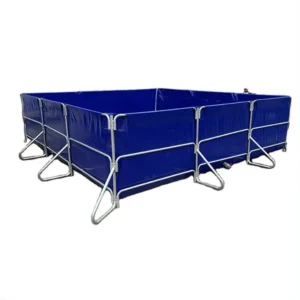
Foldable Circular Rectangular PVC Tarpaulin Fish Pond Tarpaulin for Fish tank
¥0.53 Select options This product has multiple variants. The options may be chosen on the product page -
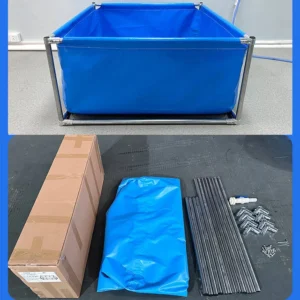
Foldable Circular Rectangular PVC Tarpaulin Fish Pond Tarpaulin for Fish tank
¥0.53 Select options This product has multiple variants. The options may be chosen on the product page -
Waterproof Heavy Duty Coated Blackout Fish Pond Tarpaulin Truck Cover Sheet Tent Swimming Pool Liner Anti UV
¥1.00 Select options This product has multiple variants. The options may be chosen on the product page -
Custom Made PVC Fish Pond Liner for Aquaculture – Full Range
Read more