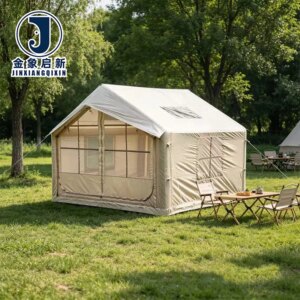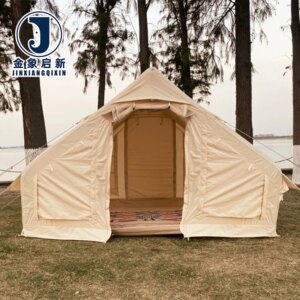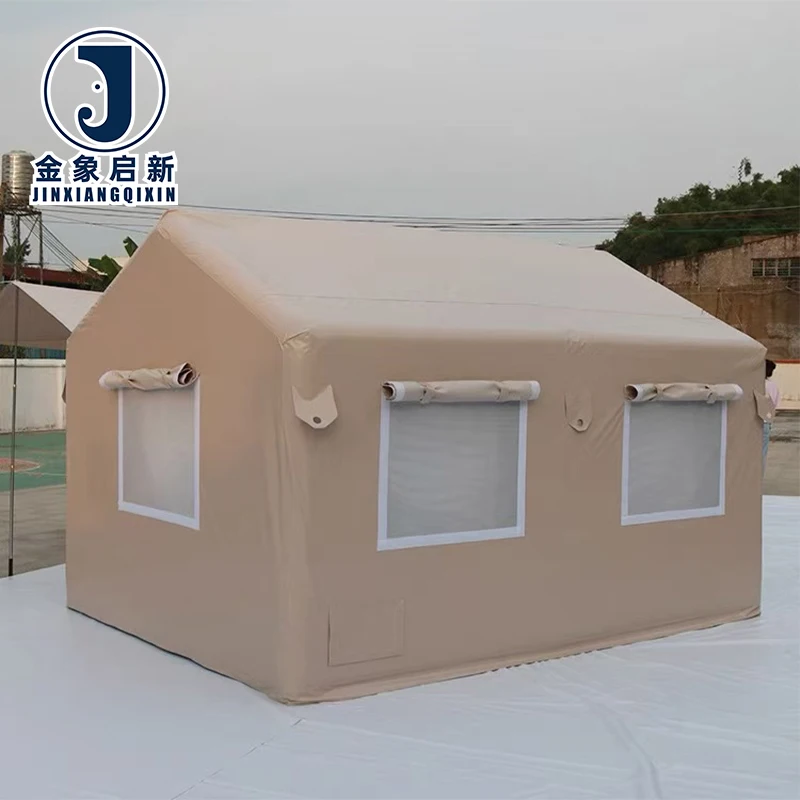
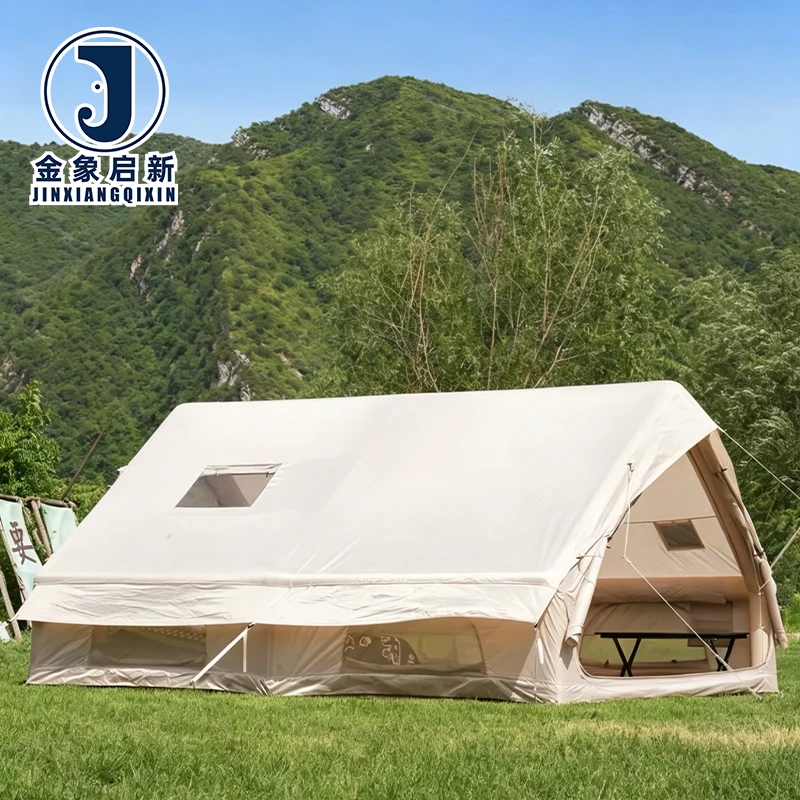
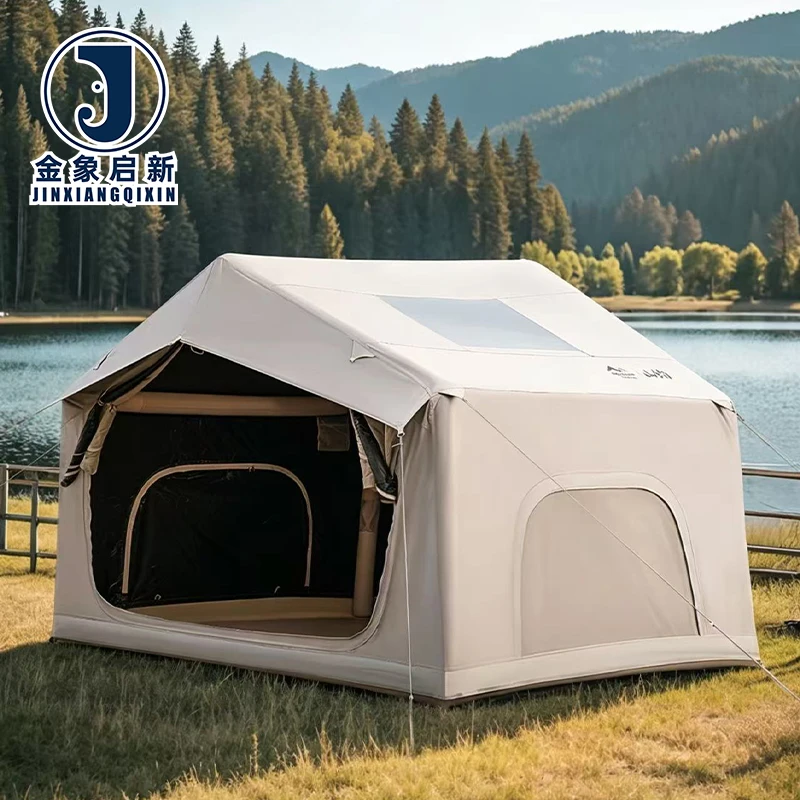
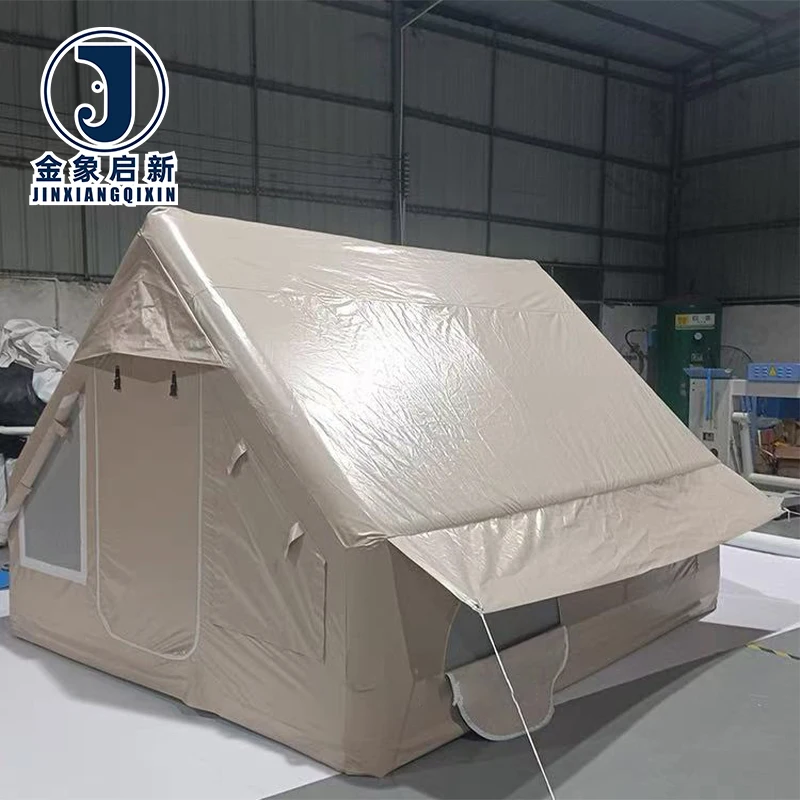
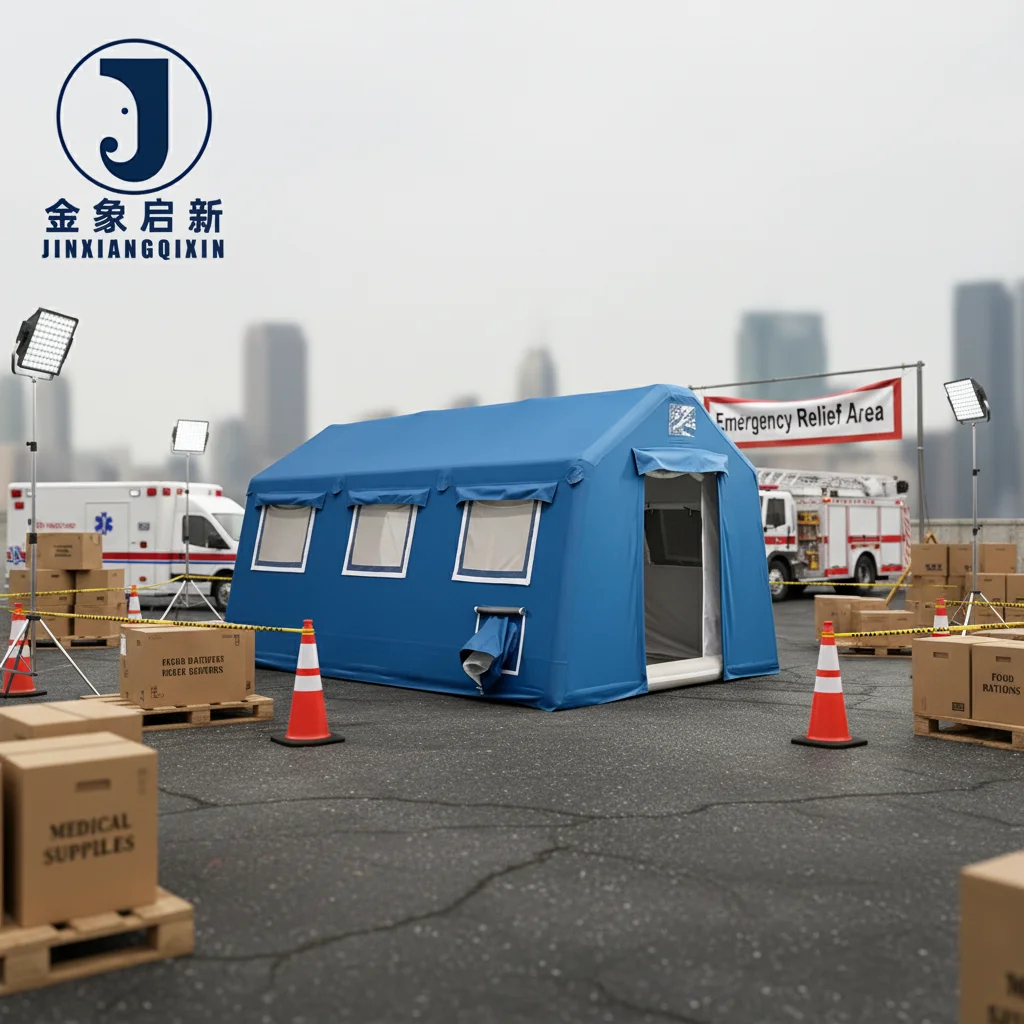
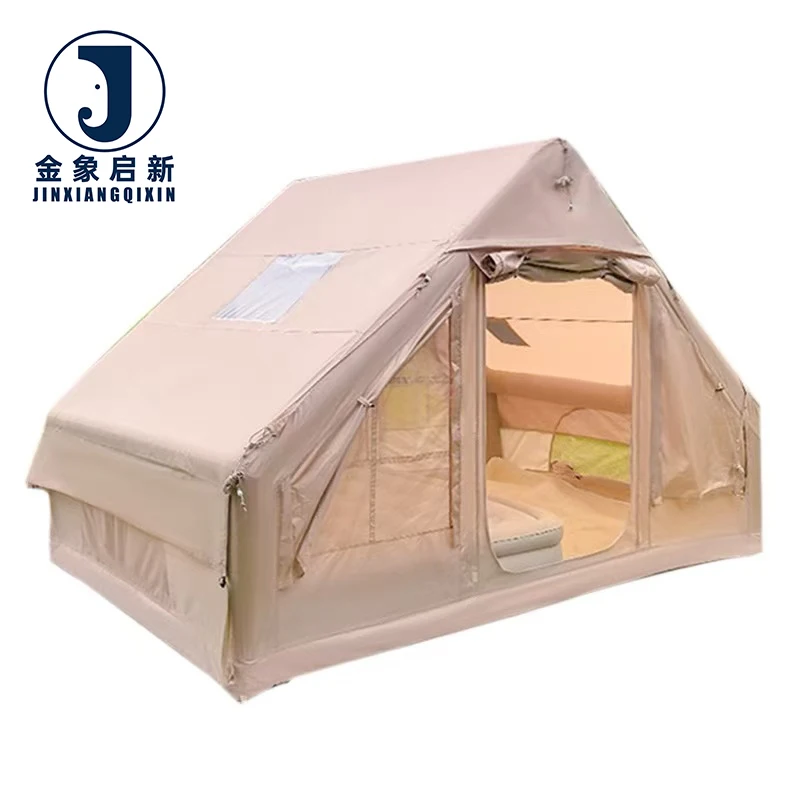
PVC Inflatable Tent 3-4 Person — four-season waterproof PVC tarpaulin with quick automatic inflation system and heat-sealed seams
- Single-layer construction rated for year-round commercial deployment
- Anti-UV treated PVC fabric prevents degradation under prolonged sun exposure
- 8-point air pressure testing protocol verifies structural stability before dispatch
- OEM/ODM customisation for sizing, colour, and pattern printing
Supported by a 10-person R&D team delivering pre-production samples within days, with dedicated QA inspection at every production stage across three full production lines.
Description
Custom-Built Inflation Architecture — every PVC inflatable tent we ship undergoes 100% air pressure testing and seam peel verification before dispatch, eliminating field failures on commercial deployments.
Technical Specifications
| Parameter | Value |
|---|---|
| Product Type | Inflatable Tent |
| Capacity | 3-4 Person |
| Core Material | PVC Tarpaulin |
| Construction | Single Layer |
| Deployment System | Automatic Inflation |
| Season Rating | Four-Season |
| Key Features | Waterproof, Quick Automatic Opening |
| Certifications | ISO9001, ISO14001, ISO45001, CE |
| Production Lines | 3 |
| Processing Equipment | 36 sets |
| R&D Team | 10 technicians |
| Customisation | OEM & ODM, sample development, pattern printing |
| Quality Control | Full-process inspection, 100% air pressure testing |
Application Suitability
| Application | Exposure & Requirement |
|---|---|
| Construction site field offices | Continuous UV exposure, wind load, dust ingress, frequent relocation |
| Outdoor event infrastructure | Rapid deployment cycles, public safety compliance, variable weather loading |
| Expedition base camps | Sub-zero temperatures, high wind shear, remote repair constraints |
| Emergency response staging | Immediate inflation requirement, ground abrasion, multi-agency handover |
| Mobile commercial operations | Daily inflation-deflation cycles, transport abrasion, brand visibility demands |
Why Seam Integrity Decides Whether a PVC Inflatable Tent Survives Its First Storm
A tent that loses pressure at the weld line is a collapsed tent, regardless of fabric quality.
I spent years on the coating line before moving into technical sales, and the most expensive lesson I witnessed was a batch of inflatable tubes returned because the heat-seal parameters drifted during a shift change. The fabric was sound; the welds parted under load within hours of inflation. Commercial buyers often focus on the base cloth weight and overlook the thermal bonding protocol, yet that junction carries the highest stress when internal pressure meets external wind shear [NEED_CITE: tensile and peel test methods for coated fabric welds per ISO 1421]. When a PVC inflatable tent is specified for construction or emergency staging, the inflation cycle repeats dozens of times per season, and each pressurisation tests the weld adhesion at the tube curvature points.
Designing the Inflation Envelope for Repeated Commercial Use
A PVC inflatable tent built for commercial duty must hold internal pressure across temperature swings that soften the coating in summer heat and stiffen it in winter cold. The single-layer construction specified here relies on continuous heat-sealed seams rather than stitched-and-taped joints, because a stitched needle path creates a perforation line that can propagate under cyclic pressure loading. Our R&D team of 10 technicians develops tube geometry profiles that distribute stress across the seam rather than concentrating it at the valve insertion point, which is where field failures commonly originate on generic camping-grade inflatables.
How Automatic Inflation Changes the Site Workflow
Quick automatic opening transforms how contractors and event crews deploy temporary shelter. Traditional frame tents require multiple workers, pole assemblies, and significant time; an automatic inflation system reduces that sequence to a single operator with a pump connection. For emergency response staging and construction site offices, this means shelter is operational before weather deteriorates. The four-season rating requires the PVC tarpaulin to remain pliable enough for inflation at low ambient temperatures while resisting deformation under solar loading at the upper range [NEED_CITE: low-temperature flexibility thresholds for plasticised PVC coated fabrics].
Reading the Specification Sheet Beyond the Headline Numbers
The core material is PVC tarpaulin, but that designation covers a wide band of coating weights, base fabric deniers, and surface treatments. What matters for an inflatable structure is the relationship between base fabric tensile strength and coating adhesion — a heavy coating on a low-denier base cloth will crack before the fabric itself tears, while a light coating on a high-denier weave may delaminate at the weld zone under internal pressure. The single-layer construction places all structural demand on one material plane, so coating-to-substrate bond strength becomes the governing failure metric. Waterproof performance depends on continuous coating coverage with no pinholes introduced during the calendering or knife-over-roll process, and the automatic inflation system depends on valve-seat adhesion to the surrounding coated fabric.
What Happens When Specifications Are Assumed Instead of Verified
I have seen coated rolls pass visual inspection and still fail at the weld line because the plasticiser content varied between production batches. On inflatable structures this surfaces as tubes that hold pressure in the factory test but weep at the seams after a week in the field [NEED_CITE: plasticiser migration and its effect on heat-seal peel strength in PVC coated textiles]. Colour variation between rolls used on the same project becomes visible once panels are erected side by side, forcing a choice between aesthetic rejection and project delay. Fire-retardant grades claimed without a supporting test report leave the site operator exposed if the local inspector requests documentation, and a tent that cannot produce certification on demand gets pulled from the site regardless of its actual performance.
Why Commercial Buyers Source This PVC Inflatable Tent Here
Three full production lines and 36 sets of processing equipment give us the throughput to fill container-volume orders while holding weld consistency across the batch. Our 10-person R&D team handles tube geometry development, valve integration, and sample builds so you can validate inflation behaviour before committing to production. Every roll of PVC tarpaulin enters our QA stream with incoming inspection, and finished inflatable structures undergo 100% air pressure testing — not a sample basis, every unit. OEM and ODM customisation covers sizing, pattern printing, and branding, developed through sample iterations within days rather than weeks. ISO9001, ISO14001, ISO45001, and CE certification provide the documentation trail that commercial procurement and site compliance officers require [NEED_CITE: ISO management system standards applicable to coated fabric manufacturing].
Documentation & Verification
- Material specification sheet stating PVC tarpaulin coating weight, base fabric construction, and surface treatment grade
- Test reports for UV stability and fire-retardant grades supplied where applicable to the order specification
- Pre-shipment air pressure test record for each inflatable unit confirming seal integrity at rated pressure
- ISO9001, ISO14001, ISO45001, and CE certificates included with shipment documentation
- Roll-to-roll batch traceability linking finished tent to source coating batch
- Certificate of origin and customs documentation prepared per destination country requirement
Fabrication, Handling & Storage
- Heat-seal temperature and dwell time must match the specific PVC tarpaulin coating formulation to prevent seam delamination under pressure.
- Store inflated or deflated units away from sharp ground debris that can score the single-layer PVC tarpaulin floor contact zone.
- Avoid folding at identical crease lines across storage cycles to prevent coating crack initiation at repeated stress points.
- Use compatible PVC-based repair adhesives for field patching; solvent-based contact cements can attack the plasticiser matrix.
- Inflate to rated pressure before storage to check valve seats and seam adhesion after extended warehouse holding.
What to Include in Your Enquiry
Specify the deployment environment — temperature range, wind exposure, and ground conditions — so we can confirm the PVC tarpaulin grade and seam construction match the load case. Confirm whether your market requires fire-retardant certification and which standard the local authority enforces. State the quantity, sizing preference, and any branding or pattern printing requirements, and indicate whether you need sample validation before full production release.
Frequently Asked Questions
Q: What customisation options exist for sizing, colour, and branding on commercial orders?
A: Our R&D team develops samples covering custom dimensions, colour matching, and pattern printing for PVC inflatable tent orders. OEM and ODM configurations are supported across our three production lines. Samples are typically developed within days, allowing you to verify inflation geometry, weld placement, and visual appearance before authorising bulk production.
Q: How does the four-season rating translate to specific temperature and weather ranges?
A: The four-season designation means the PVC tarpaulin formulation remains flexible enough for automatic inflation at low temperatures and stable under solar loading in high heat. Exact operational boundaries depend on the specific coating grade selected for your order. Request the material data sheet for the temperature flex range and thermal stability values applicable to your deployment zone.
Q: What lead times apply for custom OEM or ODM orders versus standard configurations?
A: Standard configurations move through production faster because tooling and weld jigs are already set. Custom OEM and ODM orders require sample development, approval cycles, and dedicated jig setup. Typical multi-week lead times apply depending on order volume and customisation complexity. Confirm your timeline at enquiry stage so we can sequence production scheduling accordingly.
Q: Can you provide material test reports for UV resistance and waterproof performance?
A: Test reports for UV stability and waterproof integrity are available for PVC tarpaulin grades where those treatments are specified. Third-party testing at accredited laboratories can be arranged for your market’s compliance requirements. State the applicable standard at enquiry stage so reports align with your local regulatory or procurement documentation demands.
Q: What documentation accompanies each shipment for customs and compliance clearance?
A: Each PVC inflatable tent shipment includes a material specification sheet, pre-shipment inspection record, air pressure test results, ISO and CE certificates, certificate of origin, and a detailed packing list. Customs documentation is prepared per destination country. Fire-retardant test reports are included where applicable to the specified grade.
Related products
-
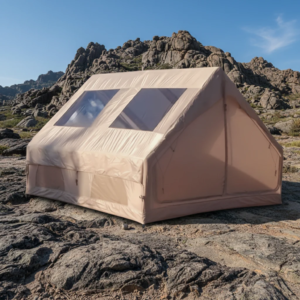
High Quality Four-Season Inflatable Tent for Camping Durable PVC Material All-Weather Resistance Quick Automatic Opening
Read more -
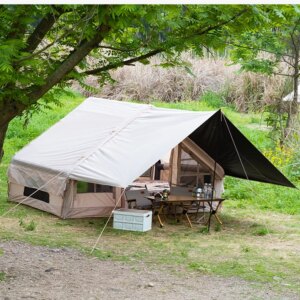
Camping Tent Inflatable PVC Waterproof UV Resistant Four-Season Quick Automatic Opening Customizable 2-3 Person
Read more -
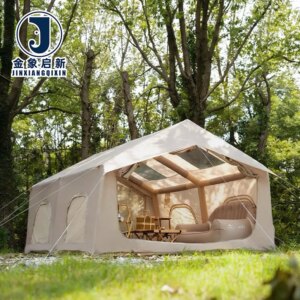
Camping Tent Inflatable UV Resistant Customizable Four-season Waterproof PVC Quick Automatic Opening 2-3 Person Outdoor
Read more -
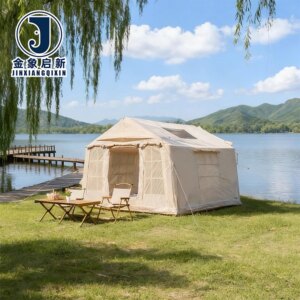
Luxury Inflatable Tent for Glamping Outdoor Waterproof Air Tent with Pump
Read more