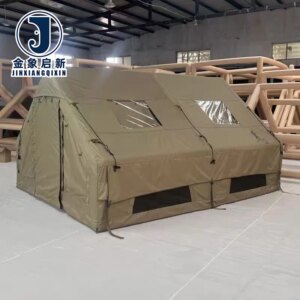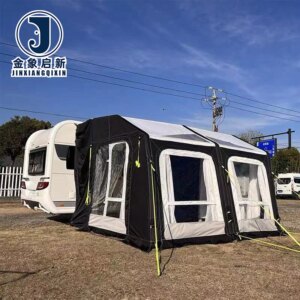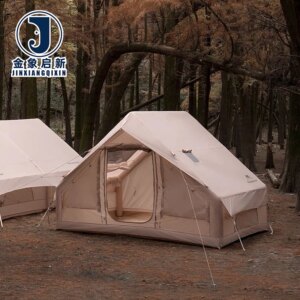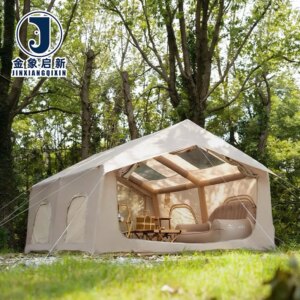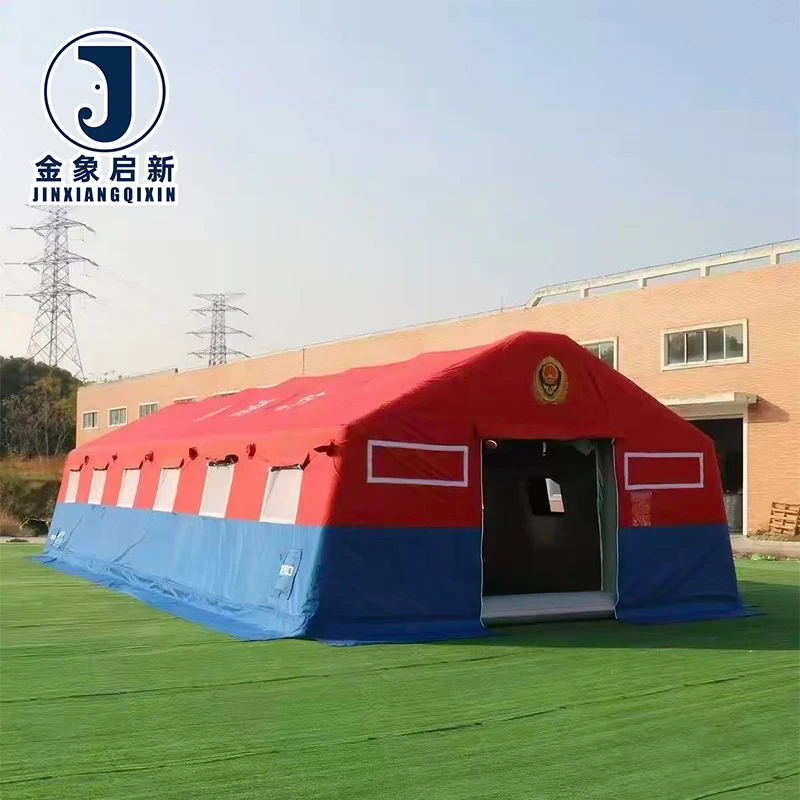
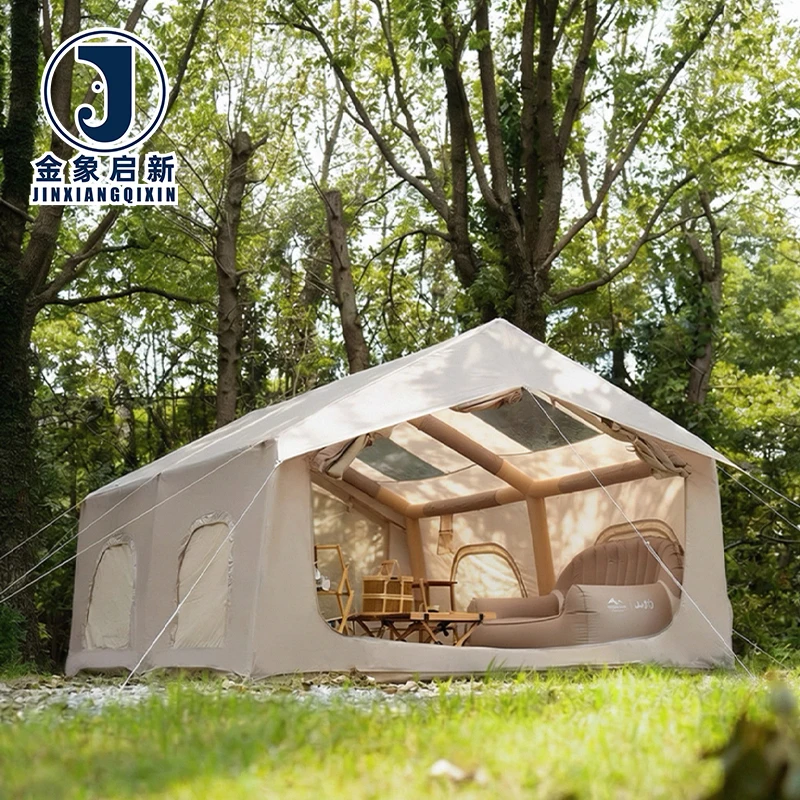
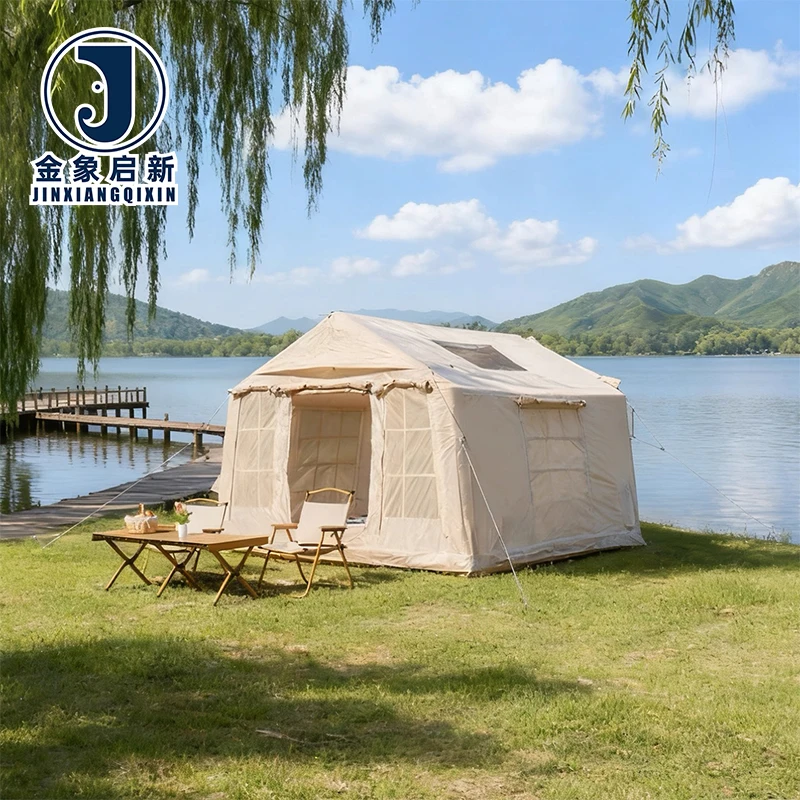
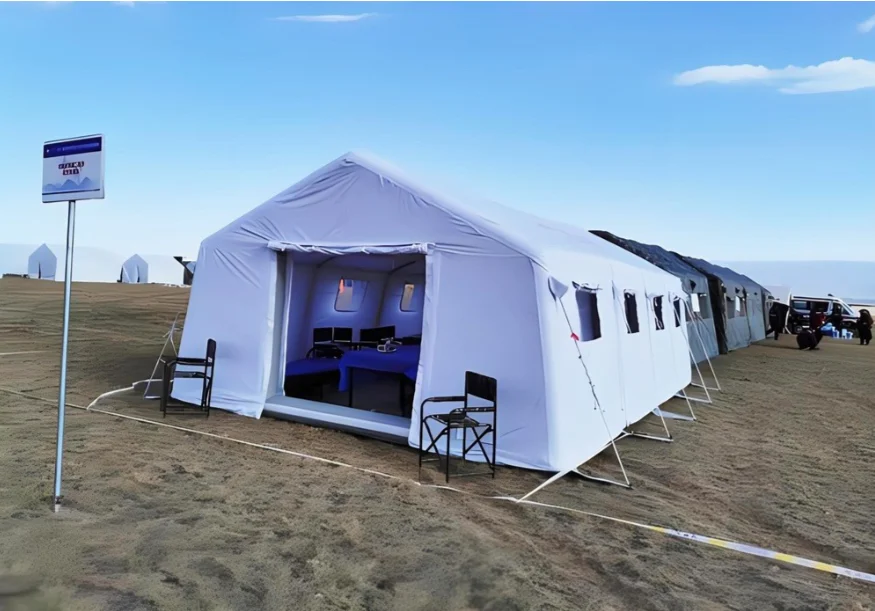
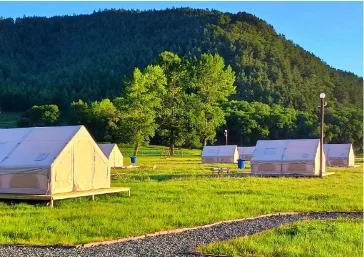
PVC Inflatable Tent for Glamping — waterproof, UV-resistant, tear-resistant PVC tarpaulin with quick automatic opening system and inflatable structure with pump.
- Complete tarpaulin range with full customization from design to delivery, supporting OEM & ODM pattern printing and custom dimensions for commercial events, construction shelters, and glamping operations.
- Backed by 10-person R&D team, 3 full production lines, and 100% pre-shipment inspection for reliable specification compliance.
Description
Coated Fabric Process Control — Every PVC inflatable tent we produce is backed by full-process quality inspection and pressure testing, ensuring airtight integrity before shipment.
Technical Specifications
| Parameter | Value |
|---|---|
| Product Type | Inflatable Tent |
| Core Material | PVC Tarpaulin |
| Key Performance | Waterproof, tear-resistant, quick automatic opening |
| UV Resistance | Available with UV-resistant treatment — confirm test standard required for your market |
| Flame Retardant Grade | Available in flame retardant grades — confirm the grade required for your market |
| Product Forms | Inflatable structure with pump |
| Customization Service | OEM & ODM, sample customization, pattern printing |
| Quality Control | Full-process QA & QC, pressure testing for airtight integrity |
| Certifications | ISO9001, ISO14001, ISO45001, CE |
Application Suitability
| Application | Exposure & Requirement |
|---|---|
| Glamping operations | Four-season weather exposure, guest-facing aesthetics, branded pattern printing, repeated inflation cycles |
| Commercial events and exhibitions | Rapid deployment demands, crowd traffic abrasion, variable wind loads, short-term repeated setup |
| Construction site shelters | Dust, debris impact, prolonged UV exposure, equipment protection, wind-borne particle resistance |
| Temporary storage facilities | Moisture intrusion prevention, large-span coverage, structural stability under load, ground contact abrasion |
Why Colour Consistency Across Inflatable Tents Requires More Than a Pantone Code
Batch-controlled coating and in-line colour monitoring prevent visible shade variation when multiple units stand side by side.
When sourcing a PVC Inflatable Tent manufacturer for a multi-unit glamping site or event series, buyers often receive tents that look matched on paper but show visible tone shifts once inflated next to each other. This happens when coating batches are not held to tight colour tolerances, or when pigment dispersion varies between production runs. We address this by running colour checks at the coating stage, not just at final inspection [NEED_CITE: colour consistency standards for coated PVC tarpaulin across production batches].
Material Selection for Demanding Inflatable Structures
The PVC tarpaulin used in these inflatable tents delivers waterproof and tear-resistant performance, which is essential when the structure faces wind-driven rain or contact with rough ground. The coating adhesion and base fabric construction work together to maintain air-holding integrity under sustained internal pressure. Choosing the right material thickness depends on inflation cycle frequency and the environmental stress the tent will face. As a custom inflatable tent fabric supplier, we provide material options that balance deployment weight against structural durability.
Full OEM & ODM Development for Branded Inflatables
Pattern printing, size adjustments, and material thickness variations are handled by our 10-person R&D team, which can develop a custom inflatable tent sample within days. This capability matters for glamping operators who need branded aesthetics or event companies requiring structures that fit specific venue footprints. Every sample goes through pressure testing for airtight integrity before approval [NEED_CITE: airtight pressure testing methodology for PVC inflatable structures]. The quick automatic opening system further reduces on-site deployment time, allowing crews to move from transport to operational status in minutes rather than hours.
How Base Fabric and Coating Weight Interact in Inflatable Applications
The tear resistance of an inflatable tent depends not on GSM alone but on the combination of base fabric denier, weave density, and coating weight. A heavier coating can fill weave gaps and improve airtightness, but if the base fabric lacks sufficient yarn count, tear propagation can still initiate at stress points around valve openings and seam junctions. The coating method influences peel strength and heat-weld behaviour, which directly affects how well seams hold under repeated inflation and deflation. UV-resistant treatment, where specified, must be verified against the test standard your end market requires, as different regions reference different exposure benchmarks. Flame retardant grades similarly vary by market regulation, and the correct grade must be confirmed before production begins.
The Hidden Cost of Specifying Inflatable Tents on Price Per Unit Alone
When inflatable tents are sourced without verifying material weight, coating adhesion, or seam construction, failures tend to appear after the first season of use. Weld lines can separate under flex stress, particularly at corners where internal pressure concentrates. Coating delamination may occur if the PVC bond to the base fabric was insufficient for the inflation pressure specified. Colour variation between tents in the same order becomes a guest-facing problem at glamping sites, forcing operators to replace units prematurely [NEED_CITE: coated fabric delamination causes under cyclic inflation pressure]. These issues trace back to inadequate specification and inspection rather than material defects.
Why Buyers Source Inflatable Tent Fabric Here
Nearly 30 years of coated fabric production means our process control over coating weight and adhesion is built into every roll and every finished inflatable unit. Three full production lines and 36 sets of professional processing equipment support bulk orders with reliable lead times. Our 10-technician R&D team handles custom inflatable tent sample development, including pattern printing and non-standard sizing. Every unit undergoes 100% inspection before shipment, including pressure testing for airtight integrity and structural stability. Dedicated QA and QC staff operate at each production stage rather than only at final check. Documentation including ISO9001, ISO14001, ISO45001, and CE certificates is provided with every dispatch.
Documentation & Verification
- Material specification sheet stating GSM, base fabric type, coating weight, and colour reference for each inflatable tent order
- Pressure test results recorded per unit confirming airtight integrity before dispatch
- ISO9001, ISO14001, ISO45001, and CE certificates included for market compliance verification
- Pre-shipment inspection record covering seam integrity, valve function, and surface finish
- UV-resistant or flame retardant test reports provided where the specified grade requires documented evidence
Fabrication, Handling & Storage
- Heat-weld seams at manufacturer-recommended temperature to match the PVC tarpaulin coating adhesion characteristics
- Store inflated or deflated units in dry conditions to prevent moisture trapping against the PVC surface
- Avoid folding inflatable tents at the same crease line repeatedly to prevent coating fatigue and crack initiation
- Use mild, non-solvent cleaners on the PVC tarpaulin surface to preserve coating integrity and printed patterns
- Inspect valve fittings and surrounding weld zones before each deployment cycle for early signs of separation
How to Scope Your Inflatable Tent Inquiry
Provide your intended application, expected inflation frequency, and the environmental conditions the structure will face, including wind exposure and ground contact type. Specify whether you require pattern printing, custom sizing, or standard dimensions, and indicate the flame retardant or UV-resistant grade needed for your target market. Let us know if you need sample development for approval before full production, and confirm the approximate order quantity to help us plan production line allocation.
Frequently Asked Questions
Q: What customization options are available for inflatable tents?
A: We offer full OEM and ODM services including size adjustments, pattern printing, material thickness variations, and colour matching. Our 10-person R&D team can develop a sample based on your drawings or concept. Confirm your dimensional requirements, print artwork, and any performance treatments needed so we can prepare an accurate specification for your review.
Q: How do you ensure colour consistency across multiple inflatable tents?
A: Colour consistency is managed at the coating stage through batch-controlled pigment dispersion and in-line monitoring. Each production run is checked against the approved colour reference before coating proceeds. This prevents the visible shade variation that can occur when multiple tents are installed side by side at glamping sites or event venues.
Q: What test documentation supports the UV-resistant and waterproof claims?
A: Where UV-resistant treatment is specified, we provide test documentation aligned to the standard your market requires — confirm the applicable benchmark before production. Waterproof performance is inherent in the PVC tarpaulin coated construction and verified through pressure testing for airtight integrity. Test reports accompany each shipment where applicable.
Q: What is the sample development process and lead time?
A: Submit your design requirements including dimensions, print files, material thickness, and any performance treatments. Our R&D team develops a sample for your approval before mass production begins. The typical sample turnaround is measured in days for standard customisations, though complex pattern printing or non-standard constructions may require additional time.
Q: What certifications and inspection reports are included with shipment?
A: Every shipment includes ISO9001, ISO14001, ISO45001, and CE certificates. You also receive a pre-shipment inspection record documenting pressure test results, seam integrity checks, and surface quality verification. Material specification sheets stating GSM, base fabric, and coating details are provided for each order to support your compliance and quality records.
Related products
-
Luxury Inflatable Tent for Glamping Outdoor Waterproof Air Tent with Pump
Read more -
Waterproof Inflatable Camping Tent Outdoor Easy Setup Air Tent for Camping
Read more -
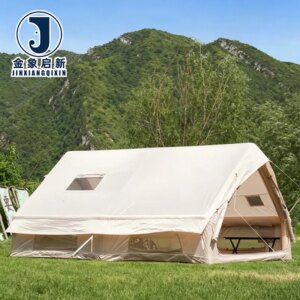
Inflatable Camping Tent PVC Four-Season Waterproof Outdoor Air Tent with Quick Automatic Opening for 2-3 Person
Read more -
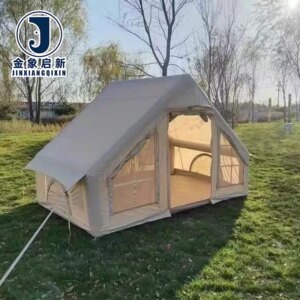
Outdoor Portable Camping Inflatable Tent Luxury All-Season Use Overnight Large Space Rainproof Insulated Quick Automatic Opening
Read more