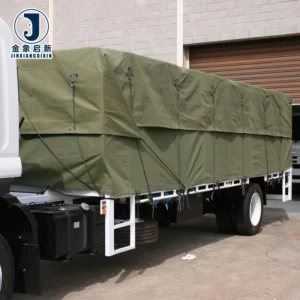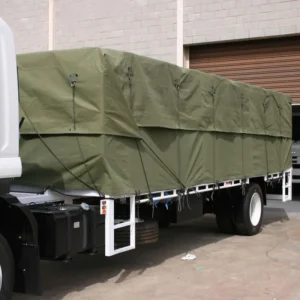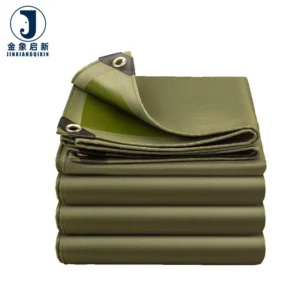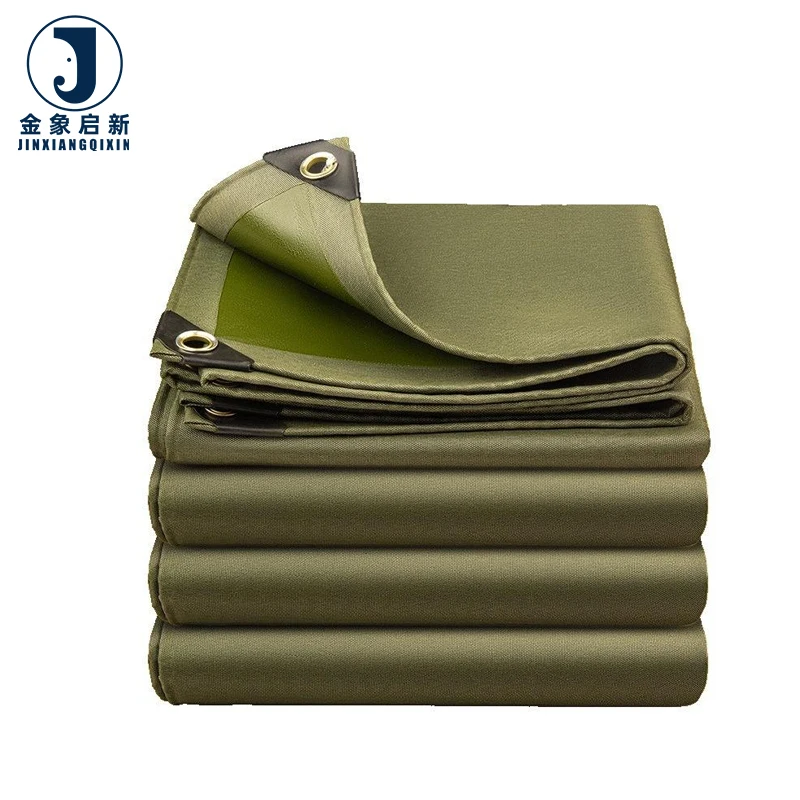
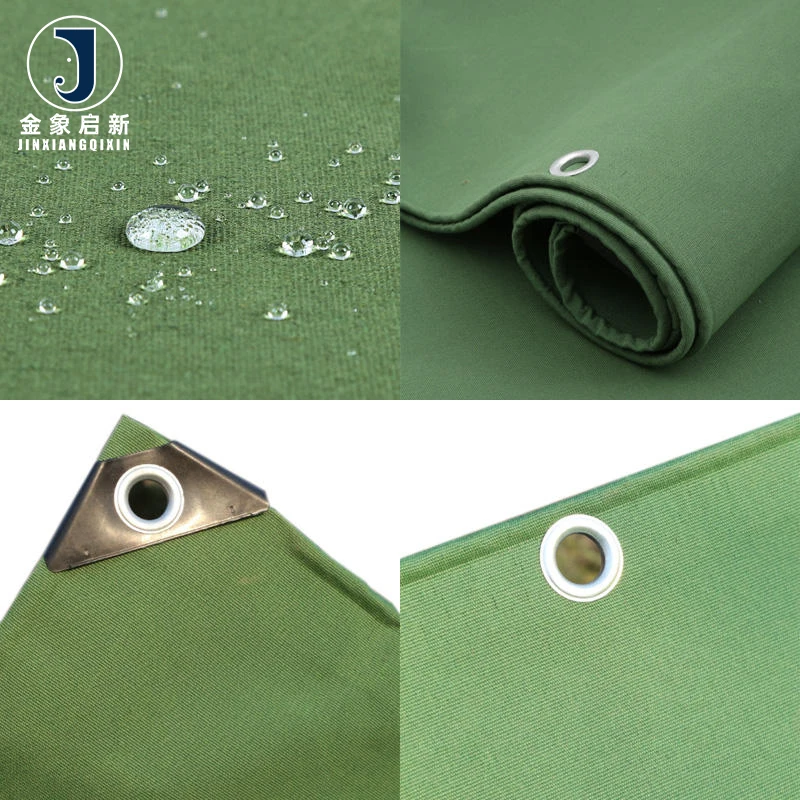
PVC Laminated Canvas Tarpaulin 600gsm, 0.5-0.7mm Thickness, 2m Roll Width — polyester cotton base with 8-12 strand fine cotton yarn, laminated for tensile and tear resistance across truck, awning and construction covers.
- Full catalogue range from roll stock to cut-and-hemmed finished covers, with custom GSM, colour, pattern printing and reinforcement hardware in one order.
- Rust-proof aluminum eyelets at 1m intervals, welded and sewn seams with poly rope reinforcement at corners and hems.
- Every roll inspected against spec sheet for GSM, colour consistency and seam pull-out before dispatch, backed by test reports and certificate of origin.
Description
Process Control on Coating Weight — Every roll of PVC Laminated Woven Canvas Tarpaulin is checked against the quoted GSM at multiple points along the line, not just at the sample stage.
Technical Specifications
| Parameter | Value |
|---|---|
| Product Type | PVC Laminated Woven Canvas Tarpaulin |
| Base Fabric | Polyester cotton industrial textile with 8-12 strands of fine cotton yarn |
| Coating Method | PVC laminated |
| Weight | 600gsm |
| Thickness | 0.5mm / 0.6mm / 0.7mm |
| Color | Army Green Camouflage / Custom |
| Roll Size | 2m width × 100m length |
| Finished Size | Custom cut-to-size or sold by inventory roll |
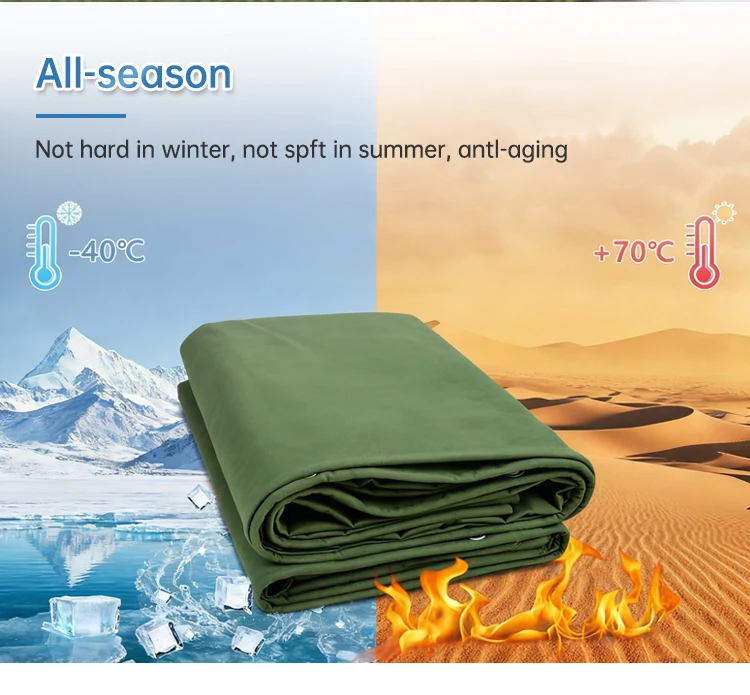
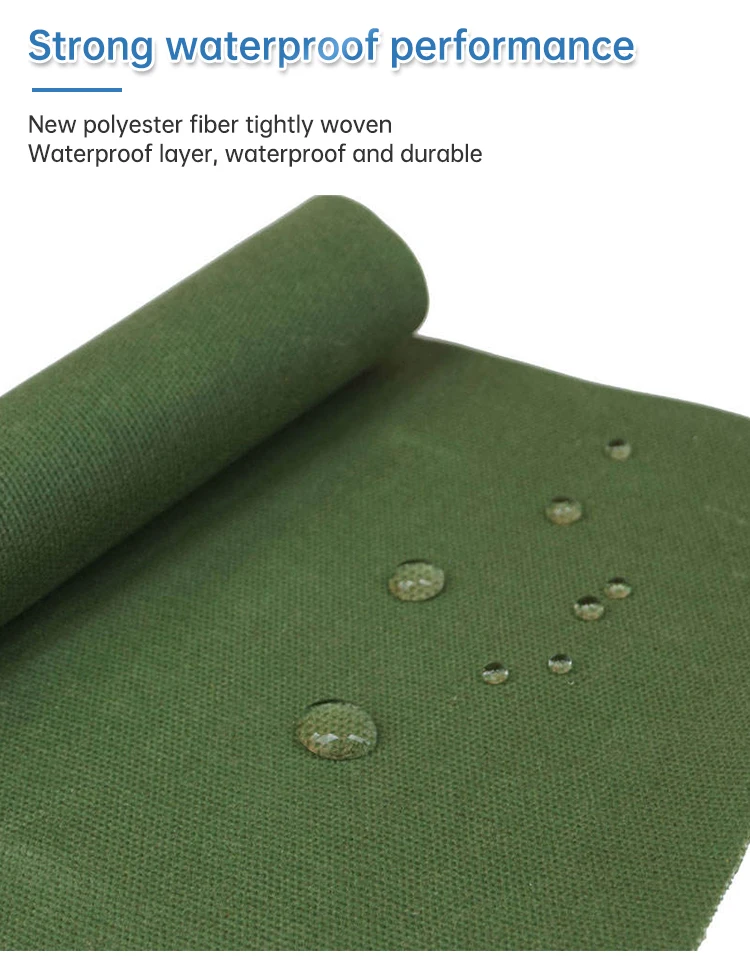
| Key Features | Wear-resistant, corrosion-resistant, tensile-resistant, high- and low-temperature resistant, waterproof, shrink proof, mold resistant |
| Reinforcement | Rust-proof aluminum eyelets at 1m intervals on corners and hems; folded seams welded and sewn with poly ropes |
| UV Resistance | Available with UV treatment — confirm grade required for your market |
| Flame Retardancy | Available in flame retardant grades — confirm the grade required for your market |
| Standards | CE, ISO |
Application Suitability
| Application | Exposure & Requirement |
|---|---|
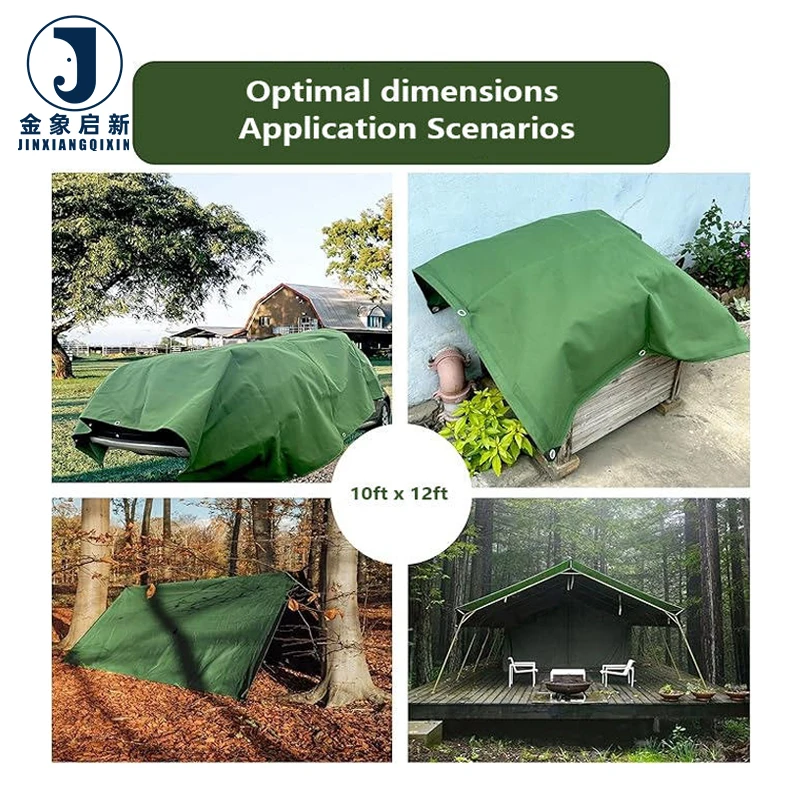
| Truck and trailer canopy cover | Road abrasion at flex points, wind uplift, UV and rain exposure, model-specific fitment at corners |
| Outdoor awning and shading sail | Constant sun exposure, seasonal temperature swings, tension across unsupported spans |
| Construction site equipment cover | Dust, chemical splash, mechanical abrasion, repeated folding and handling |
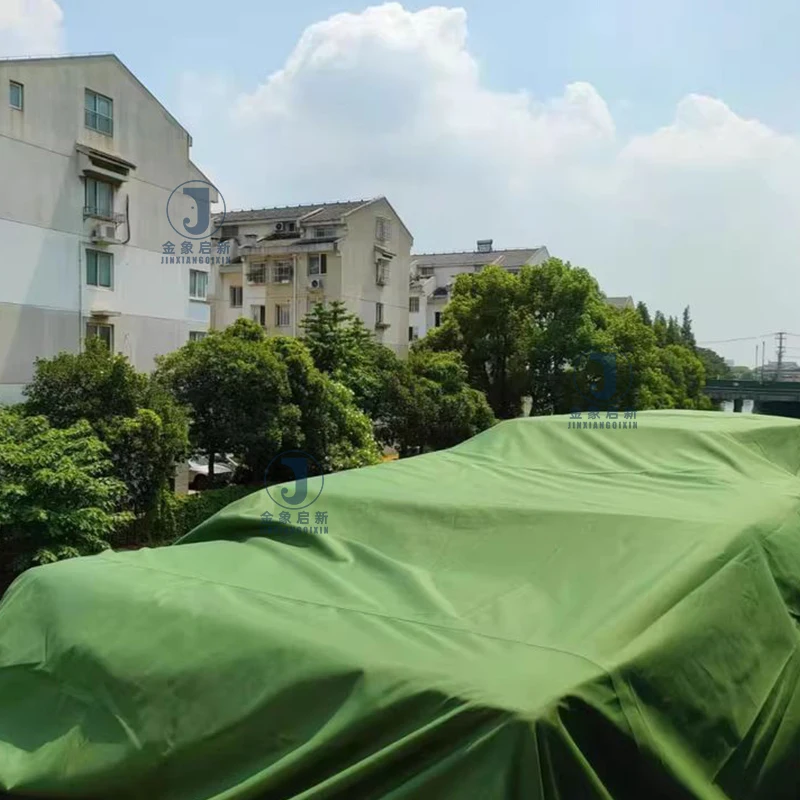
| Asphalt and open-air stockpile cover | Heat transfer from material underneath, moisture ingress, prolonged ground contact |
| Tent and temporary structure | High- and low-temperature cycling, wind load on panels, weld integrity at seam junctions |
| Engine hood and vehicle protection | Contact with hot surfaces, oil and fluid exposure, tight fold storage |
Why the Wrong Seam Treatment Ruins a Heavy Duty Canvas Tarpaulin Before the Fabric Fails
A weld that cracks at the tie-down point is a fabric failure in every practical sense, even if the canvas itself never tears.
When sourcing a heavy duty canvas tarpaulin aftermarket supplier, buyers focus on base fabric weight and coating thickness. Yet on truck covers and site enclosures, the first point of failure is almost always the welded or sewn seam — the exact spot where the load flexes most under tie-down straps or wind gusts. The lamination layer must bond to the polyester cotton base with enough peel strength to survive repeated folding, and the seam parameters need to match the specific thickness and coating formulation of the batch. [NEED_CITE: tensile and tear test methods for coated fabrics per ISO 1421]
How PVC Lamination Differs From Coating on Canvas Weave
PVC lamination bonds a pre-formed film to the woven polyester cotton base under heat and pressure, rather than applying a liquid coat. This gives the canvas tarpaulin a more uniform surface weight across the full 2m roll width, which matters when multiple panels are joined for a truck canopy or large awning. The bonded film also resists delamination at fold lines better than knife-coated alternatives of the same weight.
What the Base Yarn Construction Actually Controls
The 8-12 strand fine cotton yarn blended into the polyester cotton base is not about softness — it governs how the fabric behaves when a tear starts. A denser yarn count arrests tear propagation by forcing the tear path to deviate around each crossover point in the weave. For tarps that are folded daily or tensioned across frames, this matters more than a raw tensile figure measured on a static sample. [NEED_CITE: weave density and tear propagation resistance in industrial textiles]
Reading Thickness, GSM and Coating Together
The 0.5mm, 0.6mm and 0.7mm thickness options paired with the stated 600gsm weight indicate how the lamination film thickness is varied while keeping the base fabric constant. A thicker laminate adds abrasion resistance and stiffness, which suits fixed truck covers that see little folding. A thinner laminate on the same base keeps the canvas more pliable for tarps that are repeatedly rolled, stored and redeployed on site. Selecting the right thickness means matching it to how the finished cover will be handled, not simply choosing the heaviest option.
The Cost of Ordering by Generic Dimensions Instead of Vehicle Model
One common failure pattern we see is canvas tarpaulin cut to a generic length and width that does not match the actual trailer profile. The corners cannot be tensioned properly, wind gets underneath, and the flapping loads the eyelets beyond their pull-out rating. Every truck and trailer model has different rail positions, corner radii and tailgate clearances. Ordering a finished cover without confirming the specific model means accepting that the reinforcement points will sit in the wrong places. [NEED_CITE: tie-down load distribution on tensioned tarpaulin panels]
Why Sourcing Everything Under One Roof Matters Here
The polyester cotton base fabric, PVC lamination, cutting, welding and eyelet insertion all happen on the same production lines, which eliminates colour mismatch between roll stock and finished covers. The 10-person R&D team develops samples within days for custom widths, colours and pattern printing so you can verify the material before committing to a production run. Every roll passes through dedicated QA/QC with full pre-shipment inspection against the quoted weight and reinforcement specification. Three production lines and 36 sets of equipment support bulk volume while keeping lead times consistent. Samples ship with the same documentation package as production orders, so there is no gap between approval and delivery.
Documentation & Verification
- Material specification sheet stating 600gsm weight, base fabric composition and coating method for each roll
- Pre-shipment inspection record confirming weight verification per roll against the stated GSM
- Roll packing list with individual roll IDs for traceability back to the production batch
- Colour reference card matched to Army Green Camouflage or custom colour code before dispatch
- Test report for UV and flame-retardant treatment grades where specified in the purchase order
- Certificate of origin and customs documentation supporting export to destination market
Fabrication, Handling & Storage
- Weld temperature and dwell time must be tuned to the 0.5mm–0.7mm PVC laminate thickness to avoid scorching or weak bonds
- Rust-proof aluminum eyelets at 1m spacing require reinforced hem folding before insertion to prevent pull-through under load
- Store rolls upright on pallets to prevent flat-spot deformation on the 2m-wide PVC laminated surface
- Allow cold-stored canvas rolls to reach ambient temperature before unrolling to prevent laminate cracking at the fold
- Use mild detergent for cleaning; solvent-based agents can soften the PVC laminate layer and reduce surface adhesion
What to Include With Your Enquiry
When requesting a quote for PVC Laminated Woven Canvas Tarpaulin, provide the application — whether it is a truck canopy, awning or site cover — along with the specific vehicle model or structure dimensions if finished sizing is needed. Confirm the thickness preference from the 0.5mm, 0.6mm or 0.7mm options and whether the material will be repeatedly folded or remain installed long-term. Specify any colour, pattern printing or branding requirements, and indicate whether you need roll stock or cut-to-size finished products.
Frequently Asked Questions
Q: Can I order custom width, length, colour and GSM in a single order?
A: Yes. The production lines handle custom specifications across all parameters in one order. You provide the required width, length, colour reference and weight, and we develop a sample for approval before production begins. The sample ships with the same documentation as the final order, so material verification is complete before the bulk run starts.
Q: What is the difference between PVC coated and PVC laminated canvas construction?
A: PVC coating applies liquid PVC to the woven base, while PVC lamination bonds a pre-formed film under heat and pressure. Lamination gives more uniform coating weight across the full roll width and stronger resistance to delamination at fold lines. Both methods produce waterproof fabric, but lamination is typically preferred for covers that will be tensioned or folded repeatedly.
Q: How do you ensure colour consistency across multiple rolls in one shipment?
A: Every roll in a single order is produced from the same colour batch and checked against the reference card before packing. The pre-shipment inspection record includes a colour consistency check specifically for side-by-side installation scenarios. If a roll falls outside the acceptable range, it is pulled from the shipment and replaced before dispatch.
Q: Can you supply finished truck covers cut to my specific trailer model?
A: Yes. Provide the truck or trailer make, model and any modifications to the body or rail layout. We cut the canvas tarpaulin to match the actual dimensions, position the rust-proof aluminum eyelets at the correct tie-down points, and weld the seams at the flex zones identified for that specific model. A sample can be produced for fitment verification before the full order runs.
Q: What reinforcement options are available for high-stress tie-down areas?
A: Corners and hems are fitted with rust-proof aluminum eyelets at 1-metre intervals as standard. For high-stress zones, the hem can be doubled with an additional layer of PVC laminated canvas before eyelet insertion, and the seam can combine welding with sewn poly rope reinforcement to distribute the tie-down load across a wider fabric area.
Related products
-
13oz 10ftx12ft Woven Plain Heavy Duty Canvas Tarpaulin with Rustproof Grommets for Canopy Tent Roof Camping Woodpile
¥10.59 Add to cart -
Custom Heavy Duty Woven PVC Laminated Canvas Tarpaulin – Full Range
Read more -
Heavy Duty Canvas Tarpaulin for Canopy Tent – Custom Made
Read more -
JX Heavy Duty Woven Plain Canvas Laminated 600 GSM Tarpaulin Waterproof UV Resistant Multi-Use Industrial Grade
¥20.00 Add to cart