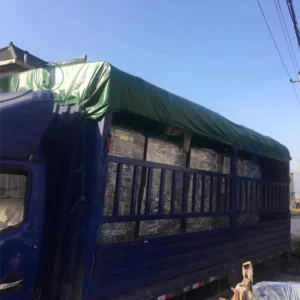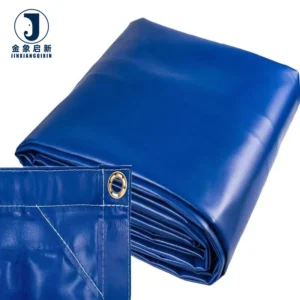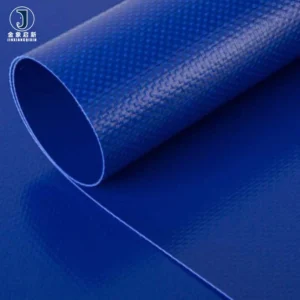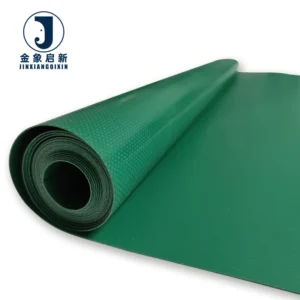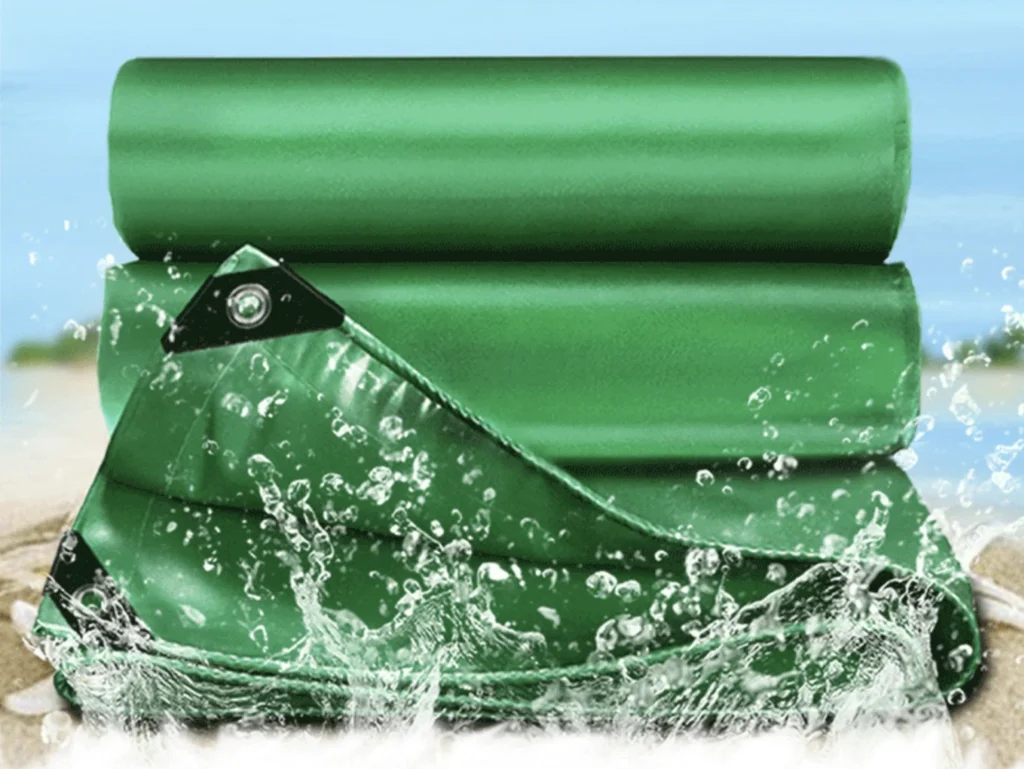
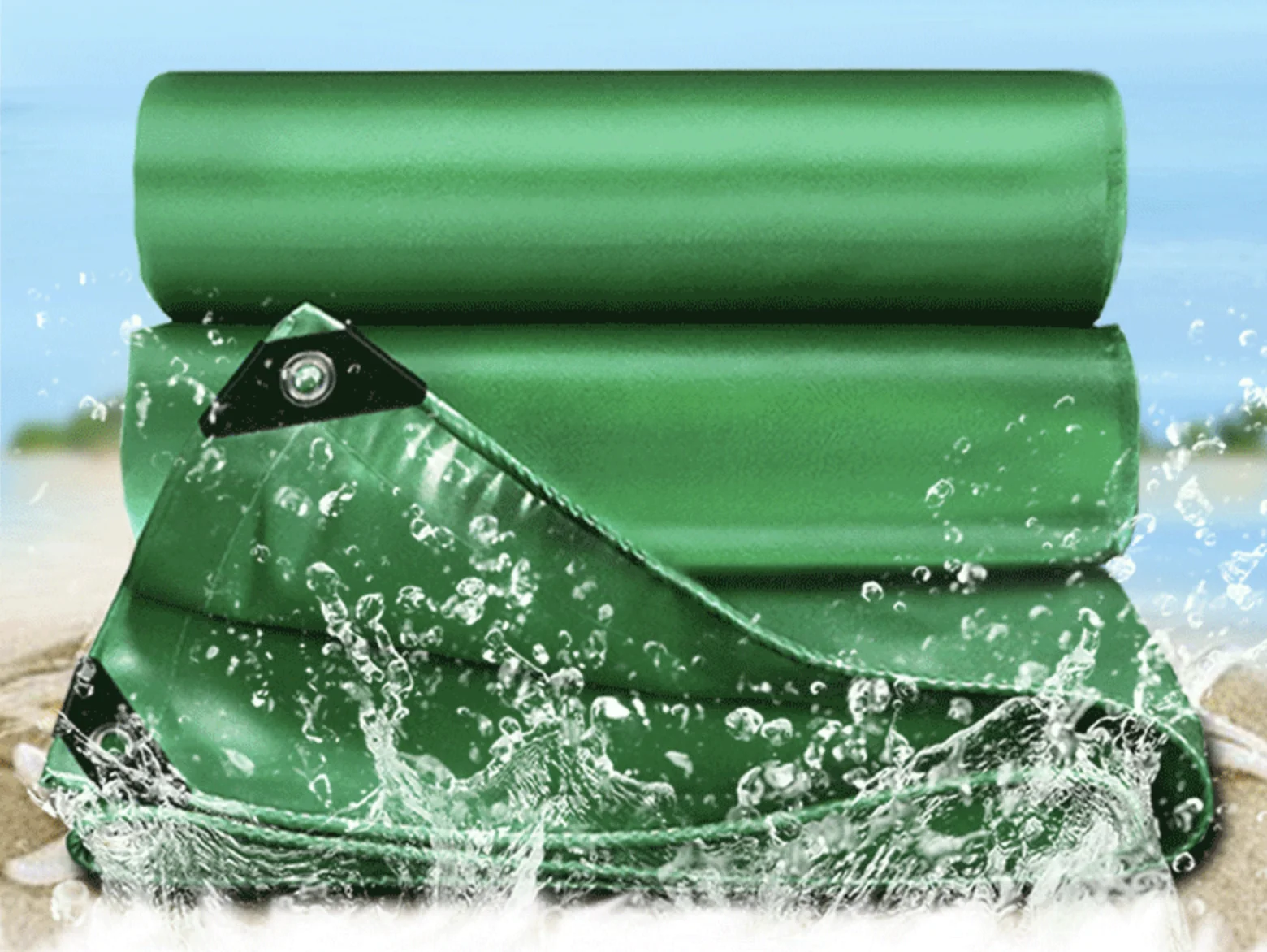
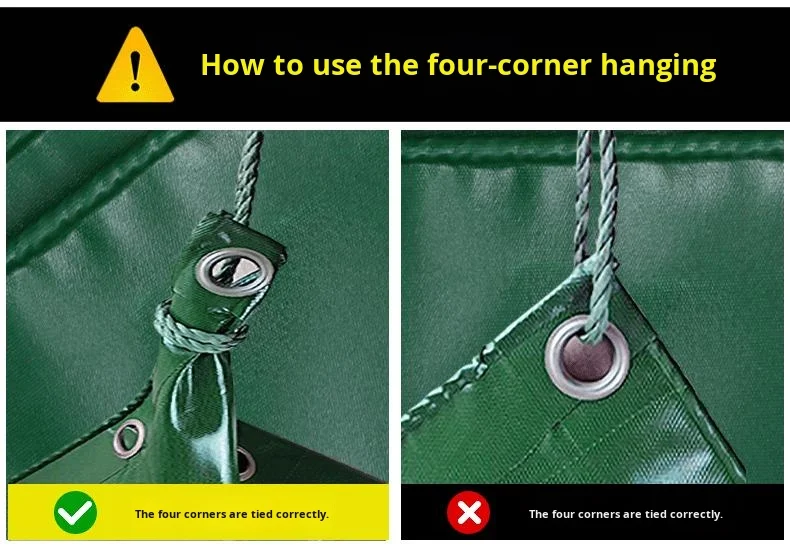
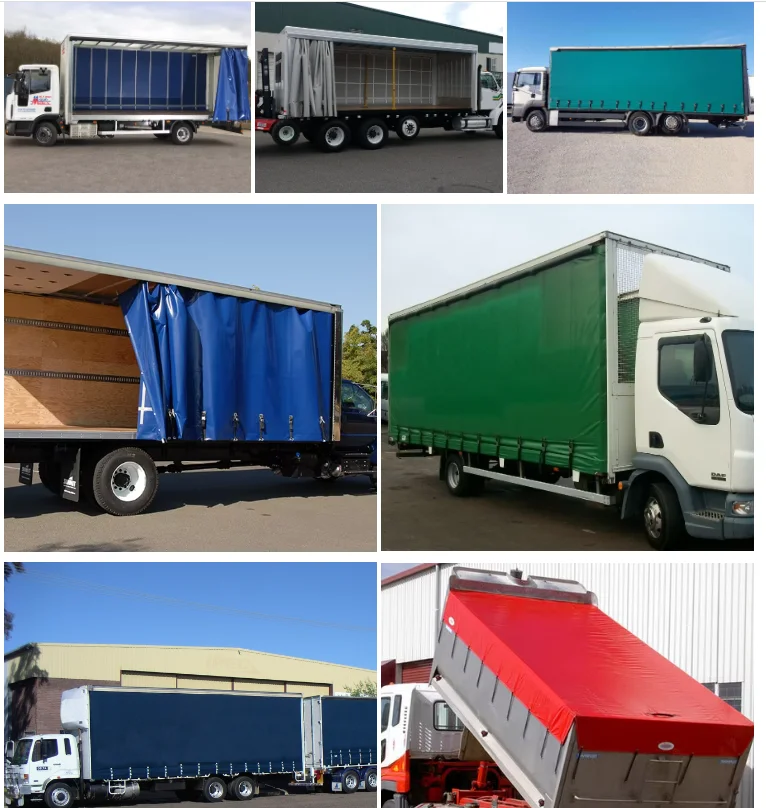
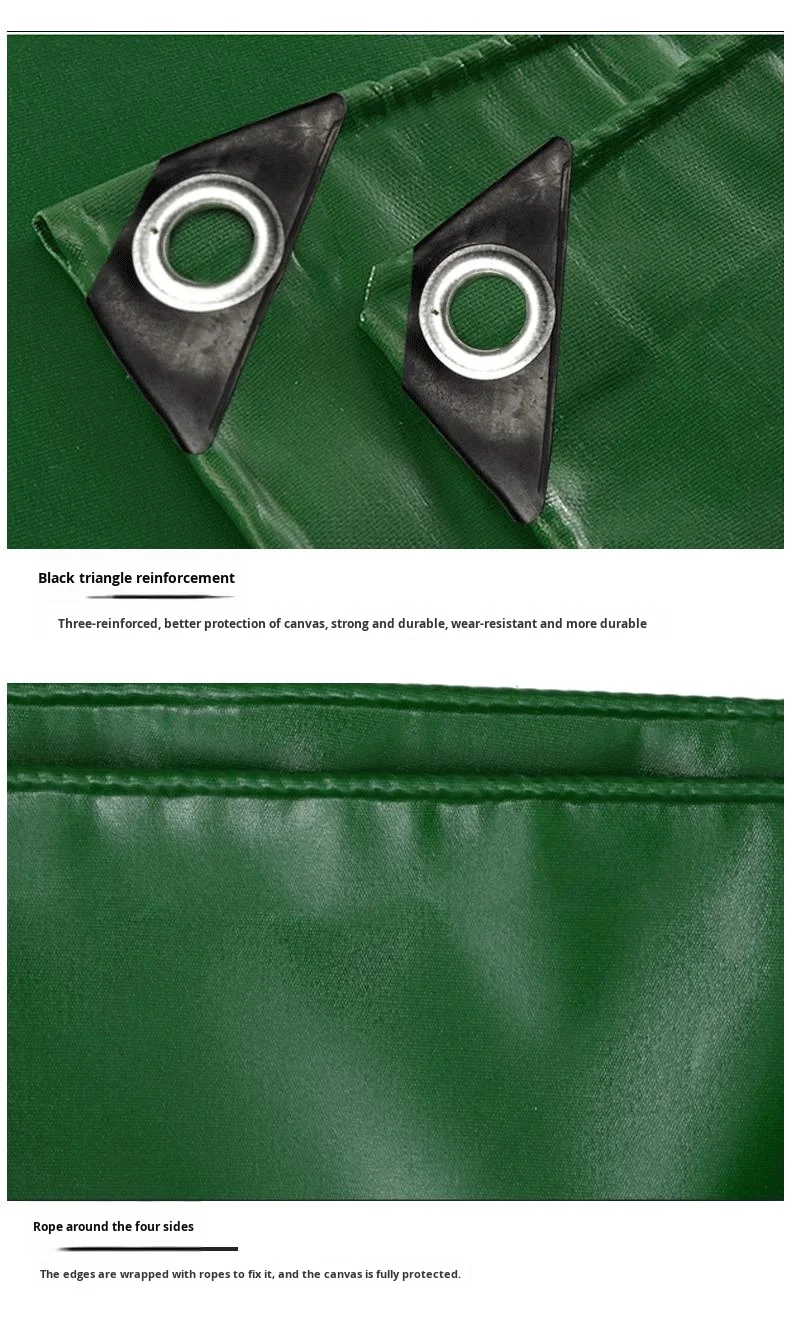
PVC Knife Coated Fabric Roll — knife coated for high tensile and tear resistance with HF, hot air and sewing compatibility.
Deep coating weight control across three production lines ensures roll-to-roll consistency on GSM, colour and finish. Full treatment scope including UV, flame retardant and anti-mildew options, each backed by test documentation on request.
- Custom width, length, colour and branding with samples developed in days
- 100% pre-shipment inspection and full traceability from batch to container
- ISO and CE certified, exporting to 20+ countries
Description
Deep Coating Adhesion Control — Knife coated construction engineered to keep PVC bonded to the base fabric through repeated flexing and thermal cycling, verified at every production stage before dispatch.
Technical Specifications
| Parameter | Value |
|---|---|
| Product Type | PVC Knife Coated Tarpaulin Roll |
| Coating Method | Knife coated |
| Coating Material | PVC |
| Flame Retardant Grade | Available in flame retardant grades — confirm the grade required for your market (grade not stated) |
| UV Treatment | UV resistance available — test basis to be confirmed at inquiry |
| Anti-Mildew | Antibacterial and mildew proof |
| Chemical Resistance | Acid and alkali resistance |
| Oil & Stain Resistance | Oil and stain resistance |
| Temperature Resistance | High temperature and cold resistance |
| Welding Options | HF, Hot Air, Sewing |
| Surface Property | Self-cleaning surface system |
| Flexibility | Highly flexible, resistant to cracking |
| Customisation | Weight (GSM), width, length, colour, surface finish available on request |
Application Suitability
| Application | Exposure & Requirement |
|---|---|
| Truck covers and side curtains | Constant road vibration, flexing at load points, UV and weather exposure, abrasion from tie-downs |
| Outdoor tents and event structures | Prolonged sun exposure, wind loading on seams, rain ingress prevention, frequent assembly and teardown |
| Tensile and stadium architectural structures | Permanent outdoor tension, UV degradation risk, wind and snow loads, aesthetic surface consistency |
| Portable storage and airport hangars | Large-span coverage, wind uplift resistance, fire compliance for enclosed spaces |
| Shade systems and shadings | Direct solar exposure, thermal expansion and contraction, colour stability over time |
| Waterproof covers for equipment and stock | Water pooling, dust and chemical contact, abrasion from handling and repositioning |
Why Stated GSM Does Not Guarantee Real-World Strength
Coating weight and base fabric construction must be specified together — one without the other leaves performance to chance.
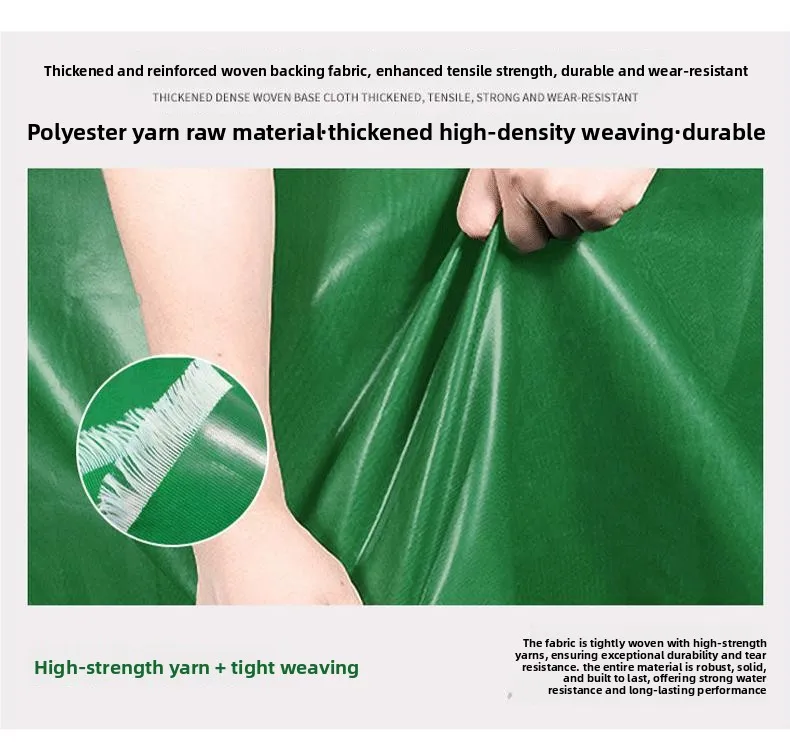
Buyers routinely compare PVC knife coated tarpaulin roll quotations on GSM alone, only to find the material feels lighter and tears more easily than expected once it arrives. The reason is straightforward: a high GSM achieved mostly through heavy coating on a loose-weave base fabric will show acceptable weight but poor tear propagation resistance. Conversely, a tightly woven high-denier base with moderate coating weight will outperform a heavier, poorly constructed alternative in tensile and peel strength. Without a material specification sheet breaking down base fabric denier, weave density and coating weight separately, the number on the quotation tells you almost nothing about how the fabric will behave under load. [NEED_CITE: tensile and tear test methods for coated fabrics per ISO 1421]
Full Product Range with Customisation at Every Parameter
Jinan Jinxiang’s PVC knife coated tarpaulin range covers the complete spectrum of coated fabric requirements. Every roll can be specified by GSM, base fabric construction, width, colour and surface finish, giving buyers the ability to order material that matches their exact fabrication process rather than adapting to stock constraints. The 10-person R&D team develops samples within days for custom colour, width or treatment requirements, allowing confirmation before bulk production starts.
Treatment Options Backed by Documentation
The available treatment menu — UV stabilisation, flame retardant, antibacterial and mildew-proof, anti-static — is specified at inquiry stage and confirmed with test documentation on request. This matters particularly for flame retardant grades, where the specific standard required varies by market and application: a tent destined for a European public event faces different classification requirements than a mining ventilation enclosure. [NEED_CITE: DIN 4102 fire classification for building materials] Requesting the test report matched to your destination market’s standard ensures the material arriving at your facility carries the compliance documentation your end client or site inspector demands.
How Knife Coating Determines Fabric Behaviour
The knife coated process applies PVC directly to the base fabric under controlled blade pressure, forcing coating material into the weave structure rather than simply sitting on the surface. This creates a mechanical bond between coating and yarn that delivers higher peel strength than laminated alternatives — a property that becomes critical at welded seams where thermal cycling can separate poorly bonded layers. The resulting fabric accepts HF and hot air welding with consistent seam formation, because the coating thickness is uniform across the roll width. Glossy or matte surface finishes are available, each affecting cleaning behaviour and print adhesion differently: glossy surfaces support self-cleaning through rain runoff while matte surfaces reduce glare on architectural installations.
The Hidden Cost of Under-Specified Rolls
When a PVC knife coated tarpaulin roll arrives with coating weight below the agreed specification, the failure rarely shows up immediately. It appears weeks or months later, typically at the point where the fabric flexes most — along a welded seam on a truck side curtain or at a stress point on a tensioned canopy. The coating cracks or delaminates because there was insufficient material to absorb the mechanical load. Colour inconsistency between rolls in the same shipment creates a different kind of cost: visible banding once panels are installed side by side, forcing the fabricator to either accept an inferior appearance or reorder at their own expense. Both failures trace back to insufficient process control during coating and inadequate pre-shipment verification. [NEED_CITE: field failure analysis of coated fabric seam delamination]
Why Source This PVC Knife Coated Tarpaulin Here
Three full production lines and 36 sets of professional equipment provide the capacity to handle container-load roll orders while maintaining roll-to-roll consistency — each roll verified against the stated GSM before dispatch.
Dedicated QA/QC at every production stage means coating weight, colour and treatment are checked in-process, not just sampled from the finished batch.
Sample development within days for custom width, colour or treatment lets buyers evaluate material behaviour on their own welding equipment before committing to bulk volumes.
ISO and CE certified production with full traceability from coating batch to shipped roll, documented through material specification sheets and pre-shipment inspection records.
A 10-person R&D team handles material selection and pattern requirements, supporting distributors who need to match specific end-market specifications across multiple product families.
Documentation & Verification
- Material specification sheet confirming exact GSM, base fabric denier, coating weight and colour reference per roll
- UV and flame retardant test reports matched to shipped roll batch numbers where applicable
- Pre-shipment inspection record with weight verification per roll against stated GSM
- Roll packing list with batch traceability from production run to container position
- Certificate of origin and customs documentation for cross-border roll shipments
Fabrication, Handling & Storage
- HF and hot air welding compatible — verify temperature and dwell time settings on sample before production runs
- Self-cleaning surface tolerates mild detergent cleaning; avoid solvent-based cleaners that degrade PVC coating
- Store rolls upright on pallets to prevent flat-spot deformation of the knife coated surface layer
- Allow cold-stored rolls to reach ambient temperature before unrolling to prevent coating crack at low flexibility
- Sewn seams should use UV-stable thread matching the fabric’s rated exposure conditions
- Cut panels with allowance for thermal expansion on large-span tensile and shade structure installations
What to Include in Your Inquiry
Specify the application and exposure conditions — whether the PVC knife coated tarpaulin will face permanent outdoor tension, repeated flexing on transport loads, or enclosed-space fire compliance requirements. Confirm the flame retardant grade or test standard your destination market demands, along with target GSM, width, colour reference and annual volume. If you require printed branding or custom panel sizing beyond standard roll dimensions, note this early so sample development can cover the full specification.
Frequently Asked Questions
Q: How do I verify the GSM on arrival matches the quotation?
A: Every roll ships with a pre-shipment inspection record documenting measured weight against the agreed specification. You can cross-reference this with your own weigh check on receipt. Our QA process checks coating weight at multiple production stages, not just at final winding, so deviations are caught before the roll leaves the facility.
Q: What flame retardant grades are available and which test standards do they meet?
A: Flame retardant treatment is available in multiple grades to match different market requirements. The specific grade and test standard — such as DIN 4102, NFPA 701 or local building code classifications — must be confirmed at inquiry stage so the correct formulation is applied and the matching test report accompanies your shipment.
Q: How is batch-to-batch colour consistency controlled across rolls?
A: Colour is formulated and matched at the coating stage with in-process verification, ensuring rolls produced for the same order maintain visual consistency when installed side by side. A colour reference is documented on the material specification sheet so reorders can be matched to previous batches.
Q: What custom widths and minimum order quantities apply to this fabric?
A: Custom widths, lengths, colours and surface finishes are produced to order, with minimums depending on the specific combination requested. Sample rolls are developed within days so you can evaluate the material on your own fabrication equipment before committing to full production volumes.
Q: Which welding methods work best with this fabric?
A: The knife coated PVC construction is compatible with HF welding, hot air welding and sewing. HF and hot air welding typically deliver the strongest seams because the coating fuses across the join. We recommend running weld tests on sample material to confirm optimal temperature and speed settings for your specific equipment.
Related products
-
PVC Coated Tarpaulin Outdoor Poly Tarp Plastic Canvas Tarpaulin Roll 650 Gsm for Truck Tent. Roof Cover
¥2.70 Add to cart -
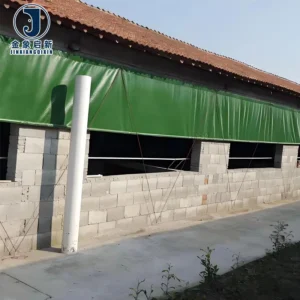
JX PVC Coated Tarpaulin/Cover for Farm Waterproof Warp Knitted Tent Pig Broiler Sheep Chicken Farm Plain Style
¥1.40 Add to cart -
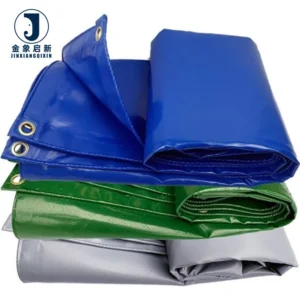
Best Quality 650gsm Waterproof Polyester Heavy Duty Bache PVC Tarpaulin Manufacturer
¥1.25 Select options This product has multiple variants. The options may be chosen on the product page -
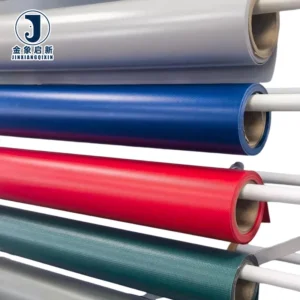
PVC Tent Fabric Shelter Blackout Anti-UV PVC Tarpaulins 1000D for Tent Fabric for Event Exhibition Shade Tents
¥1.45 Select options This product has multiple variants. The options may be chosen on the product page