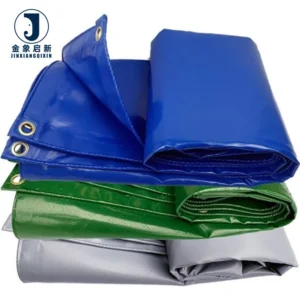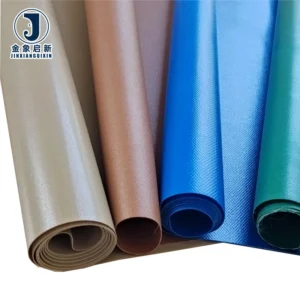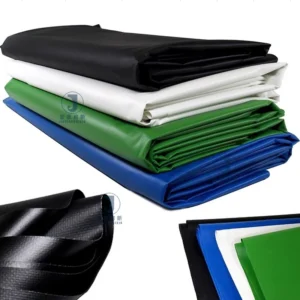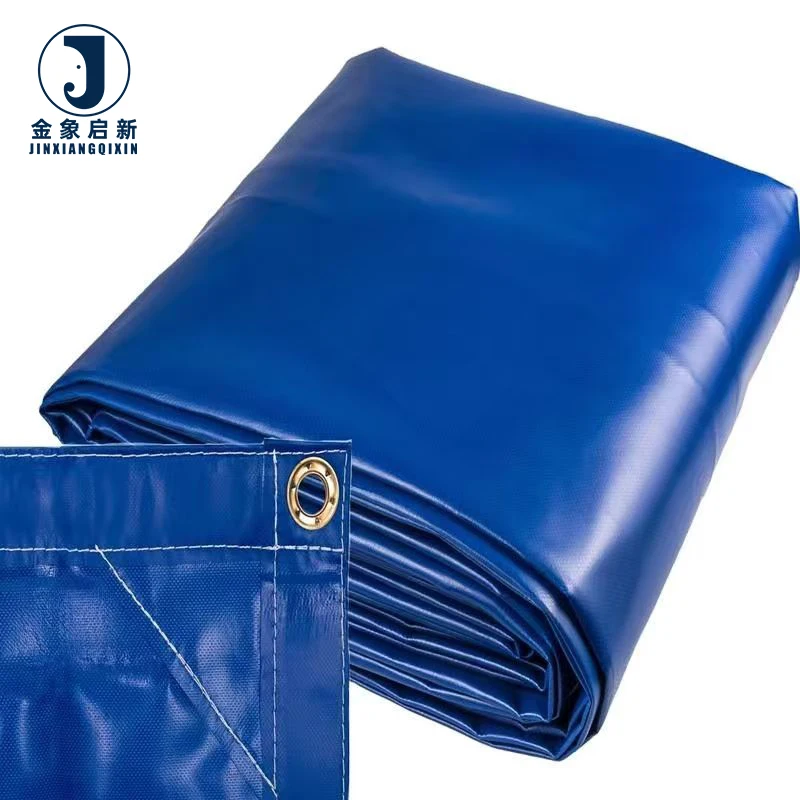
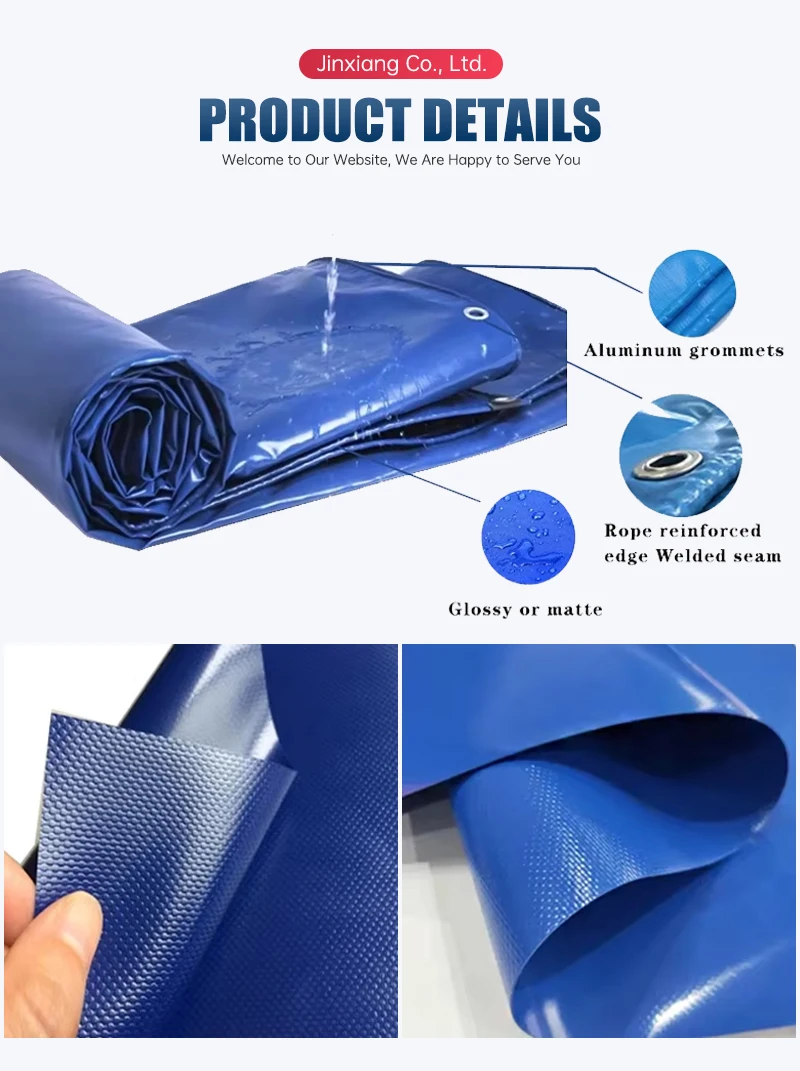
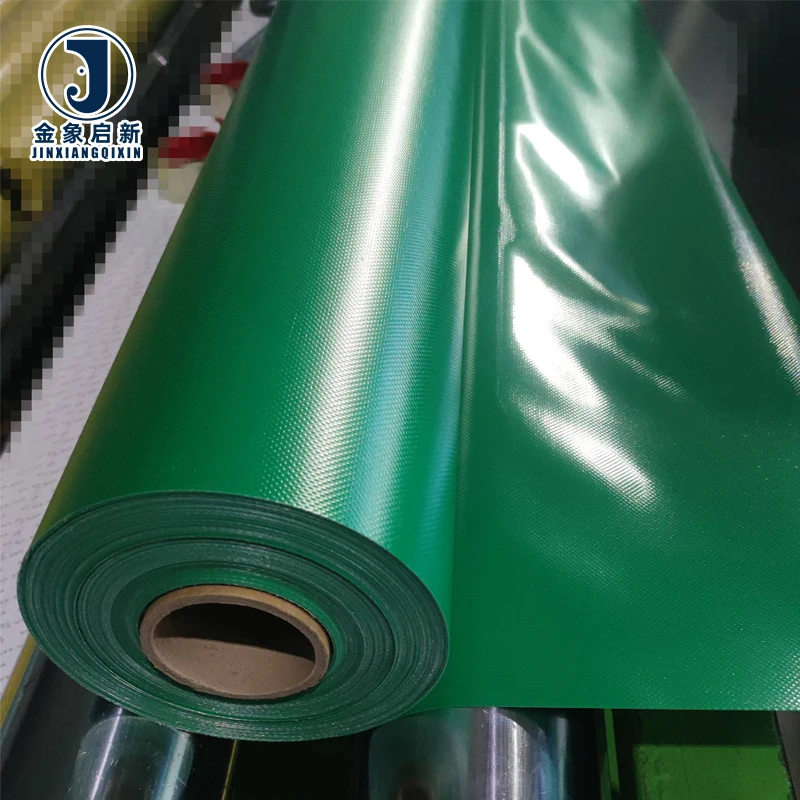
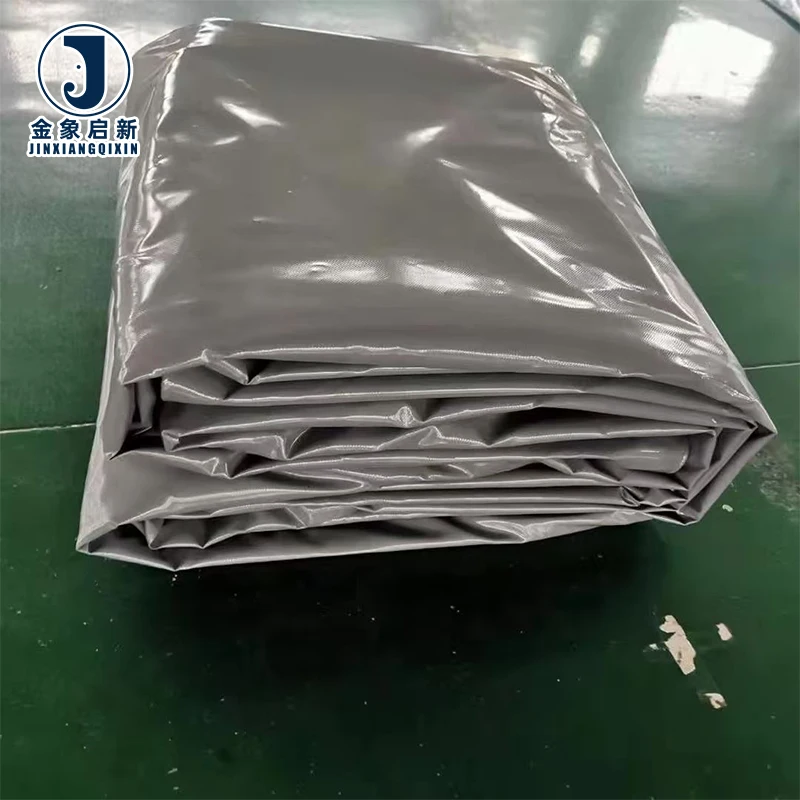
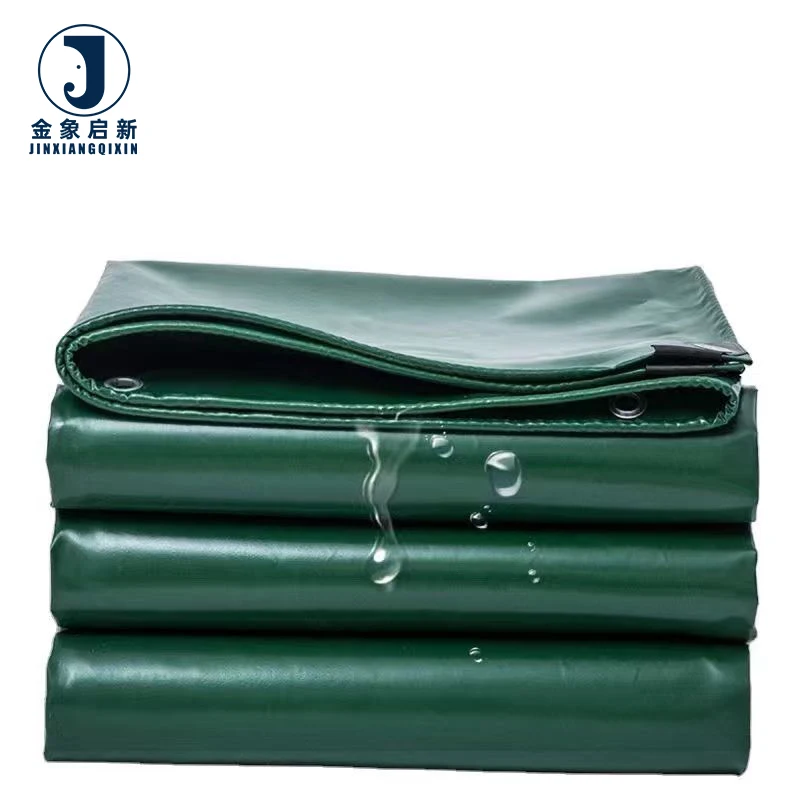
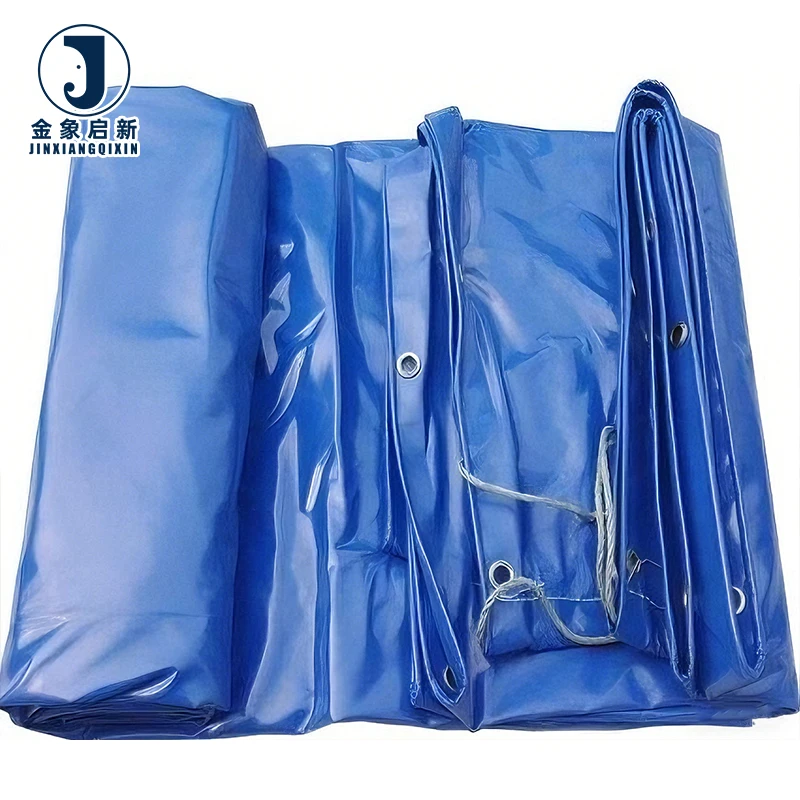
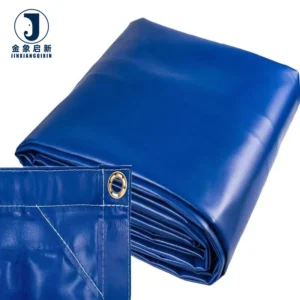
Reinforced Edges PVC Tarpaulin Industry Covering — 500 to 800 grams per square meter, high-frequency heat seamed with reinforced edges and eyelets tailored to specific vehicle dimensions. Waterproof to ≥20KPa, flame retardant ≤10 seconds, low-temperature flexible at -30℃ without fracture.
Coating weight and base fabric adhesion are held under deep process control, ensuring GSM on the spec sheet matches the roll you receive. Welded seams are engineered to hold at flex points where load stress concentrates most.
- 100% pre-shipment inspection with verified GSM, test reports and roll packing list included in every dispatch
Description
Deep Process Control Over Coating Weight — Every roll of Reinforced Edges PVC Tarpaulin Industry Covering has its GSM verified against the specification sheet before dispatch, ensuring the material you order is the material you receive.
Technical Specifications
| Parameter | Value |
|---|---|
| Product Type | PVC Coated Tarpaulin |
| Weight | 500 to 800 grams per square meter |
| Waterproof Performance | Anti-permeable ≥20KPa |
| Flame Retardant | ≤10 seconds |
| Low-Temperature Flexibility | Not fractured at -30℃ |
| Heat Resistance | Adaptable to variety of open-air natural conditions |
| Corrosion Resistance | Acid, alkali and brine corrosion |
| Seaming Method | High-frequency heat combined |
| Water Absorption | Almost no absorbable of water, drying quickly |
Application Suitability
| Application | Exposure & Requirement |
|---|---|
| Truck covers | Road debris impact, constant flexing at corners, UV exposure, tie-down tension at edges |
| Industrial covering | Chemical splash, dust containment, outdoor weathering, repeated handling and folding |
| Outdoor protection | Rain and standing water, wind uplift, temperature cycling, abrasion from contact surfaces |
Why Arriving Material Weighs Less Than the Quotation States
GSM is only meaningful when verified roll by roll, not assumed from a product code.
A PVC Tarpaulin Roll that leaves the factory at the stated weight can still arrive short if the base fabric is swapped for a lighter weave mid-production or if the coating weight is reduced to save material cost. I have watched buyers receive rolls that feel noticeably thinner than the approved sample, only to be told the difference is "within tolerance." When the coating layer is thinner than specified, the fabric loses waterproof integrity at the seams first — the area under the most stress on any truck cover. Sourcing a PVC Tarpaulin Roll from a supplier who checks every roll against the spec sheet before packing eliminates this gap [NEED_CITE: tensile and tear test methods for coated fabrics per ISO 1421].
What Coating Weight and Adhesion Mean for the Final Cover
The coating process determines how well the PVC layer bonds to the polyester base fabric. On this PVC Tarpaulin Roll range, the coating weight is controlled at each stage, which directly affects how the material behaves when heat-welded. A coating that is too thin peels at the weld line under load; a coating applied with poor adhesion delaminates after a season of sun and rain. The 500 to 800 grams per square meter range gives buyers flexibility to match weight to the specific stress level of their application.
Edge Reinforcement and the Seams That Hold Under Load
Reinforced edges matter most at the points where tie-down straps and buckles pull against the fabric. The high-frequency heat combined seaming method used on this material creates a welded bond rather than a stitched one, which means the seam does not introduce needle holes where water can enter. On truck covers, the seams at the rear opening and along the roof bow take the highest cyclic stress. When those seams are welded at the correct temperature and pressure, the joint outlasts the surrounding fabric [NEED_CITE: high-frequency welding parameters for PVC coated polyester].
Reading the Specifications That Actually Matter
Weight alone does not tell you how a PVC Tarpaulin Roll will perform in service. A 650 GSM fabric with a high-denier base and tight weave can outperform an 800 GSM fabric made with a looser, heavier yarn. The anti-permeable ≥20KPa rating on this material indicates the hydrostatic head the coating can withstand before water penetrates — relevant for covers that see standing water or driven rain. Low-temperature flexibility at -30℃ means the PVC formulation resists embrittlement in cold climates, so the cover can be folded and unfolded in winter without cracking along the crease. Corrosion resistance to acid, alkali and brine extends service life in chemical environments and coastal installations where salt spray is constant.
What Happens When the Specification Is Wrong for the Job
Specifying a lighter weight than the application demands is the most common error I see. A fleet operator covering flatbed trailers with material rated for light-duty use will see edge tearing within the first season, because the tie-down points concentrate force into a small area. Colour inconsistency between rolls is another problem — when two rolls in the same batch vary in shade, the difference becomes obvious once they are installed side by side on adjacent trucks. And when flame retardant performance is claimed without a documented test basis, the material may fail a site safety inspection, shutting down work until a compliant cover is sourced. These are not theoretical failures; they are recurring buyer pain points that cost time and money to resolve [NEED_CITE: DIN 4102 fire classification for building materials].
Why Procurement Teams Source This PVC Tarpaulin Roll Here
This material is produced on three full production lines with 36 sets of professional equipment, which gives the factory the capacity to run bulk orders while maintaining coating consistency roll to roll. A 10-person R&D team handles custom width, colour and edge reinforcement requests, developing samples within days rather than weeks. Every roll passes through dedicated QA/QC at each production stage, with 100% inspection before shipment — not a sampling check on one roll per batch. The nearly 30 years of focused experience in coated fabric means the process parameters for heat seaming and coating adhesion are refined, not guessed. Buyers receive a material specification sheet, test reports where applicable and a complete packing list with every dispatch.
Documentation & Verification
- Material spec sheet stating GSM, base fabric and coating type per roll
- Flame retardant test report (≤10 seconds) supplied with applicable orders
- Pre-shipment inspection record covering weight and visual consistency
- Roll packing list with colour reference and batch traceability
- Certificate of origin and customs documentation included
Fabrication, Handling & Storage
- Heat-weld seams at temperatures matched to the 500–800 GSM coating weight for full adhesion
- Store rolls upright on a clean, dry surface to prevent permanent creasing in the PVC layer
- Avoid dragging the coated surface across concrete or steel to protect the corrosion-resistant finish
- Allow cold-stored rolls to reach ambient temperature before unrolling to prevent low-temp stiffness damage
- Use compatible PVC-based repair patches on high-frequency heat combined seams for field repairs
What We Need to Quote Your PVC Tarpaulin Roll Accurately
To move forward, share your target weight range within the 500–800 GSM band, the roll width and length you need, and whether edge reinforcement or custom eyelet spacing is required. If the end use involves a regulated environment — mining, aviation or public-venue construction — let us know the flame retardant grade your market requires so we can confirm availability and include the correct test report with the shipment.
Frequently Asked Questions
Q: How do you verify GSM matches what is stated on the quotation?
A: Every roll is weighed and cross-checked against the material specification sheet during our 100% pre-shipment inspection. We do not rely on production batch averages. If the measured GSM falls outside the agreed tolerance, the roll is held and reworked or replaced before packing.
Q: Can I get a test report for flame retardant treatment?
A: Yes. Where flame retardant treatment is specified, we include a test report confirming the ≤10 seconds result. Share the compliance standard required in your market so we can align the documentation before production begins.
Q: What is the lead time for custom width or colour?
A: Lead times depend on the width, colour and order volume. We develop a sample within days of confirmation so you can approve weight, shade and finish before the full production run is scheduled. Confirm your requirements and we will provide a firm dispatch date.
Q: How do you ensure colour consistency across rolls in one order?
A: All rolls in a single order are produced in the same coating run using matched colour reference standards. Our in-process QA checks shade continuity between consecutive rolls, and any deviation outside the agreed tolerance is rejected before packing.
Q: What documentation comes with the shipment?
A: Each dispatch includes a material specification sheet, test reports for applicable treatments, a pre-shipment inspection record, a roll packing list with batch references, and a certificate of origin. Additional customs documents are provided as needed.
Related products
-
PVC Tarpaulin Glossy 650GSM 1000D*1000D 23*23 1.50*50M/R for Multi-purpose Cover SAMPLE FREE
¥2.70 Add to cart -
Nylon-coated Trailer Tarpaulin. Waterproof Canvas. Heavy-duty PVC Tarpaulin for Truck Tents
¥1.04 Add to cart -
PVC Tarpaulin Waterproof Triangular Tarpaulin Folha De Tarpaulina Truck Tarpaulin
¥0.90 Select options This product has multiple variants. The options may be chosen on the product page -
Custom Reinforced Edges Rip-Stop Rubberized PVC Tarpaulin Industry Covering Vinyl Coated Polyester Tarps for Trucks
¥8.00 Select options This product has multiple variants. The options may be chosen on the product page