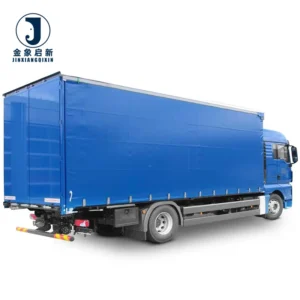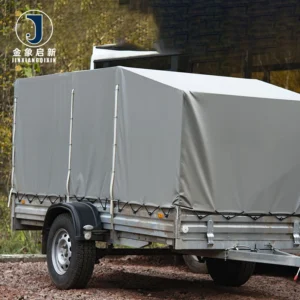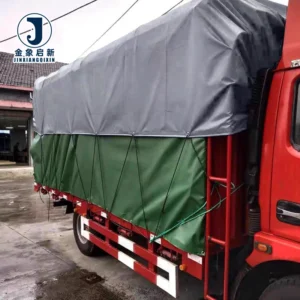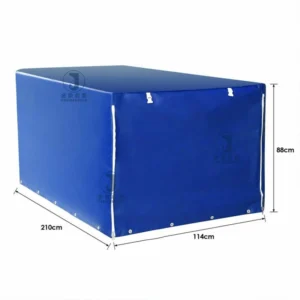
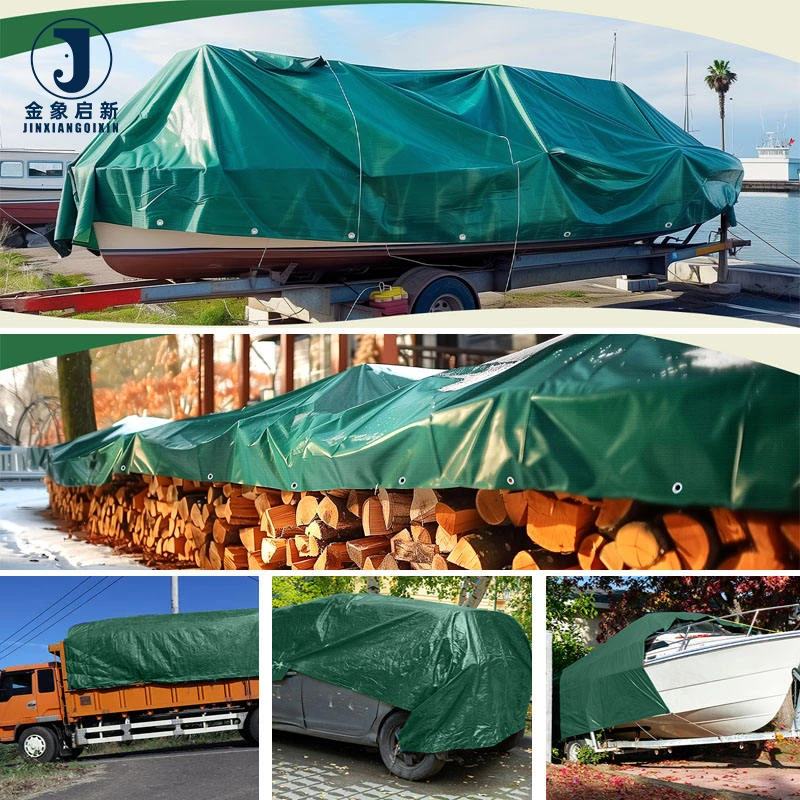
Custom PVC Truck Cover Tarpaulin for Fleets – Manufacturer — covering a moving load starts with matching fabric weight, coating thickness and eyelet placement to the specific trailer model and route conditions. Covers are cut to exact vehicle dimensions so cargo stays sealed at flex points where generic sizes fail. Reinforced PP rope hems and galvanized eyelets handle tie-down stress without tearing through the coated fabric.
- Backed by three full production lines and nearly 30 years of coating process control, each cover passes 100% pre-shipment inspection before dispatch.
Description
Deep process control over coating weight and adhesion — every PVC truck cover tarpaulin leaving our facility is verified against the stated GSM, base fabric density, and coating formulation before dispatch.
Technical Specifications
| Parameter | Value |
|---|---|
| Product Type | PVC Tarpaulin / Truck Cover |
| Material | PVC Coated Polyester Fabric |
| Weight | 450-900 g/m² |
| Thickness | 0.4-0.8mm |
| Width | Custom sizes available |
| Length | Custom sizes available |
| Surface Treatment | Anti-UV, Waterproof, Flame Retardant options (confirm the grade required for your market) |
| Edge Reinforcement | PP rope in hem with galvanized eyelets |
| Color Options | Multiple colors available |
| Assembly State | Finished tarpaulin with reinforced edges and eyelets |
| Standards | ISO 9001, CE |
Application Suitability
| Application | Exposure & Requirement |
|---|---|
| Flatbed trailer cargo cover — constant road vibration, wind uplift, UV exposure, tie-down strap abrasion at contact points | |
| Side curtain system for tautliner trailers — continuous flexing at curtain runners, mechanical wear from opening and closing cycles | |
| Tipper truck load enclosure — material shifting during transit, friction against bulk cargo, weather and road spray | |
| Fleet vehicle weather protection — long-term outdoor parking, rain ingress, dust contamination, thermal cycling |
Why a Generic PVC Truck Cover Tarpaulin Fails Where Your Load Flexes Most
Seam integrity matters more than fabric weight when covering a moving load.
A PVC truck cover tarpaulin that looks adequate on paper often fails first at the welded joints, not through the fabric itself. When a trailer flexes under load on uneven roads, the stress concentrates at seam intersections and eyelet zones rather than distributing across the panel [NEED_CITE: tensile and tear test methods for coated fabrics per ISO 1421]. The result is a cover that tears at the weld line while the body of the material remains intact — leaving cargo exposed at the exact point where protection matters most.
Fabric Weight Selection for Route and Load Conditions
Choosing the right PVC truck cover tarpaulin grade depends on how the vehicle is used, not just what it carries. A long-haul fleet operating on motorways with consistent speeds places different demands on the cover than a tipper working quarry roads with frequent stops and load shifting. Heavier grades in the available range provide the tensile reserve needed for high-abrasion routes, while lighter grades suit applications where weight savings on the vehicle itself improve fuel efficiency.
Eyelet Placement and Reinforcement Strategy
Galvanized eyelets set into a PP rope reinforced hem handle the tie-down strap loads that secure cargo during transit. The spacing and reinforcement of these fixing points must match the expected wind uplift and strap tension for the vehicle type [NEED_CITE: wind load calculations for flexible transport covers]. Closely spaced eyelets distribute load more evenly across the hem, reducing the risk of tearing at individual anchor points during high-speed transit or crosswind exposure.
How PVC Coating Thickness Interacts with Base Fabric Construction
The coating thickness of 0.4-0.8mm works in conjunction with the polyester base fabric to determine overall performance. Thicker coatings improve waterproofing and abrasion resistance at contact points but add weight and reduce flexibility in cold conditions. The polyester weave density underneath the coating governs tear propagation resistance — a tightly woven base prevents a small puncture from spreading into a full panel failure, which is why both coating and base fabric must be specified together rather than evaluating either parameter in isolation.
The Cost of Underspecifying Seam Construction
When welded seams are not matched to the fabric grade and expected flex cycles, the cover fails prematurely at the joints while the main panels remain serviceable. This forces a full replacement rather than a localized repair, doubling the effective cost per service cycle [NEED_CITE: coated fabric seam strength testing and failure analysis]. The PVC truck cover tarpaulin buyer who specifies only GSM and colour without addressing weld parameters ends up paying for covers that never reach their expected service life.
Why Sourcing From a Dedicated Coated Fabric Facility Matters
Nearly three decades of focused coated fabric production means our process control extends from raw material intake through final roll inspection. Three full production lines with 36 sets of professional equipment support the volume consistency that fleet operators require when ordering covers for mixed vehicle fleets. Our 10-person R&D team develops custom sizing and seam configurations matched to specific trailer models, and dedicated QA/QC runs at every production stage with 100% inspection before any PVC truck cover tarpaulin leaves the facility.
Documentation & Verification
- Material specification sheet stating exact GSM, base fabric denier, and coating weight per roll
- Pre-shipment inspection record confirming dimensions, eyelet count, and seam integrity
- Test reports for anti-UV and flame retardant treatments where applicable to the order
- Roll packing list with piece count, net weight, and container loading plan
- Certificate of origin and customs documentation for international shipment
Fabrication, Handling & Storage
- Heat welding parameters must match the specific coating thickness — confirm temperature and dwell time for the grade ordered
- Galvanized eyelets require reinforced corner patches at high-load tie-down positions to prevent hem pull-through
- Store rolls upright on pallets to avoid flat-spot deformation that complicates unrolling and fitting
- Clean PVC surfaces with mild detergent only — solvent-based cleaners can degrade the coating adhesion over time
- Field repairs using compatible PVC patches and hot-air welding maintain waterproof continuity at damage points
- Allow material to acclimatise before fitting in cold conditions to prevent creasing at fold lines
What We Need to Quote Your Truck Cover Requirements
Provide the truck or trailer make, model, and body dimensions so we can develop covers that fit without excess material or tension points. Specify the cargo type and typical route conditions to guide fabric weight and treatment selection. Confirm whether you need finished covers with eyelets and hems or if your own fabrication team will handle cutting and finishing from supplied PVC truck cover tarpaulin panels.
Frequently Asked Questions
Q: How do I measure my trailer for a custom PVC truck cover tarpaulin?
A: Measure the load bed length, width, and height from the chassis rail to the top of the load or headboard. Include any protrusions such as lashing rings or tail lift mechanisms. For side curtains, measure runner track length and drop from rail to bed. We use these dimensions to pattern the cover with appropriate overlap and eyelet positioning.
Q: What fabric weight suits long-haul motorway use versus quarry or construction sites?
A: Long-haul motorway operation generally suits grades at the lighter end of our available range where wind resistance and fuel efficiency are priorities. Quarry and construction environments with abrasive bulk cargo and frequent load shifting benefit from heavier grades that resist puncture and abrasion at contact points.
Q: How are eyelets reinforced to handle repeated tie-down strap loading?
A: Each galvanized eyelet is set through a hem reinforced with PP rope, which distributes strap tension across the edge rather than concentrating it at the eyelet hole. Corner positions and high-load intermediate points receive additional reinforcement patches to prevent progressive tearing under cyclic loading.
Q: Can you produce PVC truck cover tarpaulin matched to mixed fleet vehicle models?
A: Yes. Our R&D team develops individual patterns for each truck and trailer model in your fleet, ensuring proper fitment across different body lengths, widths, and configurations. Batch colour consistency is controlled across the full order so all fleet covers present a uniform appearance.
Q: What documentation accompanies flame retardant or anti-UV treated covers?
A: Treated covers ship with test reports confirming the specific grade achieved during production. These reports reference the applicable test standard and allow verification against your site or regulatory requirements. Confirm the grade needed for your market at inquiry stage so we can include the correct treatment in production.